dbboard
A high-performance desktop database client for modern serverless and distributed databases — Turso/libSQL, Cloudflare D1, PostgreSQL, CockroachDB, Neon, Supabase, MySQL/MariaDB, AWS Aurora DSQL, and the document stores Cloud Firestore and MongoDB.
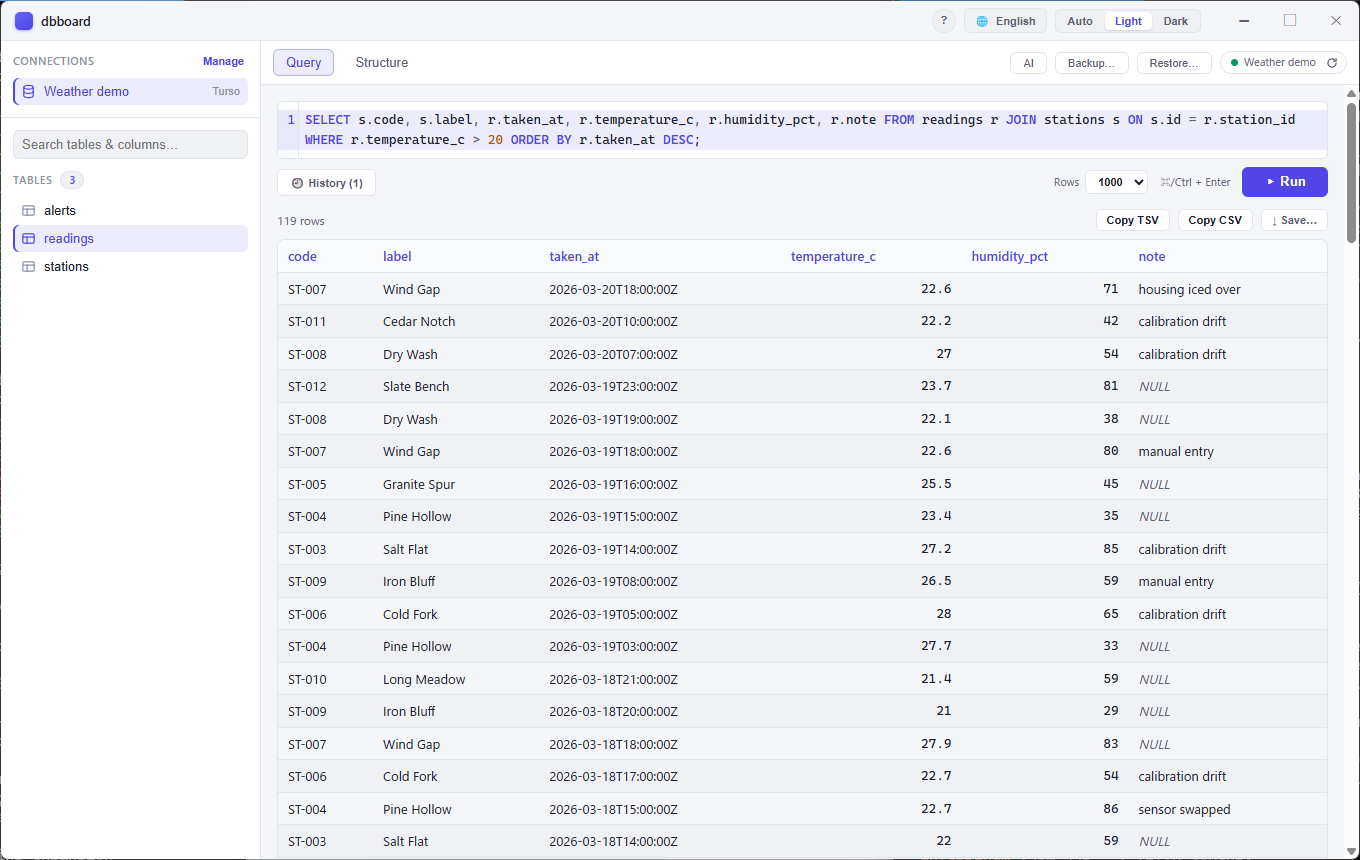
NULL rather than as
nothing, so a missing value never reads as an empty string — and the
JSON export keeps that distinction in the file, where CSV can only
write an empty field for both.
Download
A look around
Compare two databases
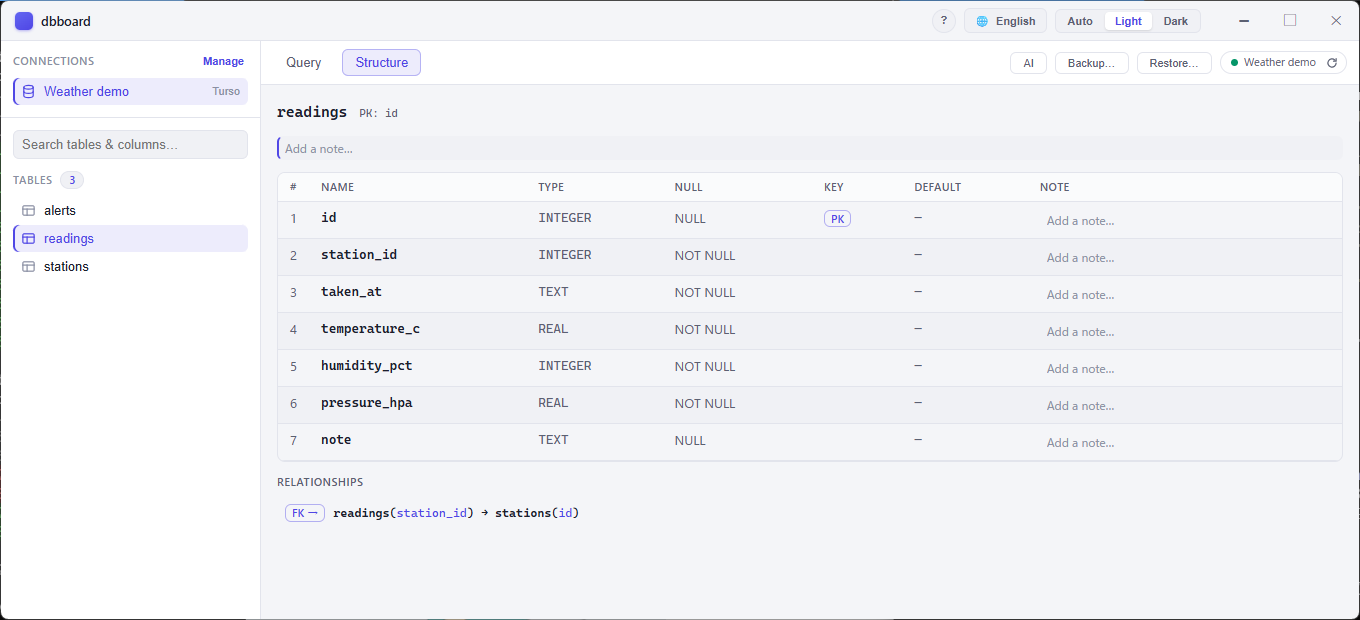
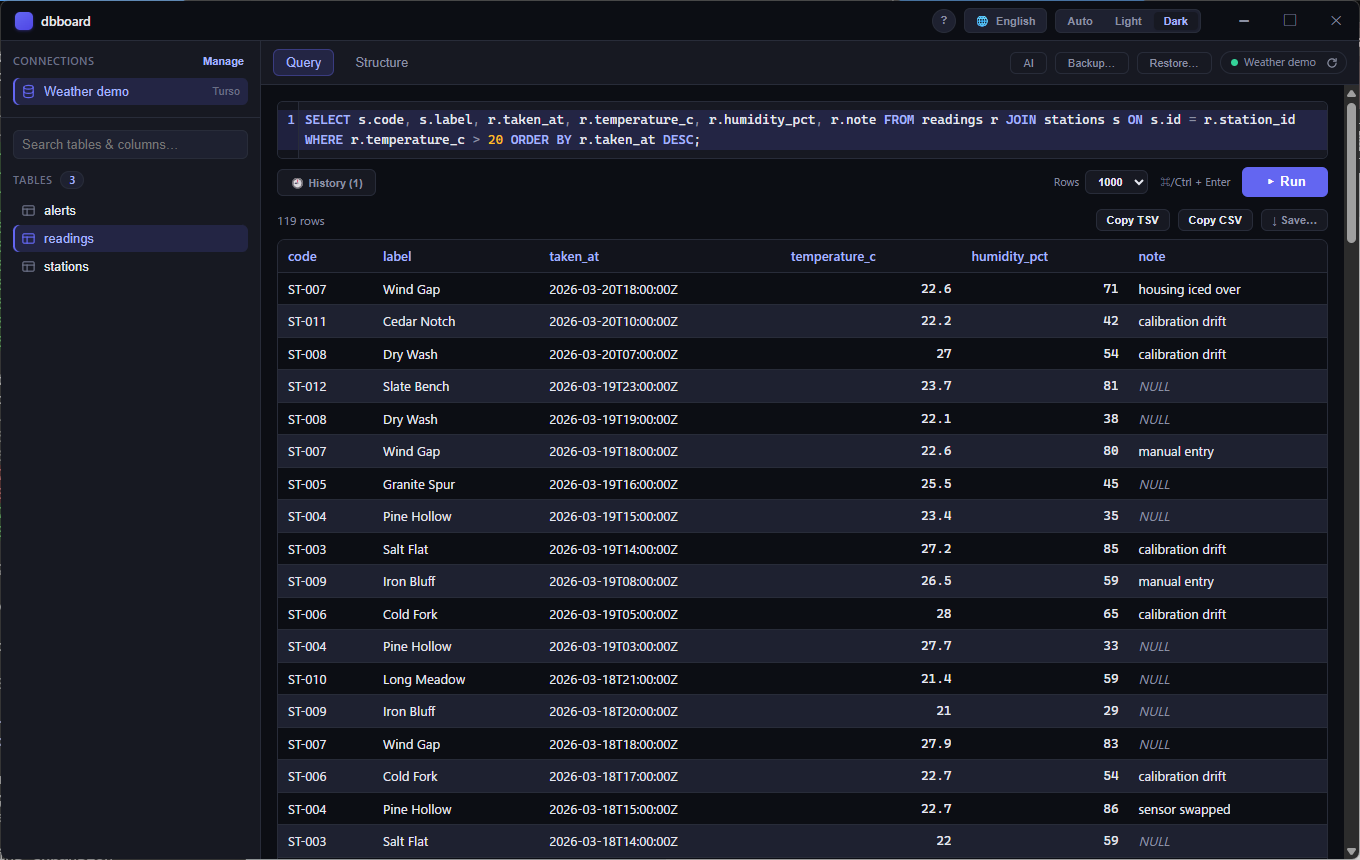
Pick a second connection on the same engine and dbboard lists what the two schemas disagree about: tables one side has and the other does not, columns that differ in type, nullability or default, primary keys that do not match, foreign keys that point somewhere else, and indexes that are missing, built over different columns, or unique on only one side. Only what differs is listed, so three hundred tables with one difference give you one line.
Types are compared exactly as each engine spells them —
VARCHAR(255) and varchar are reported as
different even where they may well mean the same thing. A second look
costs you a moment; a missed difference costs you the migration. Two
connections on different engines are refused rather than guessed at.
Queries worth keeping, and tables that do not stop at row 100
The editor has always remembered what you ran, but that list is
disposable on purpose. Name a query instead and it stays — per
connection, one click to put it back — kept in
saved-queries.toml beside your connections rather than in
the window's own storage, which "clear site data" empties and no
settings backup includes.
Browsing a table pages through all of it. The pages are keyed rather than counted, resuming strictly after the previous page's last row, so a row inserted while you read cannot make another appear twice or vanish between pages — and no page costs more than the first.
Previous versions
| Version | Windows | macOS |
|---|
Rolling back is supported, and your connections survive it.
If a release does not work for you, install the last one that did — the
list above is there for exactly that. The first time each build runs it
copies connections.toml aside as
connections.pre-<version>.toml before touching
anything, so going back finds a file that version can certainly read.
Verify your download
Every release ships a SHA256SUMS.txt covering all
artifacts. Compare your download against it before running:
# Linux / macOS
sha256sum -c SHA256SUMS.txt

# Windows PowerShell
(Get-FileHash .\dbboard-desktop_0.17.0_x64-setup.exe -Algorithm SHA256).Hash
Use it from an AI agent
dbboard also ships dbboard-mcp, a headless
MCP server that hands the
connections you have already configured to an AI agent as a tool surface
over stdio. Reading is always on; writing stays off until you opt a
connection in, and privilege changes, TRUNCATE and
DROP are blocked either way. It reuses the same
connections.toml and OS keychain the app uses, so it adds no
new place to keep credentials, and secrets never cross the wire.
An agent handed this server can ask it what it is: the about
tool answers what the product is for, which build is replying, which
engines it speaks, and what each released version changed. It reaches no
connection, no database and no file of yours — the answer is compiled
into the binary, so it describes the build that is answering rather than
whatever happens to sit on disk beside it.
It is a separate download from the app above — grab
dbboard-mcp-windows-x86_64.exe or
dbboard-mcp-macos-universal from the
latest
release, put it somewhere stable, then register it in one line:
# Windows (PowerShell)
claude mcp add dbboard --scope user -- "$env:LOCALAPPDATA/dbboard/dbboard-mcp.exe"

# macOS
claude mcp add dbboard --scope user -- "$HOME/.local/bin/dbboard-mcp"
Before you run it
These binaries are not code-signed, by decision rather than by omission: a signing certificate is a recurring purchase this project does not make. Windows SmartScreen may warn about an "unknown publisher", and macOS Gatekeeper will ask you to confirm opening an app from an unidentified developer. Both warnings are expected on every release — verify the checksum above, then allow it through.