Events and games
The fencing piste (2 m on guard, 5 m to retreat)
A fencing piste from the FIE rules: the on-guard lines are 2m from the centre and the rear limits 7m, so each fencer has exactly 5m to retreat before both feet cross the line and a touch is lost
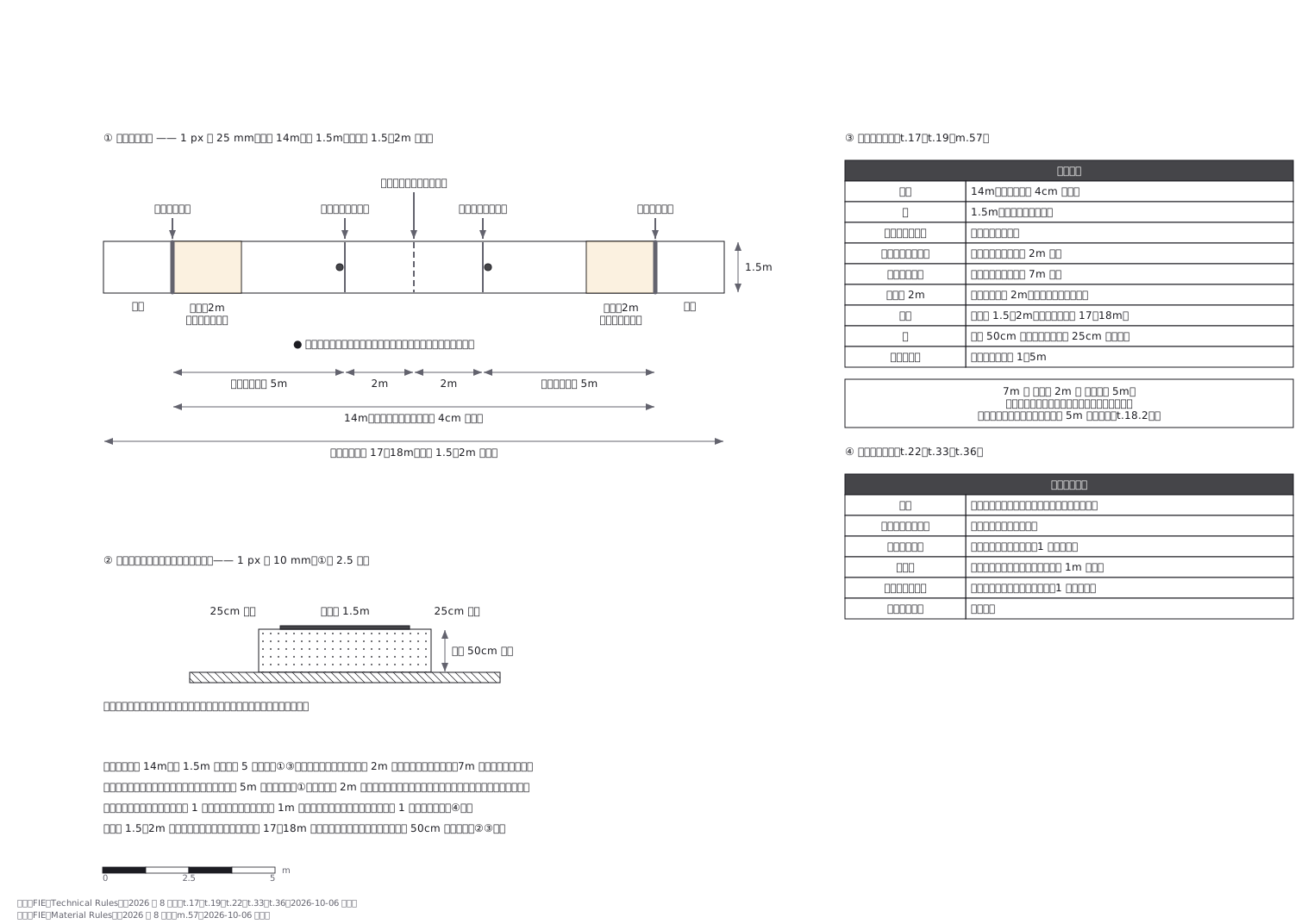
This drawing comes from one YAML file. No shape was moved by hand.
Notes in the source (in Japanese)
センターラインから後ろの限界線まで 7m = 構えの 2m + 下がれる 5m。オンガードライン(中央から 2m)で構えれば、どちらの選手も両足で後ろの限界線を越えずに5m 下がれる(t.18.2)。14m という長さは、この 5m から決まっている。
何のための図か。 会場の設営と審判が、ピストの線と延長・台・採点器の台の位置を規則の数で確かめるための図。技(突き・払い)や、有効面の判定は描かない。
描いたもの。 ①平面(1 px = 25 mm):長さ 14m・幅 1.5m のピスト、5 本の線(センターラインは破線、オンガードライン ±2m、後ろの限界線 ±7m —— t.19)、最後の 2m(色を変える —— t.19.4。色は規則に無いので橙で描いた)、両端の延長(1.5〜2m のうち 2m で描いた —— m.57.4)、構えの位置(t.22.3・22.4。点で示した)。②台の断面(1 px = 10 mm):高さ 50cm 以下、ピストより両側 25cm 以上広い(m.57.3b)。
描かなかったもの(理由)。- 主審の立ち位置・選手の左右(t.22.1 は「先に呼ばれた選手が主審の右」とだけ言う)—— 主審の位置の数が規則に無い- 台の両端の坂の勾配 —— 「ゆるい坂」とだけあり、数が無い- 採点器の台(ピストの縁から 1〜5m —— t.18.4)—— 距離だけで、どちら側に置くかも台の大きさも規則に無い。表に数だけ書いた- 子機(slave score machine)—— 延長の縁から 5m 以上離すとだけあり、台の図から外れる- 有効面・剣の寸法 —— ピストの図ではない出典(取得 2026-10-06):FIE Technical Rules(August 2026)t.17・t.18(幅 1.50m、長さ 14m・誤差 4cm、2m の所から 5m 下がれる、採点器の台は 1〜5m)、t.19(5 本の線と最後の 2m)、t.22(構え)、t.33〜t.36(横・後ろの限界を越えたとき)。FIE Material Rules(August 2026)m.57(導電性の床 17〜18m、延長 1.50〜2m、台の高さ 50cm 以下・両側 25cm 以上)。
Source (YAML)
examples/gallery/386-フェンシングのピスト-下がれるのは5m.zumen.yaml
More in this field
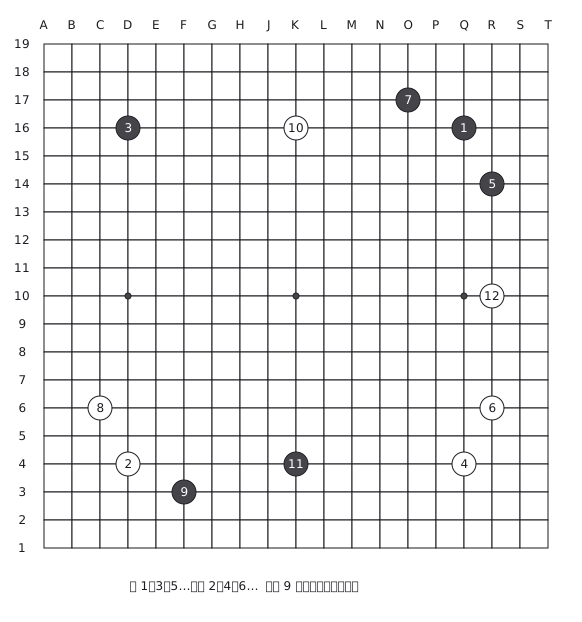 A game record on a 19-line go board where each stone carries the number of the move, showing the shape of the opening
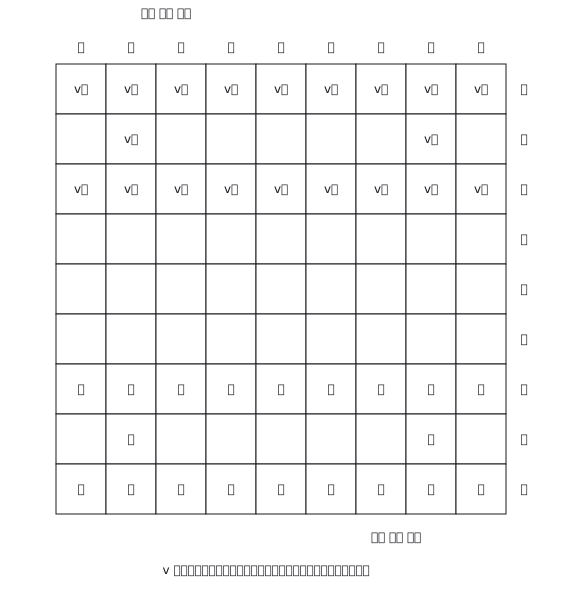 The starting position of shogi on a nine by nine board, the two sides told apart by which way the pieces point
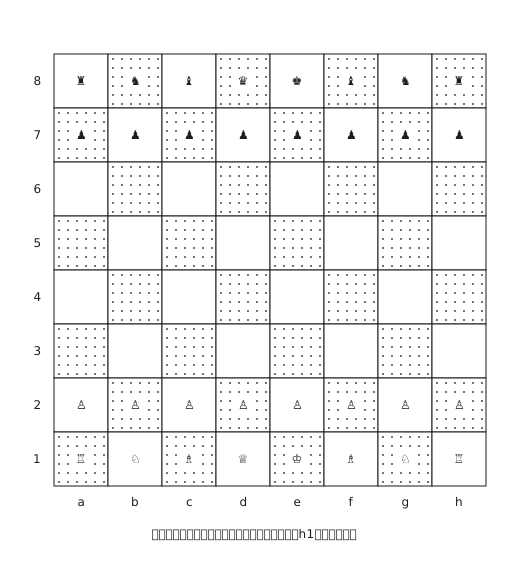 The starting position of chess on an eight by eight board, with the file and rank coordinates marked
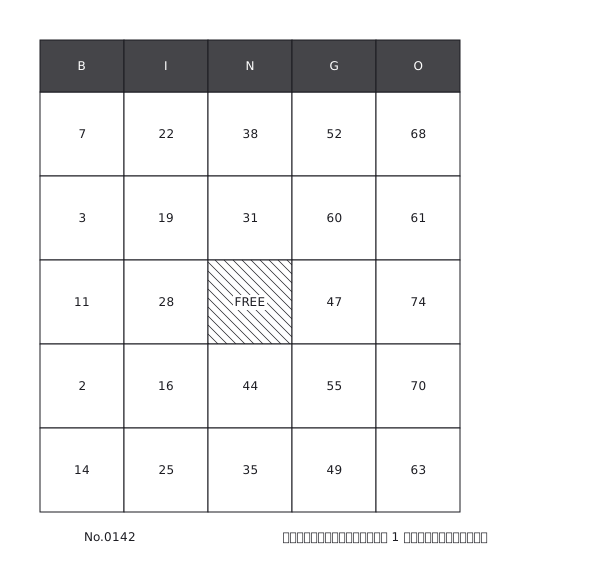 A bingo card, five by five with a free centre, where each column draws from its own range of numbers
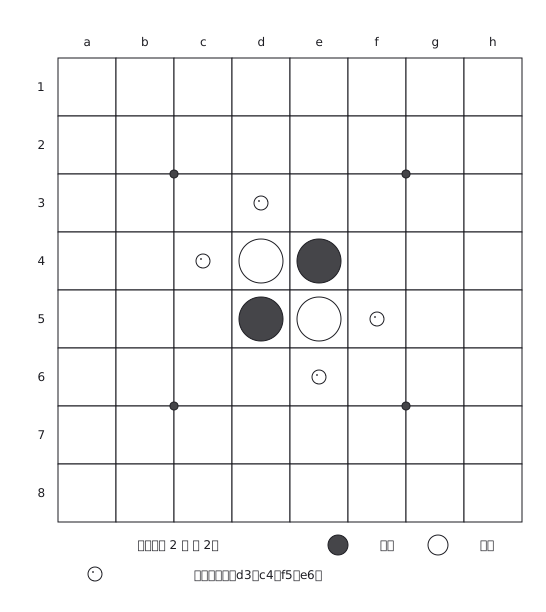 The opening position of reversi: four stones in the centre four squares, black and white alternating
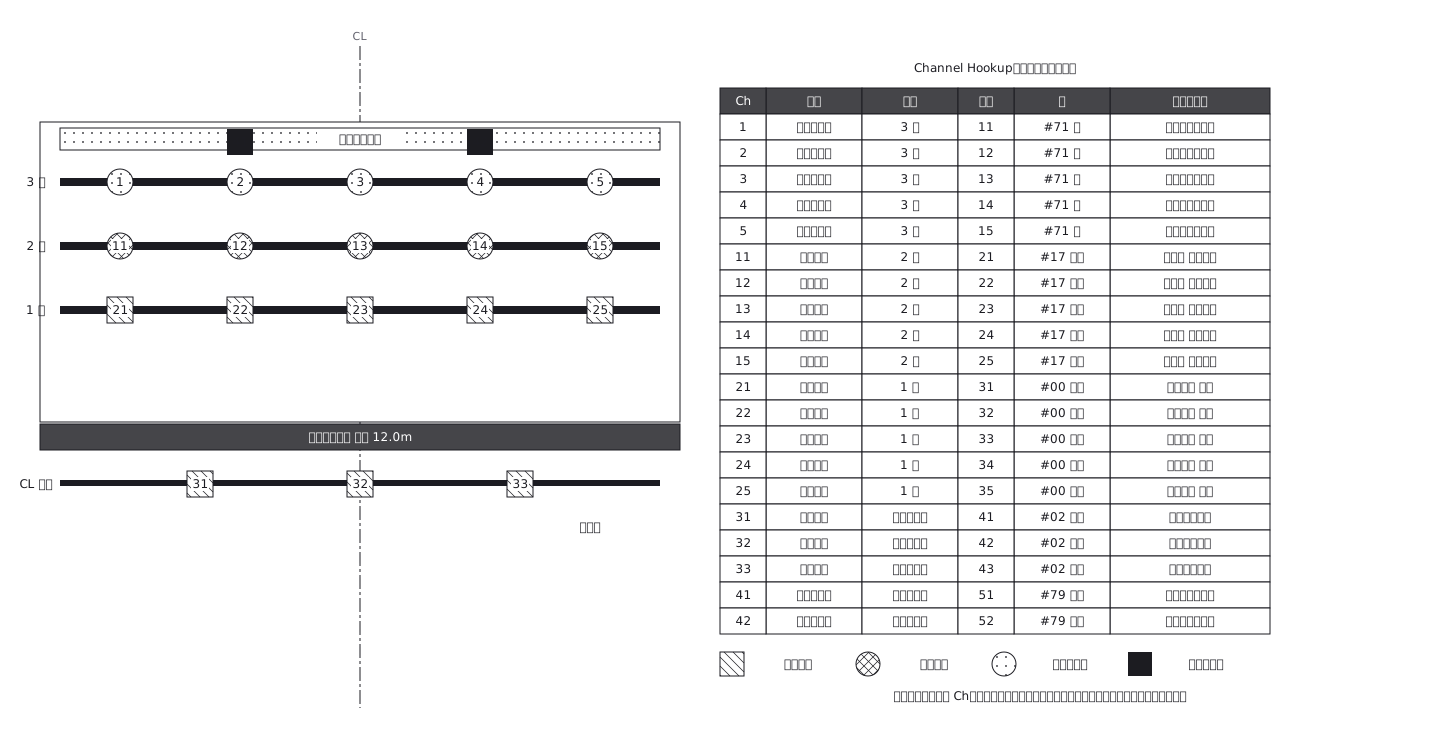 Theatrical lighting plot, with the channel schedule
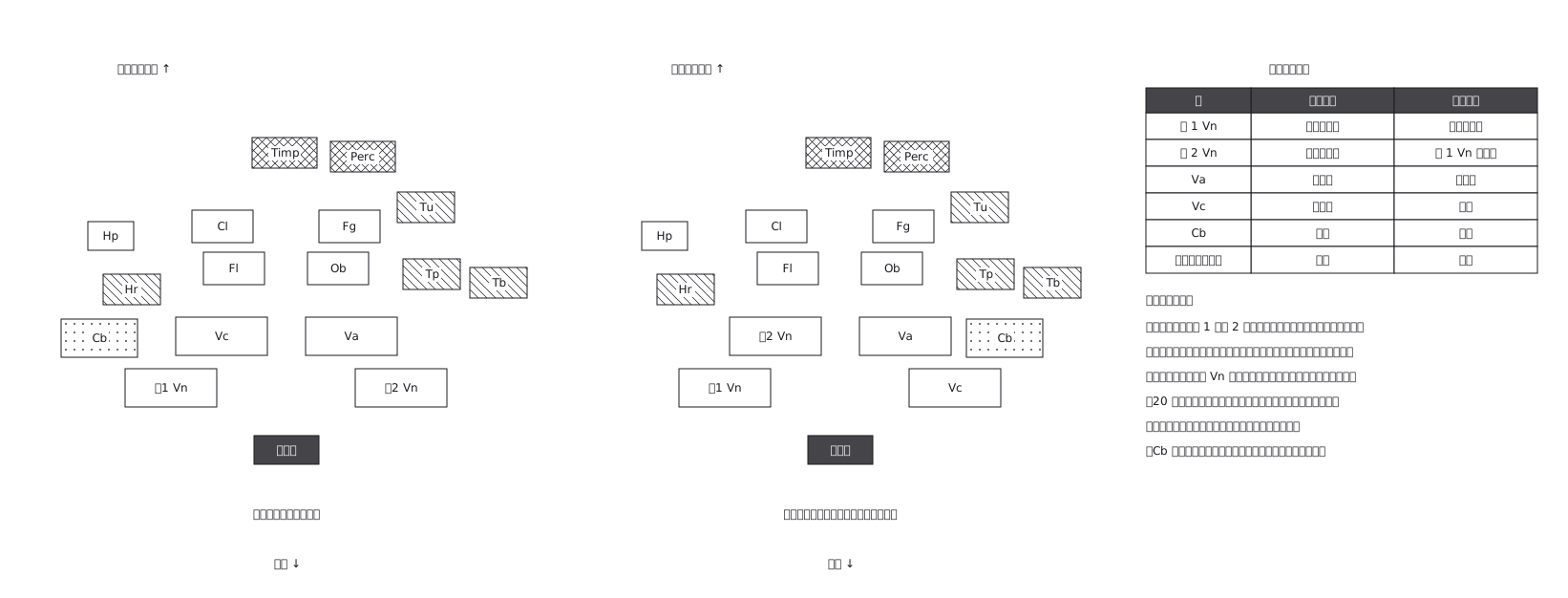 Orchestra seating, two traditions side by side
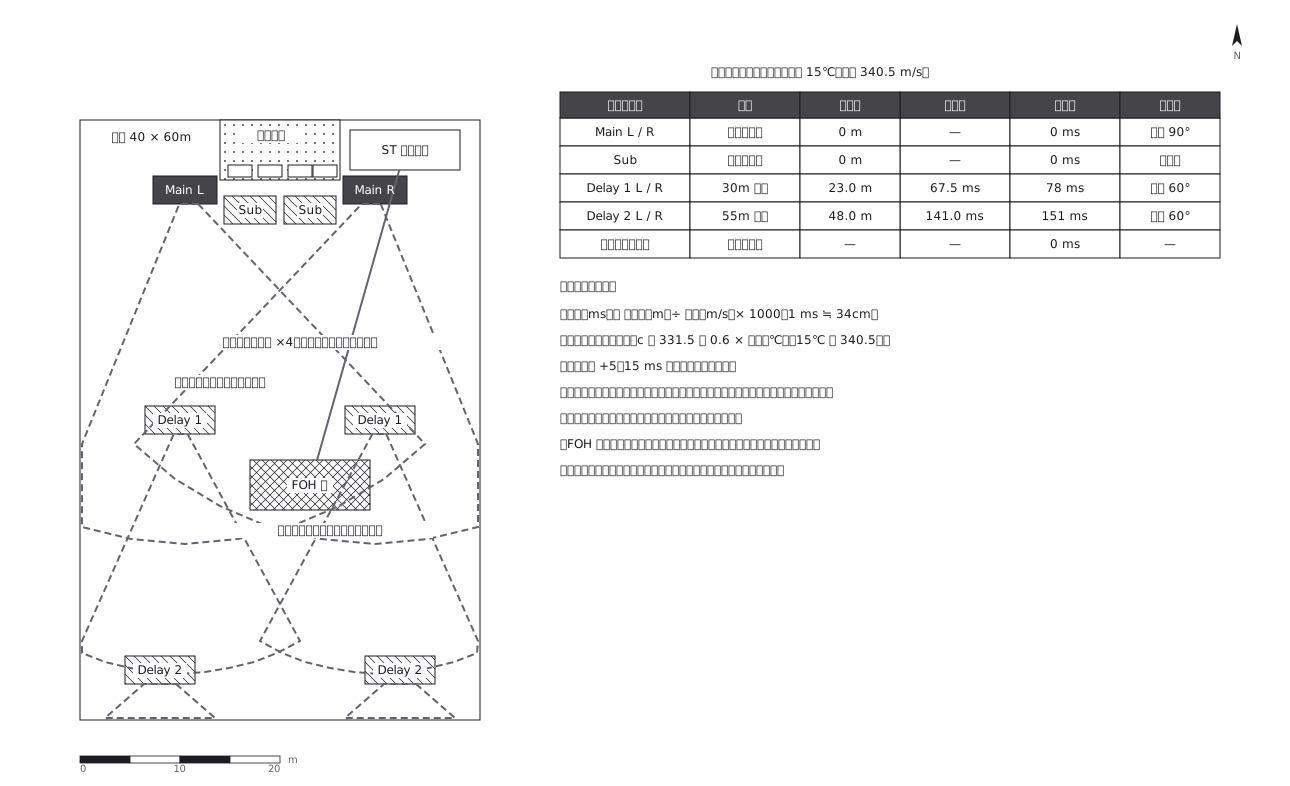 PA layout, where distance turns into delay