Events and games
39 drawings in Events and games, each generated from a single YAML file.
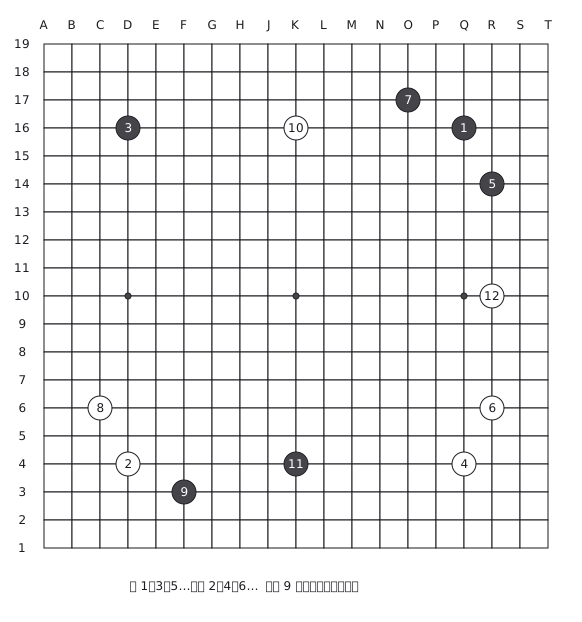 A game record on a 19-line go board where each stone carries the number of the move, showing the shape of the opening
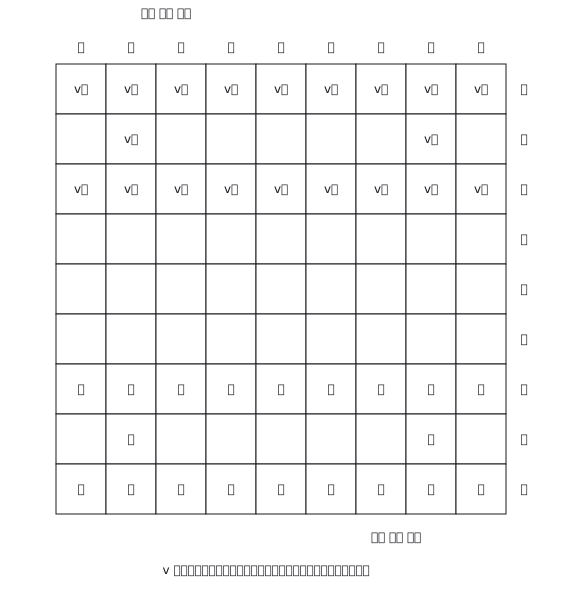 The starting position of shogi on a nine by nine board, the two sides told apart by which way the pieces point
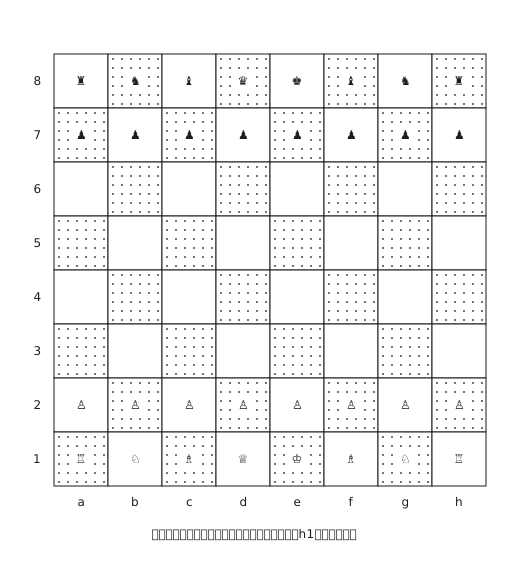 The starting position of chess on an eight by eight board, with the file and rank coordinates marked
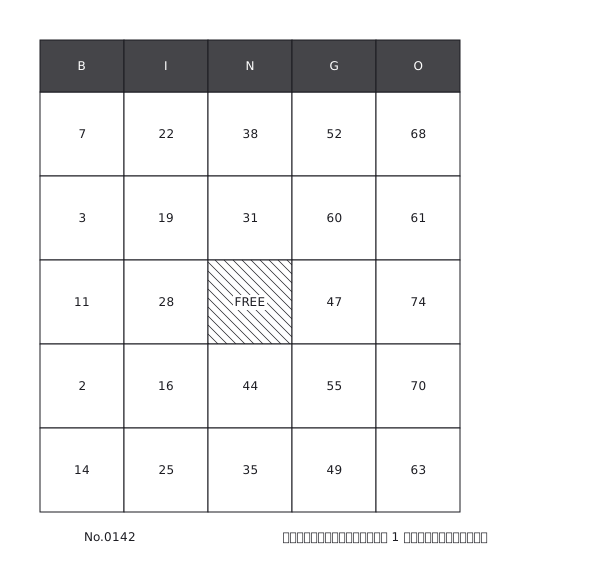 A bingo card, five by five with a free centre, where each column draws from its own range of numbers
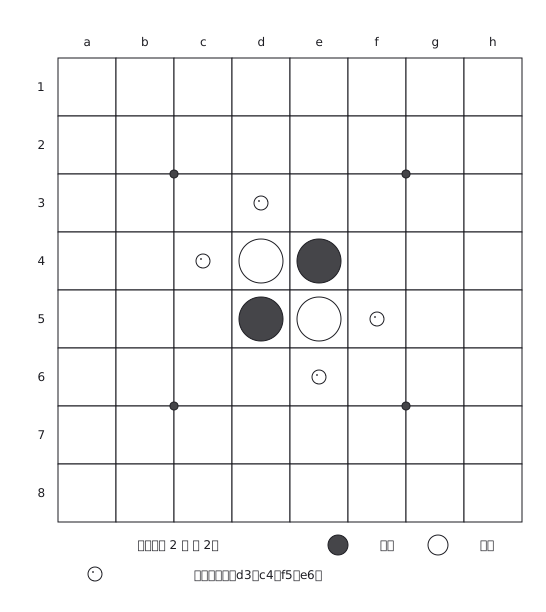 The opening position of reversi: four stones in the centre four squares, black and white alternating
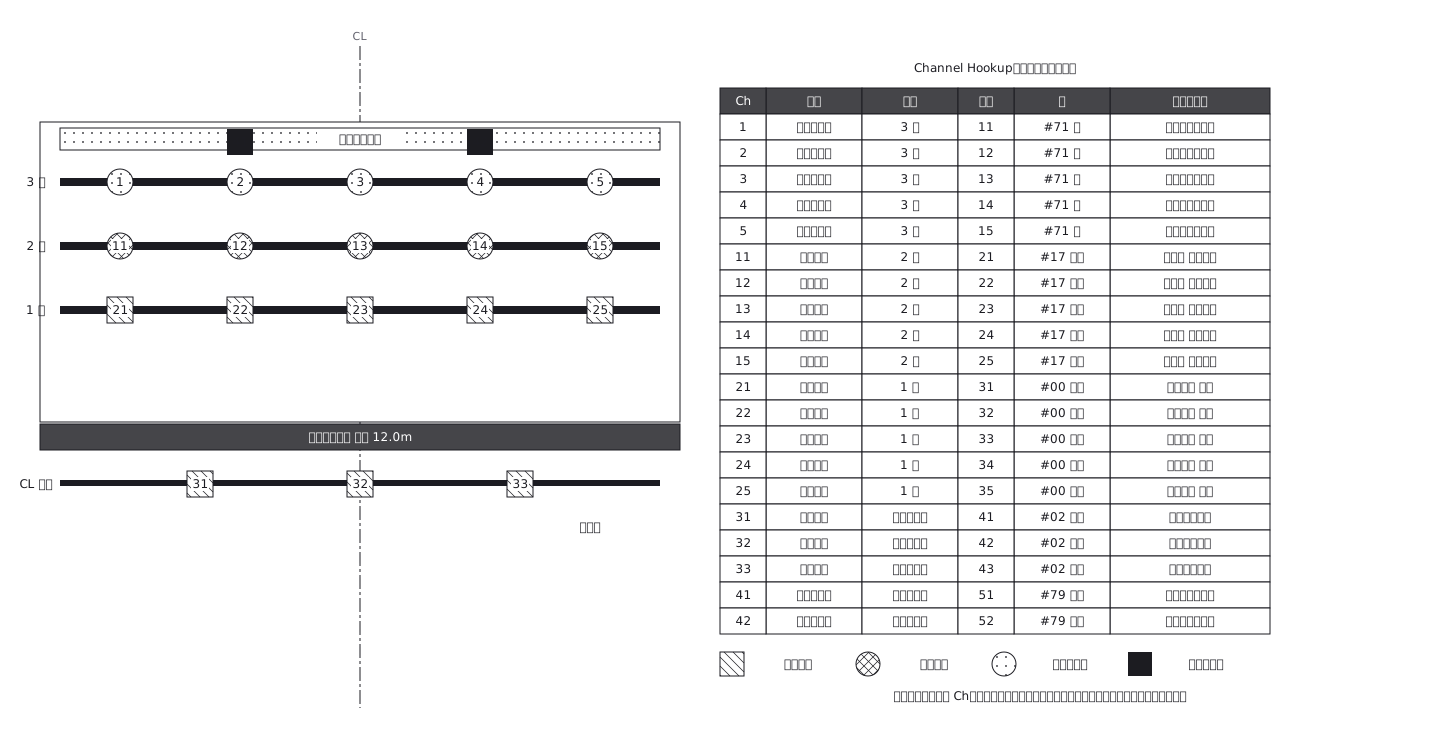 Theatrical lighting plot, with the channel schedule
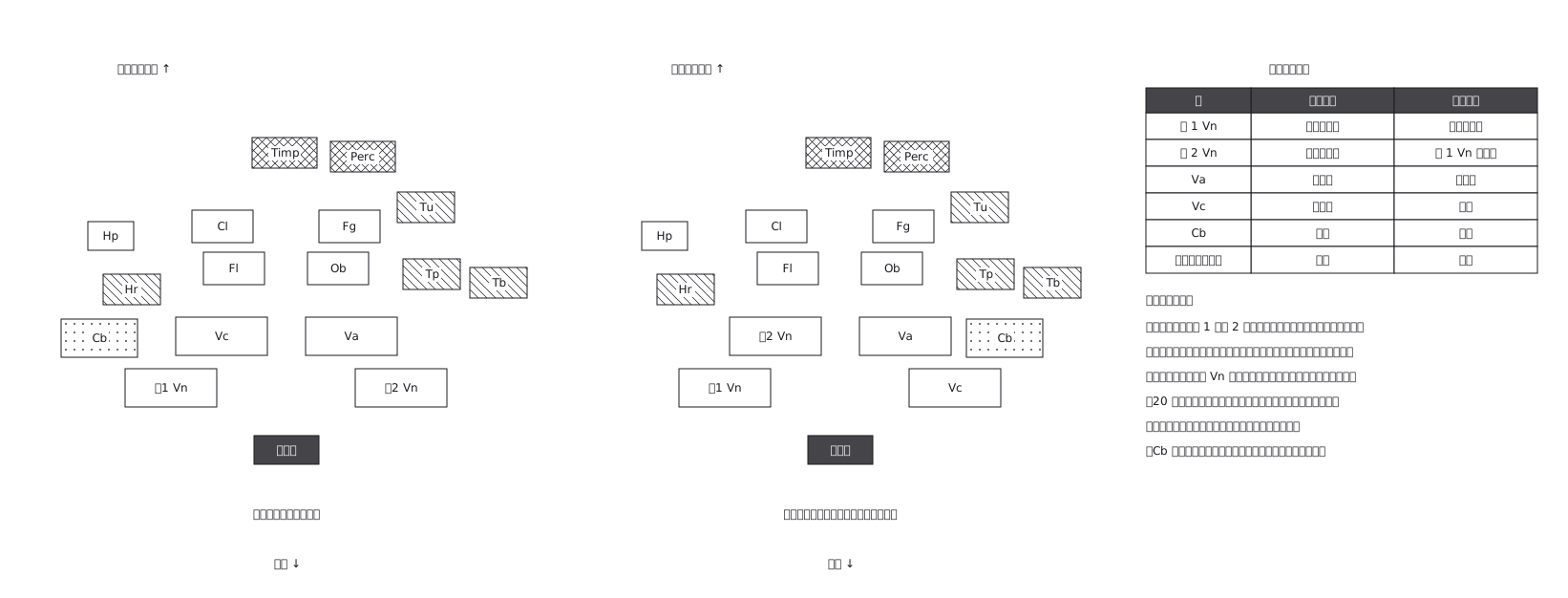 Orchestra seating, two traditions side by side
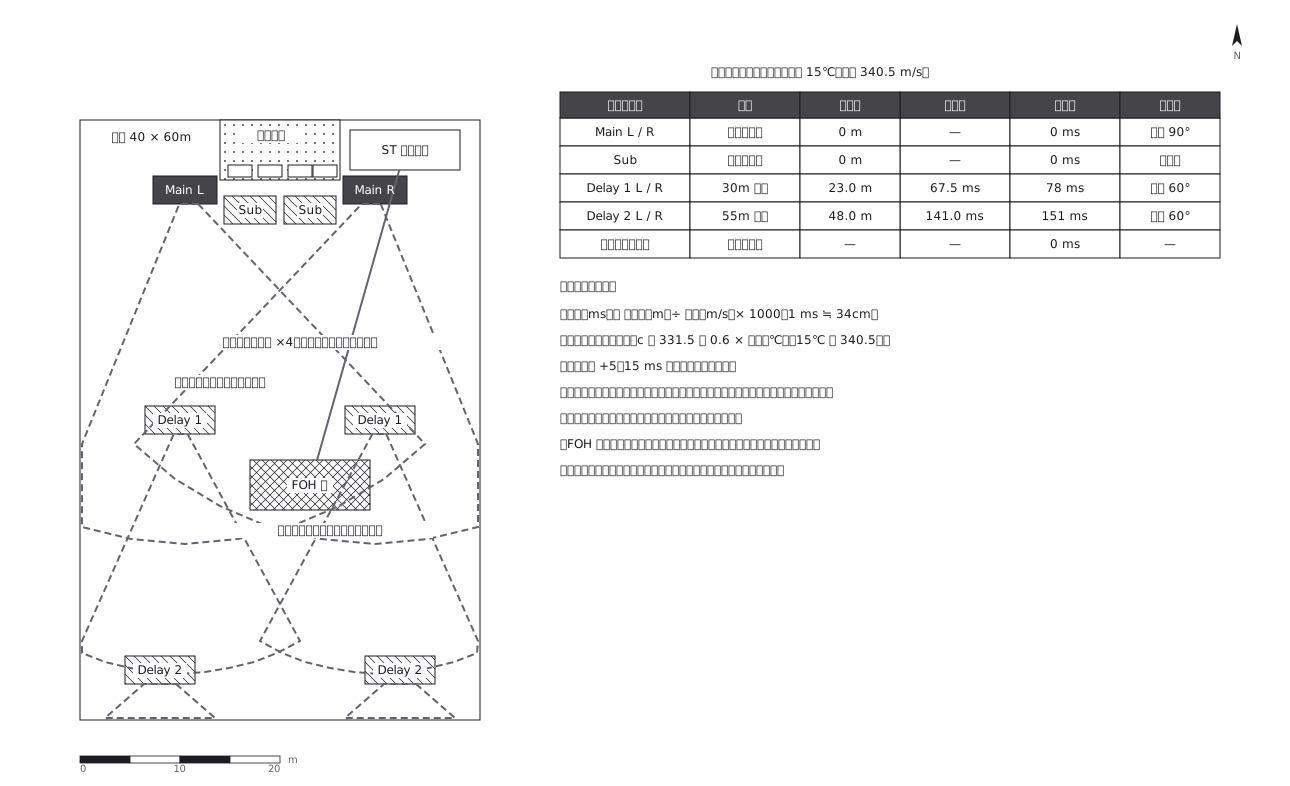 PA layout, where distance turns into delay
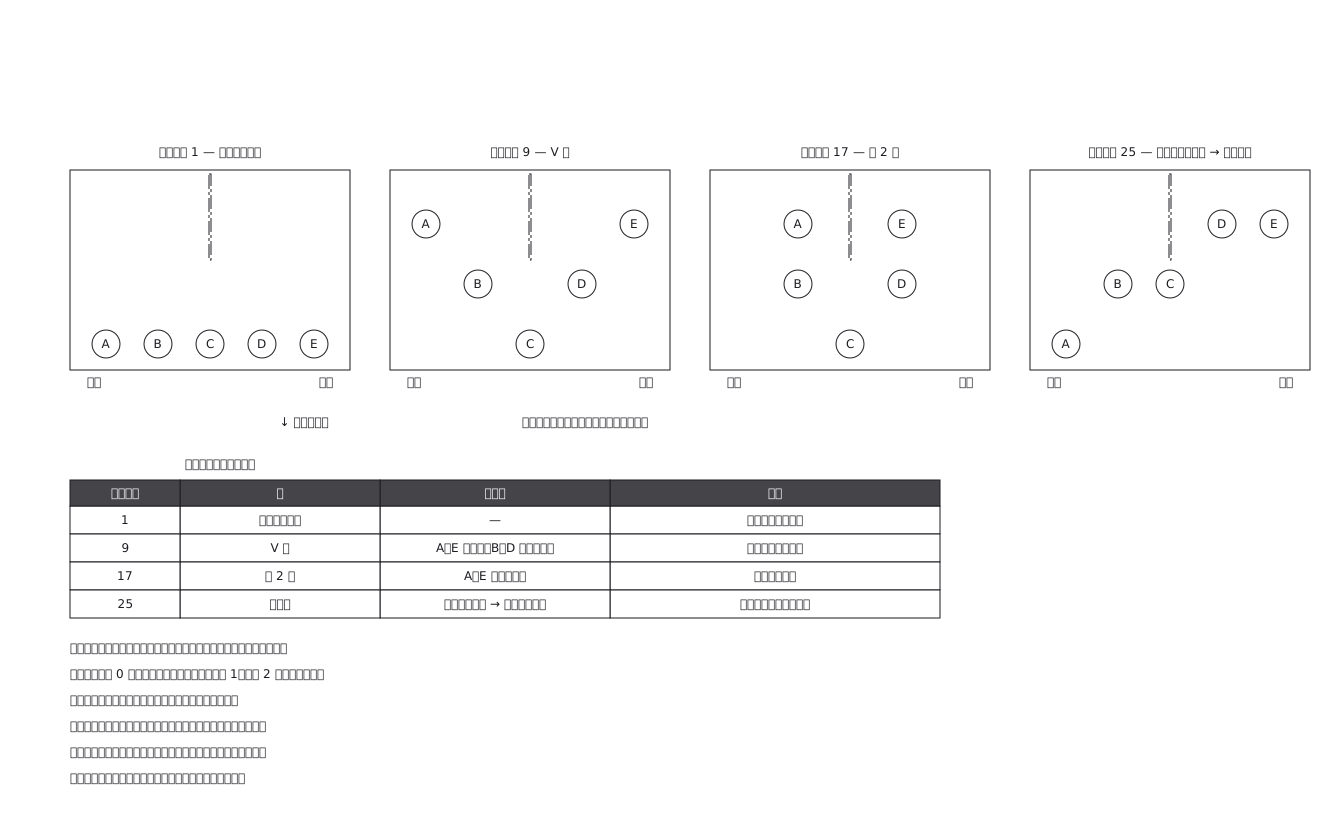 Dance formations: the diagonal reads strongest
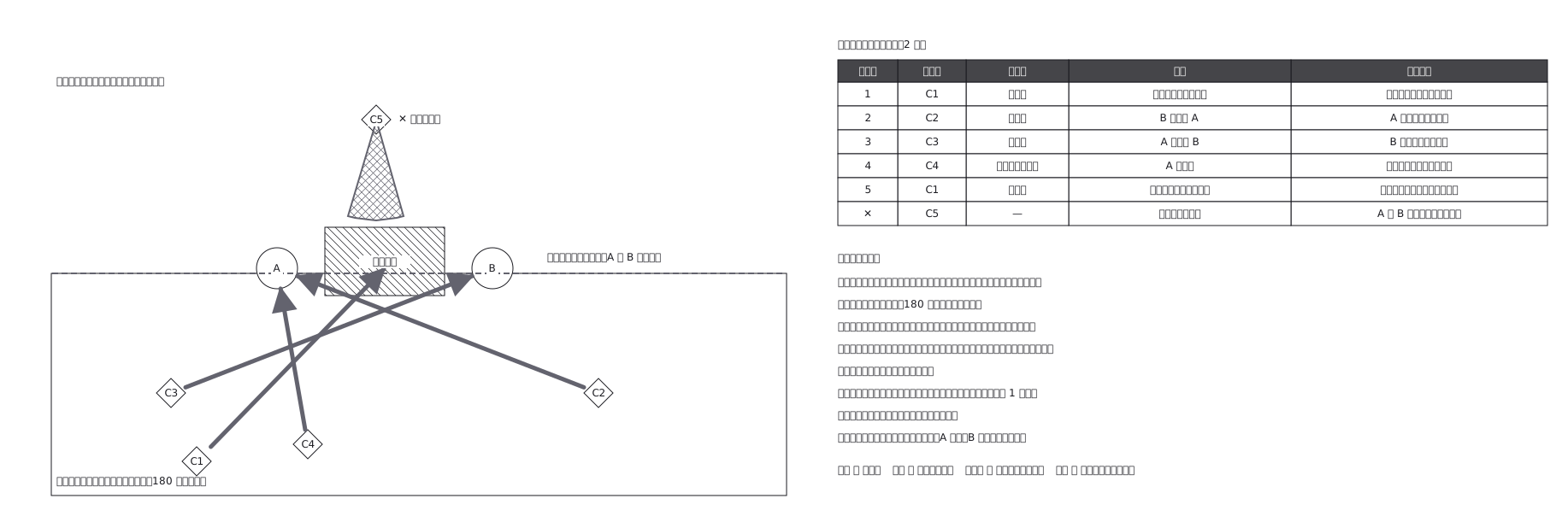 Camera plan: cross the line and left becomes right
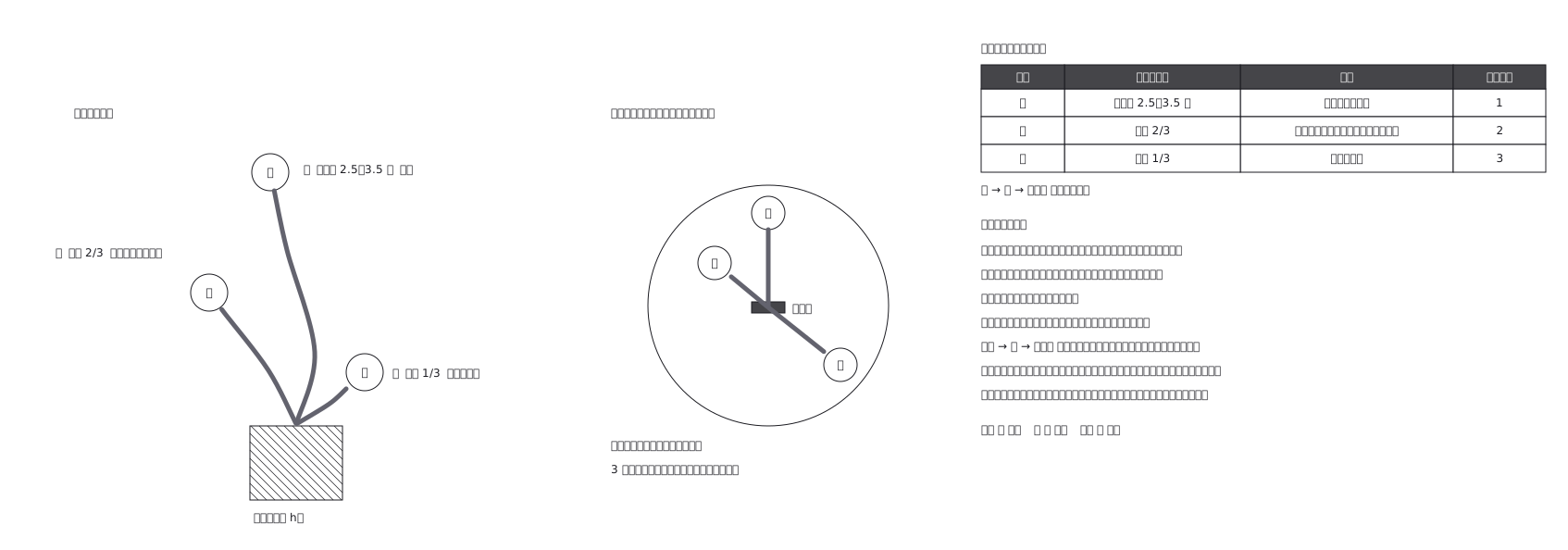 The three main stems of a formal ikebana arrangement, set by the ratio of their lengths and the angle each one leaves at
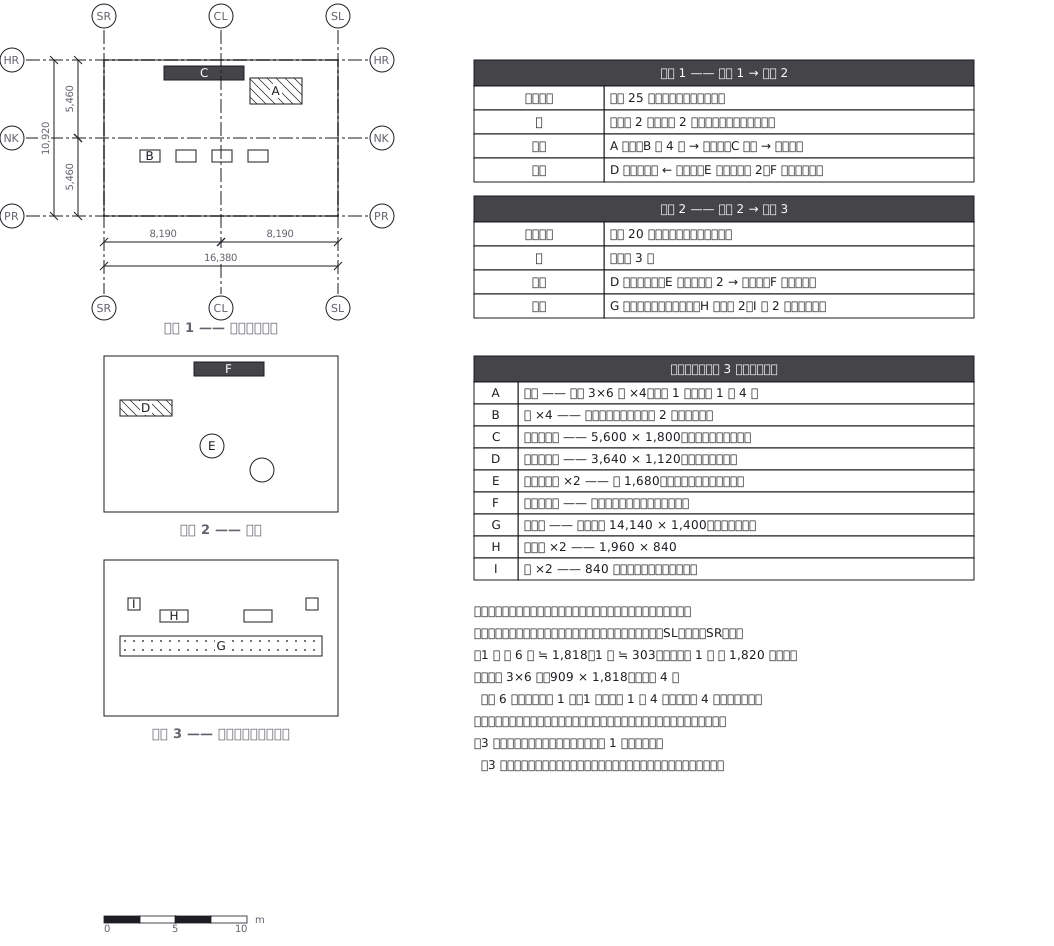 Scene change plot: what happens between the pictures
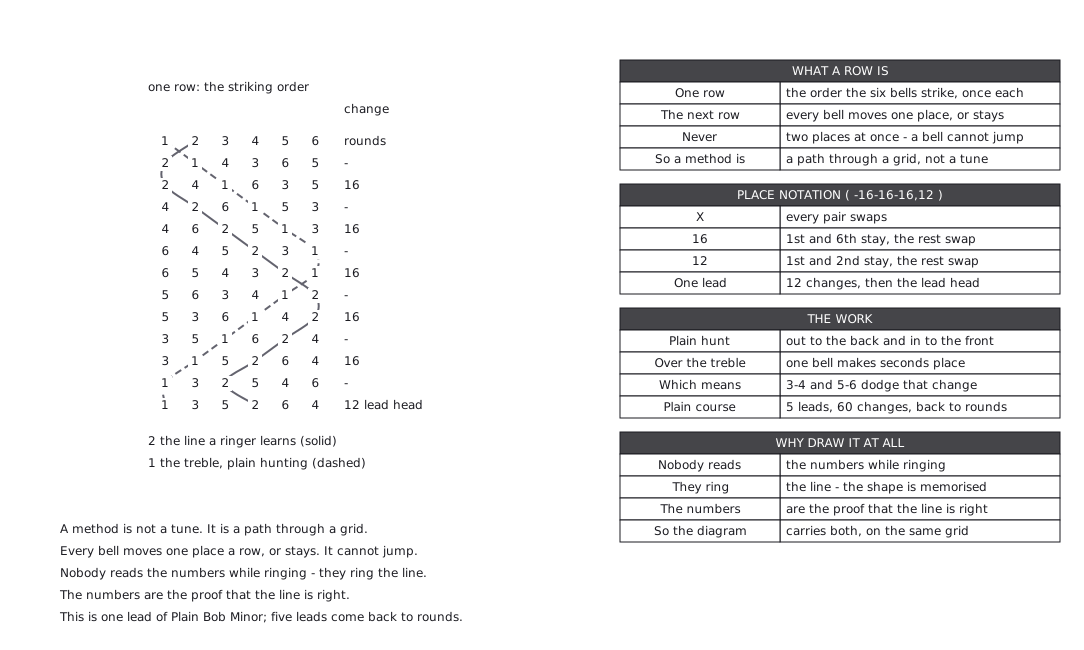 A method is not a tune - it is a path through a grid
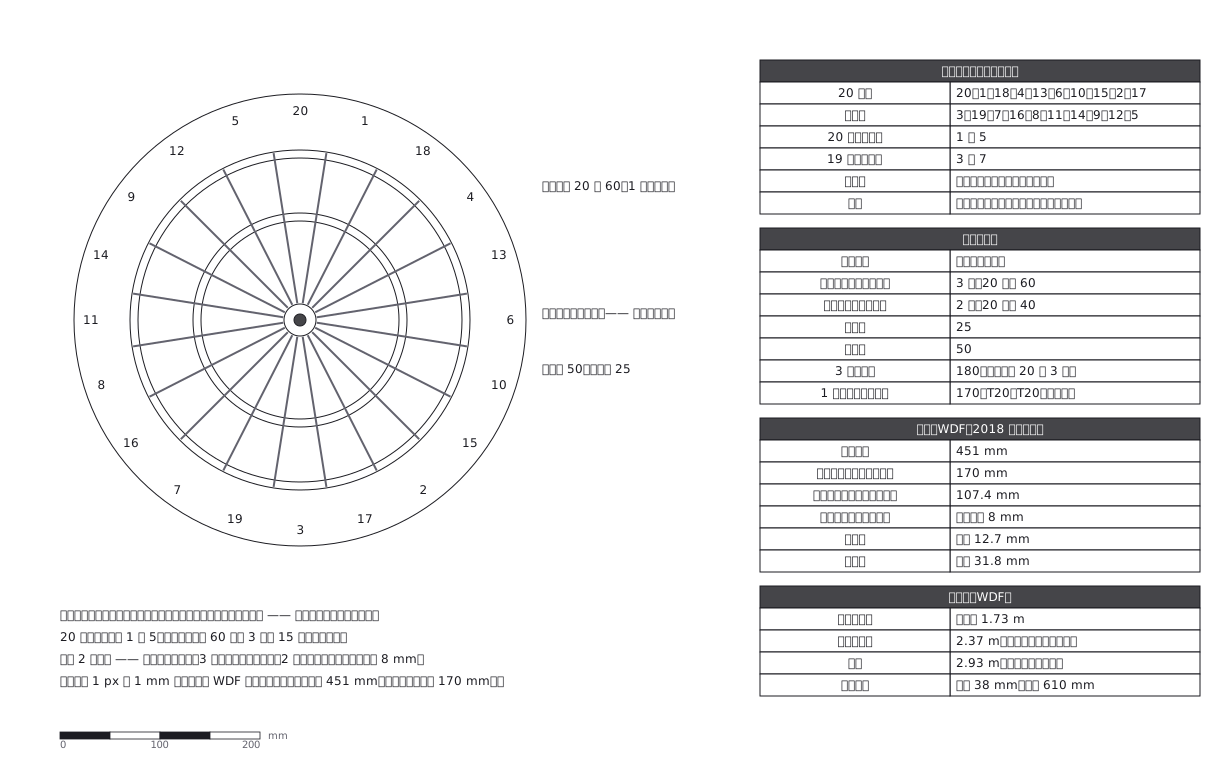 A dartboard: the numbers are arranged to punish a miss
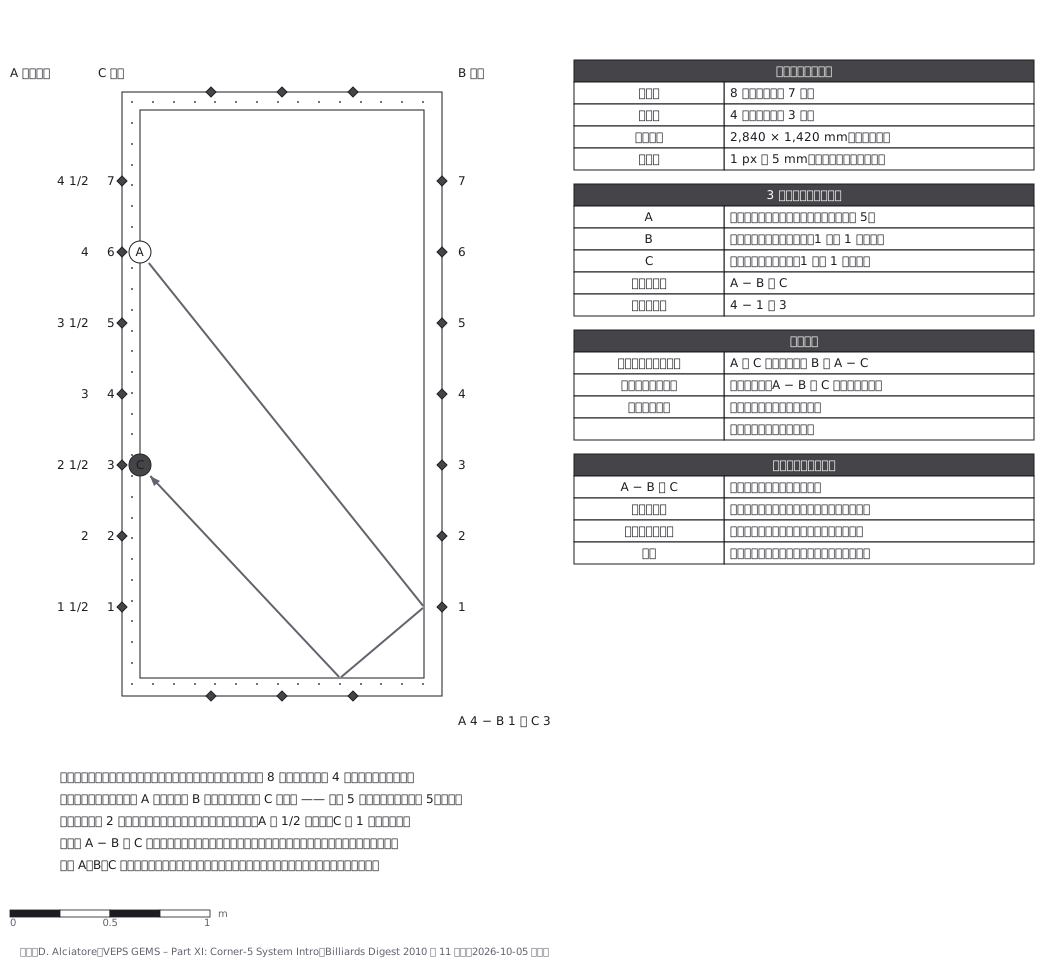 Billiards: the diamonds on the rails are a ruler, not decoration
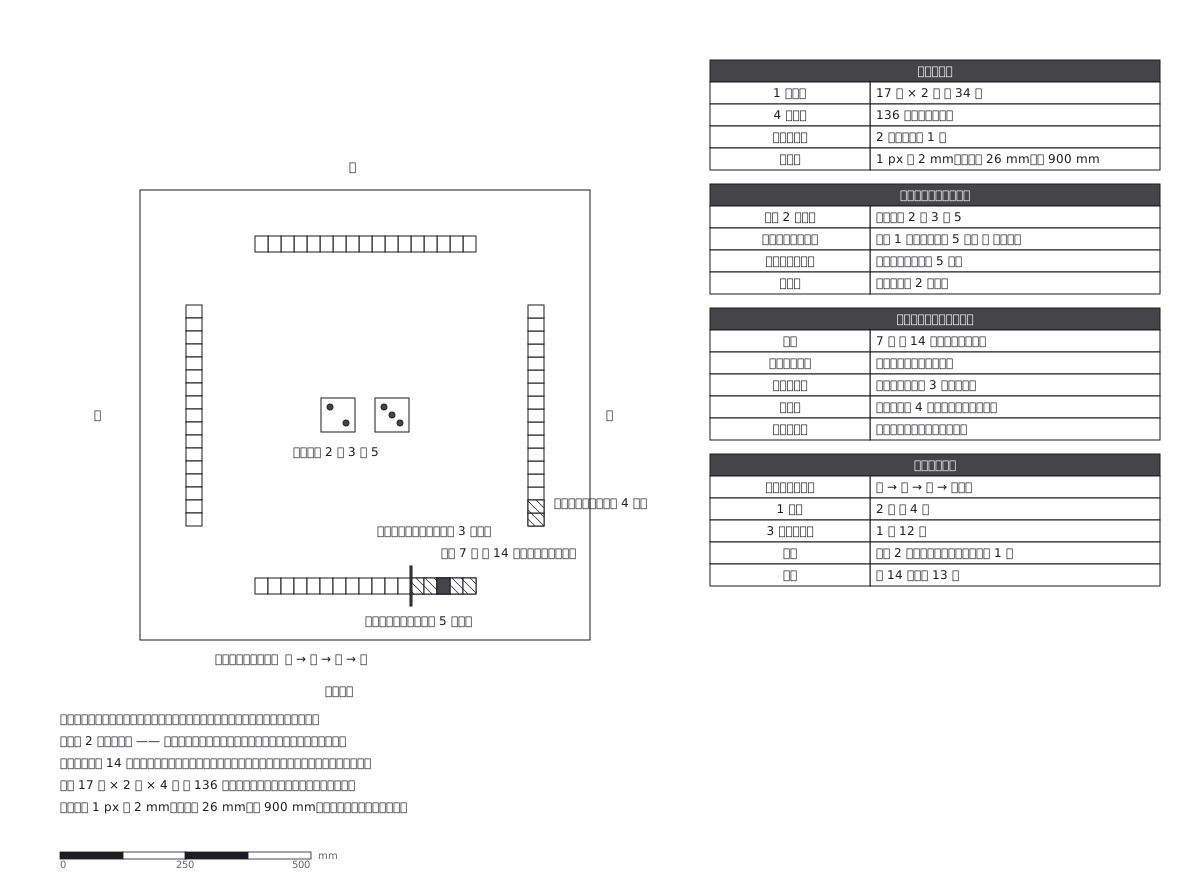 Mahjong: the dice decide where the wall is opened, not luck
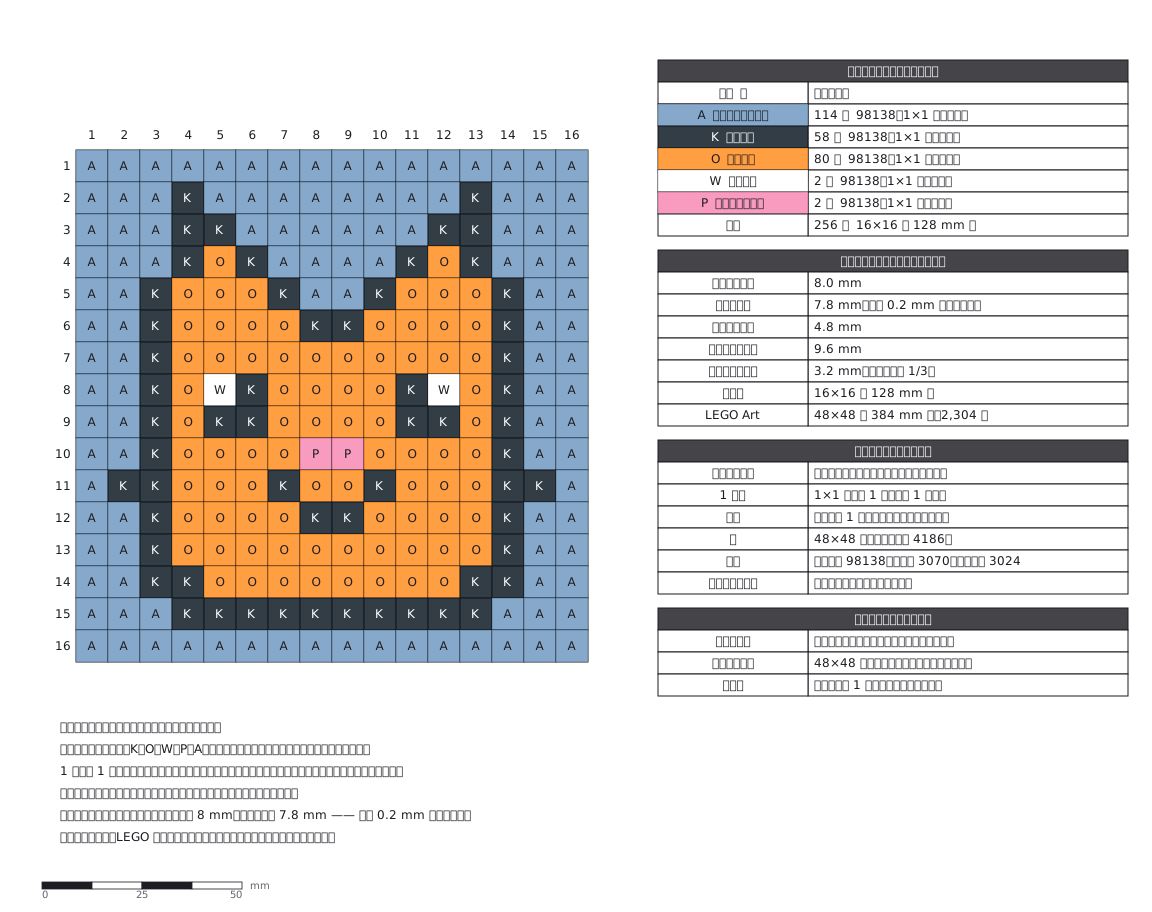 A brick mosaic chart: the colour IS the instruction, so every cell also carries a code
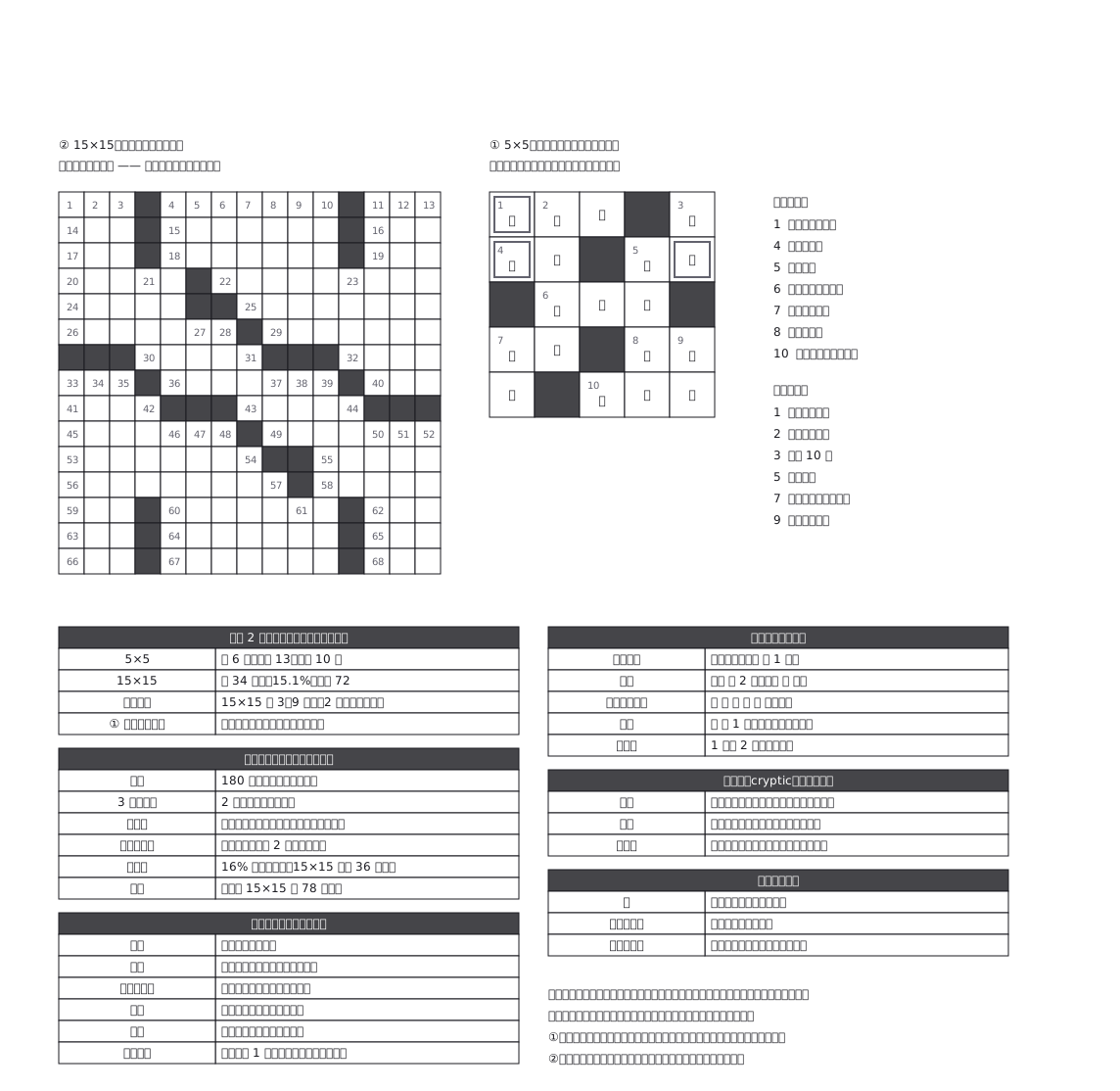 A crossword is a grid before it is words: the black squares decide the lengths
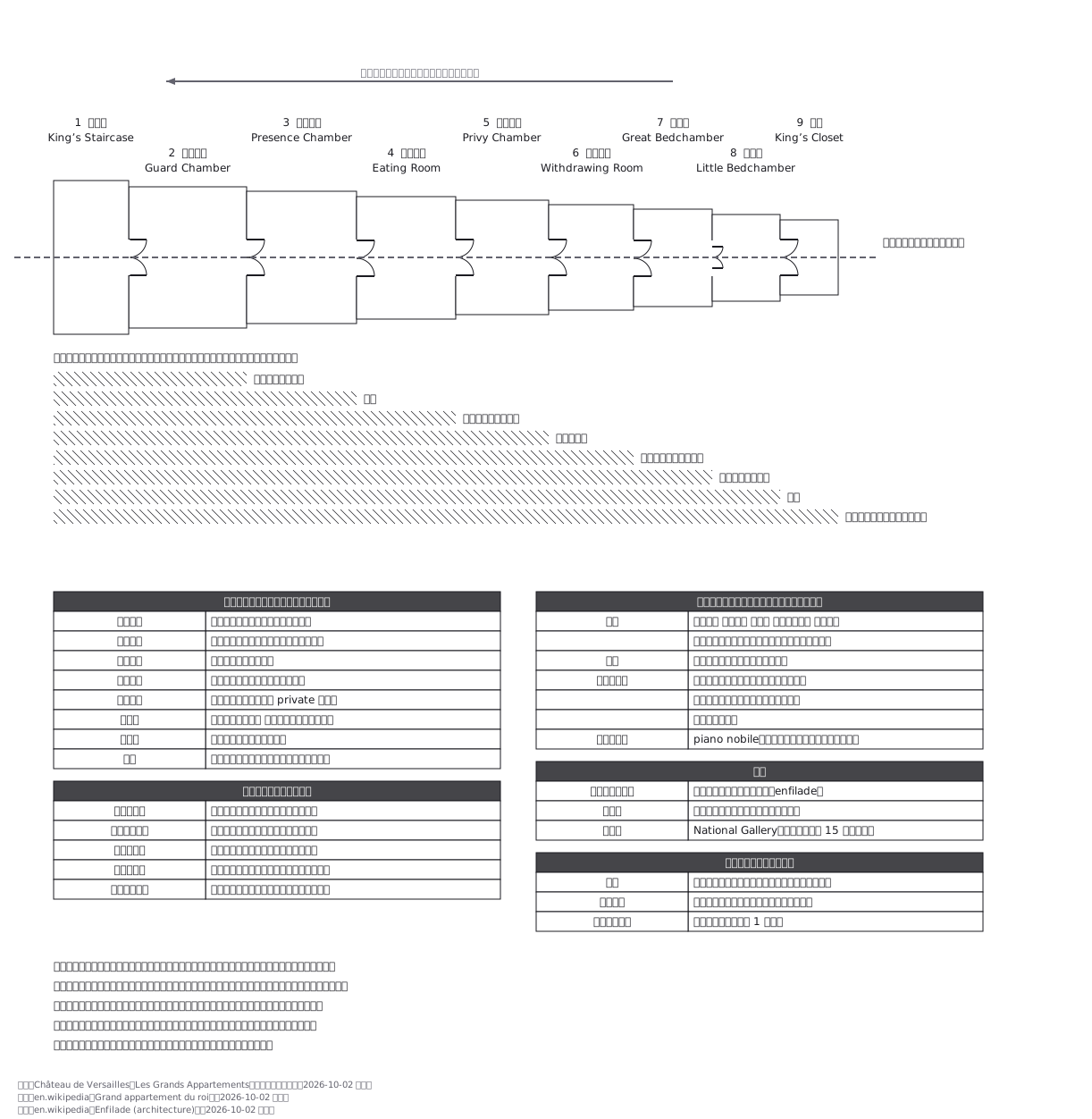 A palace enfilade: how far down the rooms you are taken IS your rank
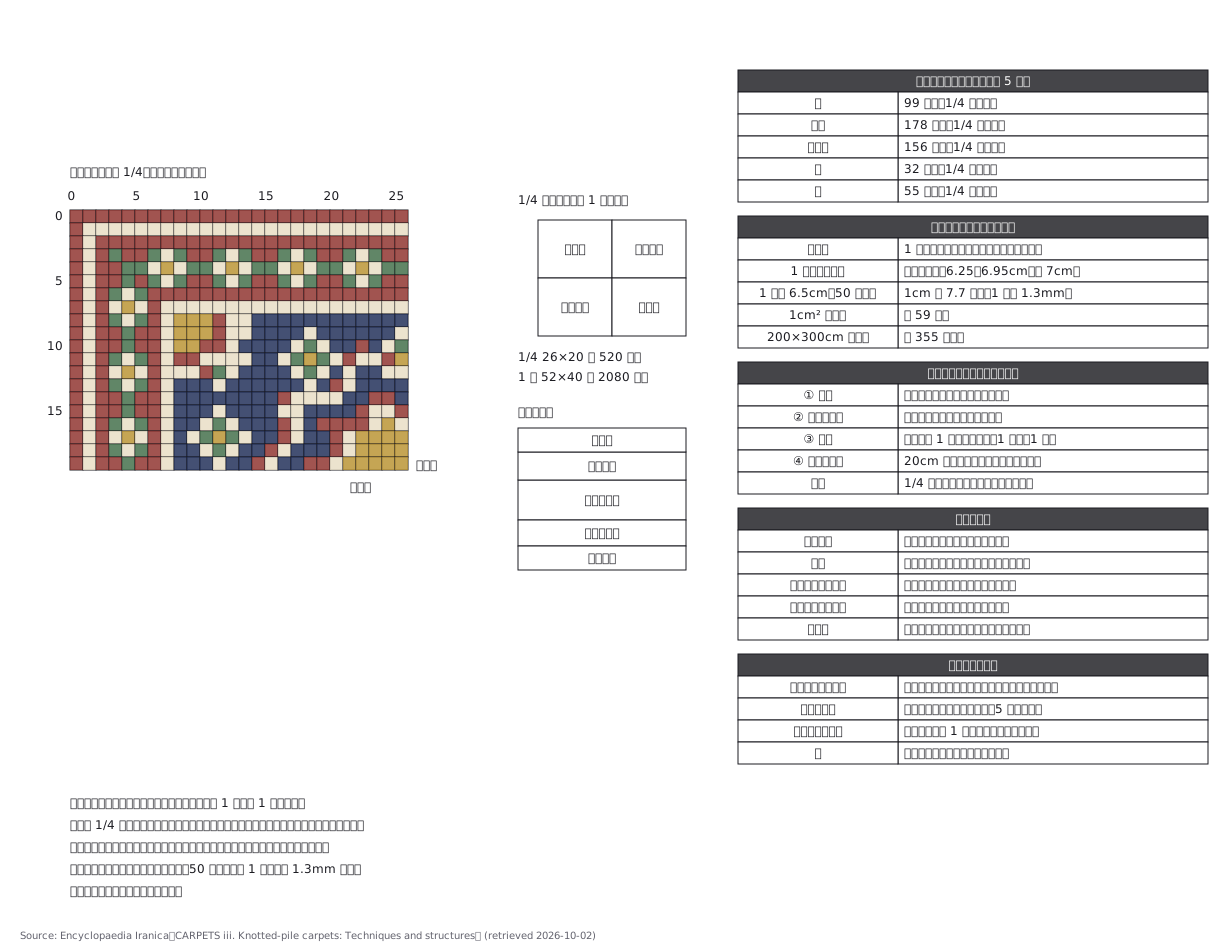 A Persian rug cartoon: one square is one knot, and only a quarter is drawn
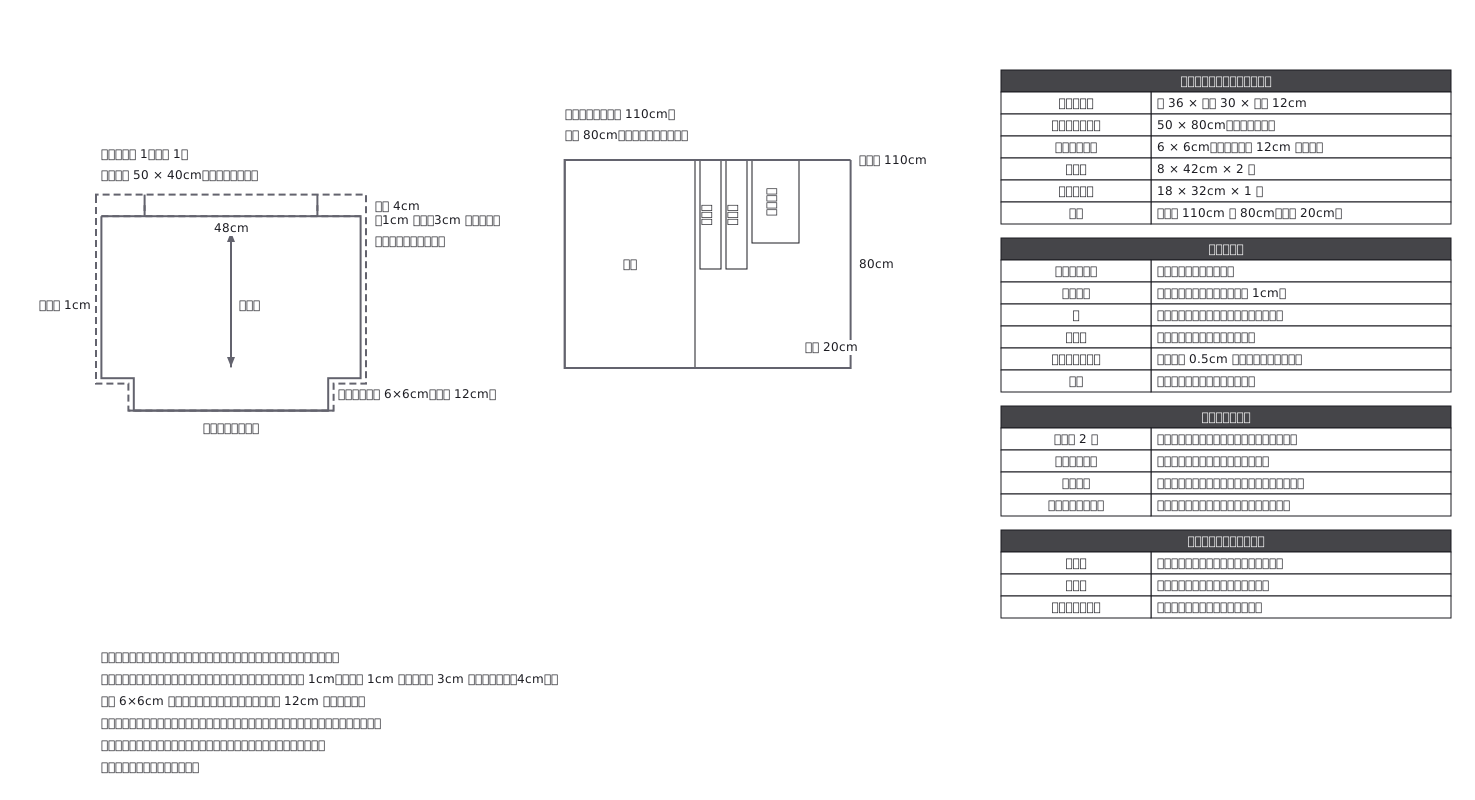 A bag pattern: half of it is drawn, and the yardage falls out of the layout
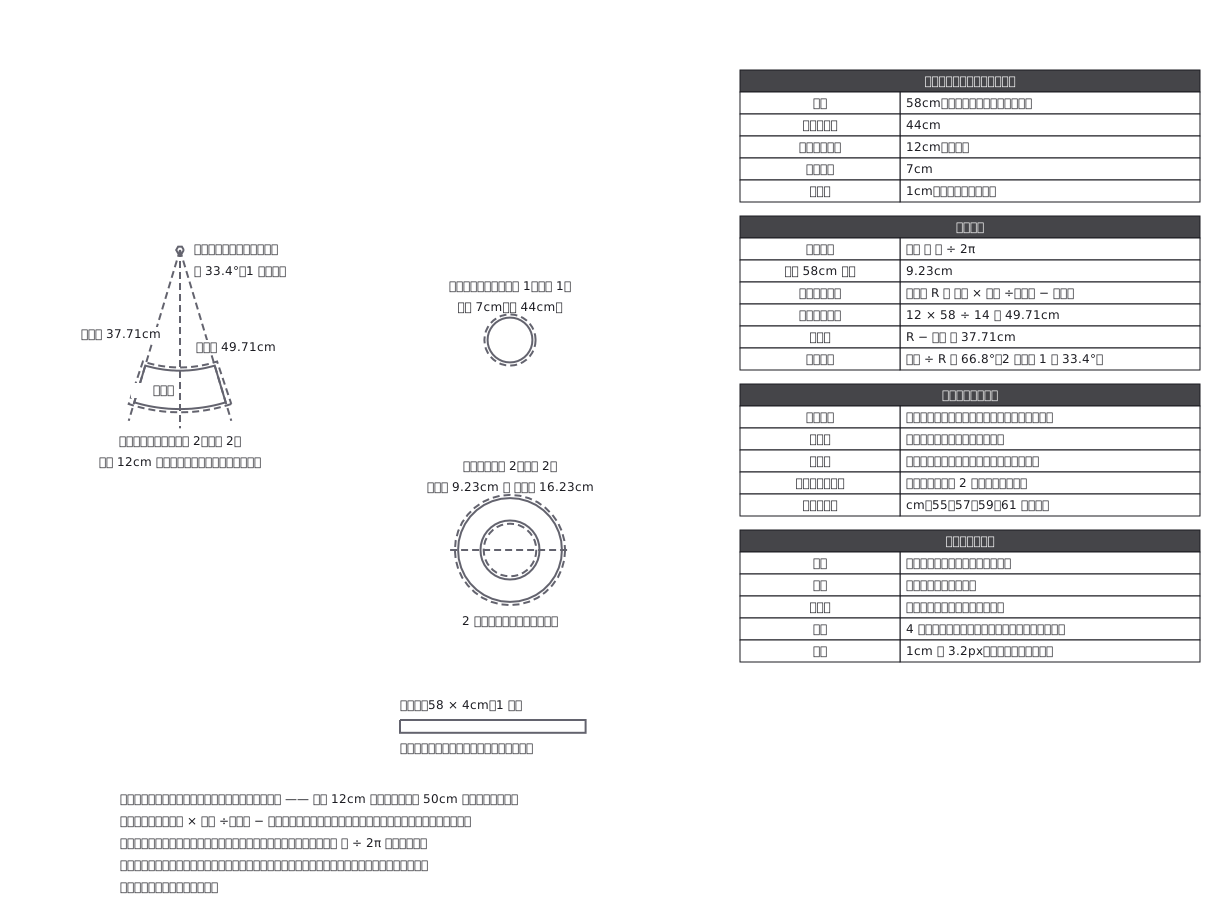 A hat pattern: a 12cm side wall unrolls into a fan of 50cm radius
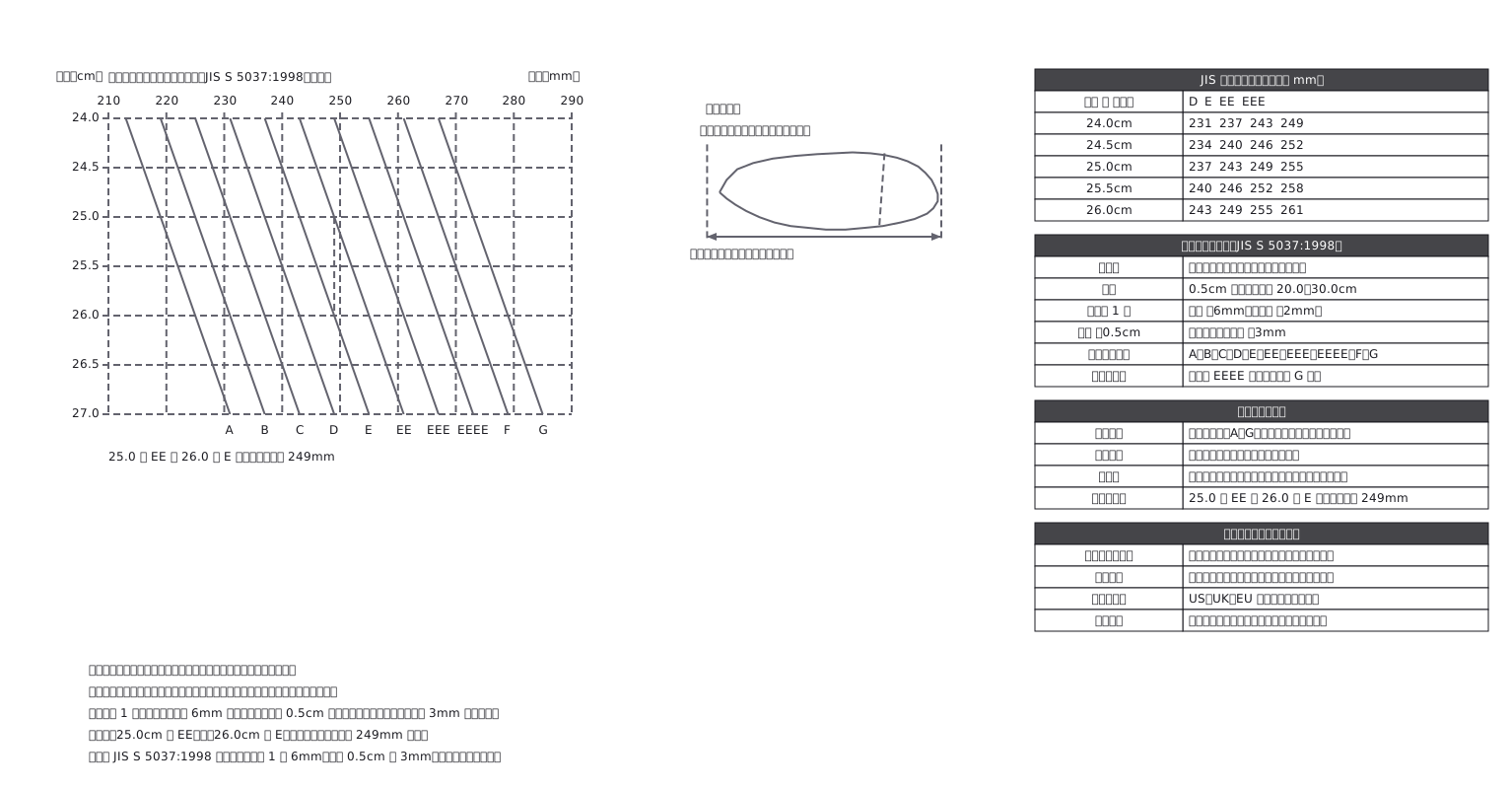 Shoe sizing as a nomogram: 25.0 EE and 26.0 E are the same girth
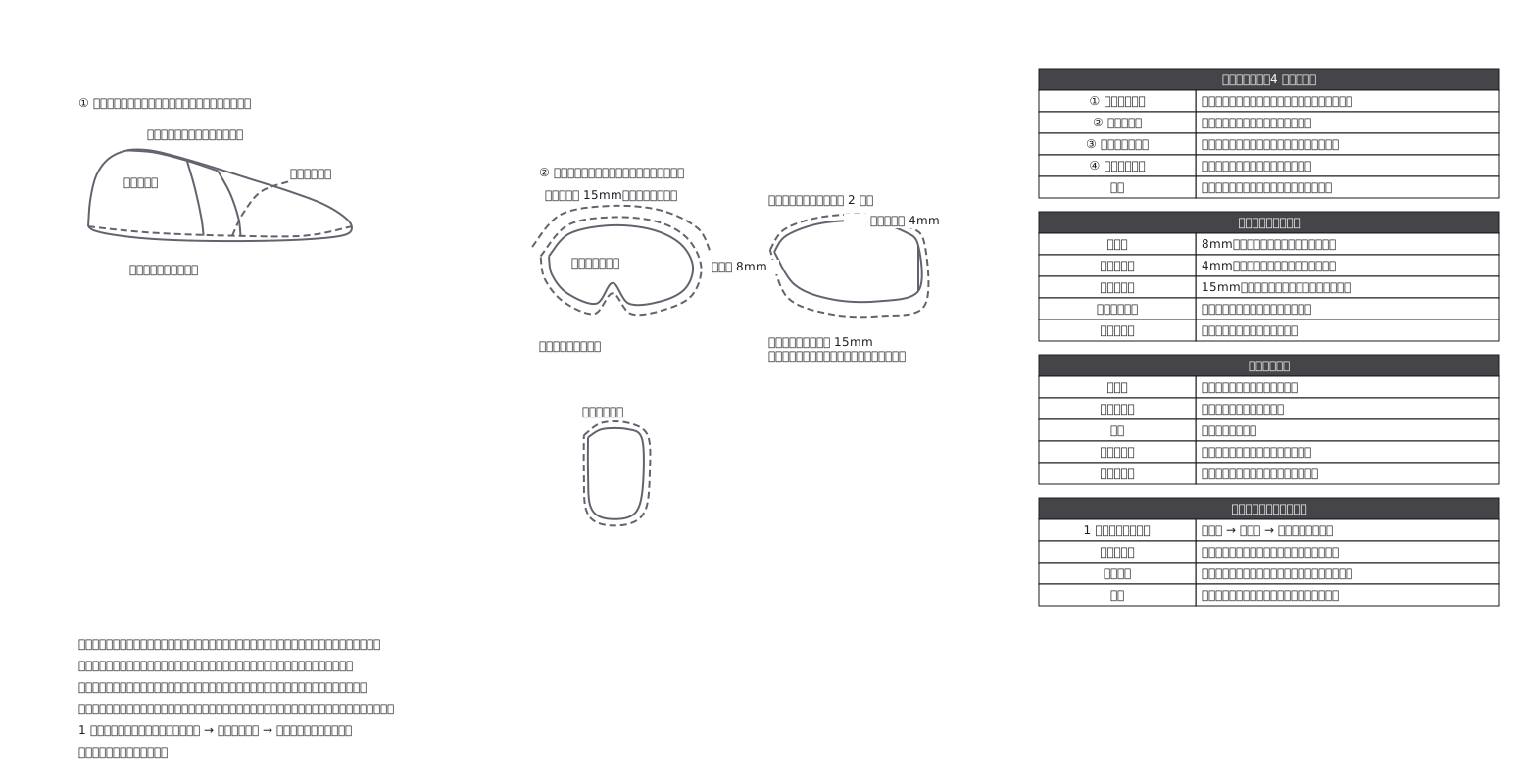 A shoe pattern comes off the last: tape it, draw on it, peel it flat
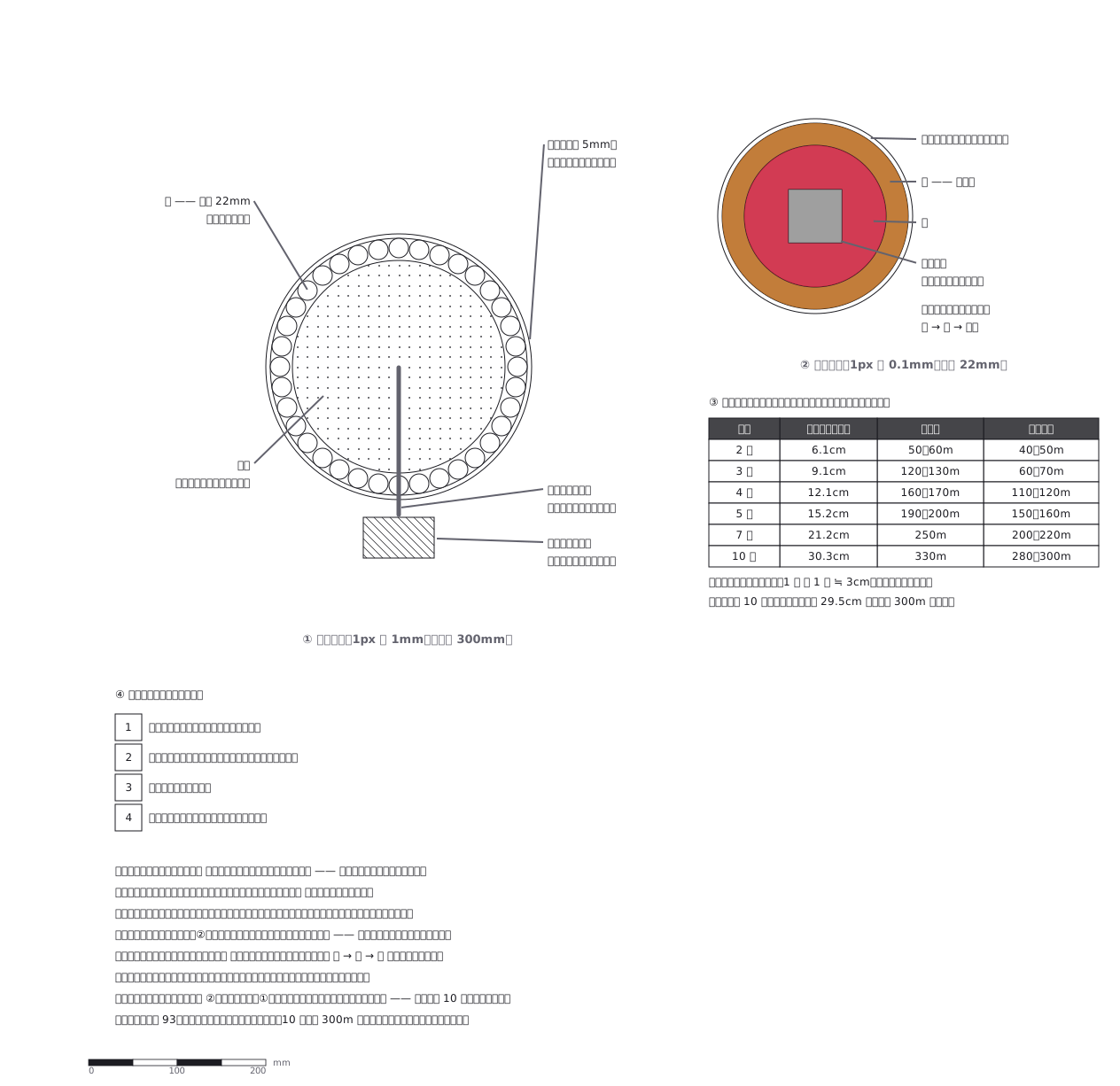 Aerial shell in section: the stars keep their relative positions as they fly, so how they are packed is the shape you see
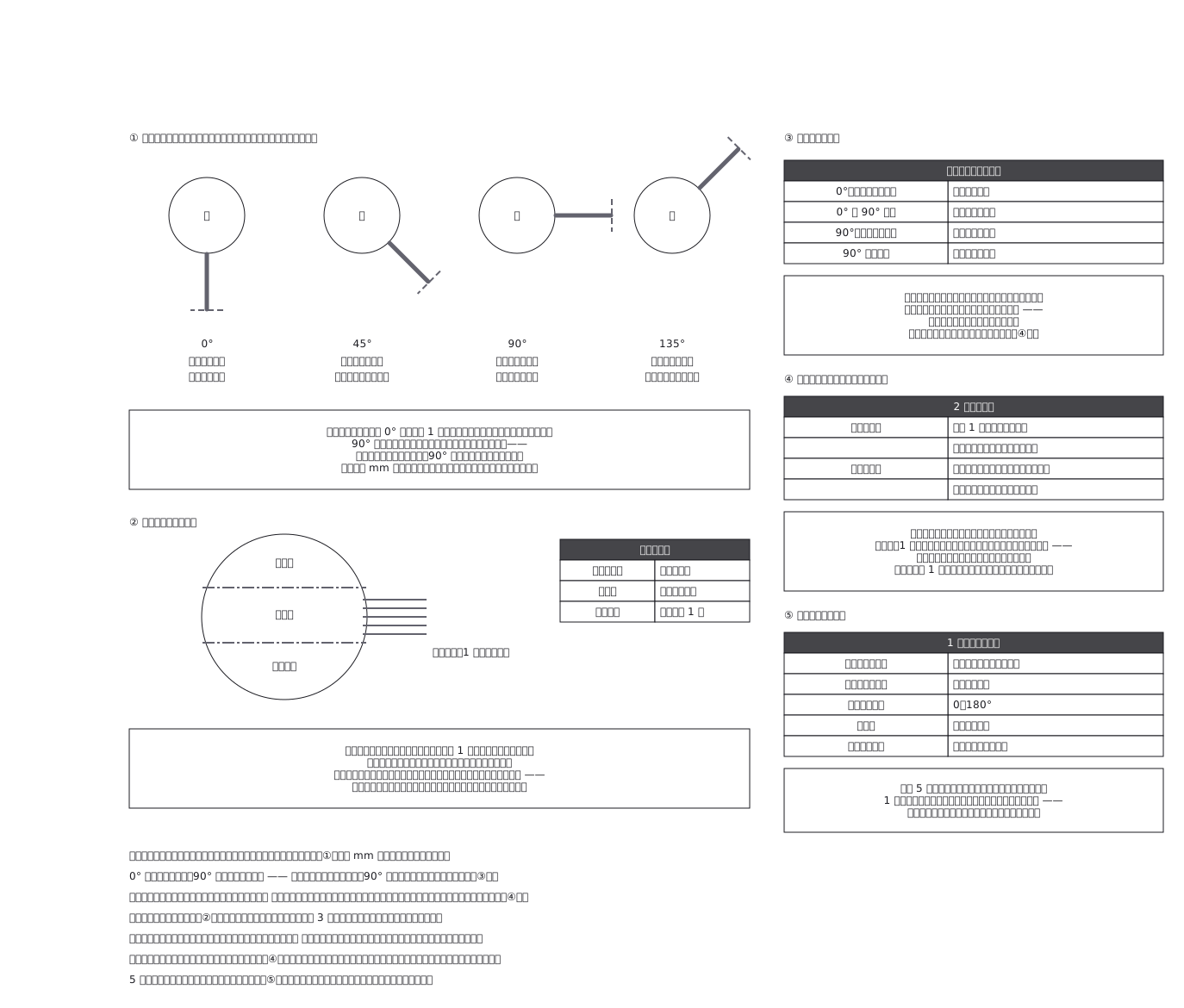 A haircut diagram records the angle the hair was held at, not the millimetres taken off: 0 degrees gives one length, 90 degrees gives a uniform layer, and everything in between is graduation
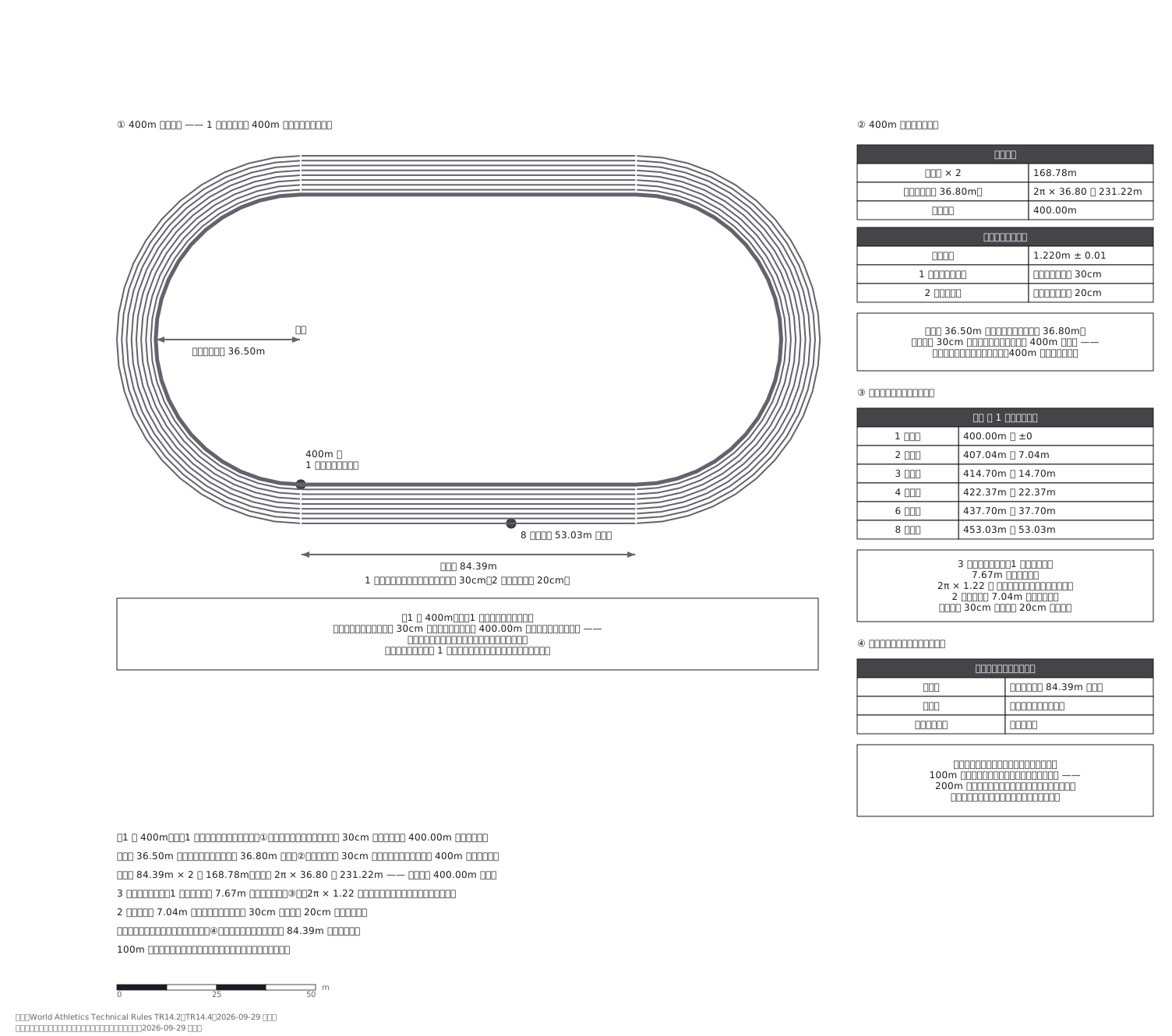 Only lane one is 400m, and it is measured 30cm inside the kerb line; every lane outside it is longer by the circumference of one lane width, which is why the staggered starts exist at all
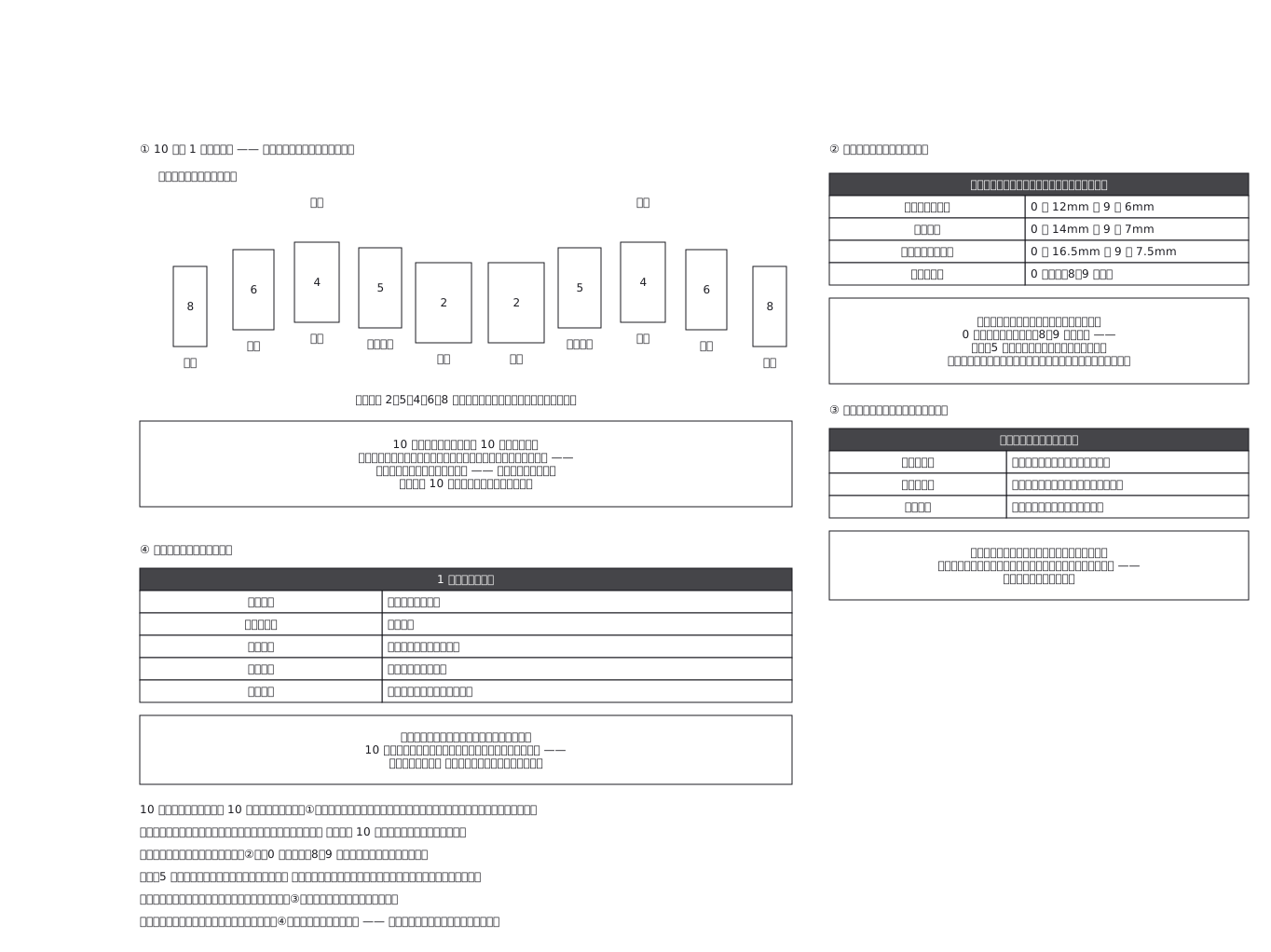 Ten nails are not ten copies of one design: a little finger is 6-7mm across where a thumb is 12-16mm, so the same motif simply does not fit, and tip numbers run backwards — the smaller the number, the wider the nail
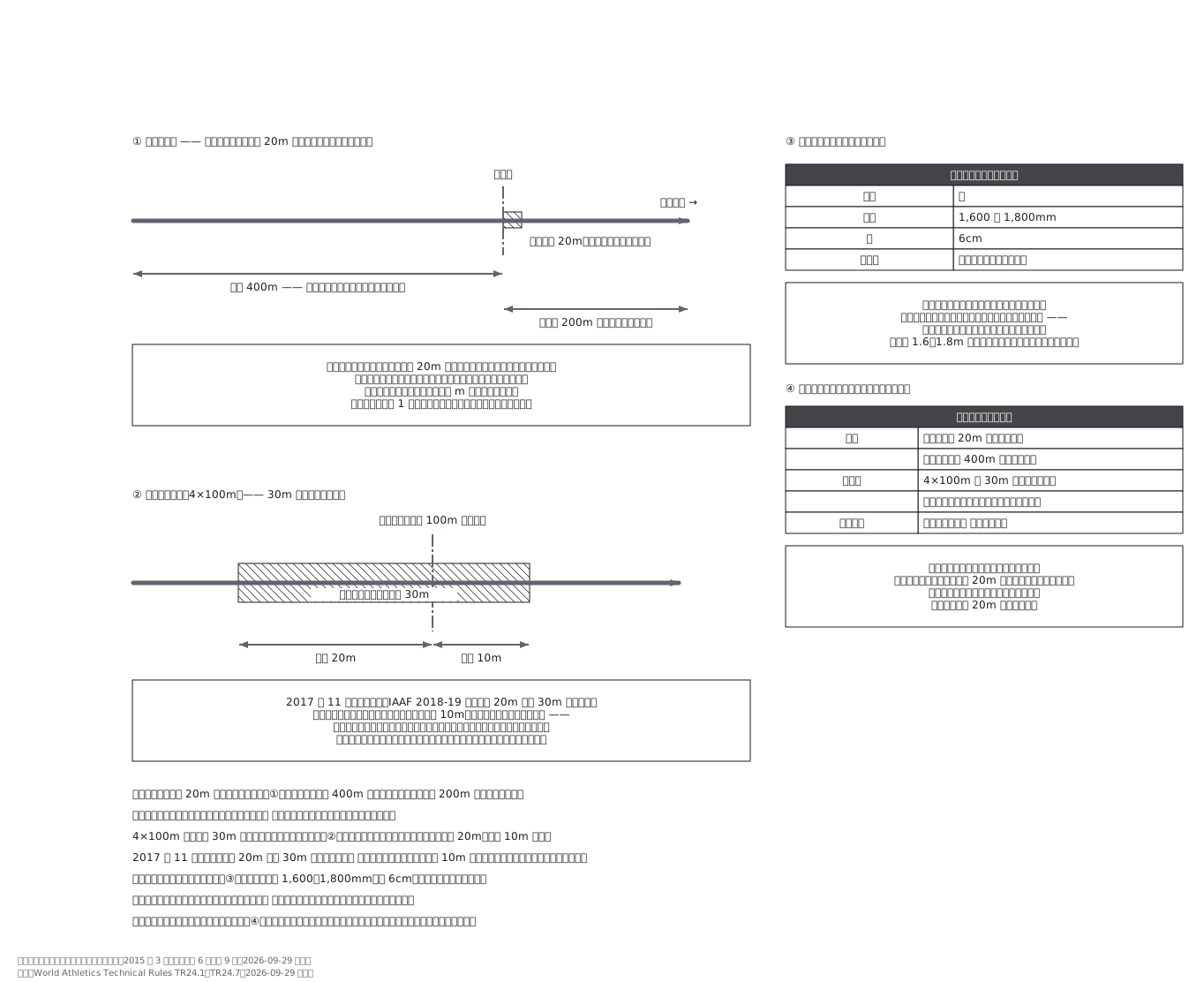 Two kinds of handover measured in opposite ways: ekiden fixes a single line and allows hundreds of metres around it to prepare, while a relay fixes a 30m zone and disqualifies anything outside it
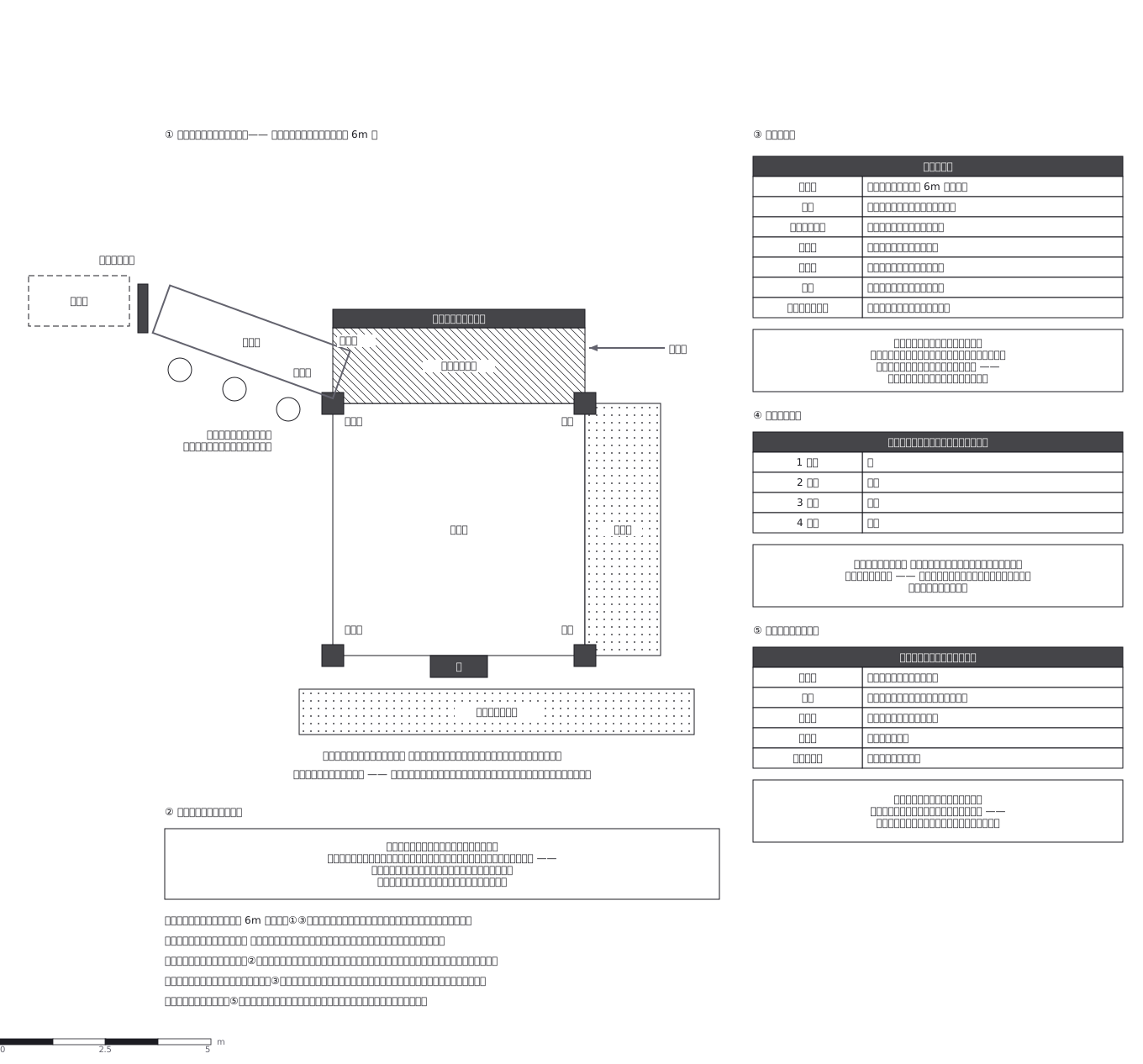 Which way the floorboards run is what separates one area from another: the chorus sits where the boards run lengthwise like the main stage, the musicians where they run crosswise — and the four pillars are not decoration but the landmarks a masked actor, who can see very little, uses to know where they are standing
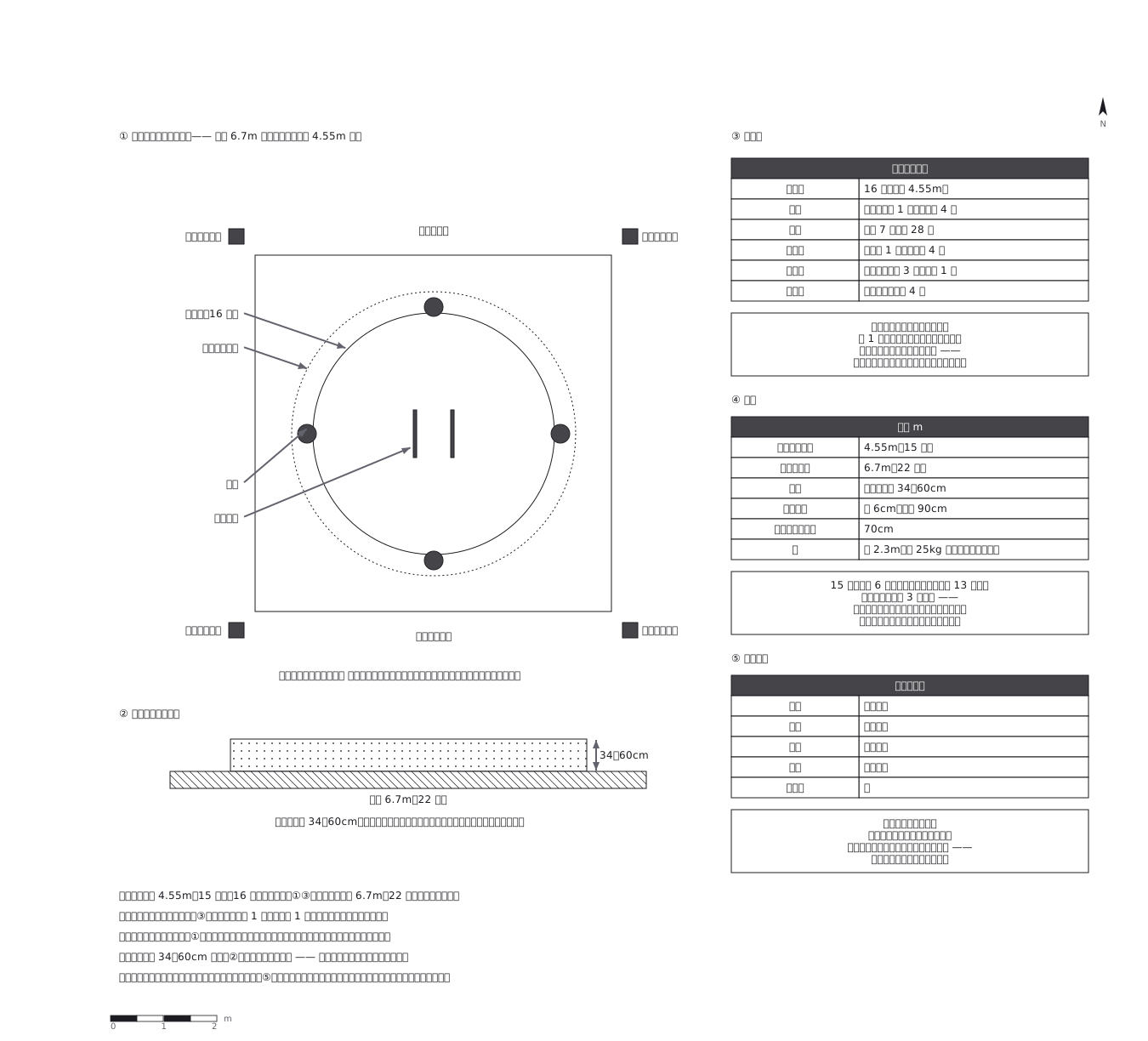 The 4.55m ring is sixteen bales plus four tokudawara set one bale-width further out, so a wrestler whose heel lands on one is still in — and the sand raked around the outside is not decoration but the instrument of judgement, since a foot that left the ring leaves a print
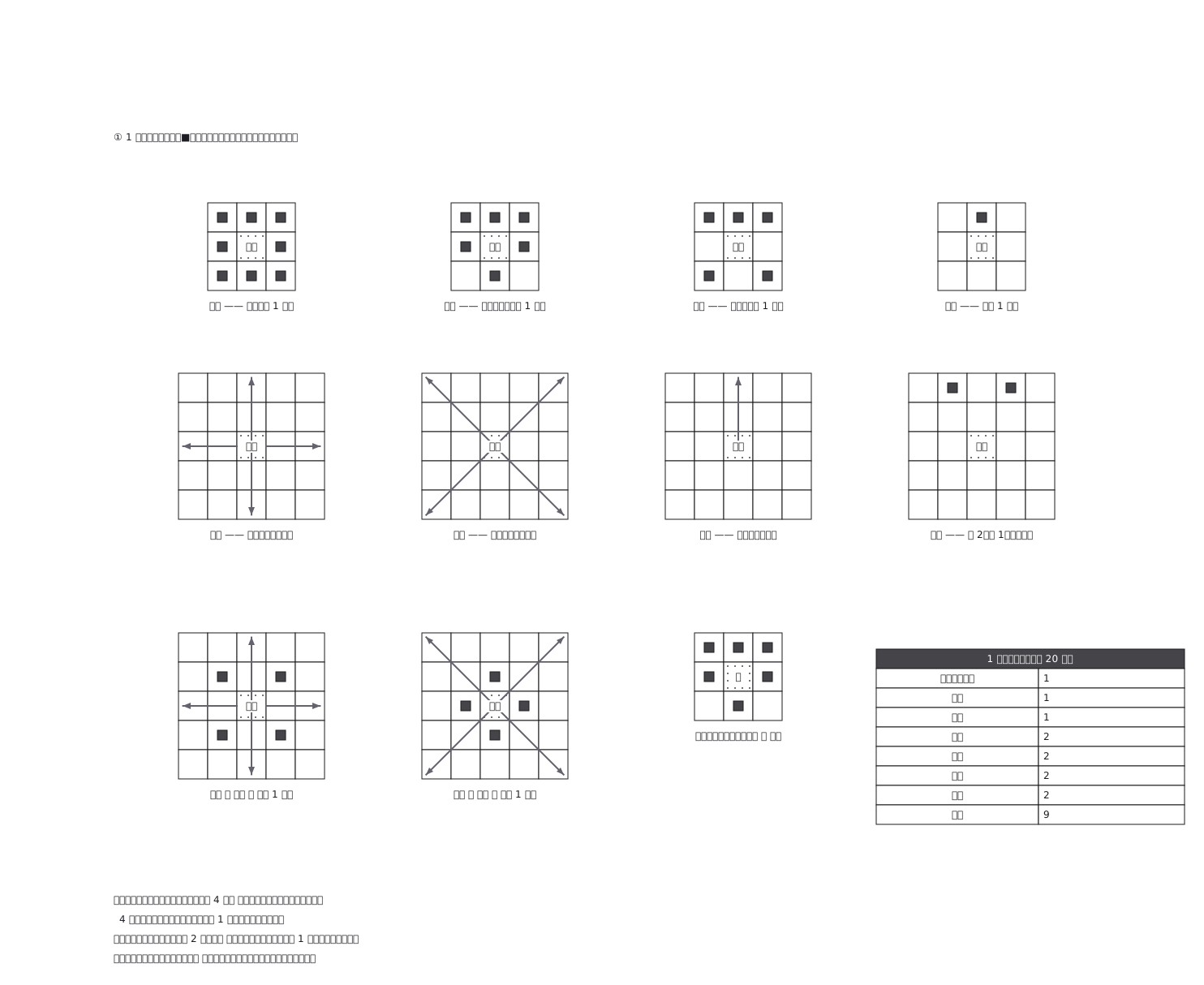 Promotion in shogi collapses four different pieces into one: a promoted silver, knight, lance or pawn all move exactly as a gold general does, however differently they moved before. Only the king and the gold cannot promote, and only the rook and bishop gain rather than converge — each keeps its own reach and picks up one extra step. The knight alone may jump.
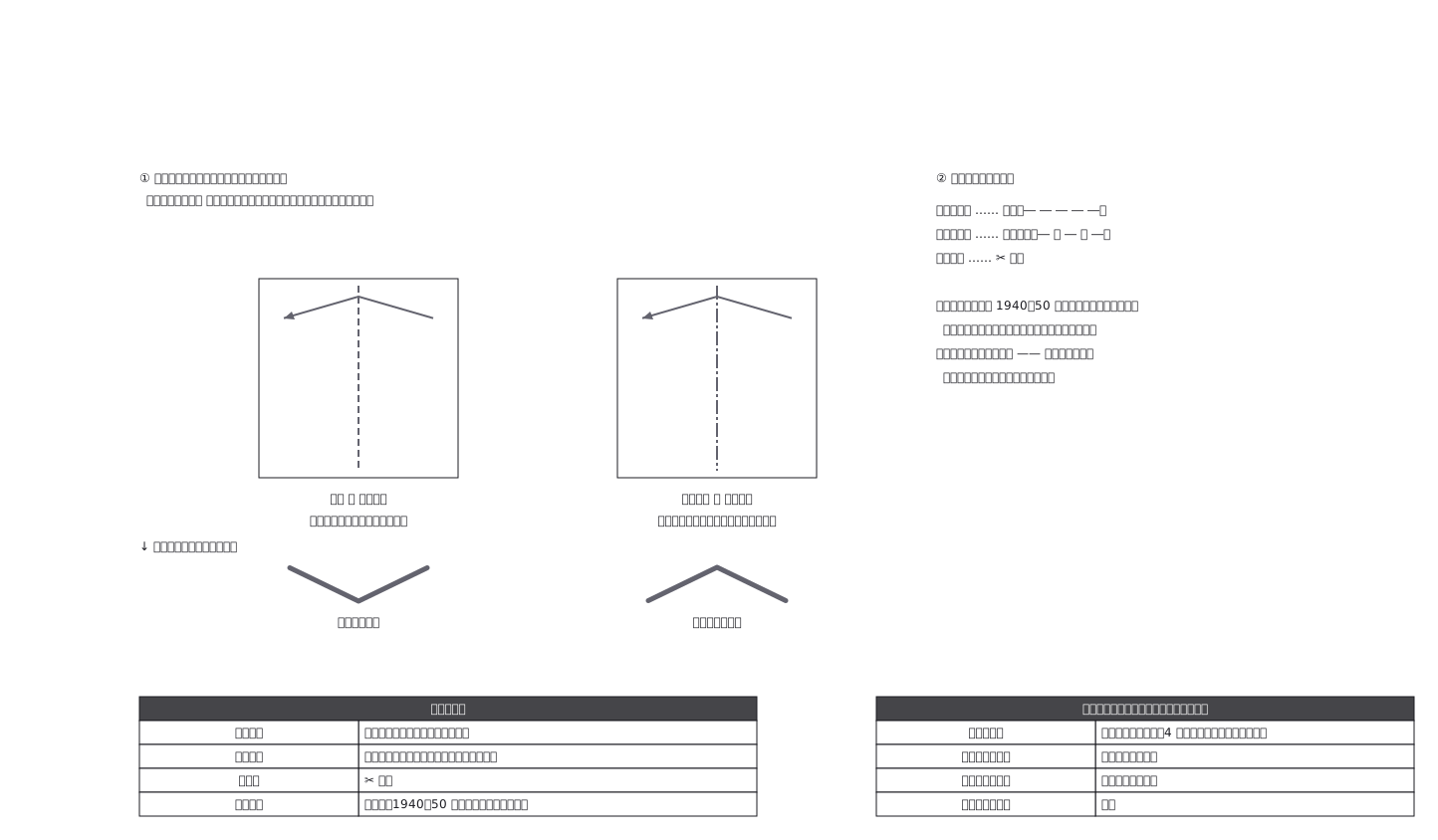 An origami diagram carries almost no words because the line itself is the instruction: a dashed line is a valley fold and a dash-dot line a mountain fold, so the same line in the same place sends the paper the opposite way. Seen edge on afterwards, one is a V and the other an inverted V. The notation was developed by Akira Yoshizawa in the 1940s and 50s.
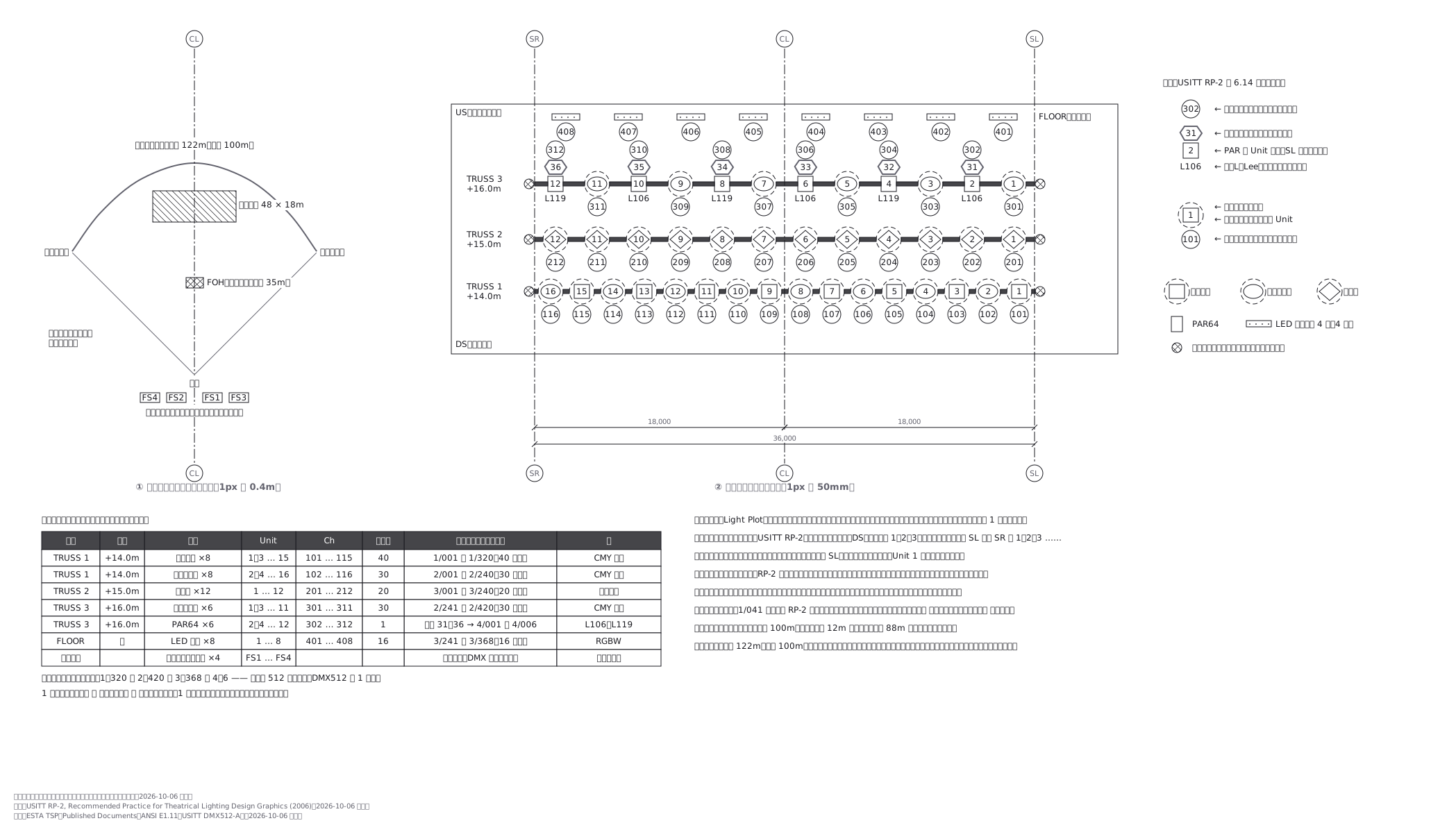 A stadium-scale lighting plot drawn to USITT RP-2: channel in a circle, circuit in a hexagon, colour at the lens, a dashed circle for a moving light’s swing. Positions count from downstage, units from stage left — which, with the audience at the bottom of the sheet, is the right-hand end. The patch table gives each unit a universe and start address, none straddling the 512-slot edge.
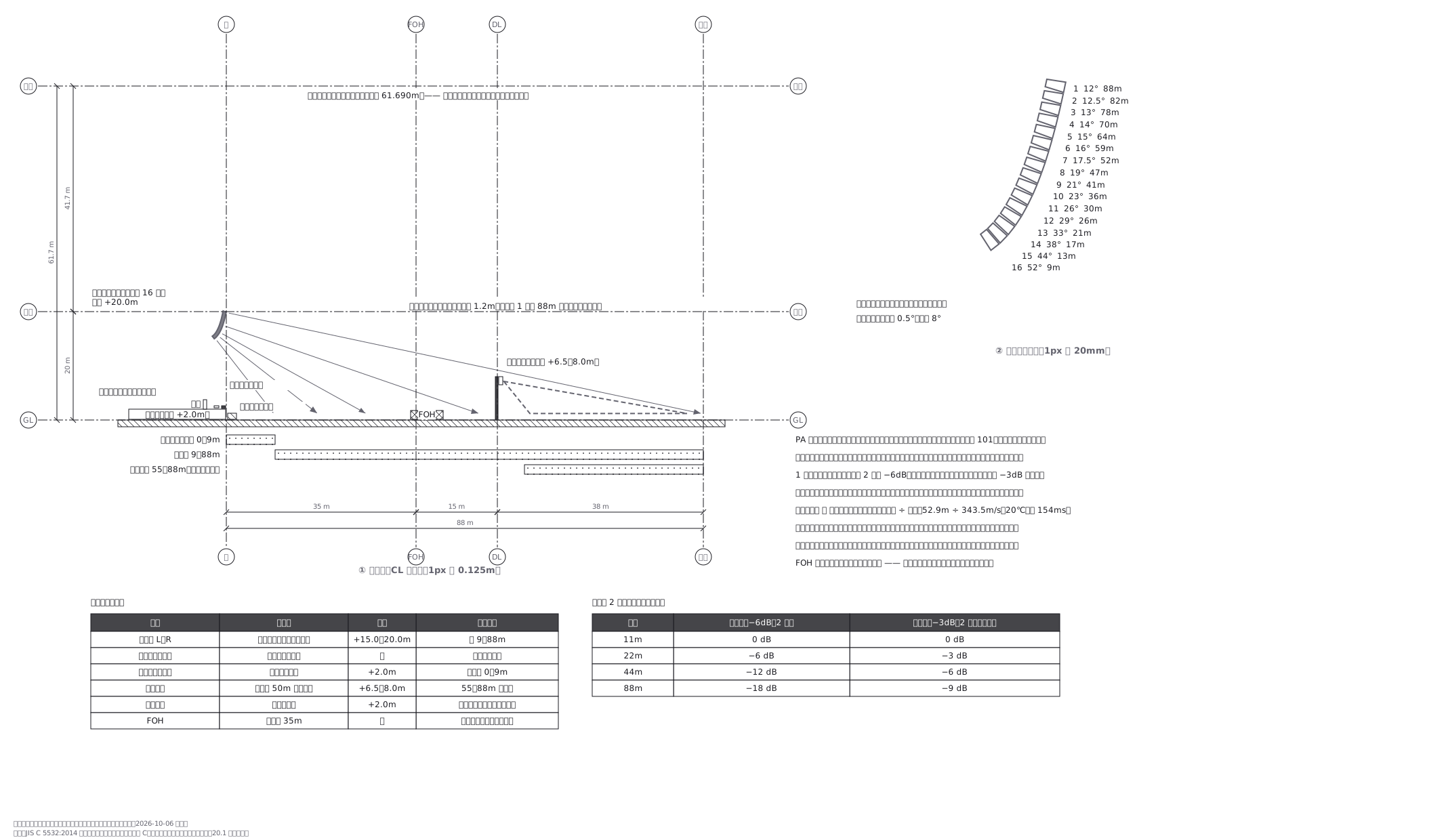 The same show’s PA cut through the centreline. Each of the sixteen line-array boxes is tilted a little further down, so the top one reaches the back of the floor and the bottom one the front rows; the boxes are narrower at the back because that is where they close up when splayed. A delay tower fills in where the main has fallen off.
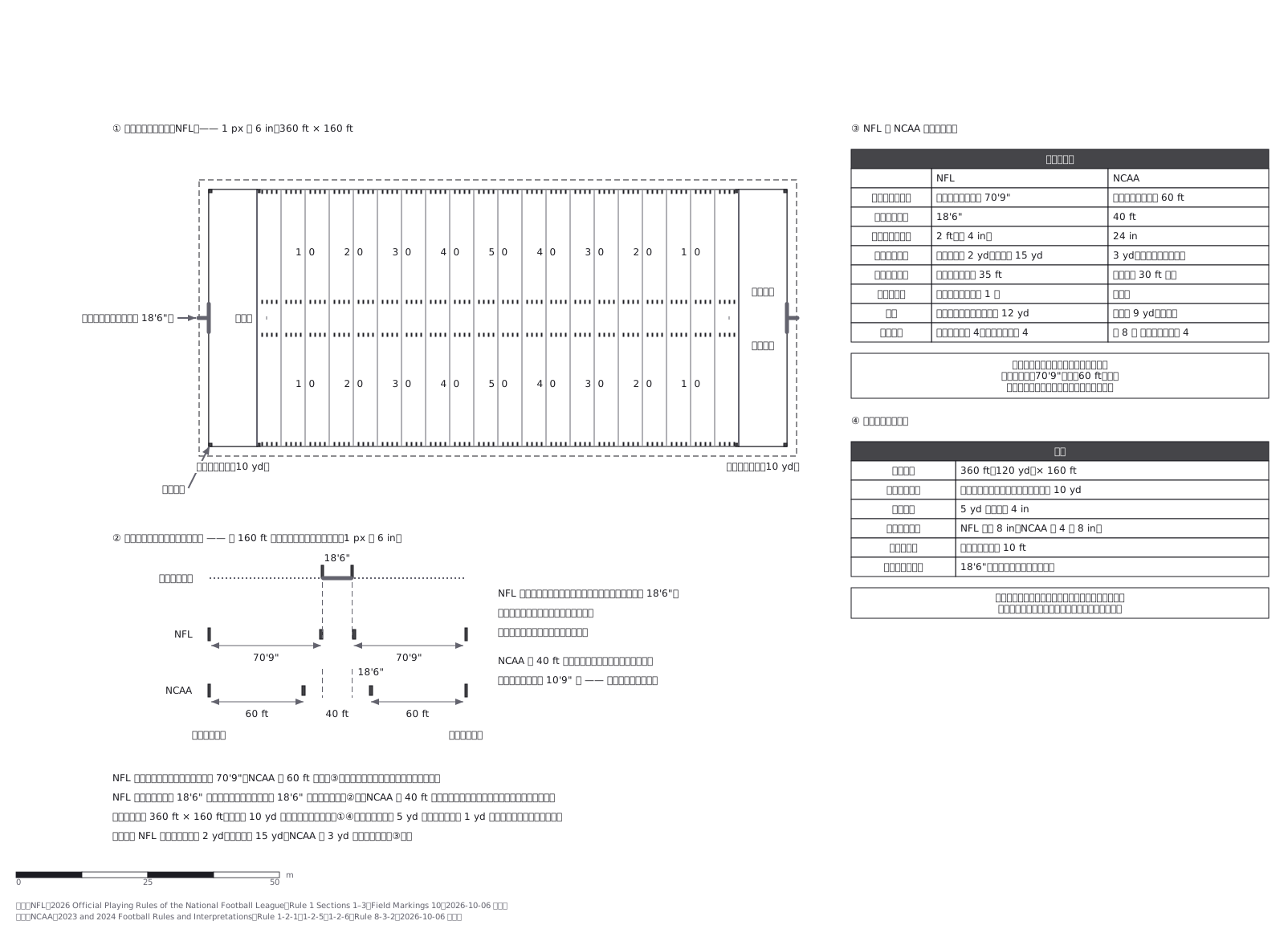 An American football field drawn from the rulebooks: NFL hash marks sit 70'9" in from each sideline, which leaves exactly 18'6" between them, the same as the inside width of the goal posts, while college hashes at 60 ft leave 40 ft and put a ball on the hash 10'9" outside the uprights
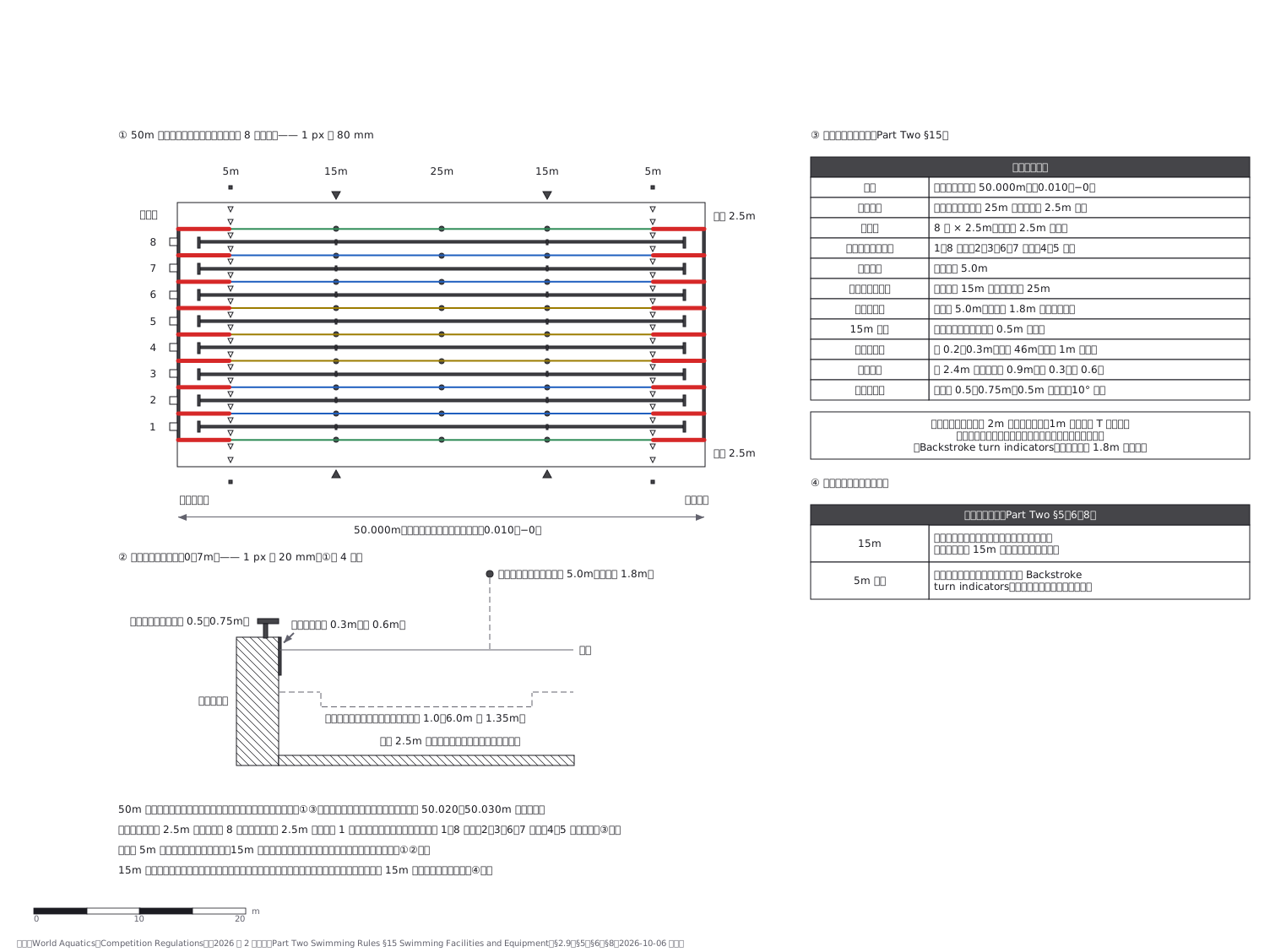 A 50m competition pool from the World Aquatics rules: the 50.000m is measured between touch pads, not walls, and the red floats and backstroke flags at 5m and the marks at 15m are there because swimmers may stay under for no more than 15m after the start and each turn
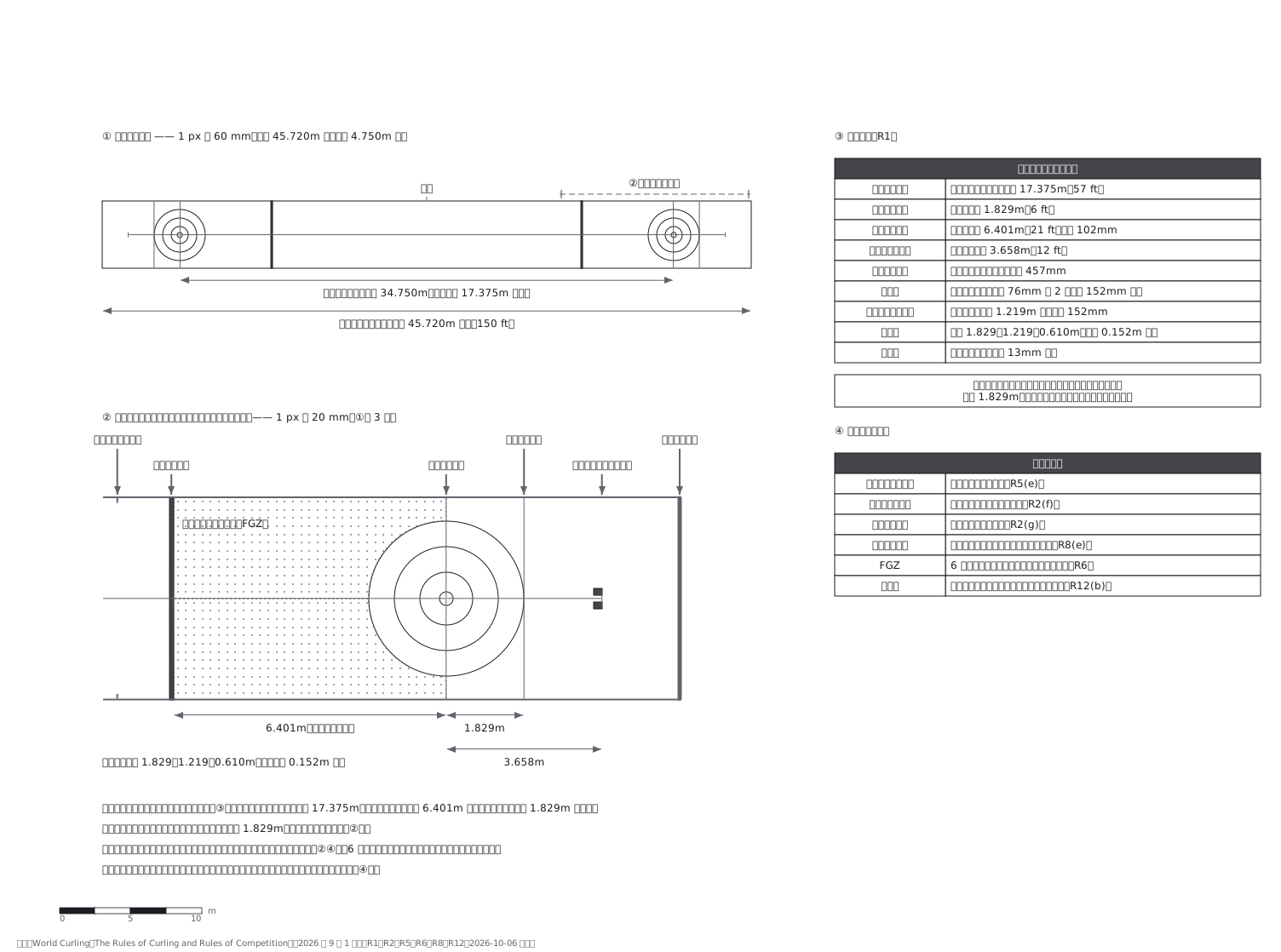 A curling sheet from the World Curling rules, where every line is measured from the tee: hog line 6.401m before it, back line 1.829m beyond it, which puts the back line exactly at the edge of the house, and the free guard zone in between
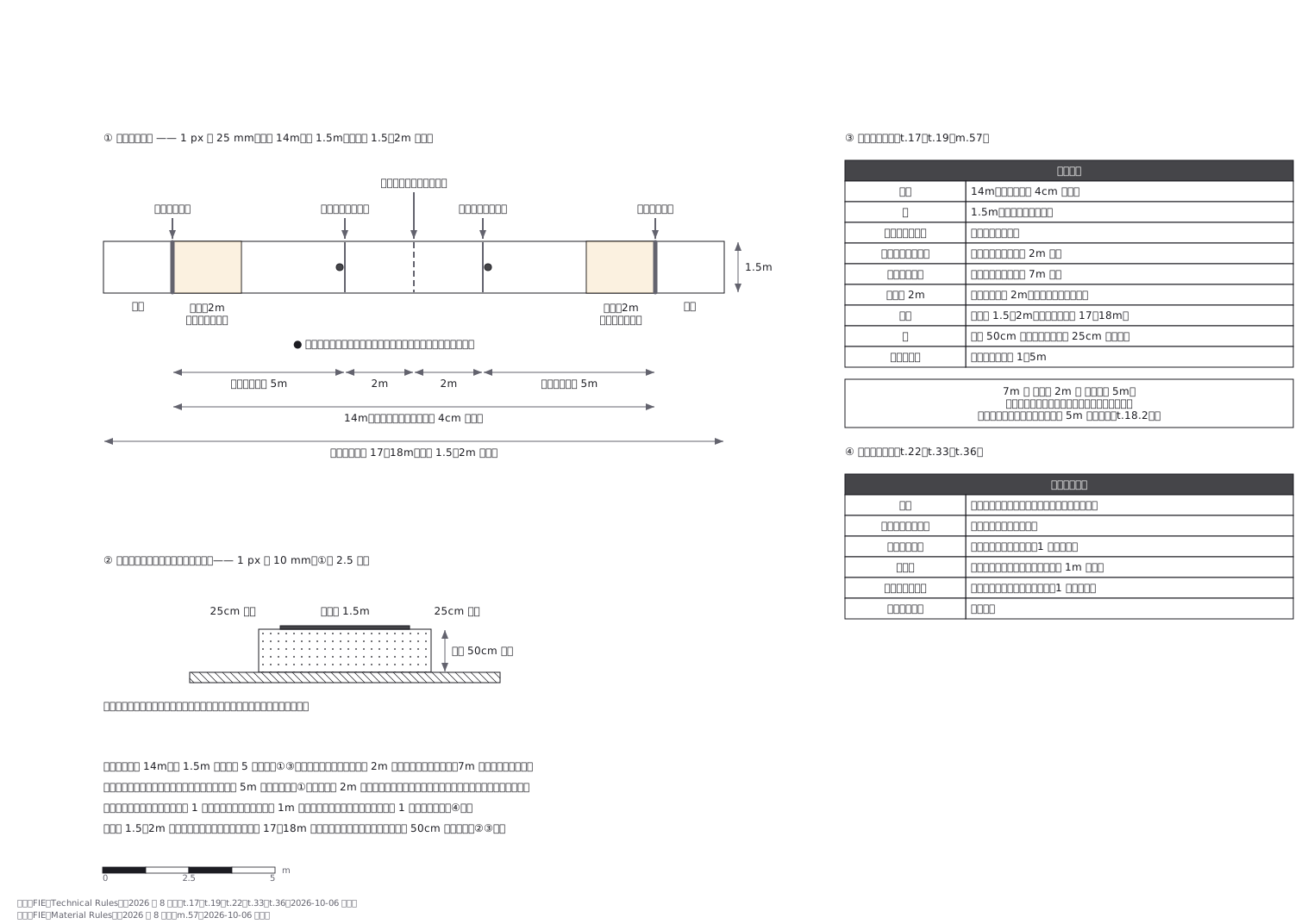 A fencing piste from the FIE rules: the on-guard lines are 2m from the centre and the rear limits 7m, so each fencer has exactly 5m to retreat before both feet cross the line and a touch is lost