Events and games
Noh stage — the direction of the floorboards separates the areas
Which way the floorboards run is what separates one area from another: the chorus sits where the boards run lengthwise like the main stage, the musicians where they run crosswise — and the four pillars are not decoration but the landmarks a masked actor, who can see very little, uses to know where they are standing
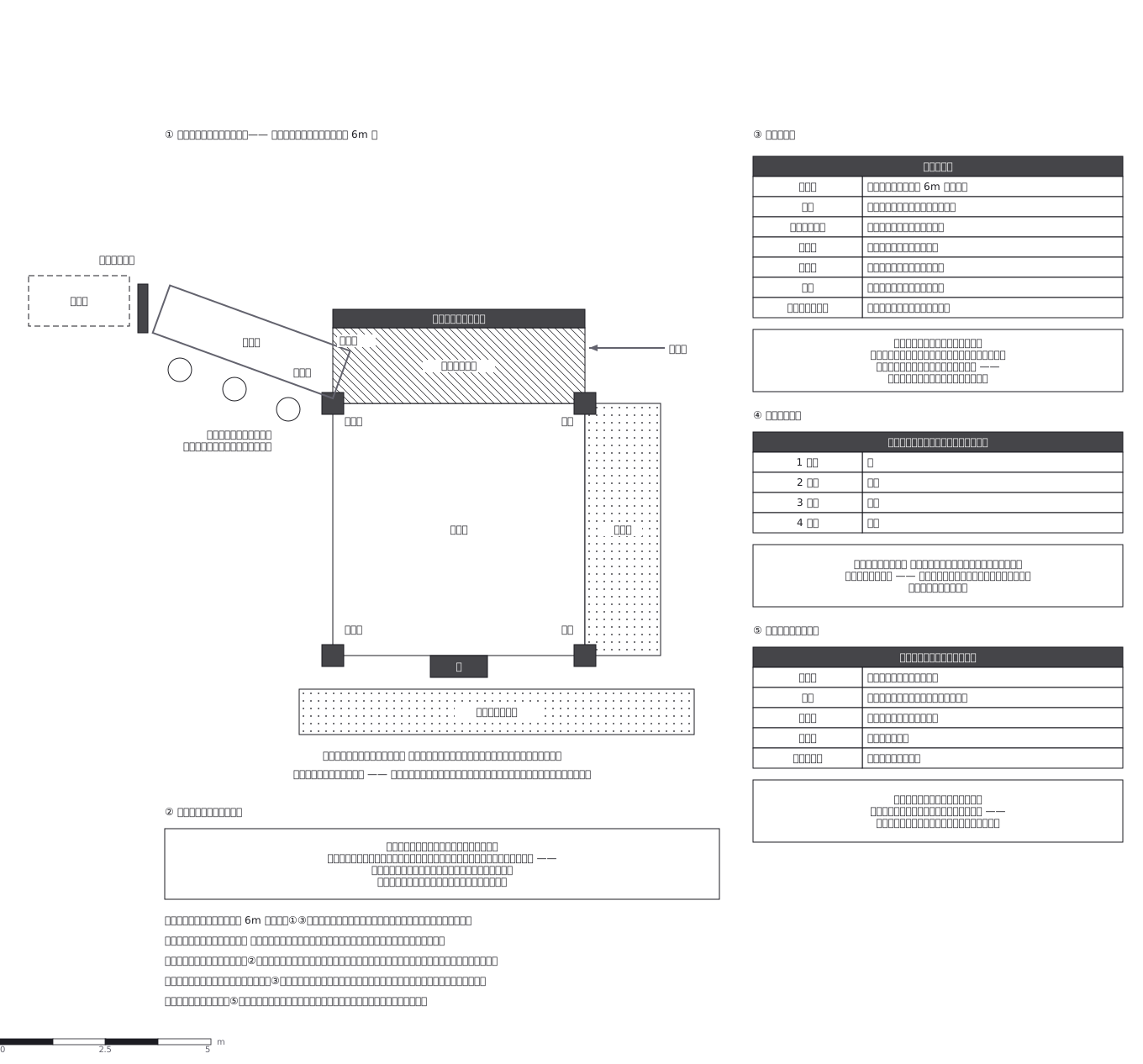
This drawing comes from one YAML file. No shape was moved by hand.
Notes in the source (in Japanese)
本舞台は常寸で京間三間四方 —— ほぼ 6m 角。 檜の板で、床下の要所には甕を埋める(足拍子の響きをよくするため)。
床板の向きが、場所を分ける。地謡座は本舞台と同じく板を縦に敷き、後座は板を横に渡す ——だから後座は「横板」とも呼ばれる。後座には囃子方が、向かって右(笛柱の側)から笛・小鼓・大鼓・太鼓の順で坐る。狂言座は橋掛りの付け根(シテ柱の後ろ)。
四本柱は飾りではない。 面をかけると視野がほとんど無くなるので、柱が、自分がどこに立っているかを知る手がかりになる ——目付柱はその名のとおり目を付けるための柱で、ほかにシテ柱・脇柱(大臣柱)・笛柱。笛柱には『道成寺』の鐘を吊るための金属の環が付いている。
橋掛りは、ただの通路ではない。 登場人物が歩む道とも、現実の世界とあの世をつなぐ通路ともなり、ときには本舞台とは別の場所を表す。歌舞伎の花道と同じく演技の場で、本舞台に対して斜め後ろへ伸びる(日本芸術文化振興会 文化デジタルライブラリー「能・世阿弥」舞台の特色 https://www2.ntj.jac.go.jp/dglib/contents/learn/edc9/kouzou/stage/tokusyoku.html 。取得 2026-10-04)。何度で取り付くかは一次資料で確かめていない(「約 110 度」とする解説はある)。絵は奥へ約 20° 振って描いた。橋掛りの長さは紙に収めるため縮めてあり、縮尺どおりではない。同じ資料で:本舞台は三間四方、アト座(横板)、地謡座は本舞台の右手、切戸口はアト座の右手奥、揚幕は三色または五色の緞子。橋掛りには一の松・二の松・三の松が並び、演技のときの目印になる(いまは照明の都合で造木が多い)。
鏡板の老松は、神の依り代であり、囃子の反響板でもある。
出口が、そのまま筋の意味になる。シテは鏡の間で装束をつけ面をかけ、揚幕(三色または五色の緞子。幕番が竹で上げ下げする)から出る。ところが舞台で切られた役は、小さな切戸口から退場する —— 揚幕へは帰らない。
白洲は客席と舞台のあいだに敷き詰めた玉砂利(水を象徴するという解説もあるが、一次資料で確かめていない)。階(きざはし)は三段。いまはシテが落ちたときに使う程度。
Source (YAML)
examples/gallery/294-能舞台.zumen.yaml
More in this field
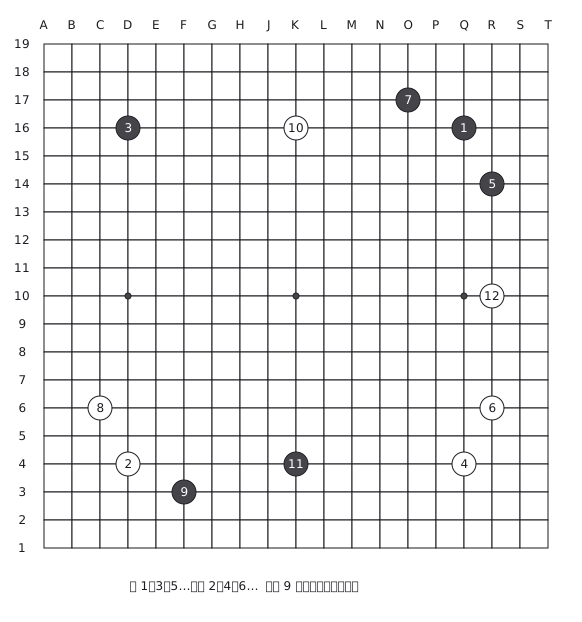 A game record on a 19-line go board where each stone carries the number of the move, showing the shape of the opening
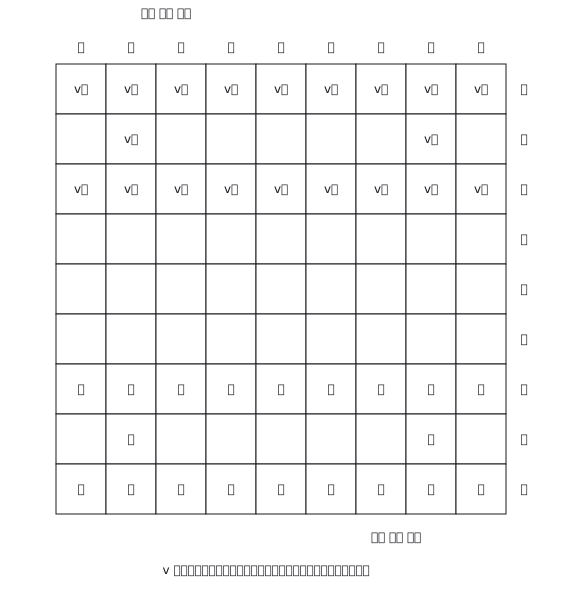 The starting position of shogi on a nine by nine board, the two sides told apart by which way the pieces point
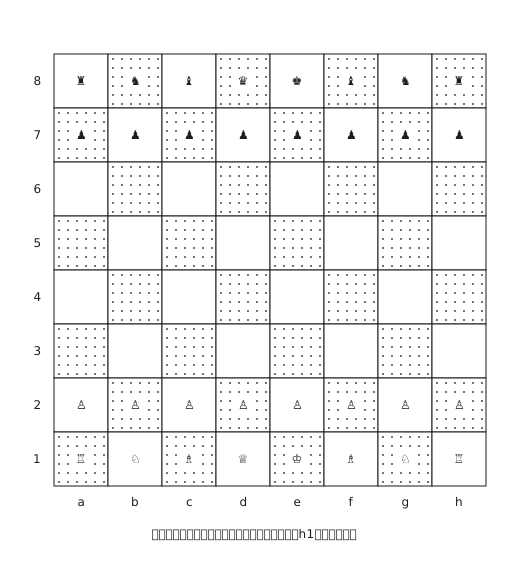 The starting position of chess on an eight by eight board, with the file and rank coordinates marked
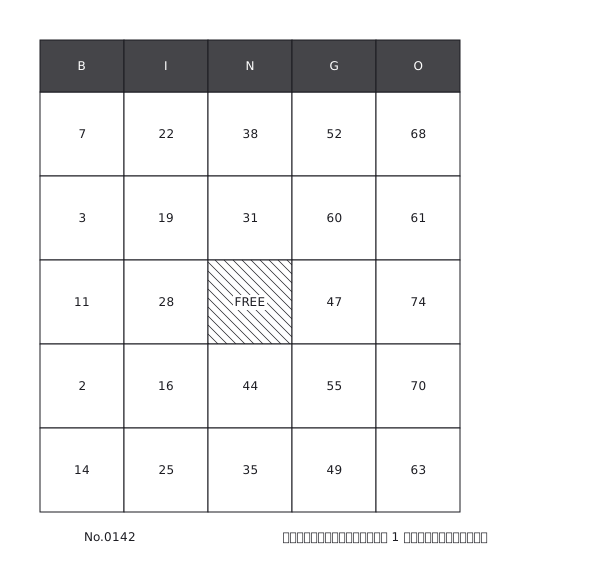 A bingo card, five by five with a free centre, where each column draws from its own range of numbers
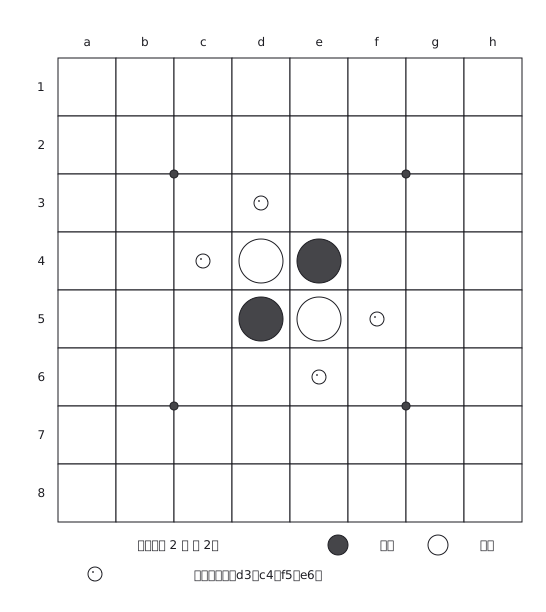 The opening position of reversi: four stones in the centre four squares, black and white alternating
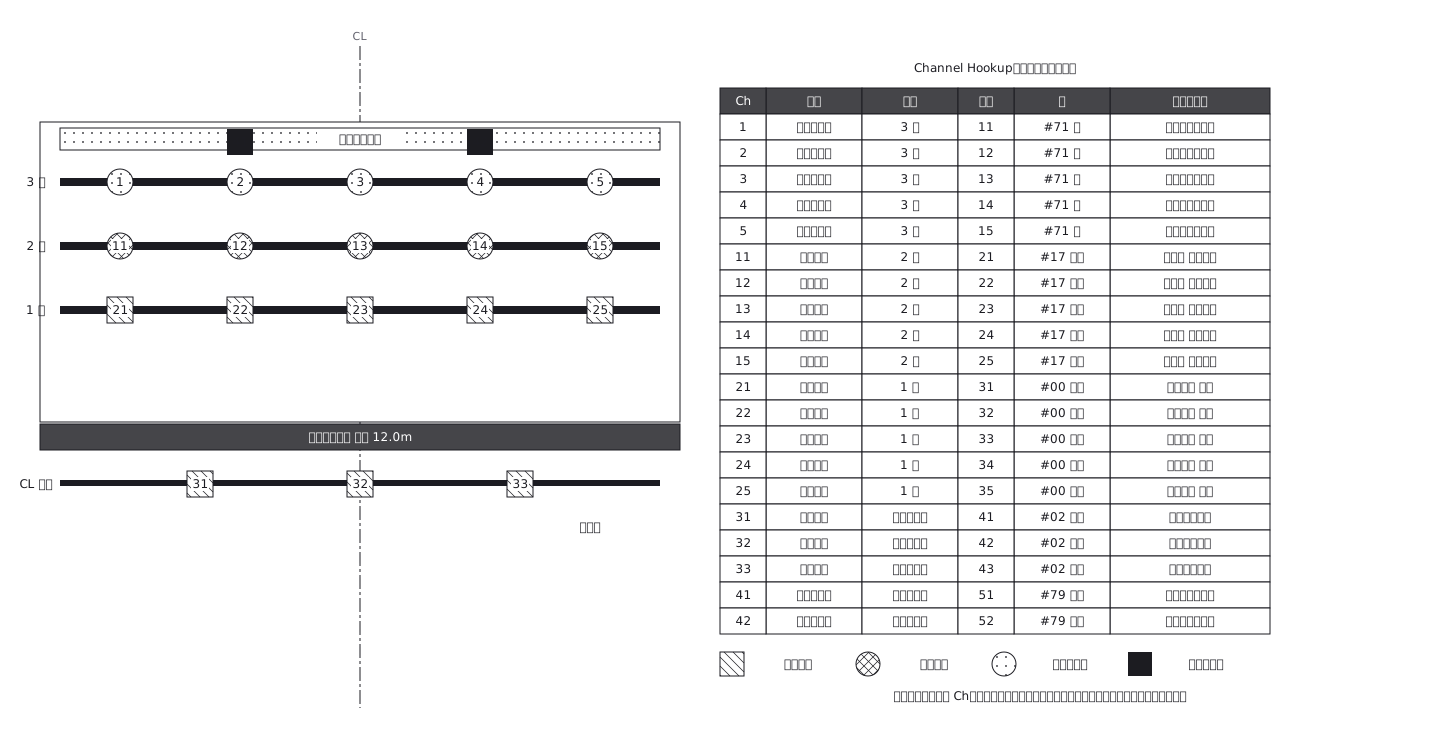 Theatrical lighting plot, with the channel schedule
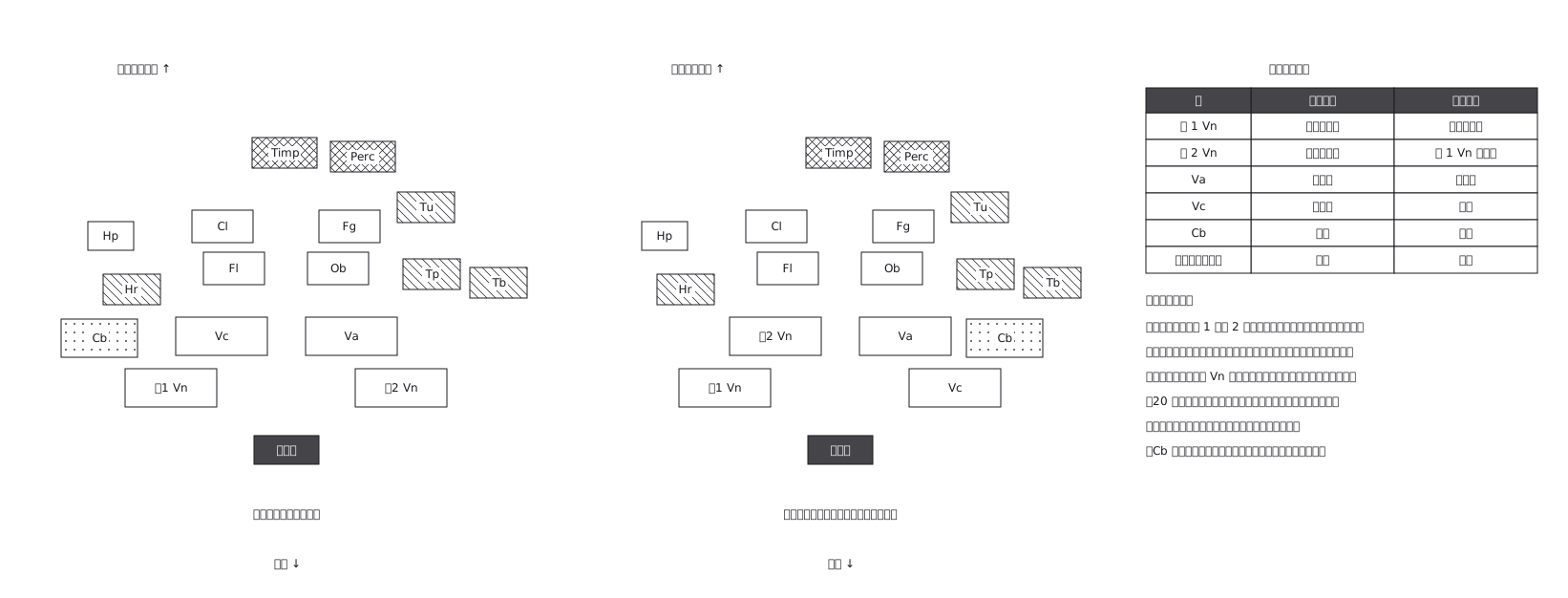 Orchestra seating, two traditions side by side
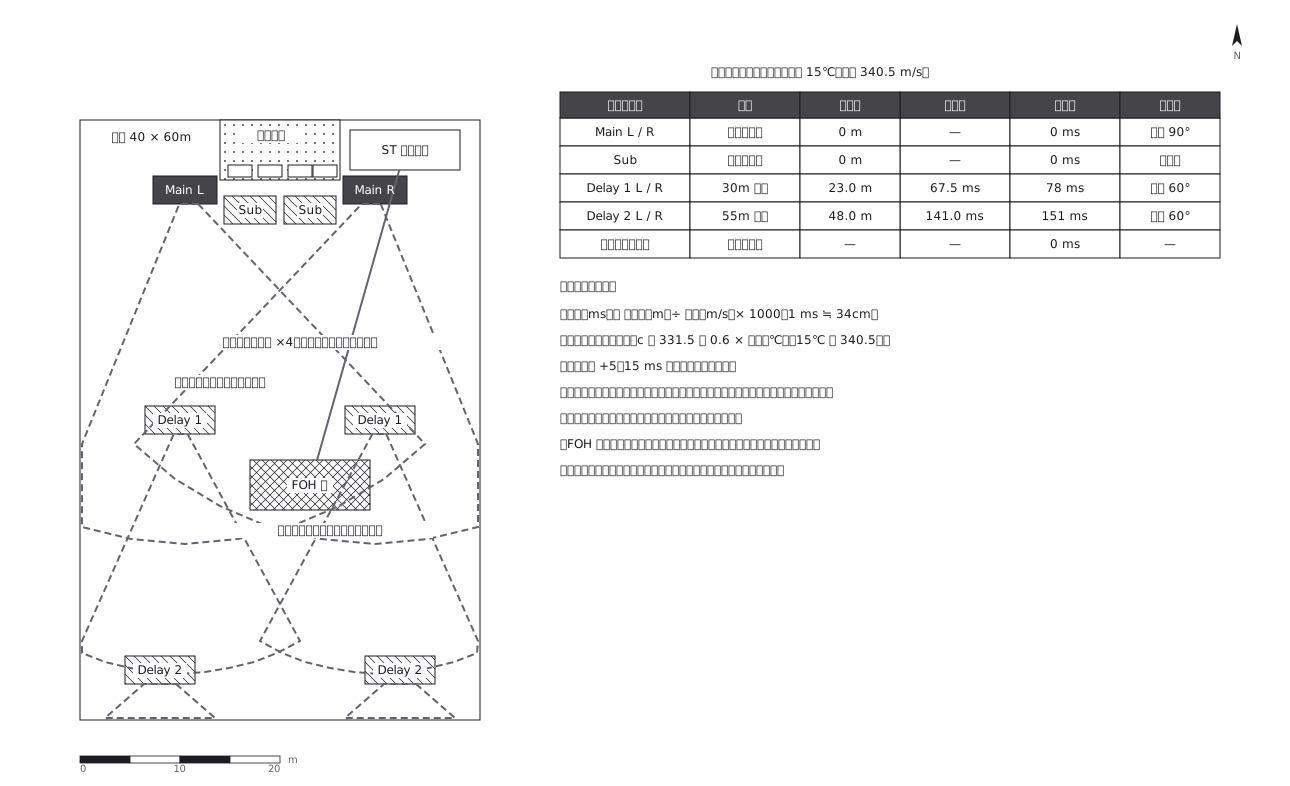 PA layout, where distance turns into delay