Learning and geometry
Determining a protein's 3D structure — phases do not show up in diffraction
Diffraction records only intensities, never phases, so a crystallographer has to fetch the phases from somewhere else — a known structure, anomalous scattering, or a heavy-atom derivative — whereas cryo-EM has no phase problem at all and pays instead by having to average tens of thousands of particles
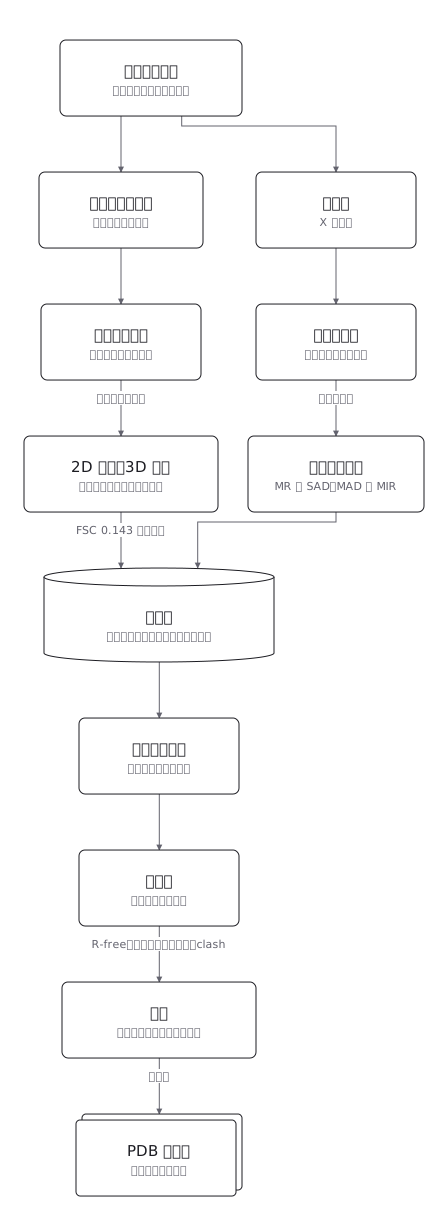
This drawing comes from one YAML file. No shape was moved by hand.
Notes in the source (in Japanese)
回折で測れるのは強度だけで、位相は写らない。 これが位相問題。強度だけでは電子密度マップを作れないので、位相はよそから持ってくるしかない ——分子置換(MR)は似た既知構造から、SAD/MAD は異常分散から、同形置換(MIR/SIR) は重原子を入れた結晶との差から。全体でいちばん多いのは MR(2022〜23 年の登録で約 88%)。実験で位相を出す道の中では単波長の SAD がいちばん多く使われ(Acta Cryst. D80 (2024) 766–779。2026-09-29 確認)、硫黄などもともと入っている原子だけで位相を出す native SAD もある。
クライオ電顕の単粒子解析には、位相問題が無い。 像そのものを撮るから。代わりに同じ分子を大量に撮って平均する —— 2D 分類でゴミを捨て、初期モデルを作り、3D 分類で状態を分け、精密化する。分解能は FSC = 0.143 を基準に言う(half-map どうしの相関)。柔らかい所と硬い所で分解能が違うので、1 枚のマップの中でも一様ではない。
どちらの道も、最後は同じ所へ出る。 マップに主鎖を通してモデルを作り、精密化し、検証する。
検証は、合わせただけでは通らない。R は観測強度とモデルの計算値の食い違い(低いほど良い)。R-free は精密化に使わずに取り分けた反射で同じ式を計算したもので、Brünger が 1992 年に Nature で導入した。R と R-free の差が大きければ、モデルにパラメータを入れすぎている。良い高分子のモデルは分解能 2.5Å で R ≒ 0.2、でたらめなモデルなら 0.6 くらいになる。
見本 290(ラマチャンドランプロット)・291(トポロジー図)と対。あちらは出来上がった構造を読む図、こちらはそこへ至る道。
Source (YAML)
examples/gallery/293-立体構造を決めるまで.zumen.yaml
More in this field
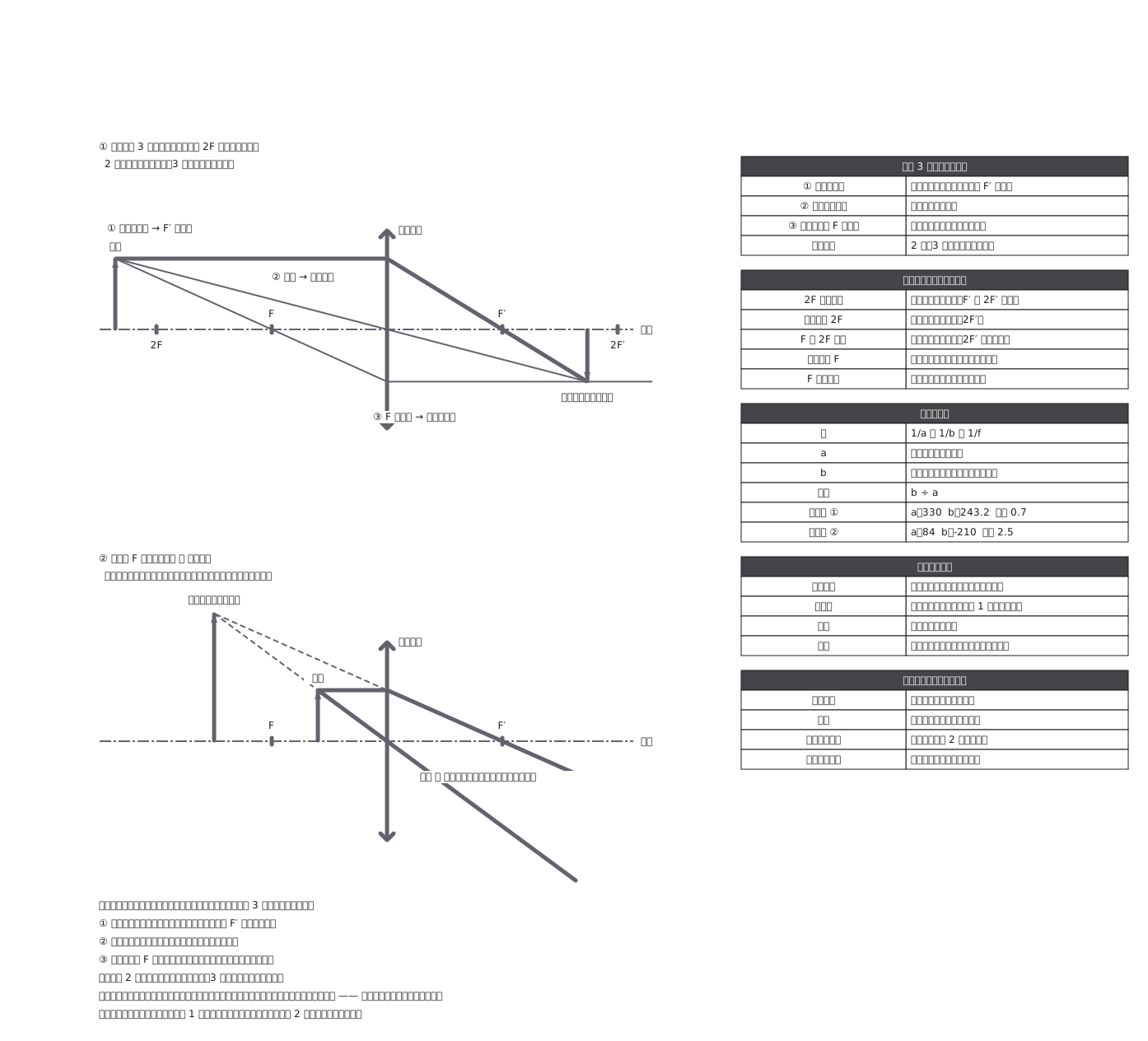 Ray tracing through a convex lens: there are only three lines to draw, and two of them fix the image
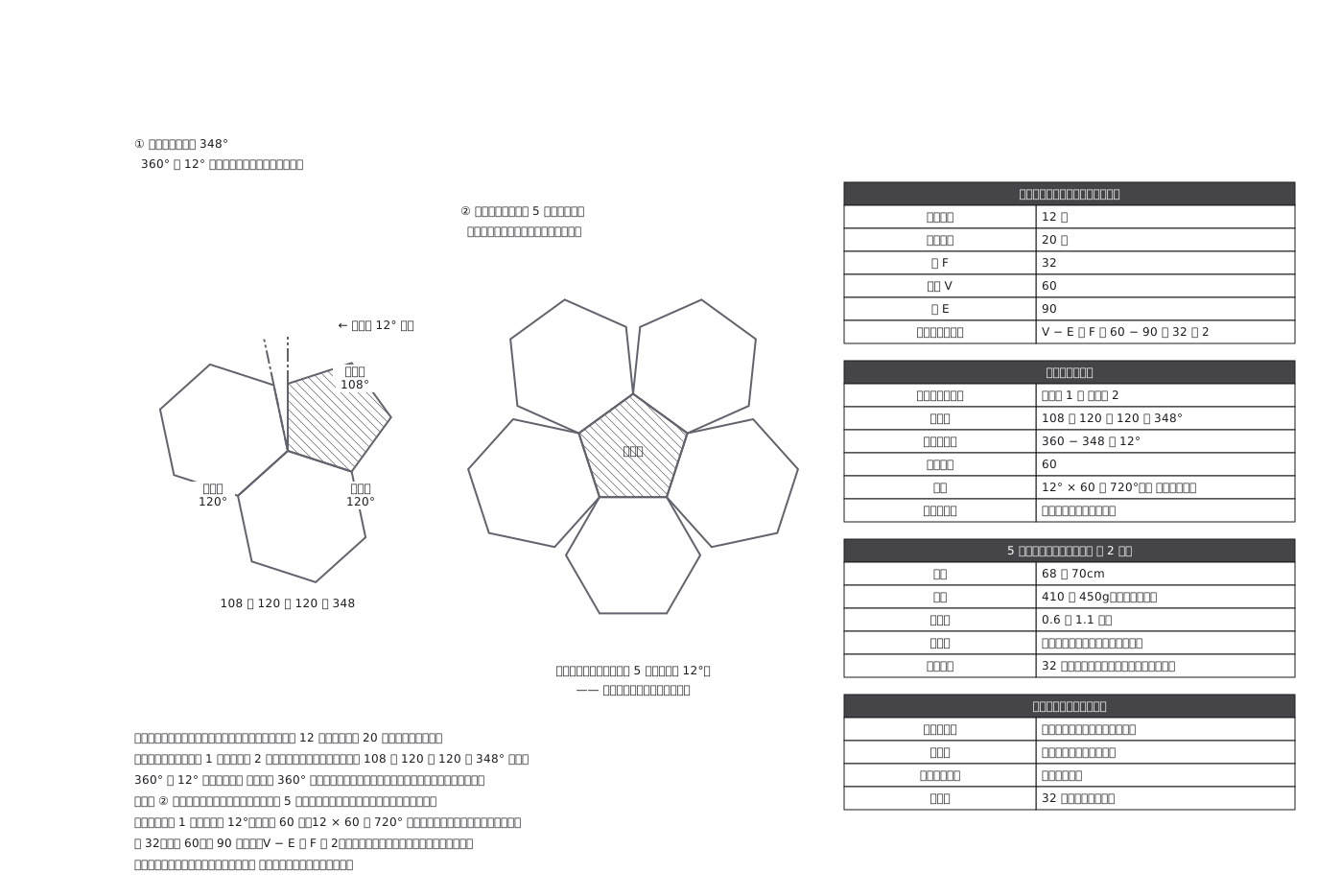 A football is a truncated icosahedron: the 12 degrees missing at every vertex are what make it a sphere
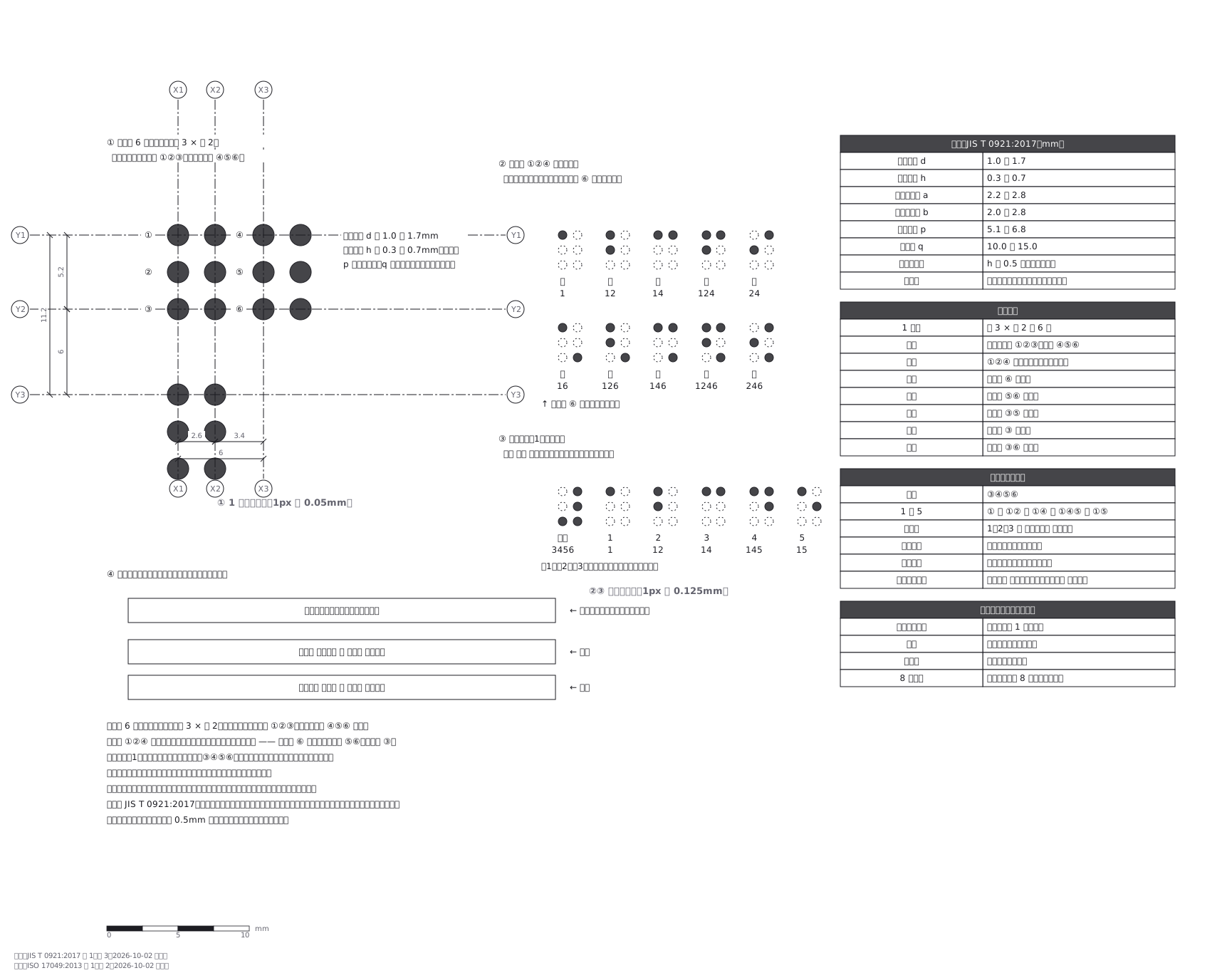 Braille has only six dots, so “a” and “1” are the same shape until a number sign says otherwise
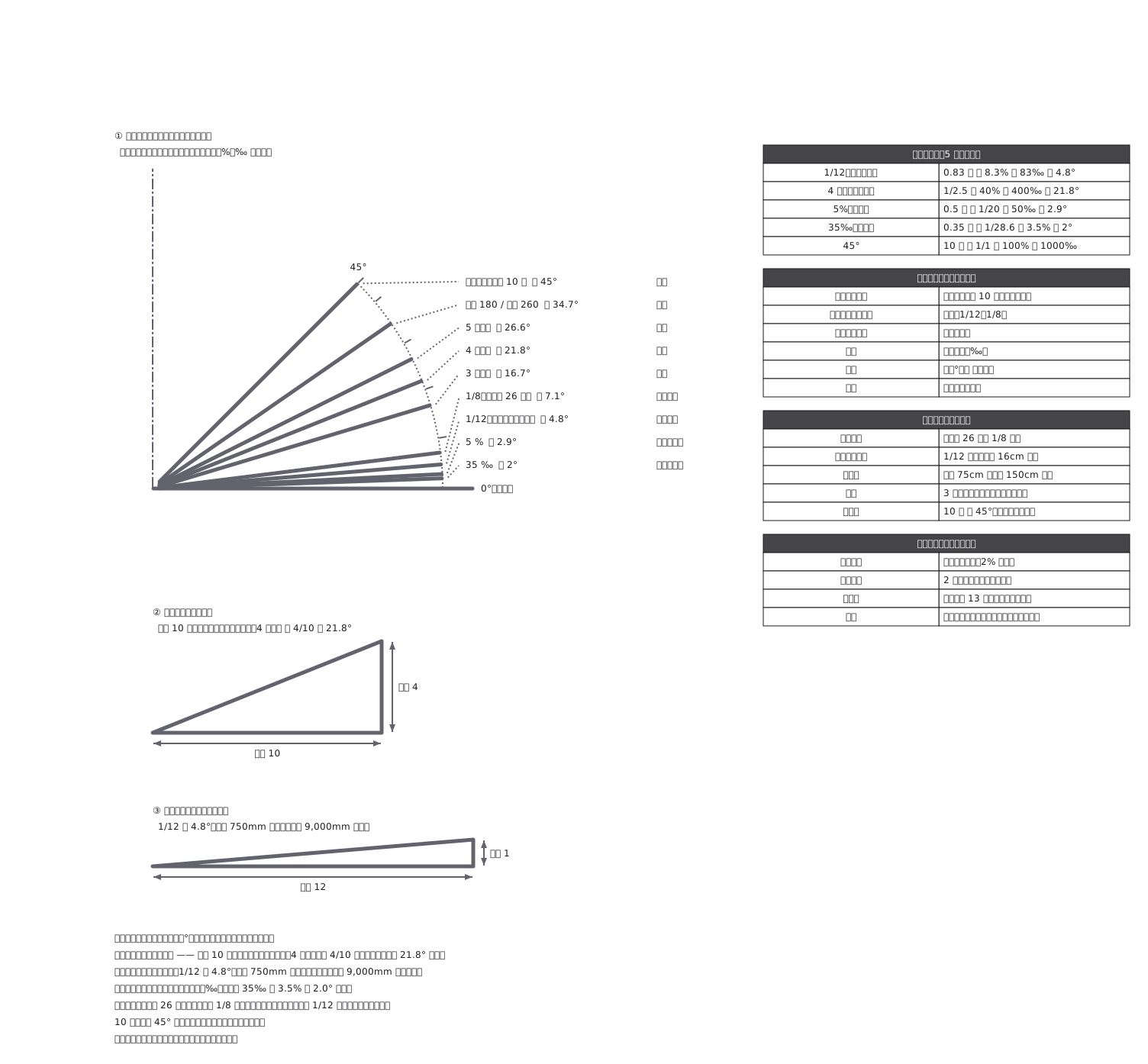 Slope notation: roofs in sun, ramps in fractions, roads in percent, railways in per mille — degrees are the minority
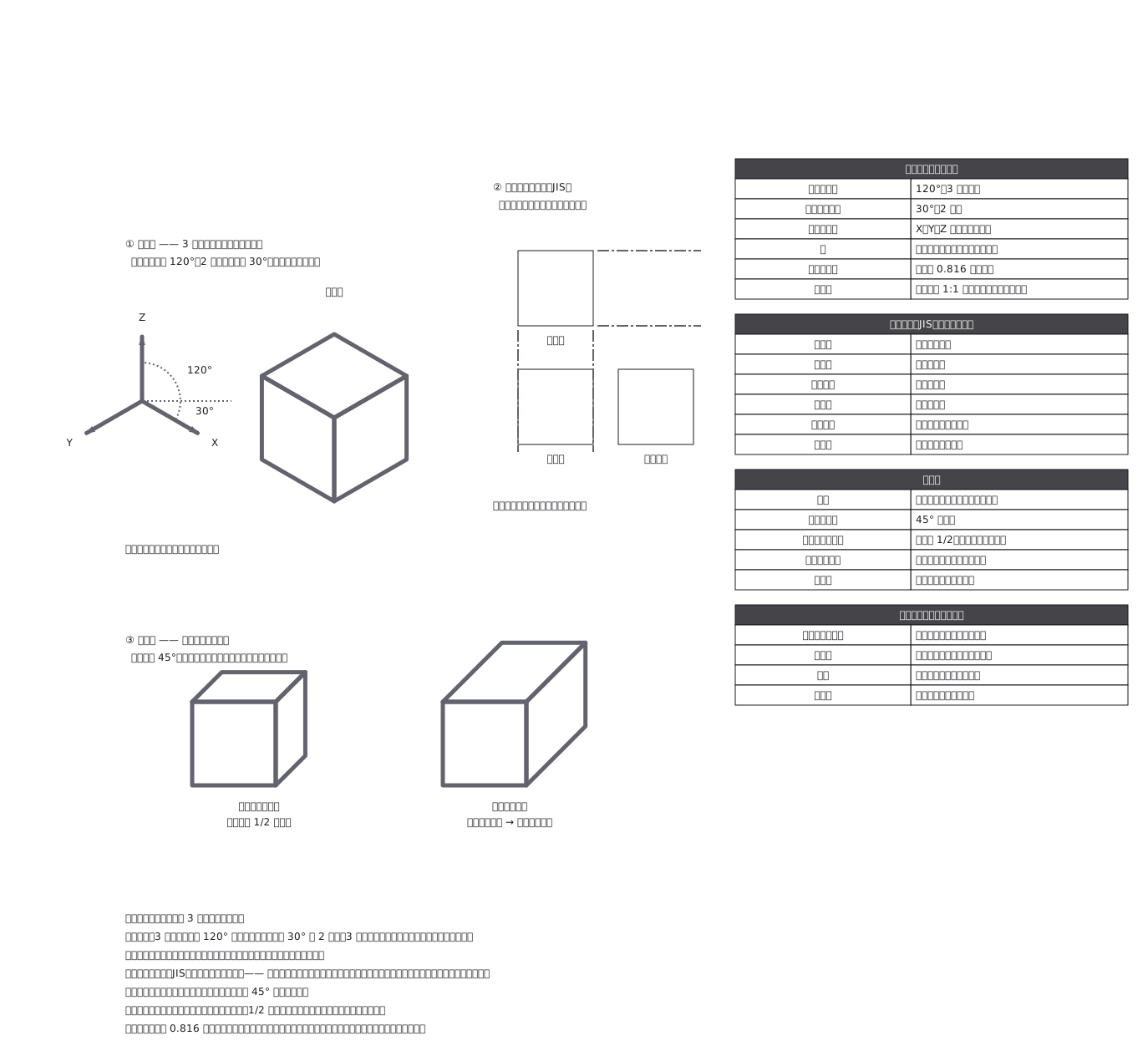 Isometric, third-angle and oblique: one scale serves all three axes, but circles become ellipses
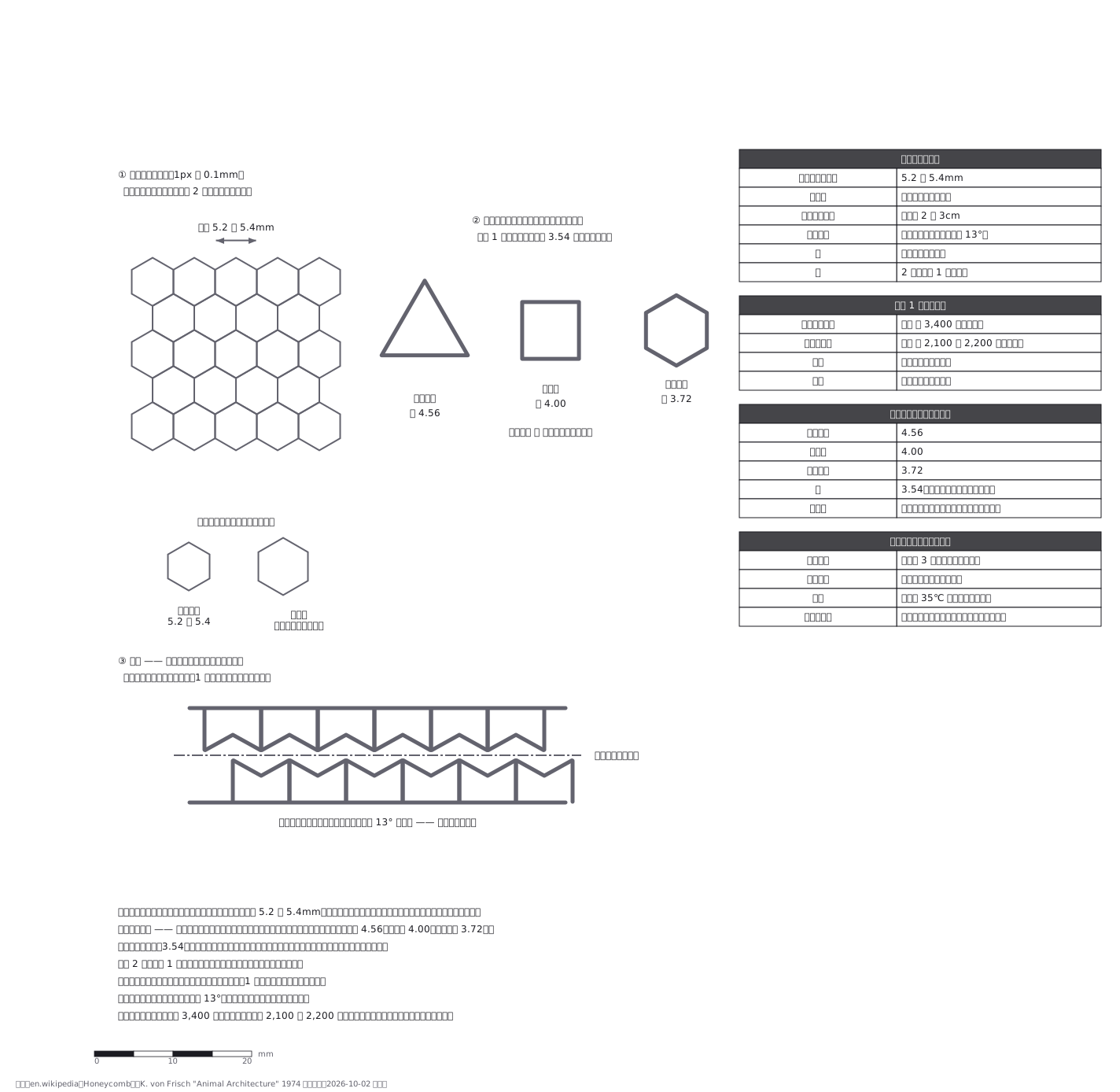 Honeycomb cells: for a given area the hexagon has the shortest wall of any shape that tiles
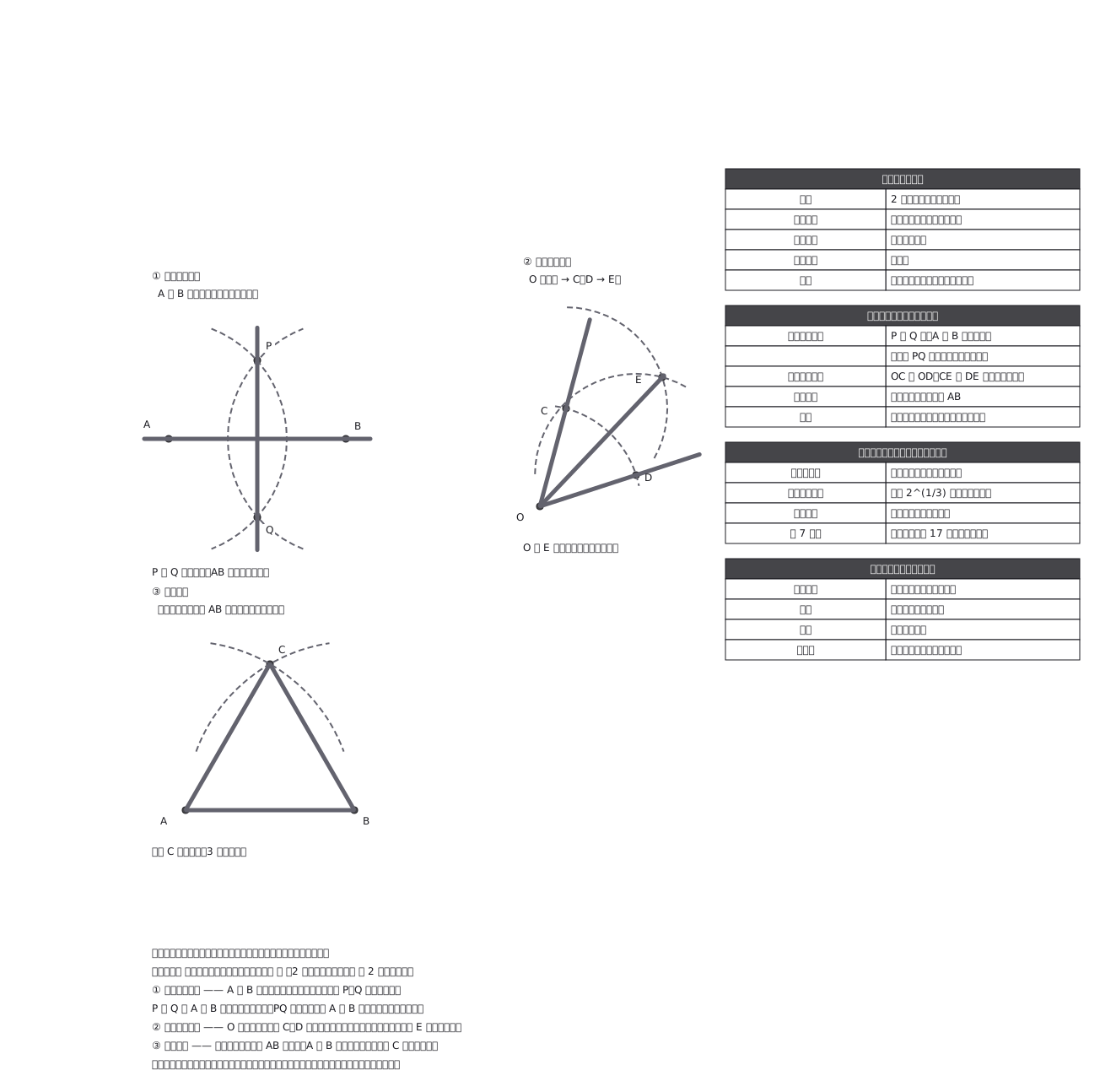 Ruler-and-compass constructions: no scale is used, because equal compass openings make equal lengths
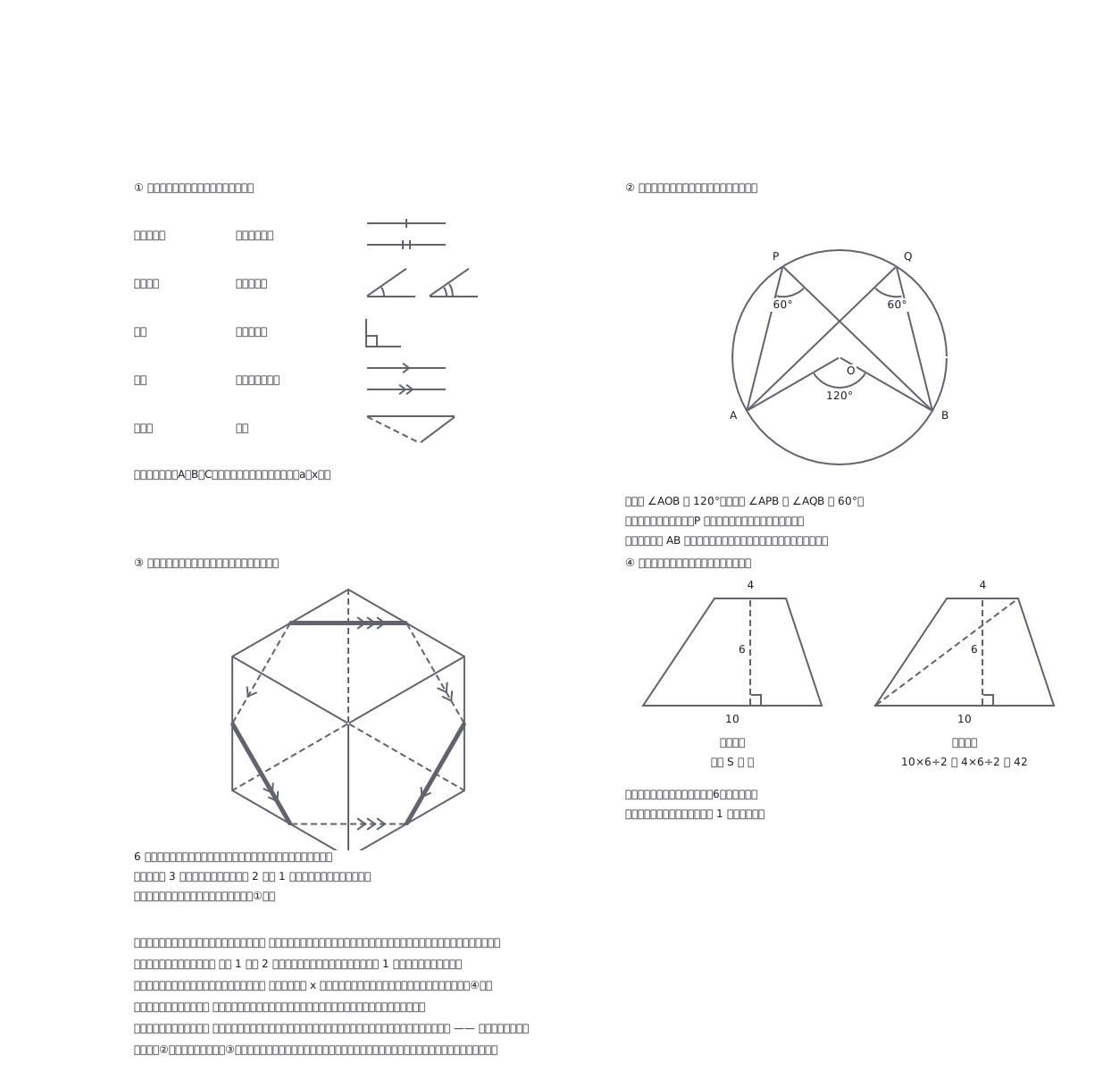 Figures in maths problems: the marks carry the meaning — equal ticks, right-angle squares, parallel chevrons — and only the given values are written on the figure