Learning and geometry
30 drawings in Learning and geometry, each generated from a single YAML file.
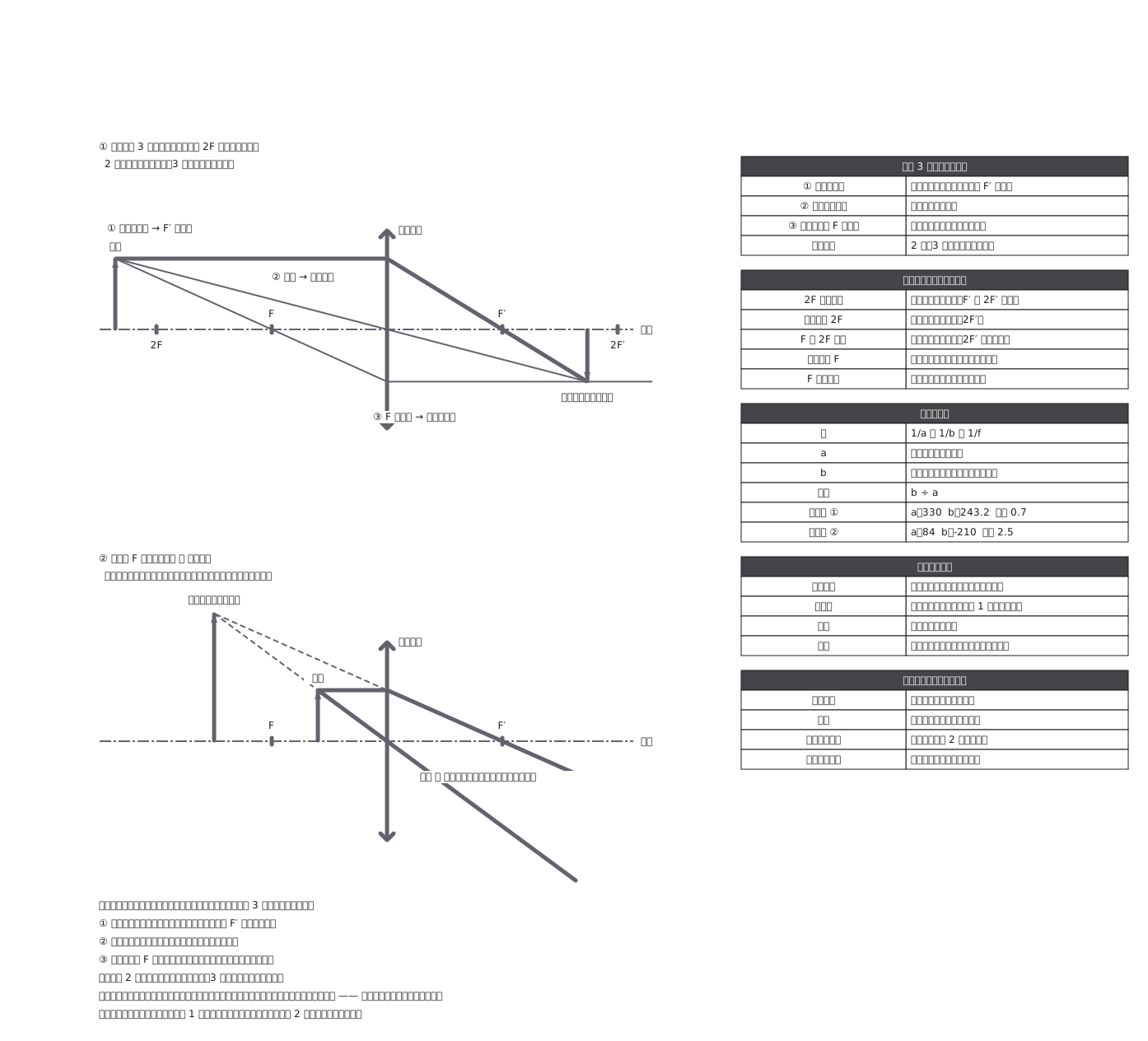 Ray tracing through a convex lens: there are only three lines to draw, and two of them fix the image
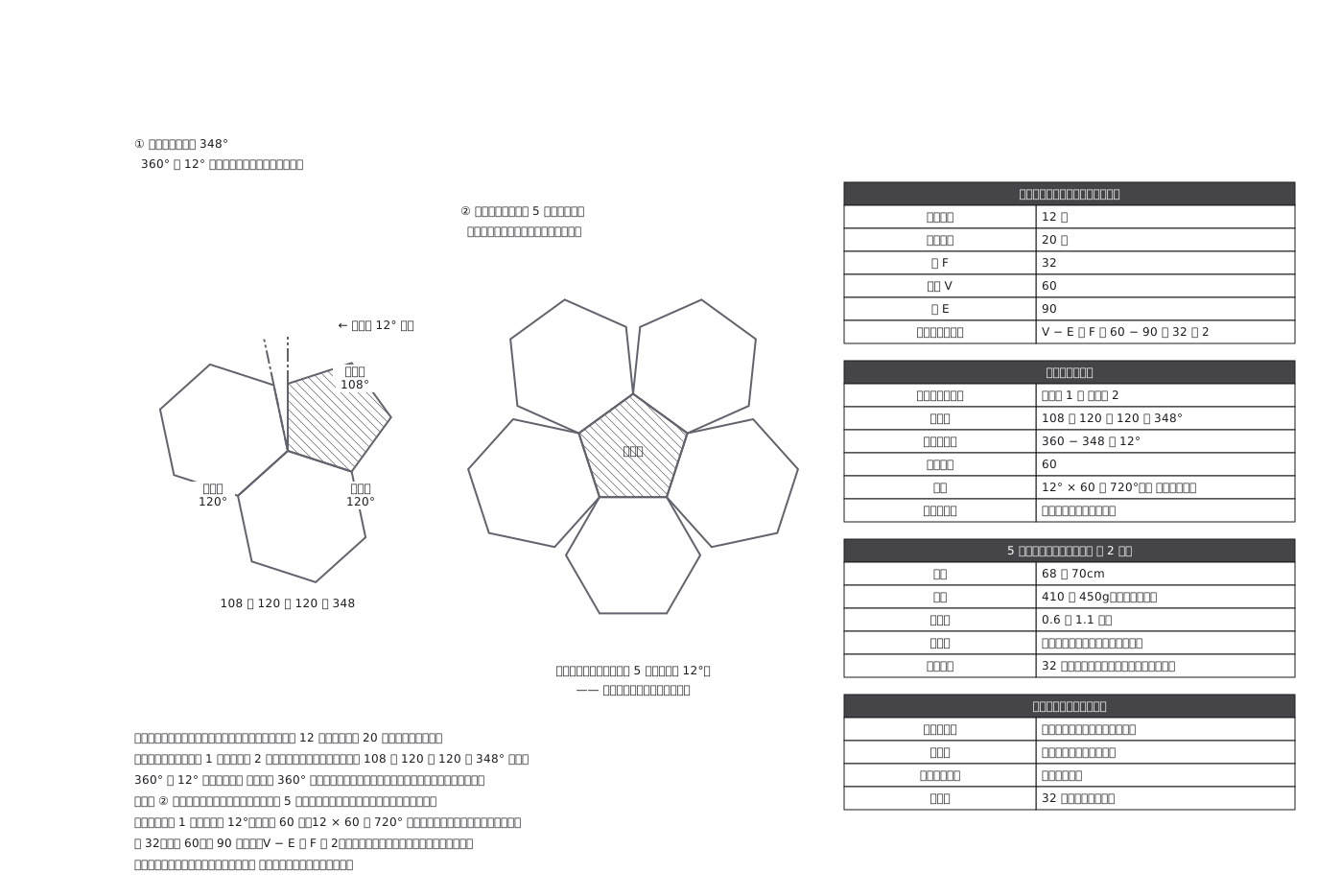 A football is a truncated icosahedron: the 12 degrees missing at every vertex are what make it a sphere
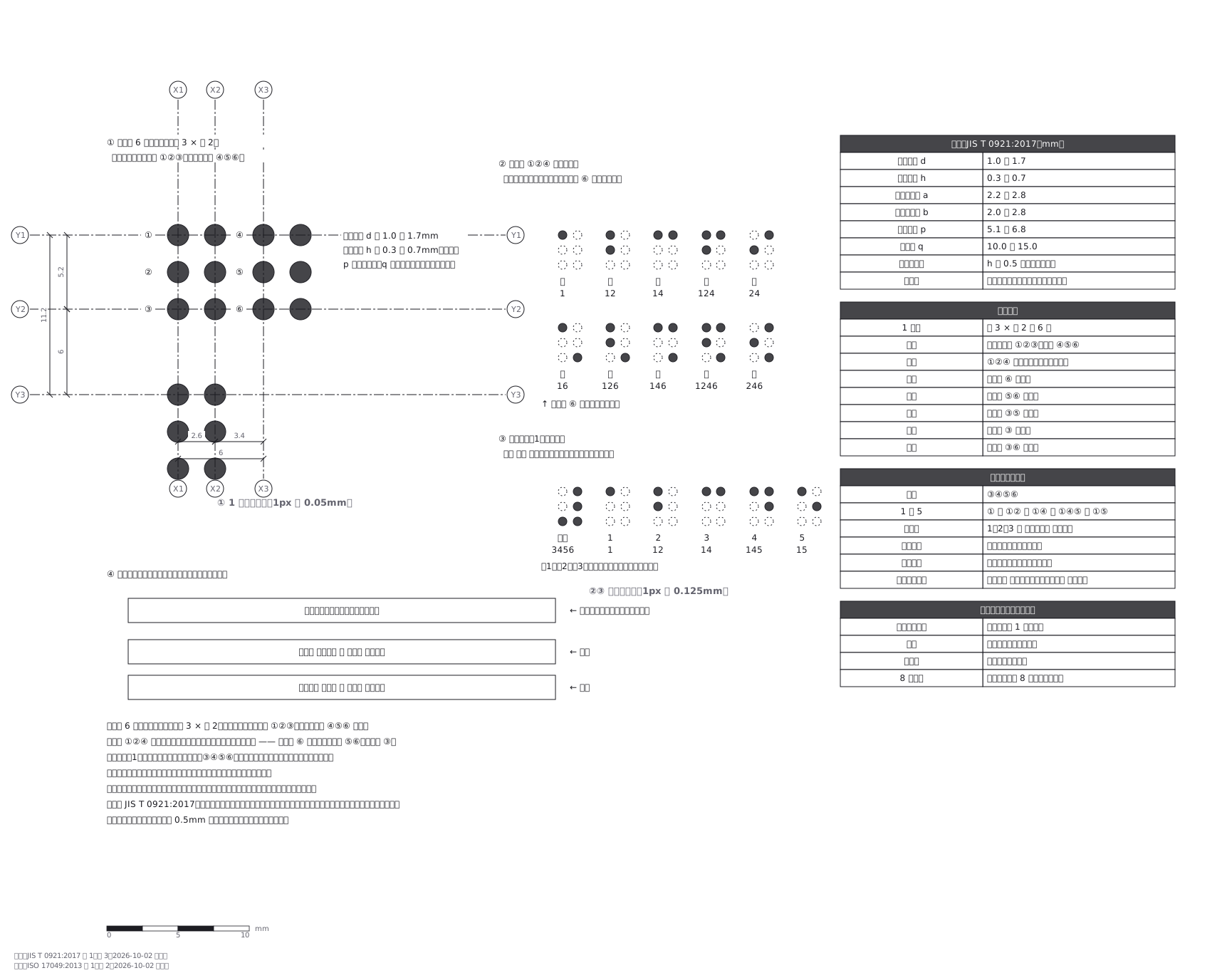 Braille has only six dots, so “a” and “1” are the same shape until a number sign says otherwise
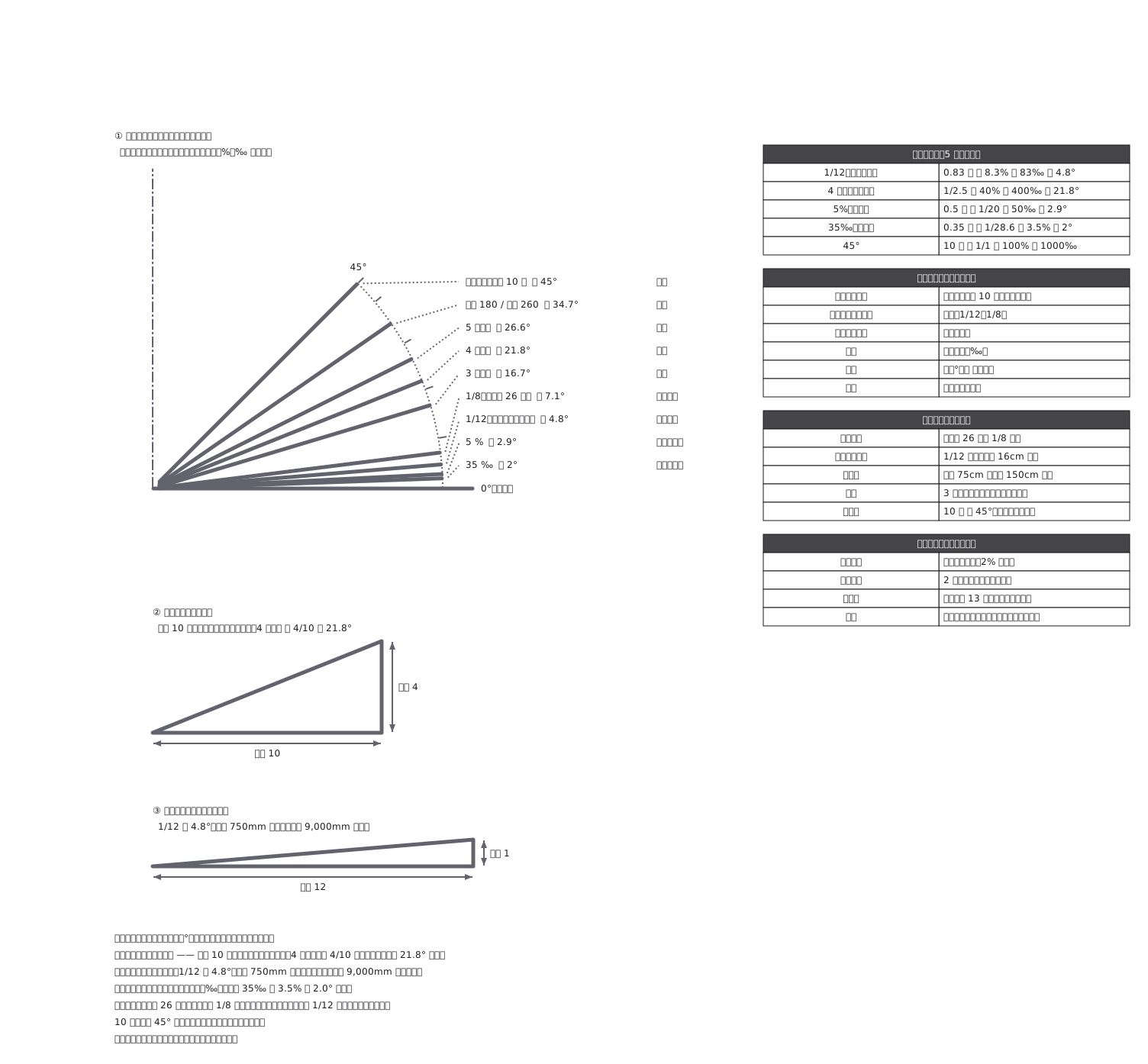 Slope notation: roofs in sun, ramps in fractions, roads in percent, railways in per mille — degrees are the minority
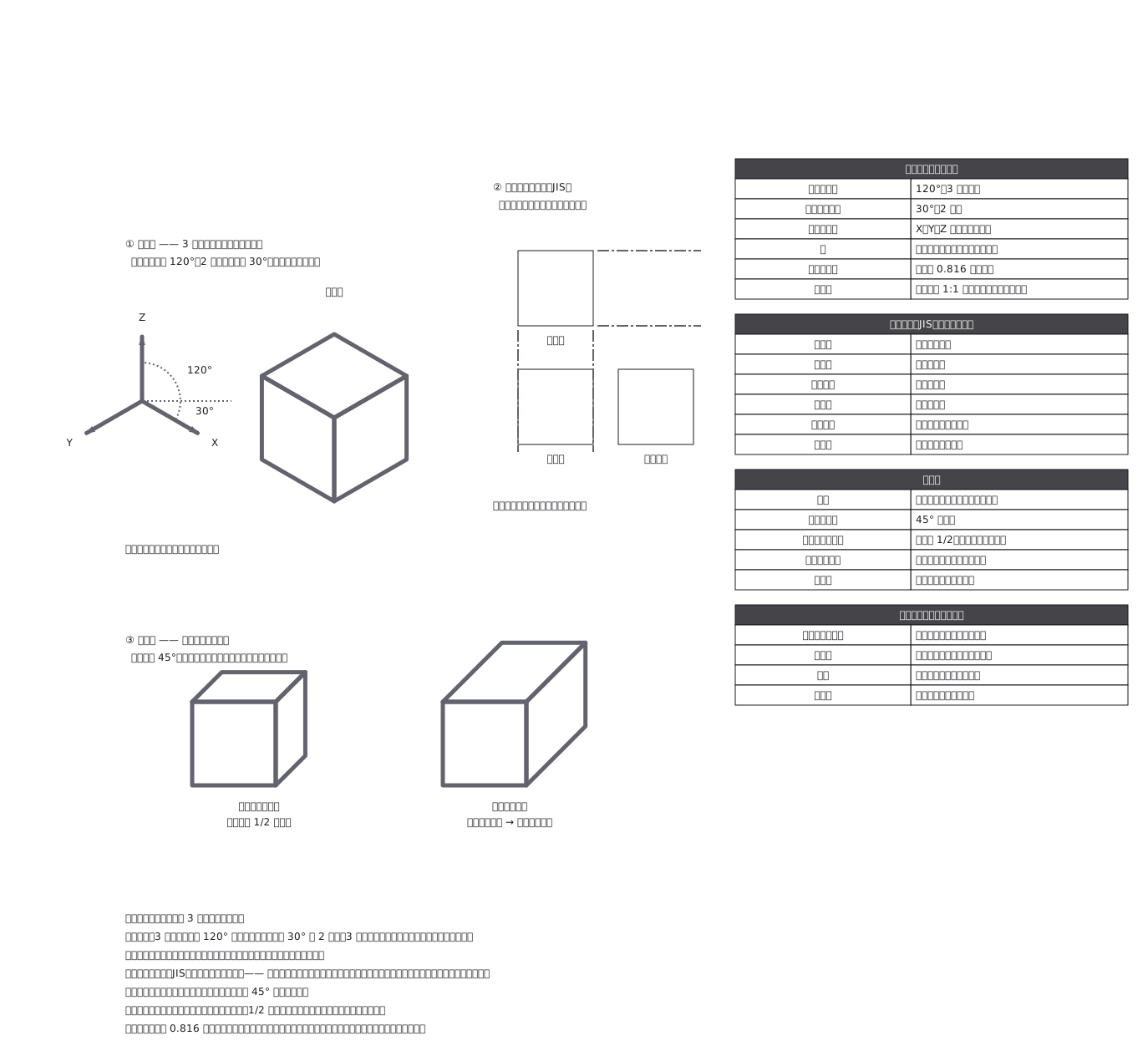 Isometric, third-angle and oblique: one scale serves all three axes, but circles become ellipses
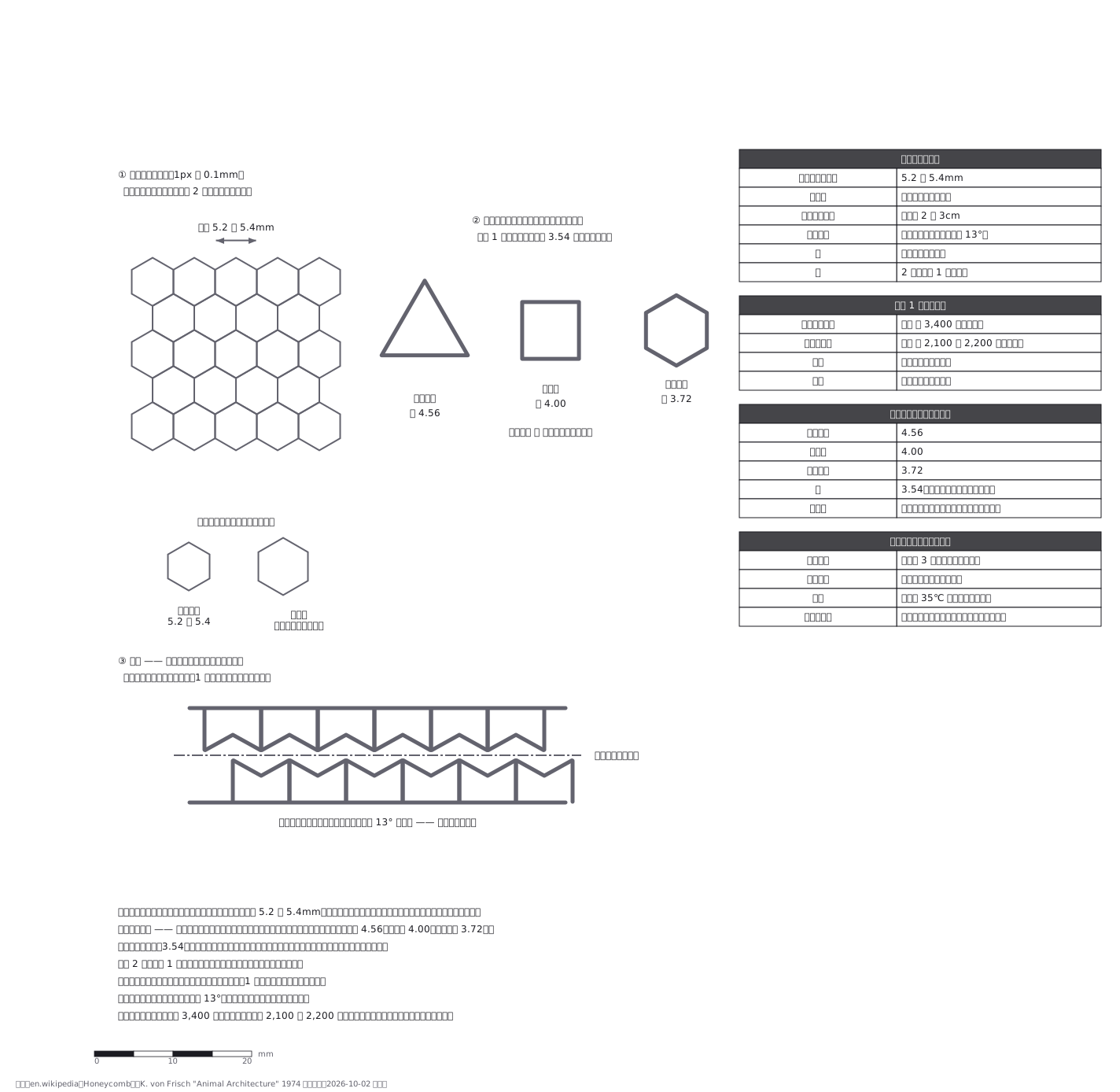 Honeycomb cells: for a given area the hexagon has the shortest wall of any shape that tiles
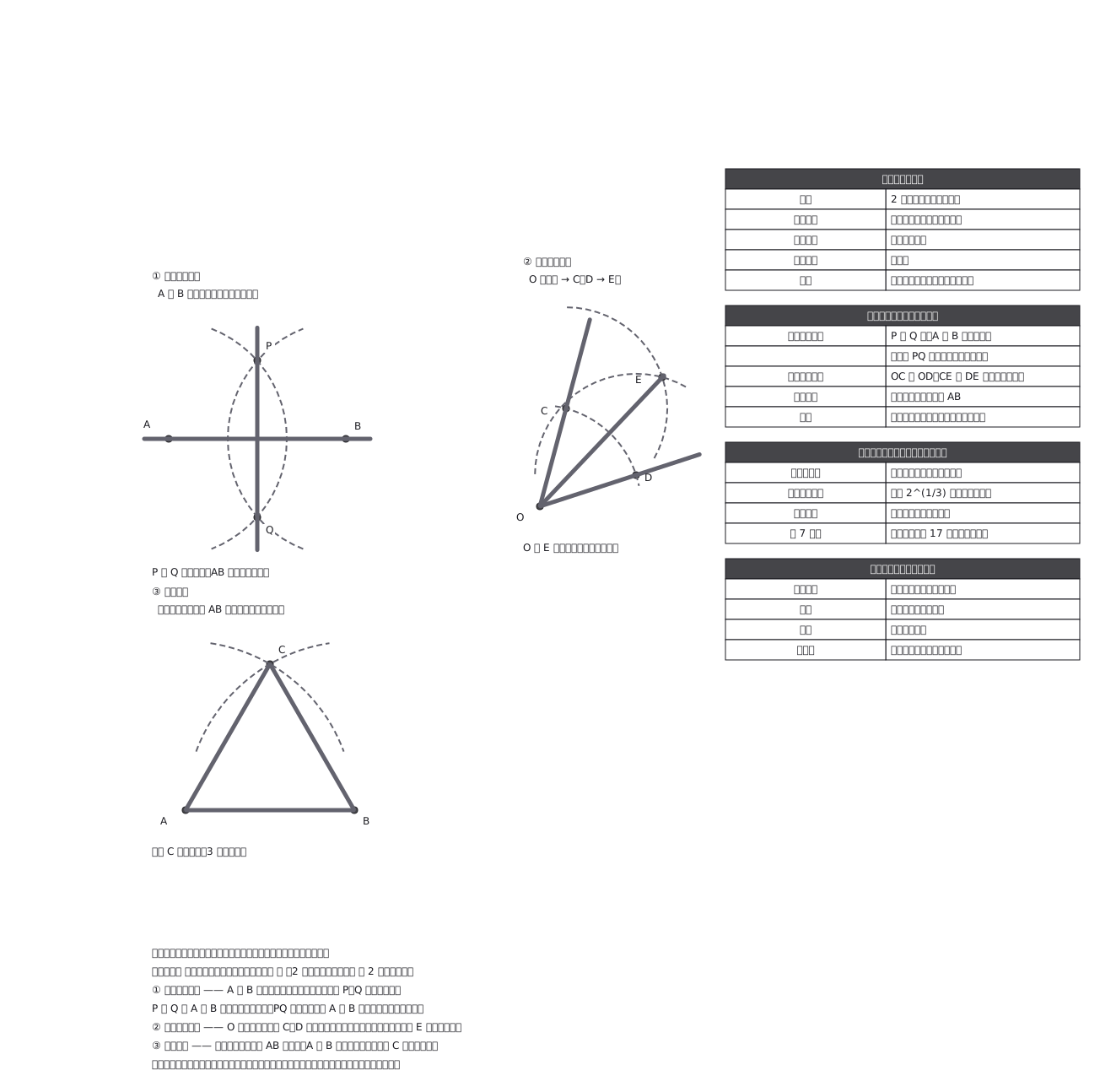 Ruler-and-compass constructions: no scale is used, because equal compass openings make equal lengths
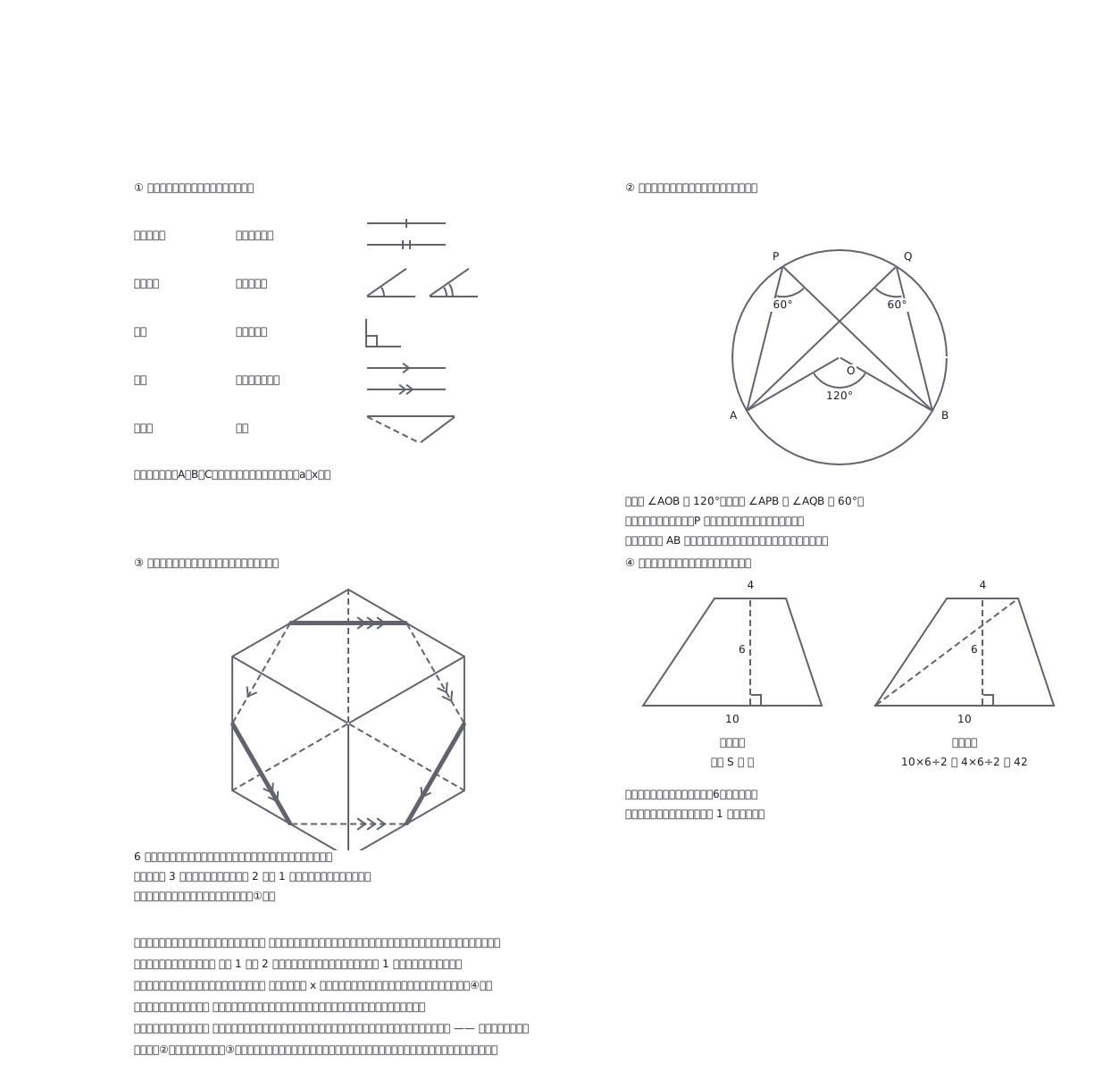 Figures in maths problems: the marks carry the meaning — equal ticks, right-angle squares, parallel chevrons — and only the given values are written on the figure
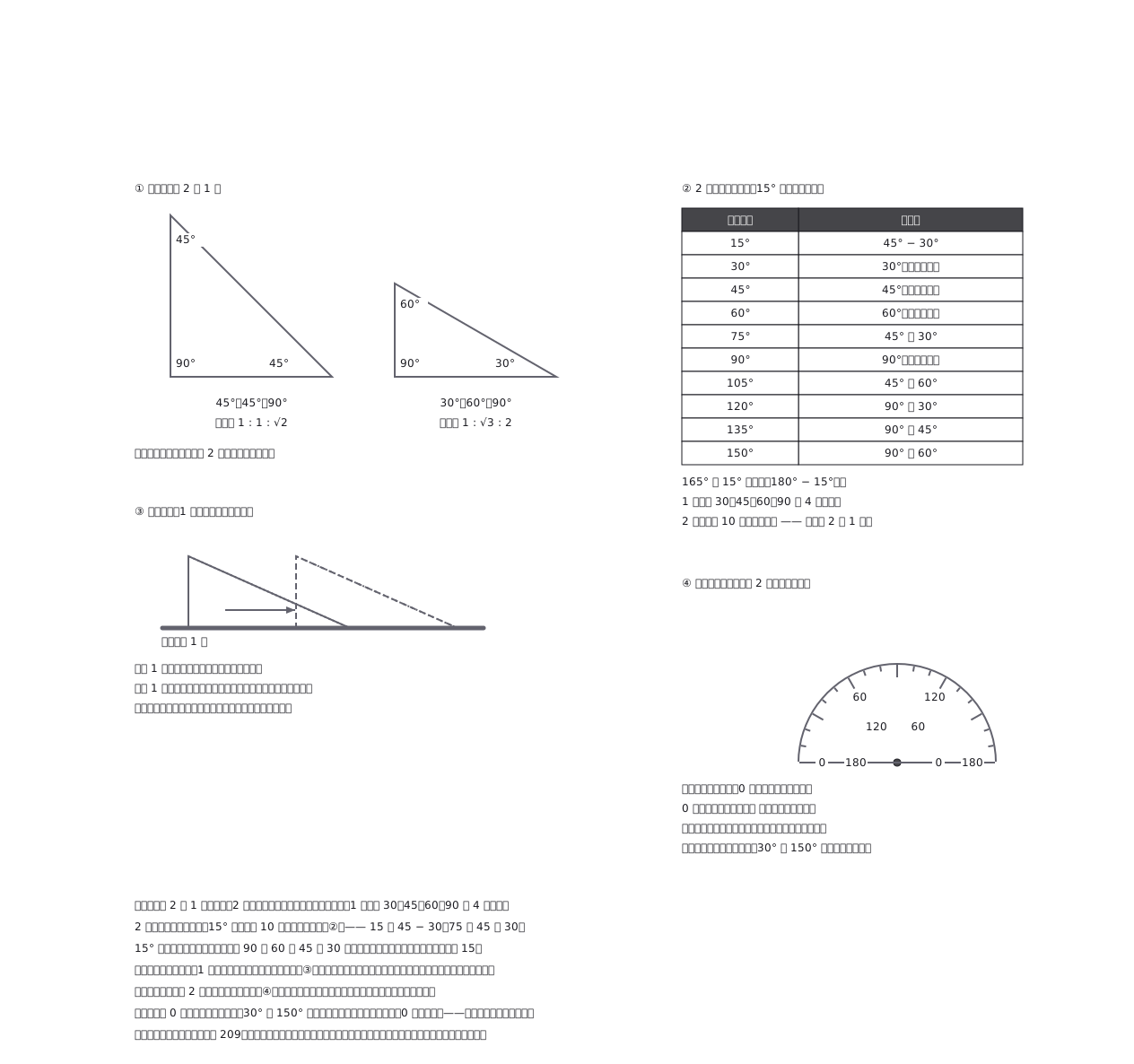 Two set squares come as a pair because two of them make ten angles in 15-degree steps, where one alone makes only four
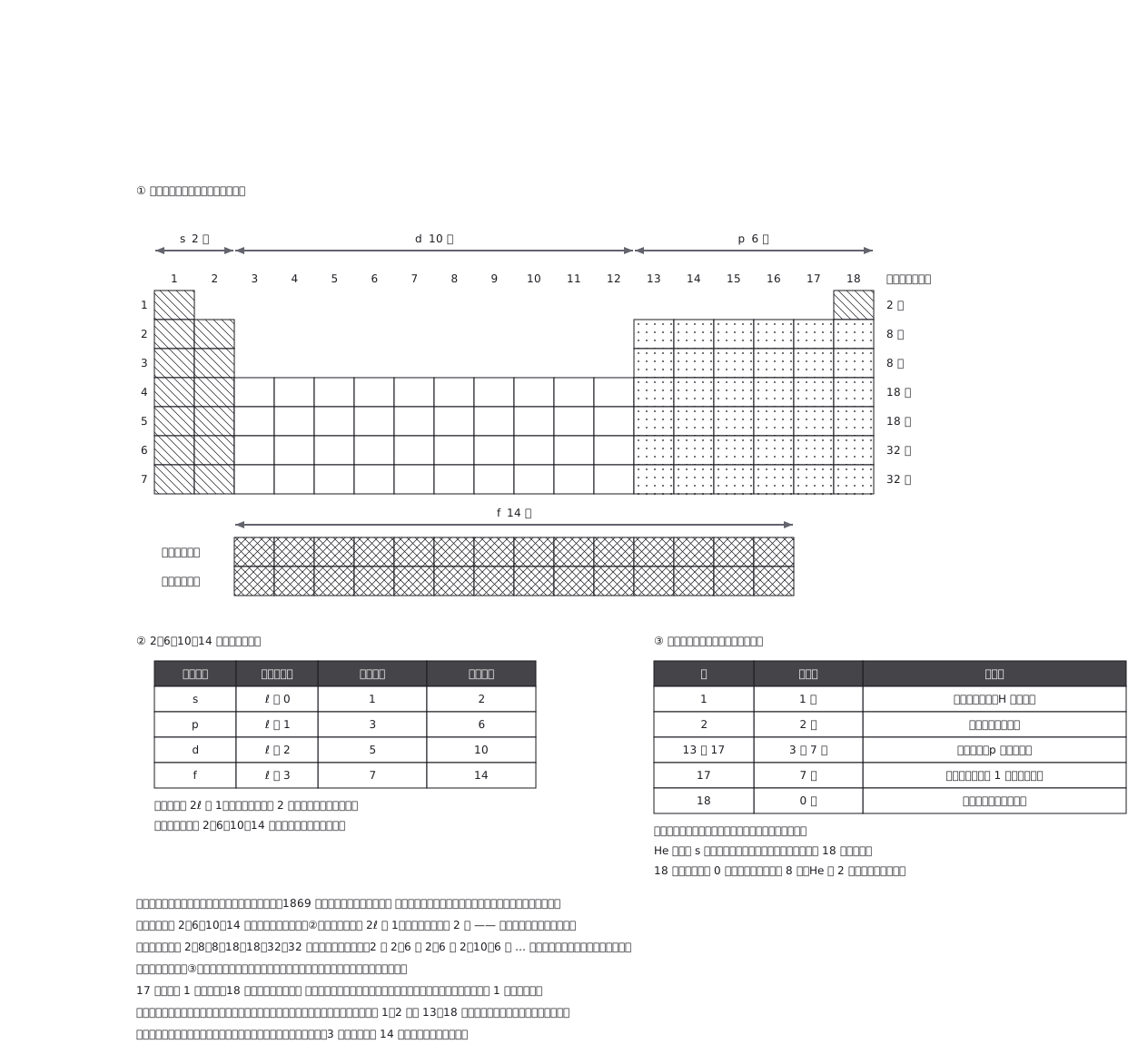 The shape of the periodic table is the electron configuration: block widths of 2, 6, 10 and 14 are orbital capacities, so no other width is possible
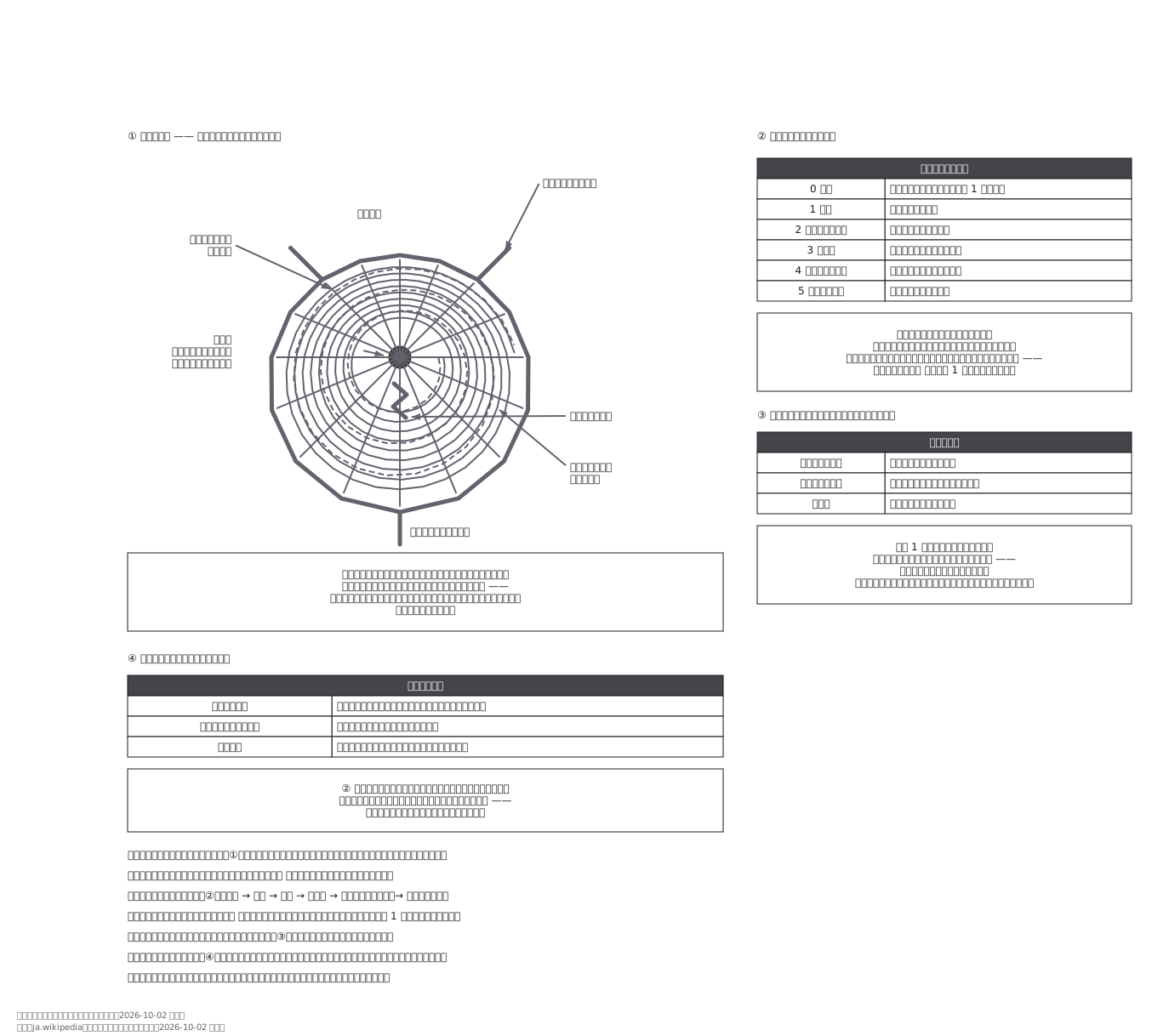 A spider does not stick to its own web because only the spiral is sticky: the radials and the temporary scaffold are dry, and the scaffold is cut away as the sticky spiral is laid from the outside in
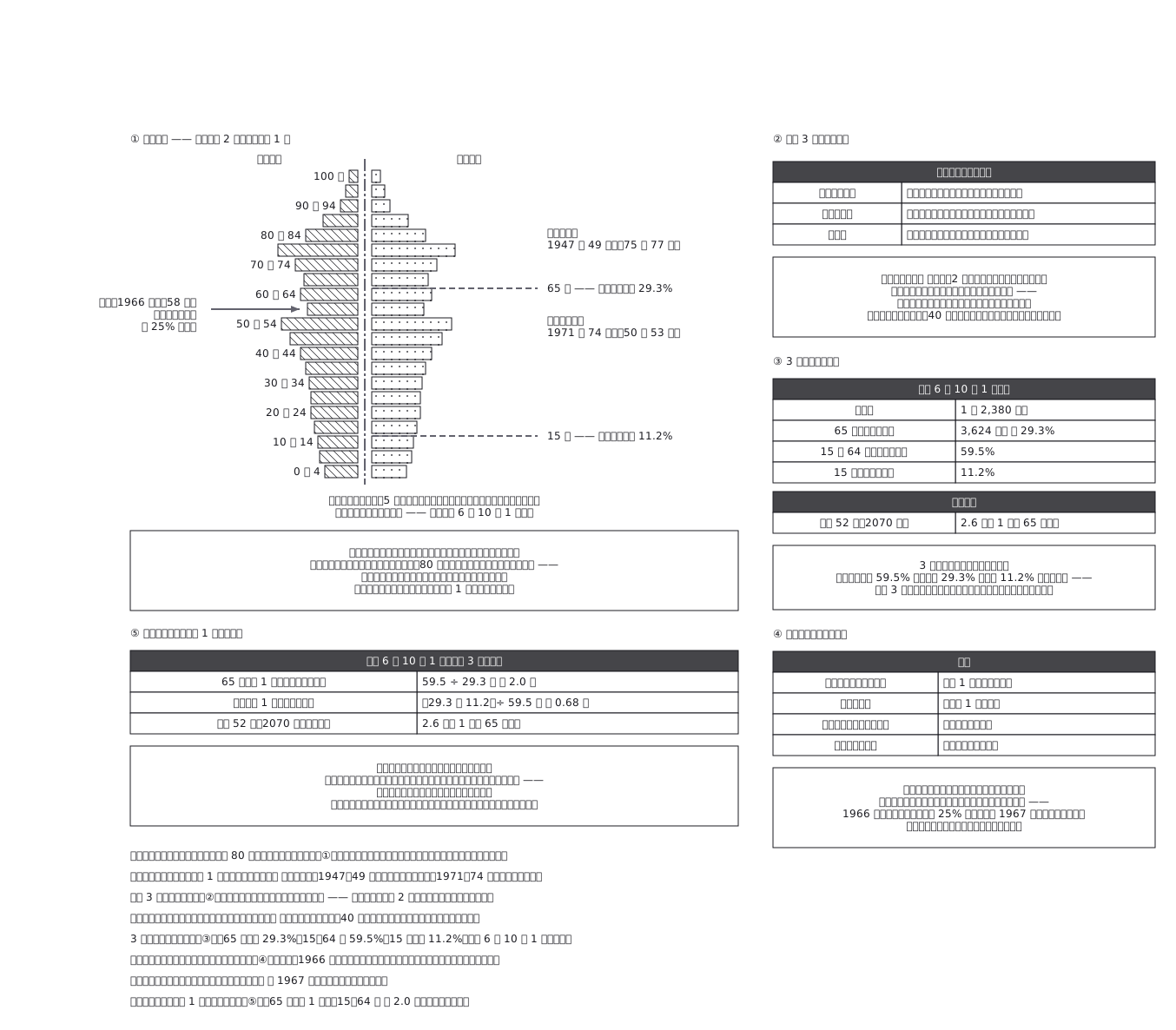 A population pyramid is not a picture of today but eighty years of births stacked upright: the bulges and the notch move up one step every year, and the notch at 1966 records a year people avoided, not a generation that was lost
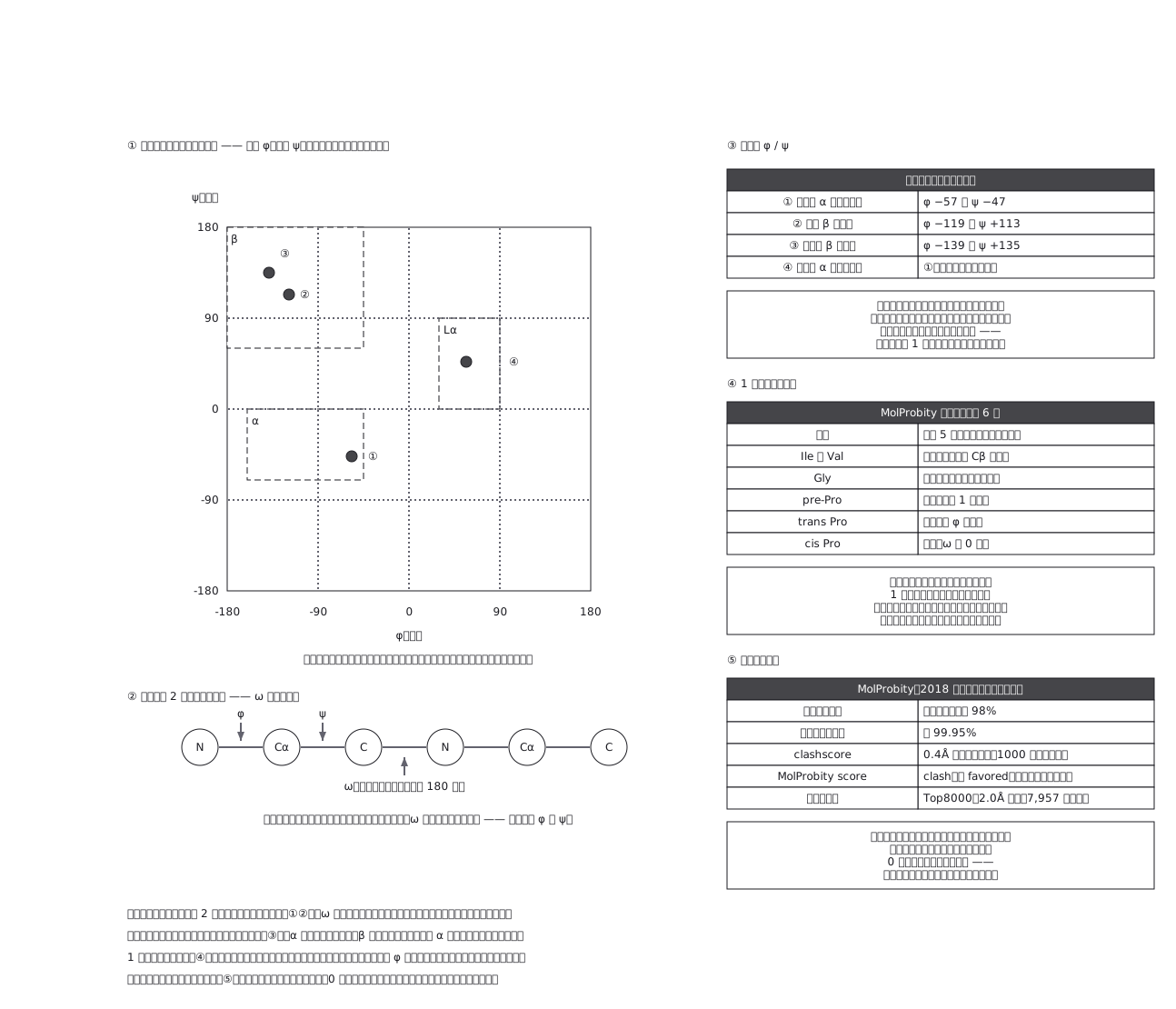 Two angles per residue are almost the whole story of a protein backbone: the peptide bond is a partial double bond so omega barely turns, leaving phi and psi, and each secondary structure lands in its own patch of the plot — which is why structure validation is done on six separate plots, since glycine and proline are allowed quite different places
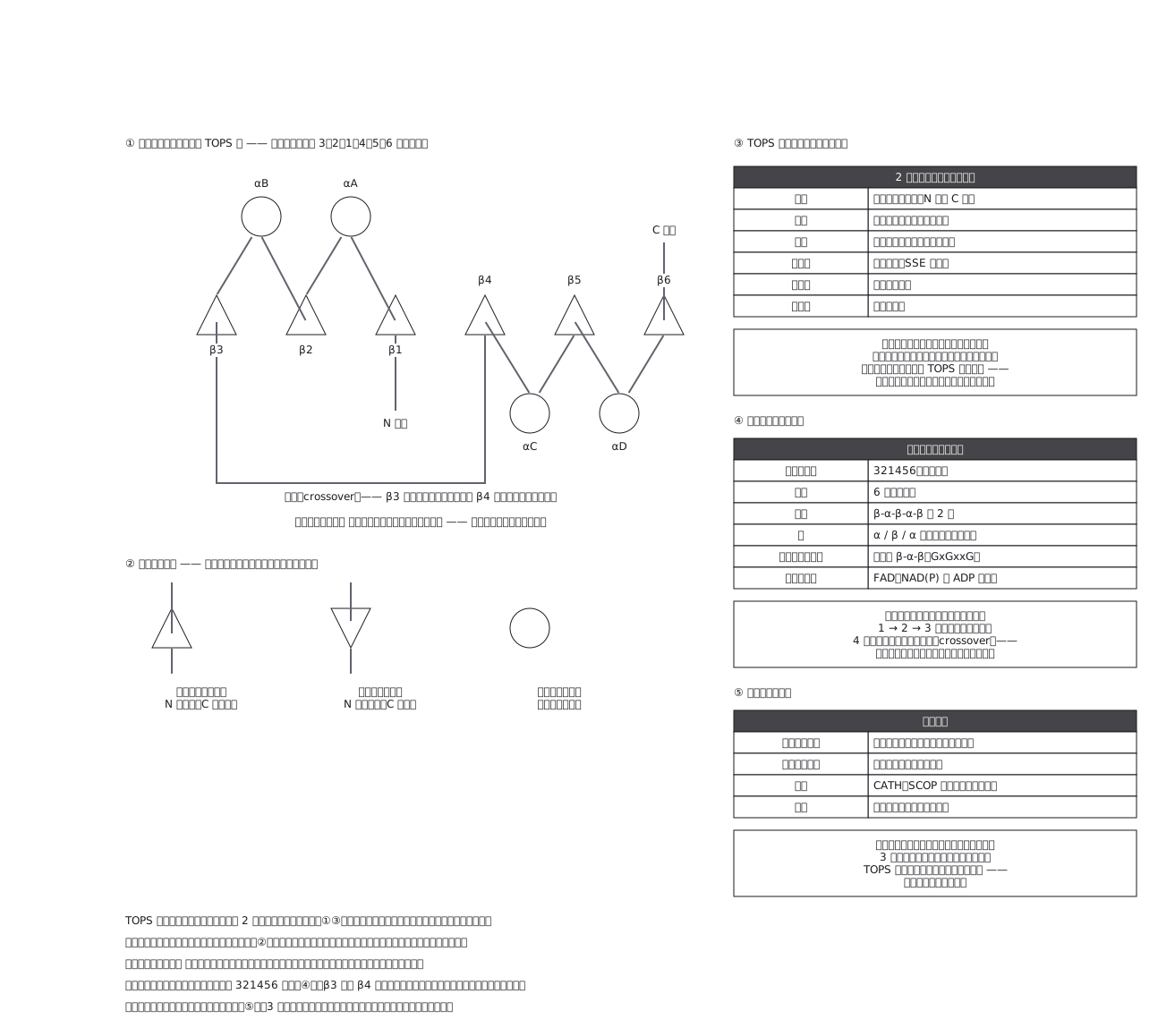 Throw away every length and only the fold is left: a TOPS cartoon draws helices as circles and strands as triangles, and whether a connecting line stops at the edge of a symbol or runs into its centre is what tells you which end of the strand it joins — so two proteins of very different size can share one diagram
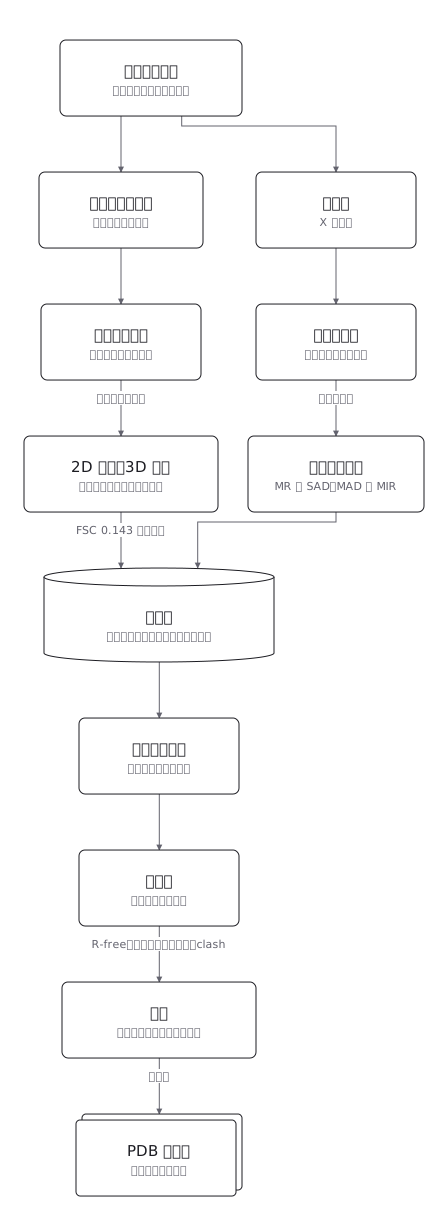 Diffraction records only intensities, never phases, so a crystallographer has to fetch the phases from somewhere else — a known structure, anomalous scattering, or a heavy-atom derivative — whereas cryo-EM has no phase problem at all and pays instead by having to average tens of thousands of particles
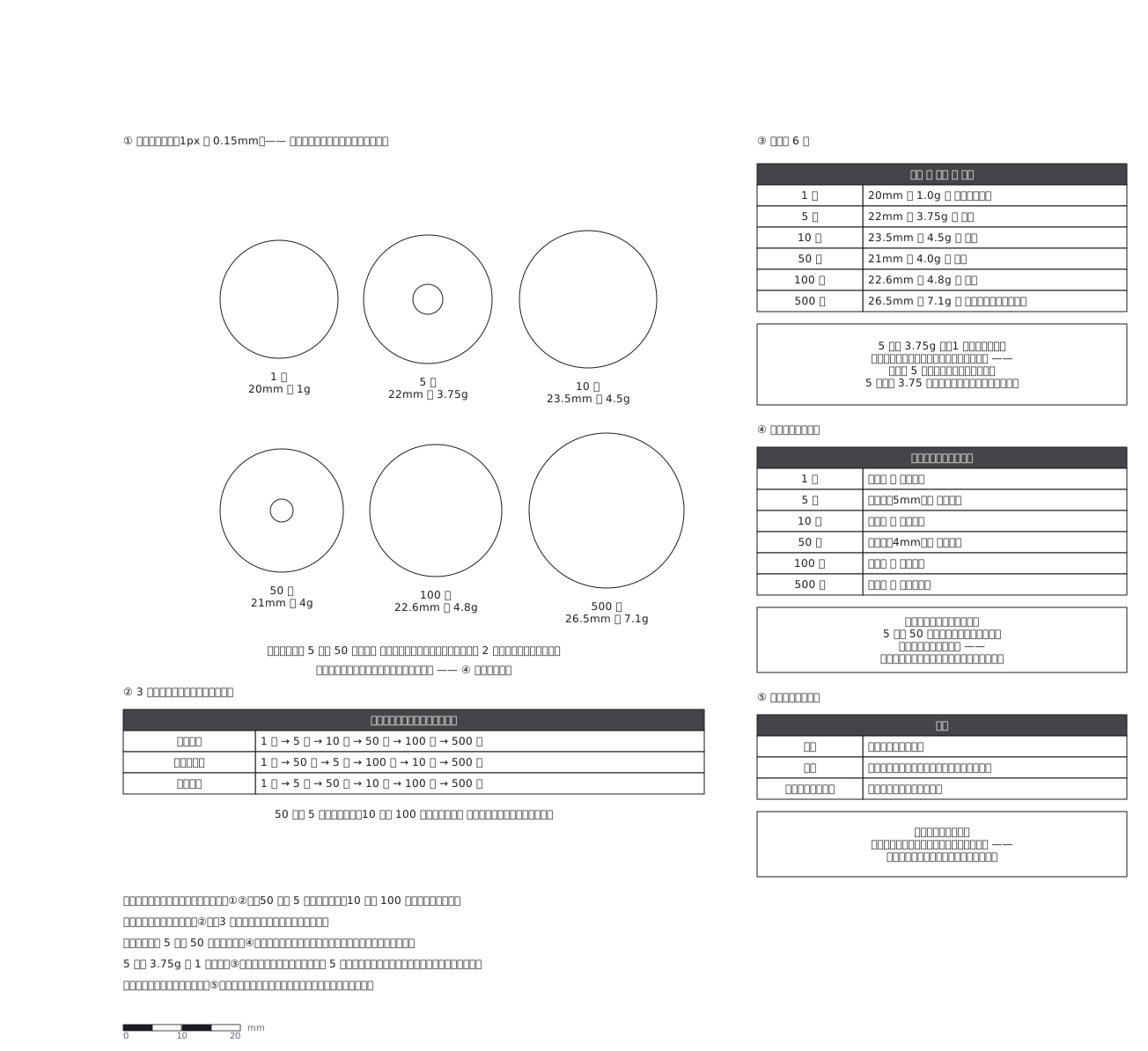 Three orderings that never agree: the 50 yen coin is smaller than the 5, the 10 is bigger than the 100, and the weights rank differently again — the only two with holes are the 5 and the 50, which are then told apart by the milled edge, because the set is designed to be read by hand
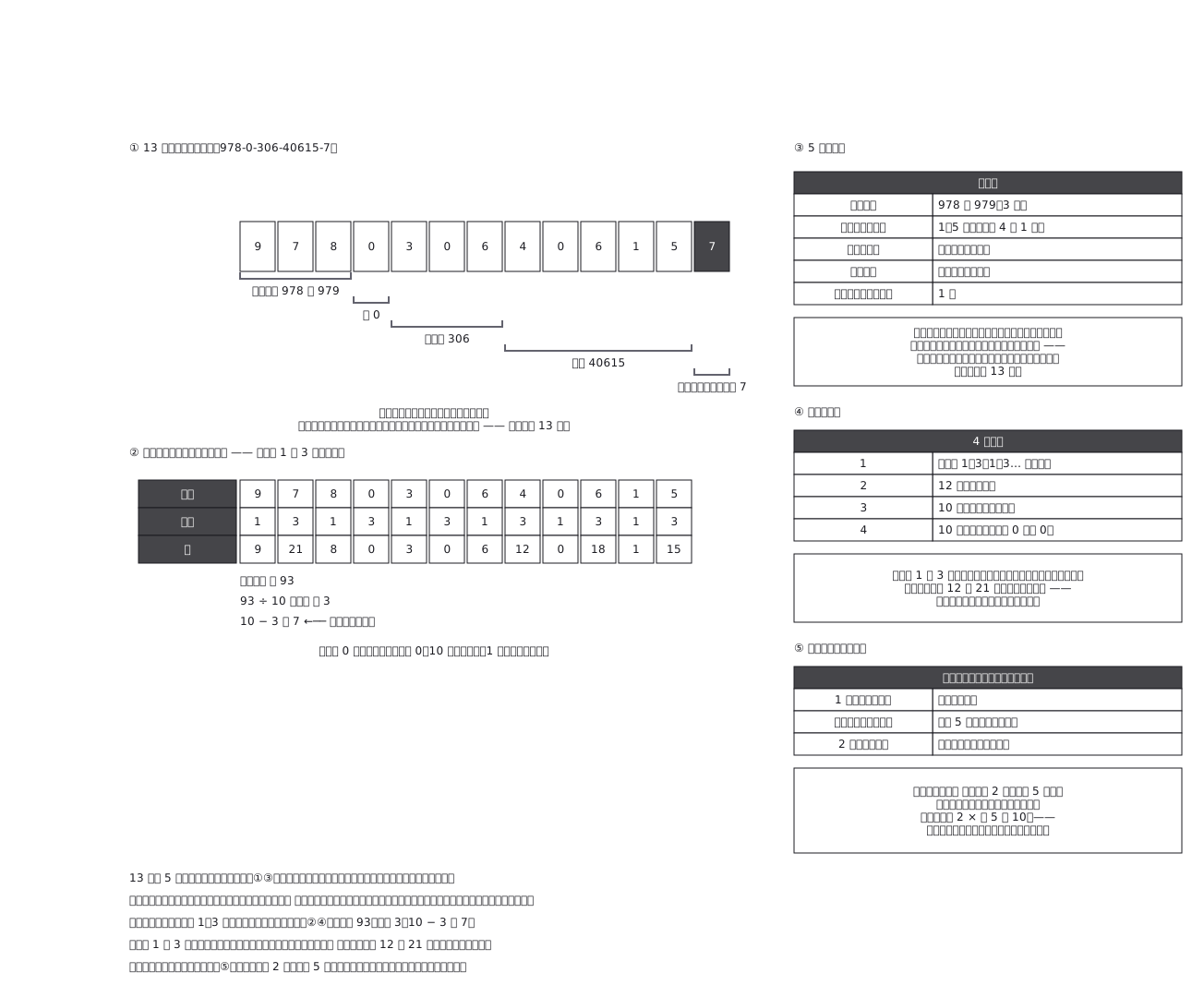 Only the middle two fields of an ISBN change length, so a publisher that issues many books holds a short registrant number and gets a longer title field in return — and the check digit, a weighted sum of alternating 1s and 3s, is deliberately imperfect: swapping two adjacent digits that differ by five slips straight through
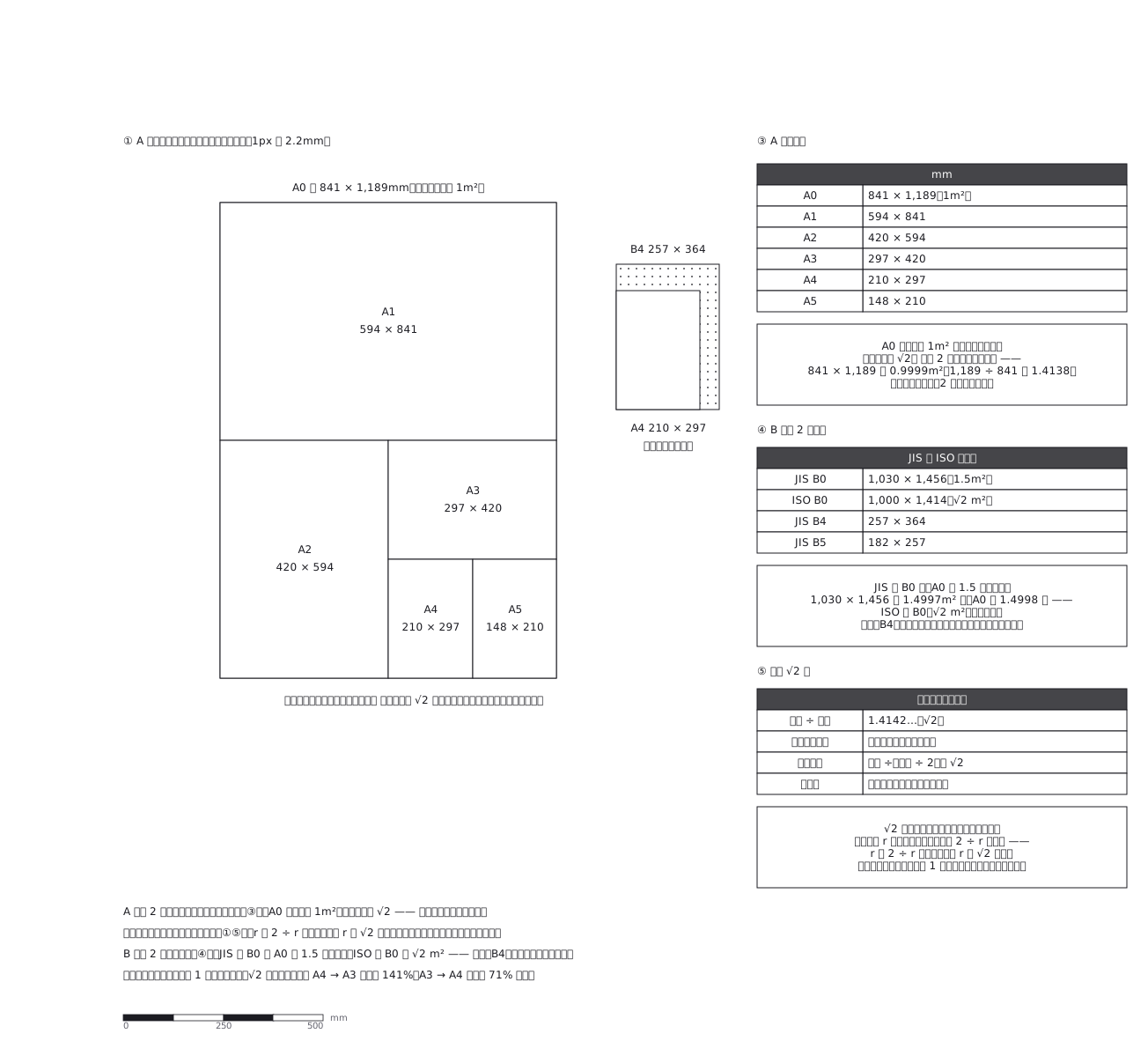 The whole A series follows from two decisions — A0 has an area of exactly one square metre and the sides are in the ratio root two — and root two is the only ratio that survives being halved, which is also why a photocopier needs just one number to step between sizes
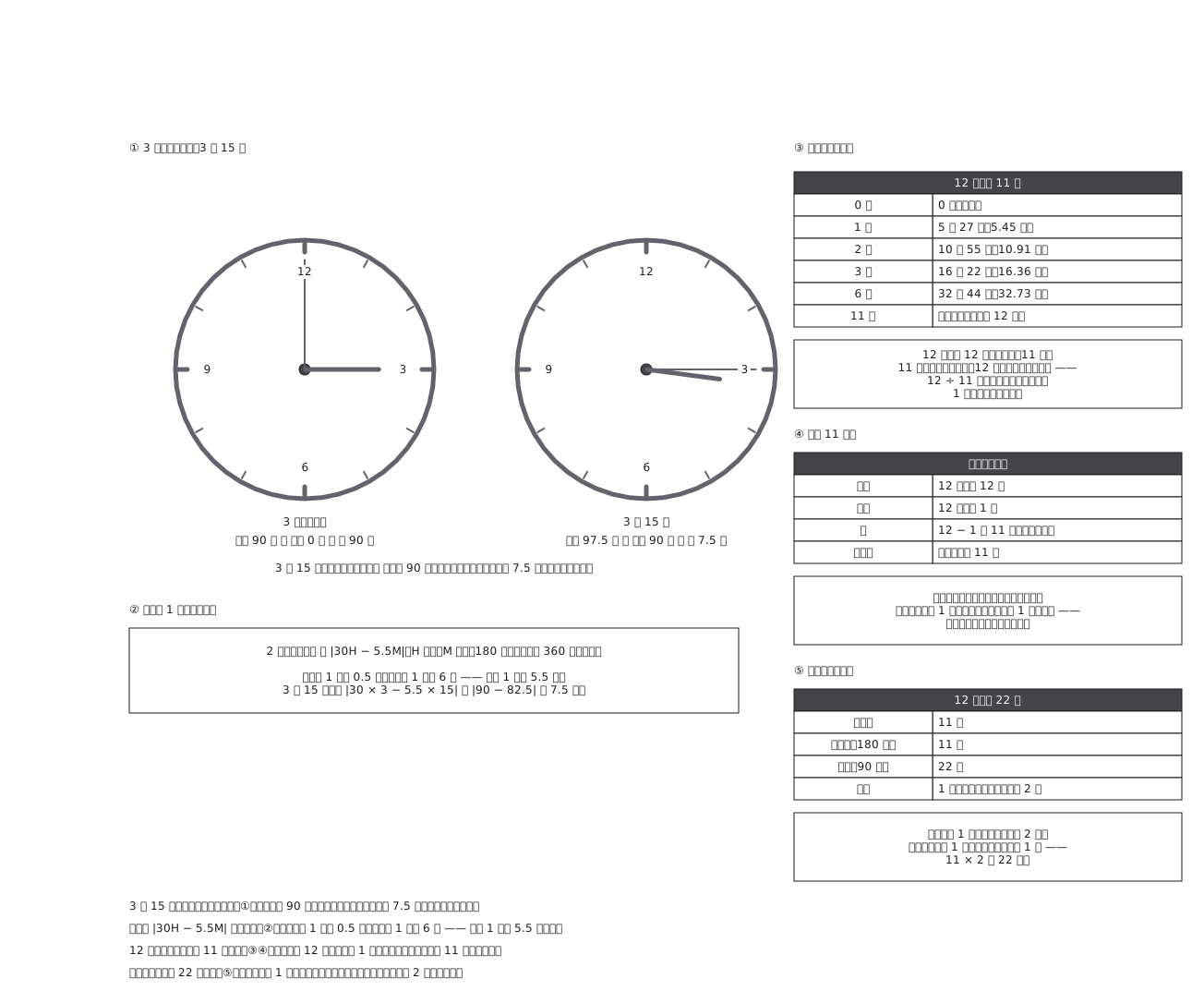 At a quarter past three the hands are not together: while the minute hand travelled ninety degrees the hour hand moved seven and a half, and the same arithmetic explains why the hands coincide eleven times in twelve hours rather than twelve
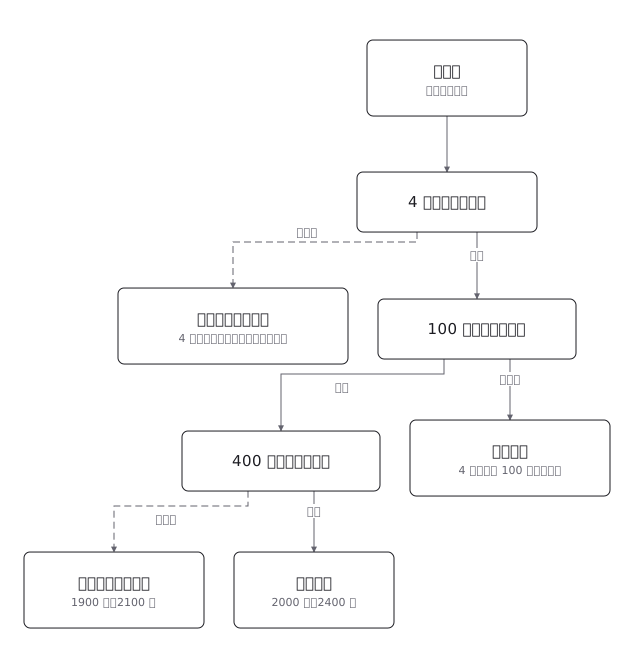 Ninety-seven leap years every four hundred, not a hundred: dropping three of them brings the average year to 365.2425 days, within 0.0003 of the real one — and the four-hundred-year total happens to divide by seven, so the weekdays come back round as well
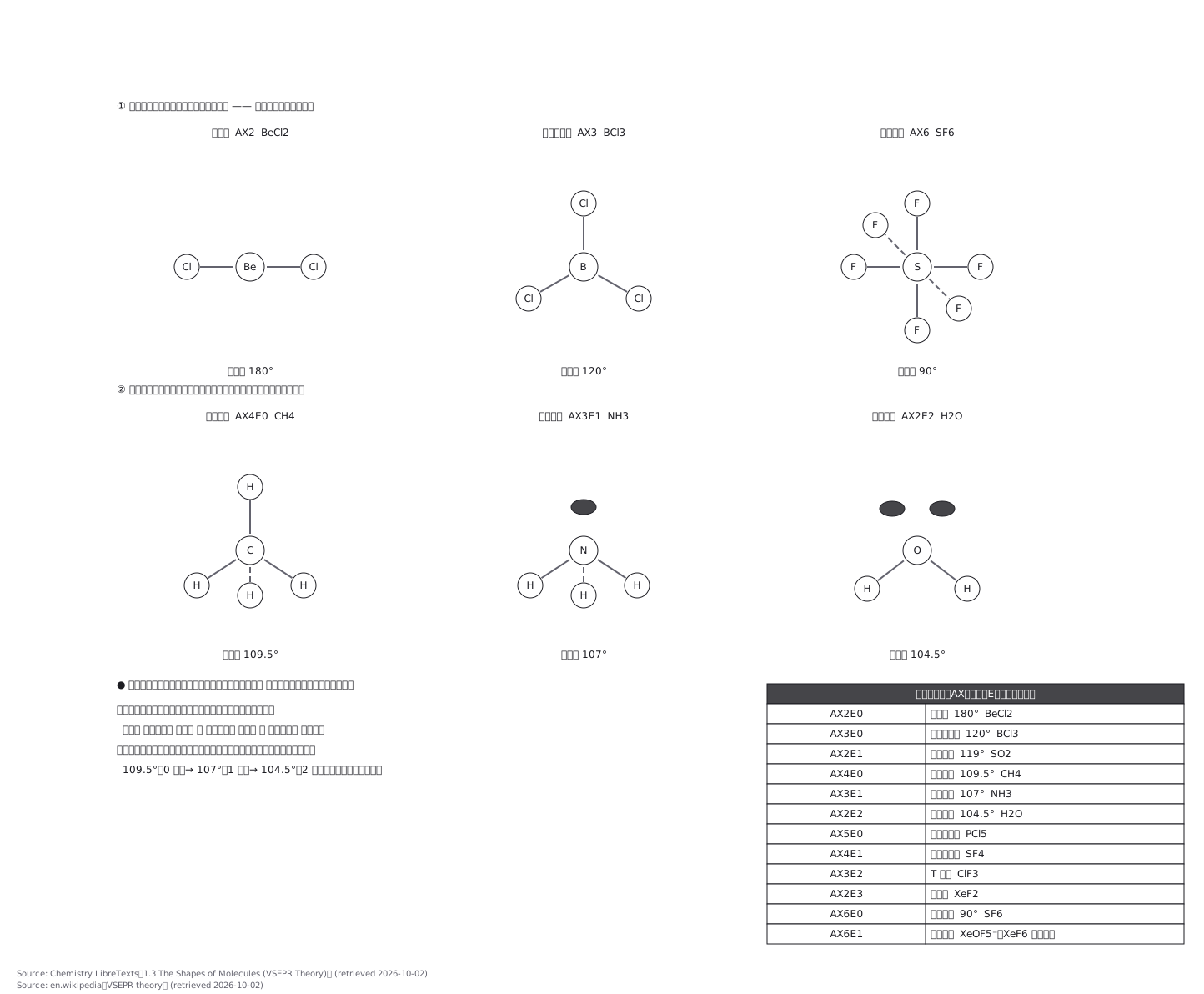 Electron pairs around a central atom push each other as far apart as they can, and that alone fixes the shape. Methane, ammonia and water all have four pairs on the same tetrahedral skeleton; what differs is how many of them are bonds, and each lone pair squeezes the bond angle further — 109.5, then 107, then 104.5 degrees.
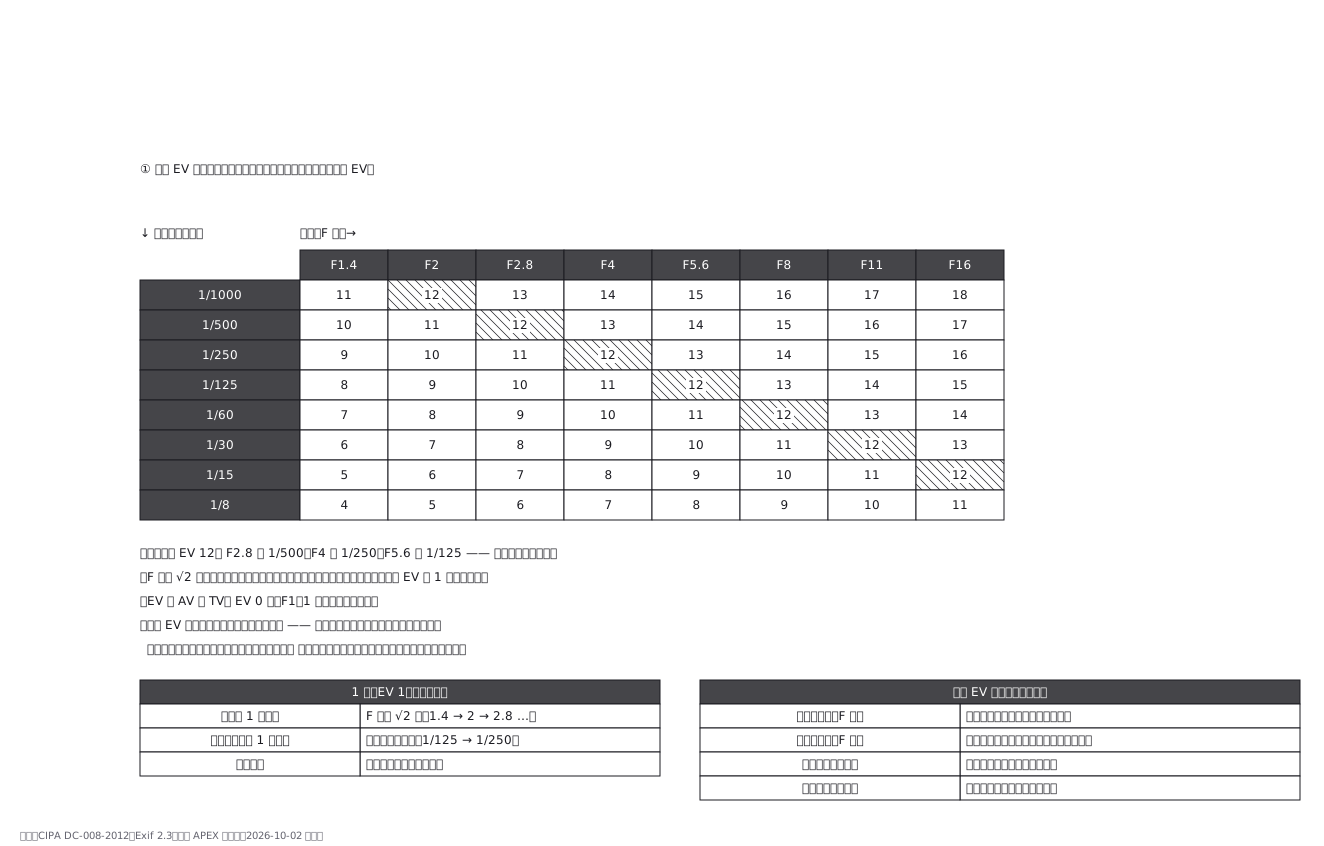 Brightness is set not by the aperture or the shutter but by their sum, so equal exposures line up on a diagonal: f/2.8 at 1/500, f/4 at 1/250 and f/5.6 at 1/125 are all 12 EV. One stop either way halves the light. What the diagonal does not equalise is the picture — a smaller aperture deepens the focus and a slower shutter lets movement blur, which is why choosing along it is the craft.
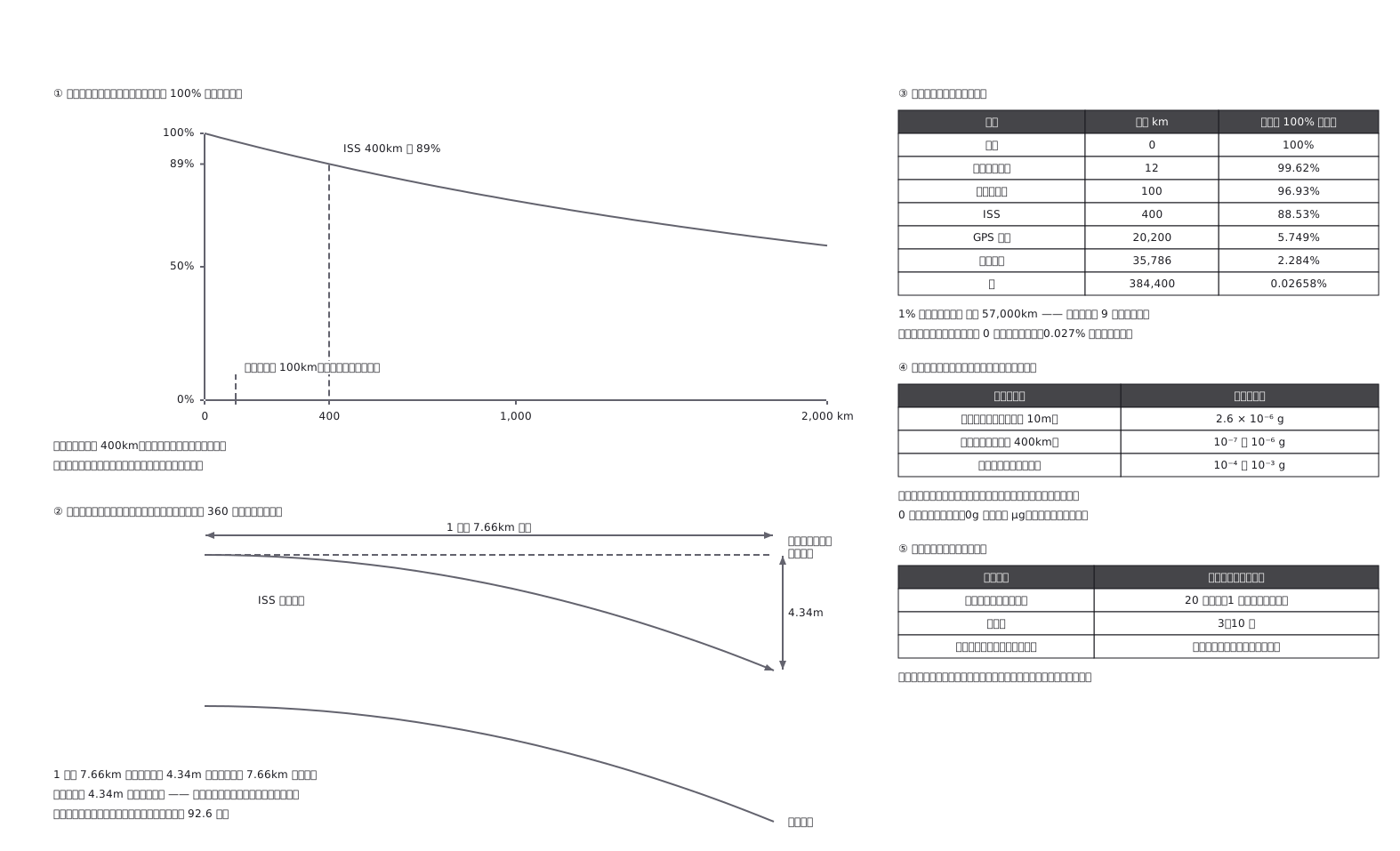 At the altitude of the ISS, 400km, Earth still pulls at 88.5 per cent of its surface strength. Astronauts float because the station is falling, not because gravity has gone: in one second it travels 7.66km and drops 4.34m, and 7.66km further on the surface has curved away by the same 4.34m. Tables give the pull at every altitude up to the Moon, and why it is called microgravity rather than zero.
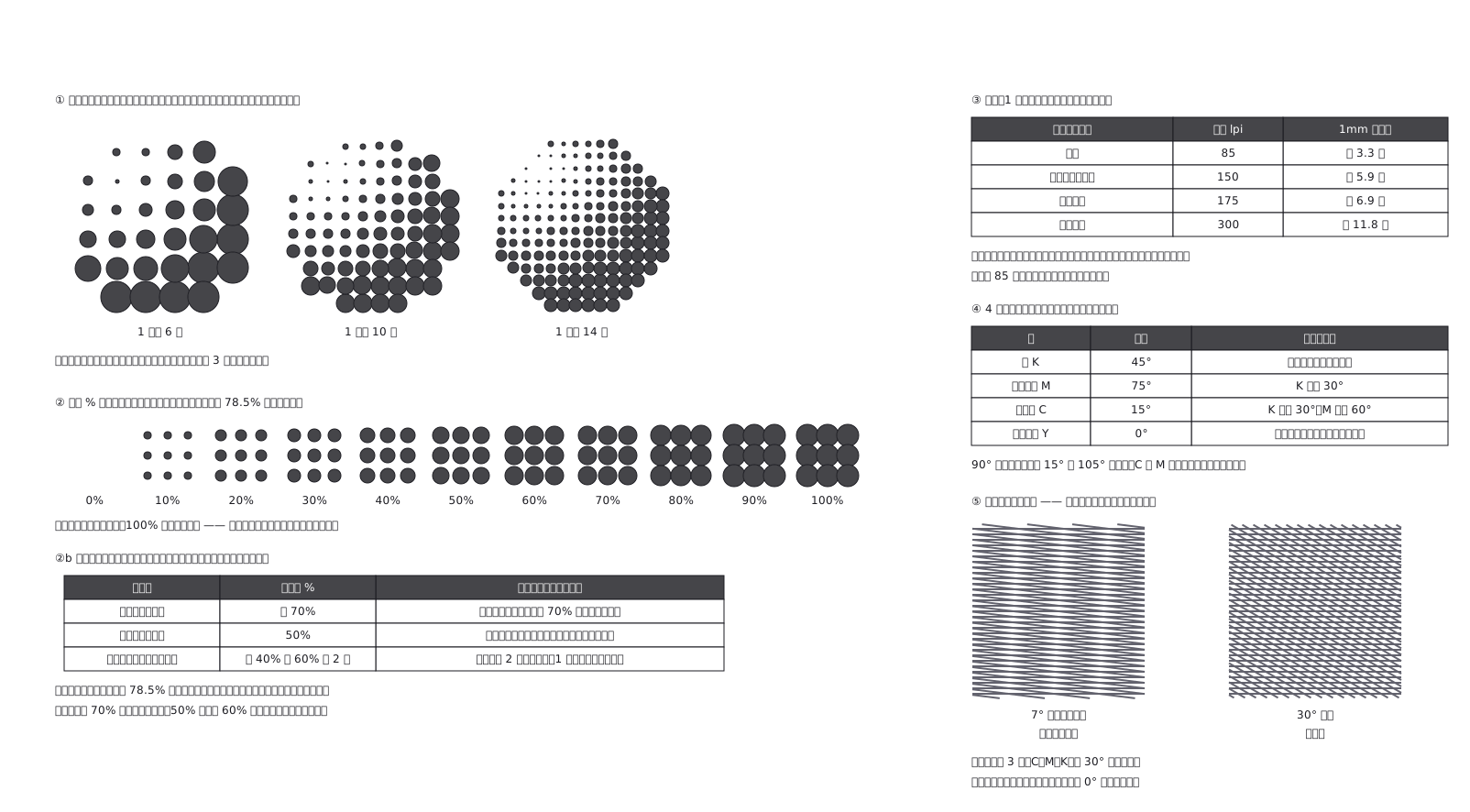 A press cannot print grey: it lays ink or it does not. Halftone varies the size of evenly spaced dots and lets the eye mix them. A shaded sphere at three screen rulings, round dots touching at 78.5 per cent, where round, square and elliptical dots join, rulings from newspapers (85 lpi) to fine art (300), and why the inks sit 30 degrees apart: screens 7 degrees apart beat into moiré.
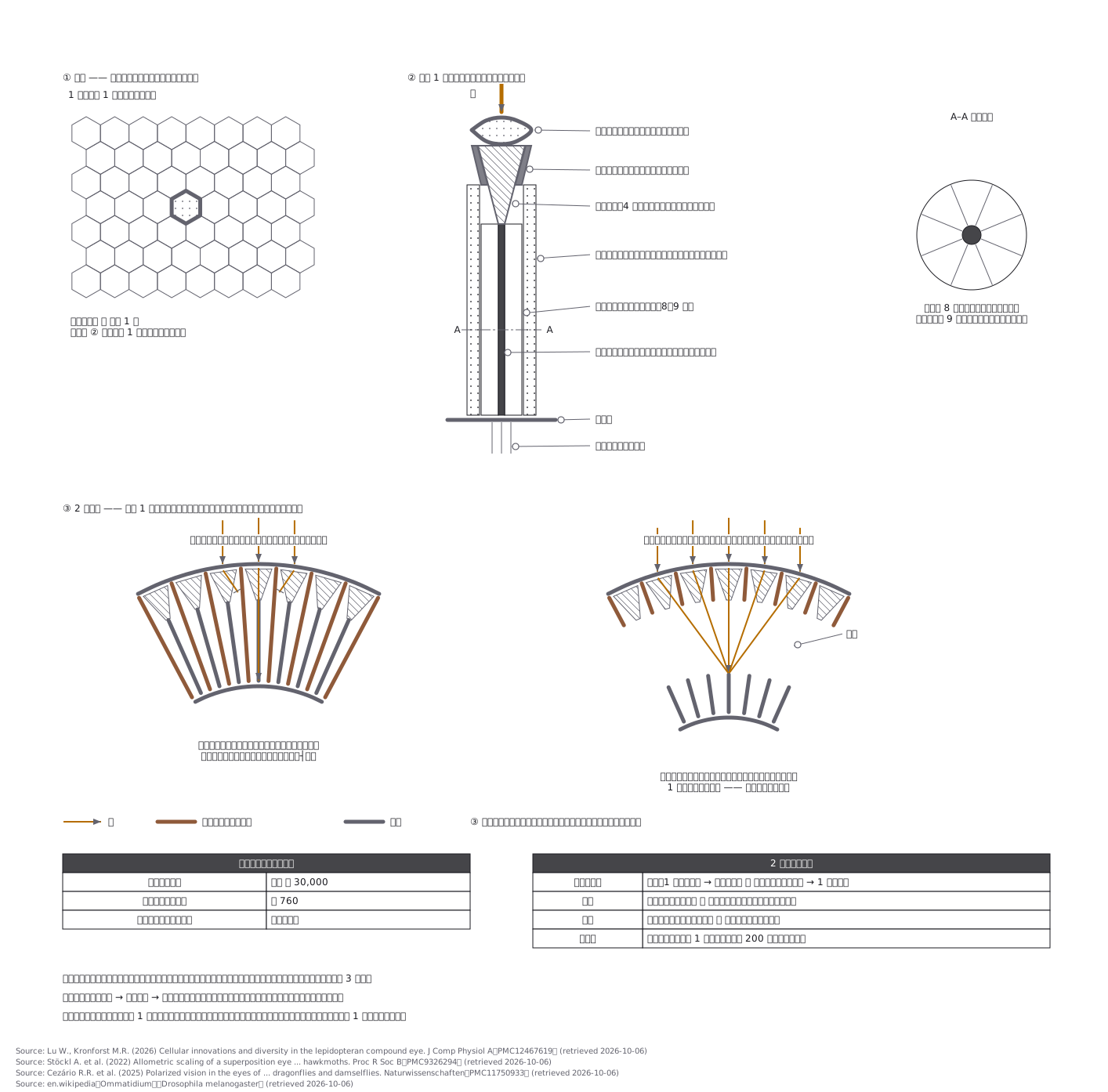 An insect compound eye is a mosaic of hexagonal facets, up to about 30,000 per eye in large dragonflies. One ommatidium in section shows cornea, crystalline cone, pigment cells, photoreceptors and rhabdom; side by side, apposition eyes take light through one lens per rhabdom while superposition eyes pool light from many lenses across a clear zone
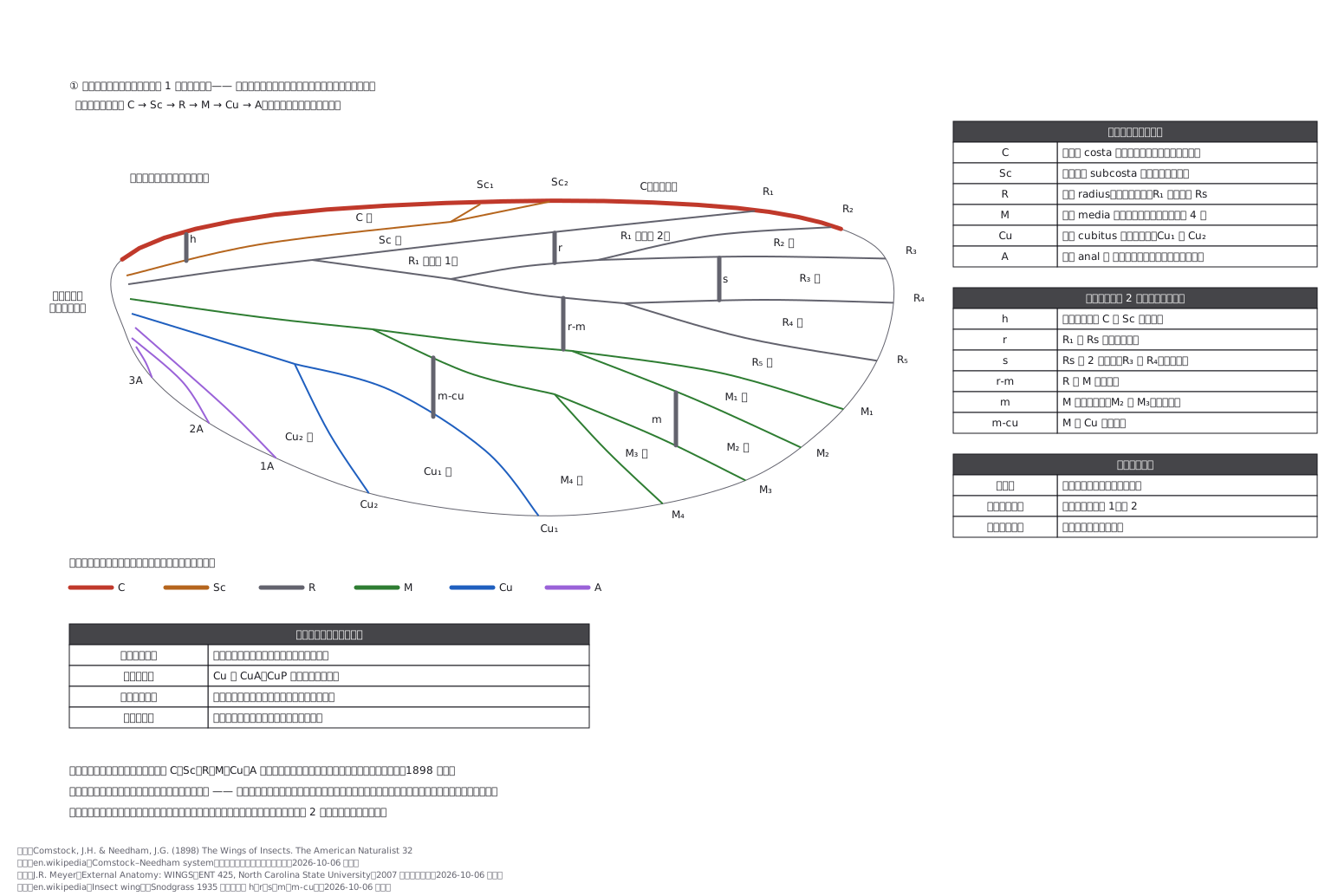 The Comstock–Needham names for insect wing veins on a generalised wing: C, Sc, R, M, Cu and A from front to back, branches numbered from the front, cross-veins named after the two veins they join, and each cell named after the vein in front of it
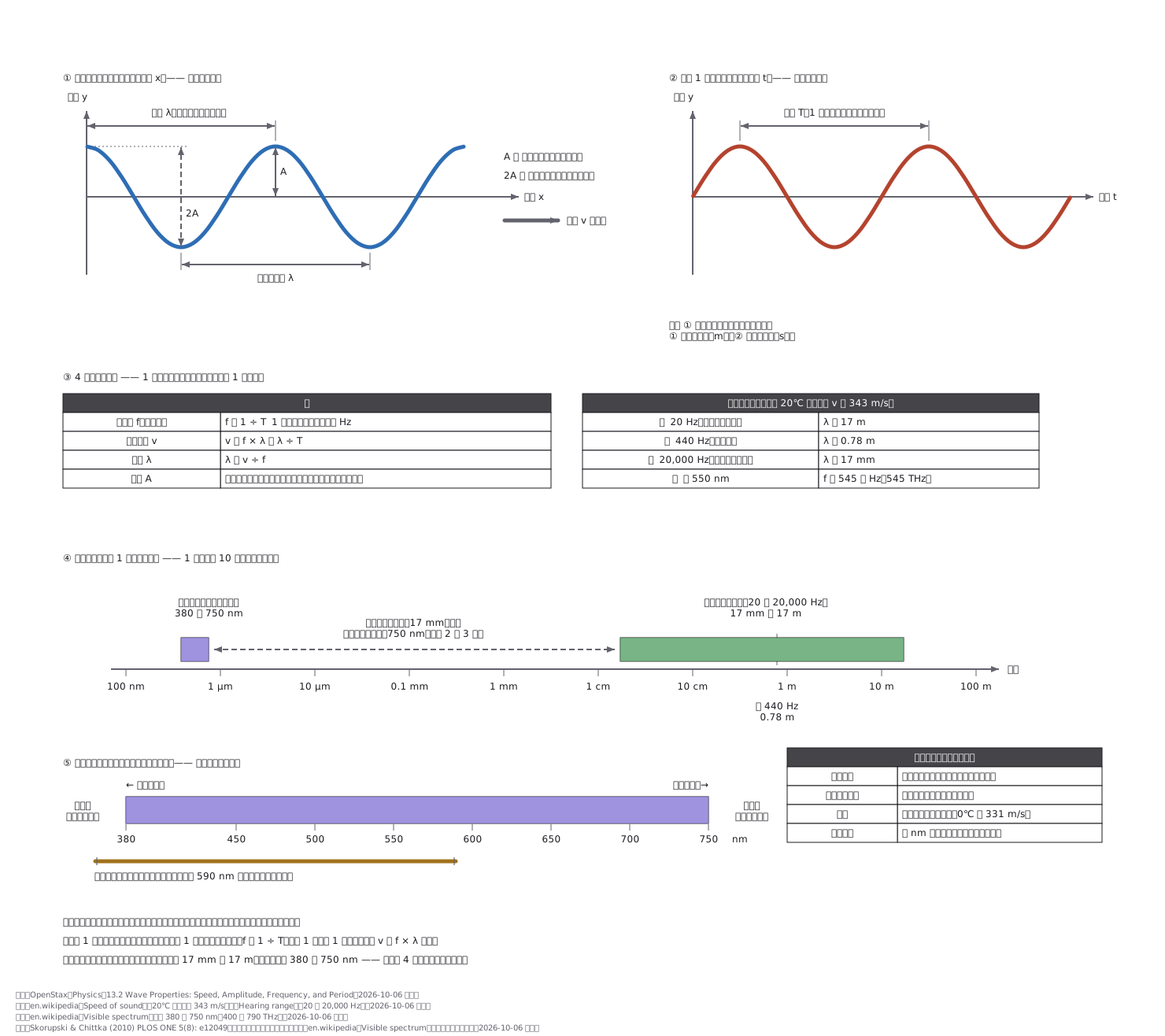 Wavelength, amplitude, period and frequency on two graphs, position and time, with v = fλ; then audible sound (17 mm to 17 m) and visible light (380 to 750 nm) on one logarithmic ruler, more than four orders of magnitude apart
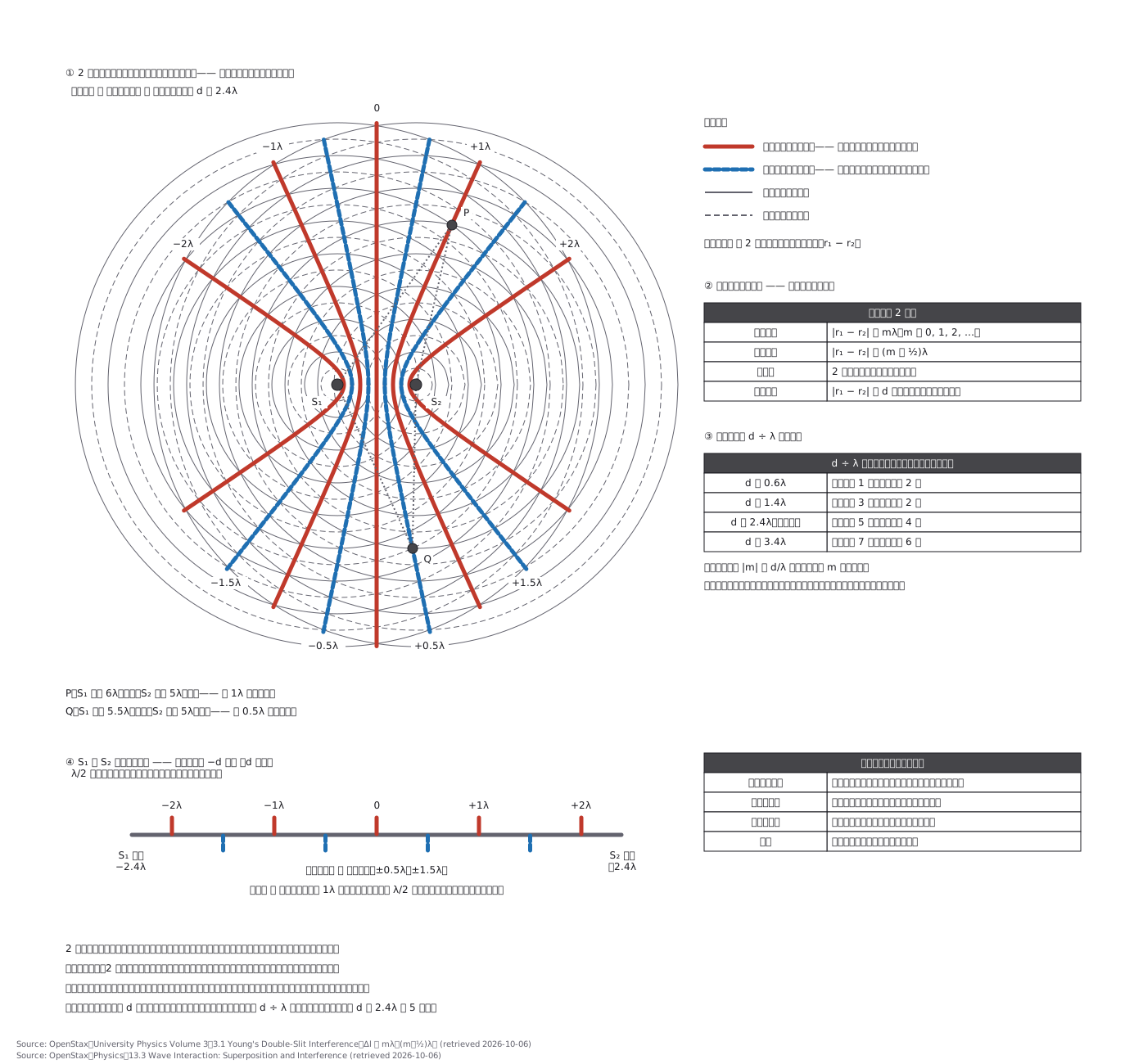 Two-source interference on water: crests and troughs from two sources in step, with five lines of reinforcement and four of cancellation drawn as hyperbolas. The path difference can never exceed the source spacing, so the number of lines is fixed by spacing divided by wavelength
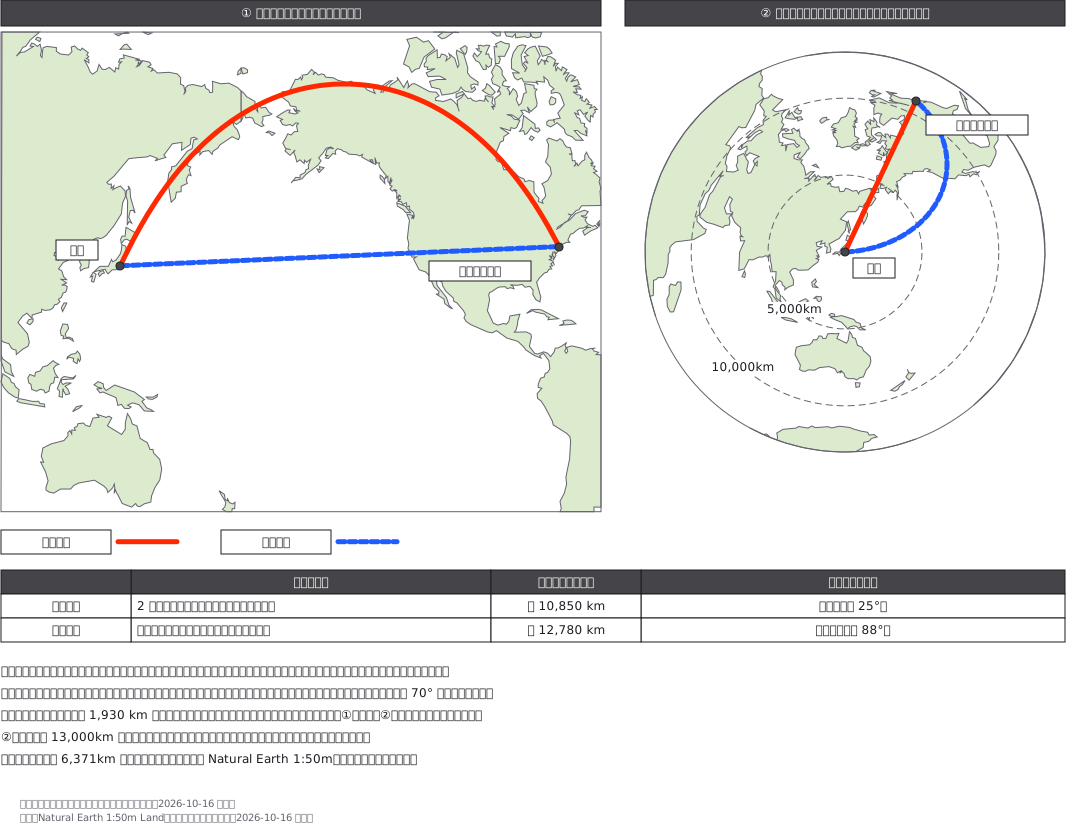 Tokyo to New York two ways on two projections: on Mercator the shortest great-circle route arcs up over Alaska while the constant-bearing rhumb line is straight; on an azimuthal equidistant map centred on Tokyo the great circle is the straight line and the rhumb line bends. About 10,850 km against 12,780 km.
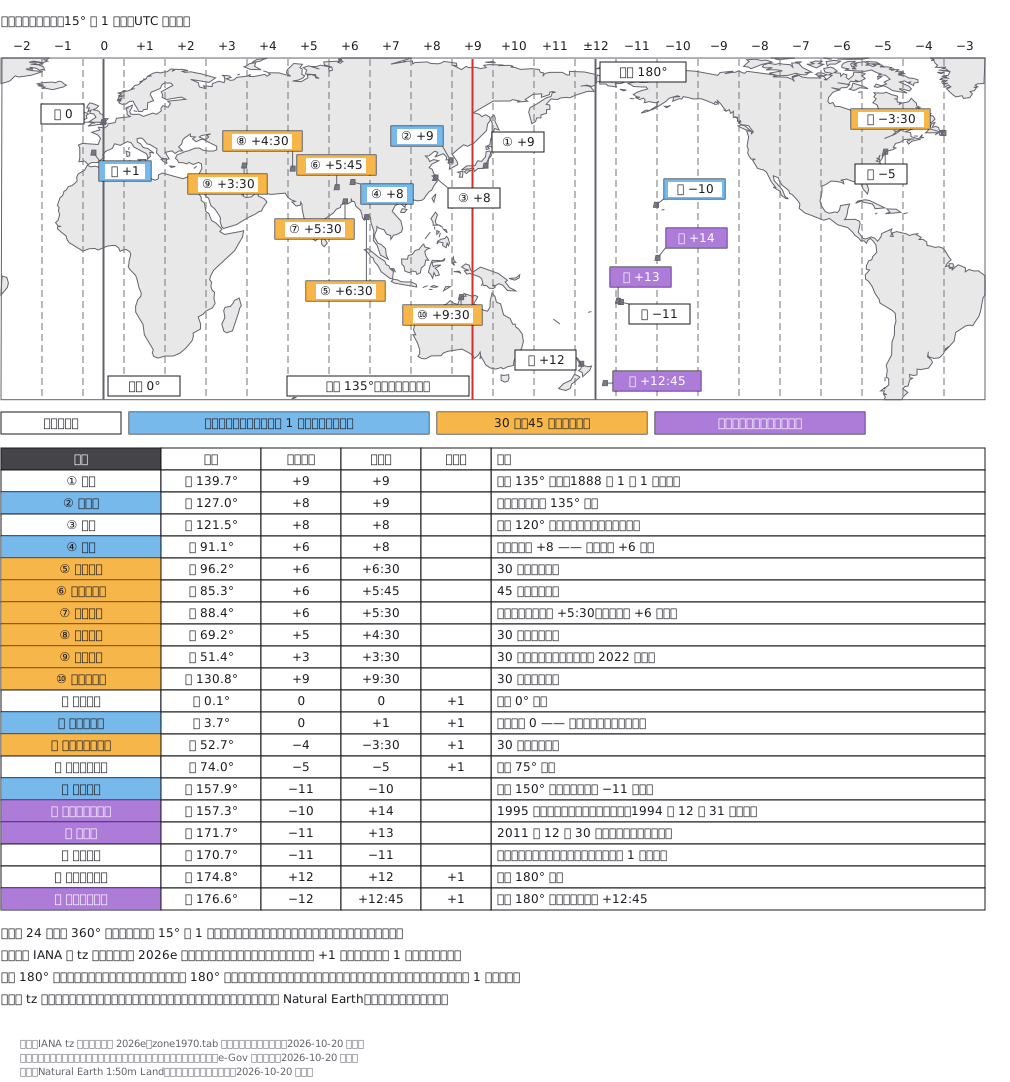 Every 15 degrees of longitude is an hour, but clocks follow borders. Twenty cities from the IANA tz database sit on the nominal bands: Seoul keeps Japan's 135-degree time, all of China keeps +8, Kolkata +5:30 and Kathmandu +5:45, and Kiritimati and Apia lie east of 180 degrees yet keep +14 and +13, a whole day ahead of Pago Pago next door.