Learning and geometry
The six dots of braille (JIS T 0921:2017)
Braille has only six dots, so “a” and “1” are the same shape until a number sign says otherwise
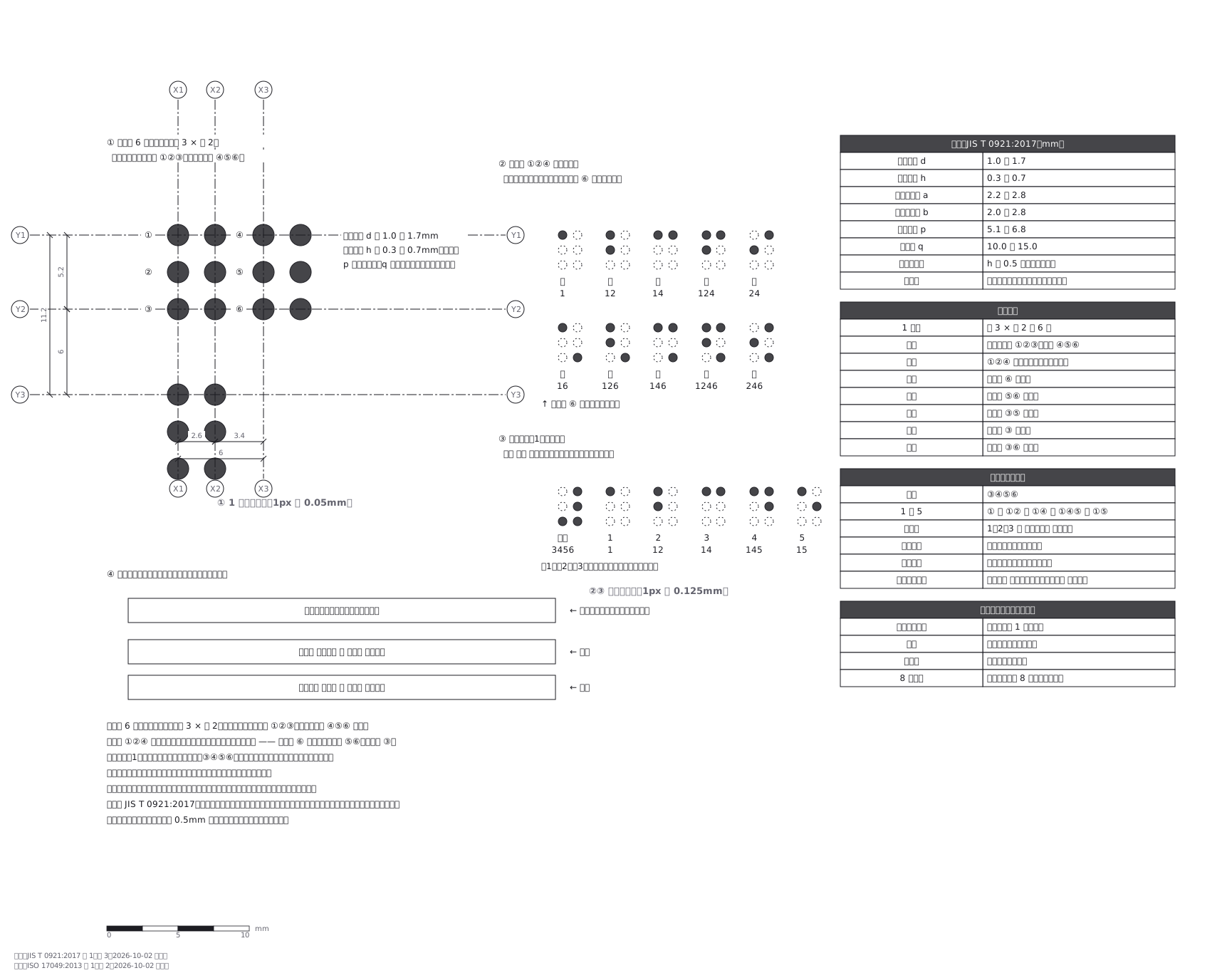
This drawing comes from one YAML file. No shape was moved by hand.
Notes in the source (in Japanese)
6 点しかない。
だから「あ」と「1」は同じ形で、前に数符があるかどうかで決まる。母音は ①②④ だけで作り、子音はそこへ点を足す(か行は ⑥ を足すだけ)。
漢字が無いので、語で区切る「ますあけ」が要る ——区切らないと「ここで/はきもの」と「ここでは/きもの」のどちらにも読める。
出典(2026-10-02 確認):JIS T 0921:2017 表 1・表 3(ISO 17049:2013 の表 1・表 2 と同じ値)。a 2.2〜2.8/b 2.0〜2.8/p 5.1〜6.8/q 10.0〜15.0(いずれも点の中心間)、d 1.0〜1.7/h 0.3〜0.7mm。https://kikakurui.com/t0/T0921-2017-01.htmlhttps://cdn.standards.iteh.ai/samples/58086/fb6f17bed4ff425fa03583afabdafb97/ISO-17049-2013.pdf①の図は a=b=2.6、p=6.0、q=11.2、d=1.45mm で描いている(どれも範囲の中)。
Source (YAML)
examples/gallery/194-点字の6点.zumen.yaml
More in this field
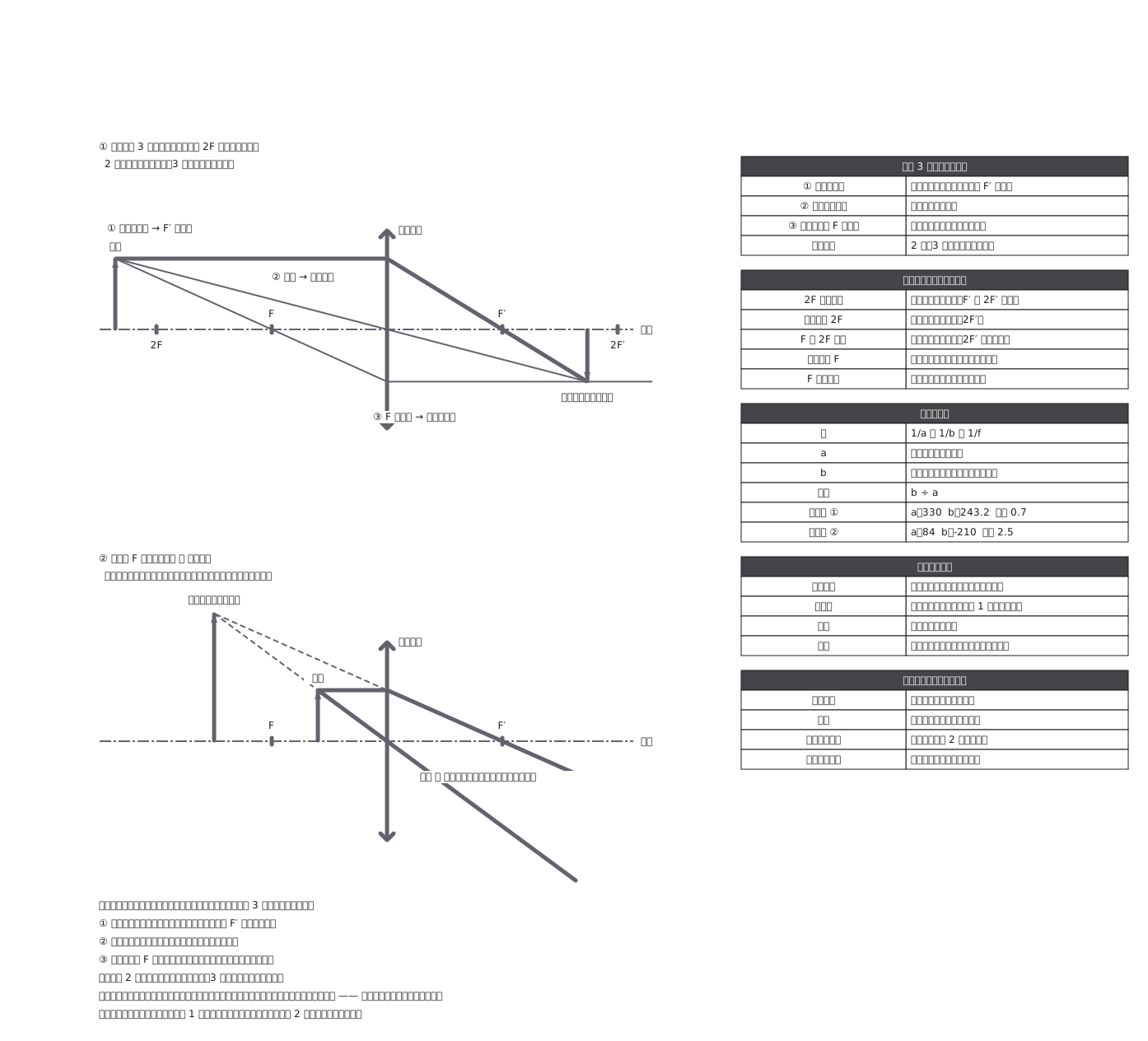 Ray tracing through a convex lens: there are only three lines to draw, and two of them fix the image
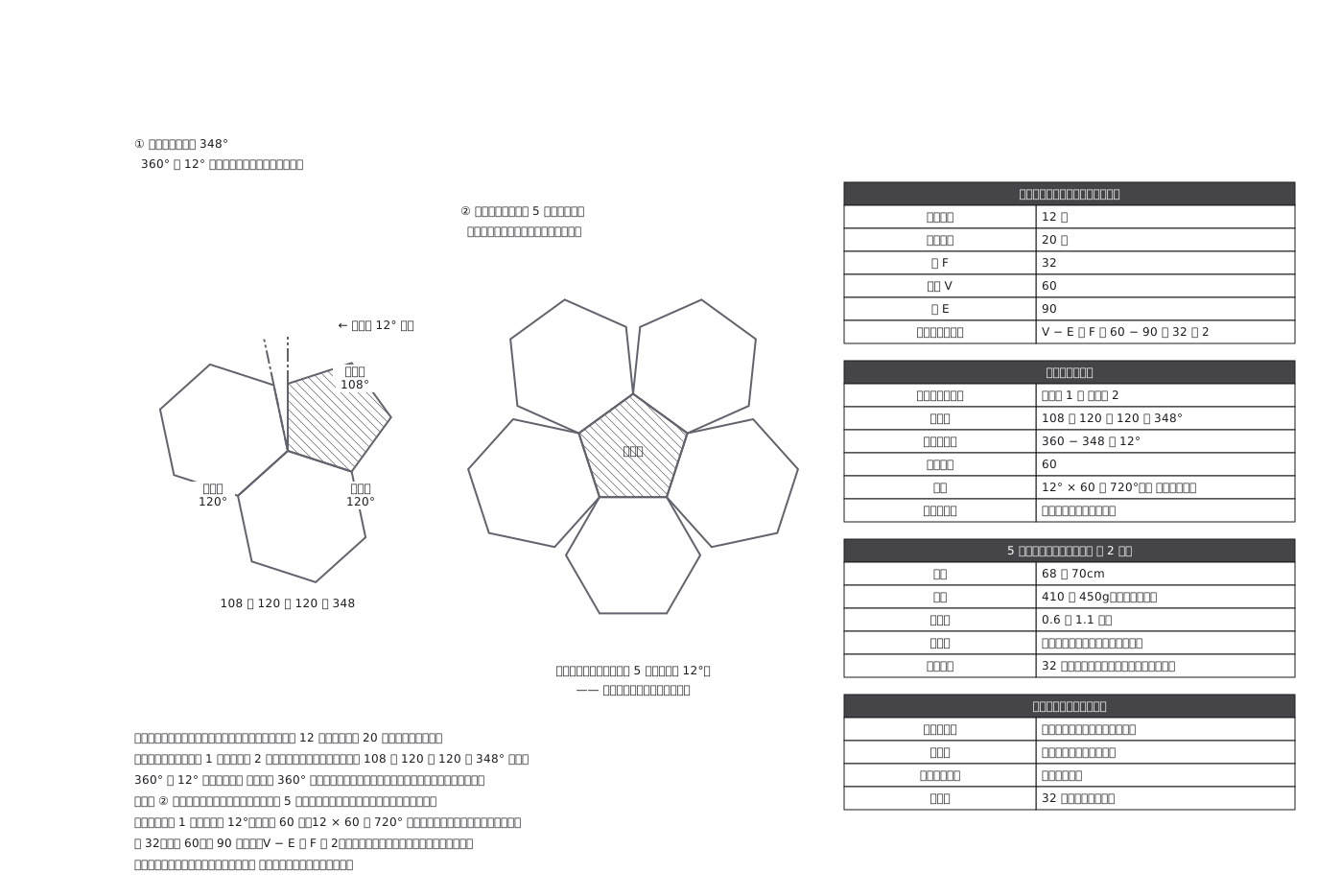 A football is a truncated icosahedron: the 12 degrees missing at every vertex are what make it a sphere
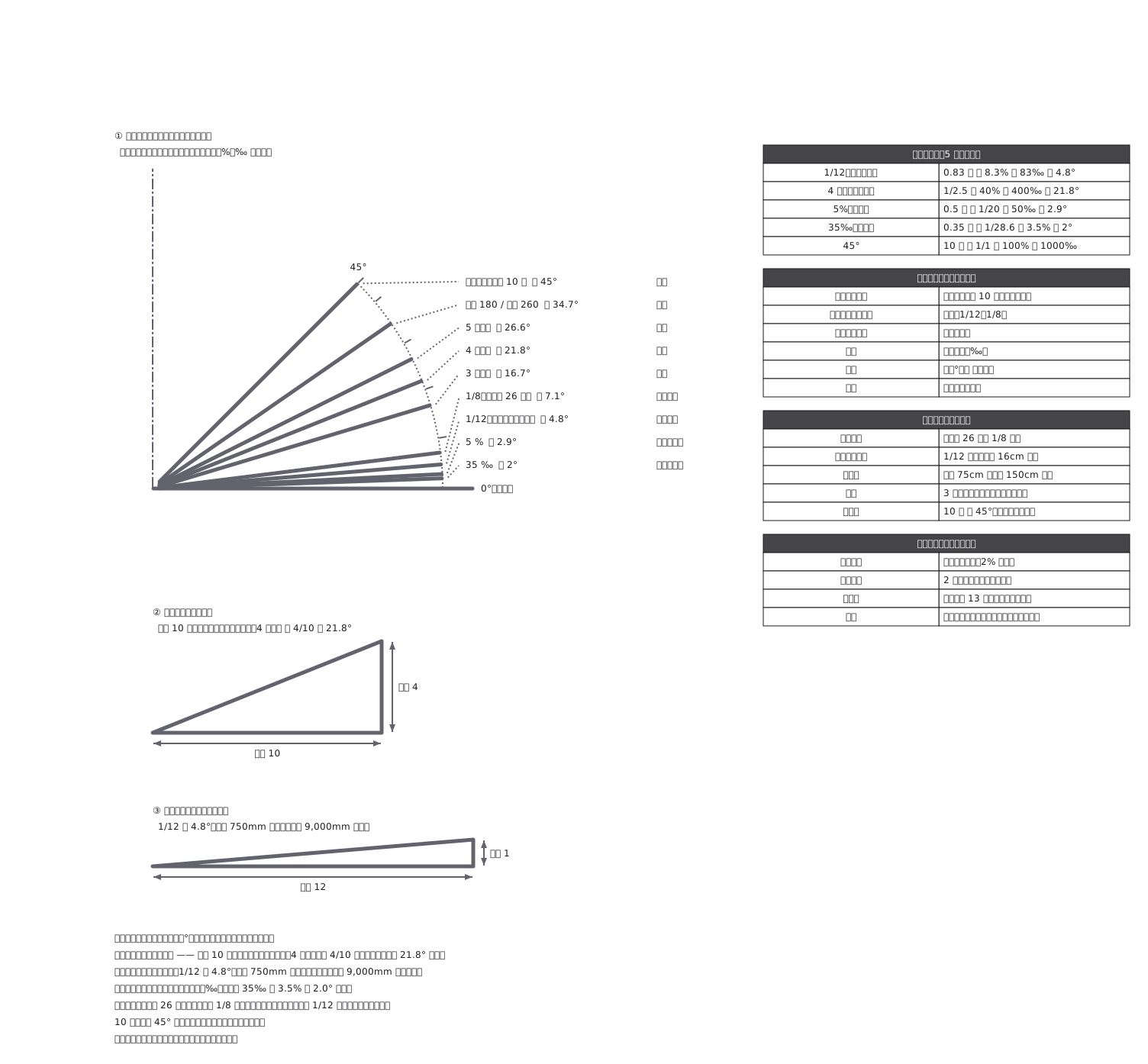 Slope notation: roofs in sun, ramps in fractions, roads in percent, railways in per mille — degrees are the minority
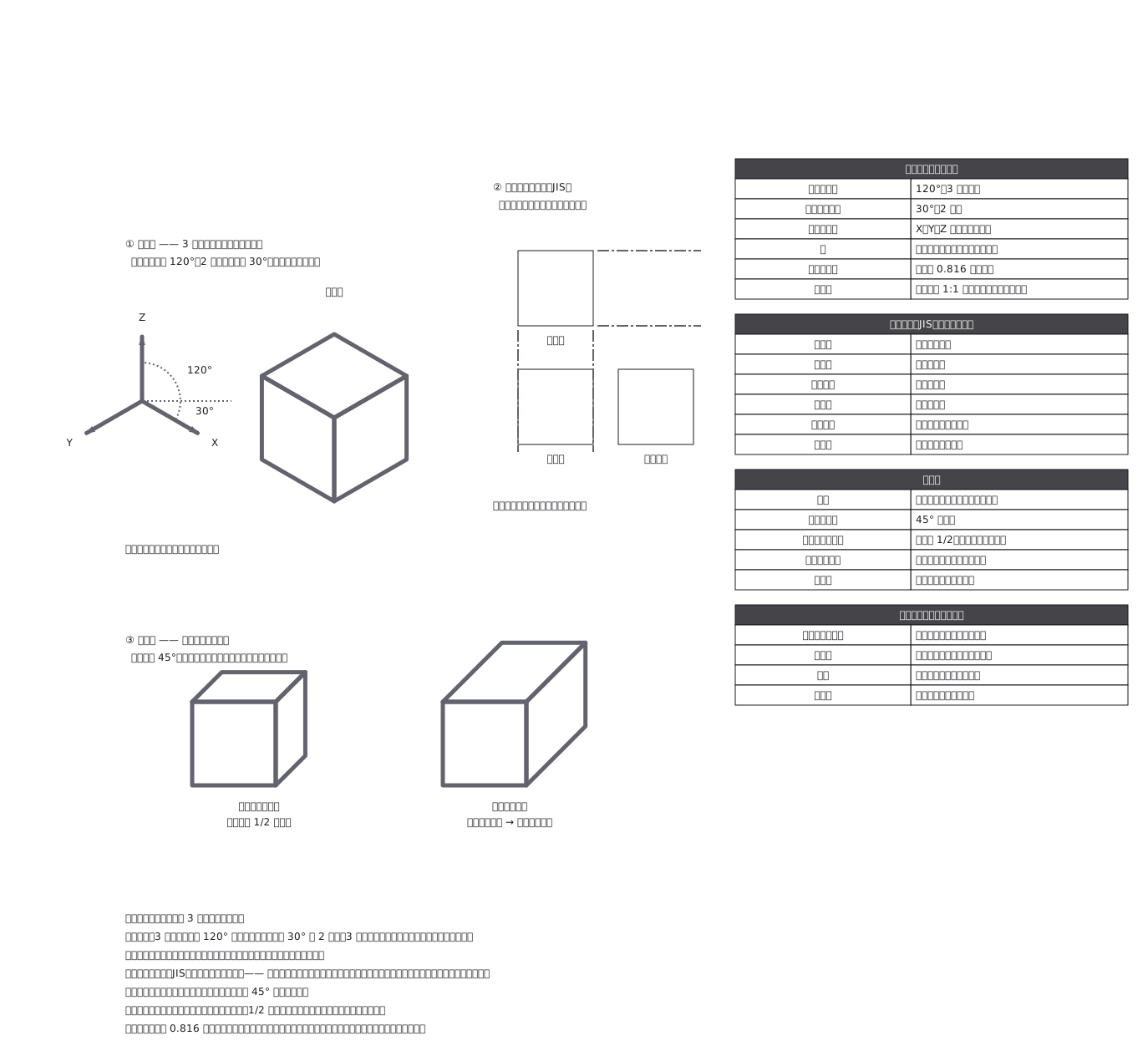 Isometric, third-angle and oblique: one scale serves all three axes, but circles become ellipses
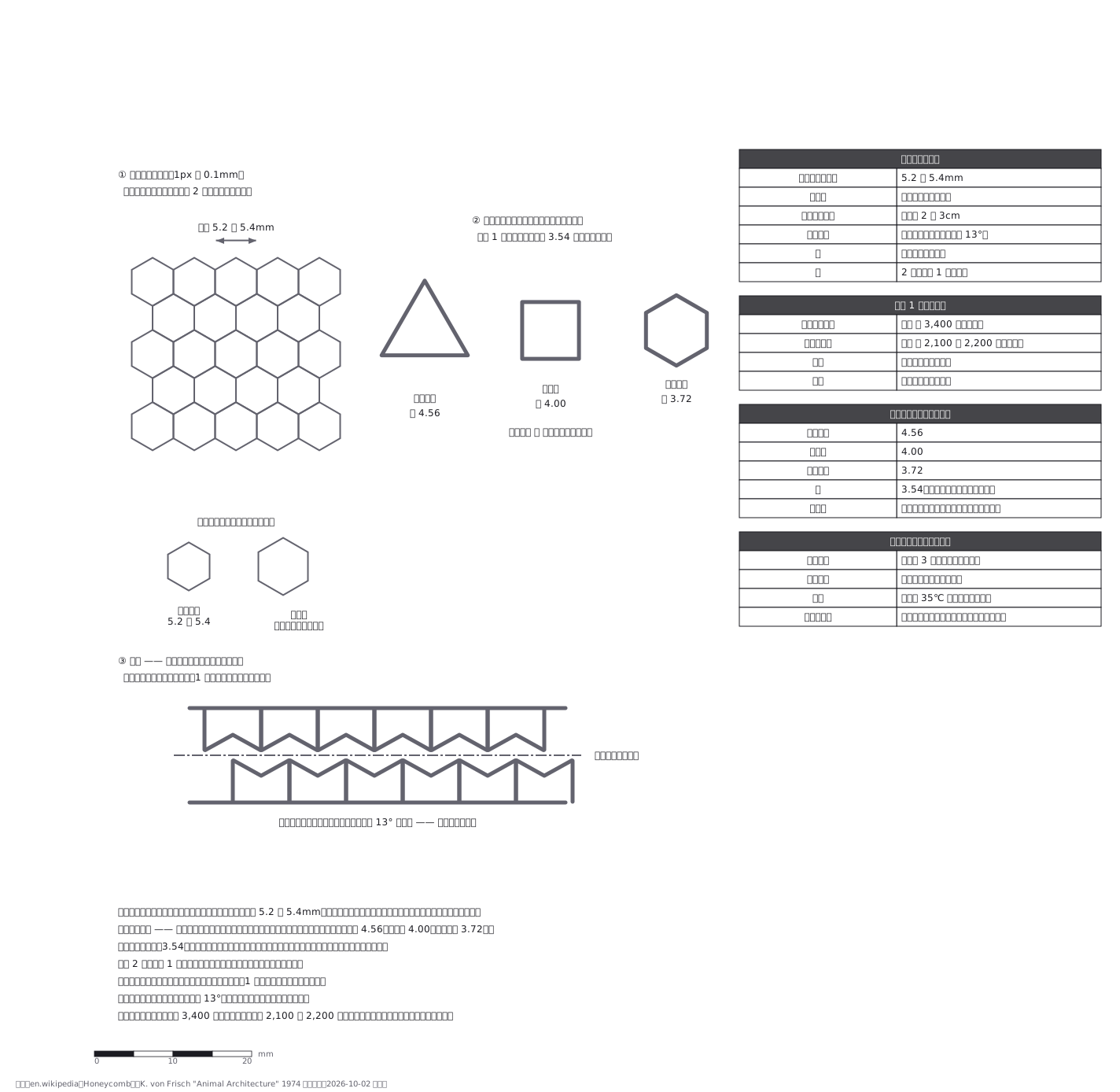 Honeycomb cells: for a given area the hexagon has the shortest wall of any shape that tiles
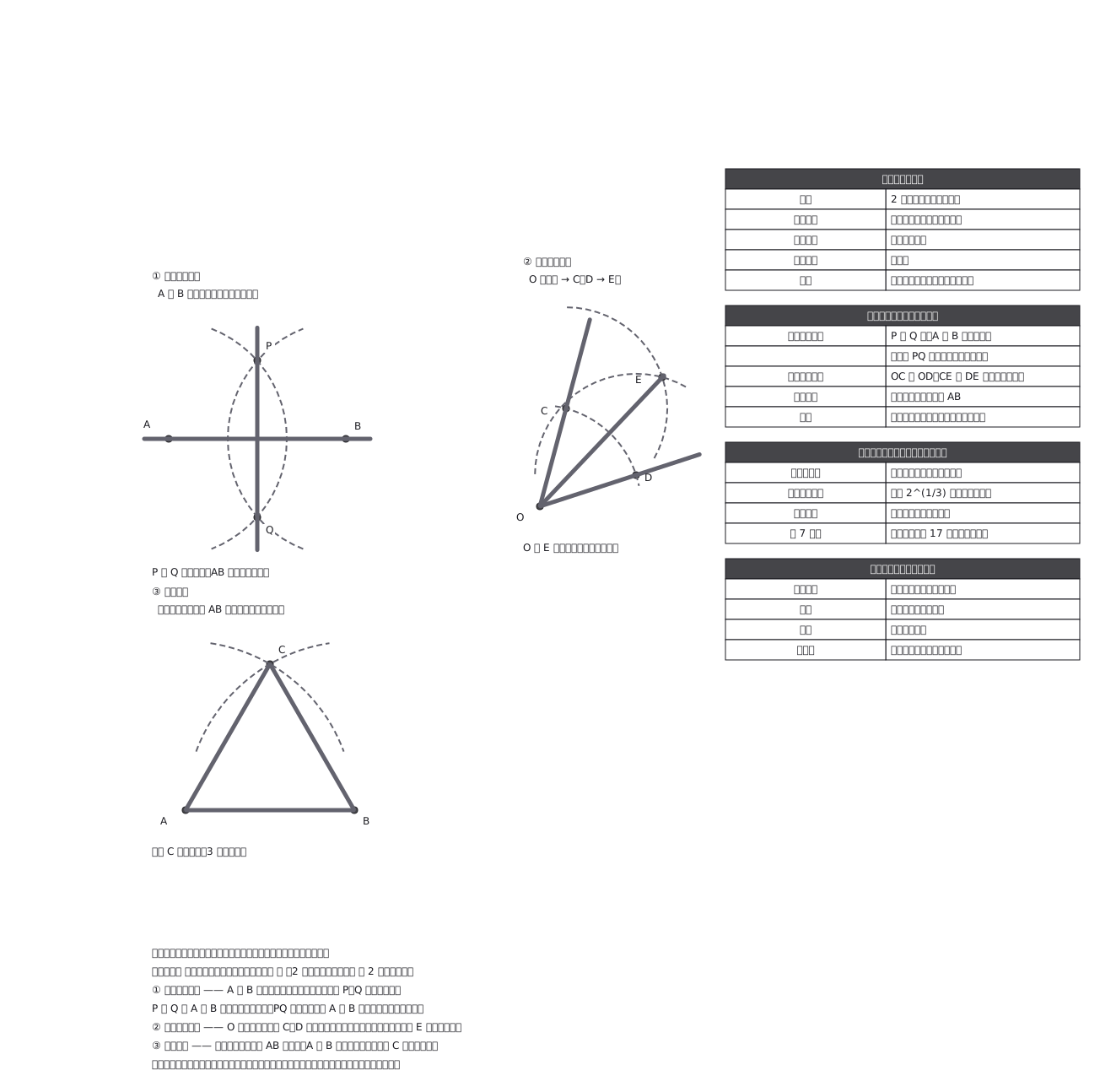 Ruler-and-compass constructions: no scale is used, because equal compass openings make equal lengths
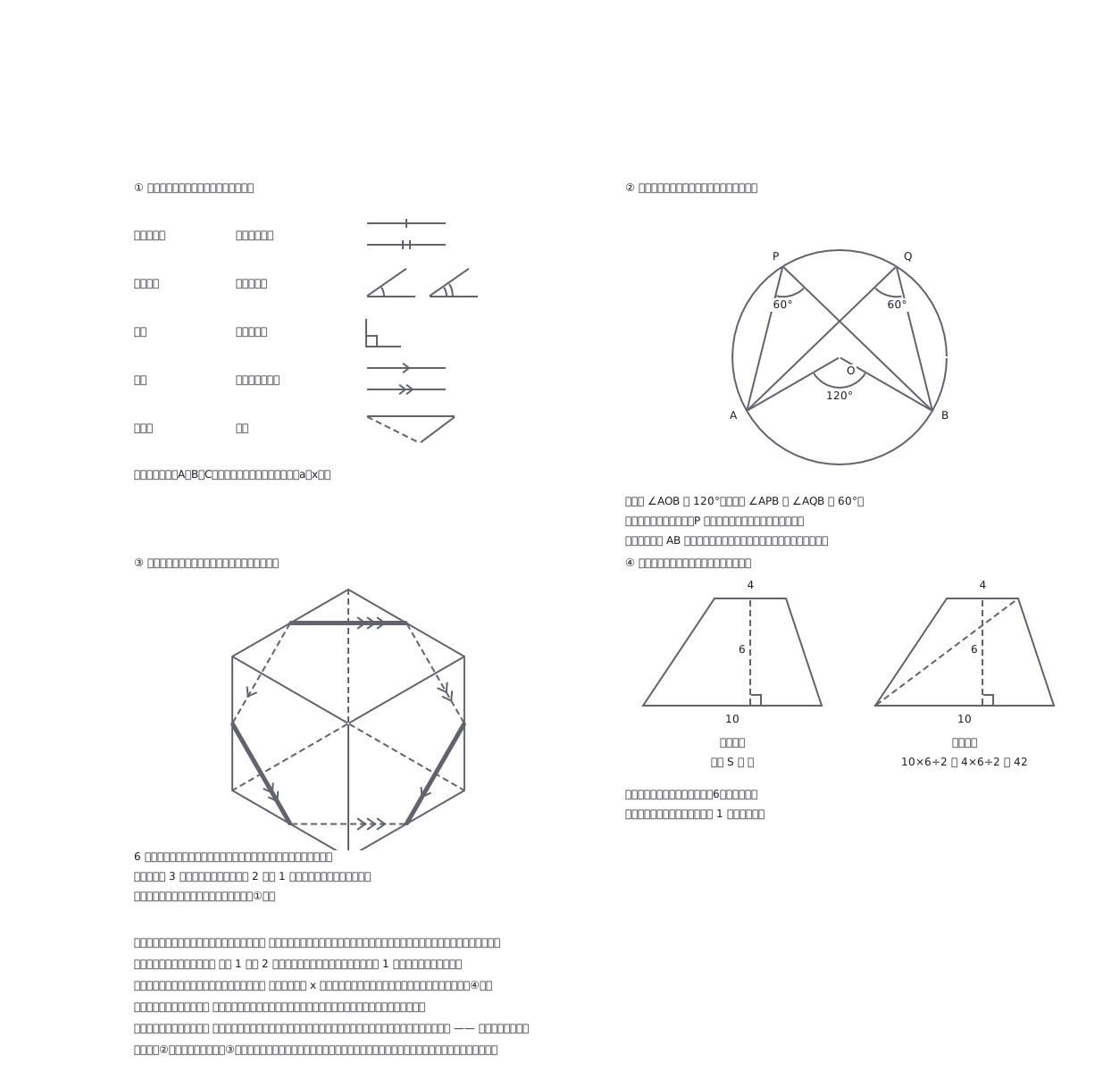 Figures in maths problems: the marks carry the meaning — equal ticks, right-angle squares, parallel chevrons — and only the given values are written on the figure
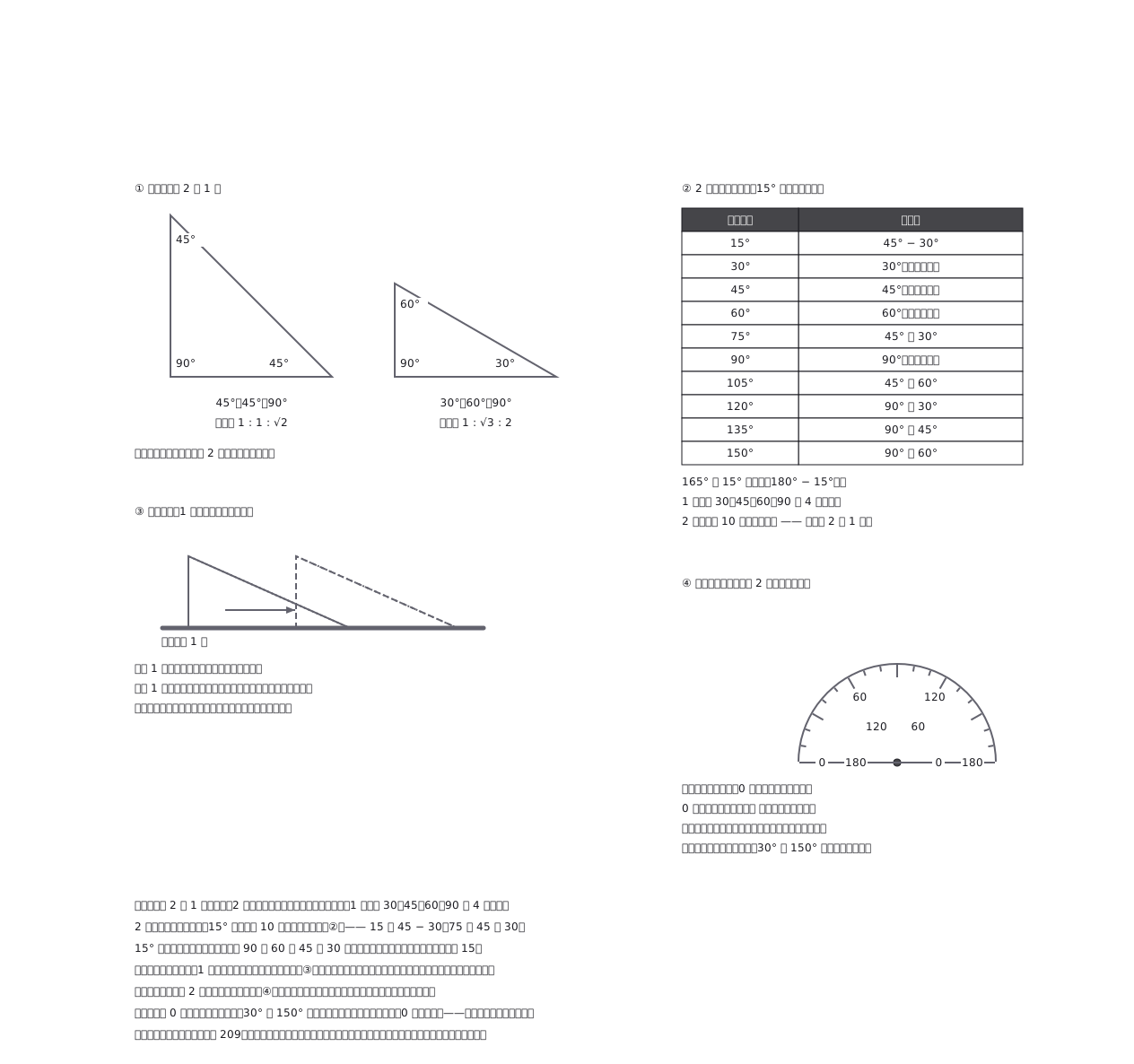 Two set squares come as a pair because two of them make ten angles in 15-degree steps, where one alone makes only four