IT and software
Hub, switch and access point (how far a frame travels)
Wire the same four machines three ways, send one frame from A to B, and the difference is how far it travels: a repeater hub copies it to every other port, a switch sends it only to the port it has learned B is on, and over the air everyone in range receives it. The dashed outlines are collision domains, and only the switch cuts them apart.
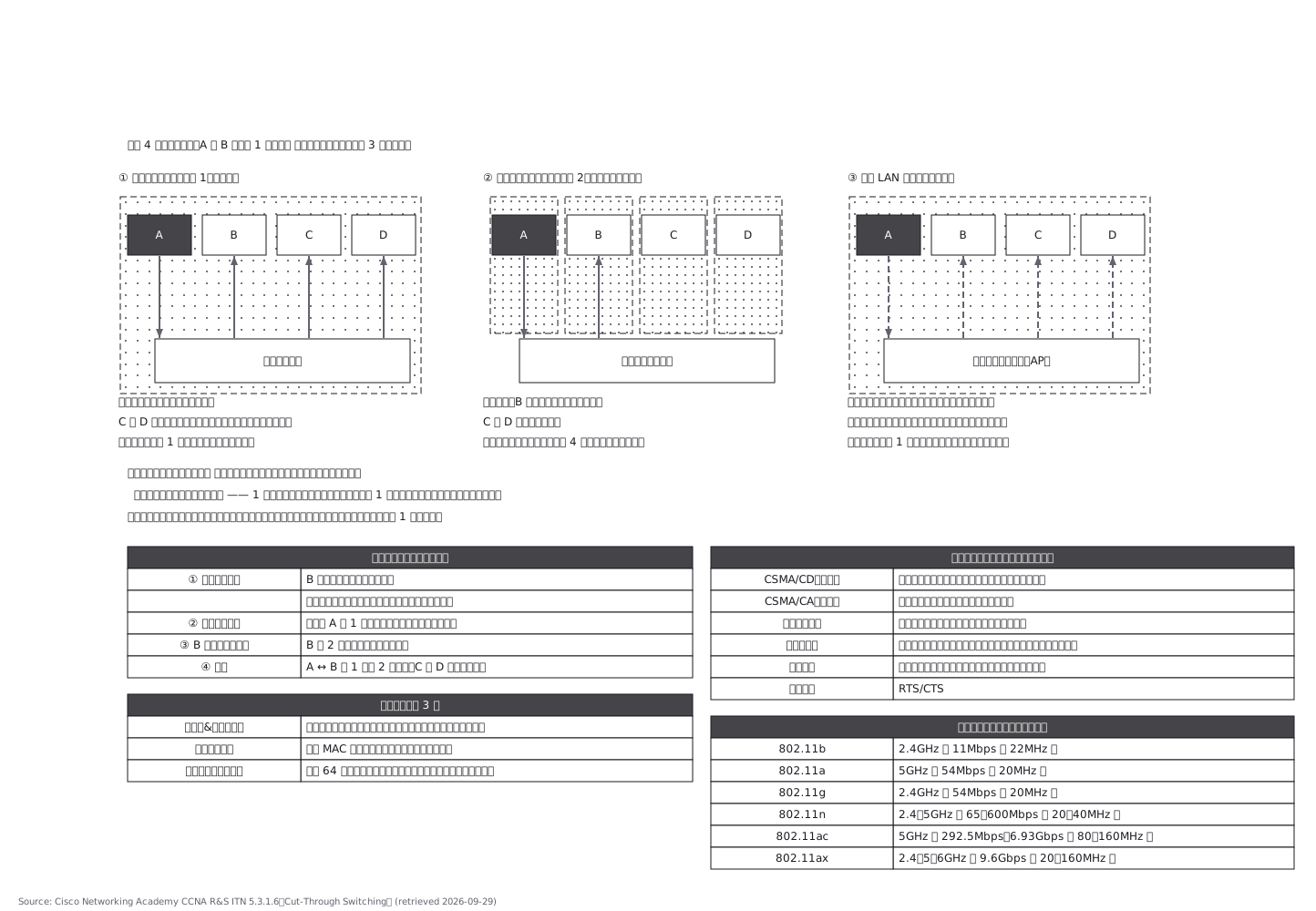
This drawing comes from one YAML file. No shape was moved by hand.
Notes in the source (in Japanese)
同じ 4 台をつないで、A が B 宛てに 1 つ送る。 違いはそこに全部出る。
レイヤ 1(物理層)の装置で、受けたポート以外の全ポートへそのまま出す。C も D も受け取ってから、自分宛てでないので捨てる。衝突ドメインは 1 つなので、同時に送れるのは 1 台だけ(半二重・CSMA/CD)。
レイヤ 2(データリンク層)の装置で、MAC アドレスの表を持っている。
表は最初から埋まっているわけではない。送られてきたフレームの送り元を見て覚える。宛先が分からないうちは全ポートへ出し(フラッディング)、相手が返事をした時点で相手のポートも分かる。
衝突ドメインがポートごとに切れるので、全二重にできる ——1 つの衝突ドメインに送信機と受信機が 1 つずつしかなければ、衝突は起こらない。
電波は共有の媒体なので、届く範囲の全員に届く。同じチャネルを使う限り衝突ドメインは切れない(別のチャネルの AP を足せば分かれる)。だから半二重で、送る前に毎回待つ(CSMA/CA)。
有線と無線で構えが逆になるのは、無線に信頼できる衝突検出の手段が無いから。有線は「送りながら衝突を見つけて即やめる」、無線は「送る前に毎回待つ」。
隠れ端末 —— A と D がどちらも AP には届くのに、互いの電波は届かないと、A が送っている最中でも D のキャリアセンスは「空いている」と判断して送ってしまう。802.11 は RTS/CTS でこれを避ける。
ストア&フォワードはフレームを全部受けて FCS(CRC)を確かめてから送る。カットスルーは宛先 MAC を読んだ時点で送る。フラグメントフリーは先頭 64 バイトまで受けてから送る —— 衝突の破片(64 バイト未満)は捨てられるが、CRC は見ていない(以前「CRC を見てから送る」と書いていたのは誤り)。出典:Cisco Networking Academy CCNA R&S ITN 5.3.1.6「Cut-Through Switching」(2026-09-29 取得)
結線の色は見本 324、ラックと 1U は見本 235、PoE は見本 236。
Source (YAML)
examples/gallery/325-ハブとスイッチとアクセスポイント.zumen.yaml
More in this field
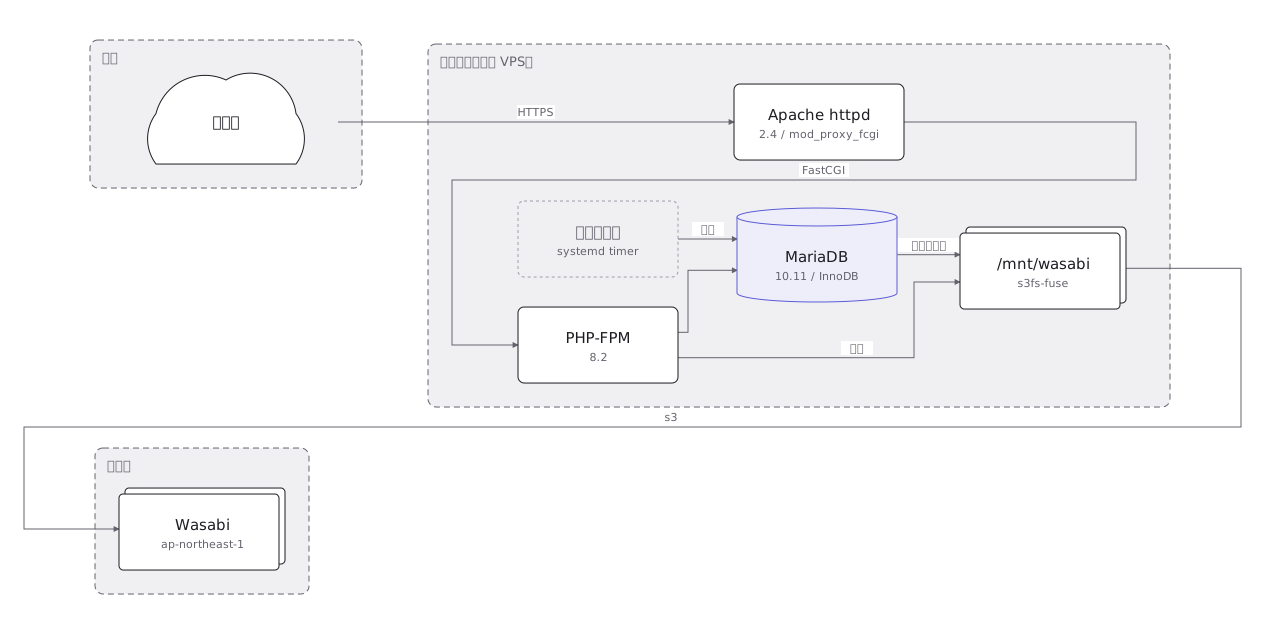 An on-premise server layout rack by rack, with the redundant power feeds and network links drawn as separate paths
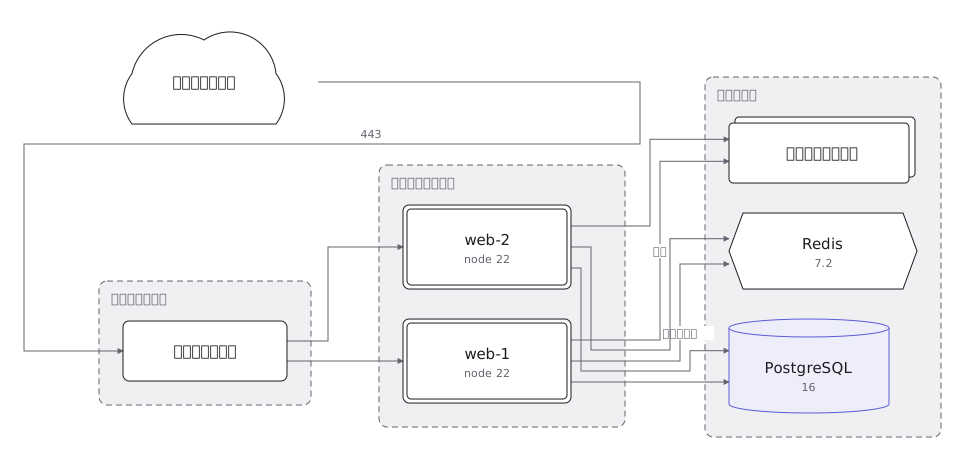 A cloud architecture showing the VPC and its subnets, and where the load balancer, application, database and object store sit
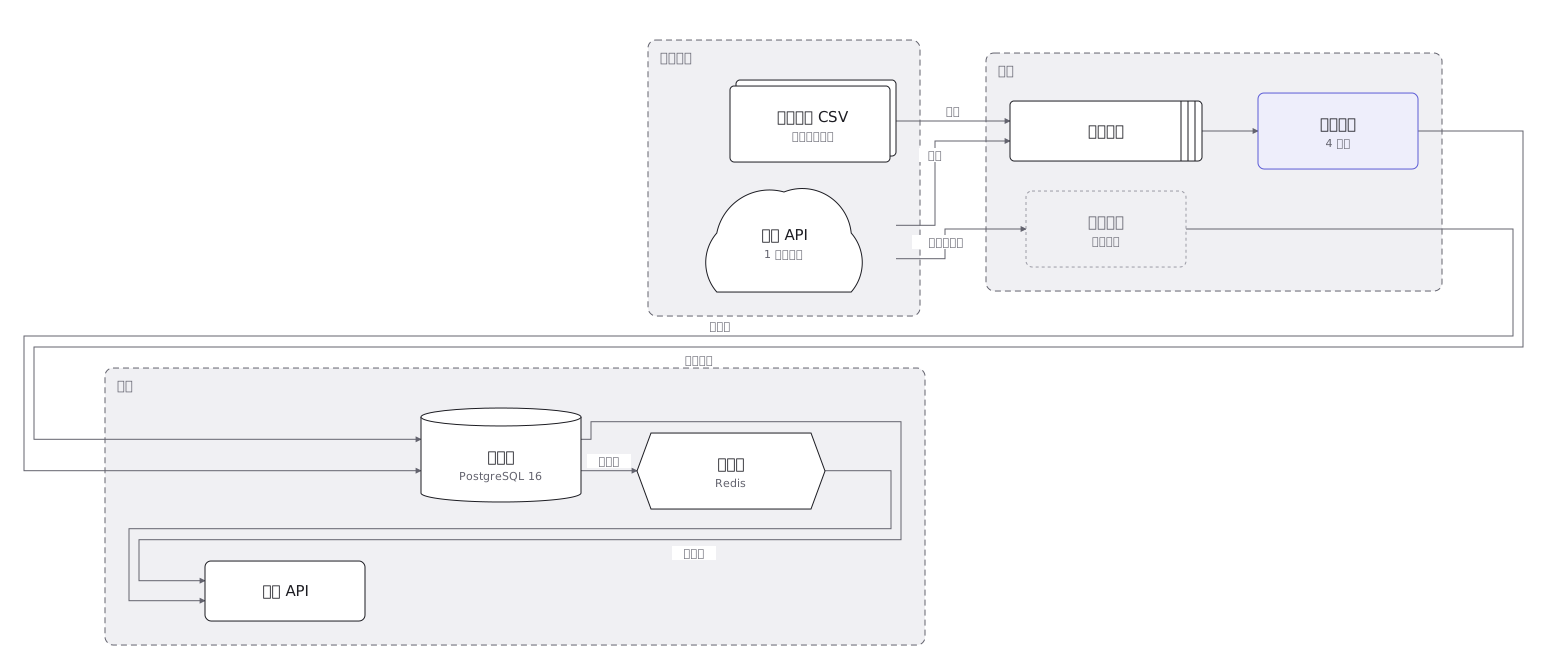 Where data goes from collection through transformation, storage and aggregation to display, and what kind of container holds it at each step
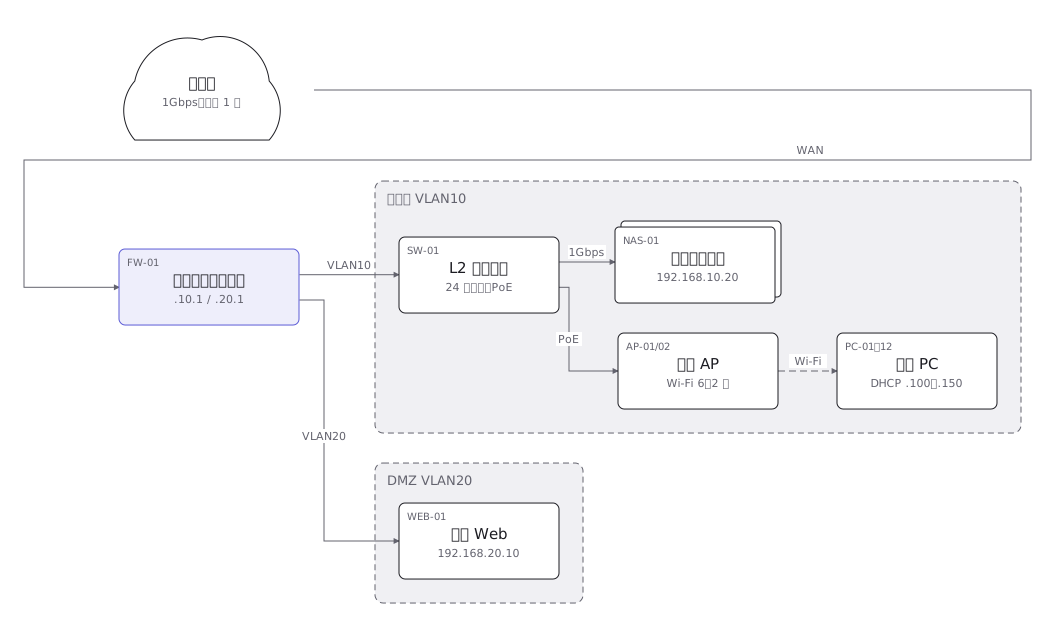 A network layout of the links and equipment between sites, with the address range carried by each segment
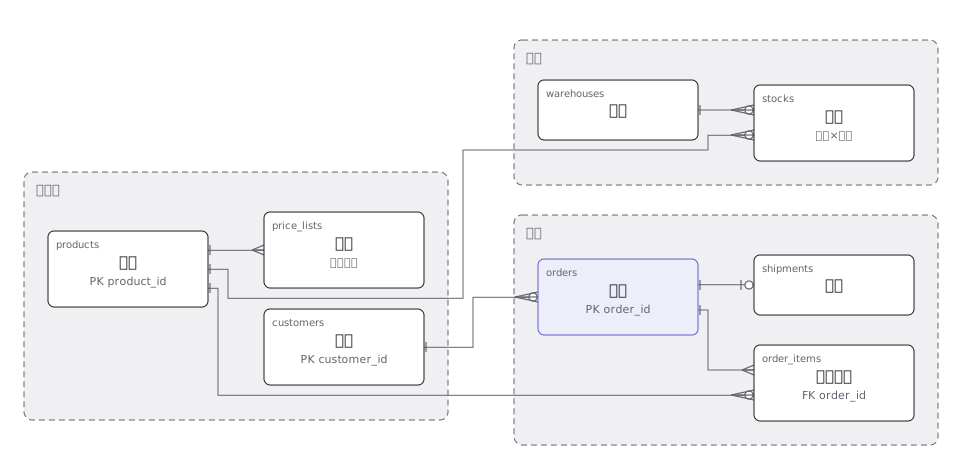 An order management ER diagram with primary and foreign keys, and the one-to-many relationships drawn as crow feet
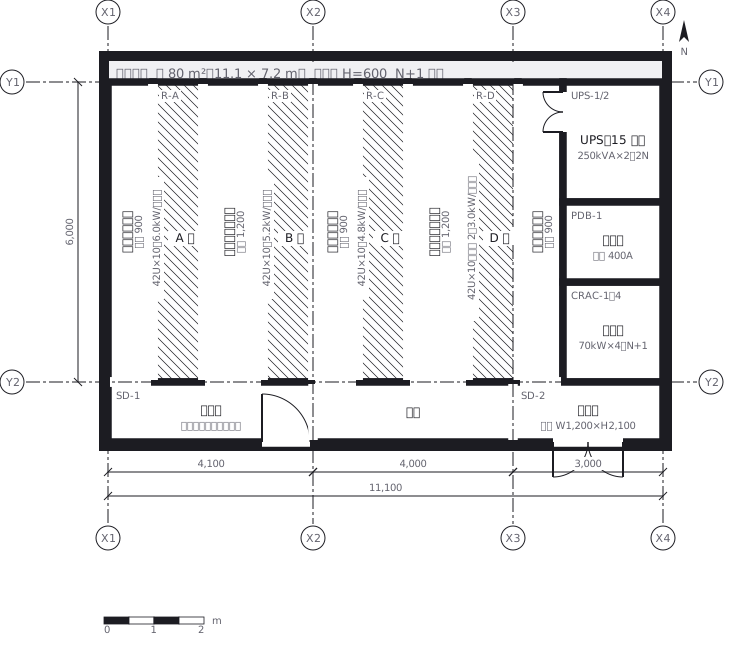 A server room where racks face each other to make hot and cold aisles, with the clearance of each aisle written in
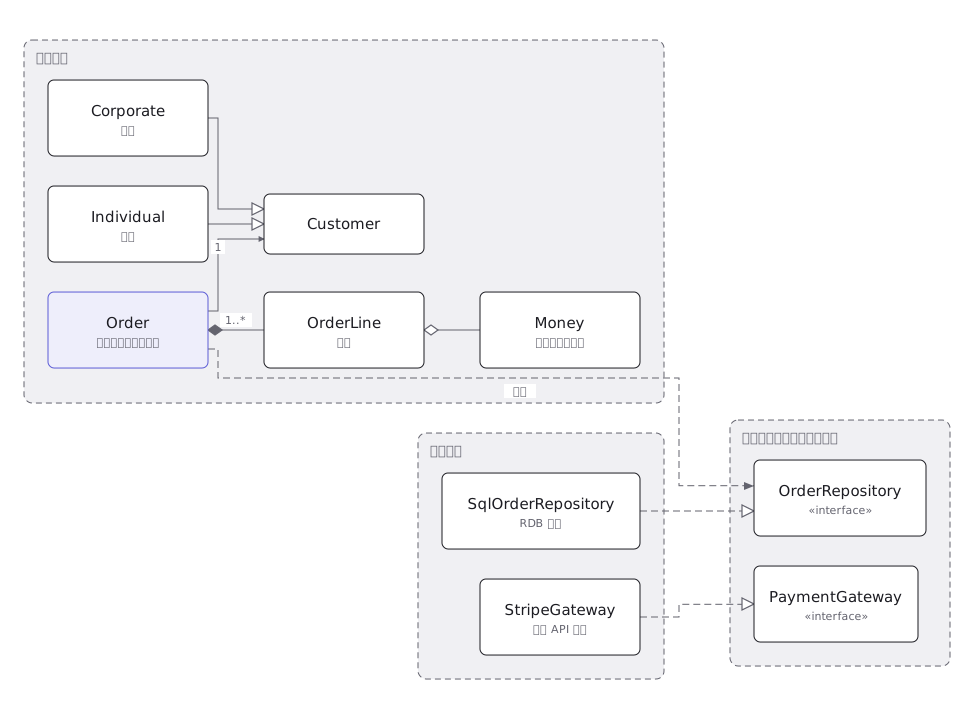 A UML class diagram where inheritance, realisation, association and aggregation are told apart by line type and end symbol
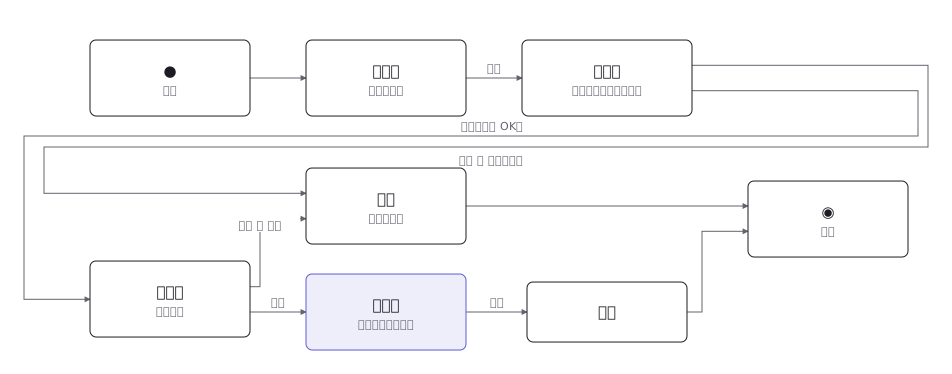 A UML state machine with transitions, the events and guards that fire them, and the pseudostates that begin and end it