IT and software
LAN cable wiring (T568A and T568B differ only in orange and green)
There are two wiring standards for an eight-pin Ethernet plug and they differ in only four wires: T568A and T568B swap the orange pair with the green pair, while pins 4, 5, 7 and 8 are identical. Pair 3 is split across pins 3 and 6 with pair 1 sitting between them, a layout inherited from telephone wiring, and gigabit uses all four pairs rather than two.
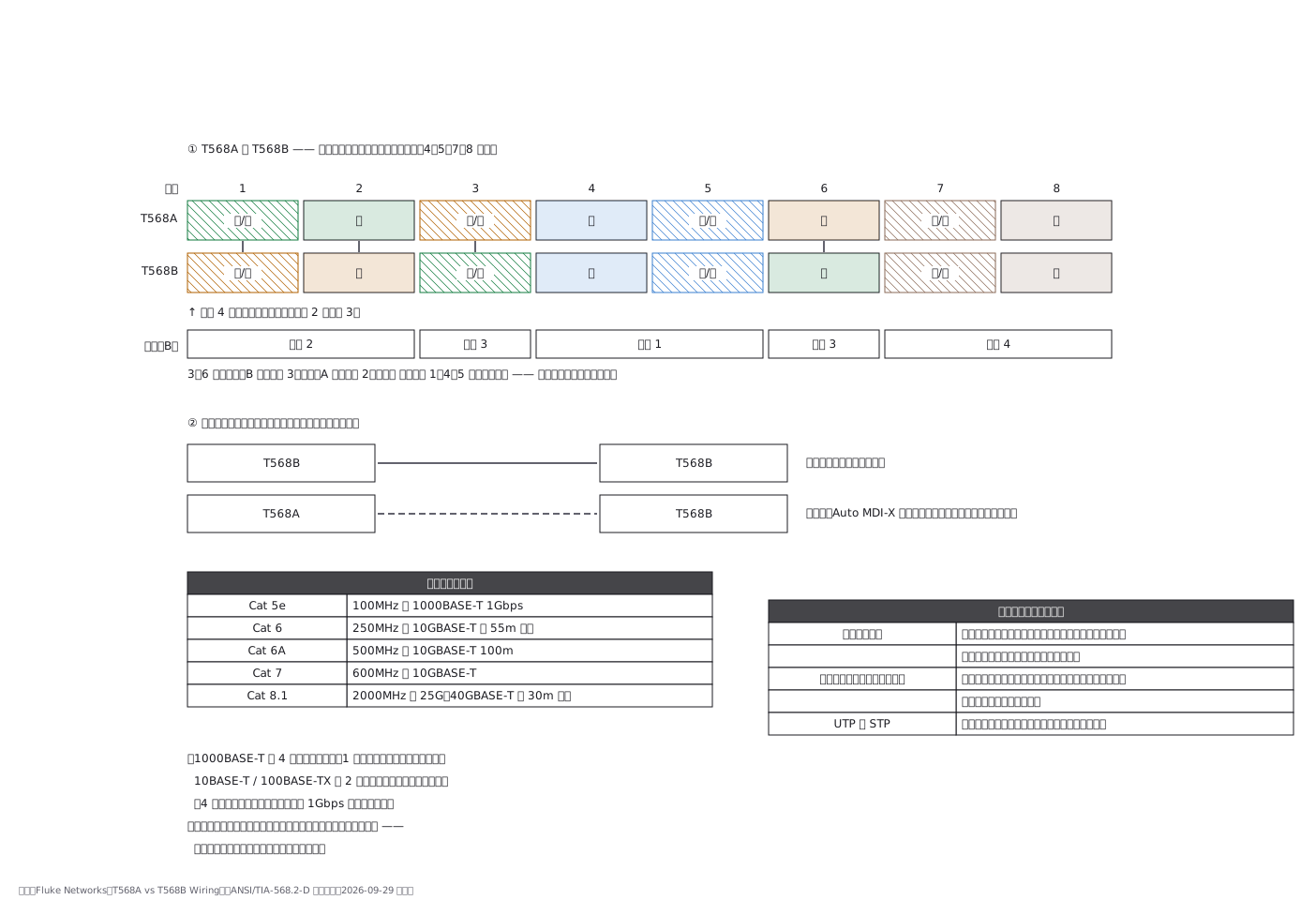
This drawing comes from one YAML file. No shape was moved by hand.
Notes in the source (in Japanese)
2 つの規格があるのに、違うのは 4 本だけ。 4・5・7・8 番は完全に同じ。
1 白/緑・2 緑・3 白/橙・4 青・5 白/青・6 橙・7 白/茶・8 茶。
1 白/橙・2 橙・3 白/緑・4 青・5 白/青・6 緑・7 白/茶・8 茶。
ペア 2(橙)とペア 3(緑)を入れ替えただけ。
ペアの番号は色で決まっている:1 青・2 橙・3 緑・4 茶(TIA-568)。T568B なら 1(4・5 番)・2(1・2 番)・3(3 番と 6 番)・4(7・8 番)。T568A では橙と緑が入れ替わるので、3・6 番に来るのはペア 2(橙)。どちらの規格でも、3・6 番の対だけが、間にペア 1 をはさんで離れている。図のペアの段は T568B のもの。
出典:Fluke Networks「T568A vs T568B Wiring」(ANSI/TIA-568.2-D の解説)https://www.flukenetworks.com/knowledge-base/application-or-standards-articles-copper/differences-between-wiring-codes-t568a-vs (2026-09-29 取得)真ん中の 2 本(4・5)を電話に使っていたころの並びが、そのまま残っている。
両端とも同じ規格で結べばストレート、片方だけ変えるとクロス。いまは Auto MDI-X が入っているので、クロスケーブルはほとんど要らない。
撚ると、ノイズ源に近い線が入れ替わる。両方の線が同じだけノイズを受けるので、差動で打ち消し合う。対ごとに撚りの細かさを変えてあるのは、同じ撚り率だと別の対の同じ線が繰り返しとなり合ってしまい、差動の利点を失うから。
1000BASE-T は 4 対すべてを使う。 10BASE-T・100BASE-TX が 2 対しか使っていなかったので、その時代の常識が残っている。
ラックと 1U は見本 235、PoE の給電クラスは見本 236。
色は palette で持たせ、ピン番号と色の名前を図の中に文字でも出している ——色だけに頼ると、白黒と色覚特性で読めなくなる。規格が決めているのは色の名前(橙・緑・青・茶)であって、hex ではないので、ここの値は地の上で読める濃さに寄せてある。
Source (YAML)
examples/gallery/324-LANケーブルの結線.zumen.yaml
More in this field
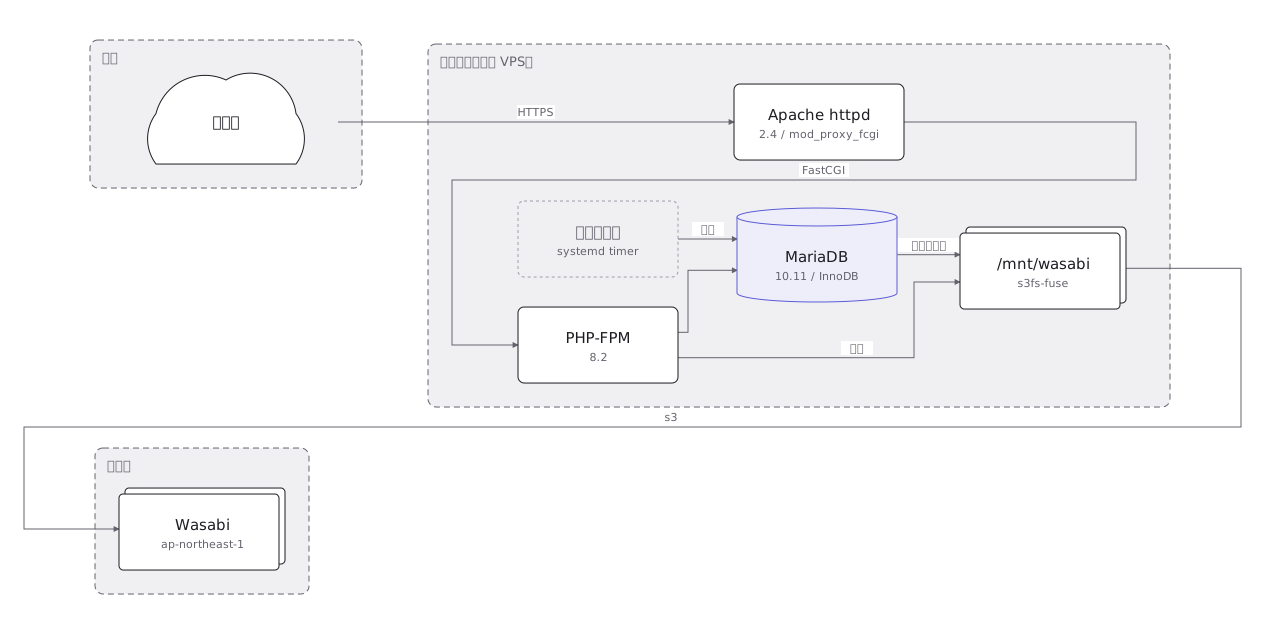 An on-premise server layout rack by rack, with the redundant power feeds and network links drawn as separate paths
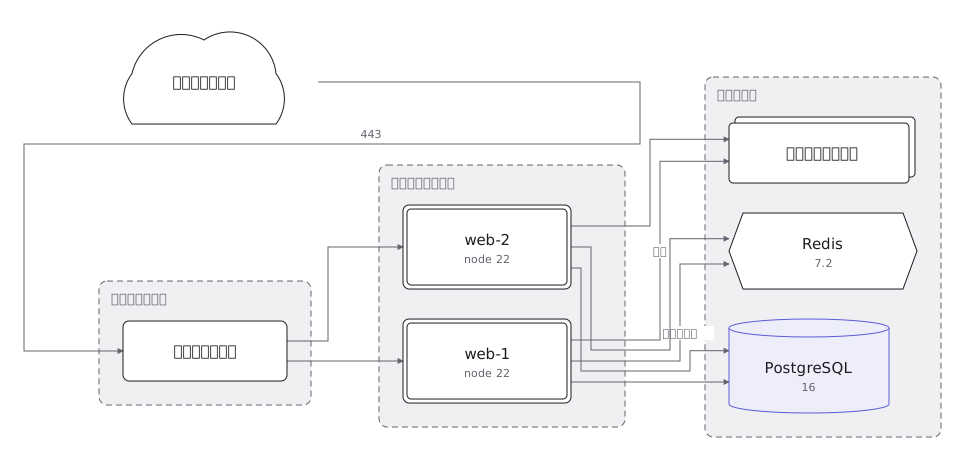 A cloud architecture showing the VPC and its subnets, and where the load balancer, application, database and object store sit
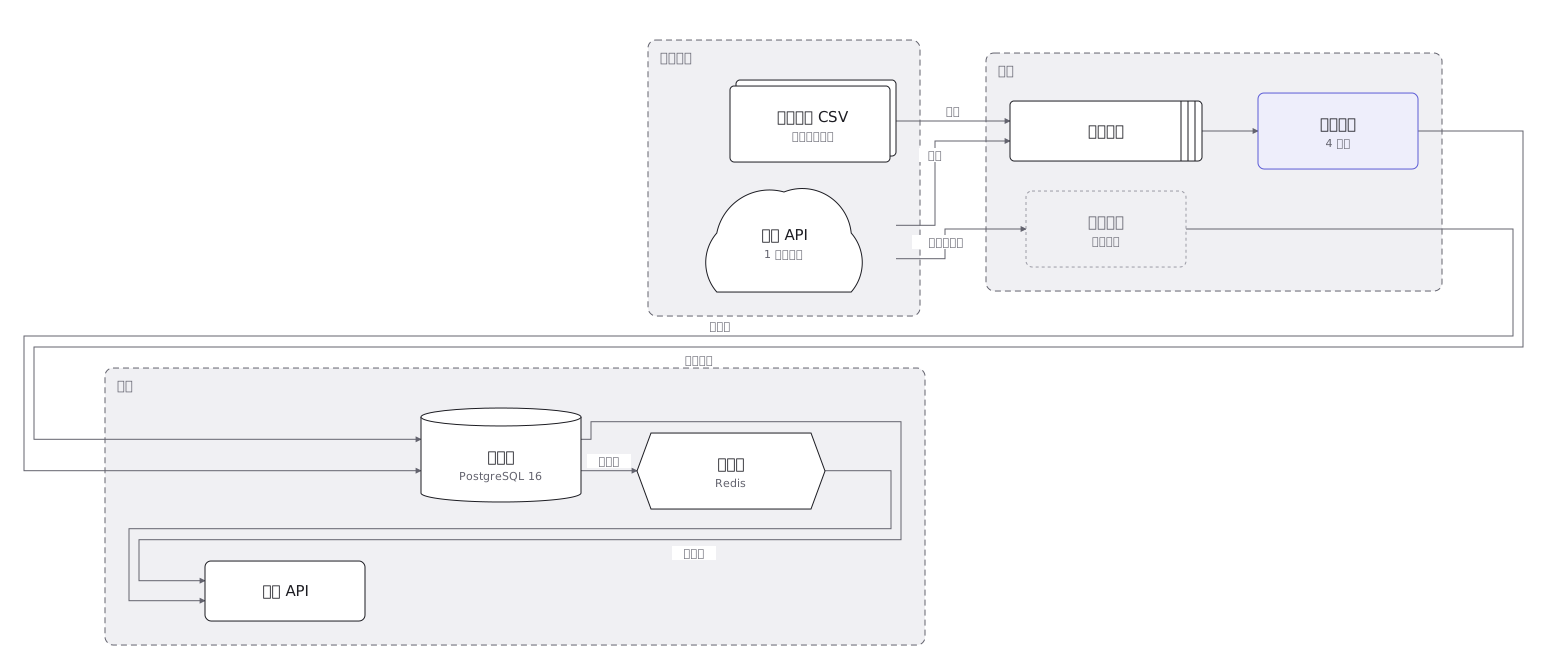 Where data goes from collection through transformation, storage and aggregation to display, and what kind of container holds it at each step
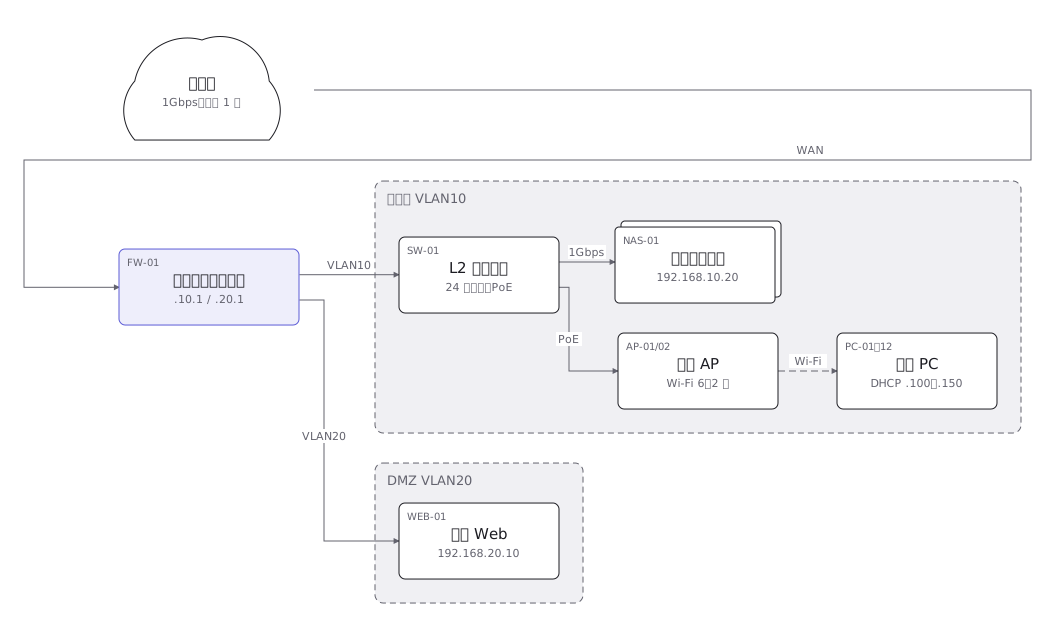 A network layout of the links and equipment between sites, with the address range carried by each segment
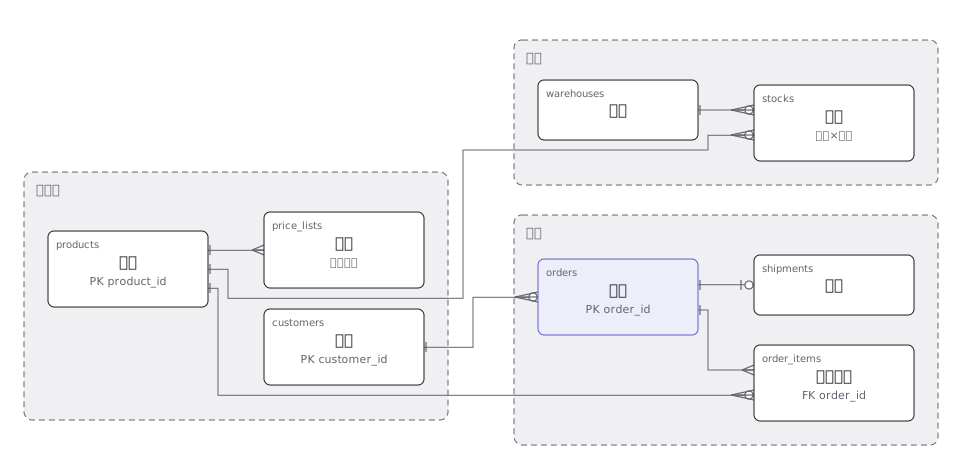 An order management ER diagram with primary and foreign keys, and the one-to-many relationships drawn as crow feet
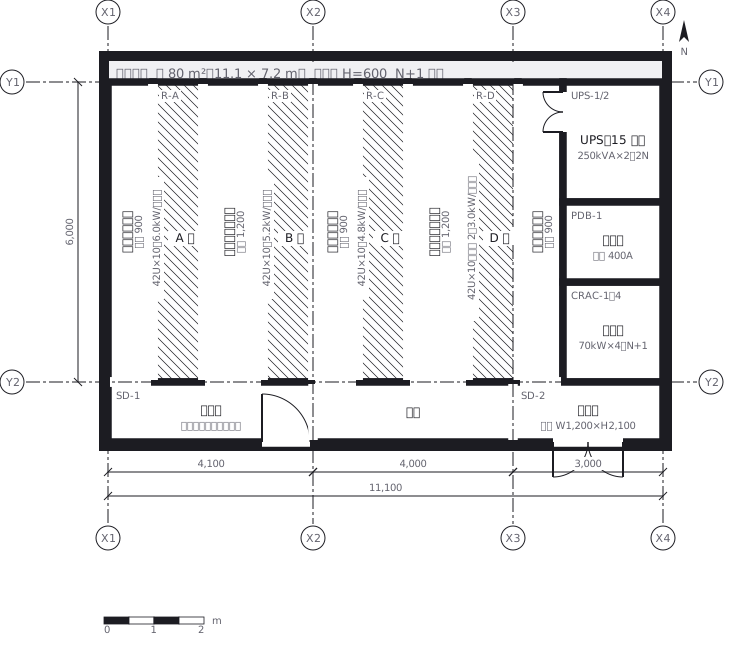 A server room where racks face each other to make hot and cold aisles, with the clearance of each aisle written in
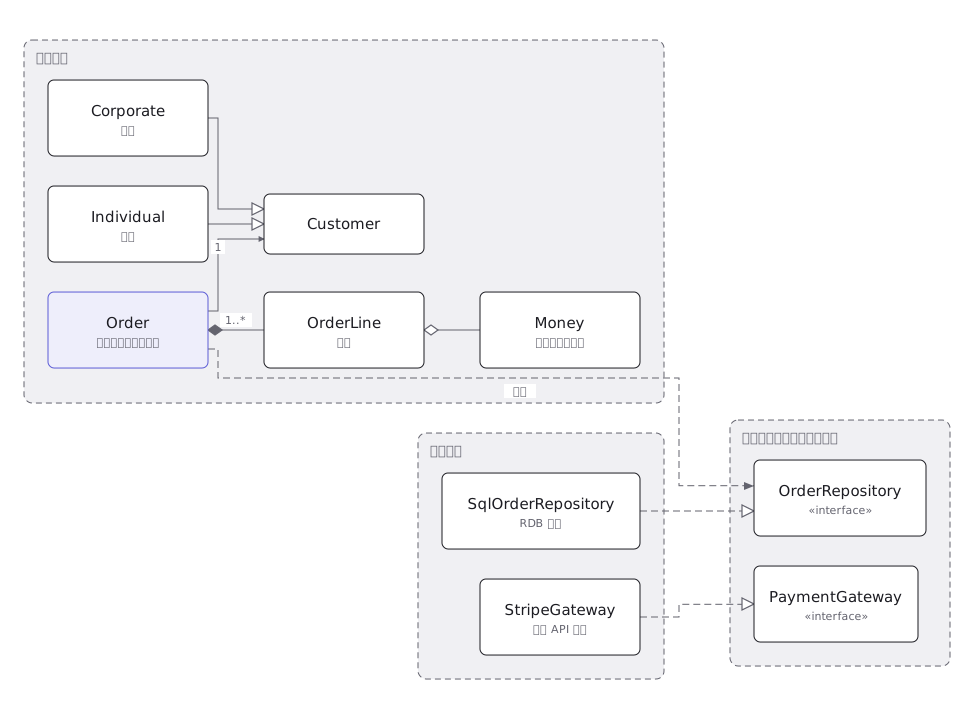 A UML class diagram where inheritance, realisation, association and aggregation are told apart by line type and end symbol
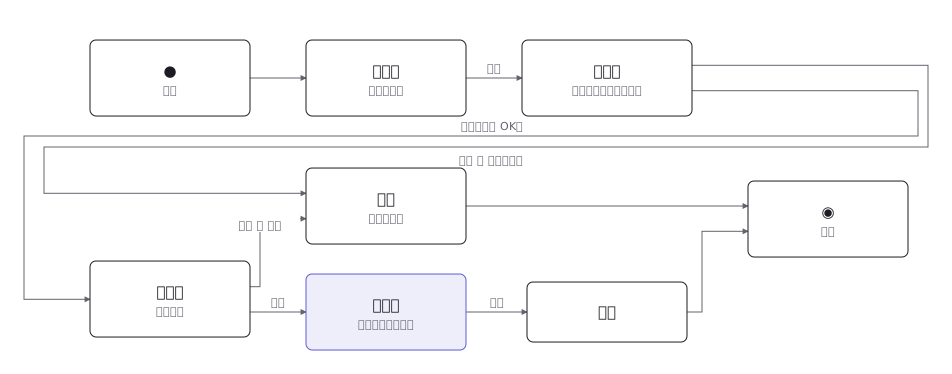 A UML state machine with transitions, the events and guards that fire them, and the pseudostates that begin and end it