Events and games
Origami diagrams (the line style is the instruction)
An origami diagram carries almost no words because the line itself is the instruction: a dashed line is a valley fold and a dash-dot line a mountain fold, so the same line in the same place sends the paper the opposite way. Seen edge on afterwards, one is a V and the other an inverted V. The notation was developed by Akira Yoshizawa in the 1940s and 50s.
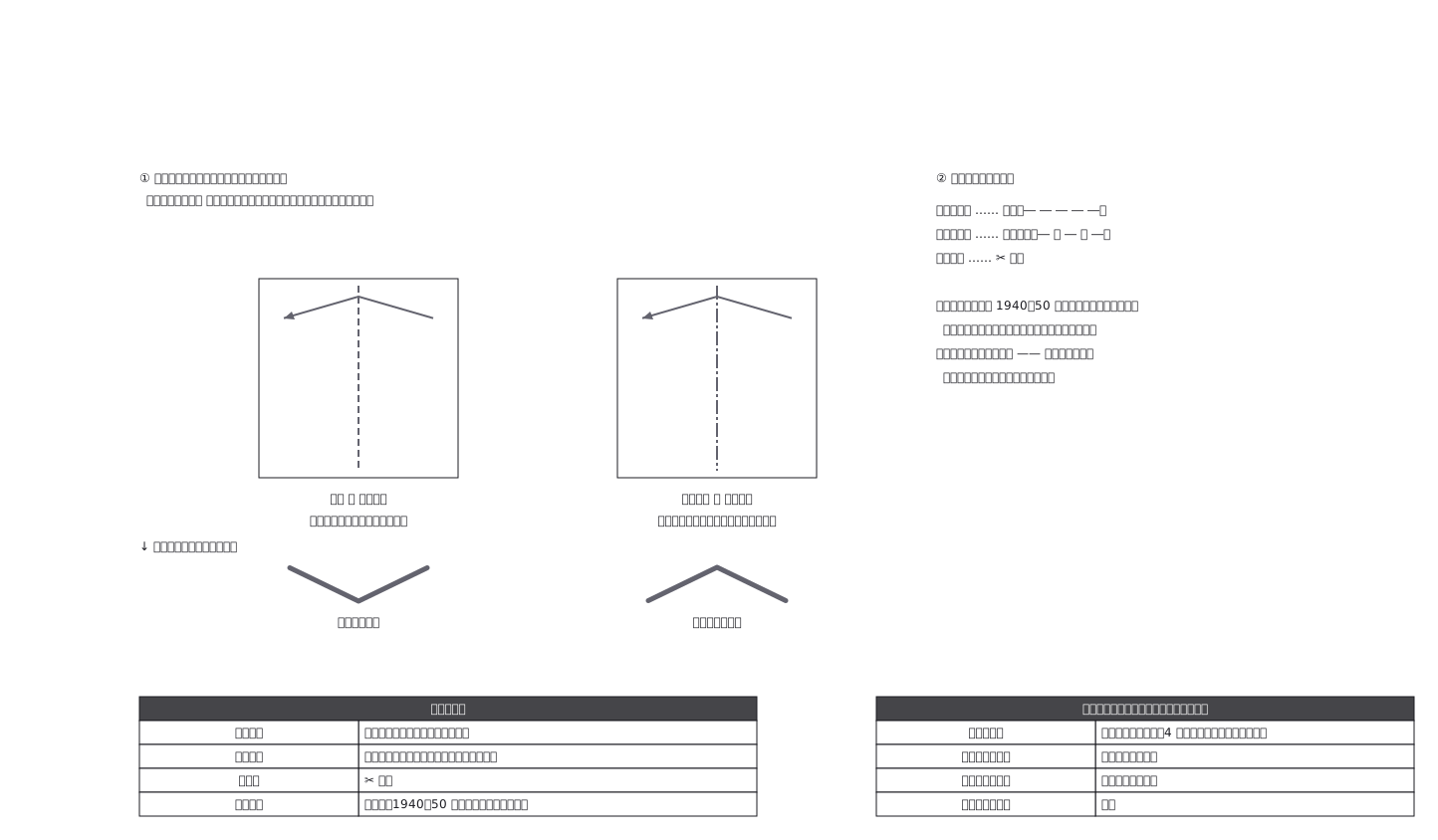
This drawing comes from one YAML file. No shape was moved by hand.
Notes in the source (in Japanese)
折り図には言葉がほとんど書いていない。線の形が指示そのものだから。
谷折り線は破線(― ― ― ― ―)、山折り線は一点鎖線(― ・ ― ・ ―)。紙の同じ位置に引いても、破線なら手前へ(折り目がへこむ)、一点鎖線なら向こう側へ(折り目が出っぱる)折る。折ったあと端から見ると、谷は V、山は Λになる。
切る線は ✂ の印。
この記号体系は 1940〜50 年代に吉澤章が発展させ、その後サミュエル・ランドレットらが補完した(吉澤・ランドレット系)。線の形だけで、どちらへ折るかが世界中に通じる。
折り紙には、途中で止めた形に名前がついているものがある ——鶴の基本形(折り鶴を作る途中。4 つのとがった「カド」を持つ)、あやめの基本形、さかなの基本形、とびらの基本形。
完成形ではなく、途中の形に名前がある —— そこから何種類にも分かれるから。
一点鎖線は zumen の line: chain(中心線・対称軸と同じ線種)。型紙の側は見本 176・177・179、面付けは見本 190。
Source (YAML)
examples/gallery/342-折り図の線.zumen.yaml
More in this field
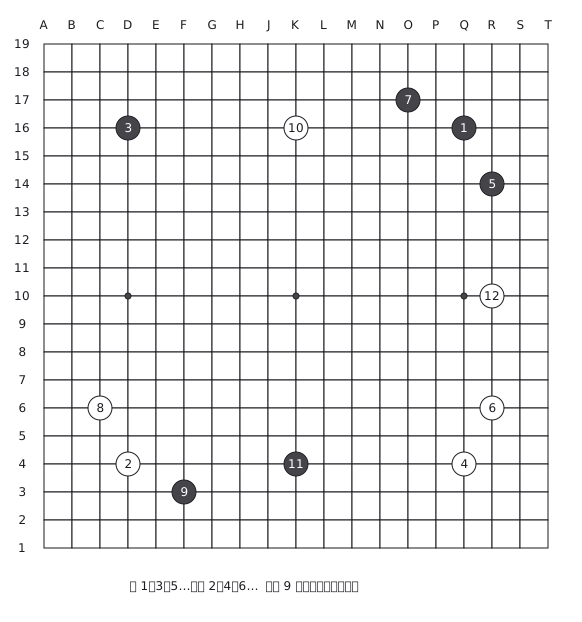 A game record on a 19-line go board where each stone carries the number of the move, showing the shape of the opening
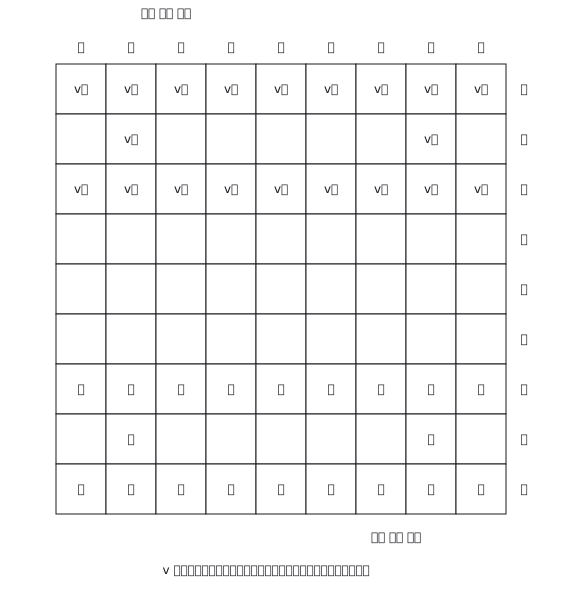 The starting position of shogi on a nine by nine board, the two sides told apart by which way the pieces point
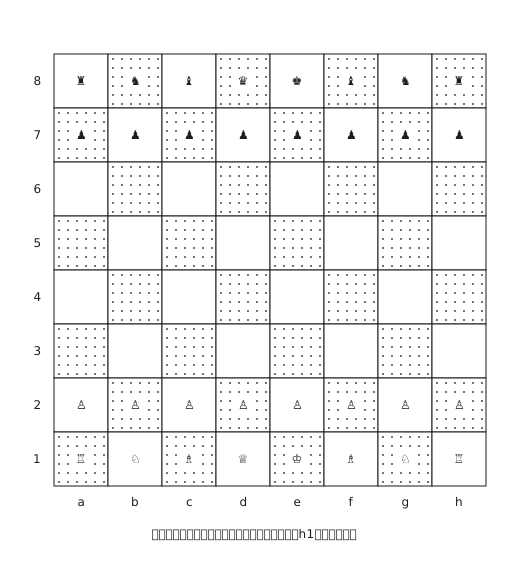 The starting position of chess on an eight by eight board, with the file and rank coordinates marked
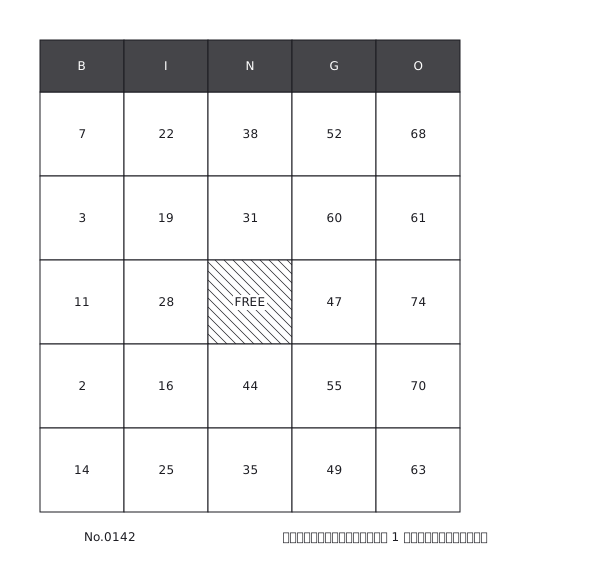 A bingo card, five by five with a free centre, where each column draws from its own range of numbers
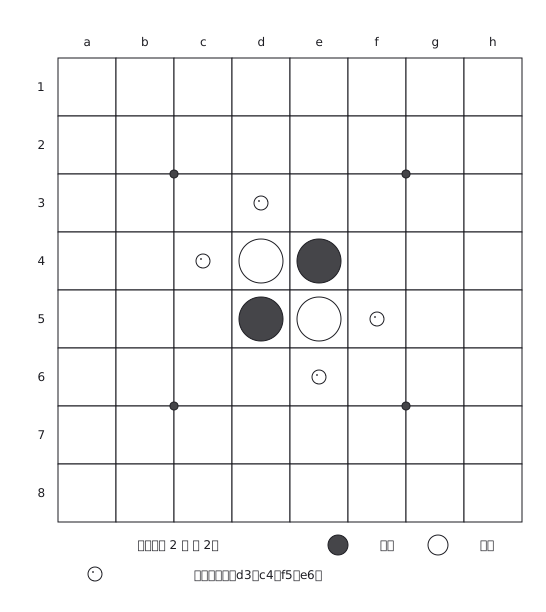 The opening position of reversi: four stones in the centre four squares, black and white alternating
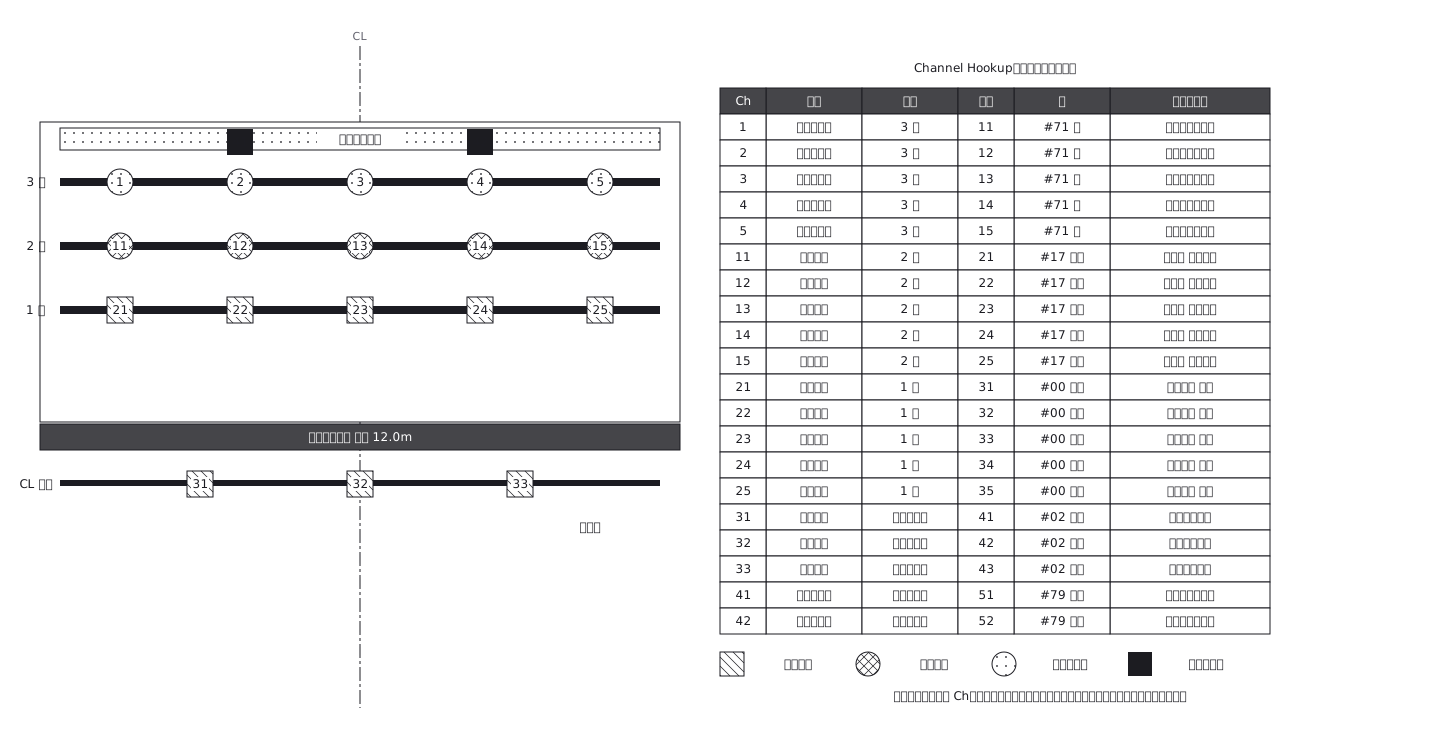 Theatrical lighting plot, with the channel schedule
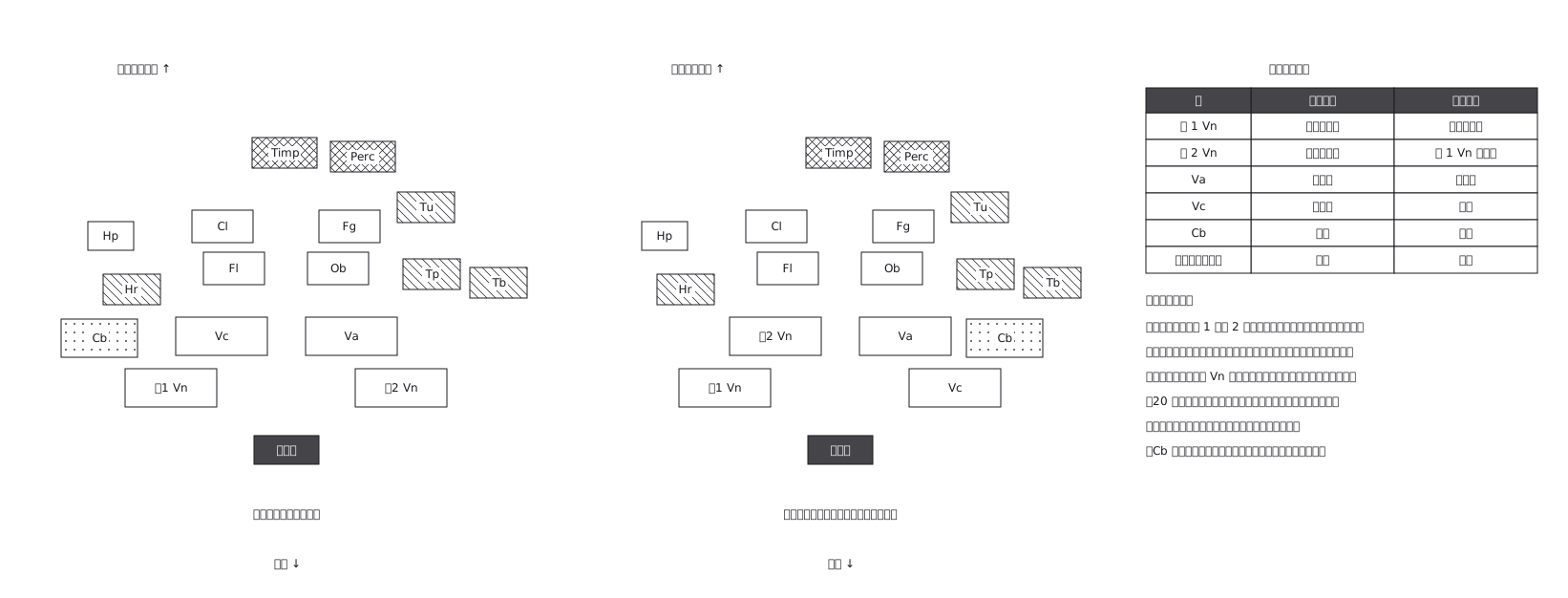 Orchestra seating, two traditions side by side
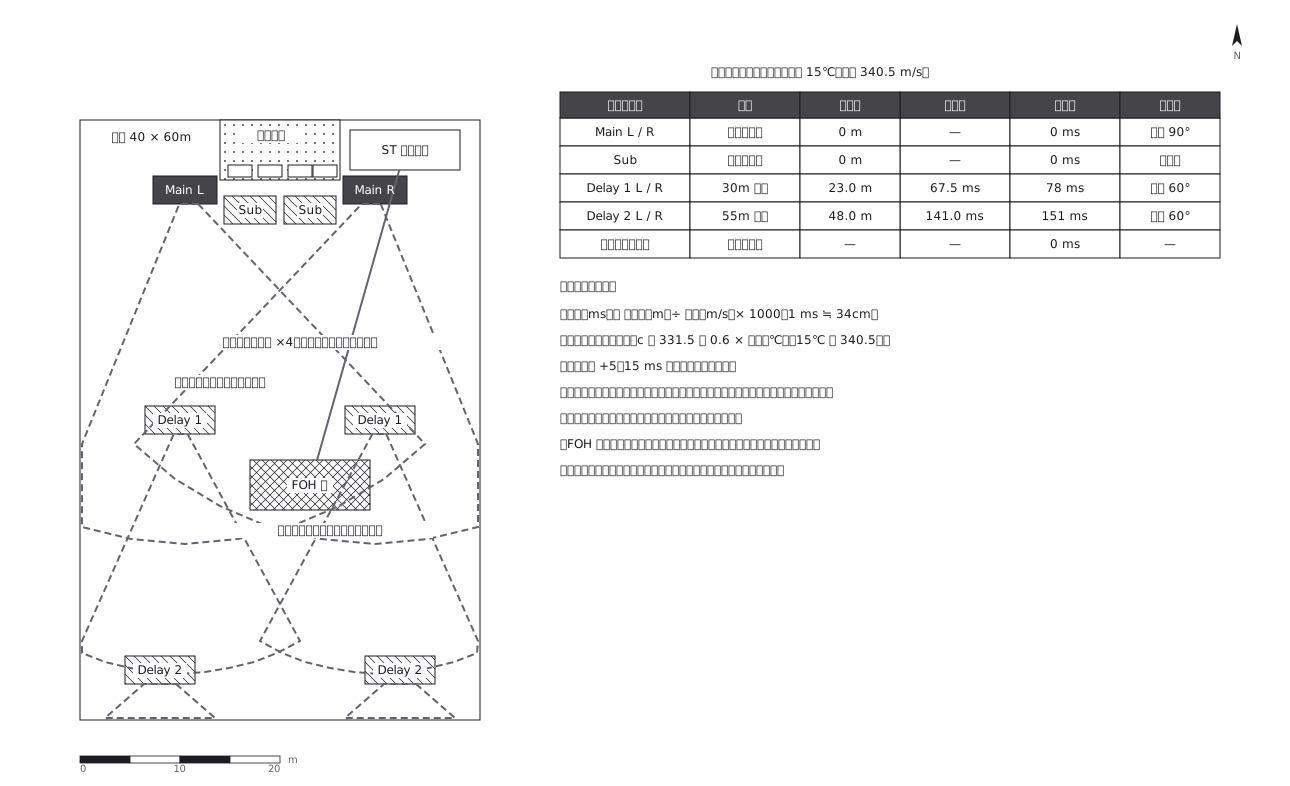 PA layout, where distance turns into delay