Instruments and acoustics
Signal path of one mixer channel (the order shapes the sound)
The same control means different things depending on where in the chain it sits. An aux send taken before the fader keeps its level when the engineer moves the fader, which is what a performer monitor needs; taken after, it follows the fader, which is what a reverb needs. Insert is in series and cuts the path open; aux is in parallel and branches away and back.
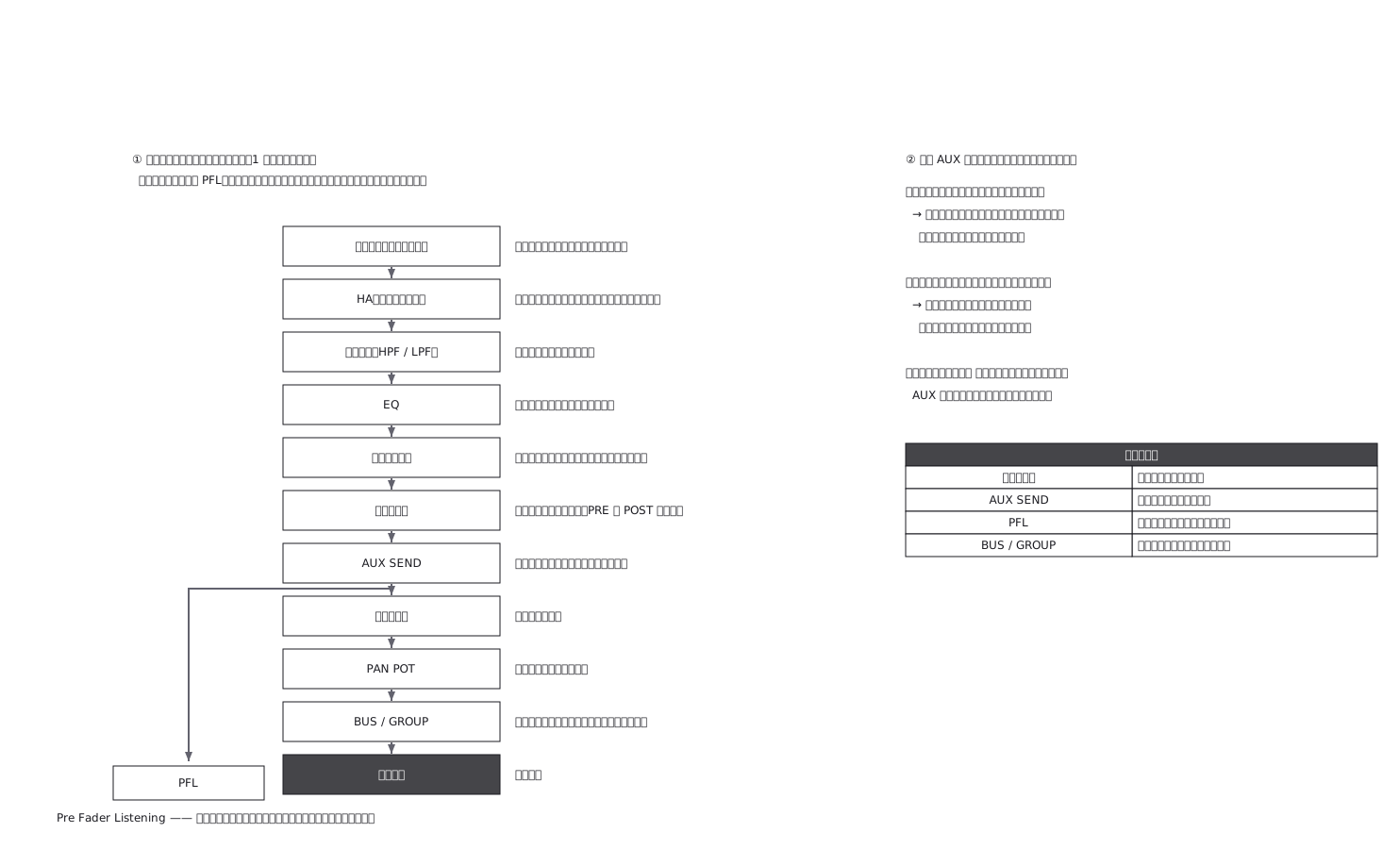
This drawing comes from one YAML file. No shape was moved by hand.
Notes in the source (in Japanese)
同じ機能でも、道のどこに置くかで別のものになる。
入力(マイク/ライン)→ HA(ヘッドアンプ)→ フィルタ(HPF / LPF)→ EQ →ダイナミクス → インサート → AUX SEND → フェーダー → PAN POT →BUS / GROUP → マスター。PAN はフェーダーの後ろ(定位を決めてから左右のバスへ振り分ける)。AUX は ① ではプリの位置に描いた。ポストの AUX はフェーダーの後ろから取る(②)。
HA で利得を合わせるのが先なのは、そこで決まった余裕が以降の段すべてに効くから。フィルタが EQ より前なのは、要らない帯域を先に落としておくため。
フェーダーの前から取る(プリフェーダー)と、卓の音量を動かしても送る量は変わらない ——演者に返すモニターはこちら。
フェーダーの後から取る(ポストフェーダー)と、卓の音量に連動して送る量も動く ——残響などのエフェクトはこちら。
どちらも「AUX SEND」という同じつまみで、違うのは取り出す場所だけ。
インサートは直列。 道を切って、そこへ外部機器を挟む。通った音がそのまま先へ行く。AUX は並列。 枝分かれして送り、戻してくる。インサートは PRE か POST を選べる。
Pre Fader Listening —— フェーダーで音量を調整される前段の信号をソロで聞く。卓のフェーダーを下げていても聞けるので、送り出す前に確かめられる。
PA の配置は見本 101、ホールの反射は見本 205、マイクの指向性は見本 327。
Source (YAML)
examples/gallery/343-ミキサーの信号の道.zumen.yaml
More in this field
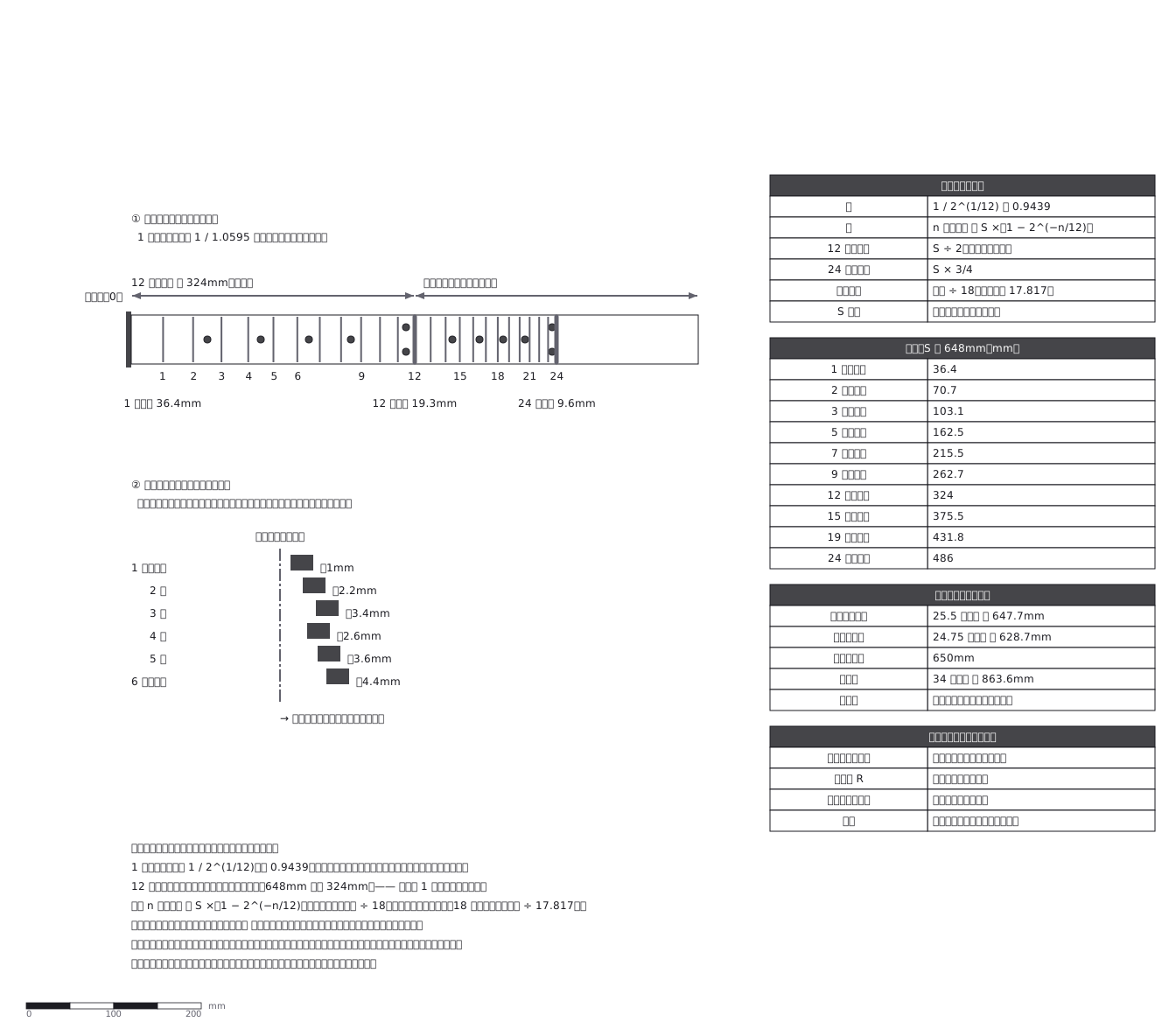 Guitar frets are a geometric series, and the saddle must still be moved back to play in tune
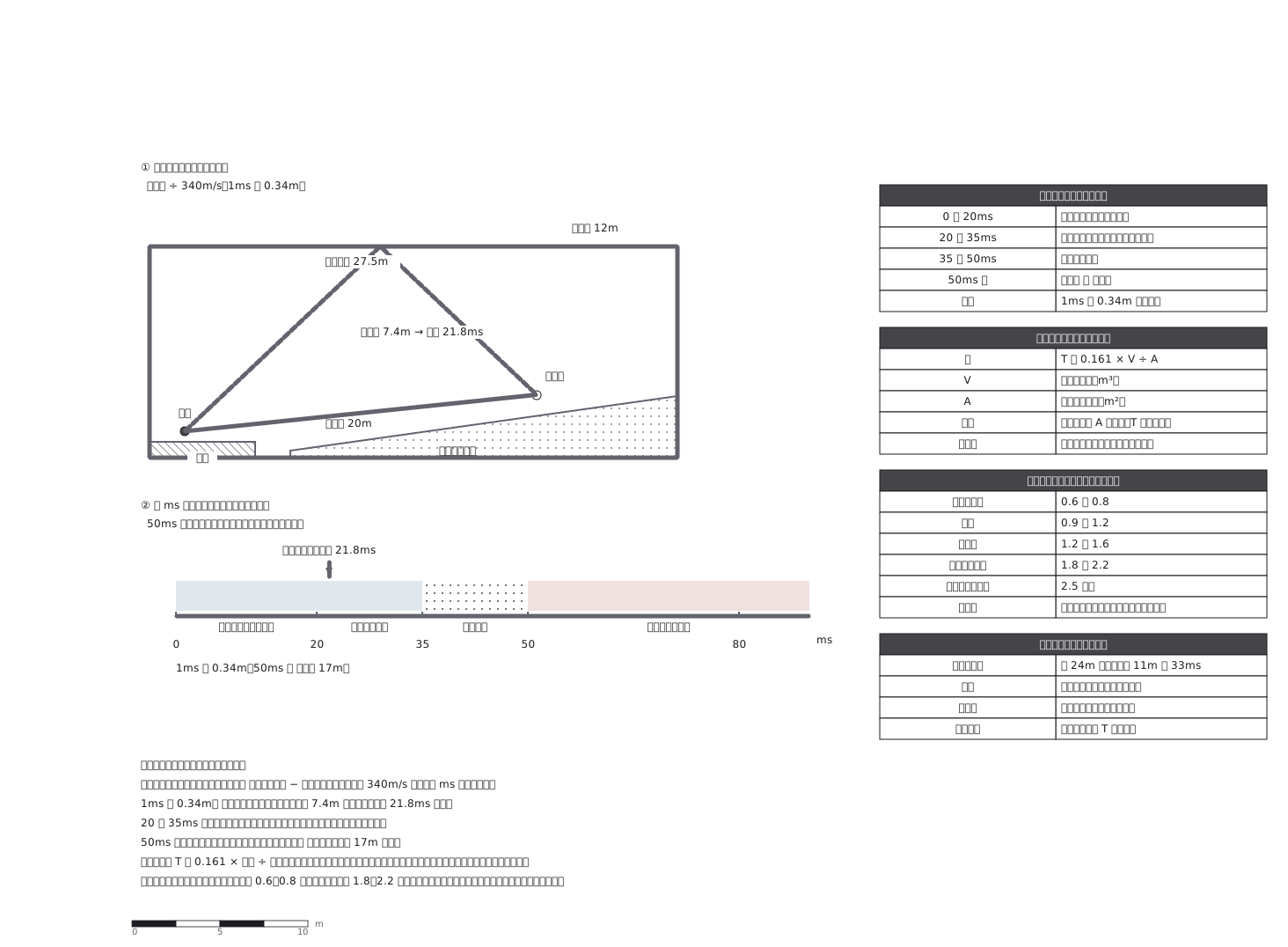 Hall acoustics: delay is nothing but a difference in path length — one millisecond is 0.34 m
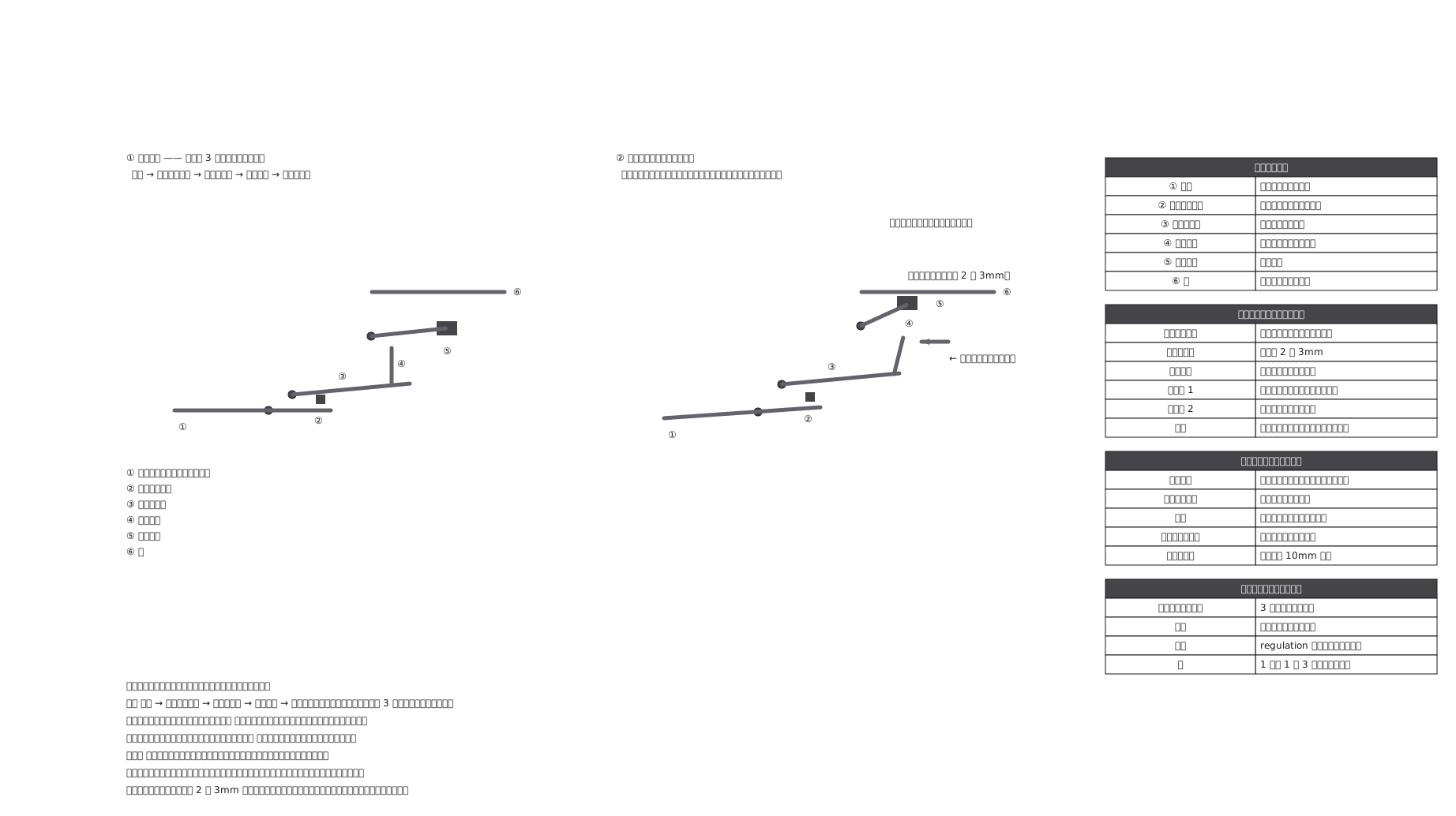 A piano action: the jack lets go just before the string, so nothing is pushing the hammer at impact
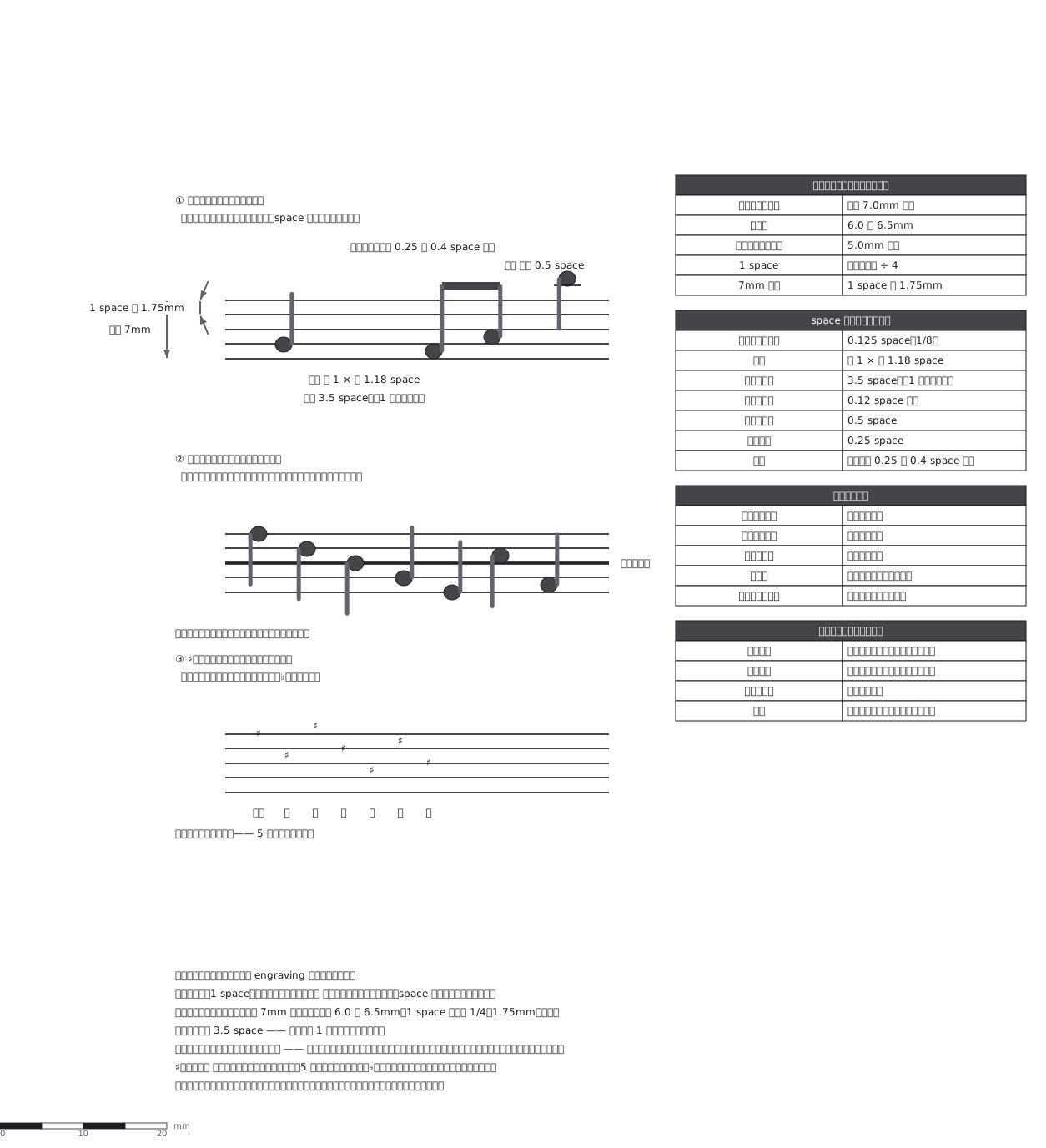 Music engraving: the staff space is the unit for every measurement, and the stem is 3.5 of them
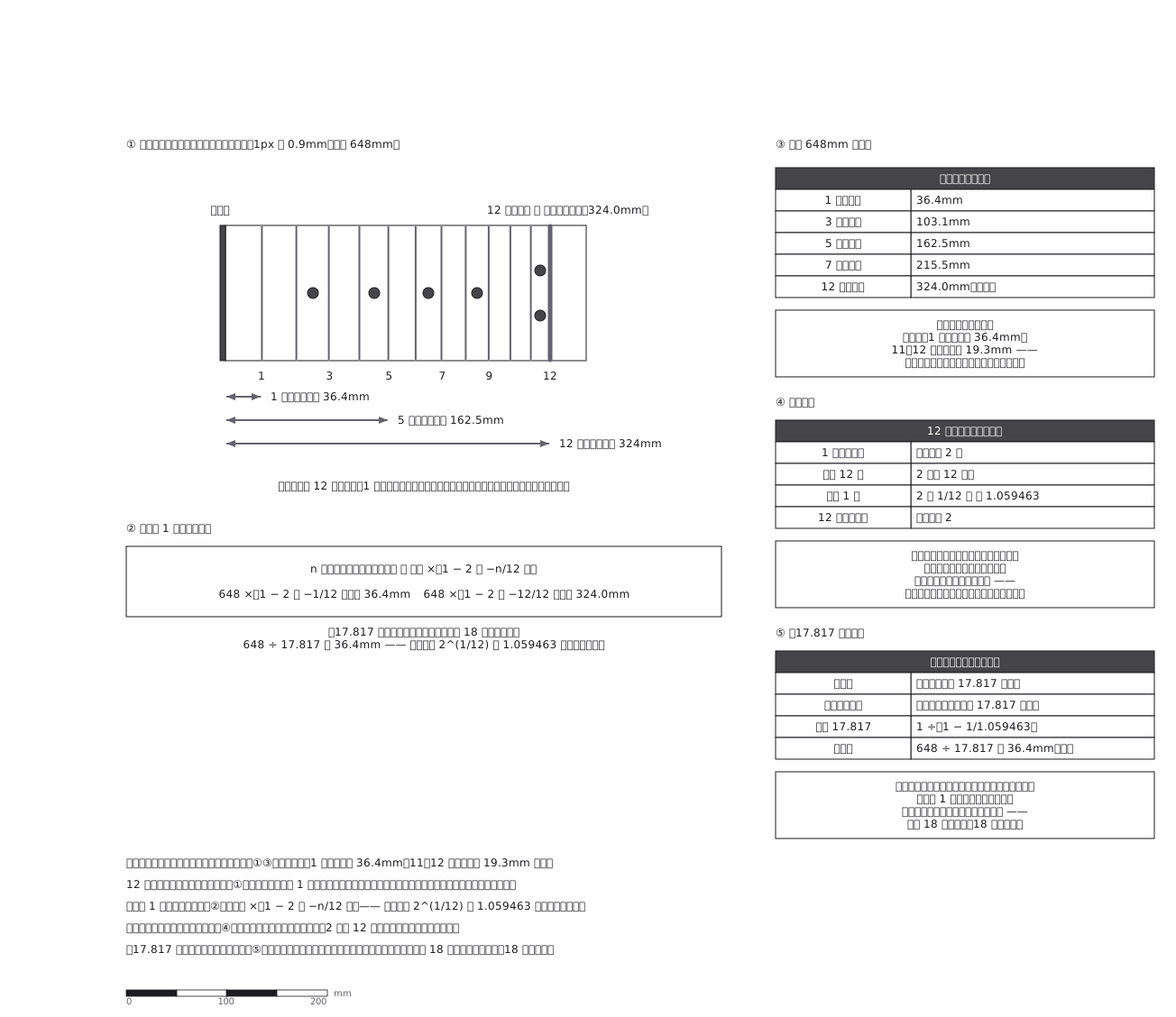 Frets crowd together as you climb because what is divided into twelve is not a distance but a ratio: each semitone multiplies by 2^(1/12), so the twelfth fret lands at exactly half the string and everything beyond it repeats at half size
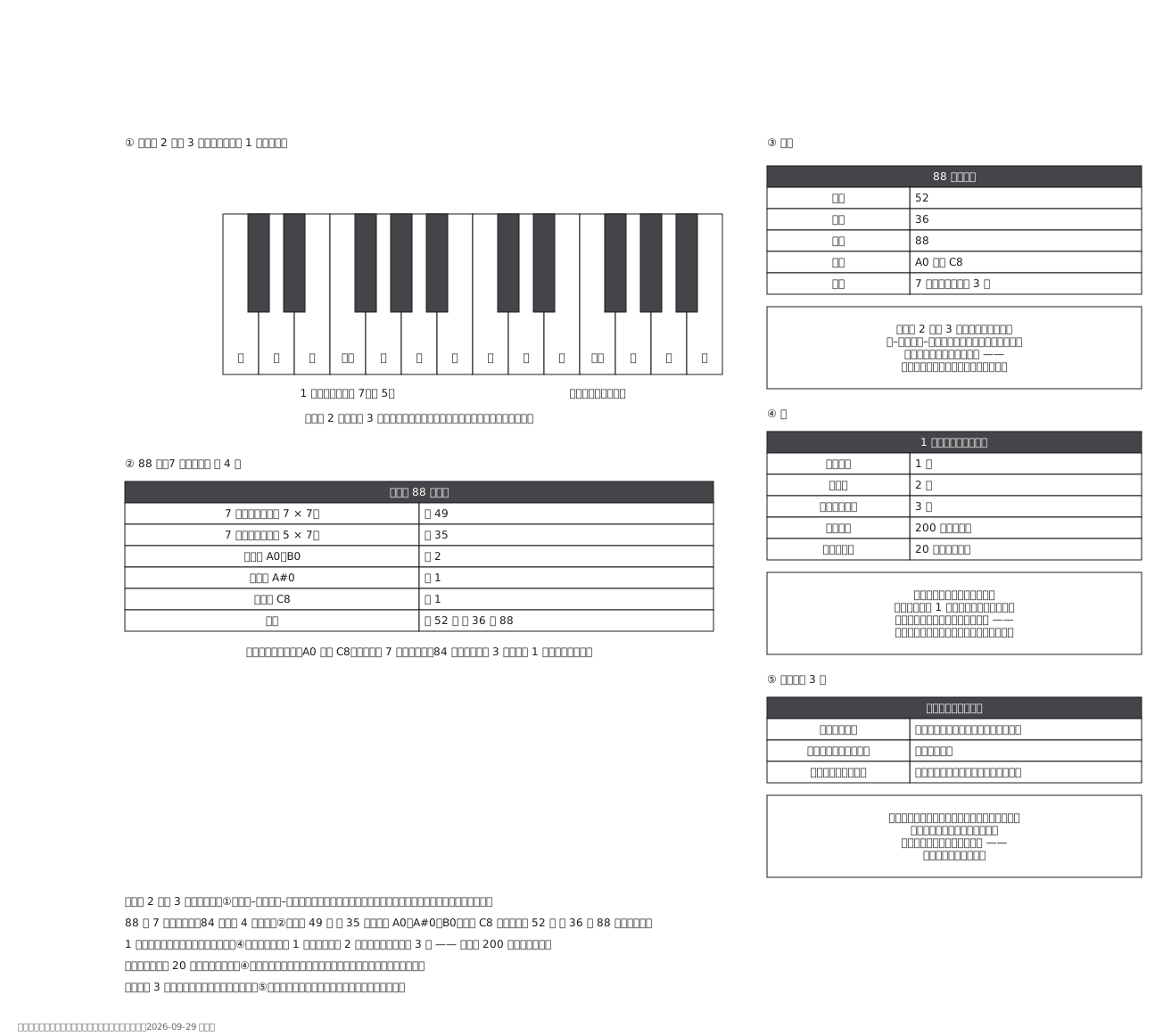 The black keys are grouped in twos and threes so that a hand can find its place without looking — twelve evenly spaced keys would give no landmark at all — and 88 turns out to be seven octaves plus four: three keys added below and one above
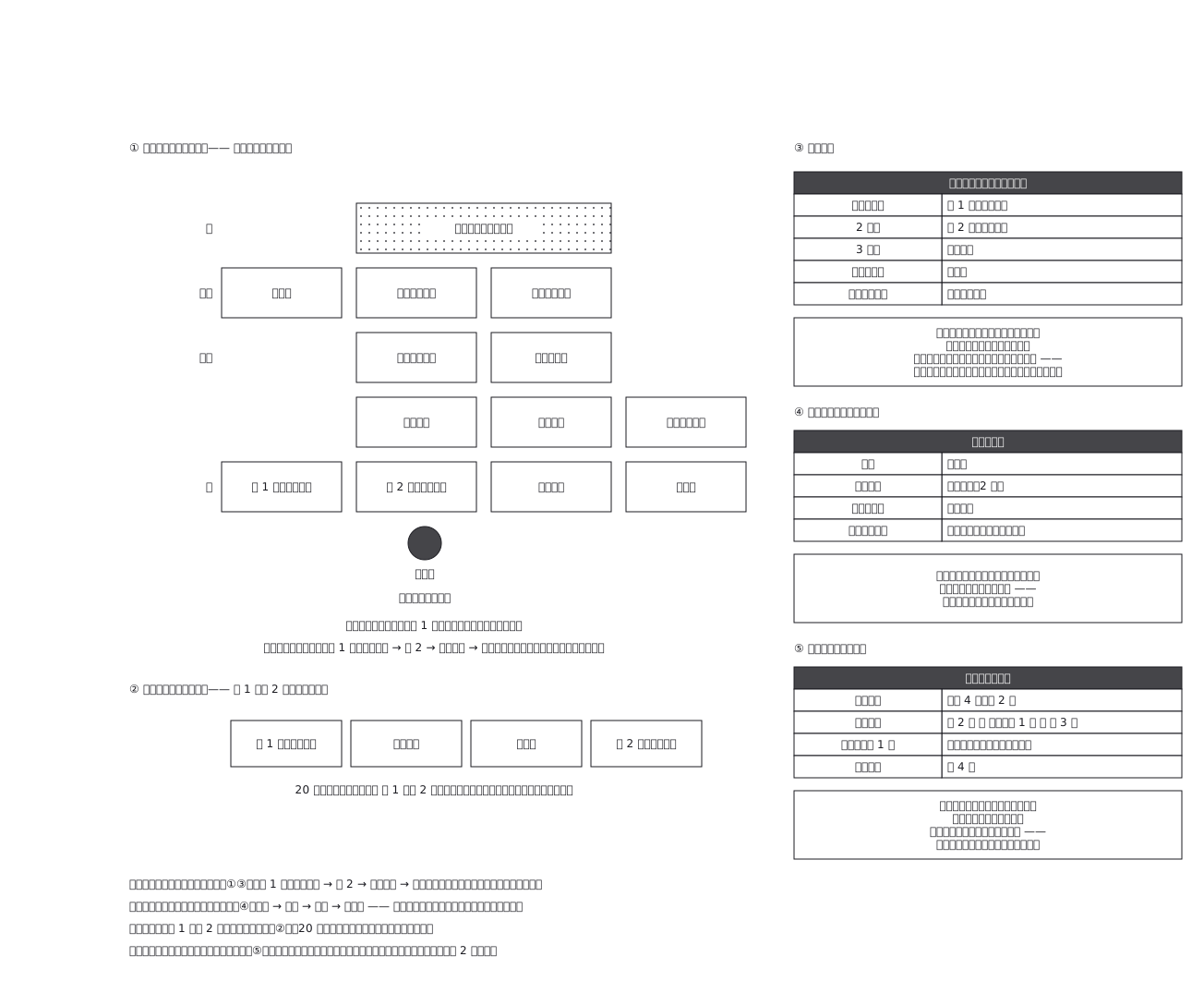 The strings run left to right from high to low and the louder the instrument the further back it sits, so the seating plan is itself a balance control — and "double wind" or "triple wind" names the size of the orchestra by counting only the woodwind
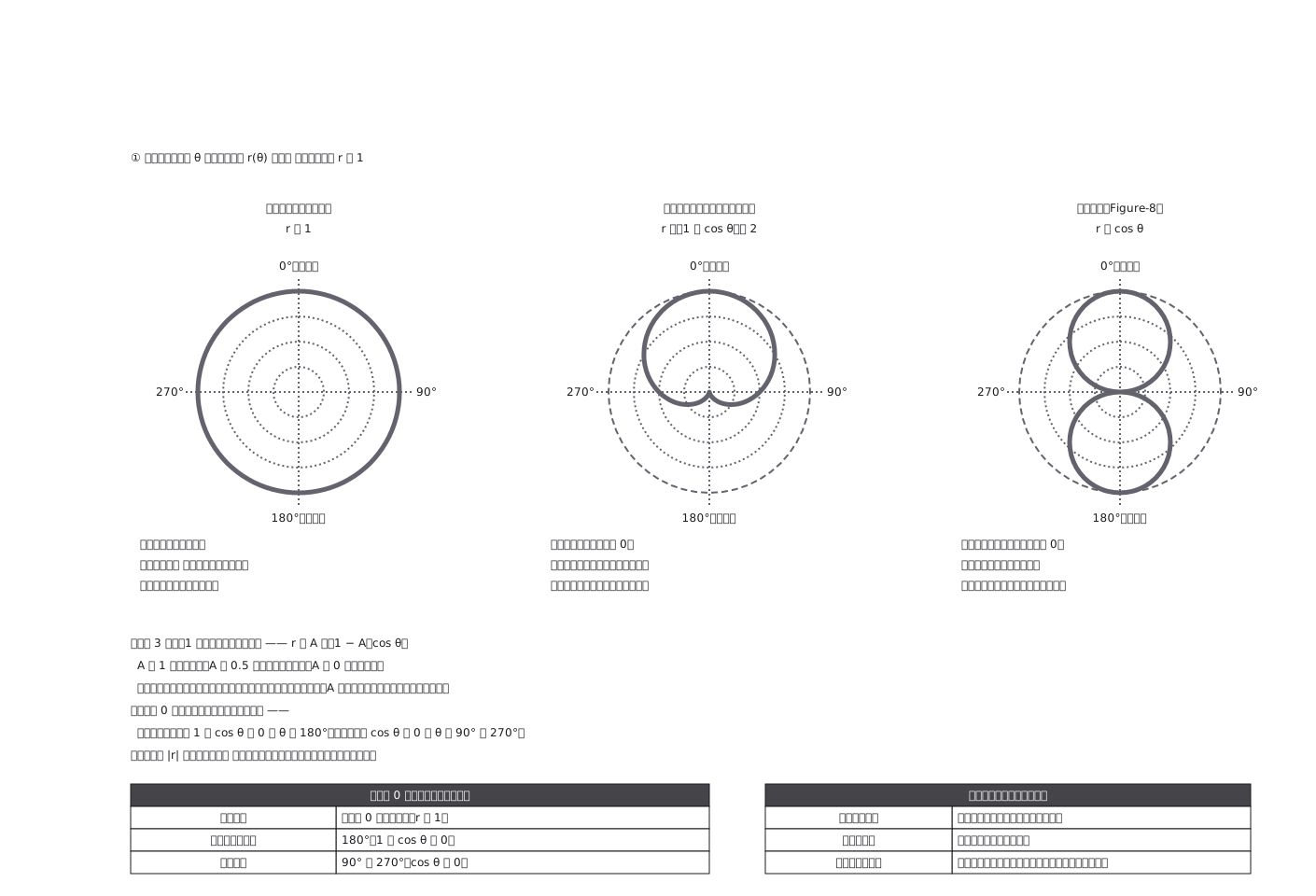 A polar plot of how much a microphone picks up from each direction. The three familiar shapes are not separate inventions but one formula at its ends and middle — omnidirectional, cardioid and figure-of-eight are A = 1, 0.5 and 0 in r = A + (1 - A)cos θ. Solving the same formula gives the dead angles: 180 degrees for a cardioid, 90 and 270 for a figure-of-eight.