Instruments and acoustics
Early reflections and reverberation in a concert hall
Hall acoustics: delay is nothing but a difference in path length — one millisecond is 0.34 m
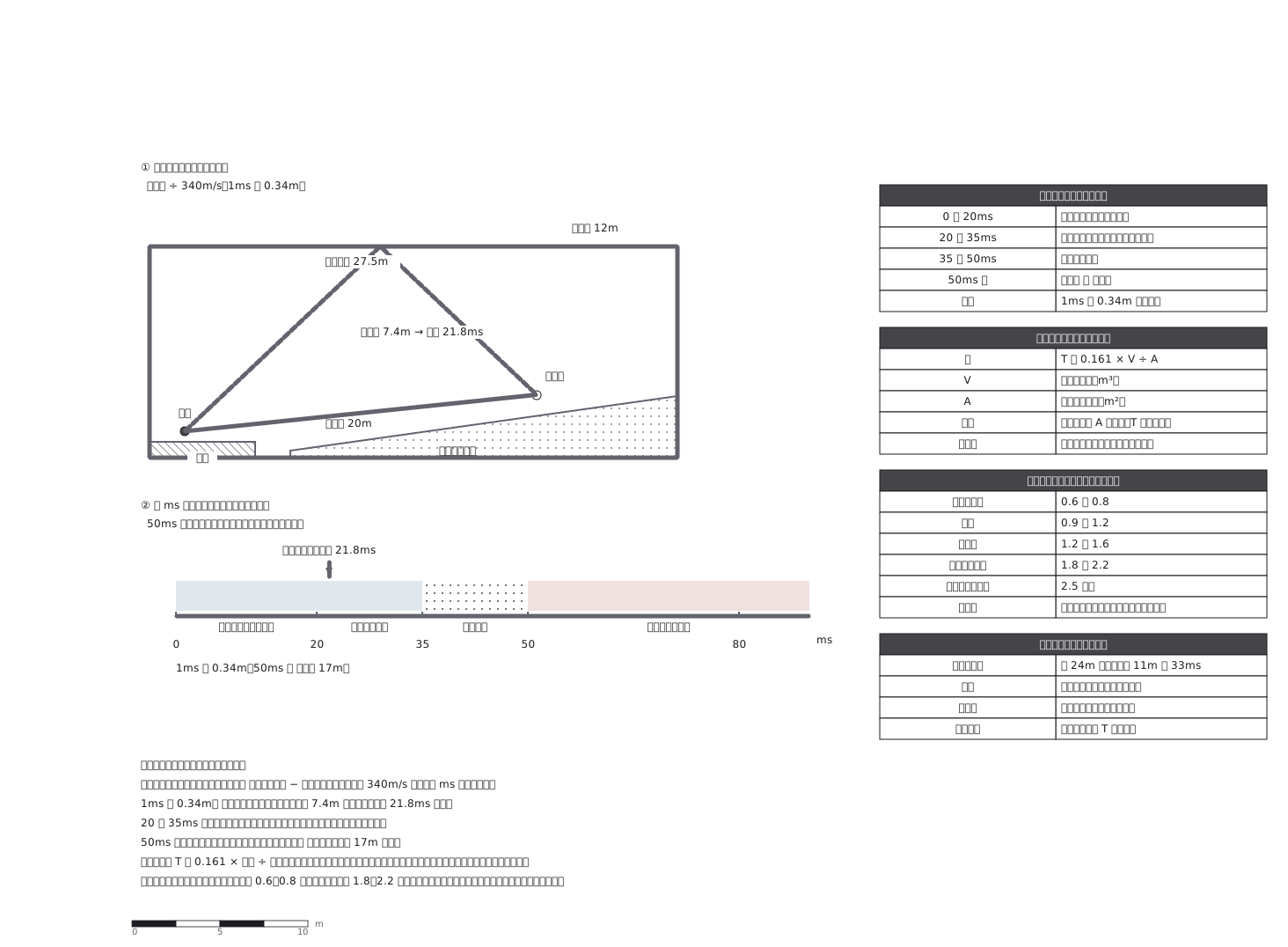
This drawing comes from one YAML file. No shape was moved by hand.
Notes in the source (in Japanese)
「遅れ」は、距離の差そのもの。
反射音の経路 − 直接音の経路 を 340m/s で割れば ms になる。1ms = 0.34m。
20〜35ms は「よい初期反射」、50ms を超えると別の音(エコー)。残響は T = 0.161 V / A(セイビン)。人も吸音材なので、満席と空席では別のホールになる。
Source (YAML)
examples/gallery/205-ホールの初期反射.zumen.yaml
More in this field
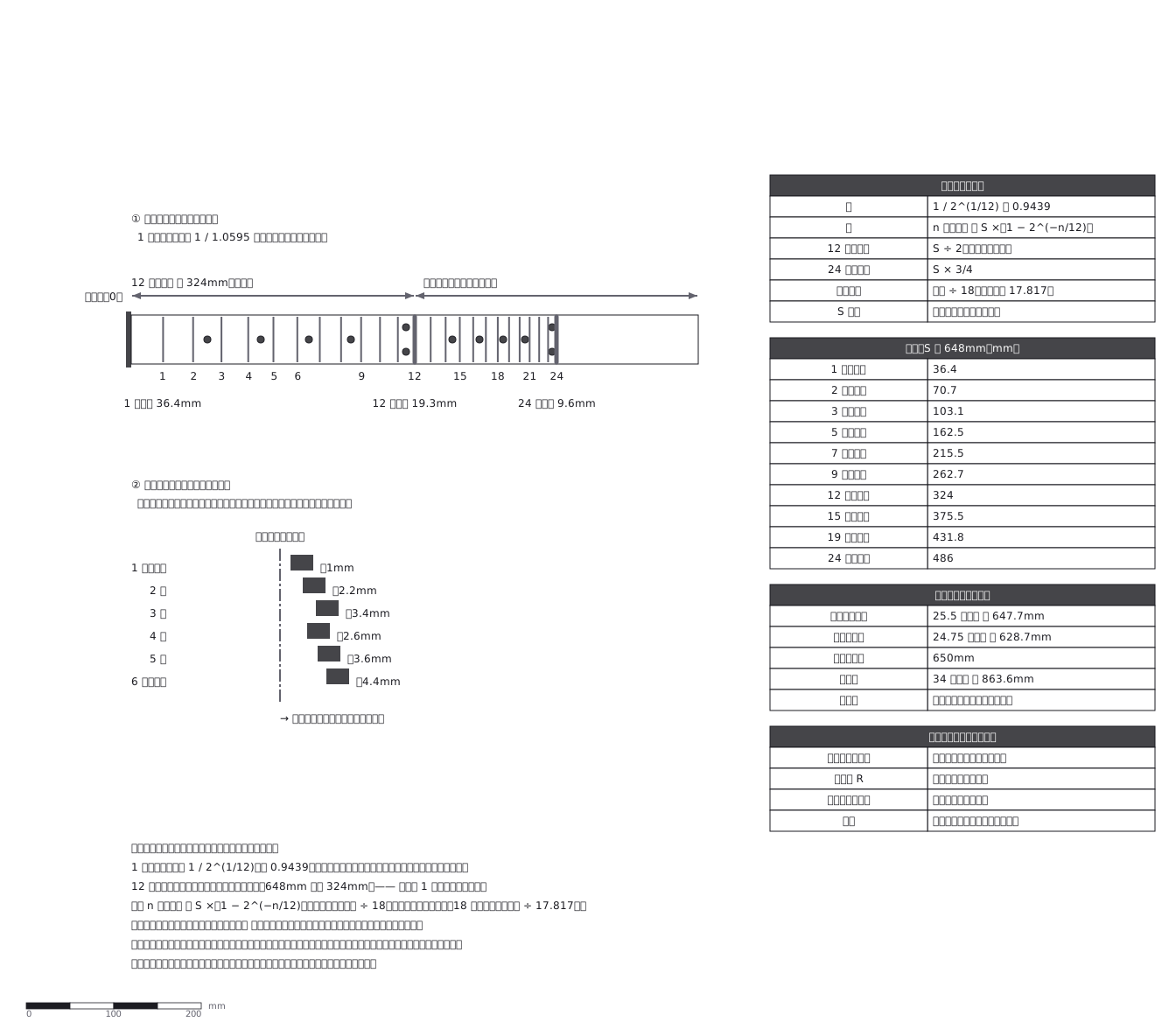 Guitar frets are a geometric series, and the saddle must still be moved back to play in tune
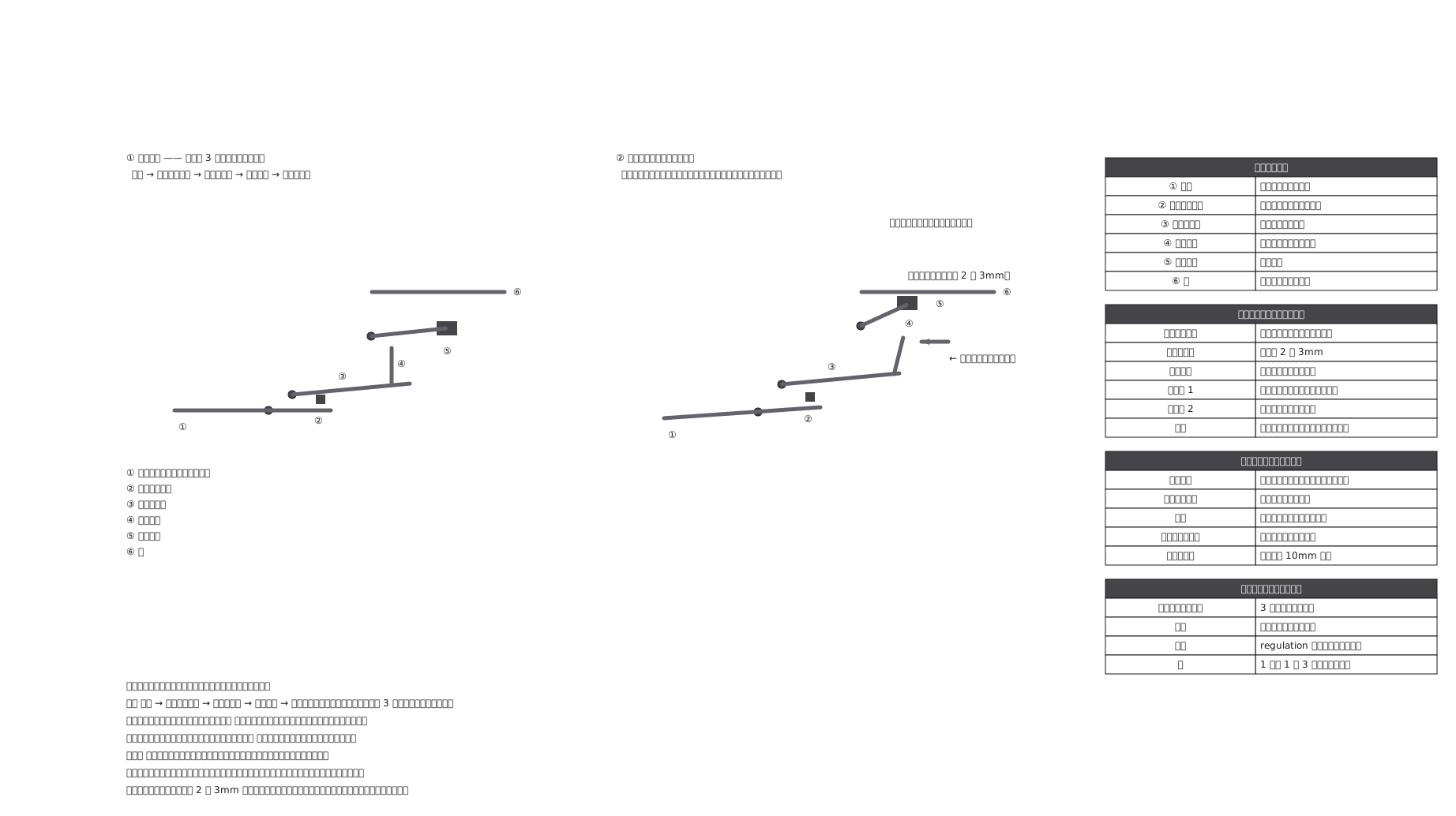 A piano action: the jack lets go just before the string, so nothing is pushing the hammer at impact
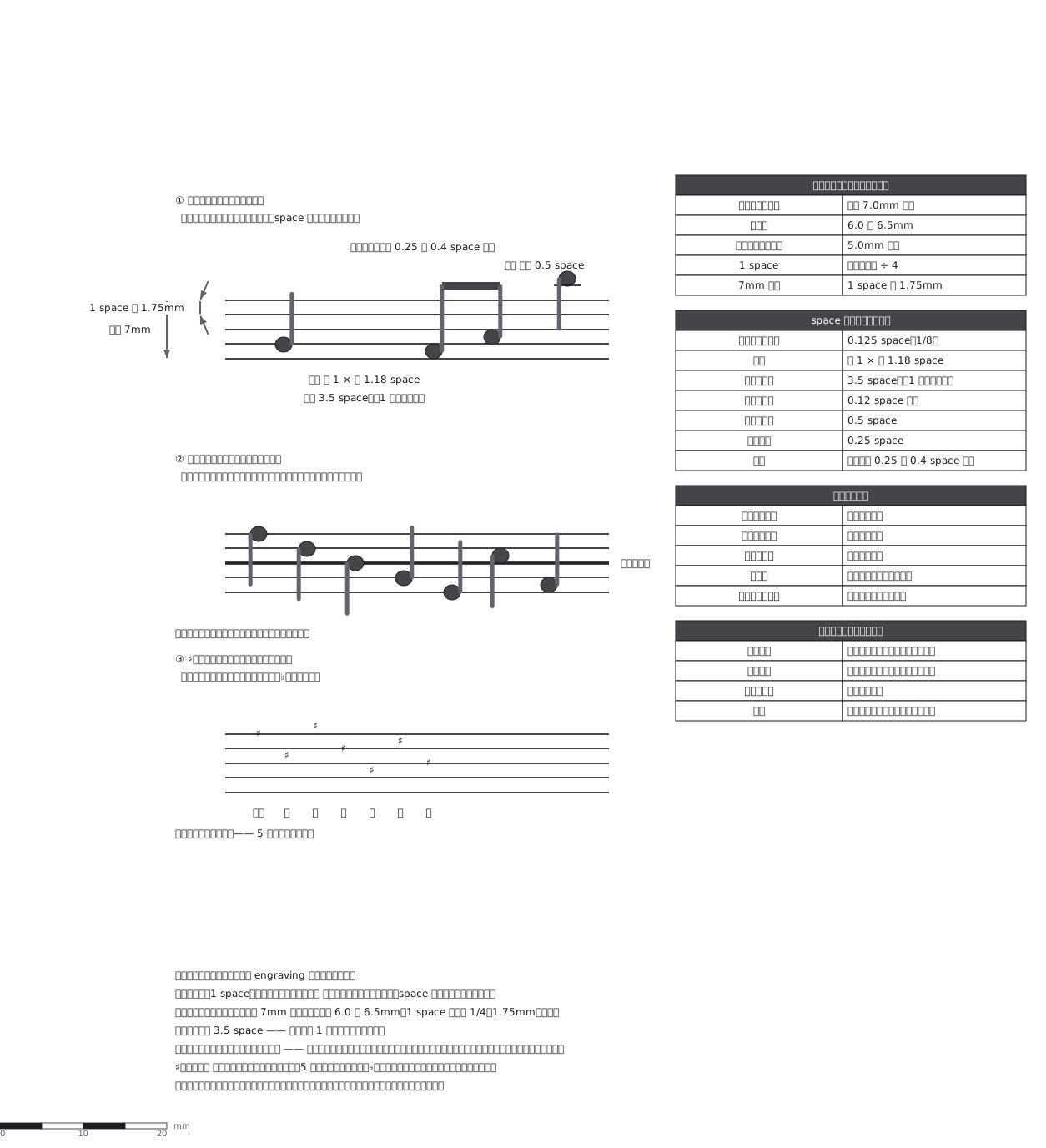 Music engraving: the staff space is the unit for every measurement, and the stem is 3.5 of them
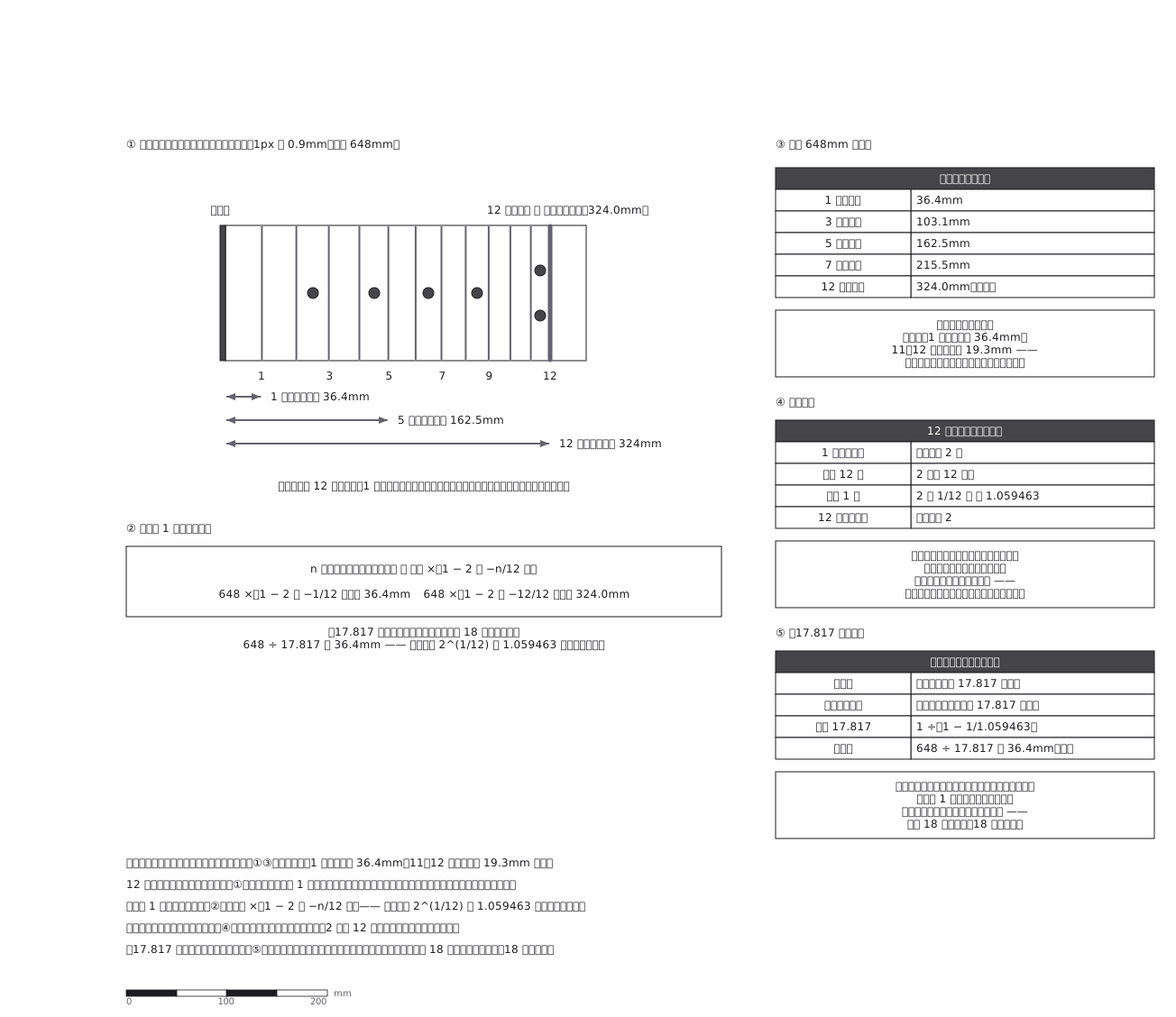 Frets crowd together as you climb because what is divided into twelve is not a distance but a ratio: each semitone multiplies by 2^(1/12), so the twelfth fret lands at exactly half the string and everything beyond it repeats at half size
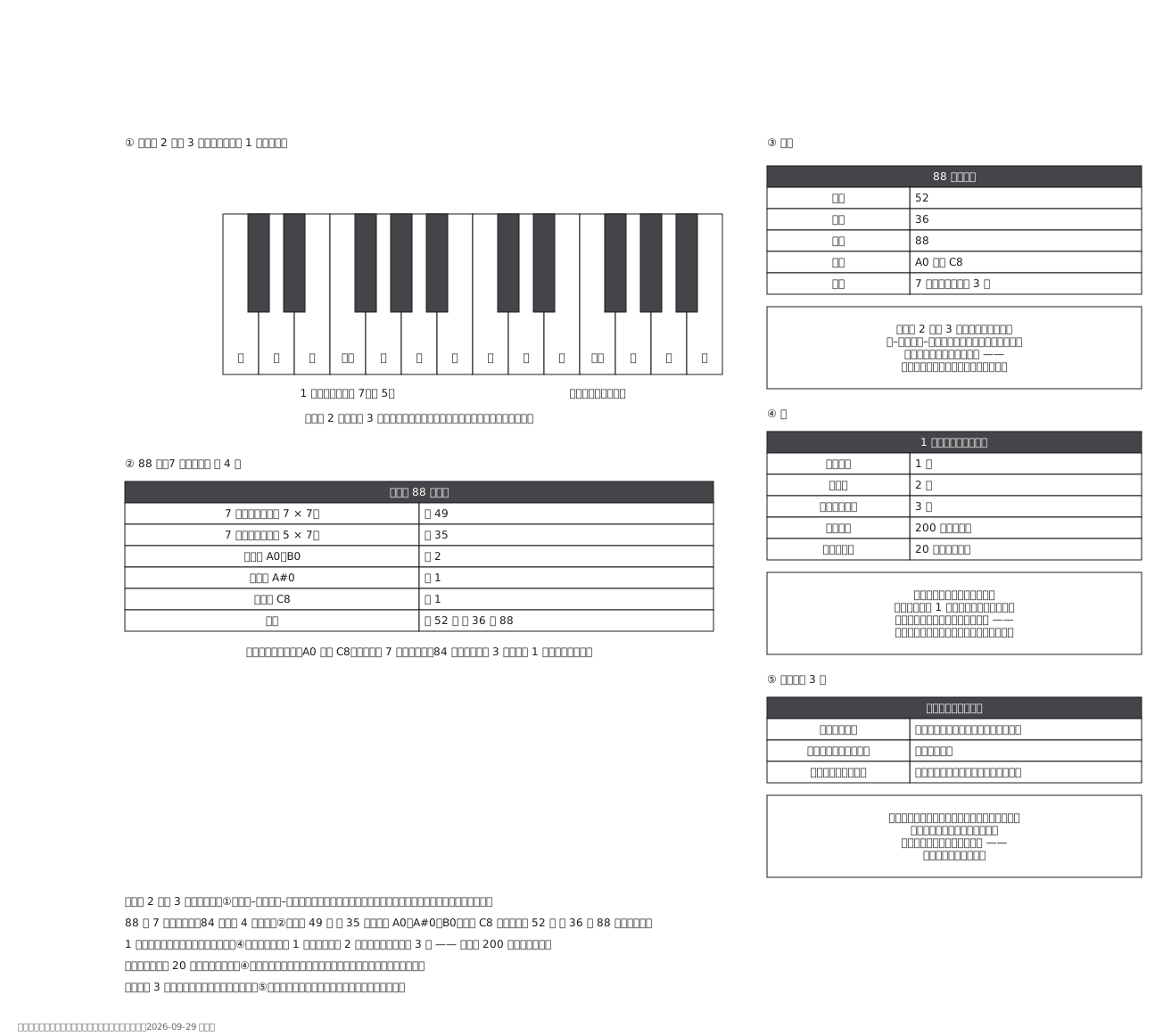 The black keys are grouped in twos and threes so that a hand can find its place without looking — twelve evenly spaced keys would give no landmark at all — and 88 turns out to be seven octaves plus four: three keys added below and one above
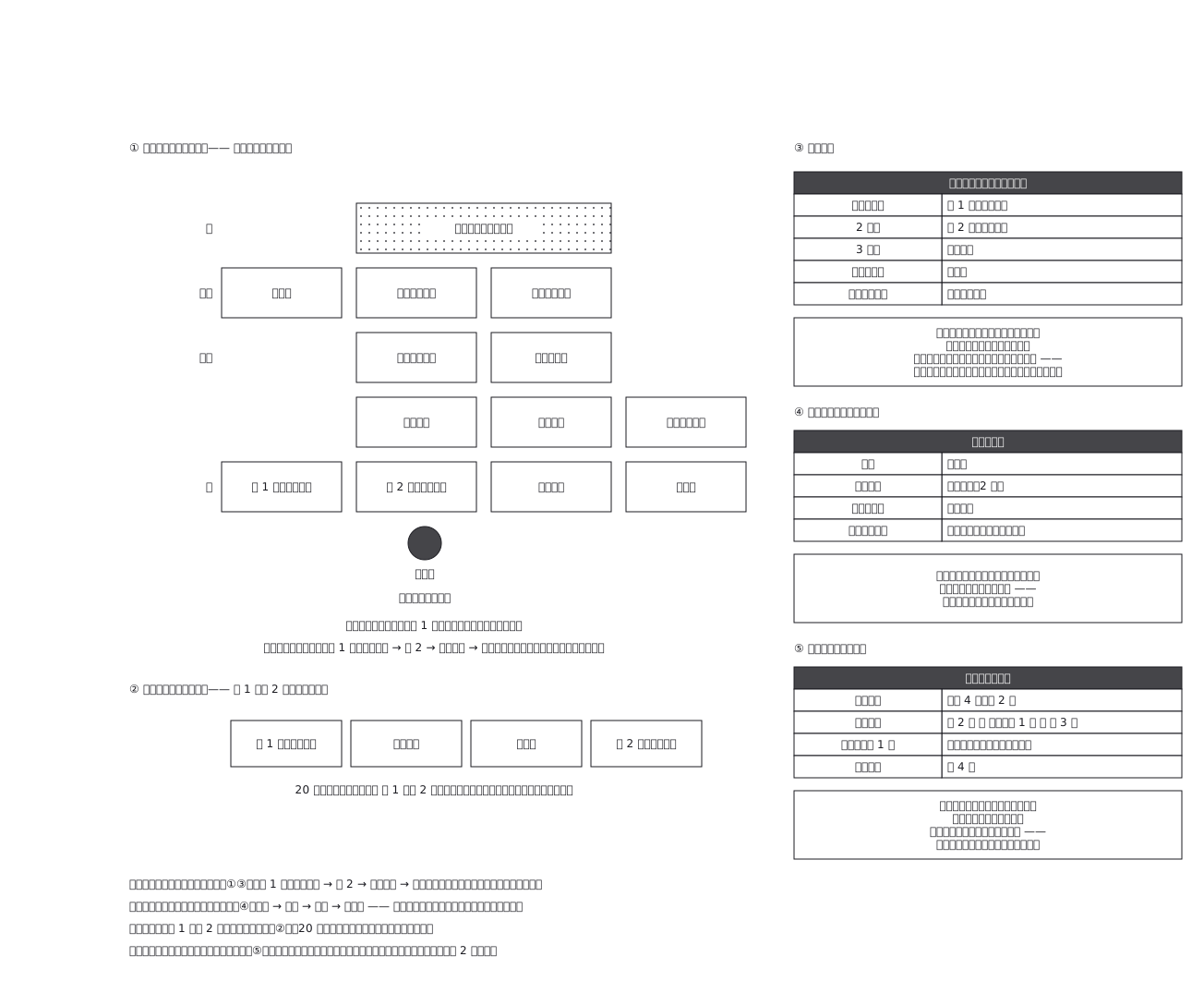 The strings run left to right from high to low and the louder the instrument the further back it sits, so the seating plan is itself a balance control — and "double wind" or "triple wind" names the size of the orchestra by counting only the woodwind
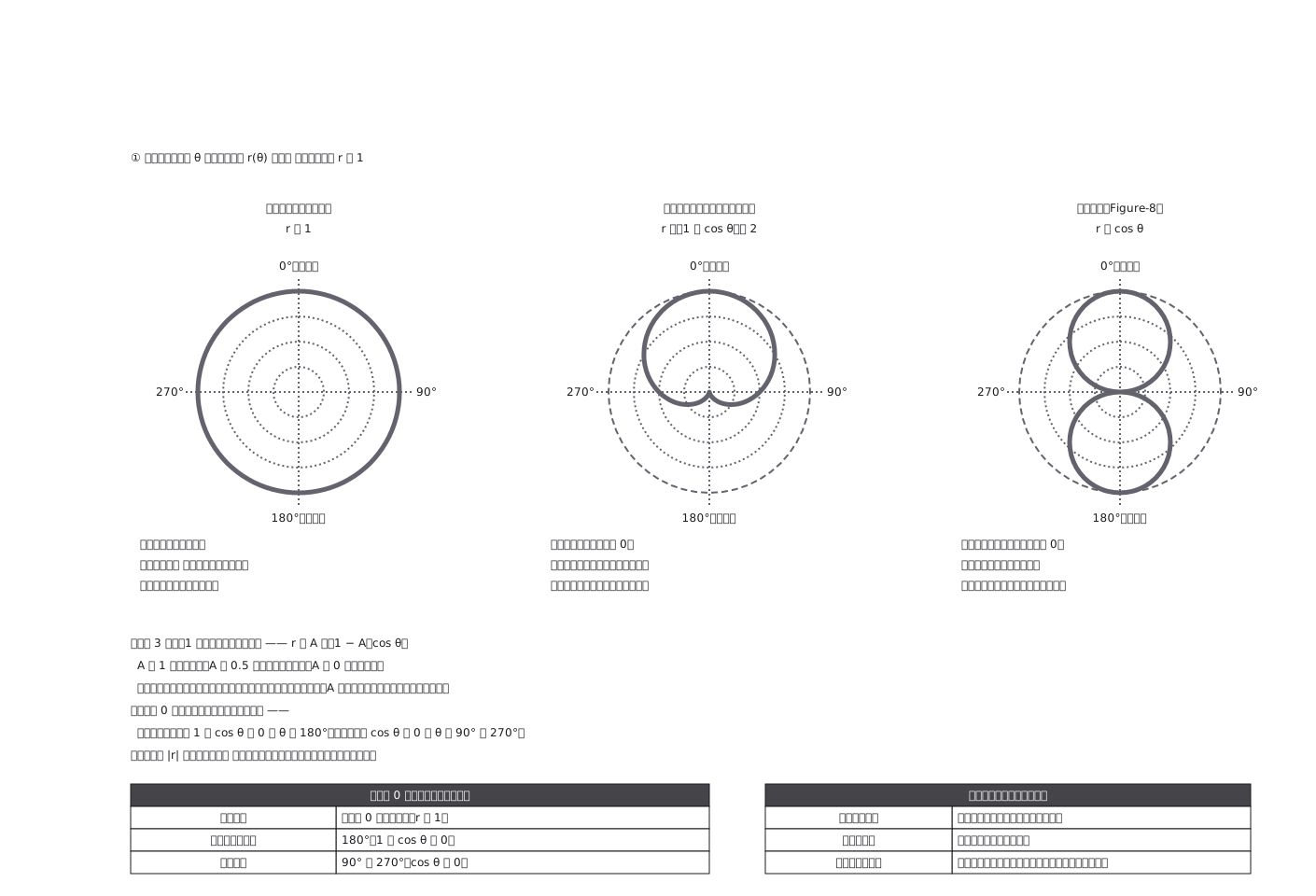 A polar plot of how much a microphone picks up from each direction. The three familiar shapes are not separate inventions but one formula at its ends and middle — omnidirectional, cardioid and figure-of-eight are A = 1, 0.5 and 0 in r = A + (1 - A)cos θ. Solving the same formula gives the dead angles: 180 degrees for a cardioid, 90 and 270 for a figure-of-eight.
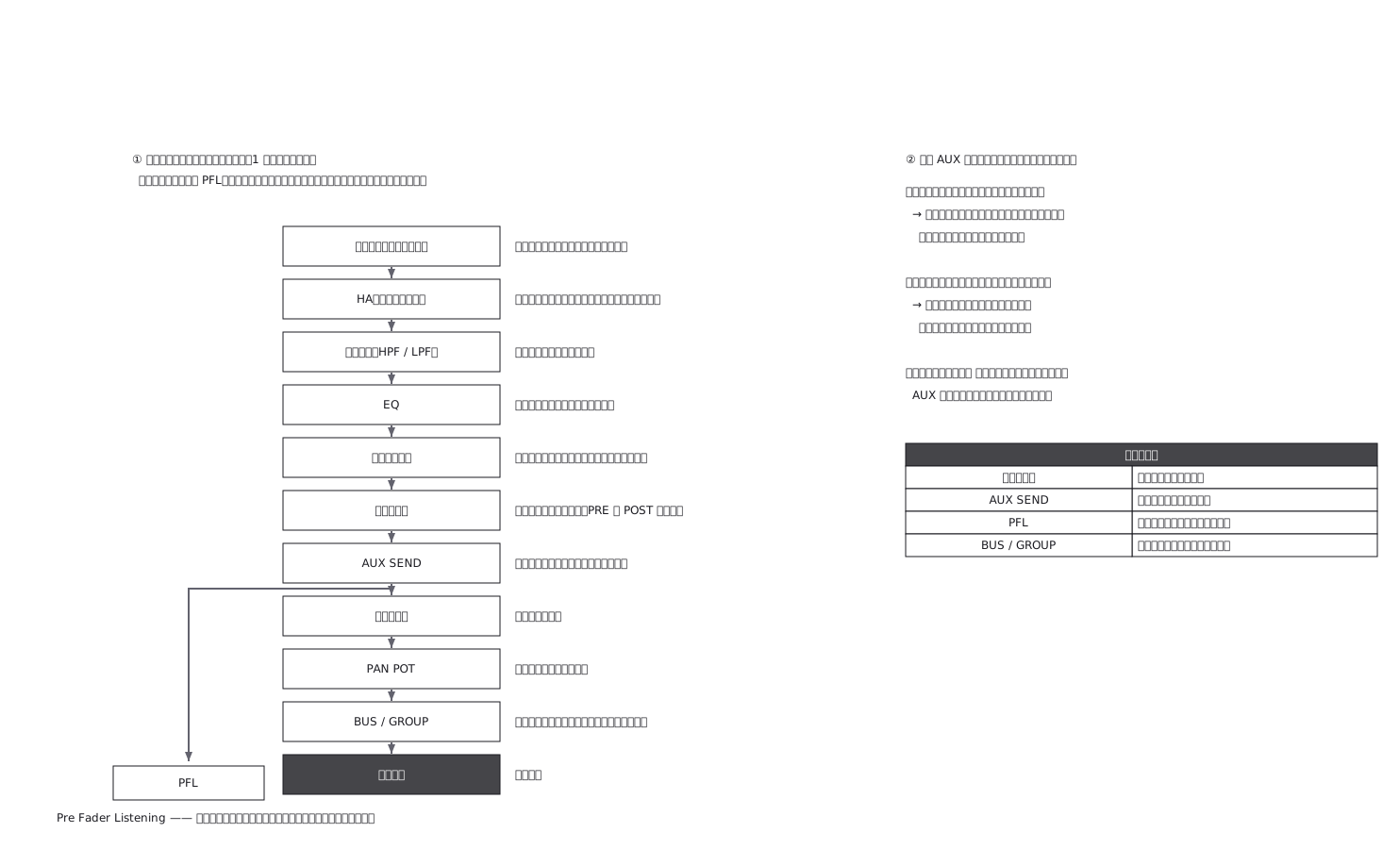 The same control means different things depending on where in the chain it sits. An aux send taken before the fader keeps its level when the engineer moves the fader, which is what a performer monitor needs; taken after, it follows the fader, which is what a reverb needs. Insert is in series and cuts the path open; aux is in parallel and branches away and back.