Instruments and acoustics
Guitar fret positions (what is divided equally is a ratio, not a difference)
Frets crowd together as you climb because what is divided into twelve is not a distance but a ratio: each semitone multiplies by 2^(1/12), so the twelfth fret lands at exactly half the string and everything beyond it repeats at half size
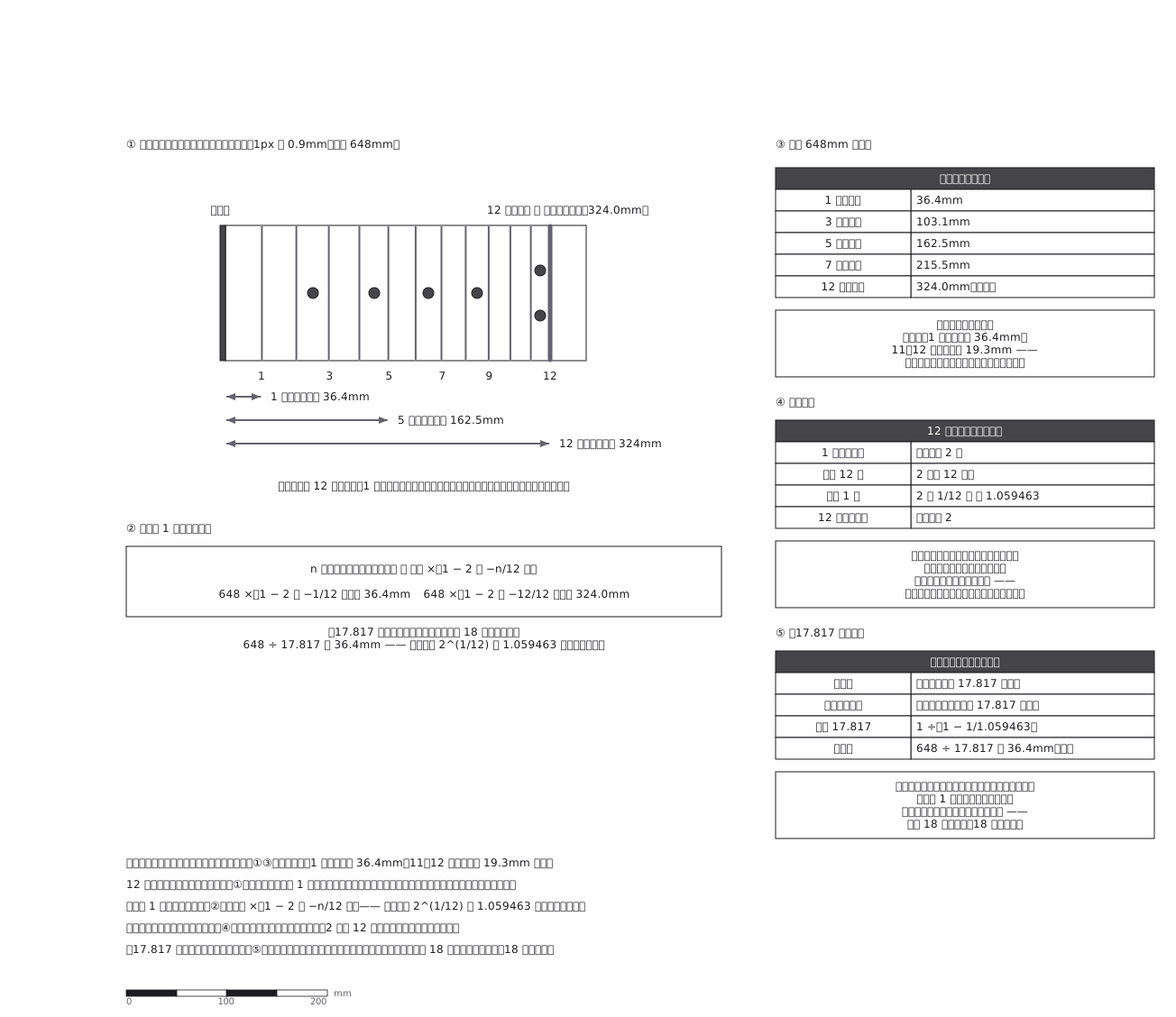
This drawing comes from one YAML file. No shape was moved by hand.
Notes in the source (in Japanese)
フレットの間隔は、だんだん狭くなる。弦長 648mm のとき、ナット〜1 フレットは 36.4mm、11〜12 フレットは 19.3mm ——同じ半音でも、長さは半分近くまで縮む。
12 フレットがちょうど半分(324.0mm)。弦長が半分になると 1 オクターブ上がり、そこから先は同じ形が半分の大きさで繰り返す。
位置は 1 つの式で出る。n 番目のフレットまでの距離 = 弦長 ×(1 − 2 の −n/12 乗)648 ×(1 − 2^(−1/12))= 36.4mm、648 ×(1 − 2^(−12/12))= 324.0mm。
等分するのは、差ではなく比。1 オクターブは周波数が 2 倍。それを半音 12 個で等分するのだから、1 回ぶんは 2 の 1/12 乗 = 1.059463(12 回かけるとちょうど 2)。音の高さは比で感じるので、足し算ではなくかけ算で等分する ——フレットの間隔が狭くなるのはそのため。
「17.817 で割る」も、同じもの。 昔は 18 で割っていた(18 の法則。16 世紀の V. ガリレイの 18:17)。残りの弦長を 17.817 で割った所に次のフレットを置く、を繰り返す。17.817 = 1 ÷(1 − 1/1.059463) で、648 ÷ 17.817 = 36.4mm ——べき乗を計算せずに同じ位置が出る。 18 は、それを手で扱える数にした近似(12 フレットで約 2mm ナット寄りに出る)。
数はすべて計算で確かめた(フレット位置・半音の比・17.817 との一致)。
同じ題材で、見本 204 もある。 204 は寸法(12√2 と実際の位置)、こちらは「等分するのは、差ではなく比」という理屈のほう。
Source (YAML)
examples/gallery/310-ギターのフレット位置は等比.zumen.yaml
More in this field
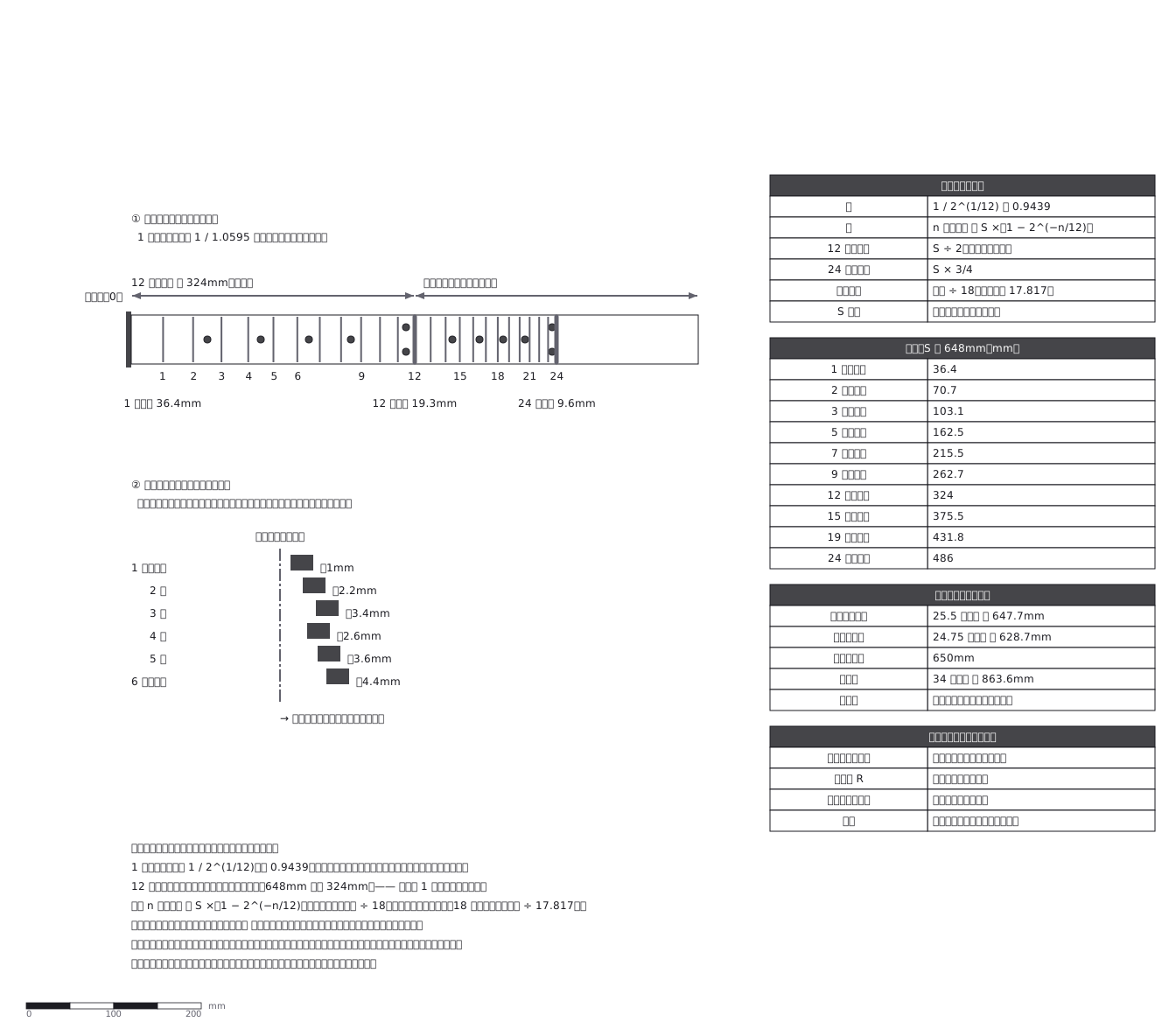 Guitar frets are a geometric series, and the saddle must still be moved back to play in tune
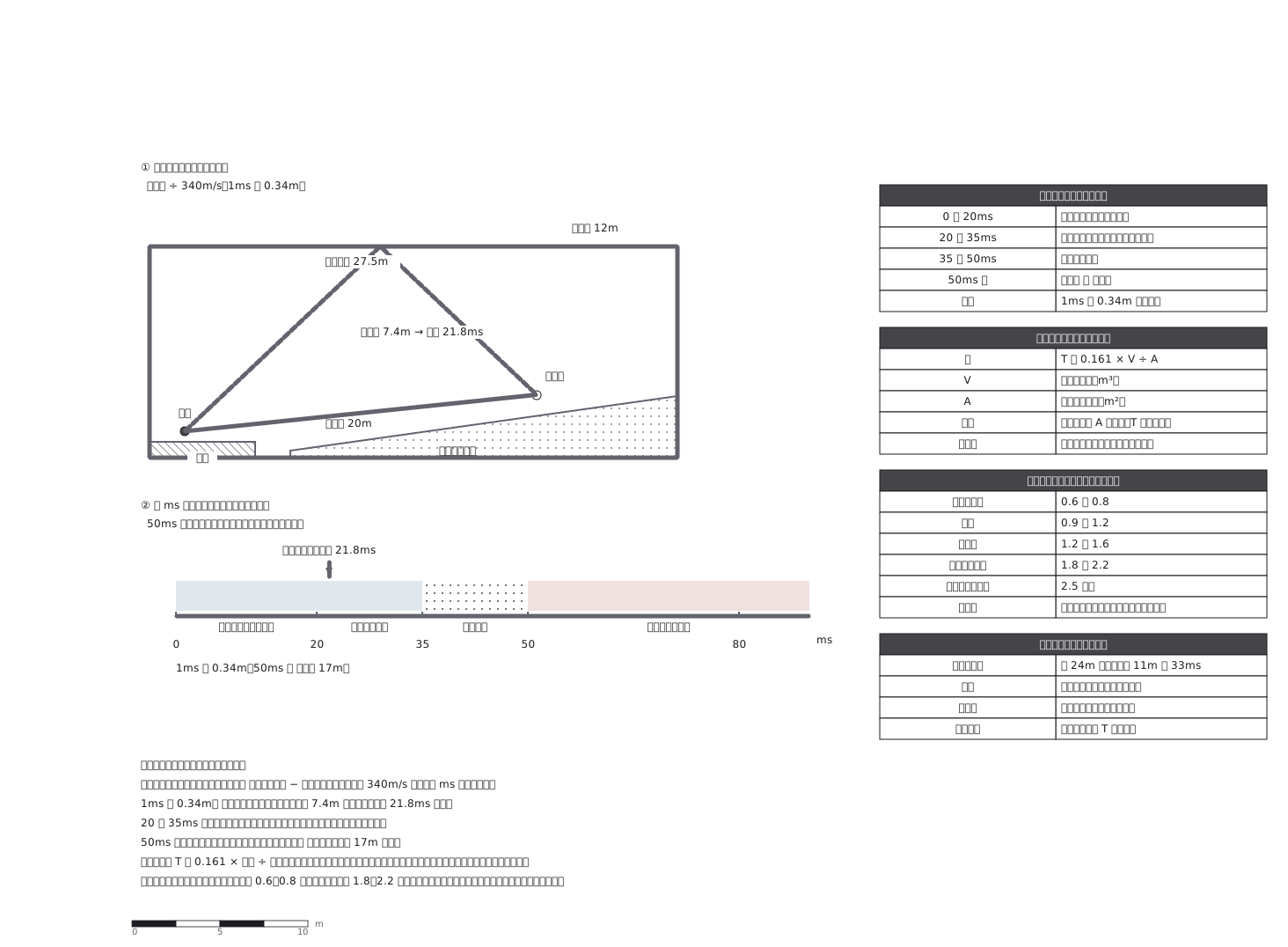 Hall acoustics: delay is nothing but a difference in path length — one millisecond is 0.34 m
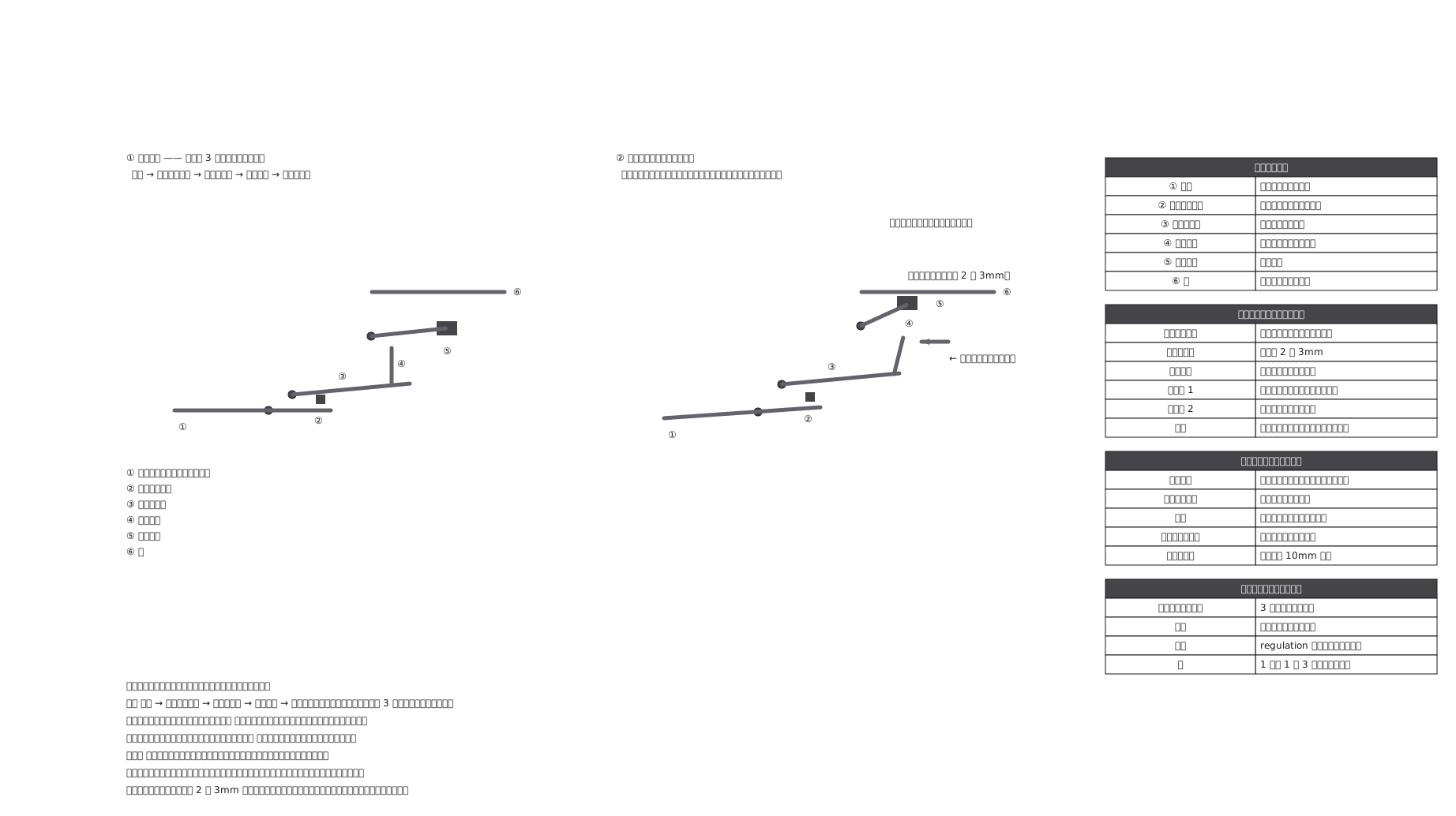 A piano action: the jack lets go just before the string, so nothing is pushing the hammer at impact
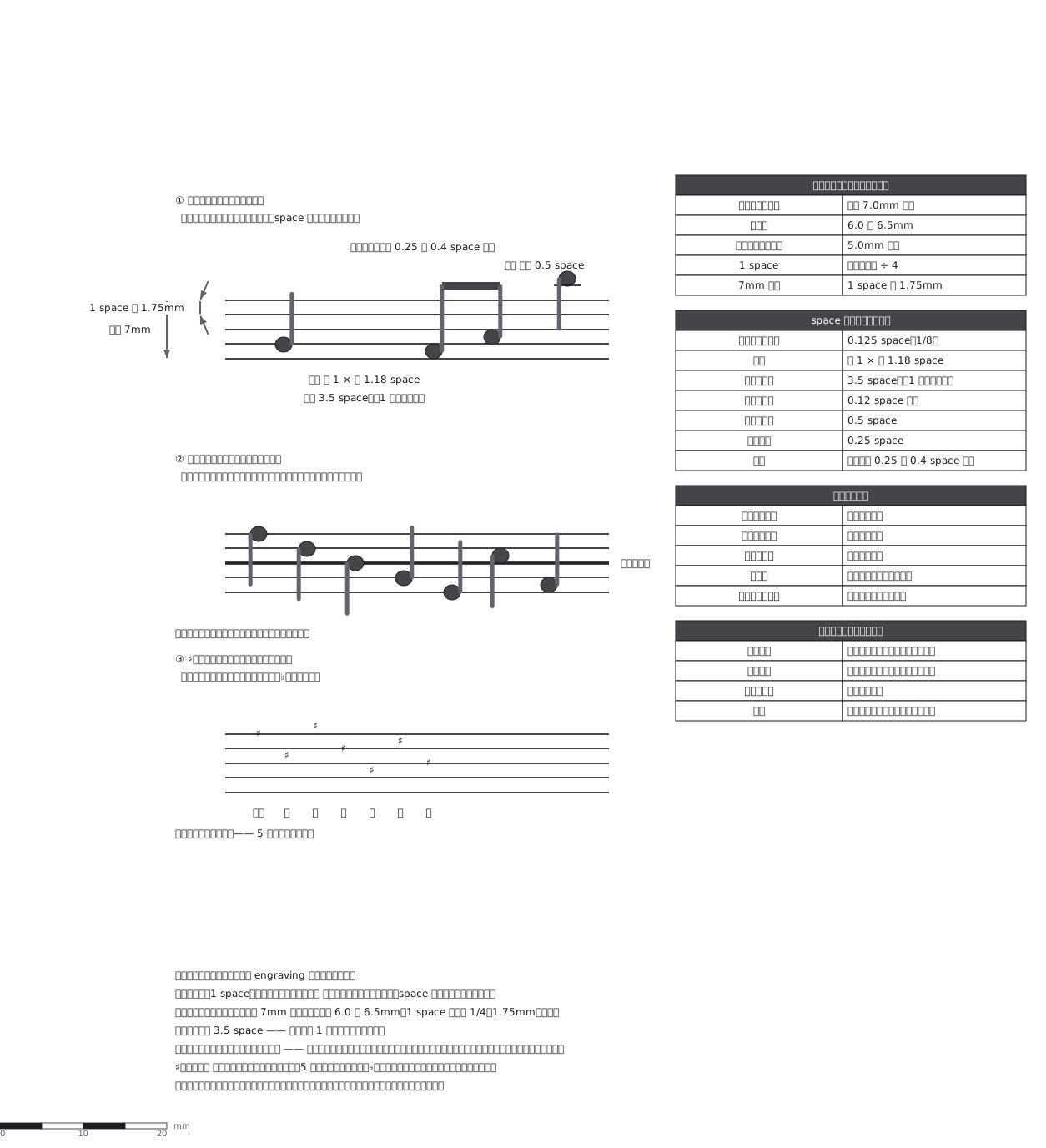 Music engraving: the staff space is the unit for every measurement, and the stem is 3.5 of them
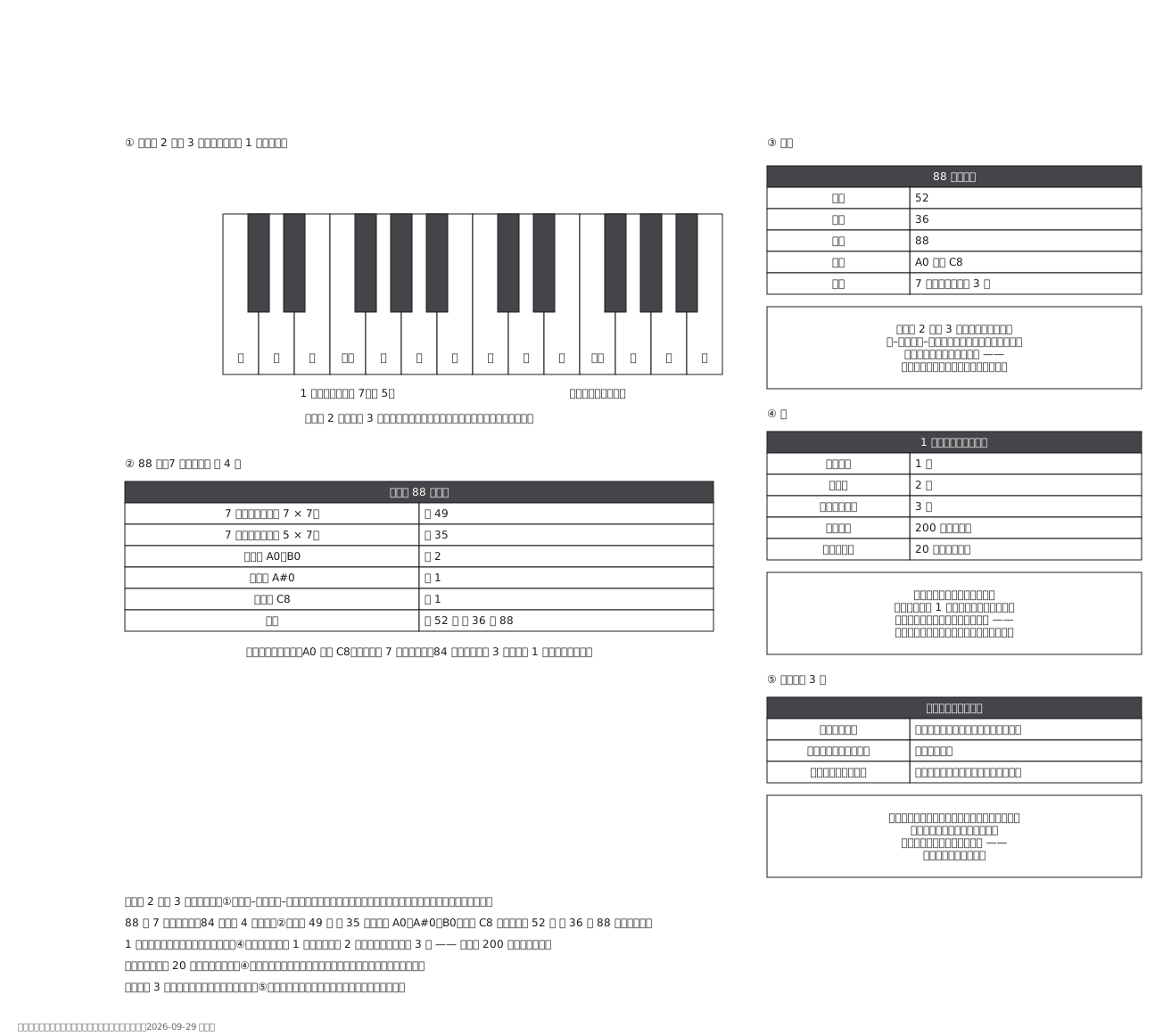 The black keys are grouped in twos and threes so that a hand can find its place without looking — twelve evenly spaced keys would give no landmark at all — and 88 turns out to be seven octaves plus four: three keys added below and one above
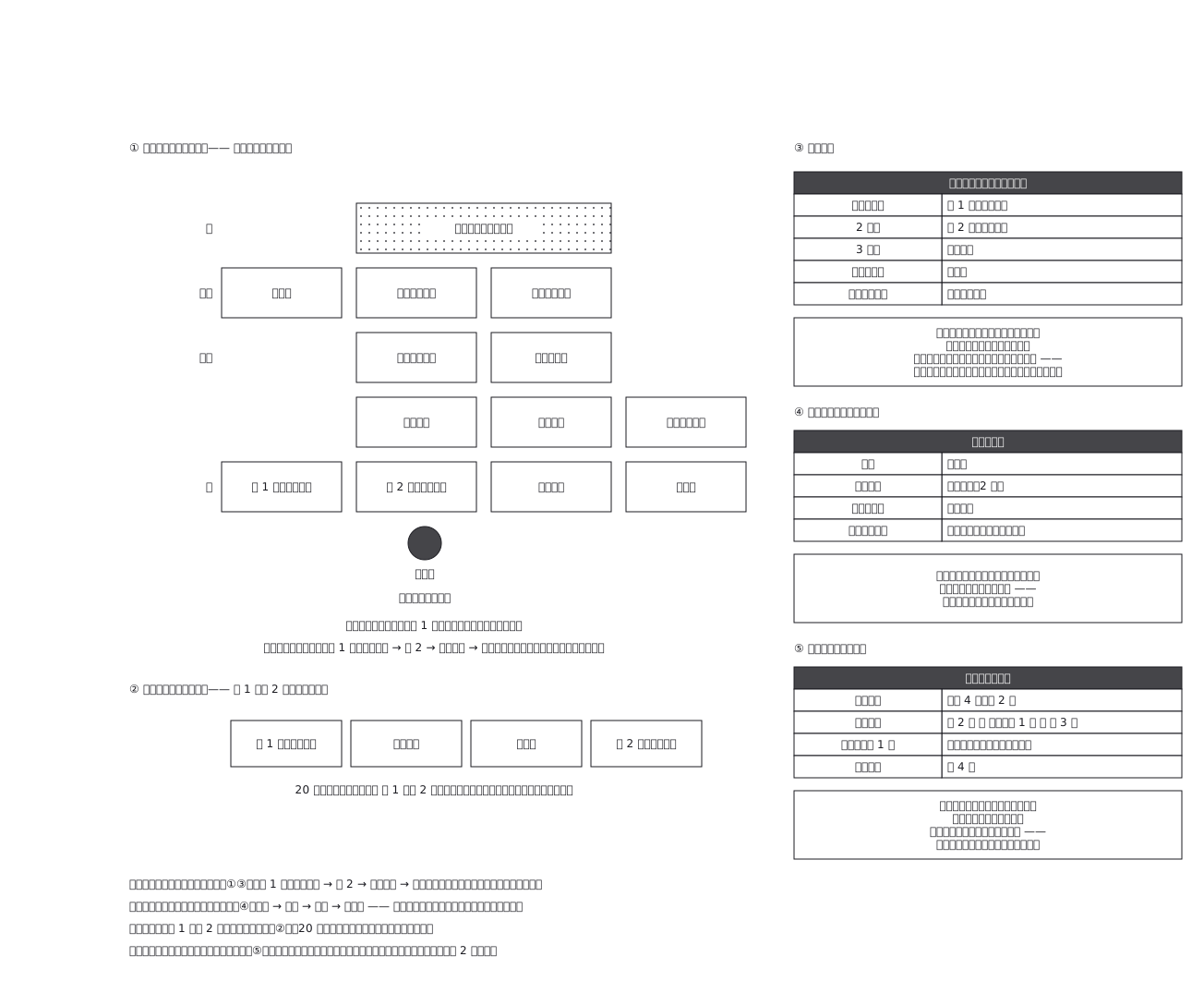 The strings run left to right from high to low and the louder the instrument the further back it sits, so the seating plan is itself a balance control — and "double wind" or "triple wind" names the size of the orchestra by counting only the woodwind
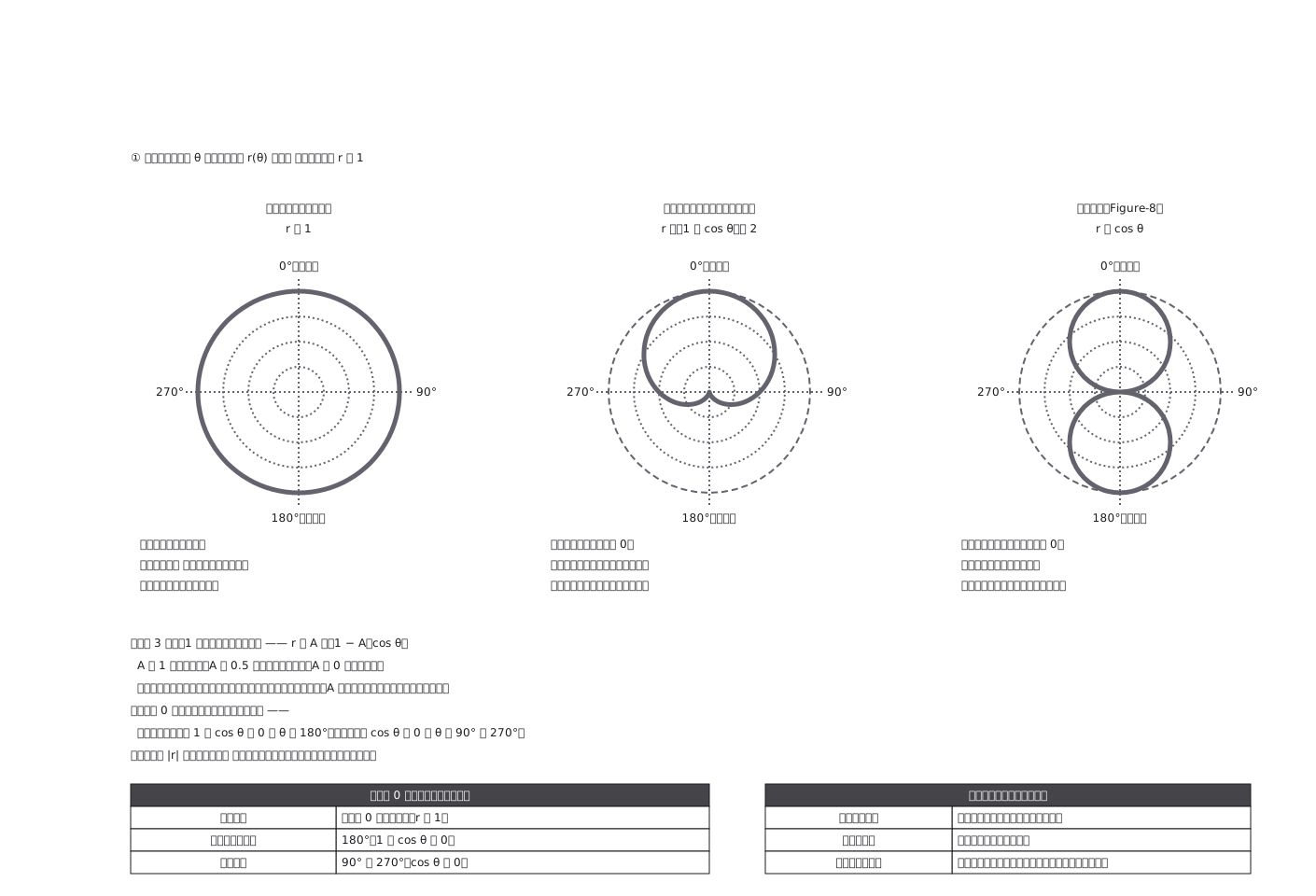 A polar plot of how much a microphone picks up from each direction. The three familiar shapes are not separate inventions but one formula at its ends and middle — omnidirectional, cardioid and figure-of-eight are A = 1, 0.5 and 0 in r = A + (1 - A)cos θ. Solving the same formula gives the dead angles: 180 degrees for a cardioid, 90 and 270 for a figure-of-eight.
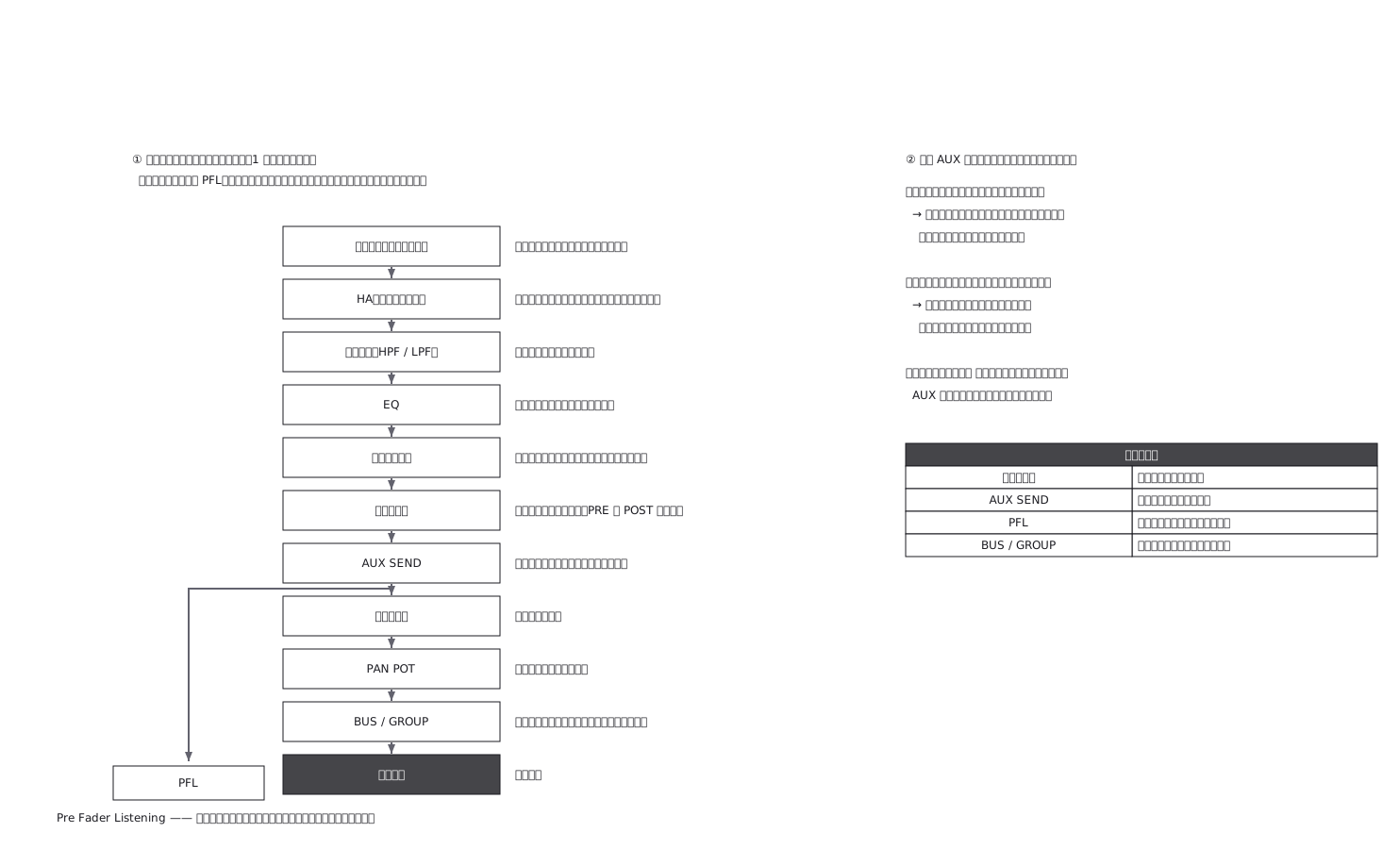 The same control means different things depending on where in the chain it sits. An aux send taken before the fader keeps its level when the engineer moves the fader, which is what a performer monitor needs; taken after, it follows the fader, which is what a reverb needs. Insert is in series and cuts the path open; aux is in parallel and branches away and back.