Instruments and acoustics
Orchestra seating (the layout itself balances the volume)
The strings run left to right from high to low and the louder the instrument the further back it sits, so the seating plan is itself a balance control — and "double wind" or "triple wind" names the size of the orchestra by counting only the woodwind
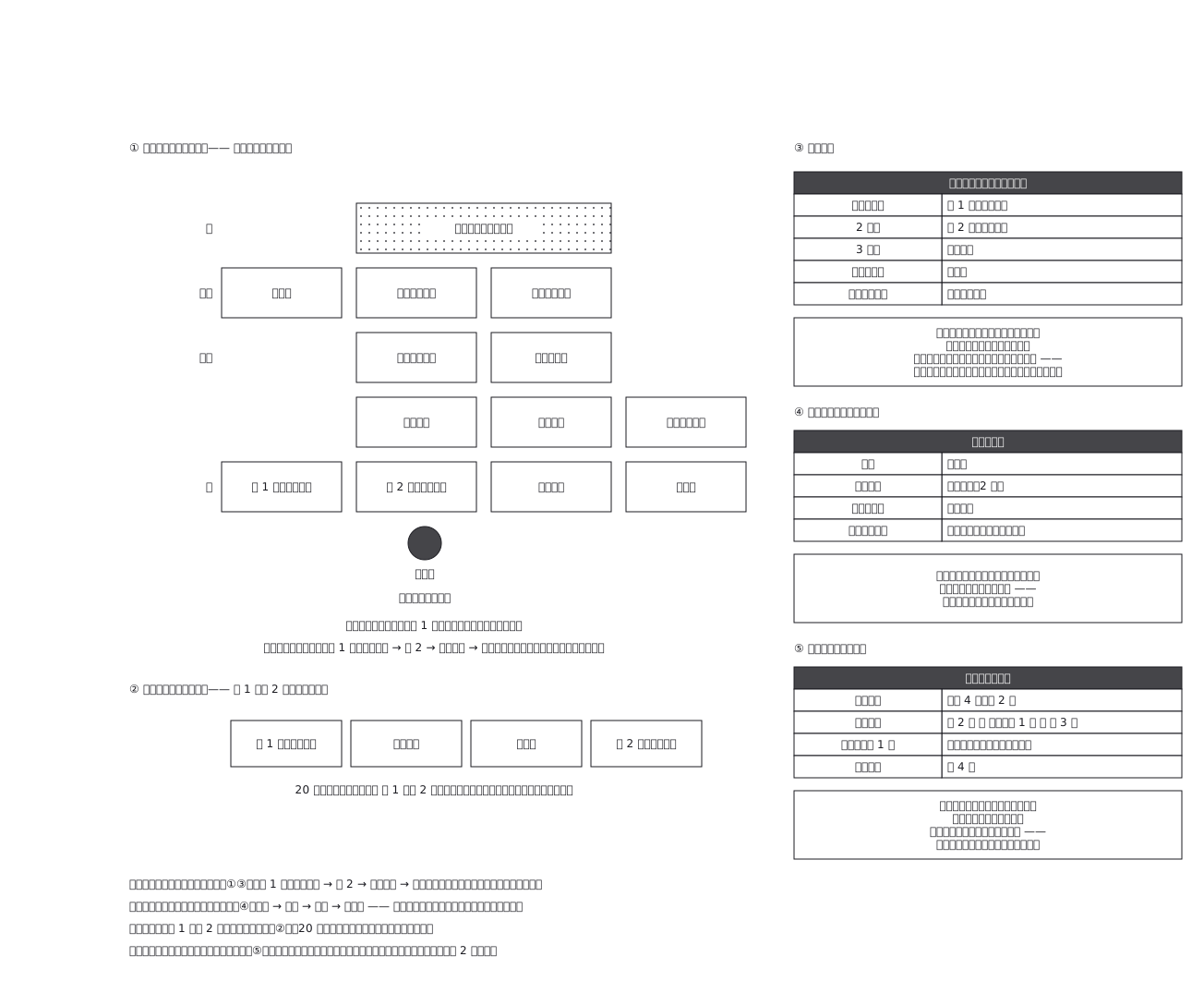
This drawing comes from one YAML file. No shape was moved by hand.
Notes in the source (in Japanese)
弦は、客席から見て左から高音の順。第 1 ヴァイオリン → 第 2 ヴァイオリン → ヴィオラ → チェロと並び、コントラバスはチェロの後方。 これが現代配置。コンサートマスターは、第 1 ヴァイオリンの最前列・客席側に座る。
後ろへ行くほど、音の大きい楽器。前列が弦、その後ろに木管が 2 列、さらに後ろに金管、いちばん後ろ(または舞台左奥)に打楽器。距離で音量を揃えている —— 配置そのものが、音量の調整になっている。
対向配置(両翼配置)は、第 1 と第 2 ヴァイオリンを左右に分ける置き方。18〜19 世紀から 20 世紀初めまでの標準。1920 年代にストコフスキーが「左から高音の順」に並べ替え、それが広まって現代配置になった(出典:Classic FM「Why are orchestras arranged the way they are?」https://www.classicfm.com/discover-music/why-orchestras-arranged/ 2026-09-29 確認)。第 1 と第 2 が向かい合うので、受け渡しが左右に聞こえる。
「何管編成」は、木管の本数の呼び名。二管編成はフルート・オーボエ・クラリネット・ファゴットが各 2 本。三管編成はそれぞれ 2 本に派生楽器の 1 本(ピッコロ・コーラングレ・バスクラリネット・コントラファゴット)が加わり、各 3 本になる(その奏者が持ち替えることも多い)。四管編成は同じ数え方で各 4 本。(三管の定義は『日本大百科全書(ニッポニカ)』「管弦楽」〔美山良夫〕の「フルート 3 のうちピッコロが 1 … 同属の楽器を 3 管用いる」。同項は現代配置が 1925 年にアメリカで始まり、それまでは第 1・第 2 ヴァイオリンが向かい合う配置が多かったとする。https://kotobank.jp/word/管弦楽-48675 取得 2026-10-04。四管を名指した記述はこの項には無く、数え方からの読み)弦や金管の数ではなく、木管が何本ずつかで編成を言う —— 曲を選ぶと、必要な人数が決まる。
図は模式で、寸法は持たない(席の間隔は確かめていない)。
同じ題材で、見本 96 もある。 96 は対向配置と現代配置を並べて比べる図、こちらは「配置そのものが音量の調整である」ことを扱う。
Source (YAML)
examples/gallery/317-オーケストラの配置と音量.zumen.yaml
More in this field
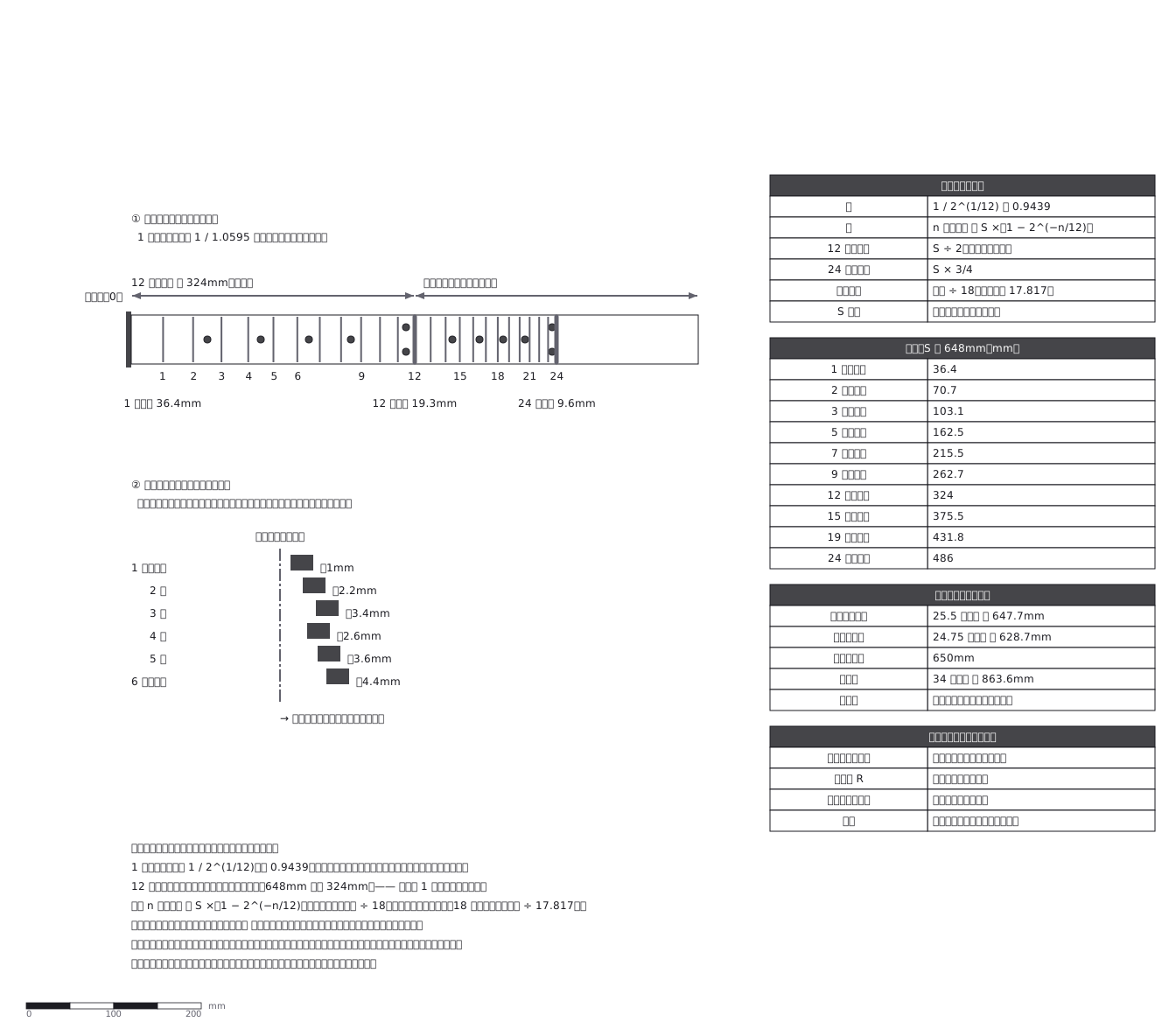 Guitar frets are a geometric series, and the saddle must still be moved back to play in tune
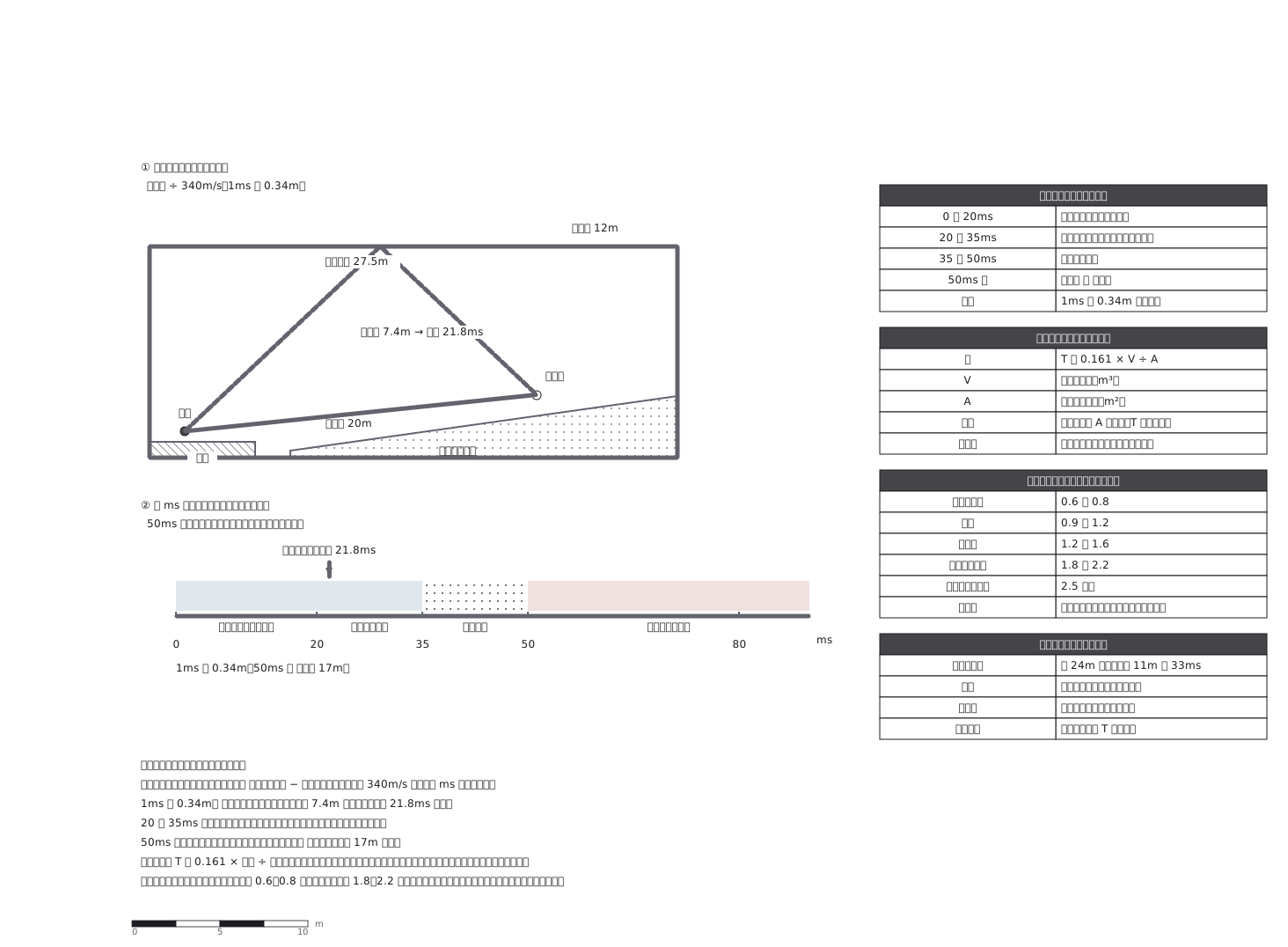 Hall acoustics: delay is nothing but a difference in path length — one millisecond is 0.34 m
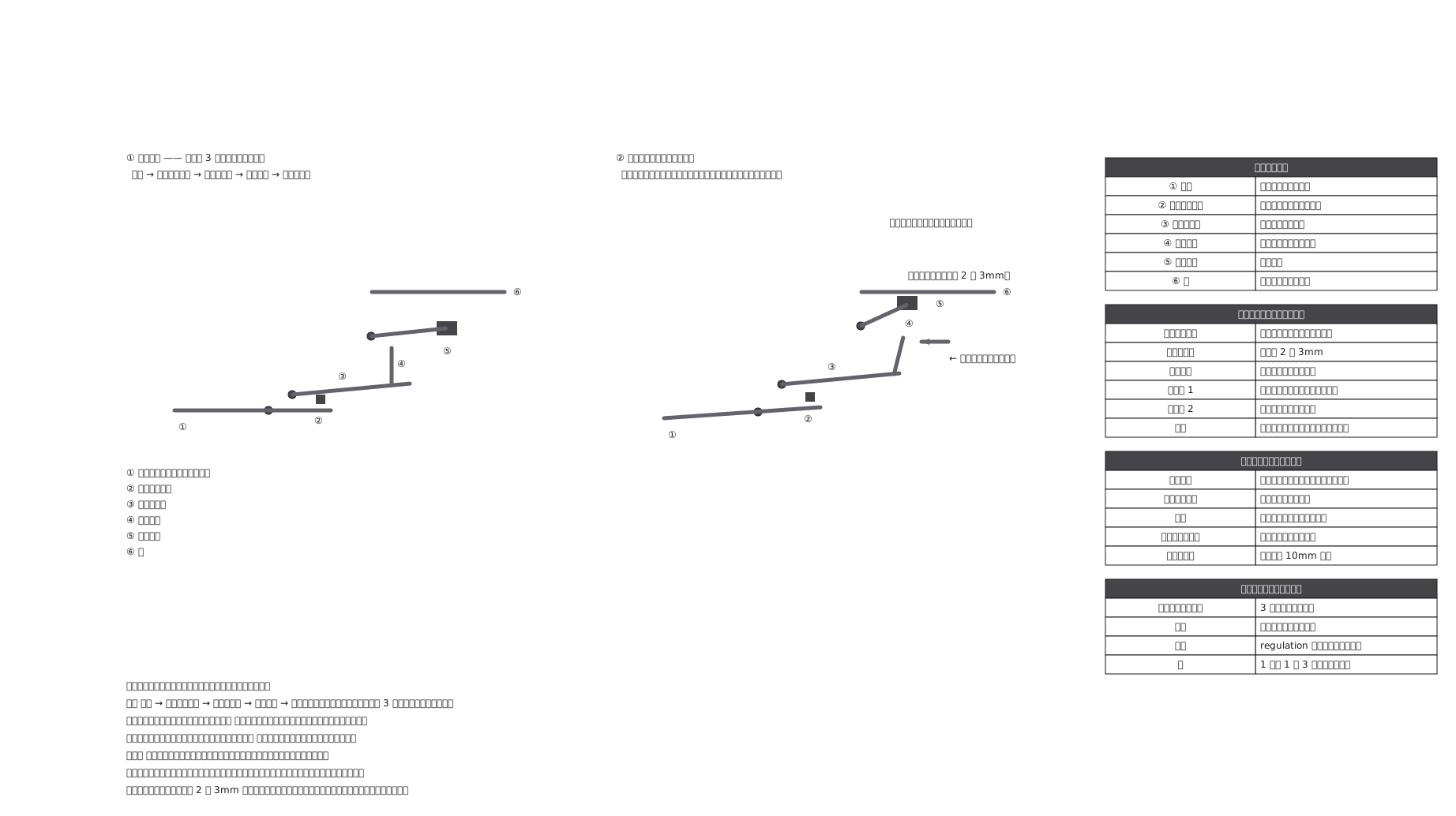 A piano action: the jack lets go just before the string, so nothing is pushing the hammer at impact
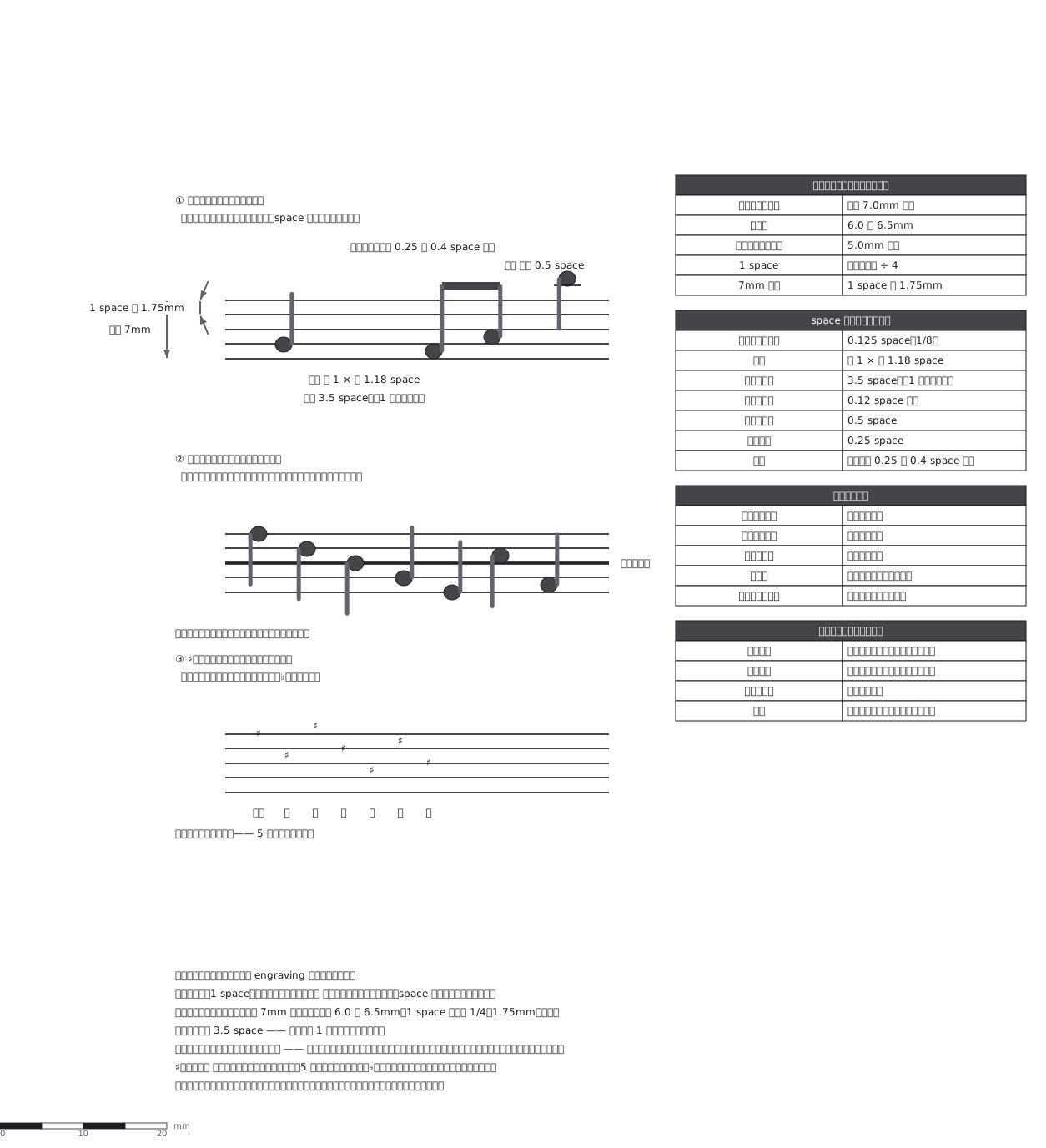 Music engraving: the staff space is the unit for every measurement, and the stem is 3.5 of them
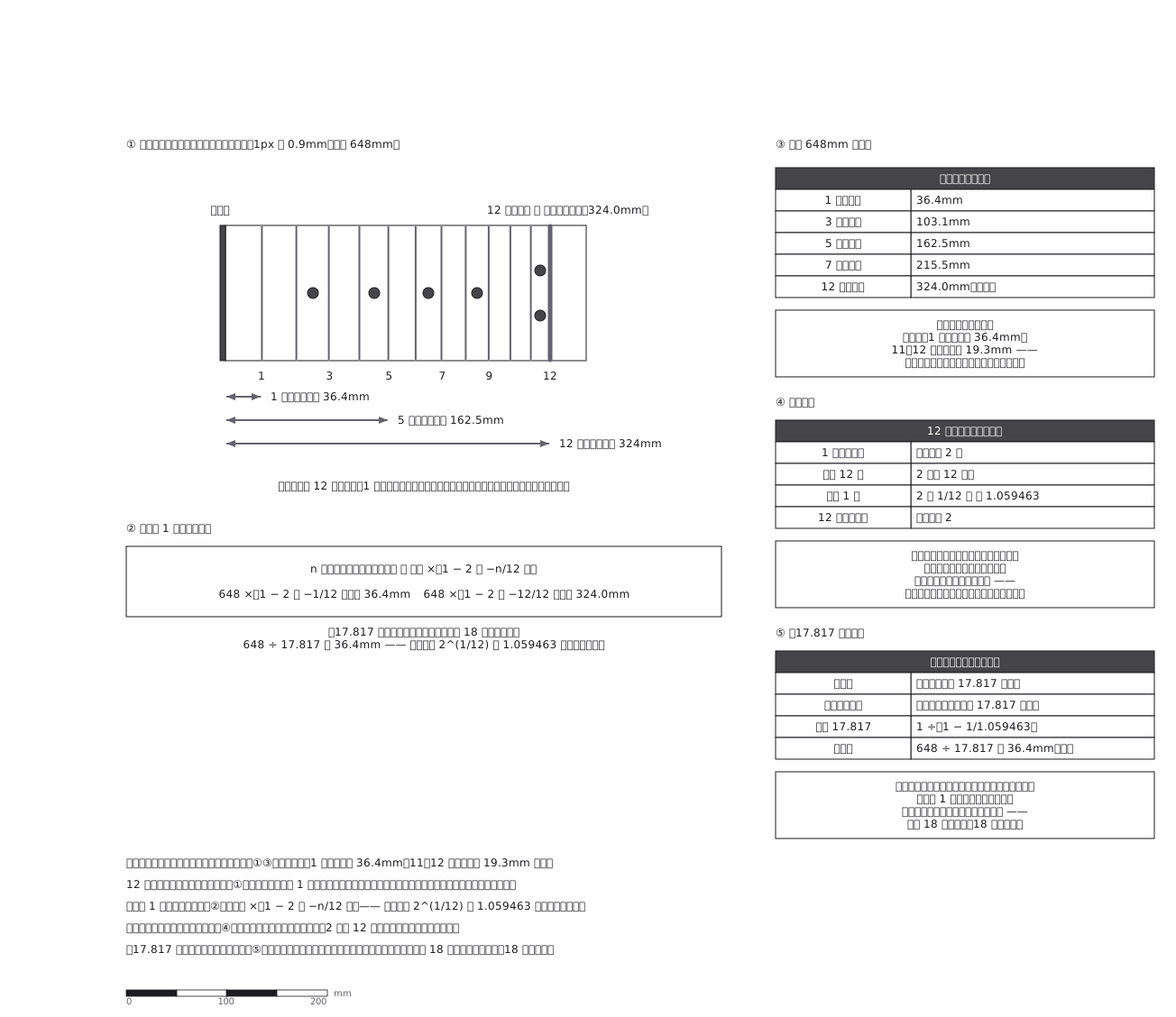 Frets crowd together as you climb because what is divided into twelve is not a distance but a ratio: each semitone multiplies by 2^(1/12), so the twelfth fret lands at exactly half the string and everything beyond it repeats at half size
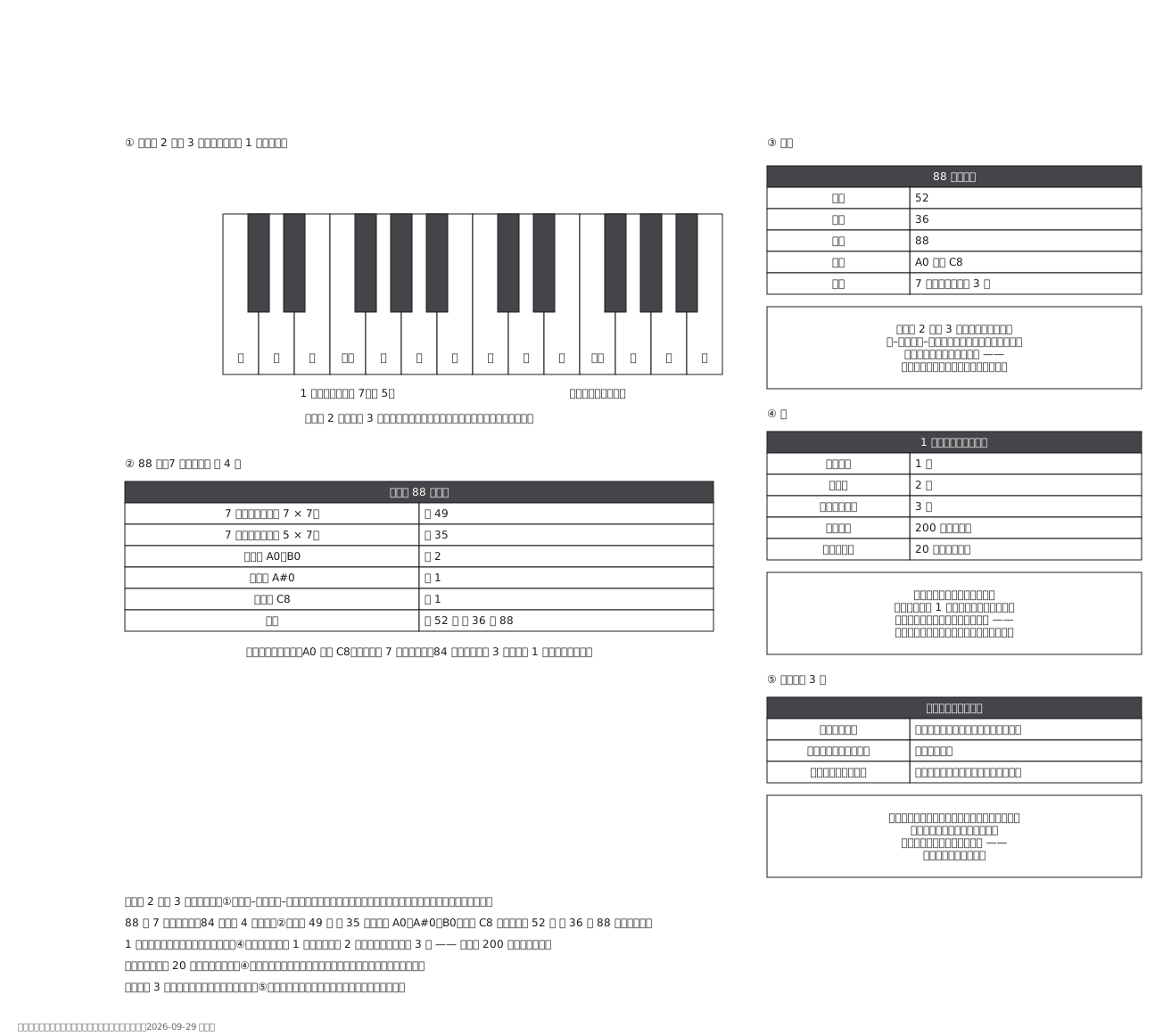 The black keys are grouped in twos and threes so that a hand can find its place without looking — twelve evenly spaced keys would give no landmark at all — and 88 turns out to be seven octaves plus four: three keys added below and one above
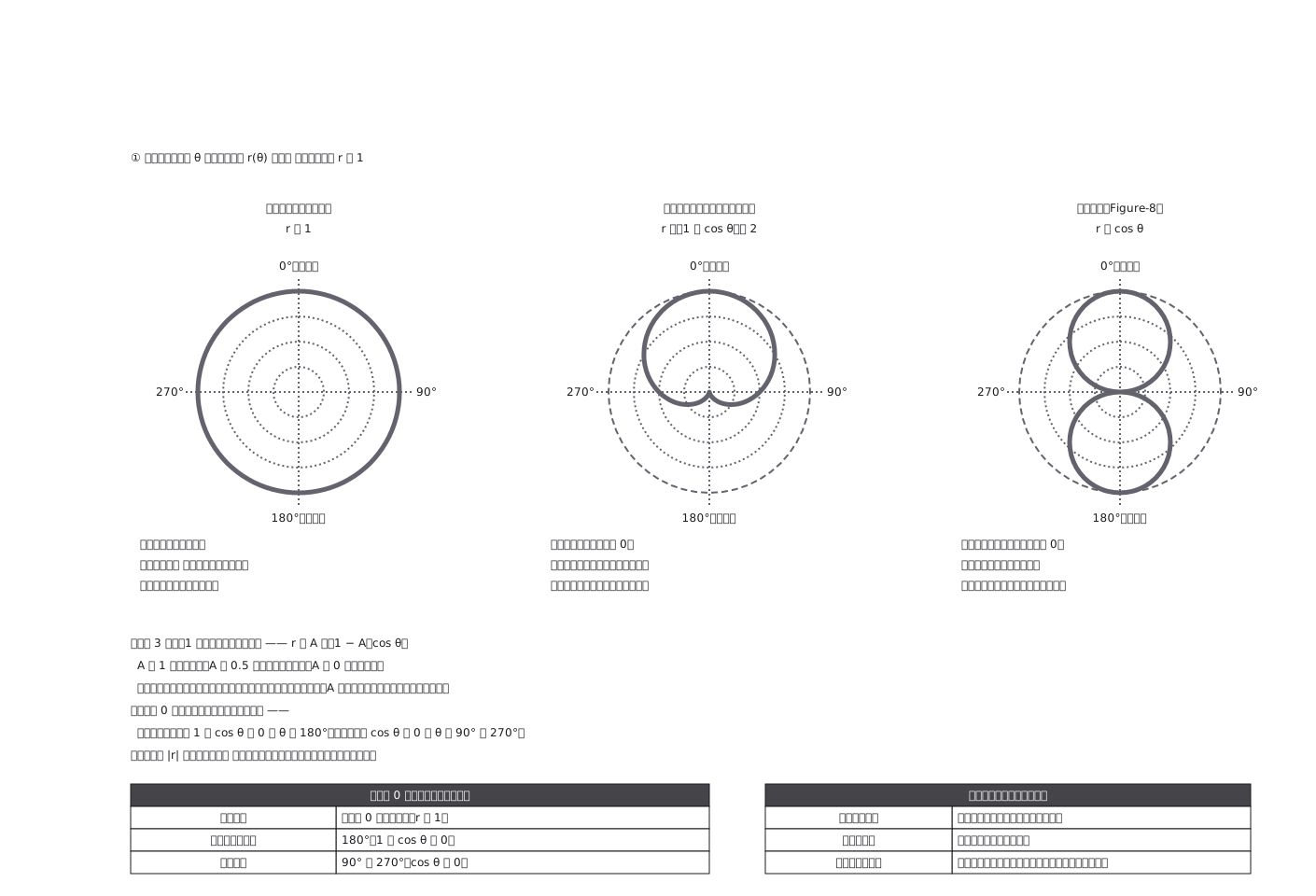 A polar plot of how much a microphone picks up from each direction. The three familiar shapes are not separate inventions but one formula at its ends and middle — omnidirectional, cardioid and figure-of-eight are A = 1, 0.5 and 0 in r = A + (1 - A)cos θ. Solving the same formula gives the dead angles: 180 degrees for a cardioid, 90 and 270 for a figure-of-eight.
 The same control means different things depending on where in the chain it sits. An aux send taken before the fader keeps its level when the engineer moves the fader, which is what a performer monitor needs; taken after, it follows the fader, which is what a reverb needs. Insert is in series and cuts the path open; aux is in parallel and branches away and back.