Health, food and farming
How to read a prescription (everything is in one line)
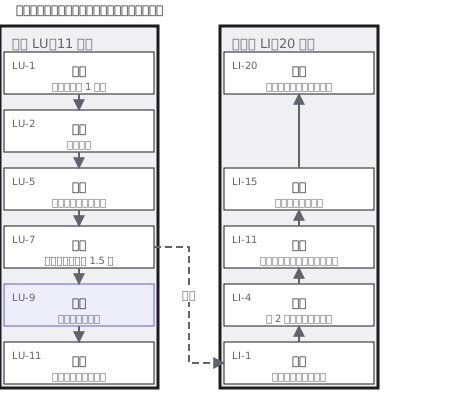
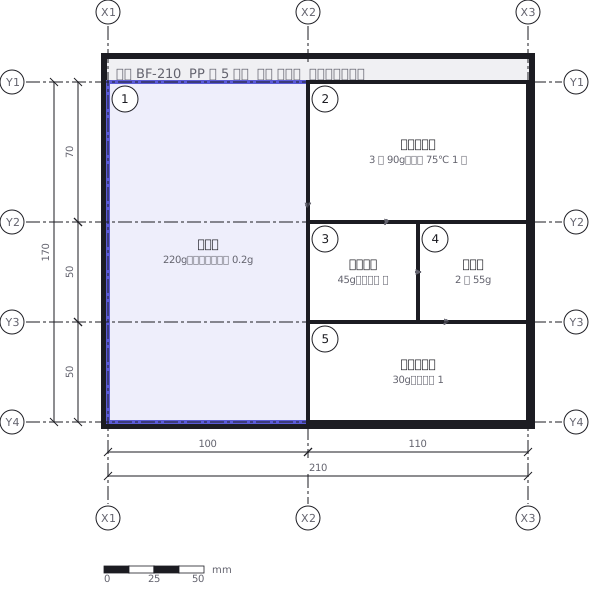
A Japanese prescription form, laid out box by box, with one line of it taken apart: drug name, how much is in one packet, how many packets per dose, how many times a day and when, and how many days it covers — all five in a single line. The form also has to say how long it stays valid, and when that box is left blank the default is four days counted from the day it was issued, holidays included.
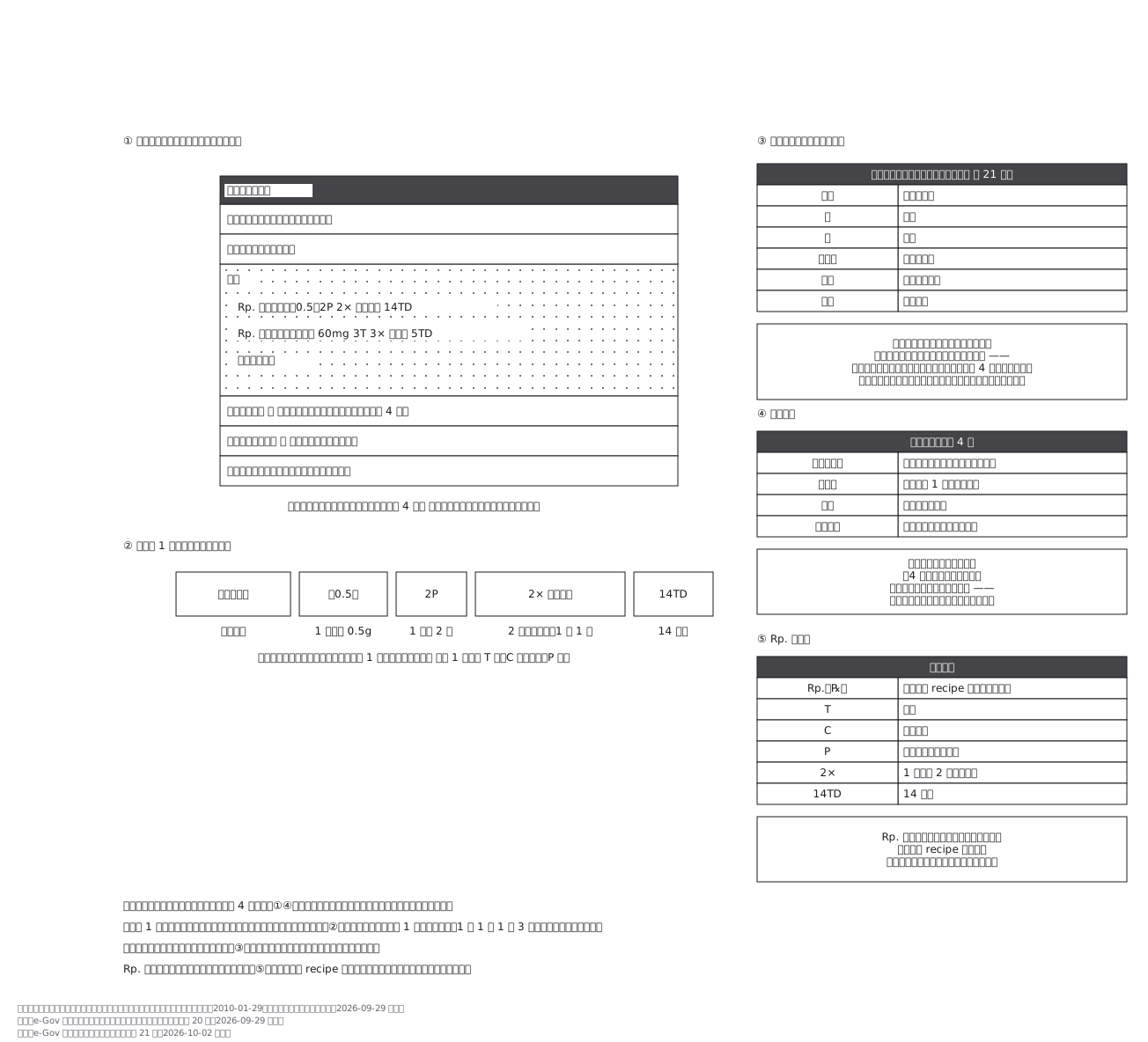
This drawing comes from one YAML file. No shape was moved by hand.
Notes in the source (in Japanese)
処方の 1 行に「何を・どれだけ・いつ・何日分」が全部入っている。例 —— アローゼン(0.5)2P 2× 朝夕食後 14TD。アローゼンが薬の名前、(0.5)が 1 包 0.5g、2P が 1 日量で 2 包、2× 朝夕食後が「1 日量を 2 回に分けて朝と夕の食後」(=1 回 1 包)、14TD が 14 日分。この古い書き方の量は 1 日量。 1 回量と読むと 2 倍・3 倍を飲ませる事故になる ——厚生労働省の検討会報告書(2010-01-29「内服薬処方せんの記載方法の在り方に関する検討会報告書」)は、「3×」のような表記を紛らわしいとして、「1 回 1 錠 1 日 3 回 朝昼夕食後」の 1 回量の書き方を基本にした。出典:https://www.jshp.or.jp/content/2010/0202.pdf(報告書の写し、取得 2026-09-29)T は錠剤、C はカプセル、P は包(分包した粉薬)。
使用期間は、無記入なら発行日を含めて 4 日。発行日を 1 日目に数え、休みの日も日数に入る ——金曜に出た処方箋は月曜が最後の日(金・土・日・月で 4 日)、火曜にはもう切れている。出典:保険医療機関及び保険医療養担当規則 第 20 条 3 号イ「交付の日を含めて四日以内」(e-Gov、取得 2026-09-29)「4 日もある」と思うと、連休をまたいだだけで使えなくなる。
記載事項は、薬の名前と量だけではない。患者の氏名・年齢、薬名、分量、用法・用量、発行の年月日、使用期間 ——「いつまで使えるか」も、書かなければならないことのひとつ。ほかに医療機関の名称・所在地と、医師の記名押印または署名。出典:医師法施行規則 第 21 条(e-Gov 法令検索 lawid 323M40000100047、取得 2026-10-02)
Rp. は「処方」ではなく「受け取れ」。℞ はラテン語 recipe(受け取れ)の略で、薬剤師への命令の形が、今も頭に残っている(綴りの移り変わりの年代は確かめていない)。
様式は模式(欄の寸法は確かめていない)。薬の名前は例として書いたもの。
Source (YAML)
examples/gallery/318-処方箋の読み方.zumen.yaml
More in this field
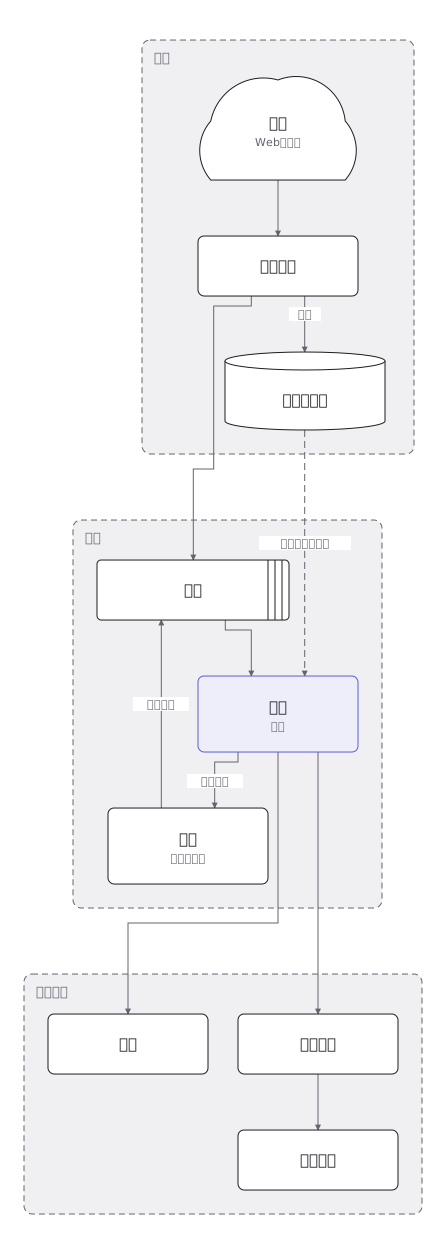 How an outpatient moves through a hospital — reception, consultation, tests, payment, prescription — and where each department keeps people waiting
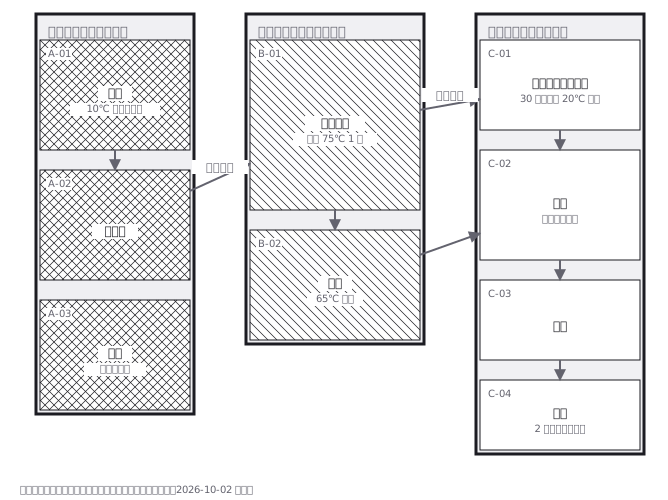 A school meal kitchen split into contaminated and clean zones, with the paths of food, people and crockery kept from crossing
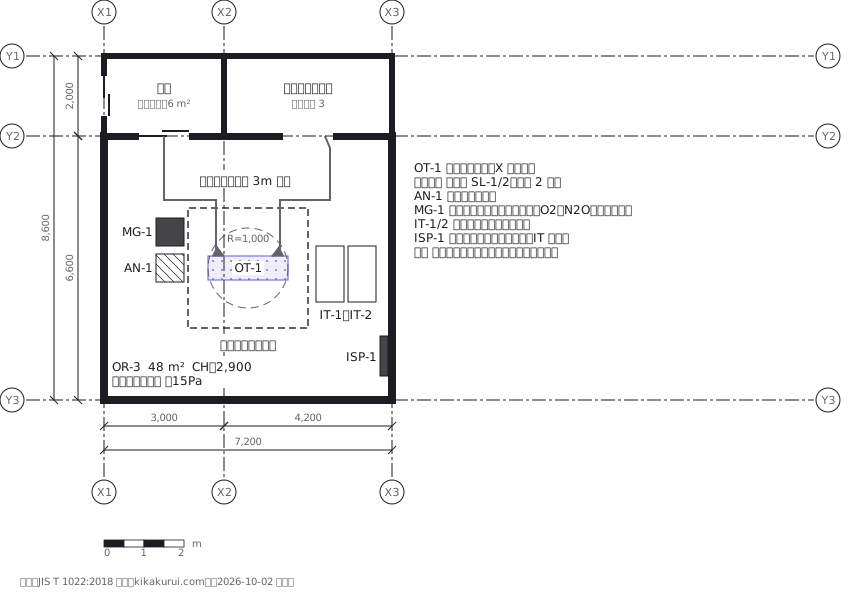 An operating room laid out around the table: surgical light, anaesthesia machine, electrosurgical unit and monitors, with the sterile field
 The fourteen meridians and their principal points, named to the WHO standard acupuncture point locations
 A packing instruction for a boxed lunch: what goes in each compartment, how much, which way up, and in what order
 A periodontal chart where all 32 teeth are measured at six points each, recording pocket depth, bleeding and mobility
 A sabiki fishing rig from main line to six hooks, feeder cage and sinker, with the gauge and length specified for every section
 High-density apple training, with tree and row spacing