Instruments and acoustics
Microphone directivity (three patterns are the two ends and the middle of one formula)
A polar plot of how much a microphone picks up from each direction. The three familiar shapes are not separate inventions but one formula at its ends and middle — omnidirectional, cardioid and figure-of-eight are A = 1, 0.5 and 0 in r = A + (1 - A)cos θ. Solving the same formula gives the dead angles: 180 degrees for a cardioid, 90 and 270 for a figure-of-eight.
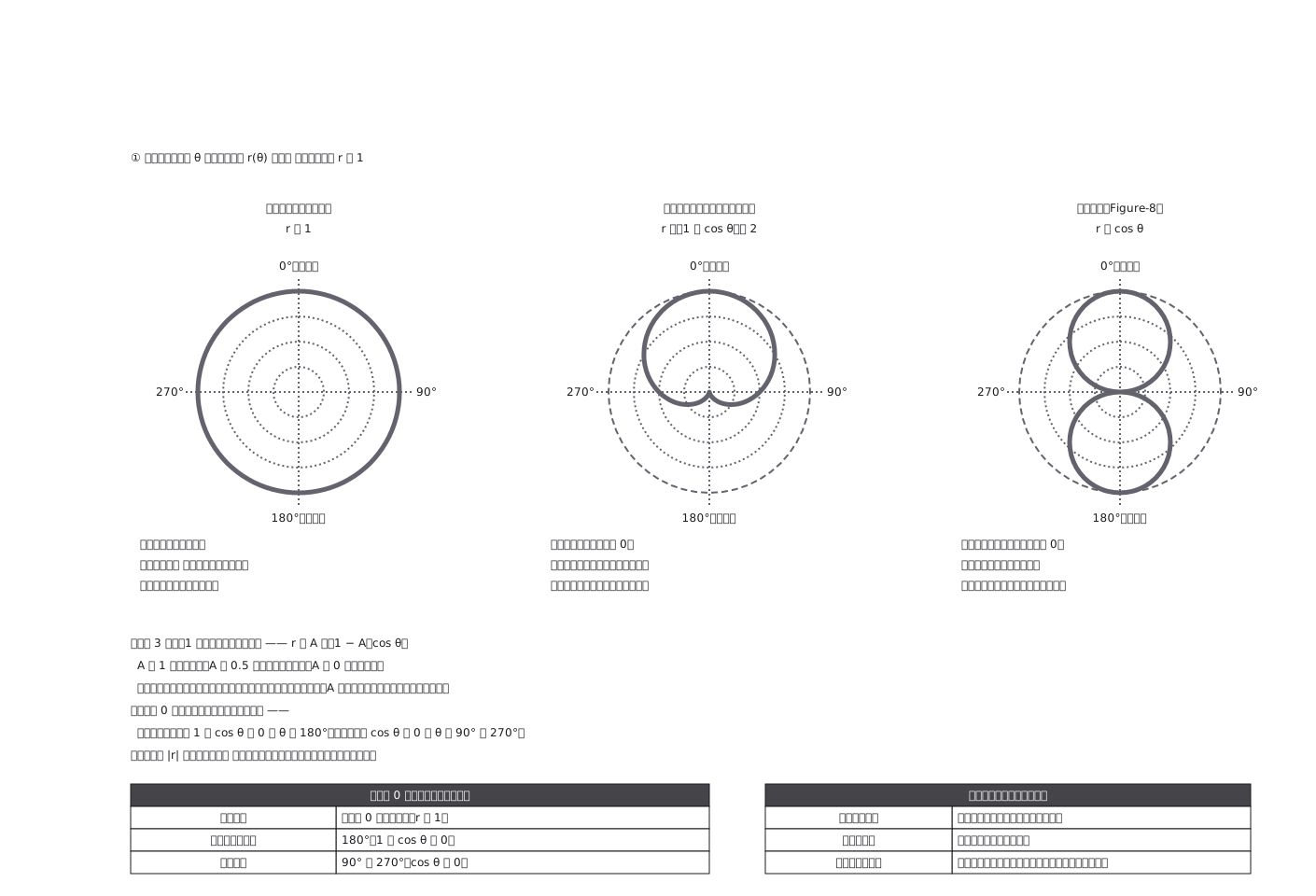
This drawing comes from one YAML file. No shape was moved by hand.
Notes in the source (in Japanese)
指向性の図は、向き θ に対する感度 r(θ) を極座標で描いたもの。光の配光曲線(見本 264)と同じ読み方で、外側の破線が r = 1。
無指向性(全指向性)は r = 1。 どの向きも同じ感度 ——ただし可聴周波数の全部で無指向になるものは無い。
カーディオイドは r =(1 + cos θ)/ 2。 正面に強く、真後ろが 0。特定の方向以外を拾いにくいのでハウリングとかぶりに強く、舞台のスピーチや楽器の拡声で多用される。
双指向性(Figure-8)は r = cos θ。 正面と真後ろに強く、真横が 0。後ろ側は位相が逆になる。
式を並べると、1 つの family の両端と真ん中だと分かる。
r = A +(1 − A)cos θ
A = 1 で無指向性、A = 0.5 でカーディオイド、A = 0 で双指向性。スーパーカーディオイドとハイパーカーディオイドは、その間にある(A の値はこの図では確かめていないので、形は描いていない)。
カーディオイドは 1 + cos θ = 0 から θ = 180°、双指向性は cos θ = 0 から θ = 90° と 270°。出典に書いていなくても、式があれば確かめられる。
図の輪は |r| を描いたもの(負の値は、向きではなく位相の反転)。型(ダイナミック/コンデンサ)と指向性は別の話で、どちらにも各指向性がある。
光の側は見本 264、PA の配置は見本 101、ホールの反射は見本 205。
Source (YAML)
examples/gallery/327-マイクの指向性.zumen.yaml
More in this field
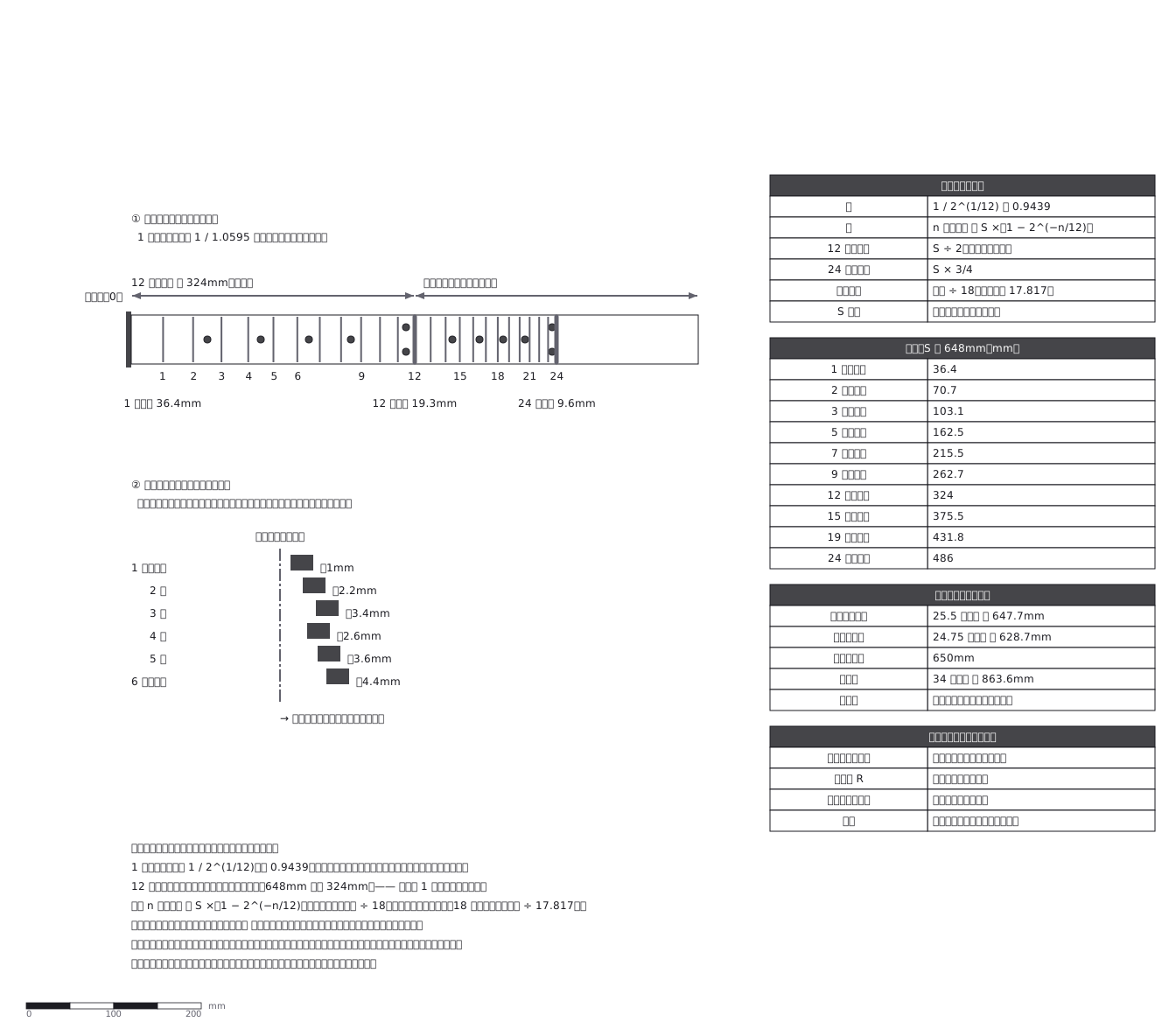 Guitar frets are a geometric series, and the saddle must still be moved back to play in tune
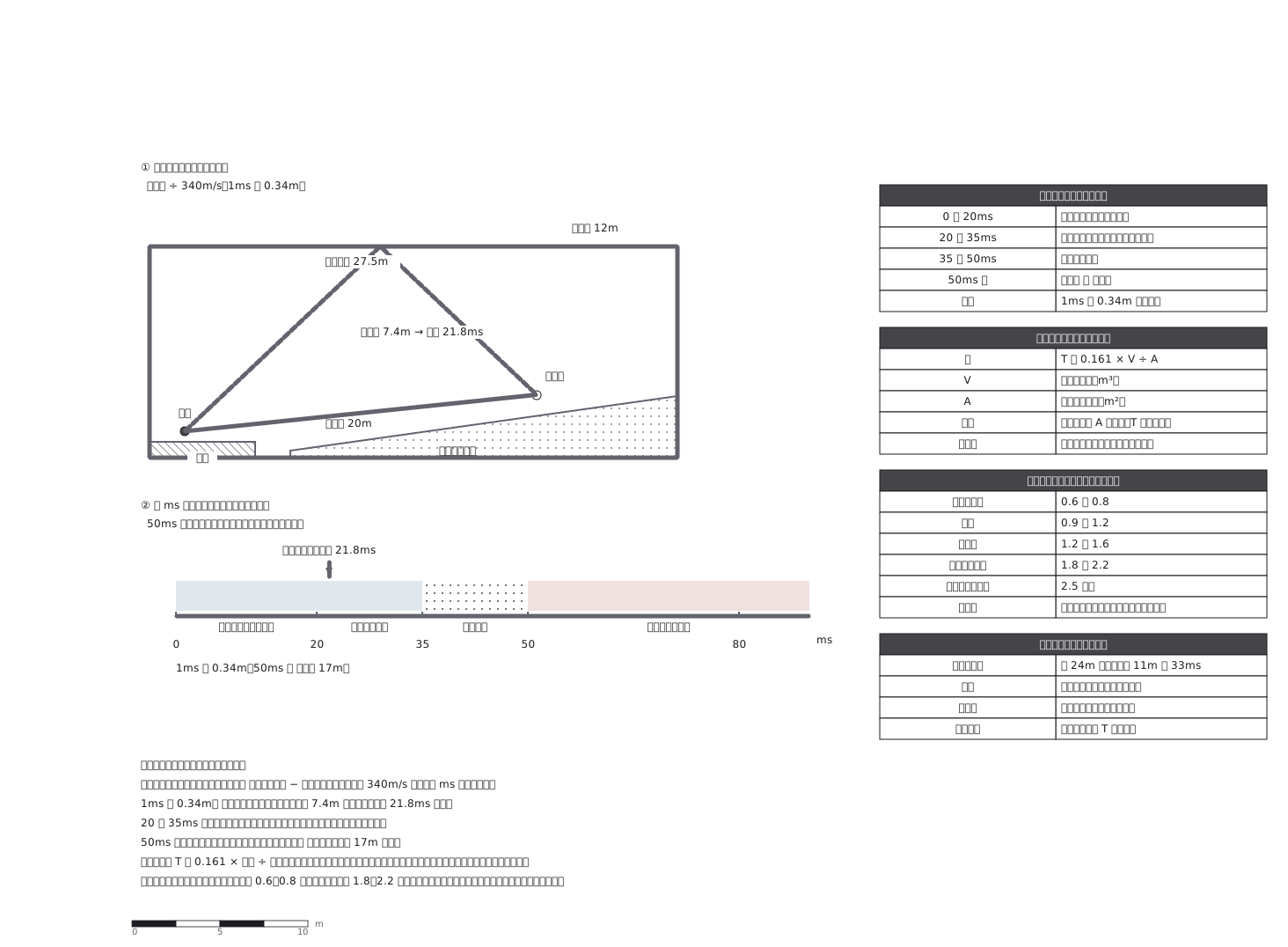 Hall acoustics: delay is nothing but a difference in path length — one millisecond is 0.34 m
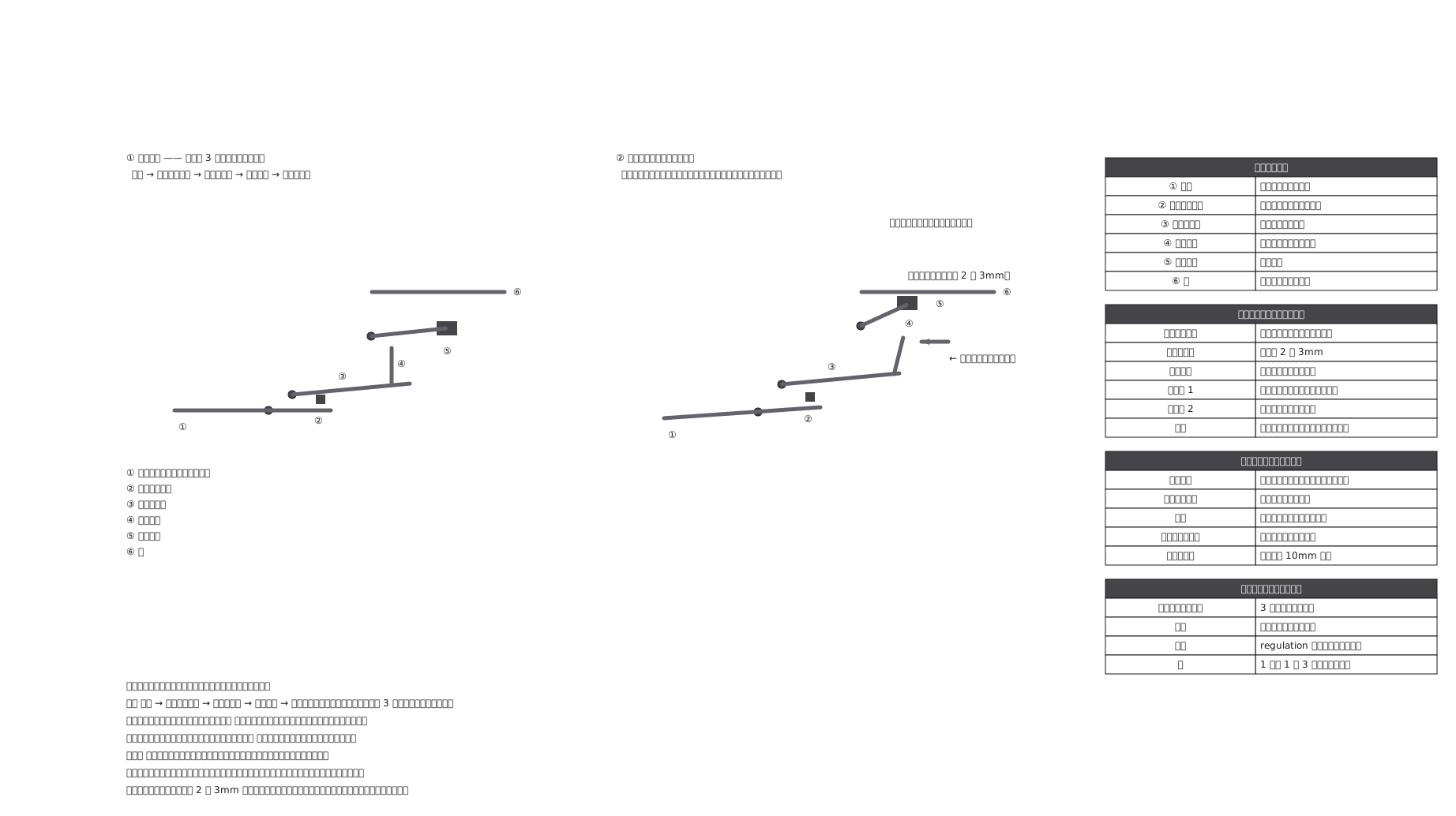 A piano action: the jack lets go just before the string, so nothing is pushing the hammer at impact
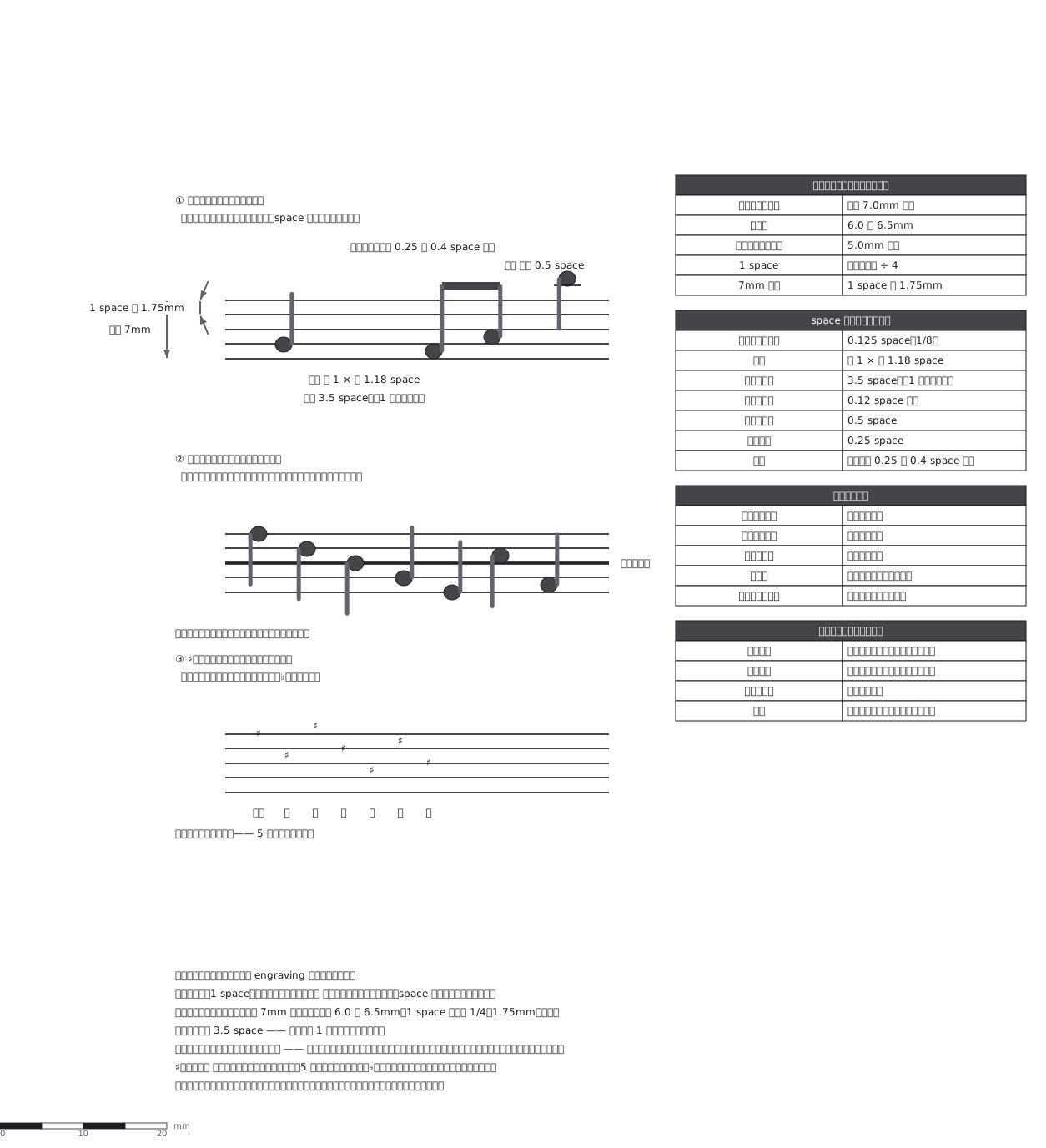 Music engraving: the staff space is the unit for every measurement, and the stem is 3.5 of them
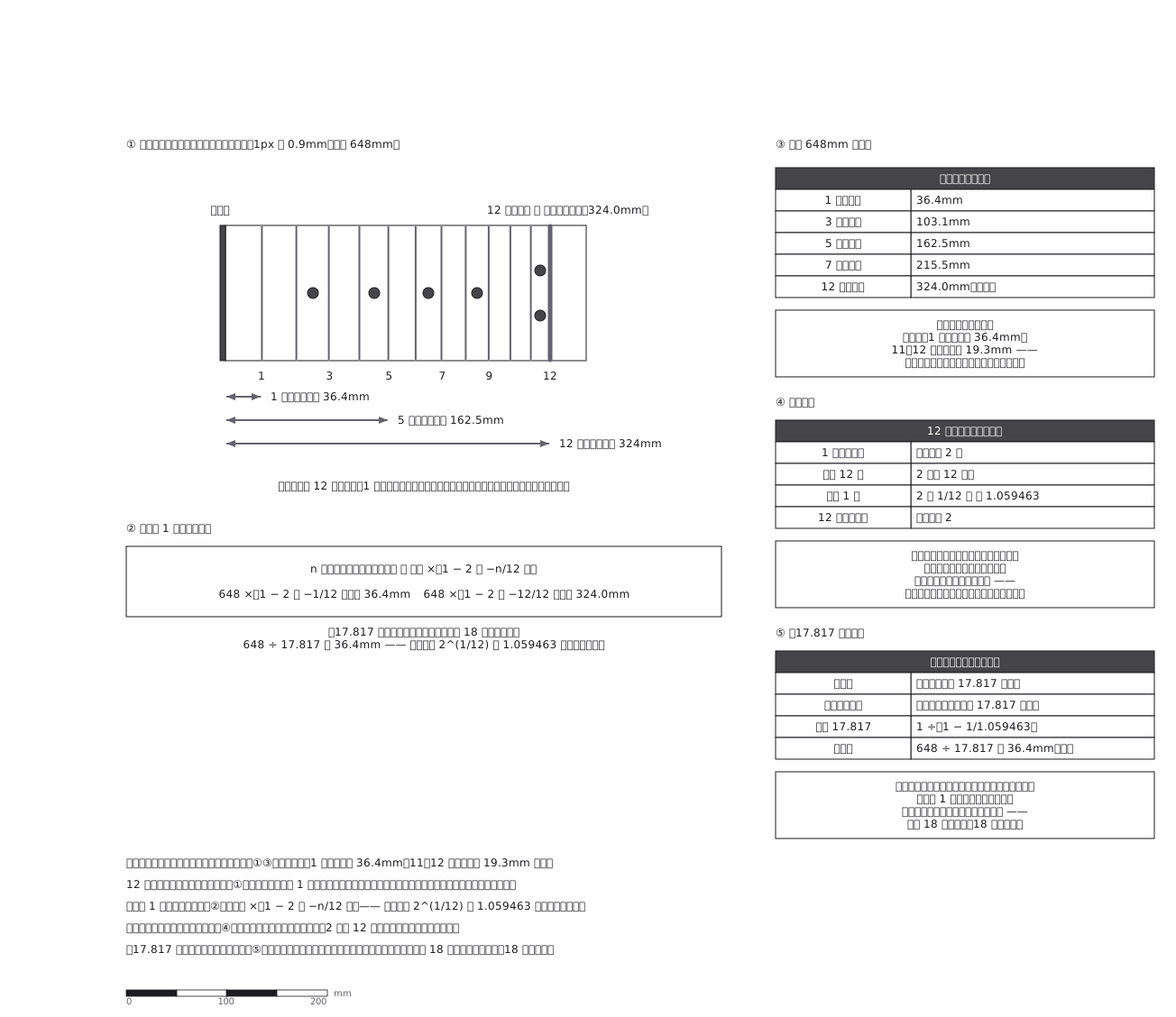 Frets crowd together as you climb because what is divided into twelve is not a distance but a ratio: each semitone multiplies by 2^(1/12), so the twelfth fret lands at exactly half the string and everything beyond it repeats at half size
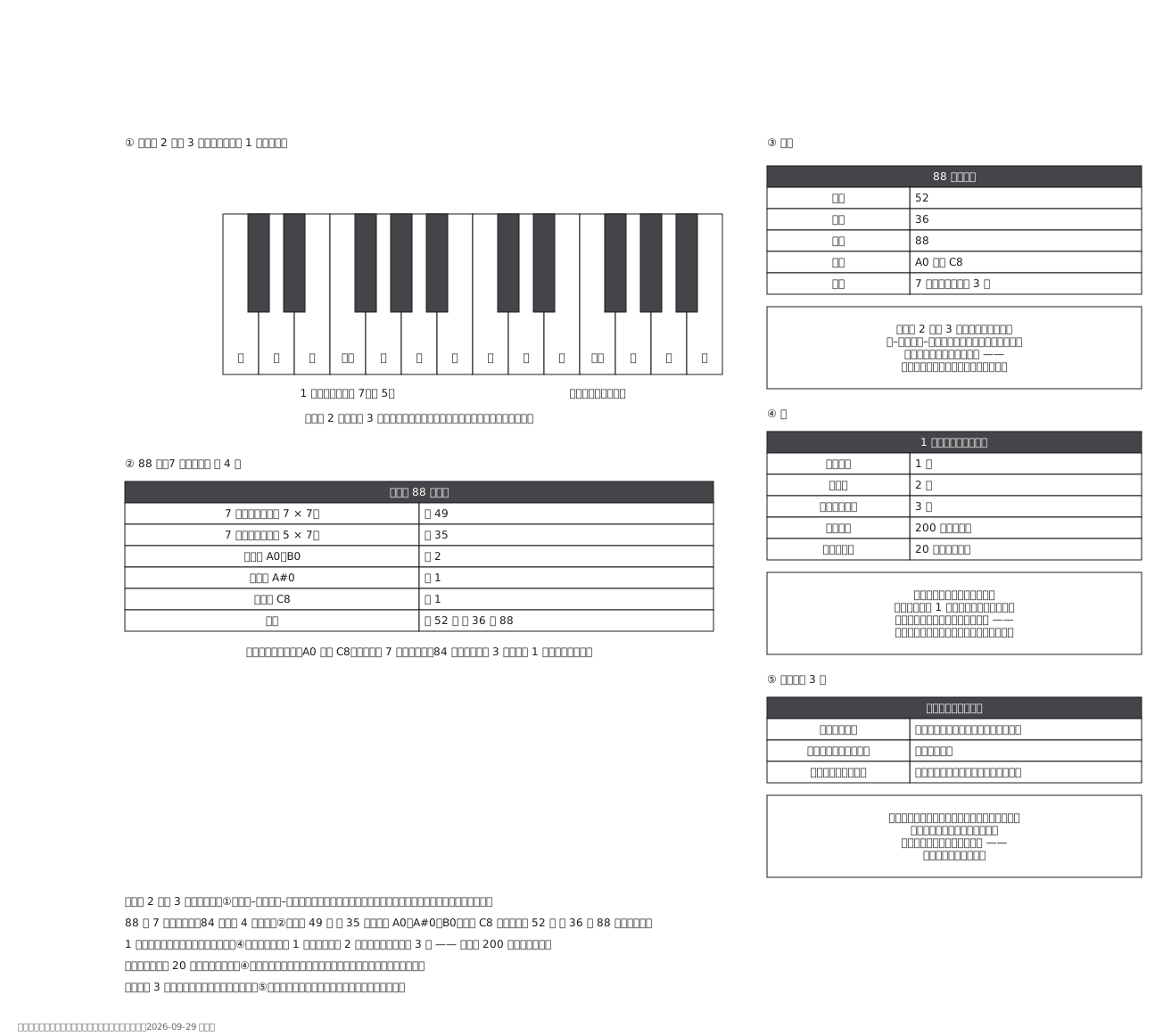 The black keys are grouped in twos and threes so that a hand can find its place without looking — twelve evenly spaced keys would give no landmark at all — and 88 turns out to be seven octaves plus four: three keys added below and one above
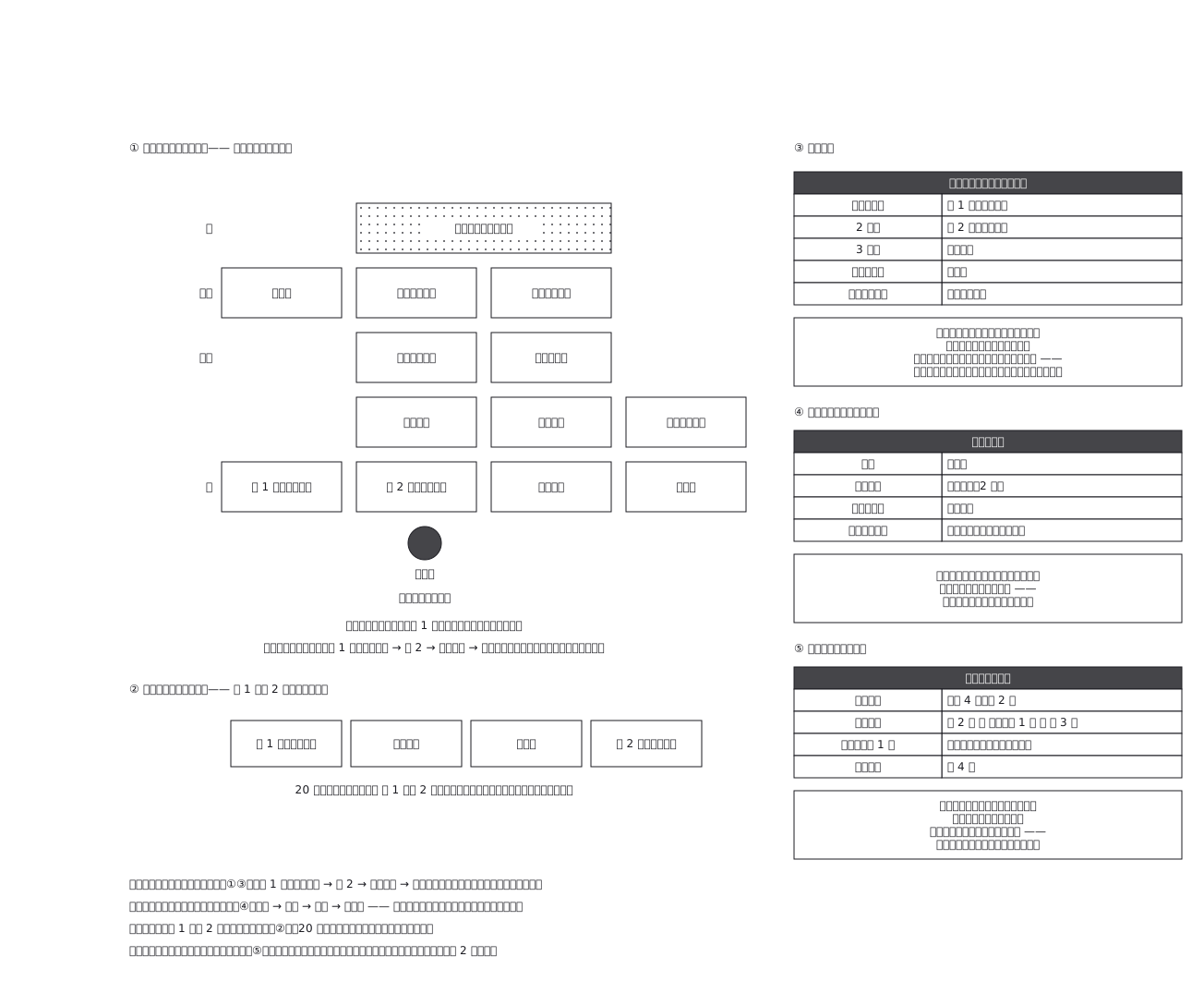 The strings run left to right from high to low and the louder the instrument the further back it sits, so the seating plan is itself a balance control — and "double wind" or "triple wind" names the size of the orchestra by counting only the woodwind
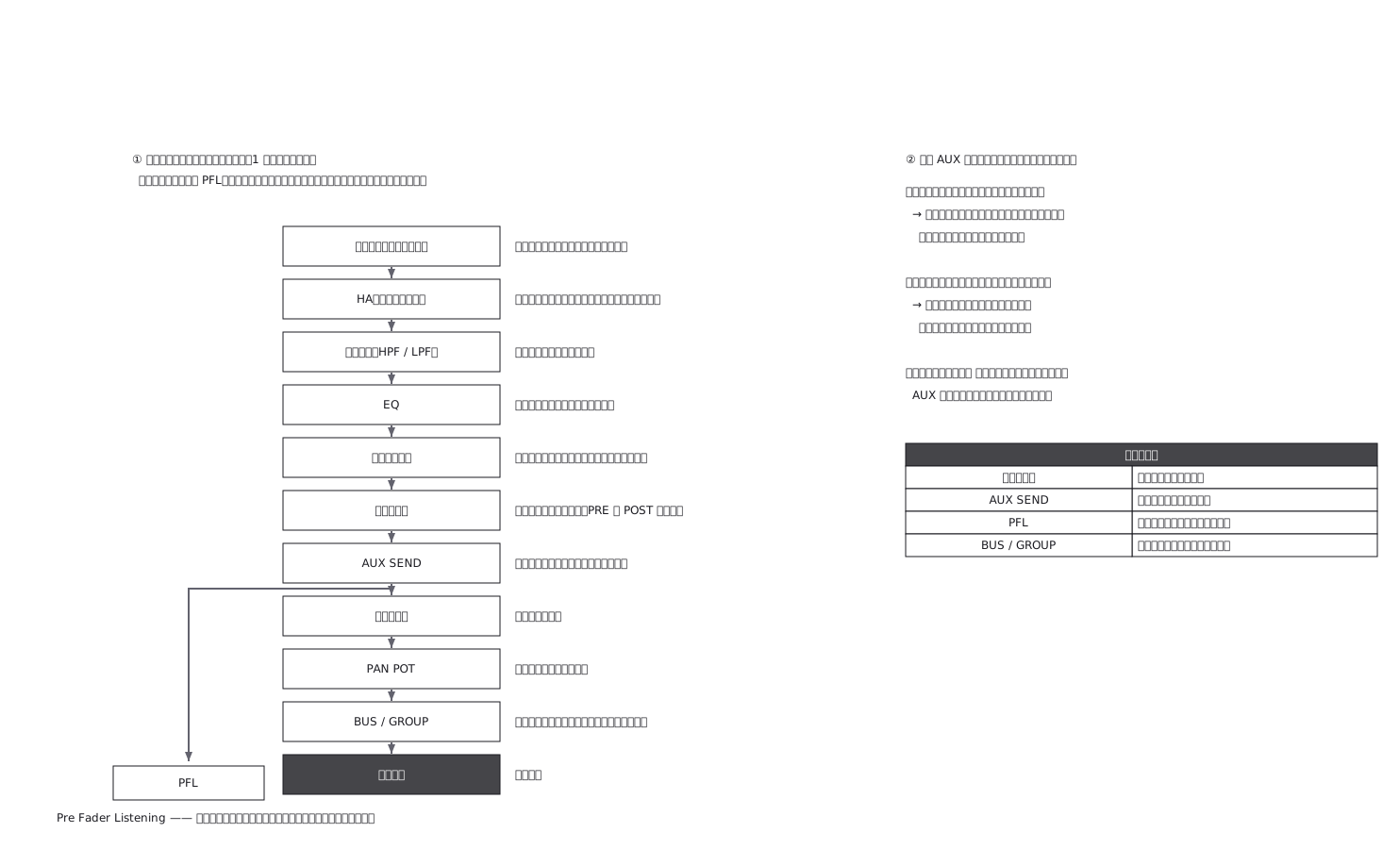 The same control means different things depending on where in the chain it sits. An aux send taken before the fader keeps its level when the engineer moves the fader, which is what a performer monitor needs; taken after, it follows the fader, which is what a reverb needs. Insert is in series and cuts the path open; aux is in parallel and branches away and back.