Health, food and farming
Weaving draft - 2/2 twill on four shafts
Three small grids decide the fourth - the cloth is computed
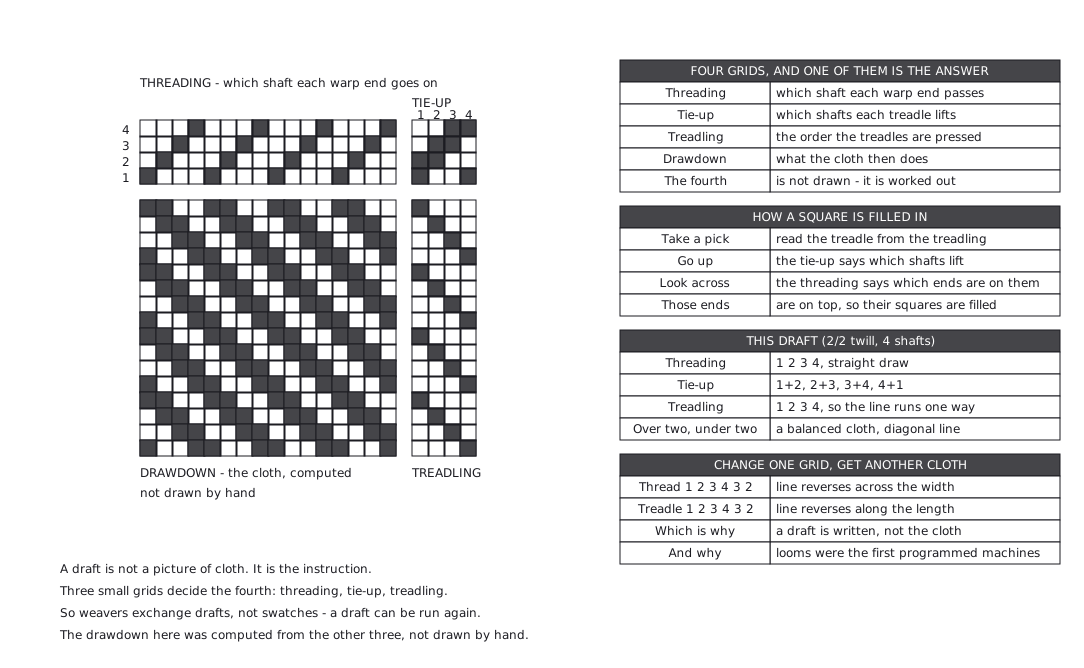
This drawing comes from one YAML file. No shape was moved by hand.
Notes in the source (in Japanese)
Three small grids decide the fourth.
A draft has four parts: threading (which shaft each warp end passesthrough), tie-up (which shafts each treadle lifts), treadling (theorder the treadles are pressed) and the drawdown - the cloth.
Nobody draws the drawdown. It is worked out: take a pick, read itstreadle, the tie-up says which shafts lift, the threading says which endsare on those shafts, and those ends are on top. Fill those squares.
So a draft is an instruction and the cloth is its output. Change one grid andthe cloth changes - the same threading treadled 1 2 3 4 3 2 zigzags instead.That is why weavers exchange drafts rather than swatches, and why the loomis the ancestor of the programmed machine.
The drawdown on this sheet was computed from the other three.
Source (YAML)
examples/gallery/161-Weaving-draft.zumen.yaml
More in this field
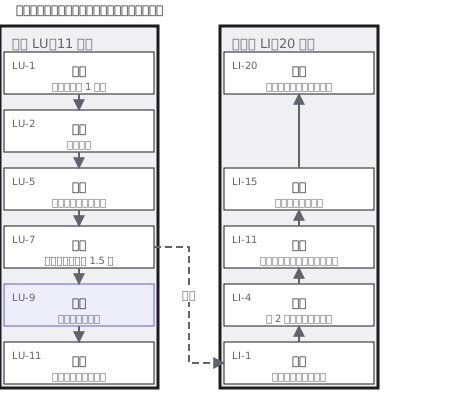
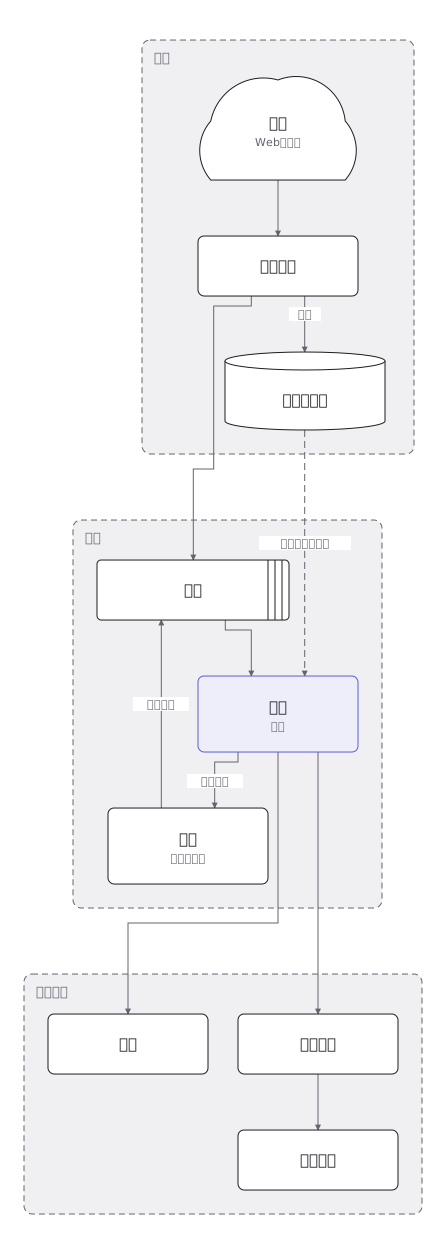 How an outpatient moves through a hospital — reception, consultation, tests, payment, prescription — and where each department keeps people waiting
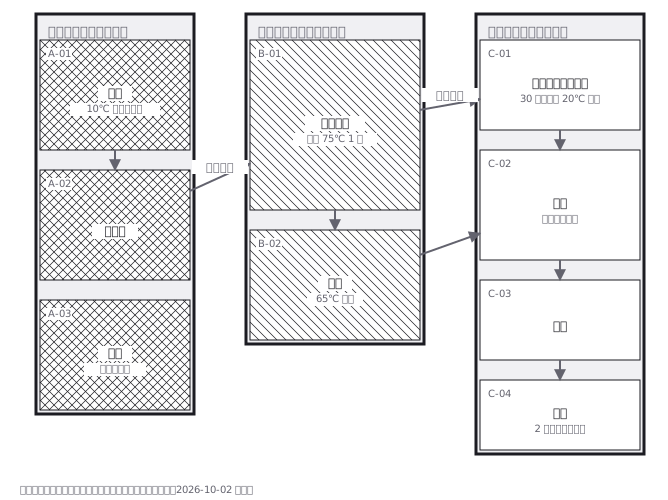 A school meal kitchen split into contaminated and clean zones, with the paths of food, people and crockery kept from crossing
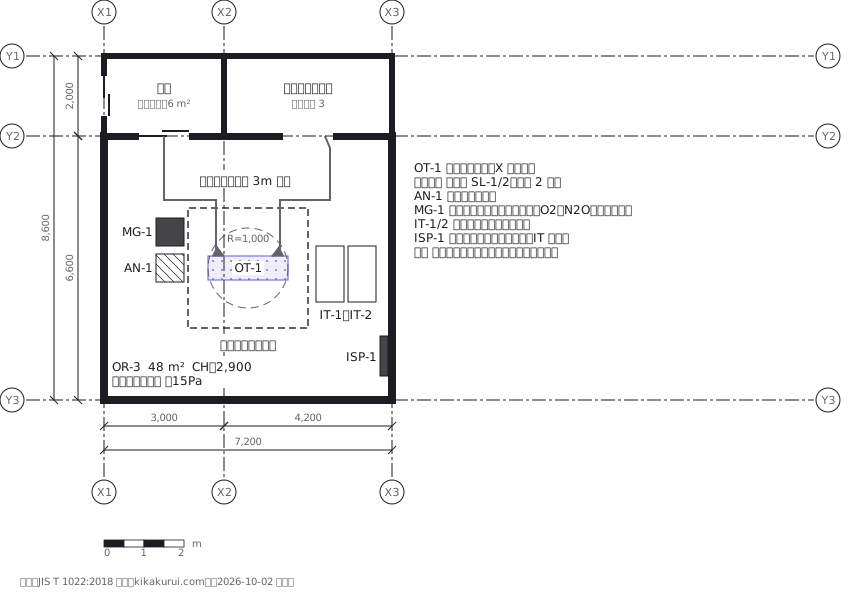 An operating room laid out around the table: surgical light, anaesthesia machine, electrosurgical unit and monitors, with the sterile field
 The fourteen meridians and their principal points, named to the WHO standard acupuncture point locations
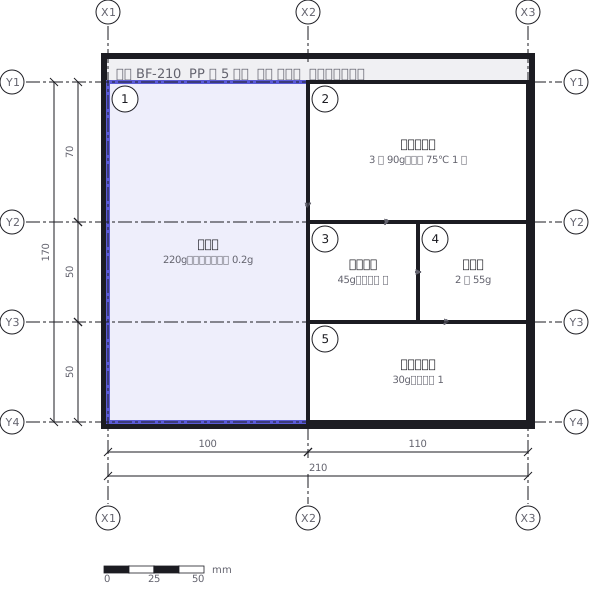 A packing instruction for a boxed lunch: what goes in each compartment, how much, which way up, and in what order
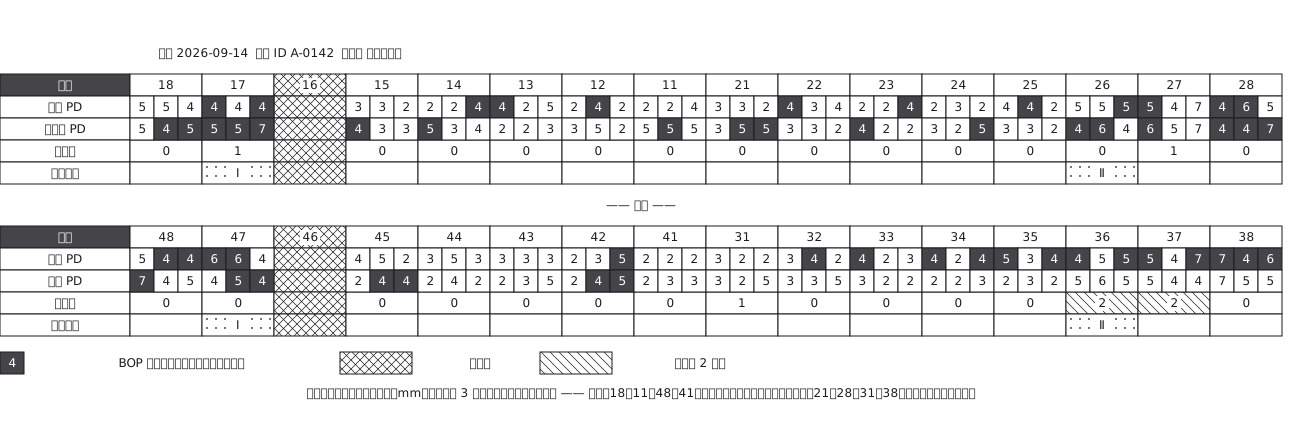 A periodontal chart where all 32 teeth are measured at six points each, recording pocket depth, bleeding and mobility
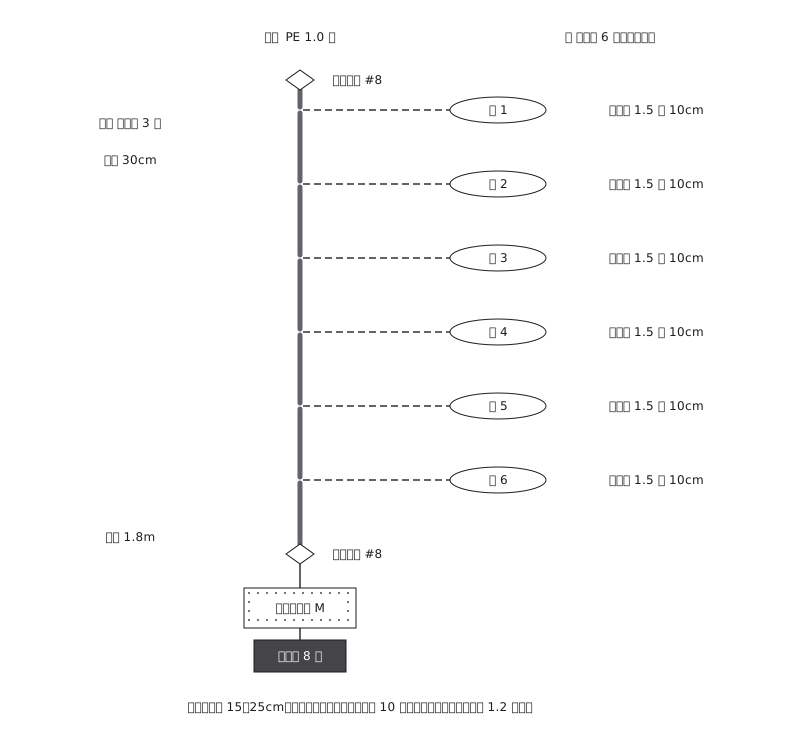 A sabiki fishing rig from main line to six hooks, feeder cage and sinker, with the gauge and length specified for every section
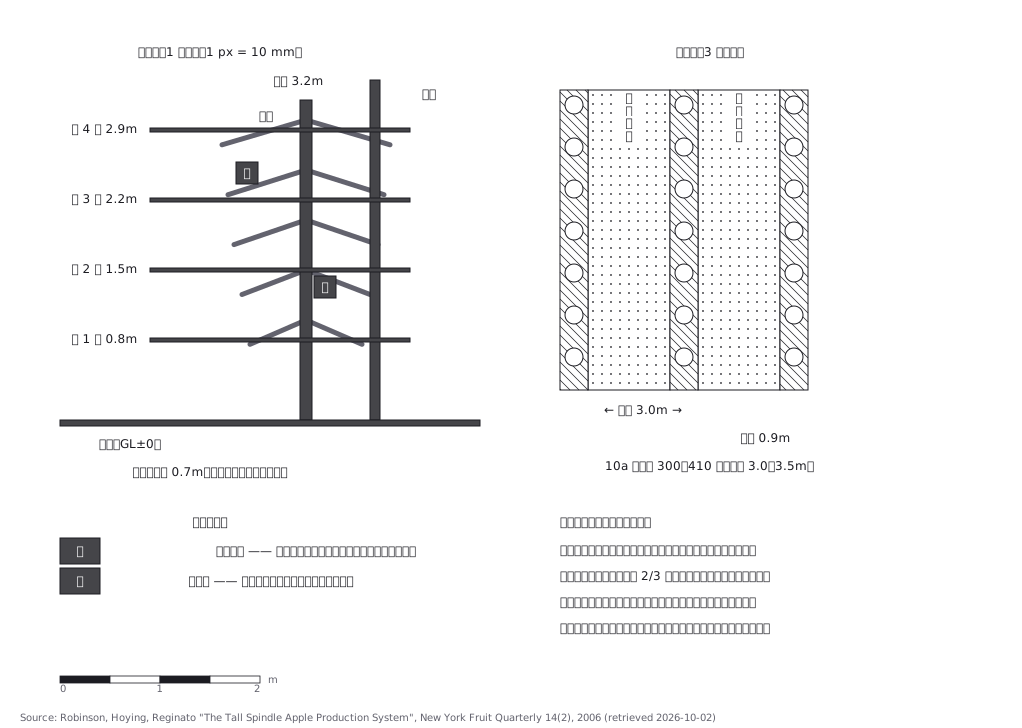 High-density apple training, with tree and row spacing