IT and software
Morse code (a ratio of lengths, not a shape)
Nothing about the shape of a dot or a dash is fixed; what is fixed is the ratio of durations — dash three, gap inside a letter one, between letters three, between words seven. That is why the same code carries over sound, light or a key. Laid out at true length, SOS comes to exactly 27 units.
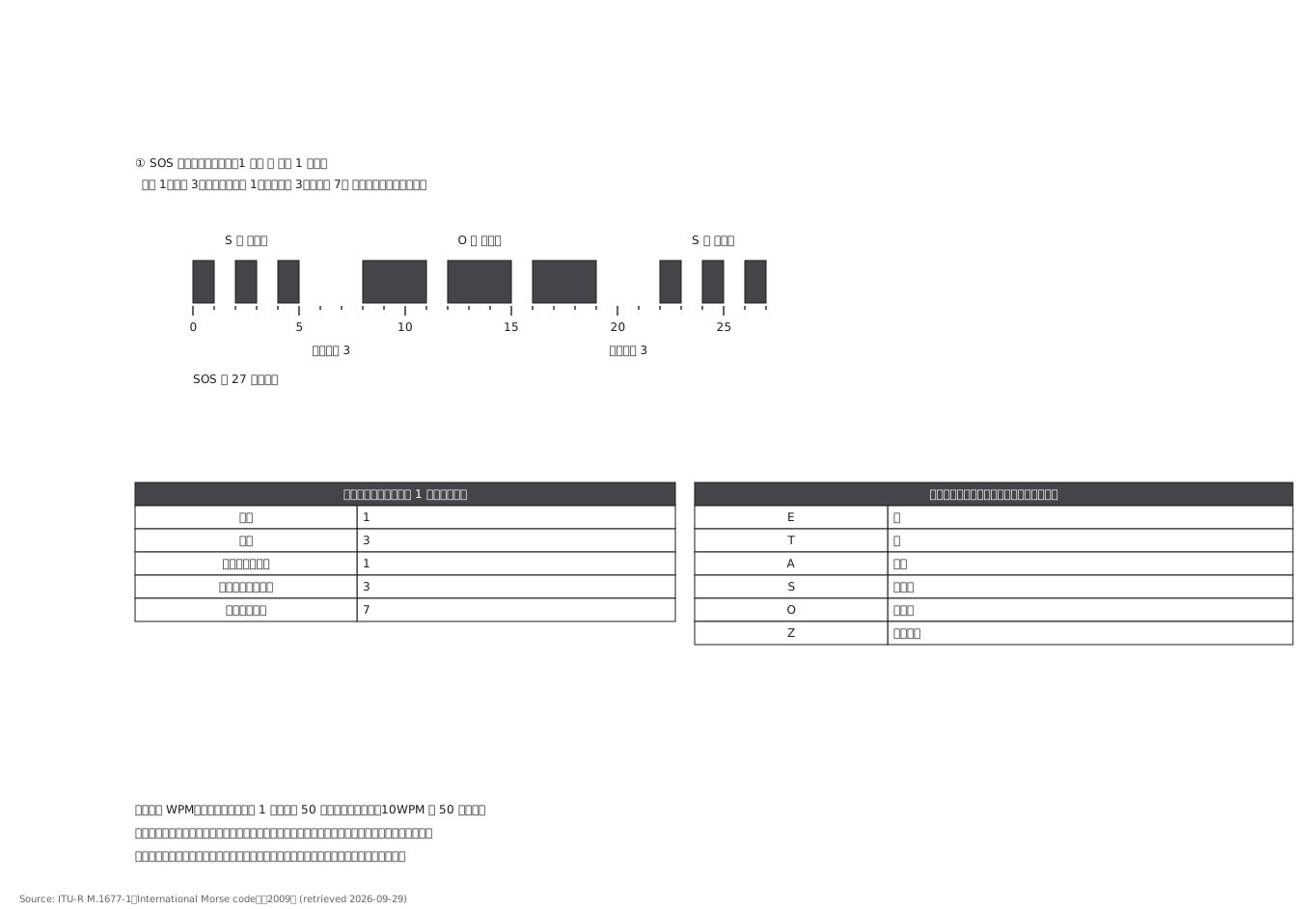
This drawing comes from one YAML file. No shape was moved by hand.
Notes in the source (in Japanese)
決めてあるのは長さの比だけ。 短点を 1 単位として ——長点 3、符号の中の間隔 1、文字と文字の間隔 3、語と語の間隔 7。
点と線の「形」は決まっていない。決まっているのは時間の比なので、音でも、光でも、打鍵でも、同じ符号が通る。
S は ・・・、O は ---。間に文字間隔 3 を入れて並べると、SOS はちょうど 27 単位になる(5 + 3 + 11 + 3 + 5)。図は、その 27 単位をそのままの長さで描いたもの。
WPM(語毎分)。1 語は短点 50 個分と決めてあり、10WPM は 50 字/分にあたる。
同じ「・」と「-」でも意味が違う(それぞれ「ヘ」と「ム」)。国際基準ではなく、ドイツ・オーストリア電信連合(DÖTV)の 1854 年版の符号をいろは順に当てはめたもの(イ = A の符号、ロ = Ä の符号 …)。
参照した記事は SOS を「-・・/---/・・・」と書いていたが、これは D・O・S。 同じ記事が S = ・・・、O = --- と書いているので、出典の中で食い違っている。 この図は後者(字の定義)から組み立てた。
表には出典が字を挙げているものだけを載せた。ほかの字も同じ決まりで並ぶ。点字の 6 点は見本 194、QR コードの作りは見本 304。
出典:長さの比と字の符号は ITU-R M.1677-1(International Morse code, 2009)§2・§1。https://www.itu.int/rec/R-REC-M.1677-1-200910-I/ (2026-09-29 取得)和文の由来は 安岡孝一「Birth of International Morse Code」(京都大学人文科学研究所)。
Source (YAML)
examples/gallery/339-モールス符号.zumen.yaml
More in this field
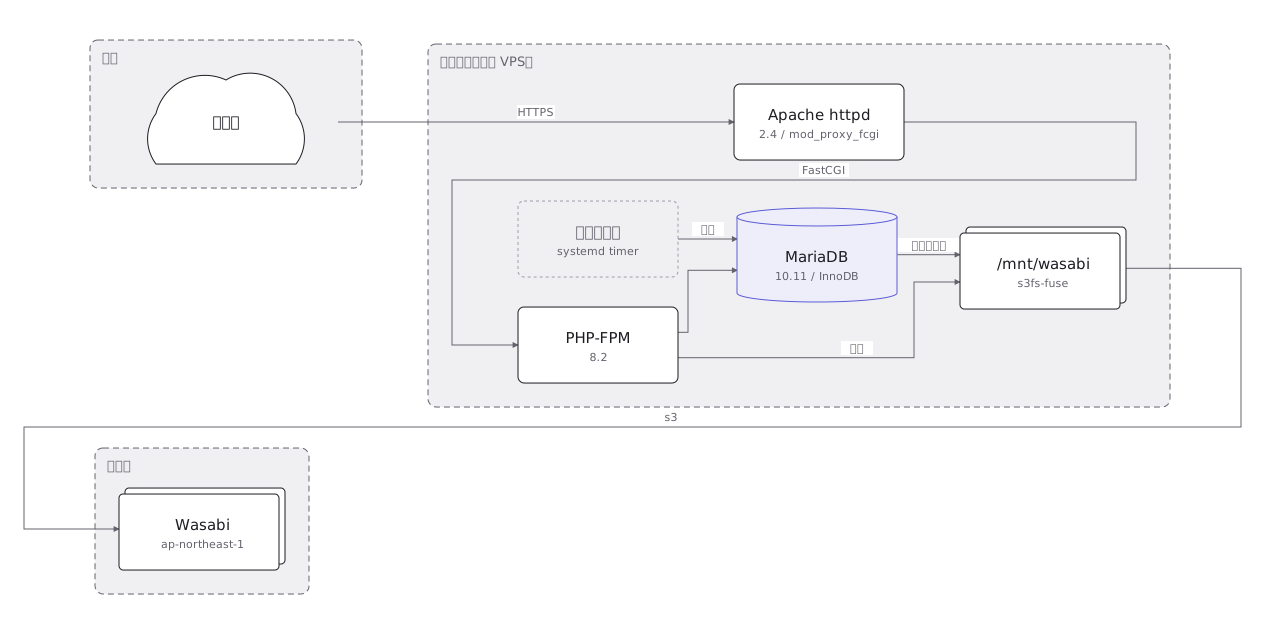 An on-premise server layout rack by rack, with the redundant power feeds and network links drawn as separate paths
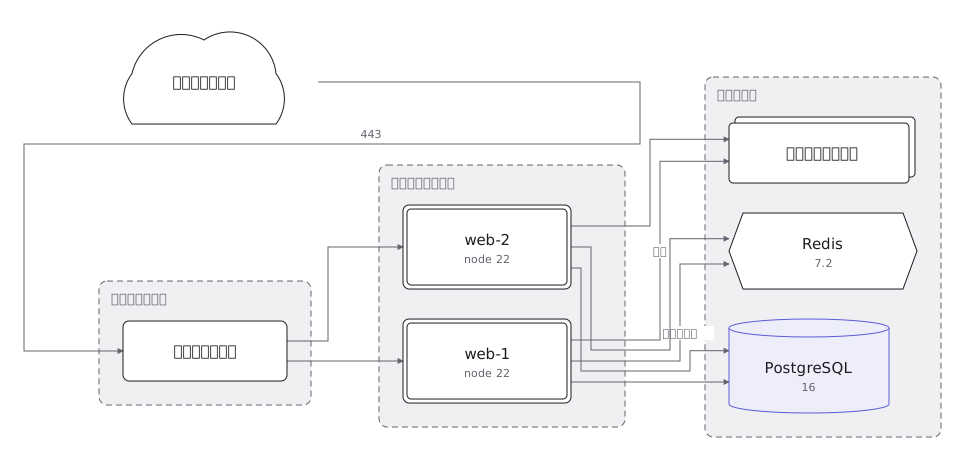 A cloud architecture showing the VPC and its subnets, and where the load balancer, application, database and object store sit
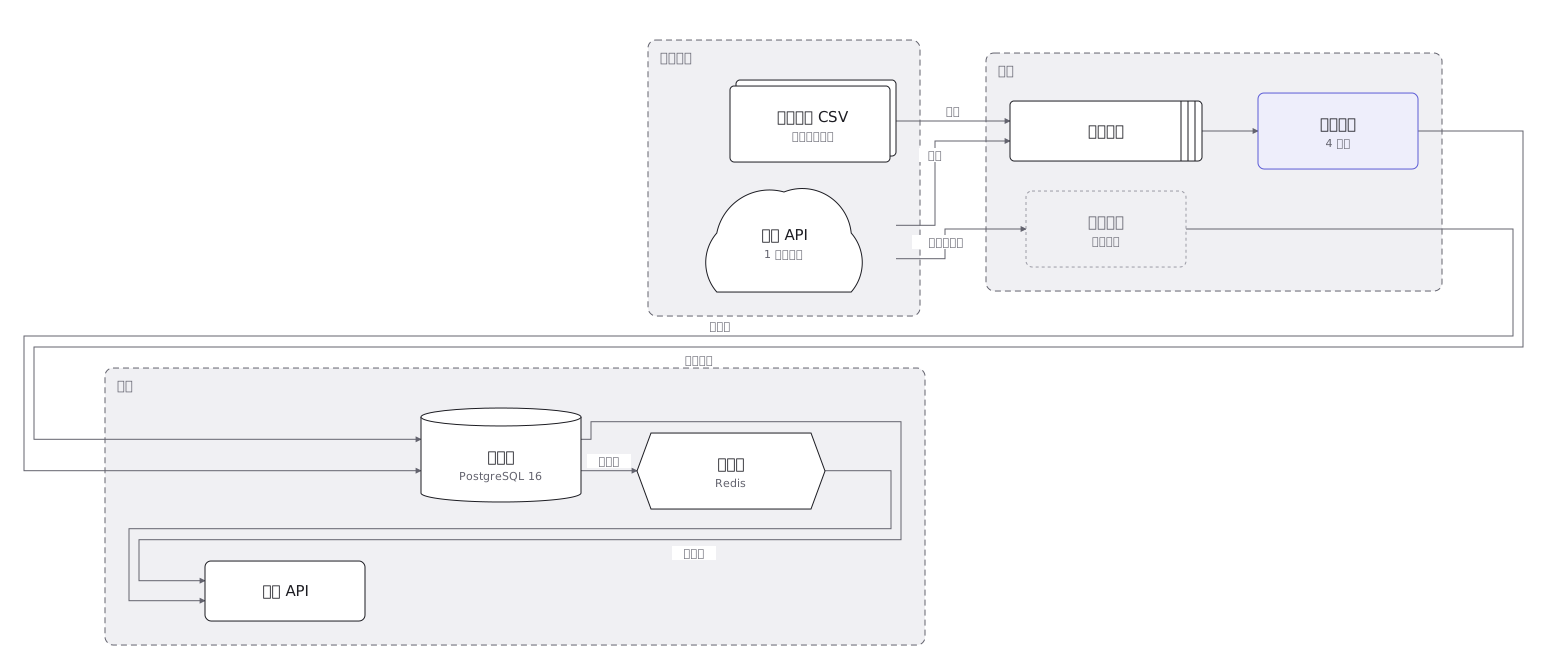 Where data goes from collection through transformation, storage and aggregation to display, and what kind of container holds it at each step
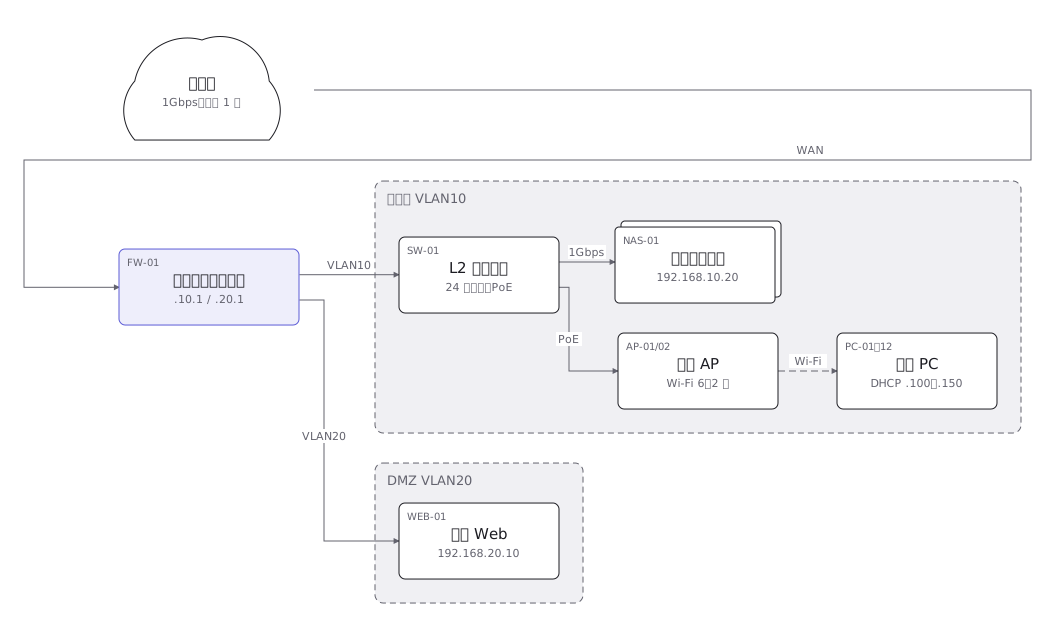 A network layout of the links and equipment between sites, with the address range carried by each segment
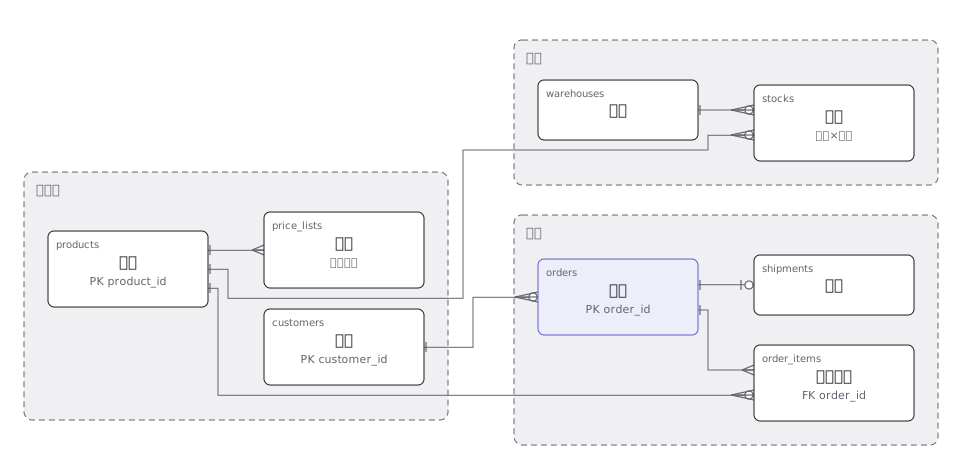 An order management ER diagram with primary and foreign keys, and the one-to-many relationships drawn as crow feet
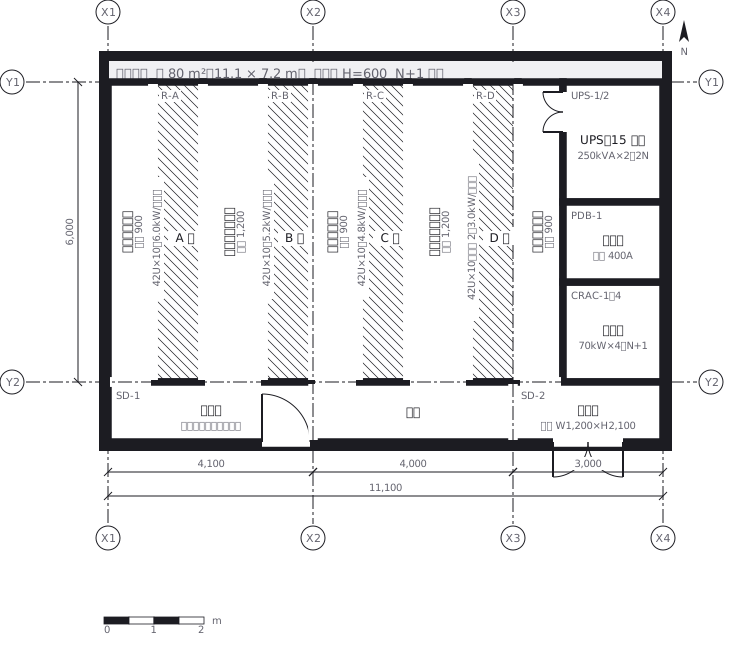 A server room where racks face each other to make hot and cold aisles, with the clearance of each aisle written in
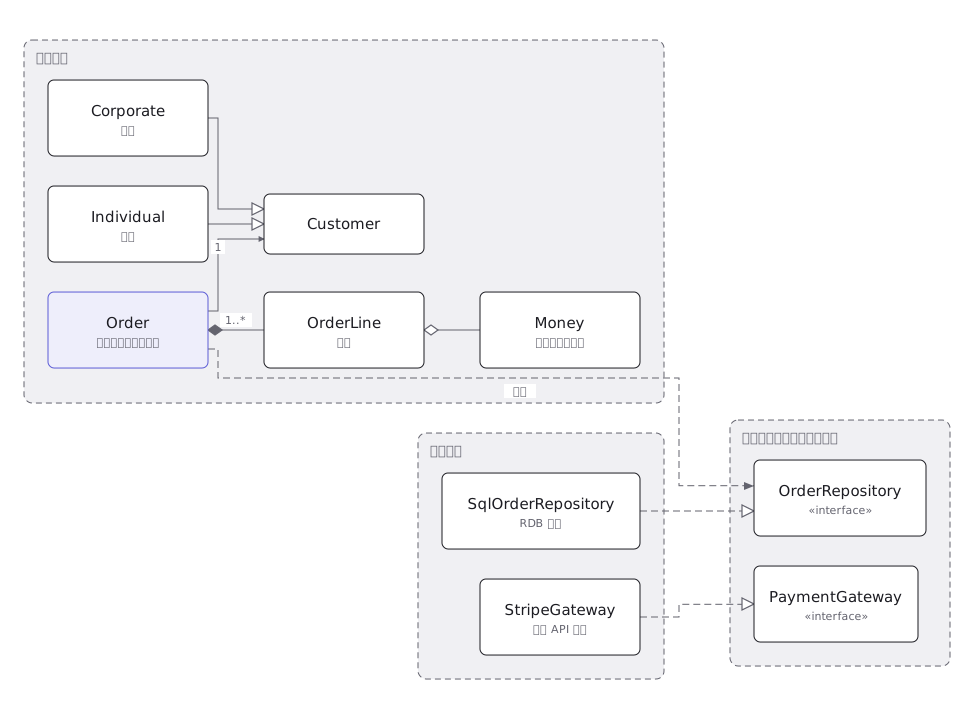 A UML class diagram where inheritance, realisation, association and aggregation are told apart by line type and end symbol
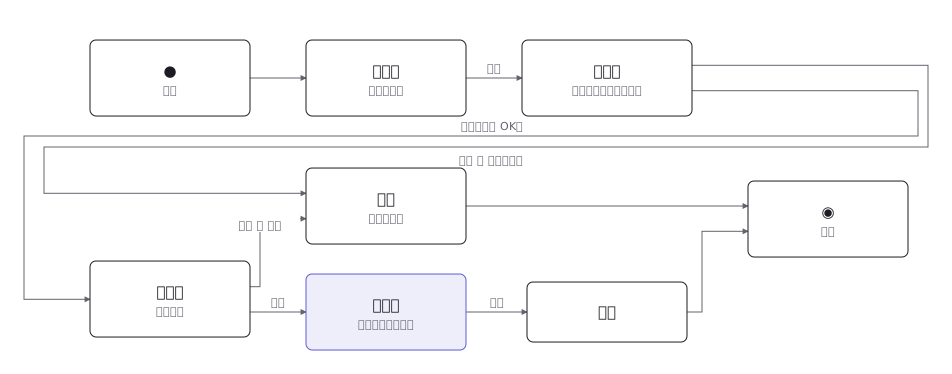 A UML state machine with transitions, the events and guards that fire them, and the pseudostates that begin and end it