Retail and logistics
How crude oil becomes products (separating alone is not enough)
Distillation only separates what the crude already contains, and it yields fewer light fractions than the market wants — so the heavy ends get broken up to make more. Vacuum distillation squeezes further gas oil from the residue, then cracking units cut the big molecules down, and only after desulphurising and reforming is any of it a product.
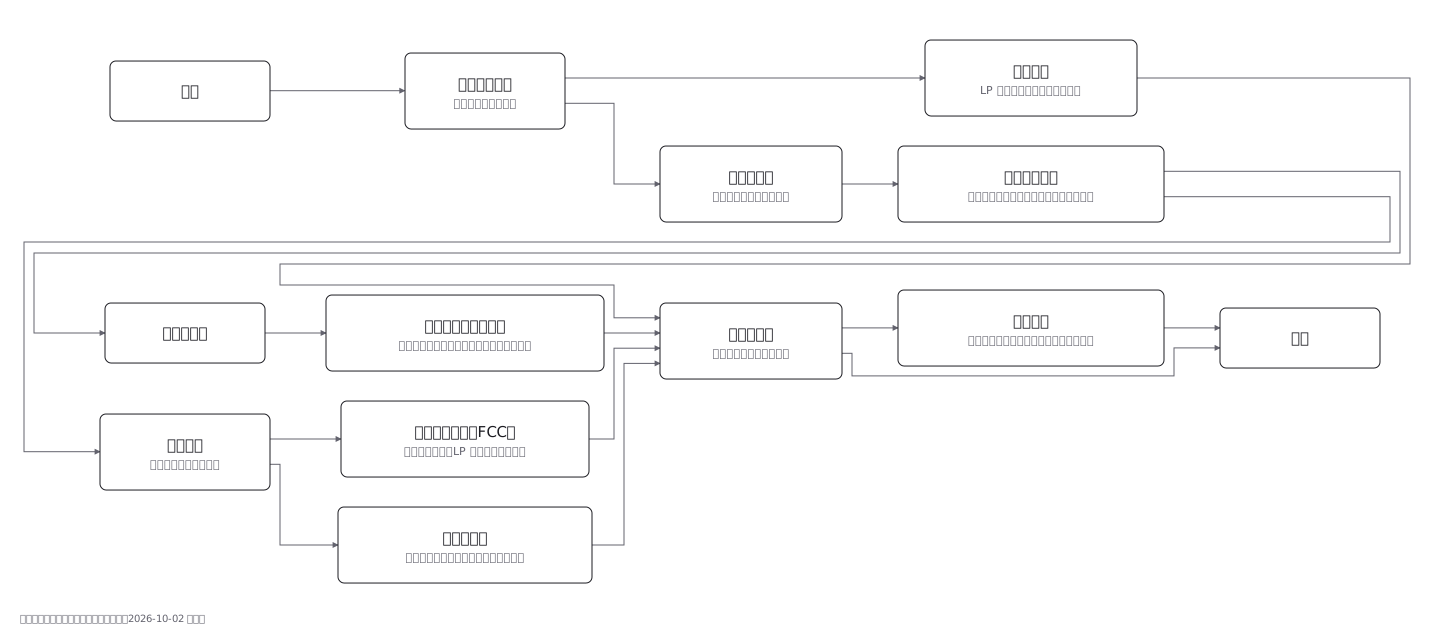
This drawing comes from one YAML file. No shape was moved by hand.
Notes in the source (in Japanese)
蒸留は「分ける」工程で、「作る」工程ではない。原油に入っている軽い油の量は決まっているのに、世の中が欲しがる量はそれより多い ——だから重いものを壊して、軽いものを作る。
常圧蒸留装置が、沸点の違いで原油を分ける。上からLP ガス・ナフサ・灯油・軽油、そして塔の底に常圧残渣油(重油の留分)が残る。(A 重油は留分の名前ではなく、軽油に重い油を少し混ぜて作る製品。)
残渣油はさらに減圧蒸留装置へ。圧を下げると低い温度で沸くので、そのままでは分解してしまう重い油からも減圧軽油を搾れる。
流動接触分解(FCC)は減圧軽油などを壊して、分解ガソリン(ガソリンの基材)・LP ガス・分解軽油にする。水素化分解は水素を加えながら壊して、ナフサ・灯油・軽油にする。熱分解(コーカー)は減圧残渣油から、ガス・ナフサ・軽油の留分と石油コークスを作る。
分解装置は、需要の形に合わせて分子の大きさを変える装置である。
水素化精製で硫黄などの不純物を除き、接触改質でガソリンのオクタン価を上げる。改質に回すナフサも、先に水素化精製で硫黄を除く(改質の触媒が硫黄で効かなくなるため)。分ける → 壊す → 整えるの 3 段で、ようやく製品になる。
出典:石油連盟「製油所の精製工程」https://www.paj.gr.jp/statis/faq/67(蒸留・脱硫・分解・改質の 4 工程と留分の名前。2026-10-02 照合)。各分解装置が出す製品の内訳は装置と運転で変わる —— ここに書いたのは主なものだけ。
鉄の側は見本 323、下水は見本 321。
Source (YAML)
examples/gallery/338-石油が製品に分かれるまで.zumen.yaml
More in this field
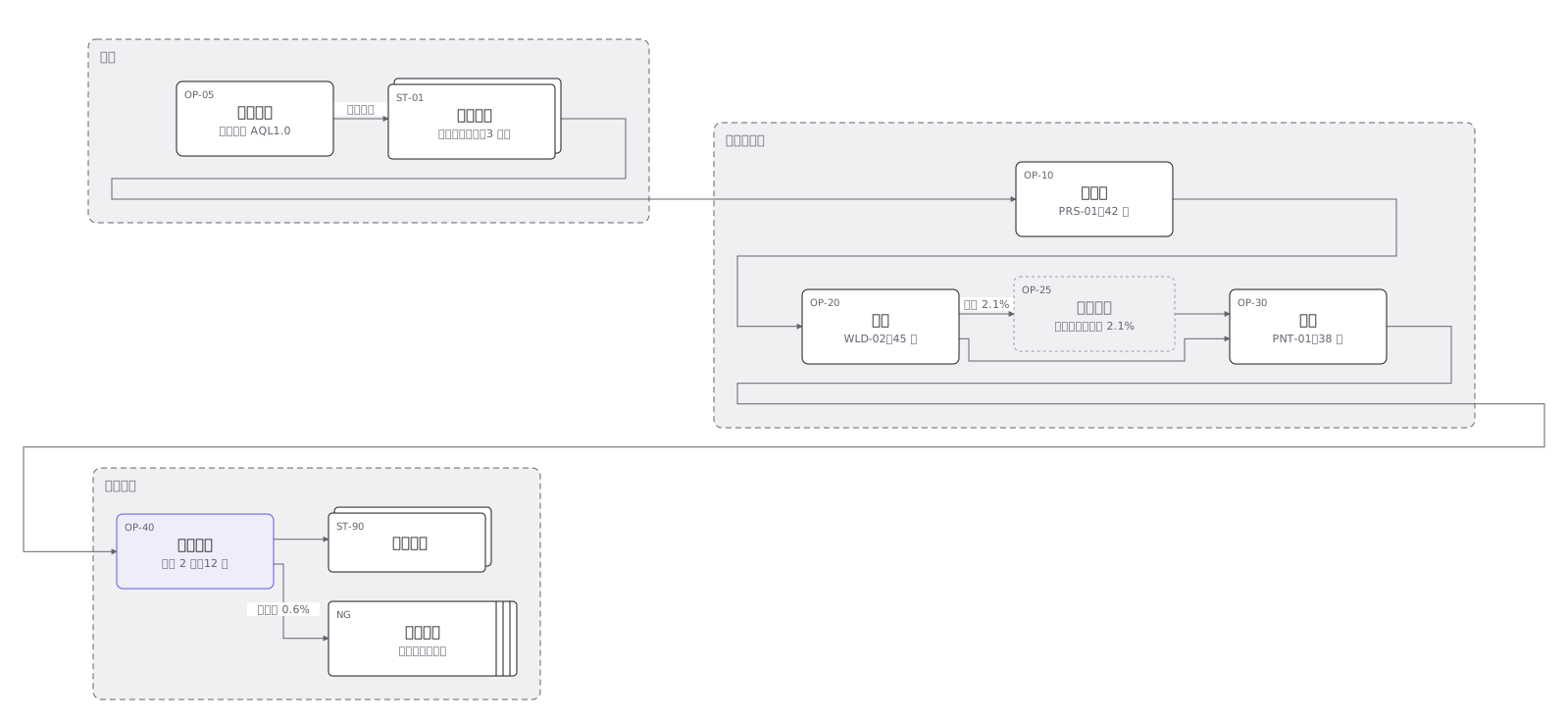 An assembly line with what happens at each station, and the route a part takes back when inspection rejects it
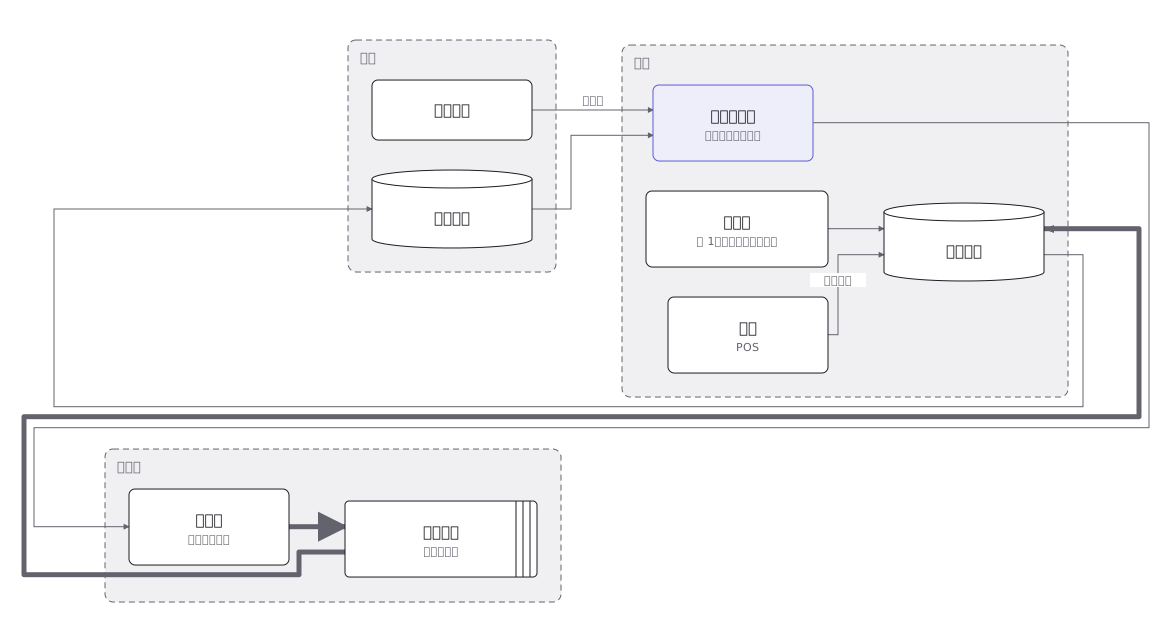 How a shop restocks: the reorder point, the safety stock, and the lead time that has to be covered until goods arrive
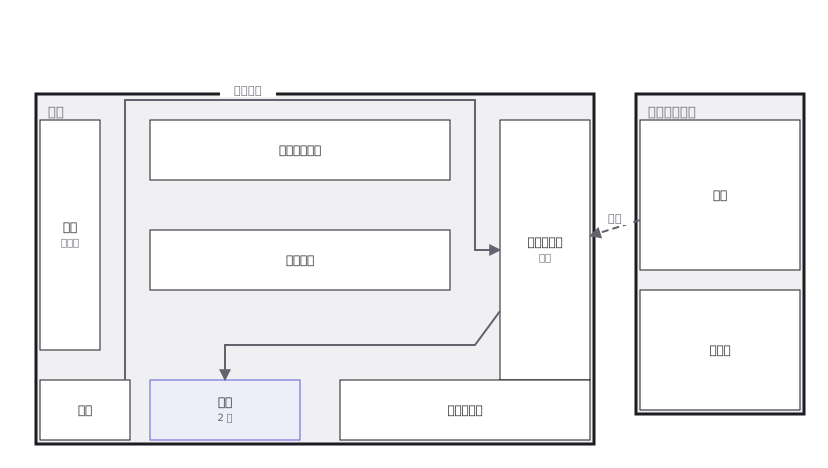 A convenience store floor layout: the fixtures, the main aisle, the till and chilled cases, and the path a customer takes from the door
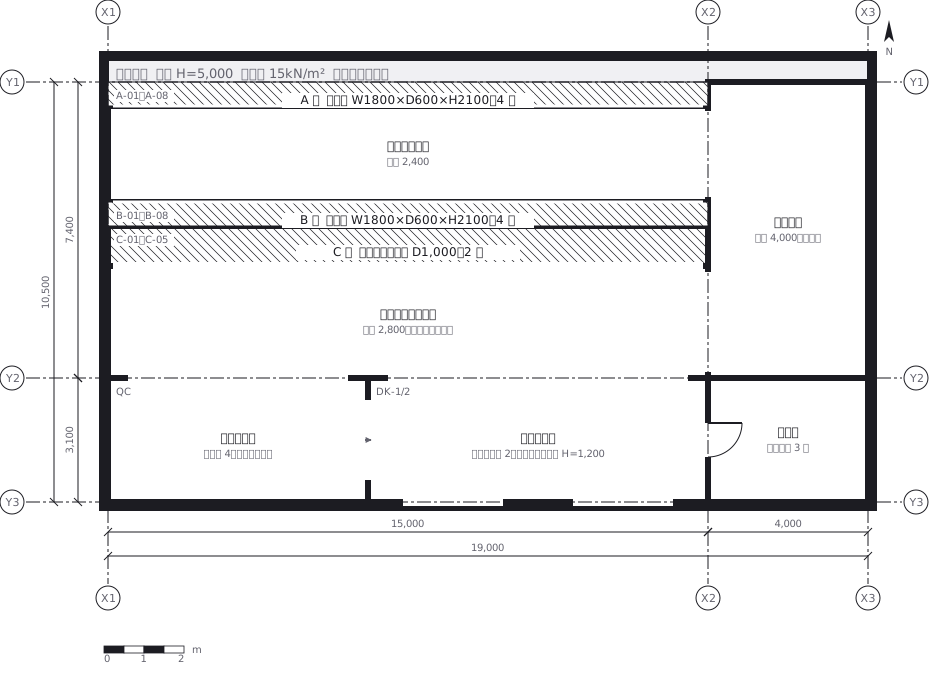 A warehouse where every rack bay, level and position carries an address, overlaid with the aisles and the picking route
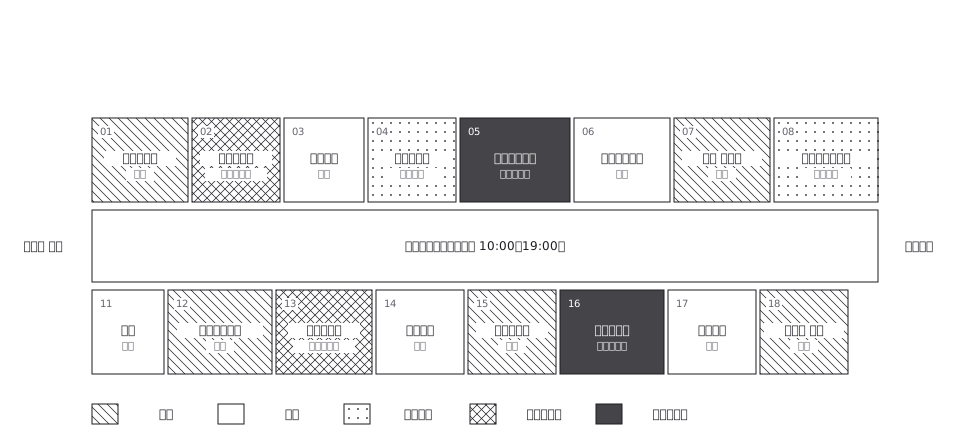 Shopping street directory, trade by hatch
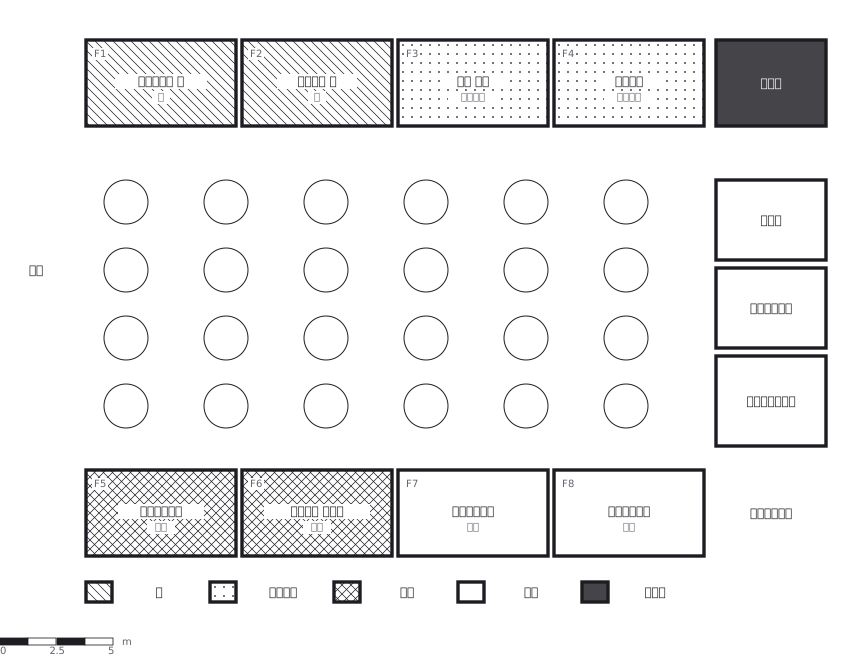 A food court laid out with 240 seats in the middle and the outlets around the edge, each cuisine distinguished by hatch rather than colour
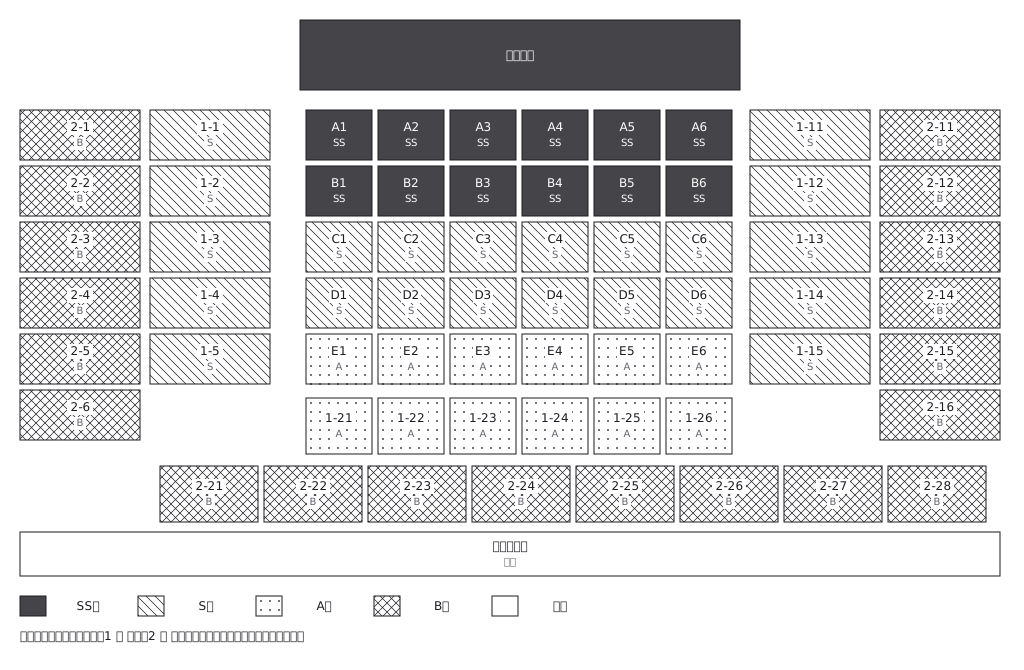 A domed stadium with its seats divided into five price bands, including standing room
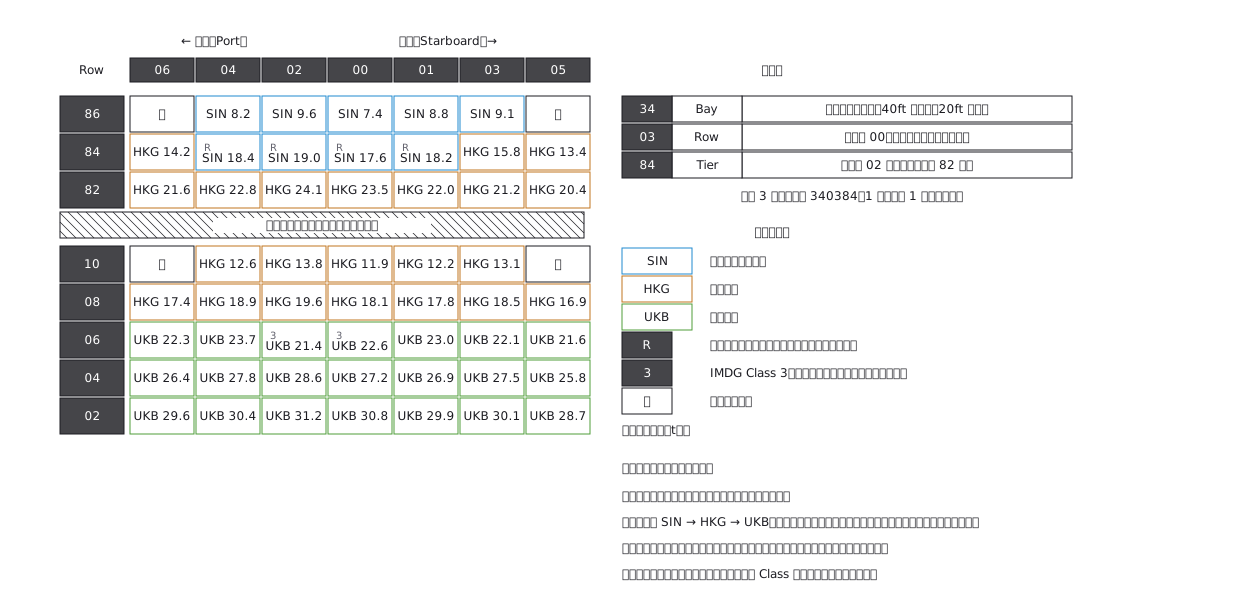 Container stowage: bay, row and tier are the address