Learning and geometry
Exposure (many combinations give the same brightness)
Brightness is set not by the aperture or the shutter but by their sum, so equal exposures line up on a diagonal: f/2.8 at 1/500, f/4 at 1/250 and f/5.6 at 1/125 are all 12 EV. One stop either way halves the light. What the diagonal does not equalise is the picture — a smaller aperture deepens the focus and a slower shutter lets movement blur, which is why choosing along it is the craft.
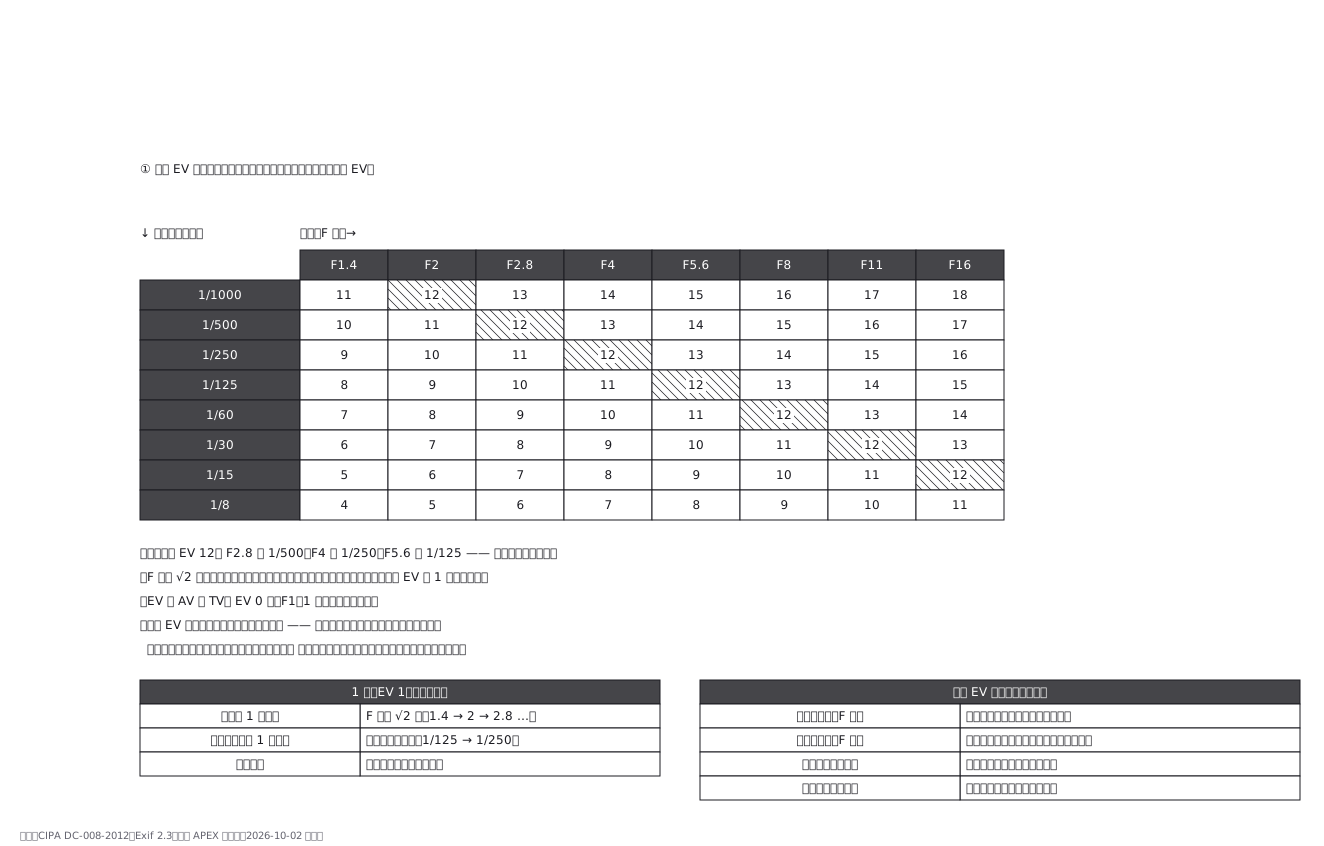
This drawing comes from one YAML file. No shape was moved by hand.
Notes in the source (in Japanese)
明るさを決めているのは、絞りとシャッターの組み合わせではなく、その和。
F 値が √2 倍になるか、露光時間が半分になると、届く光の量が半分になる。そのとき EV が 1 大きくなる。
F 値の系列が 1.4・2・2.8・4・5.6・8・11・16 と並んでいるのは、1 つ進むごとに √2 倍になるから。シャッター速度が 1/30・1/60・1/125 …と並ぶのは、1 つ進むごとに半分になるから。どちらも「1 段」で同じ量なので、片方を 1 段動かしたらもう片方を逆に 1 段動かせば、明るさは変わらない。
F2.8 と 1/500、F4 と 1/250、F5.6 と 1/125 —— どれも 12EV。表の中で、同じ EV の組み合わせは斜めに並ぶ。
EV = AV + TV(AV は絞り値、TV は露光時間の段数)。EV 0 は「F1・1 秒」と決めてある。
絞り値が大きいほど被写界深度は深く、シャッター速度が遅いほどブレは大きい。明るさが同じでも絵は変わるので、どの組み合わせを選ぶかが撮り方になる。
AV = 2 log2 F、TV = log2(1/t)。F 値 8 つと速度 8 つを実際に計算すると、どれも整数から 0.1 以内に収まる(F1.4 は 0.97、1/60 は 5.91、1/15 は 3.91 —— 系列の数字が丸めてあるため)。例に挙げた組(F2.8–1/500・F4–1/250・F5.6–1/125)も、3 つとも 12 になる。
出典(2026-10-02 確認):CIPA DC-008-2012(Exif 2.3)付録の APEX の定義ApertureValue Av = 2 log2(F 値)、ShutterSpeedValue Tv = −log2(露光時間)。https://www.cipa.jp/std/documents/e/DC-008-2012_E.pdf
光の側の図は見本 264(配光曲線)、レンズの作図は見本 191。
Source (YAML)
examples/gallery/337-露出とEV.zumen.yaml
More in this field
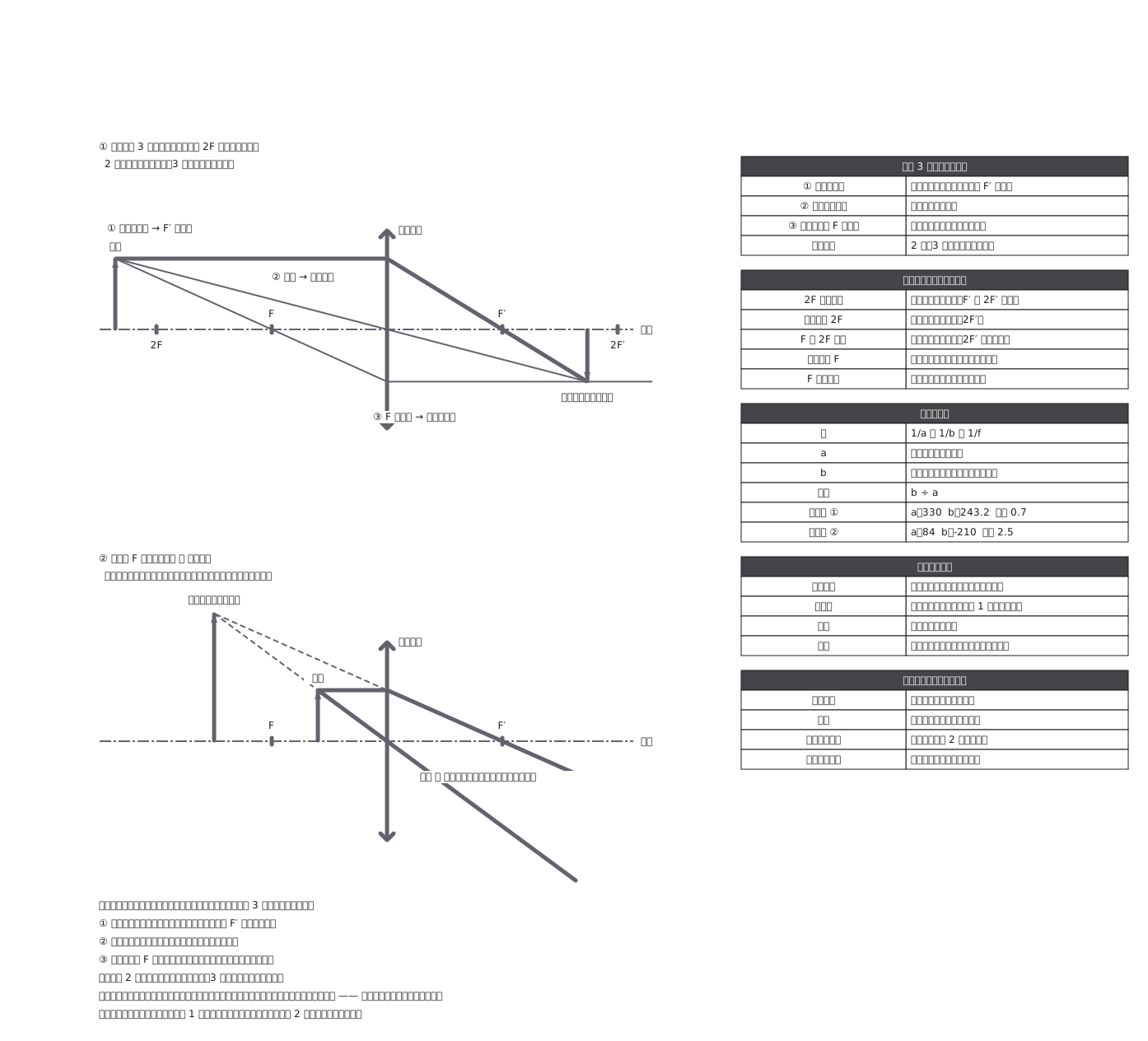 Ray tracing through a convex lens: there are only three lines to draw, and two of them fix the image
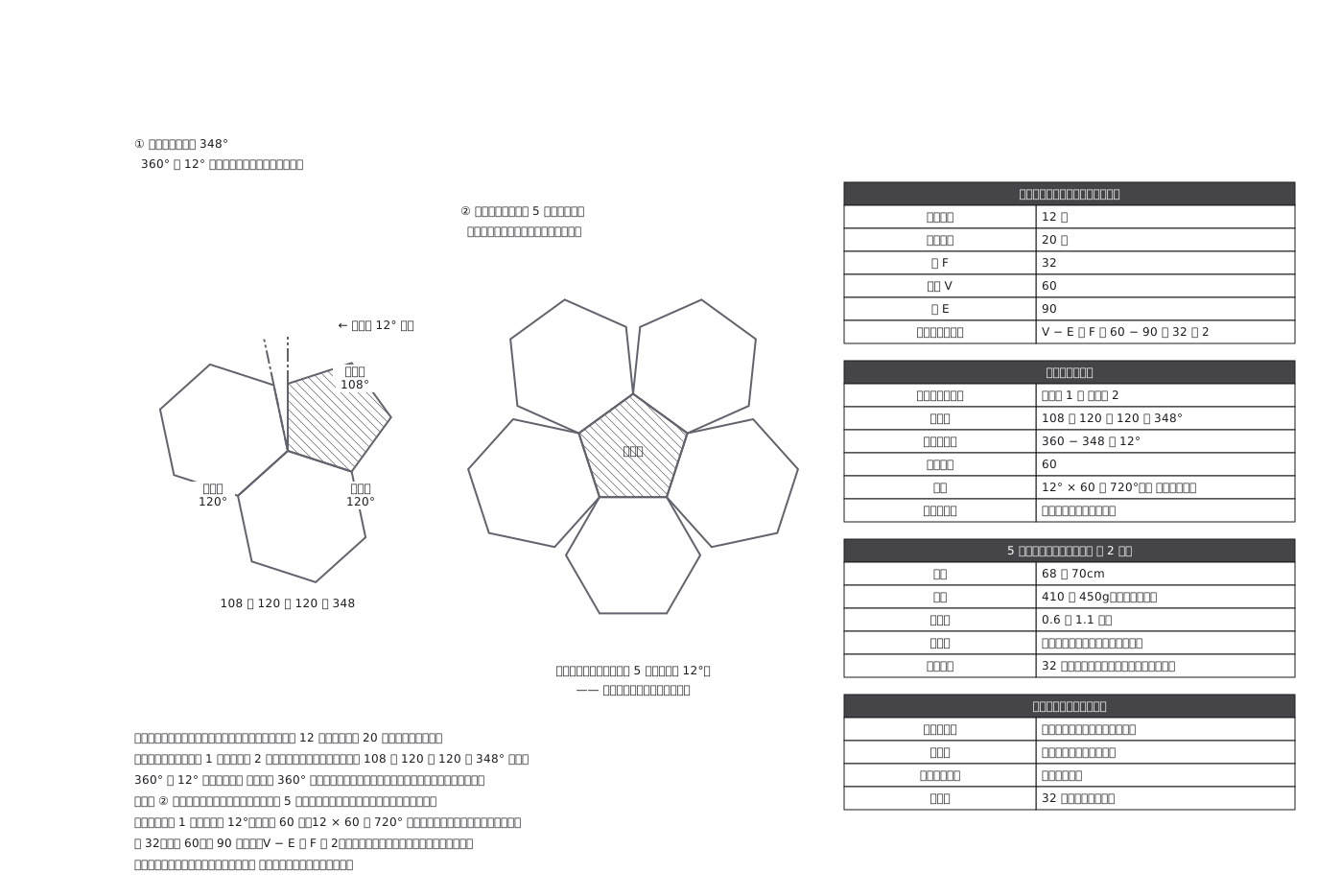 A football is a truncated icosahedron: the 12 degrees missing at every vertex are what make it a sphere
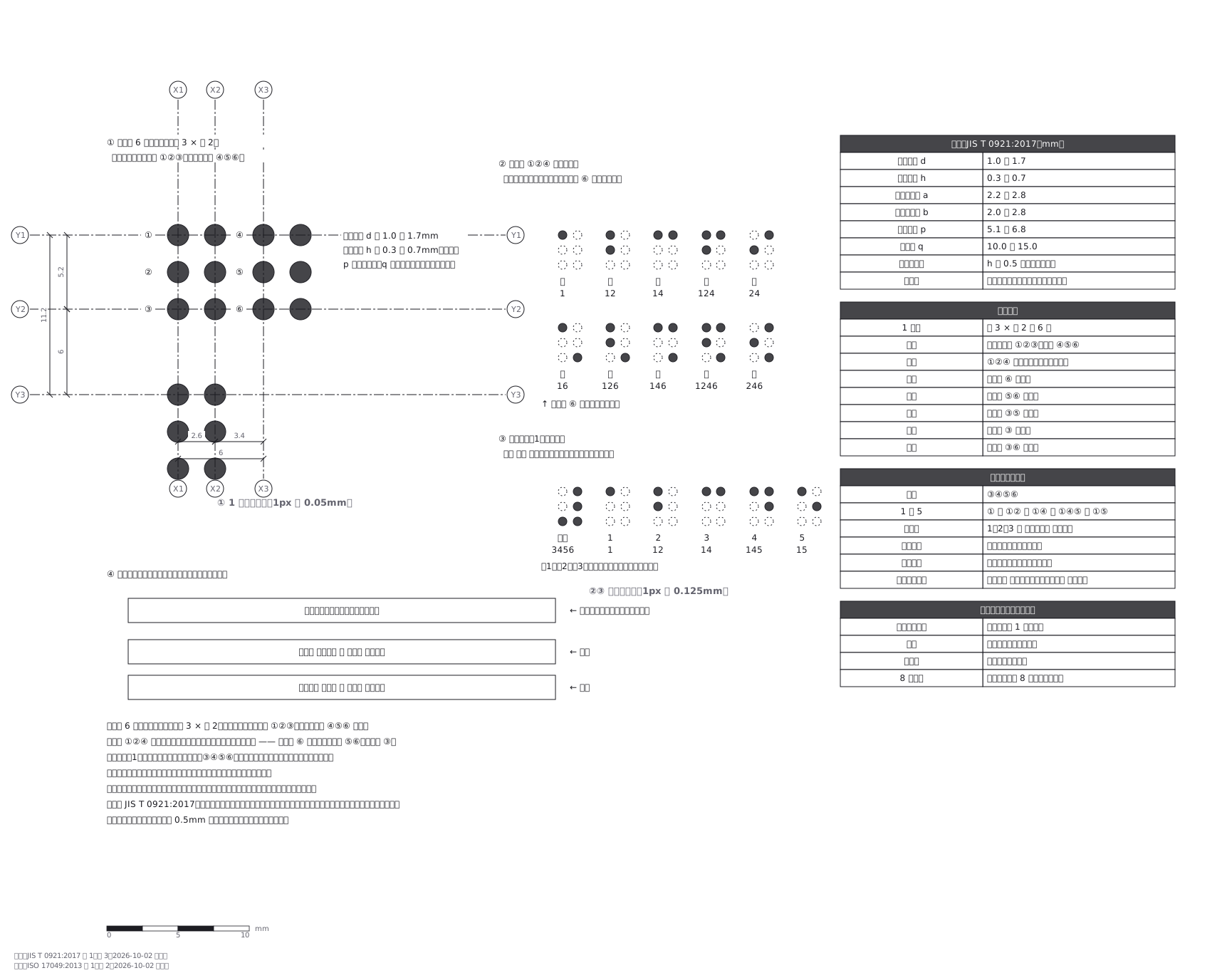 Braille has only six dots, so “a” and “1” are the same shape until a number sign says otherwise
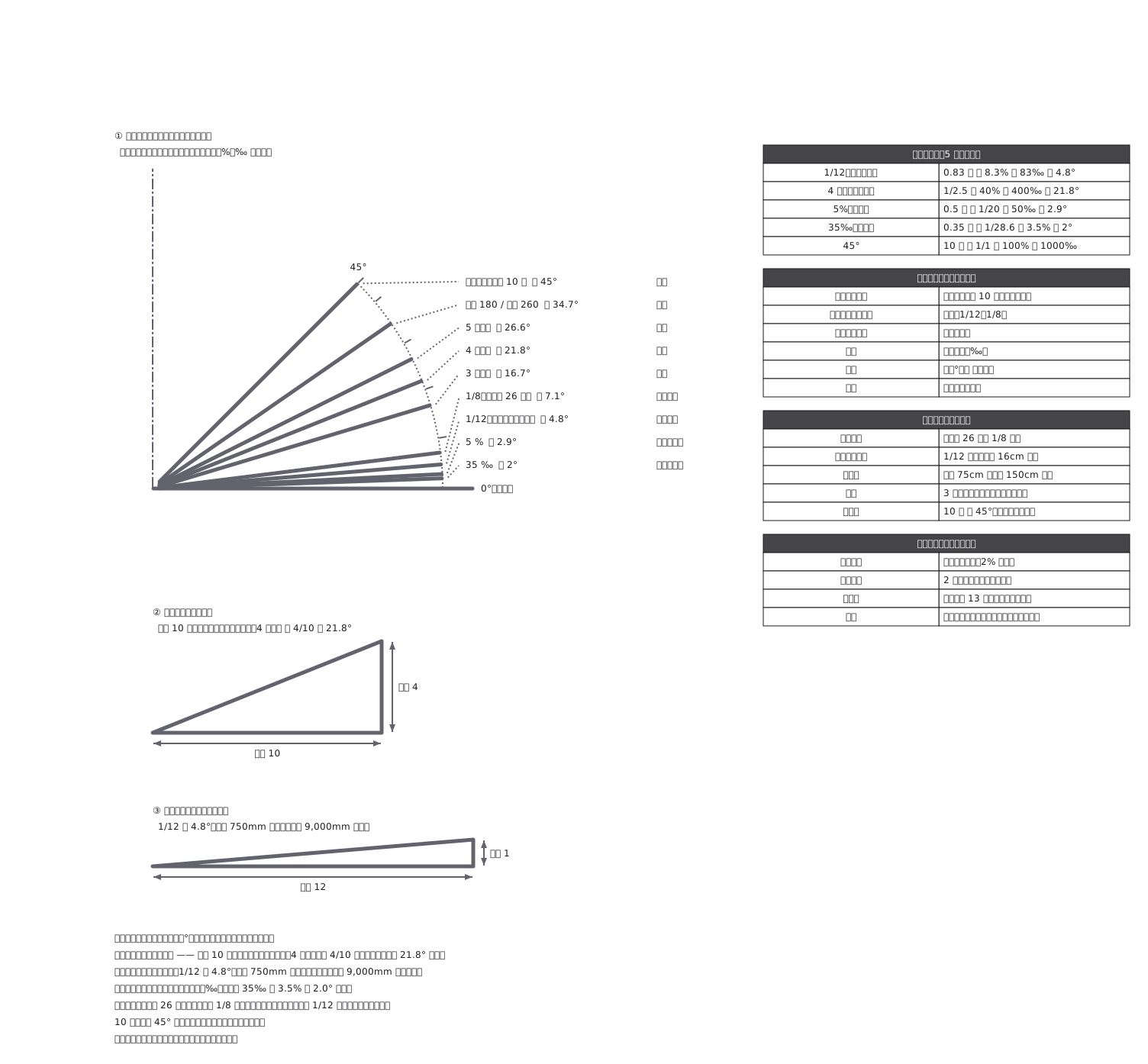 Slope notation: roofs in sun, ramps in fractions, roads in percent, railways in per mille — degrees are the minority
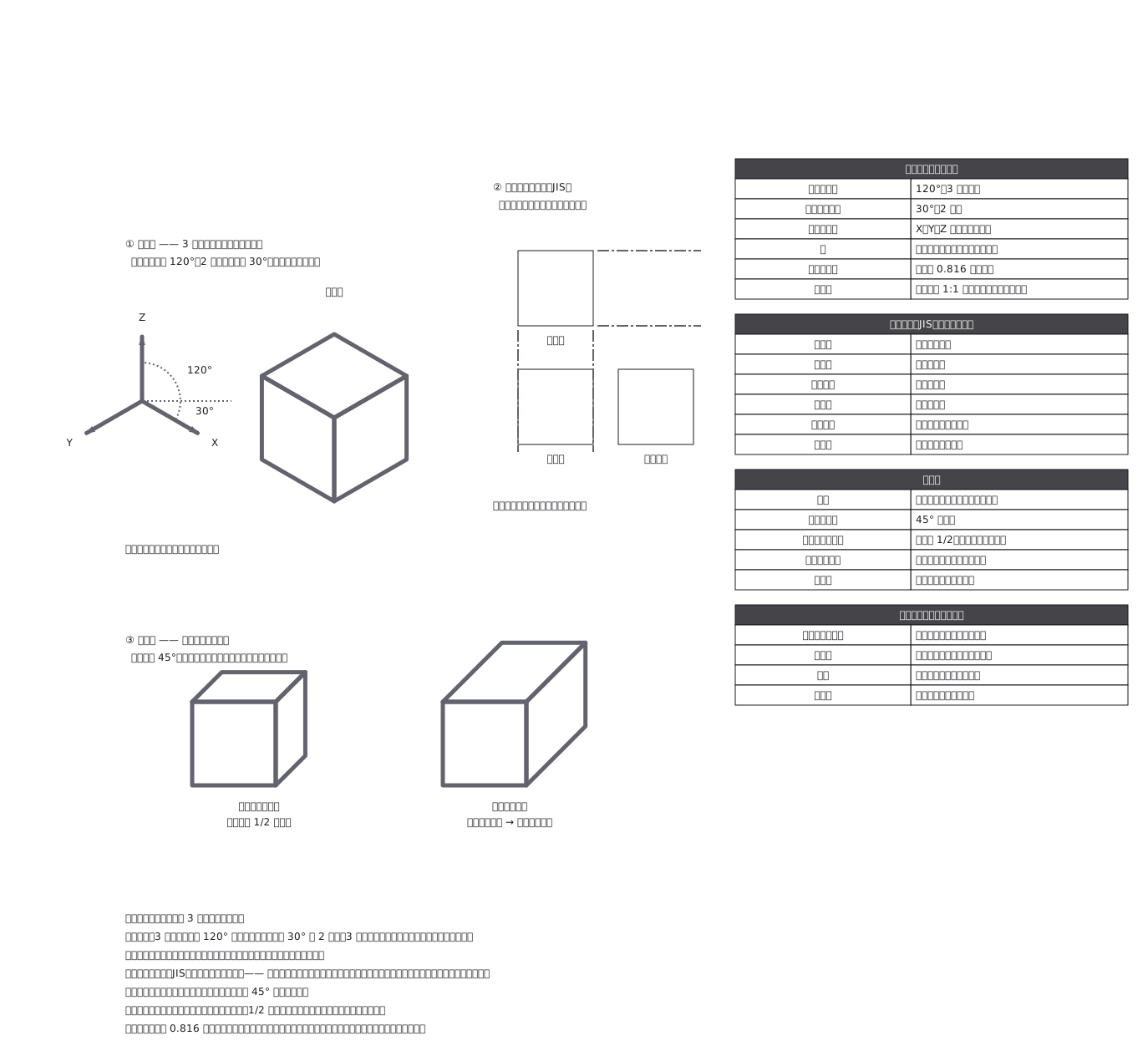 Isometric, third-angle and oblique: one scale serves all three axes, but circles become ellipses
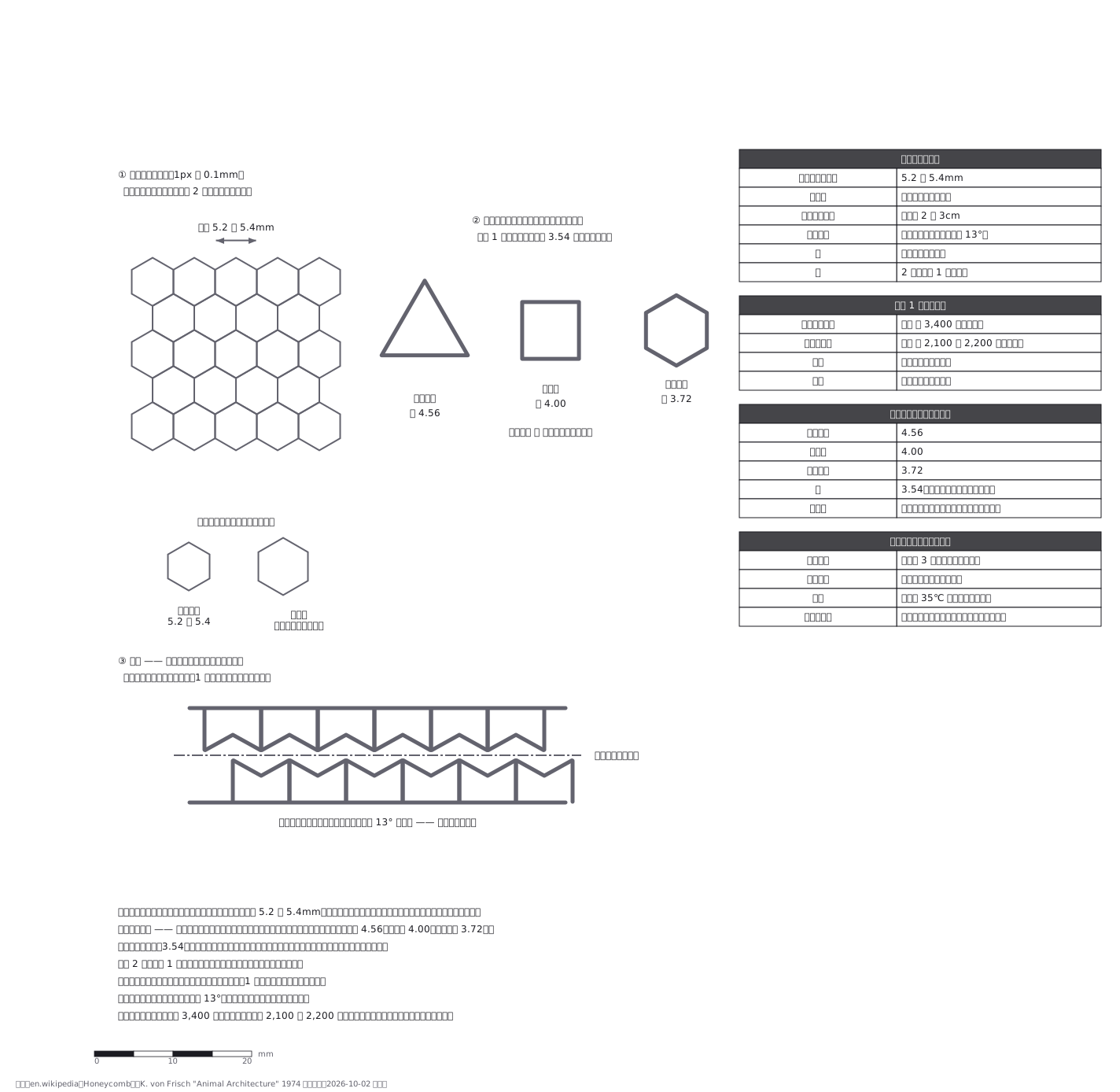 Honeycomb cells: for a given area the hexagon has the shortest wall of any shape that tiles
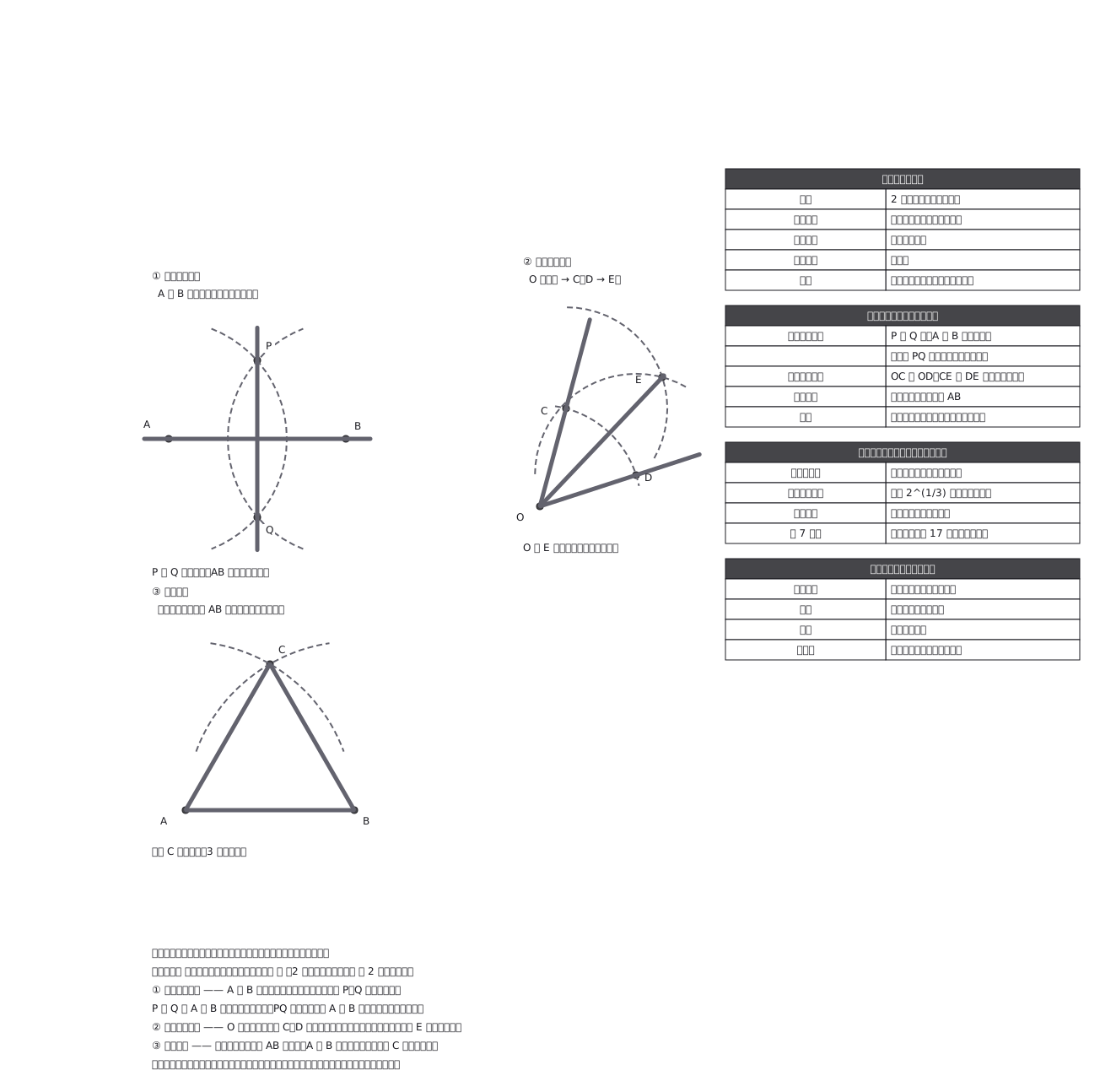 Ruler-and-compass constructions: no scale is used, because equal compass openings make equal lengths
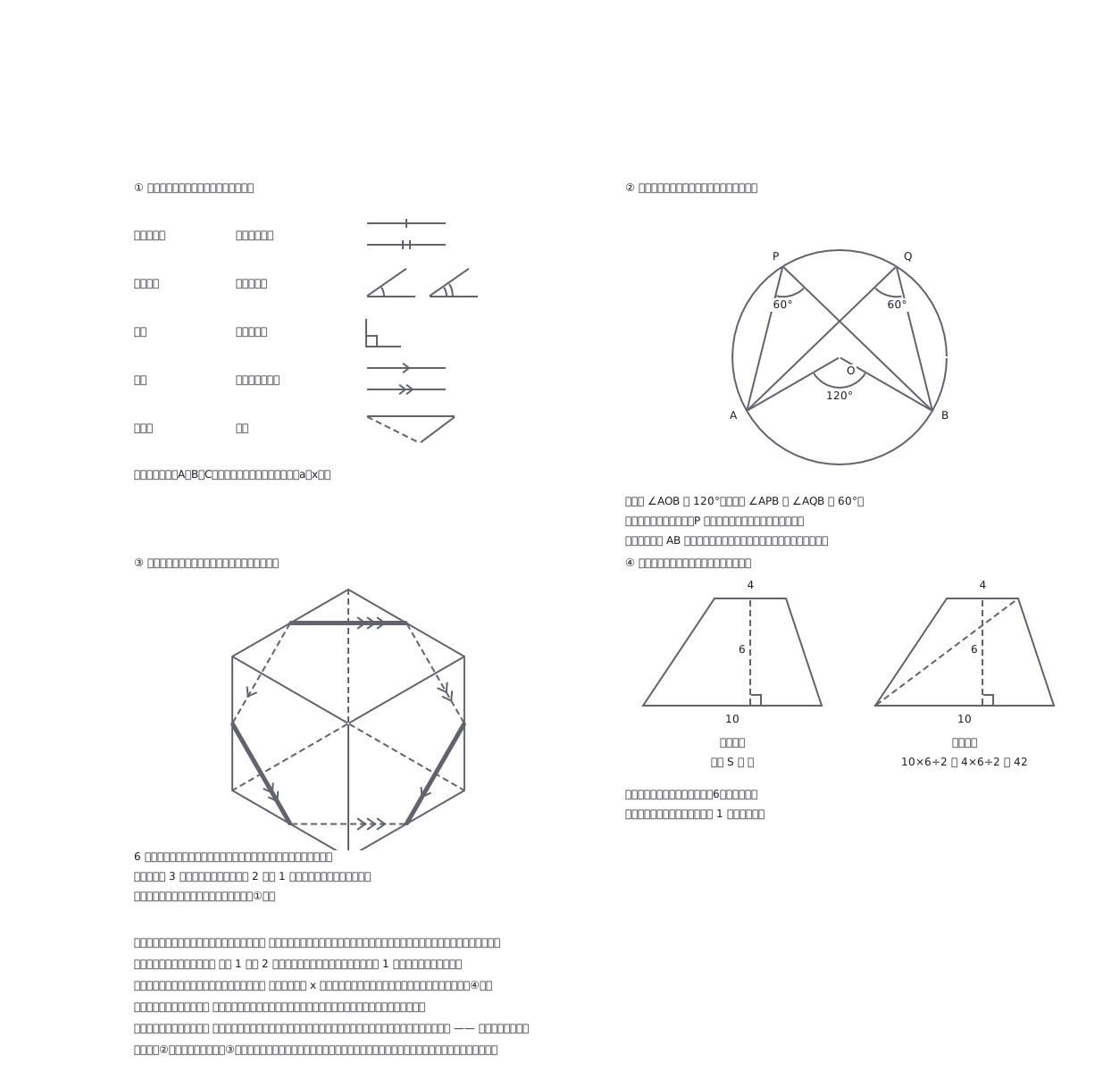 Figures in maths problems: the marks carry the meaning — equal ticks, right-angle squares, parallel chevrons — and only the given values are written on the figure