Appliances and furniture
Chair construction drawing (how the tenons meet in the back leg)
A chair drawn for making: four tenons meet in the back leg, and they must be set at different heights
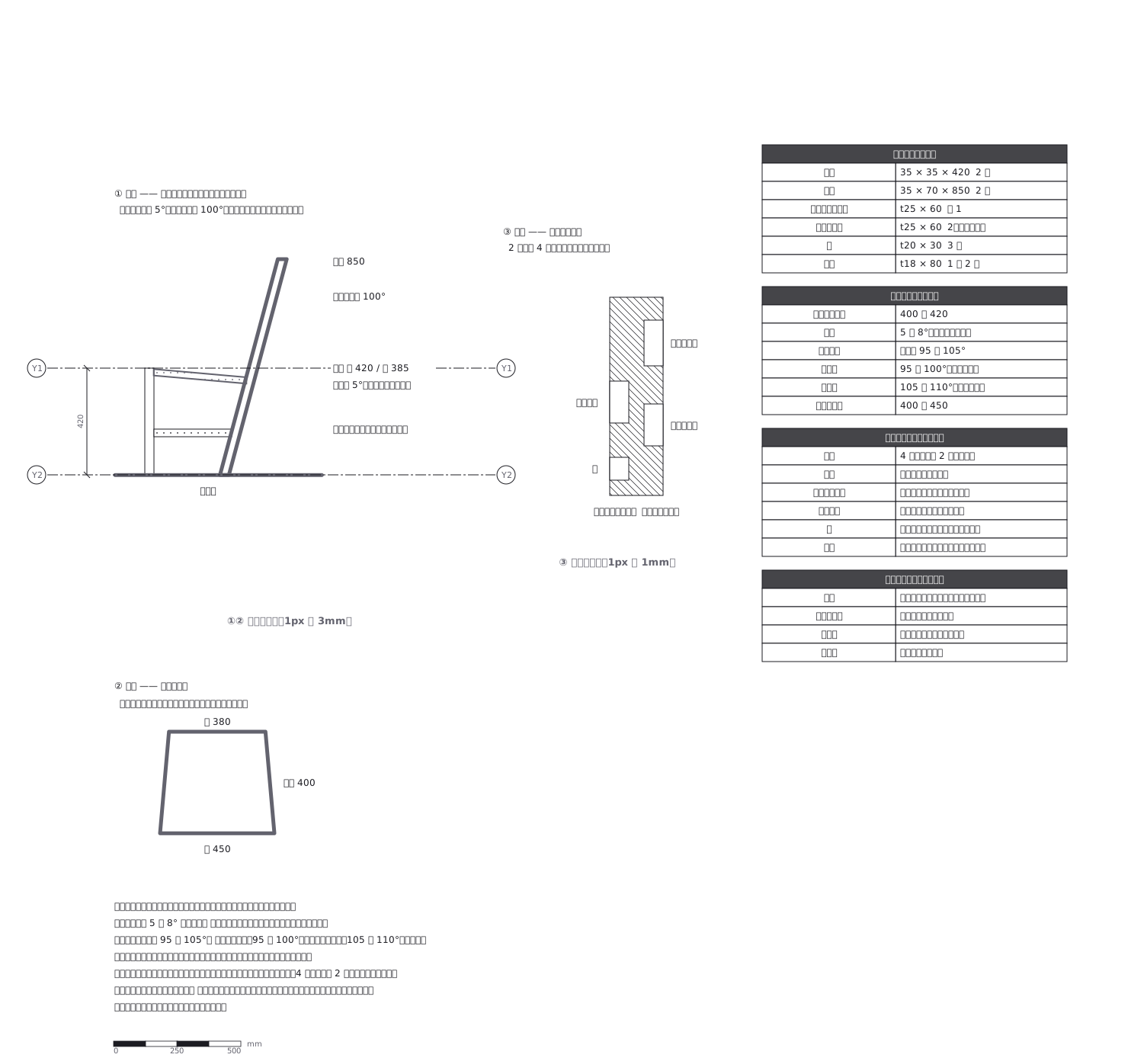
This drawing comes from one YAML file. No shape was moved by hand.
Notes in the source (in Japanese)
椅子でいちばん壊れるのは後脚。
背板・横の座枠・後ろの座枠・貫と、4 本のほぞが、前の面と内側の面の 2 面から入る。高さをずらさないと、ほぞ穴どうしが脚の中で貫通して折れる。
もう 1 つ —— 座面も背も、垂直でも水平でもない。座面は後ろへ 5〜8°(まっすぐだと滑り落ちる)、背は座面に 95〜105°。座枠は前が広い台形なので、横の座枠のほぞは斜めになる。
Source (YAML)
examples/gallery/201-椅子の製作図.zumen.yaml
More in this field
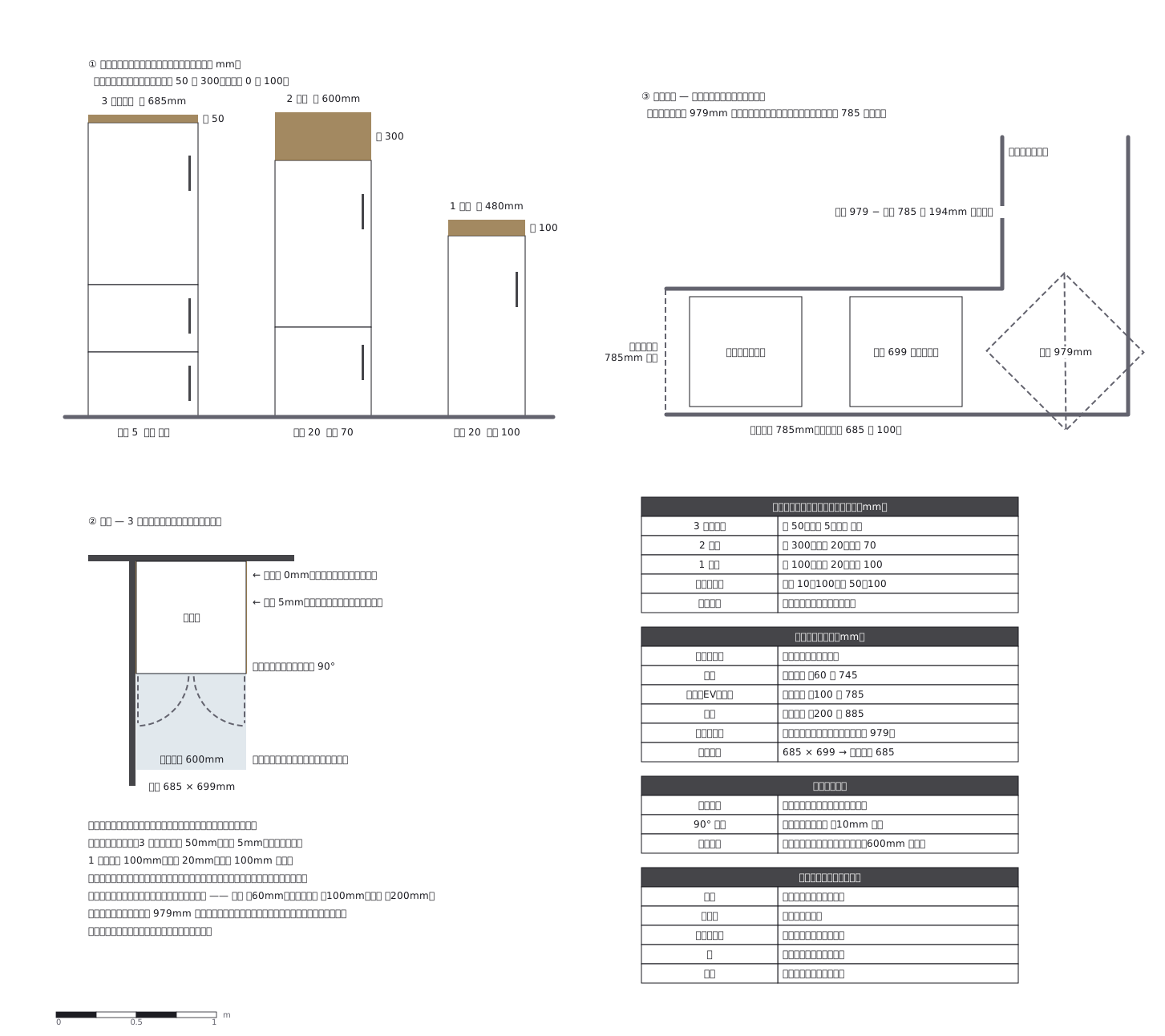 Fitting a refrigerator: clearances differ by model, and a corner turns on the diagonal
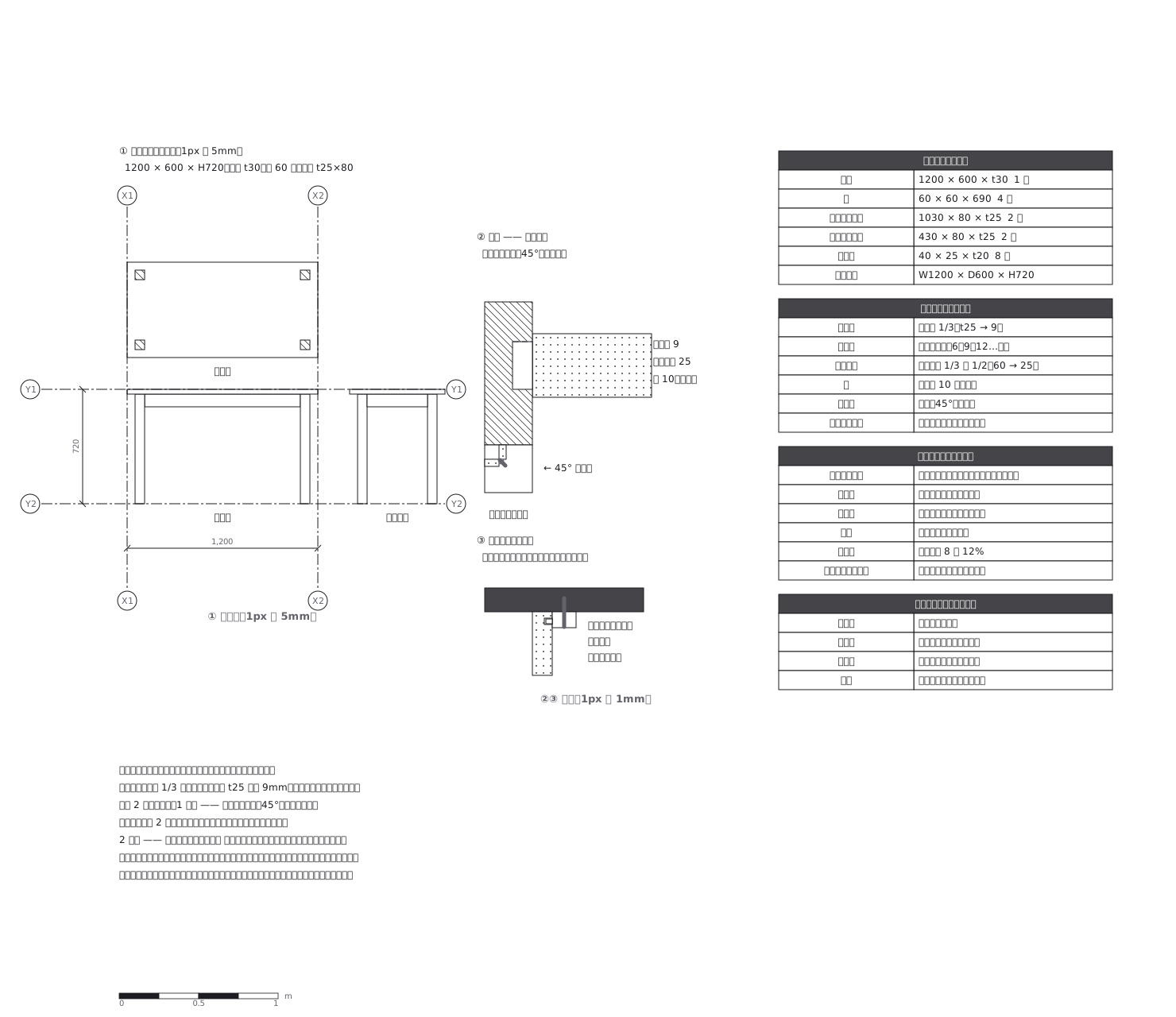 A bench built for making: tenons mitred where they meet, and a top that is never screwed down
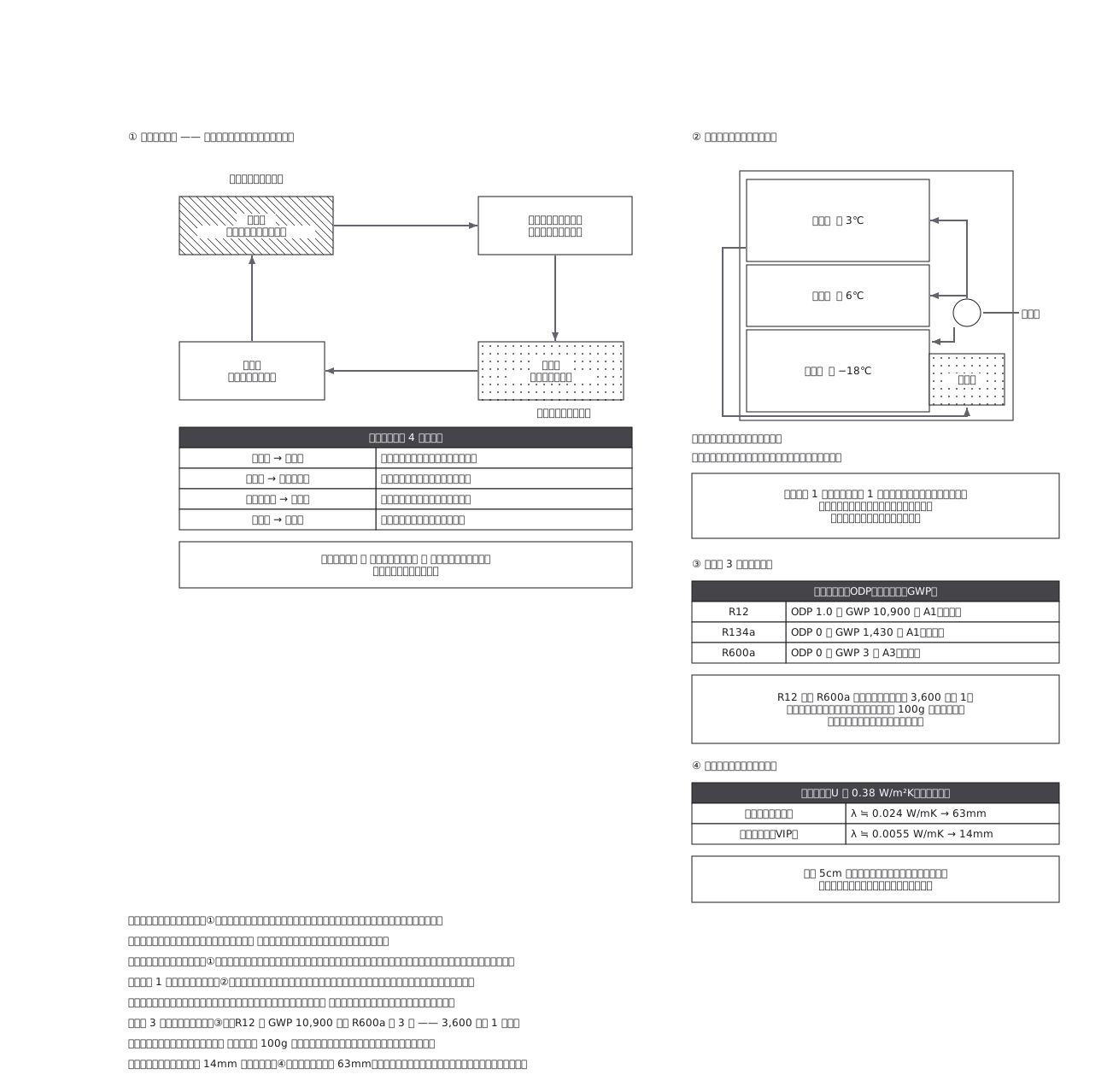 A fridge does not make cold, it pumps heat out — and it throws away more than it took, because the compressor's electricity comes out as heat too
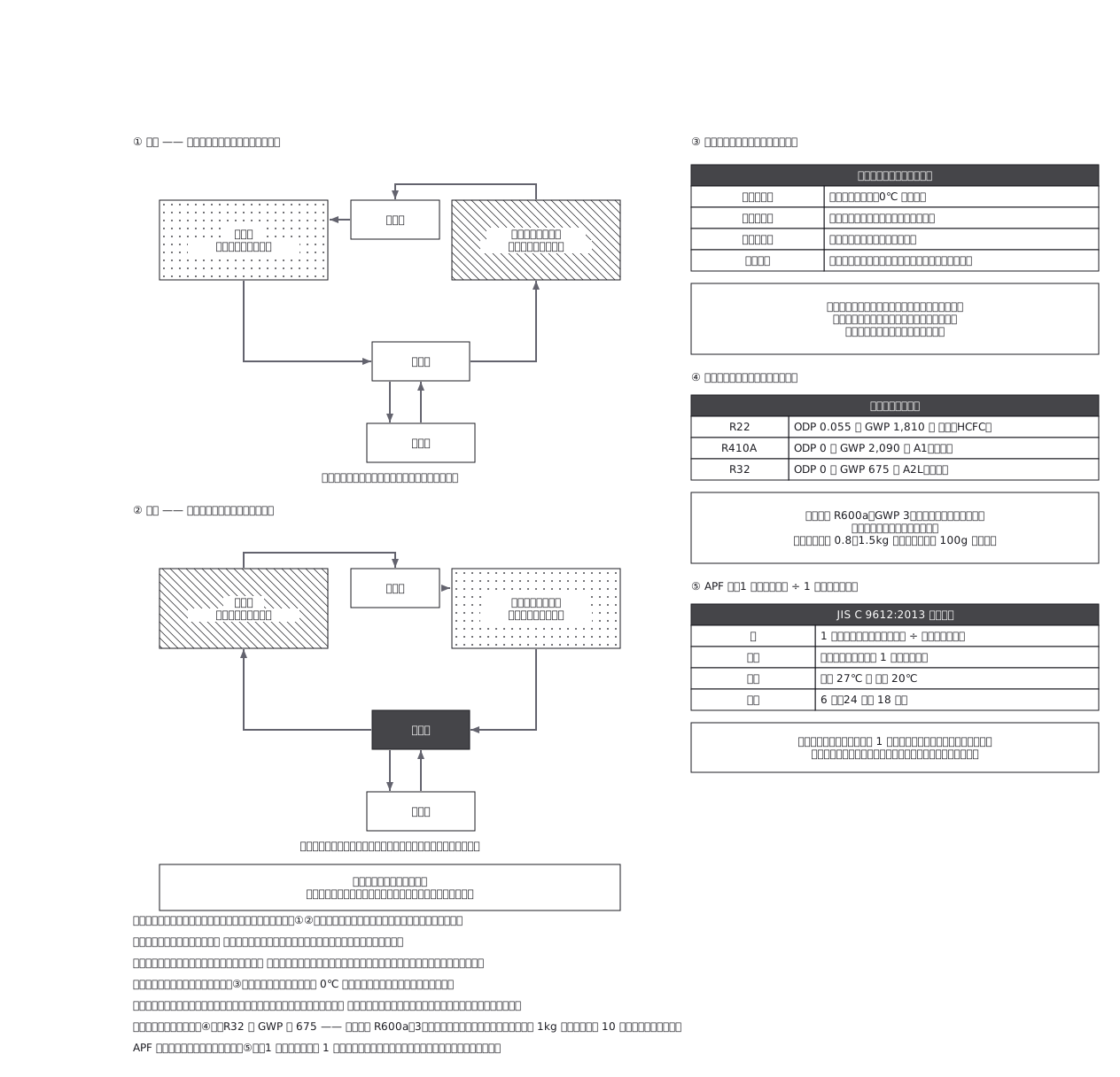 Heating and cooling swap the roles of the indoor and outdoor coils, and the only part that changes is one valve — which is also why a heat pump briefly runs cooling in the middle of heating, to melt its own frost
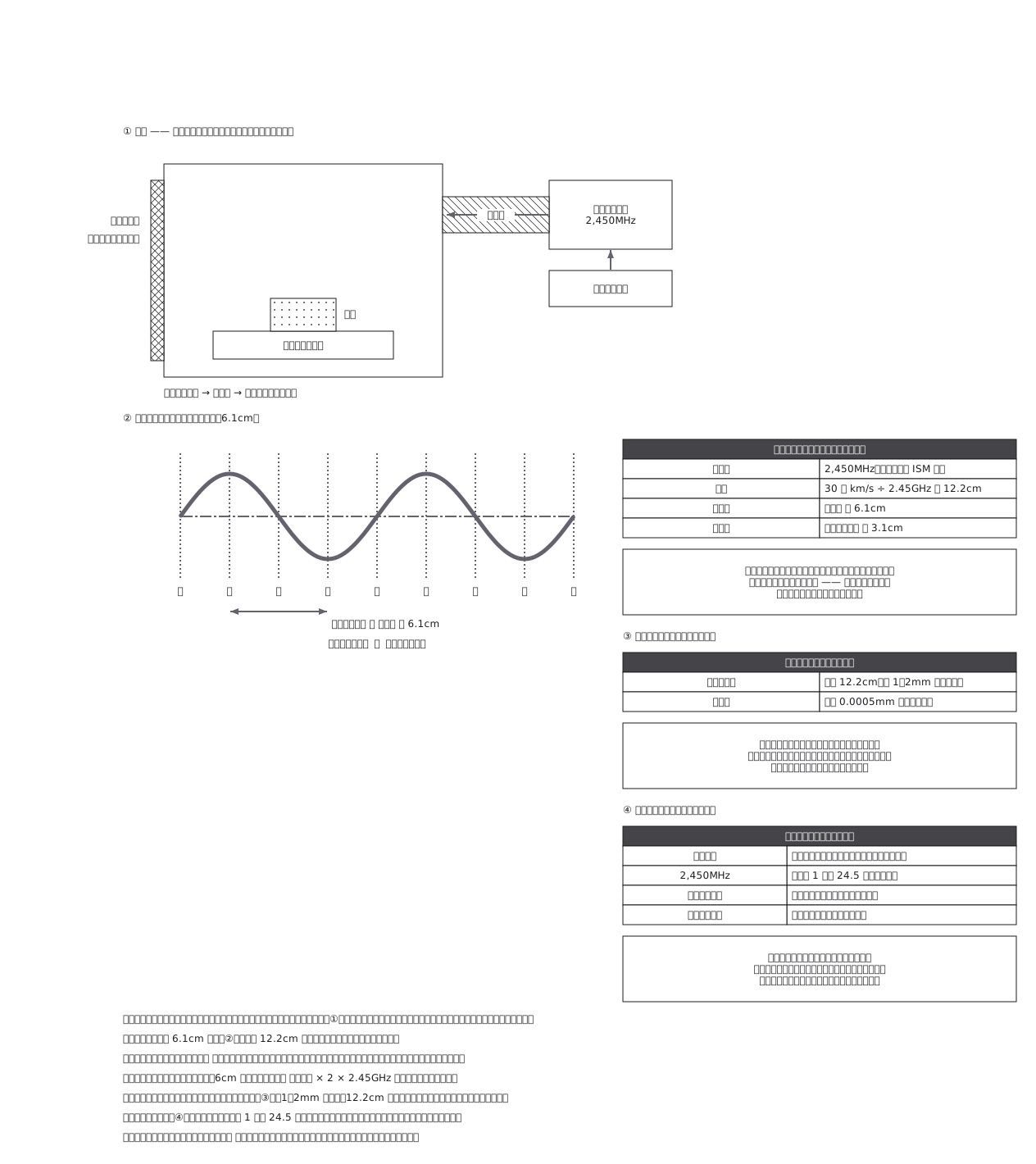 Hot and cold spots sit 6.1cm apart because that is half of the 12.2cm wavelength, which no cabinet design can remove — so the food is moved instead
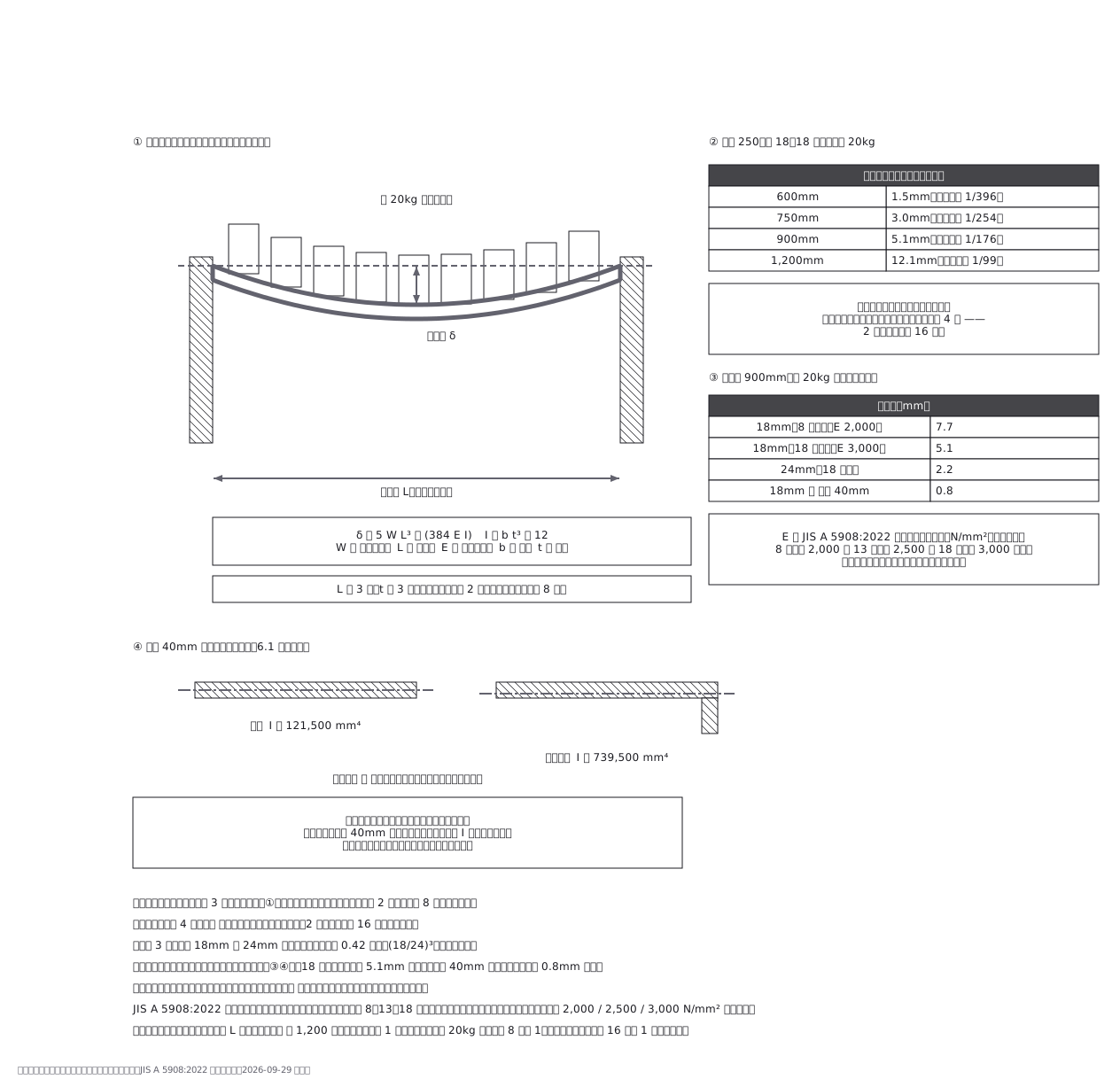 A shelf sags with the cube of its span, so doubling the span sags it eight times — and gluing a 40mm rail under the front edge does more than upgrading the board
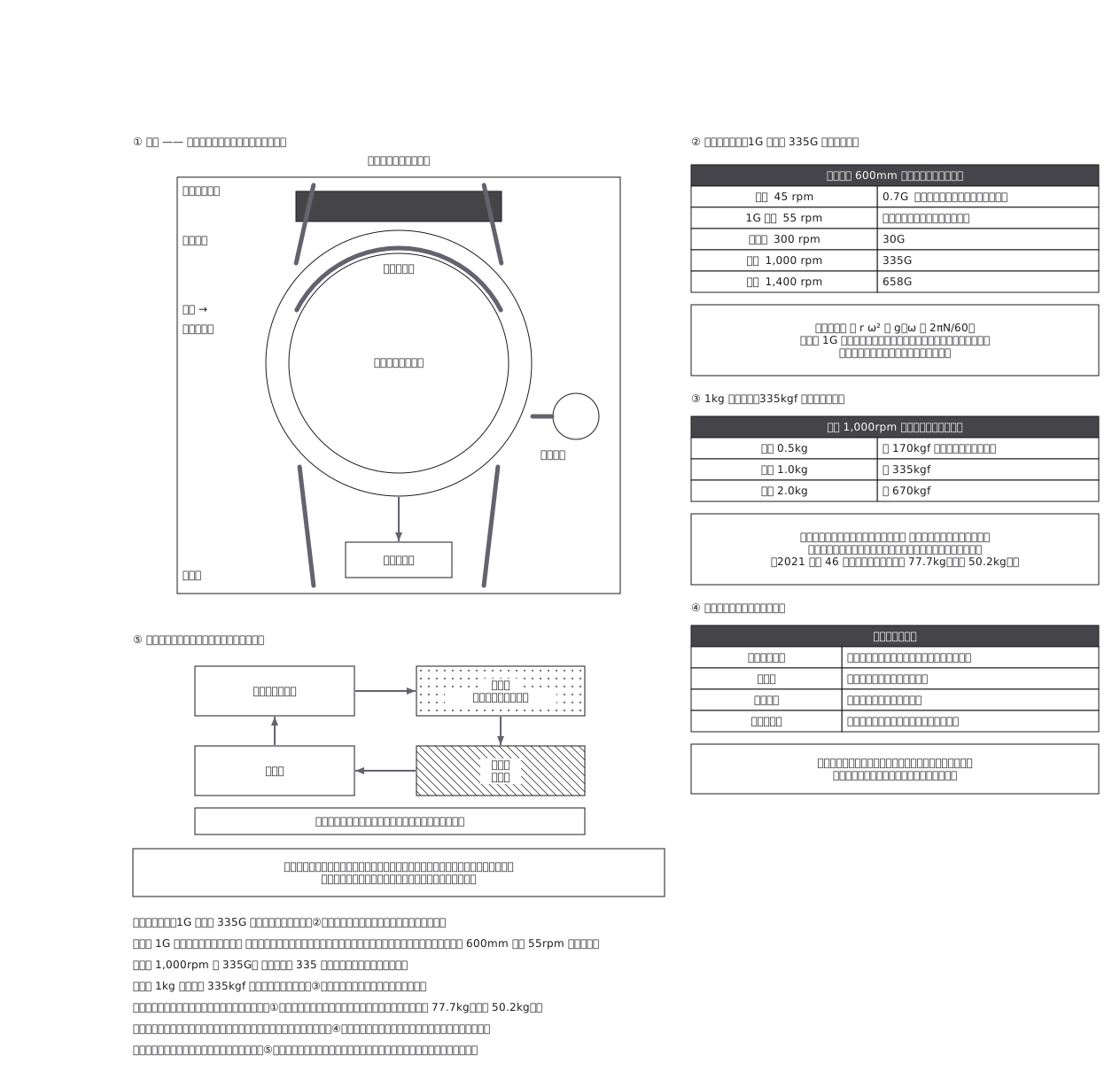 The same drum has to stay under 1G to wash and reach 335G to spin, which is why it hangs on springs behind a concrete weight rather than being bolted to the machine
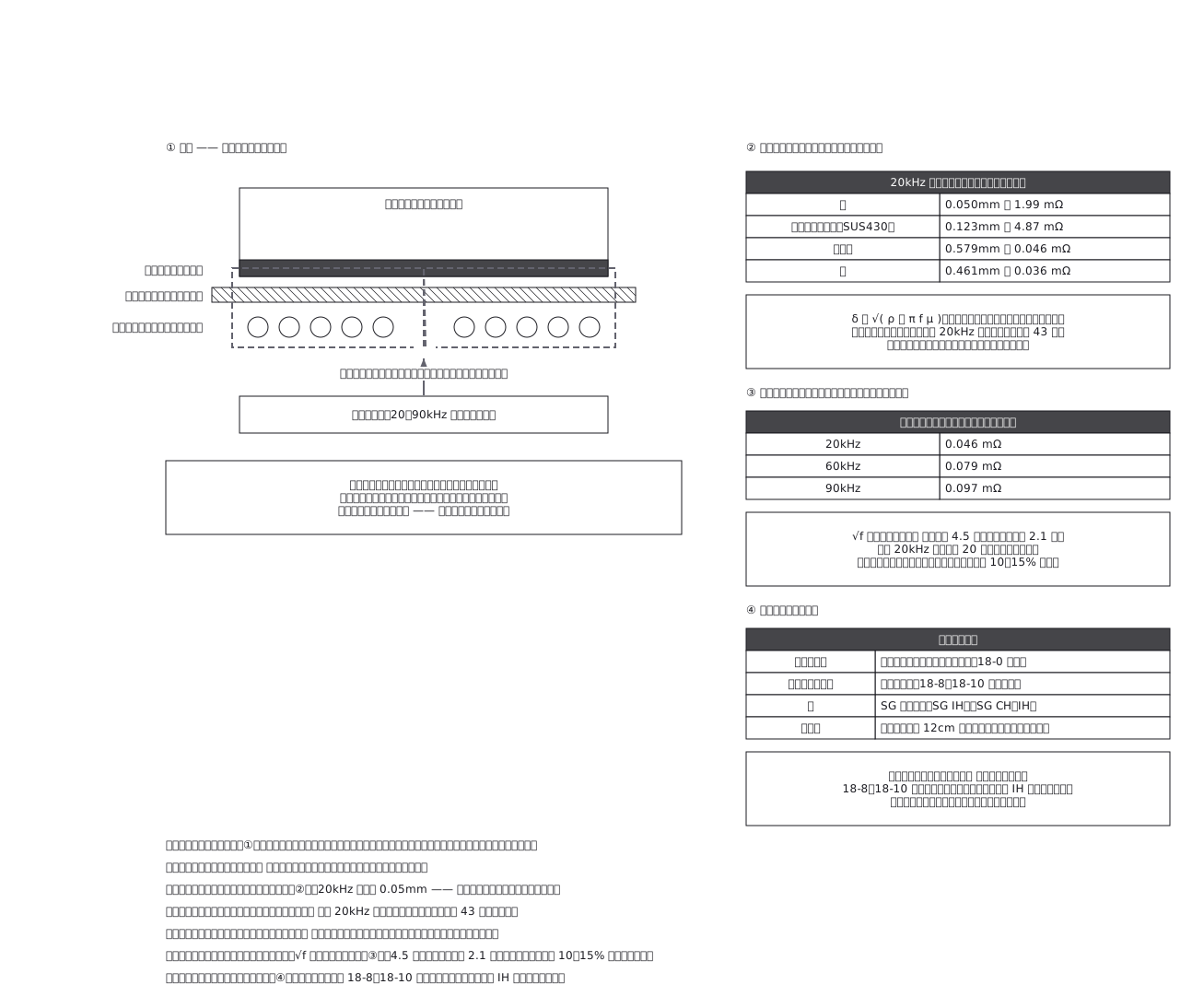 Induction heats only the outer 0.05mm of the pan, and that thin skin is why iron works and aluminium does not: at 20kHz iron's surface resistance is 43 times aluminium's