Appliances and furniture
How induction (IH) cooktops work — only the bottom 0.05 mm of the pan heats
Induction heats only the outer 0.05mm of the pan, and that thin skin is why iron works and aluminium does not: at 20kHz iron's surface resistance is 43 times aluminium's
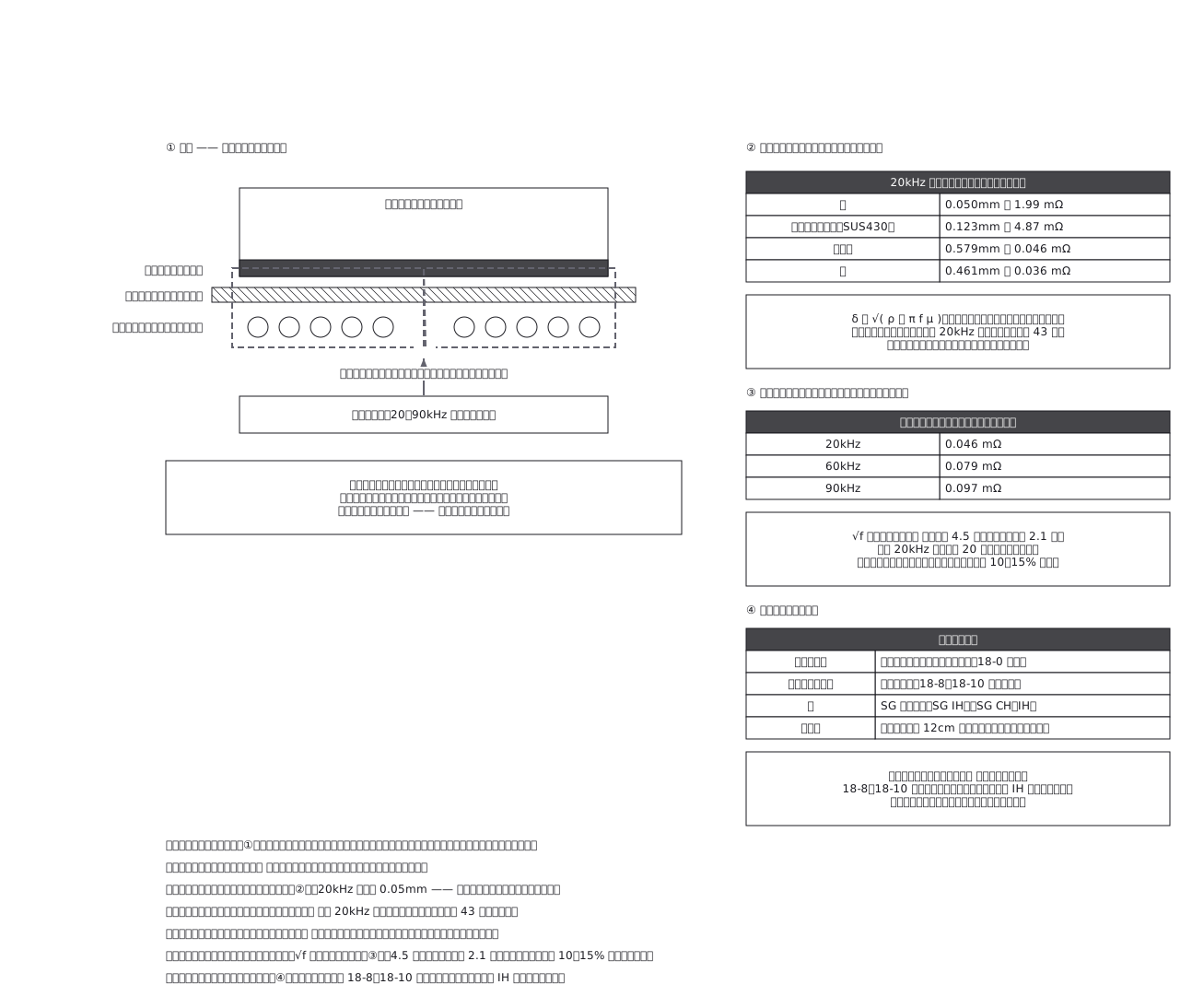
This drawing comes from one YAML file. No shape was moved by hand.
Notes in the source (in Japanese)
熱は鍋の中で生まれる。 コイルが作る磁力線が鍋底を突き抜け、鍋の中に渦電流が流れ、鍋自身の電気抵抗で発熱する。ガラスも空気も温めていない —— トッププレートが熱いのは、鍋から伝わったから。
電流は表面のごく薄い層にしか流れない(表皮効果)。δ = √( ρ / π f μ )。20kHz の鉄で 0.050mm ——紙より薄い層だけが働いている。
鉄が効くのは、層が薄いぶん抵抗が高いから。同じ 20kHz で、鉄の表面抵抗(1.99 mΩ)はアルミ(0.046 mΩ)の 43 倍。アルミと銅は「電気を通しすぎて熱が出ない」。
オールメタルは周波数を上げて埋めるが、√f でしか増えない。20kHz → 90kHz でアルミの抵抗は 2.1 倍にしかならず、火力は鉄より約 10〜15% 弱い。
火力の差・鍋底の径(鉄・磁性ステンレスは底径 12cm 以上):パナソニック「IH クッキングヒーター よくあるご質問 A-03」https://sumai.panasonic.jp/ihcook/faq/faq.php?id=a-03 取得 2026-09-29(火力「7・8」で約 10〜15% 弱い。同社の測定方法による)。
見分けるのは材質ではなく鍋底。ステンレスでも 18-8/18-10 は磁石がつかない。
Source (YAML)
examples/gallery/251-IHの原理.zumen.yaml
More in this field
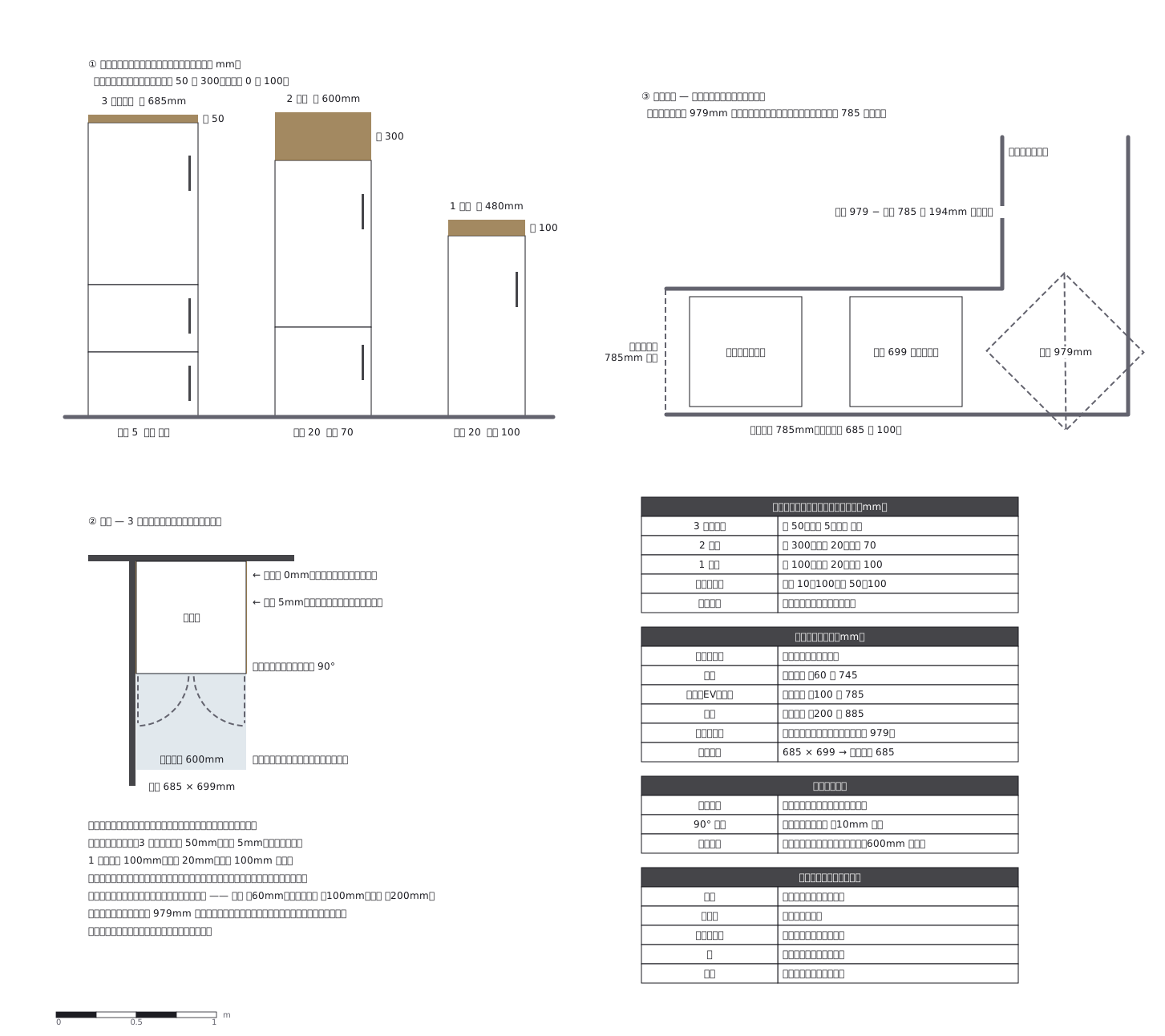 Fitting a refrigerator: clearances differ by model, and a corner turns on the diagonal
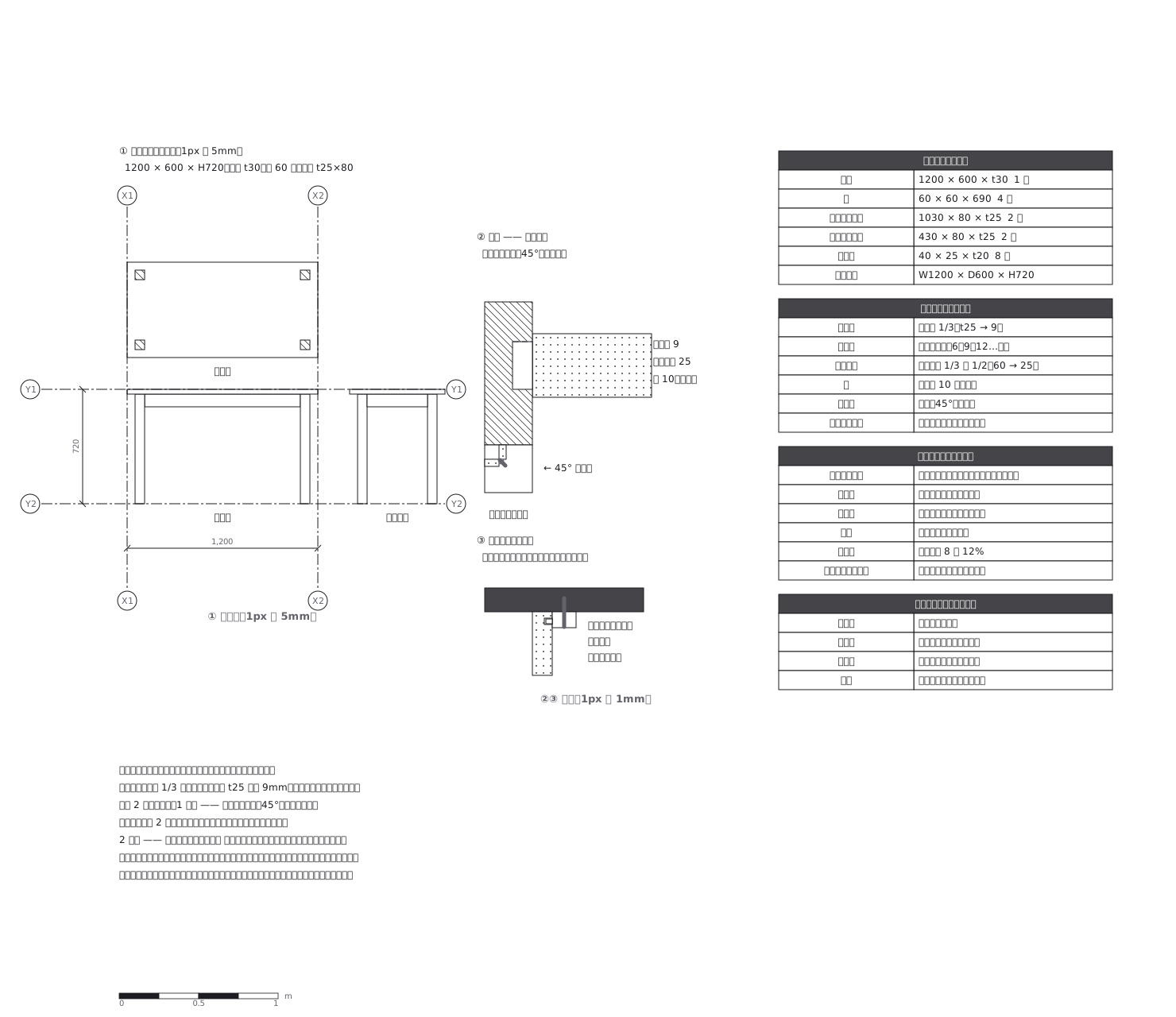 A bench built for making: tenons mitred where they meet, and a top that is never screwed down
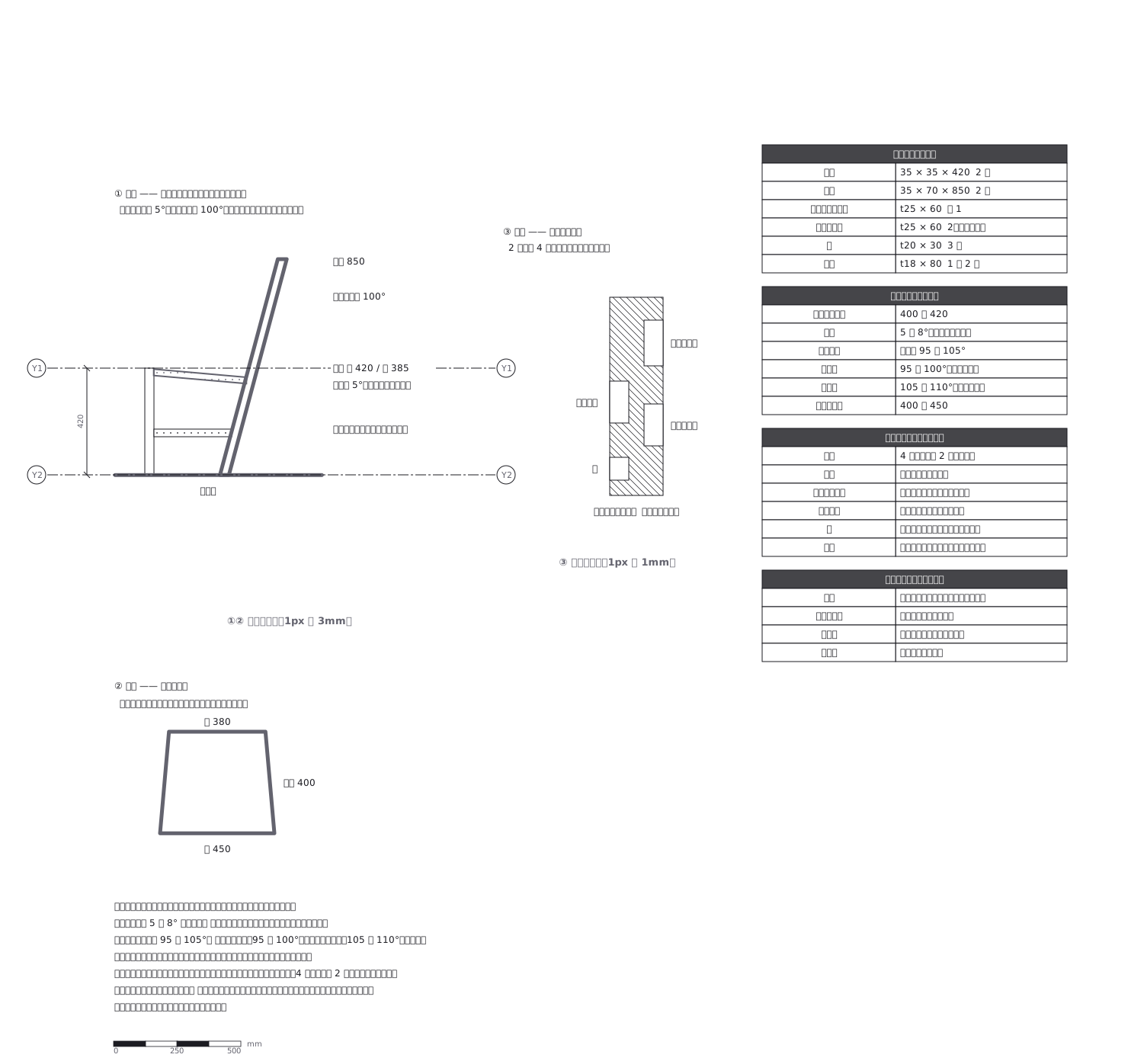 A chair drawn for making: four tenons meet in the back leg, and they must be set at different heights
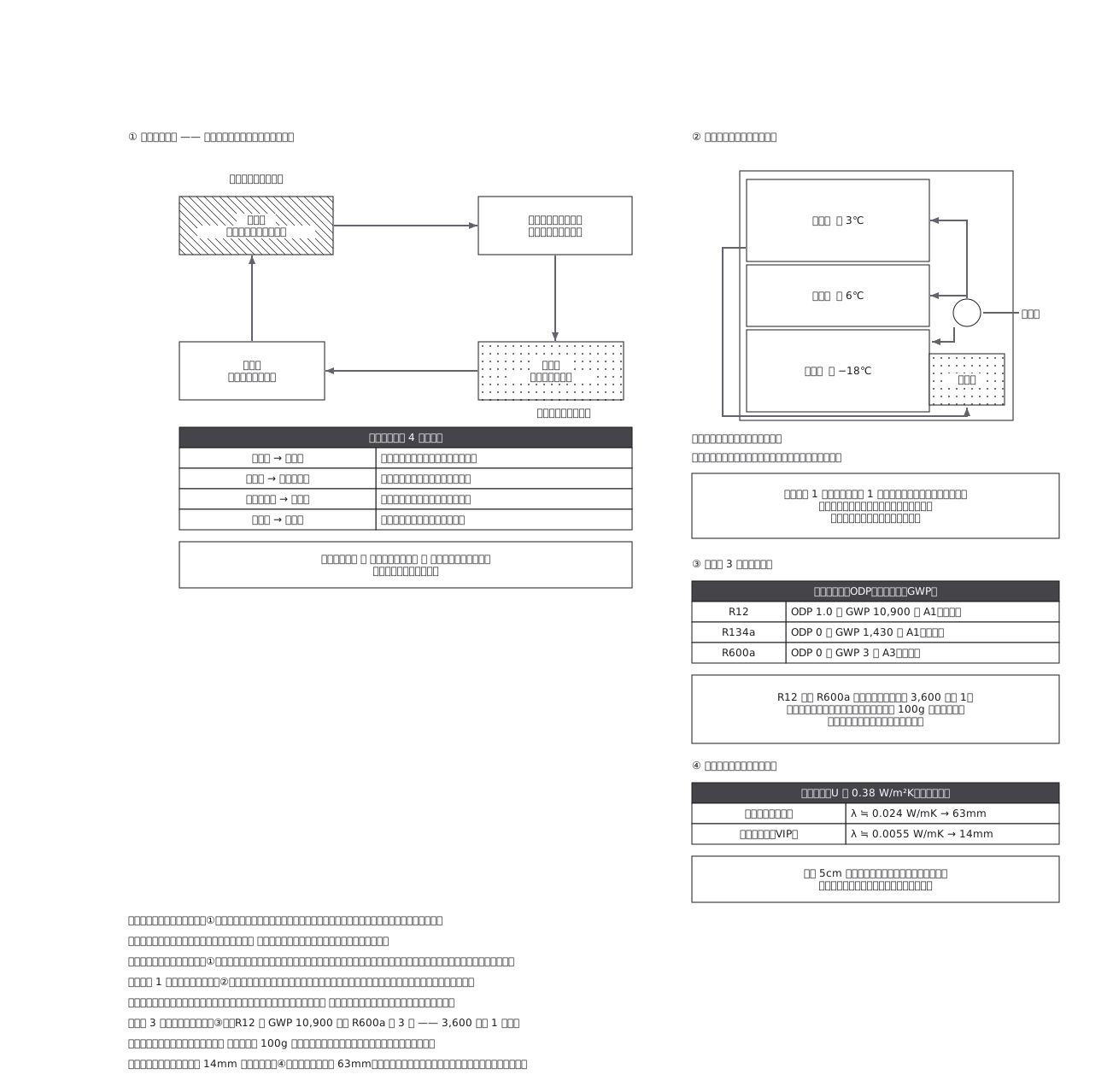 A fridge does not make cold, it pumps heat out — and it throws away more than it took, because the compressor's electricity comes out as heat too
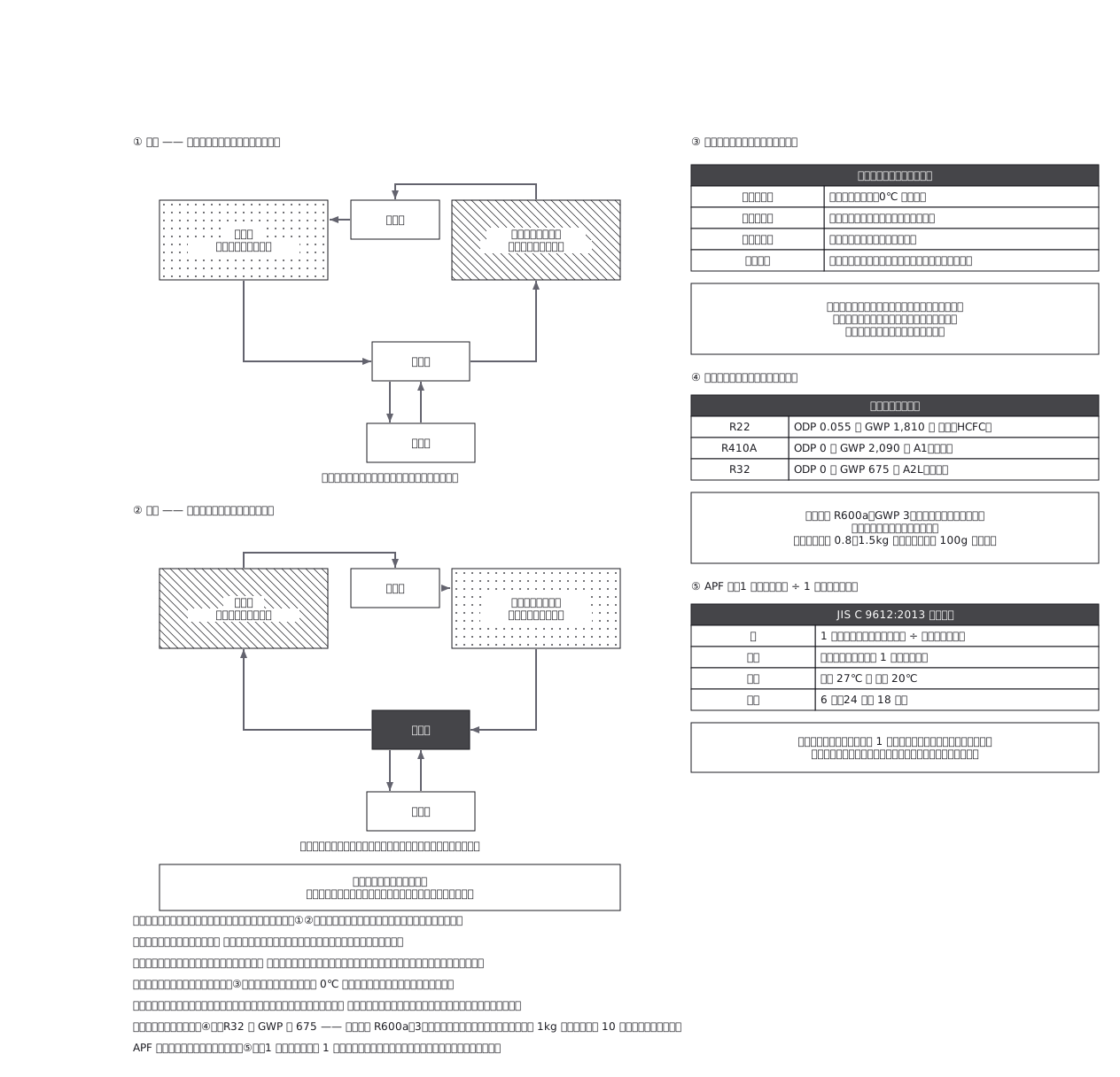 Heating and cooling swap the roles of the indoor and outdoor coils, and the only part that changes is one valve — which is also why a heat pump briefly runs cooling in the middle of heating, to melt its own frost
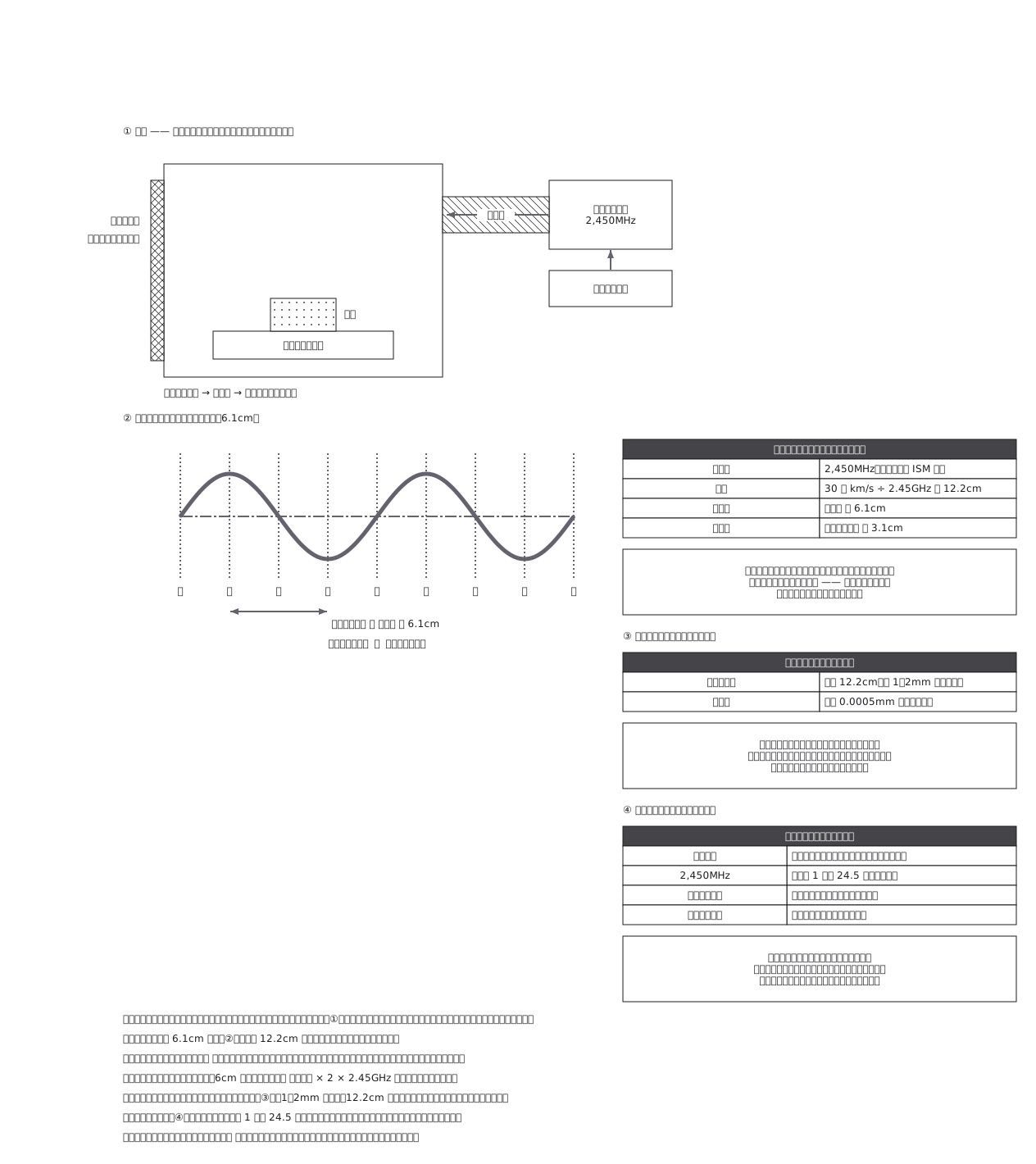 Hot and cold spots sit 6.1cm apart because that is half of the 12.2cm wavelength, which no cabinet design can remove — so the food is moved instead
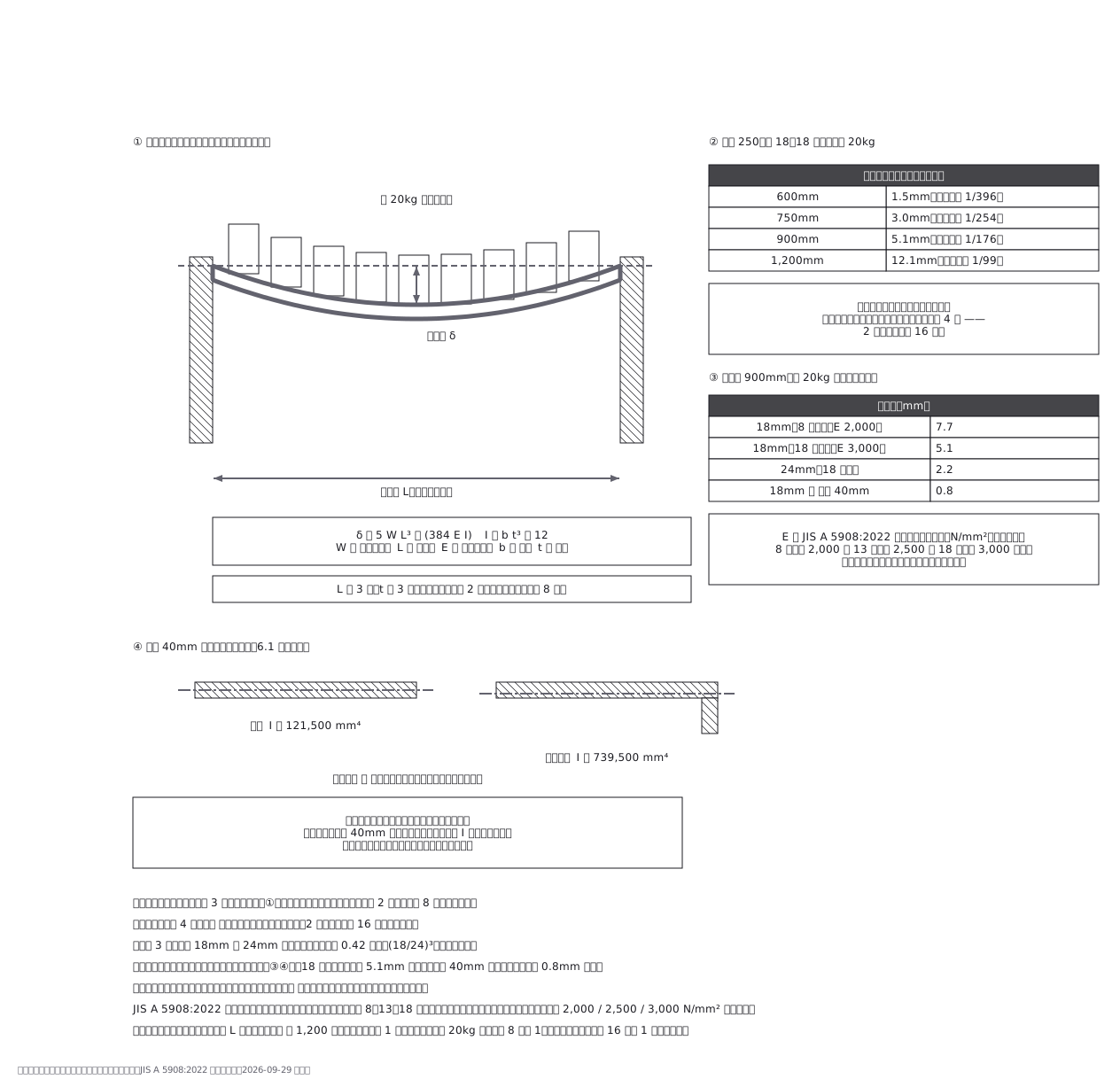 A shelf sags with the cube of its span, so doubling the span sags it eight times — and gluing a 40mm rail under the front edge does more than upgrading the board
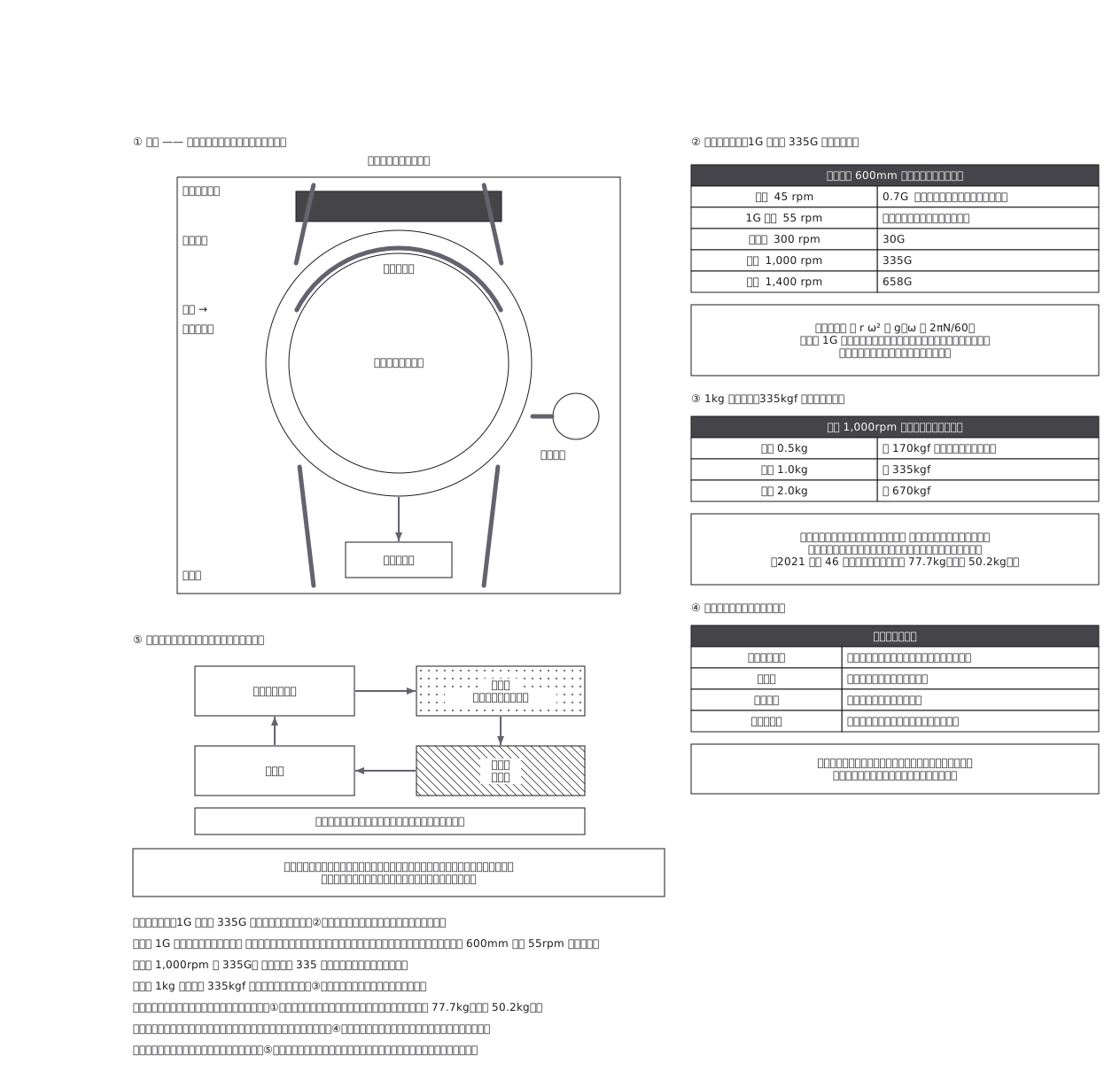 The same drum has to stay under 1G to wash and reach 335G to spin, which is why it hangs on springs behind a concrete weight rather than being bolted to the machine