Appliances and furniture
33 drawings in Appliances and furniture, each generated from a single YAML file.
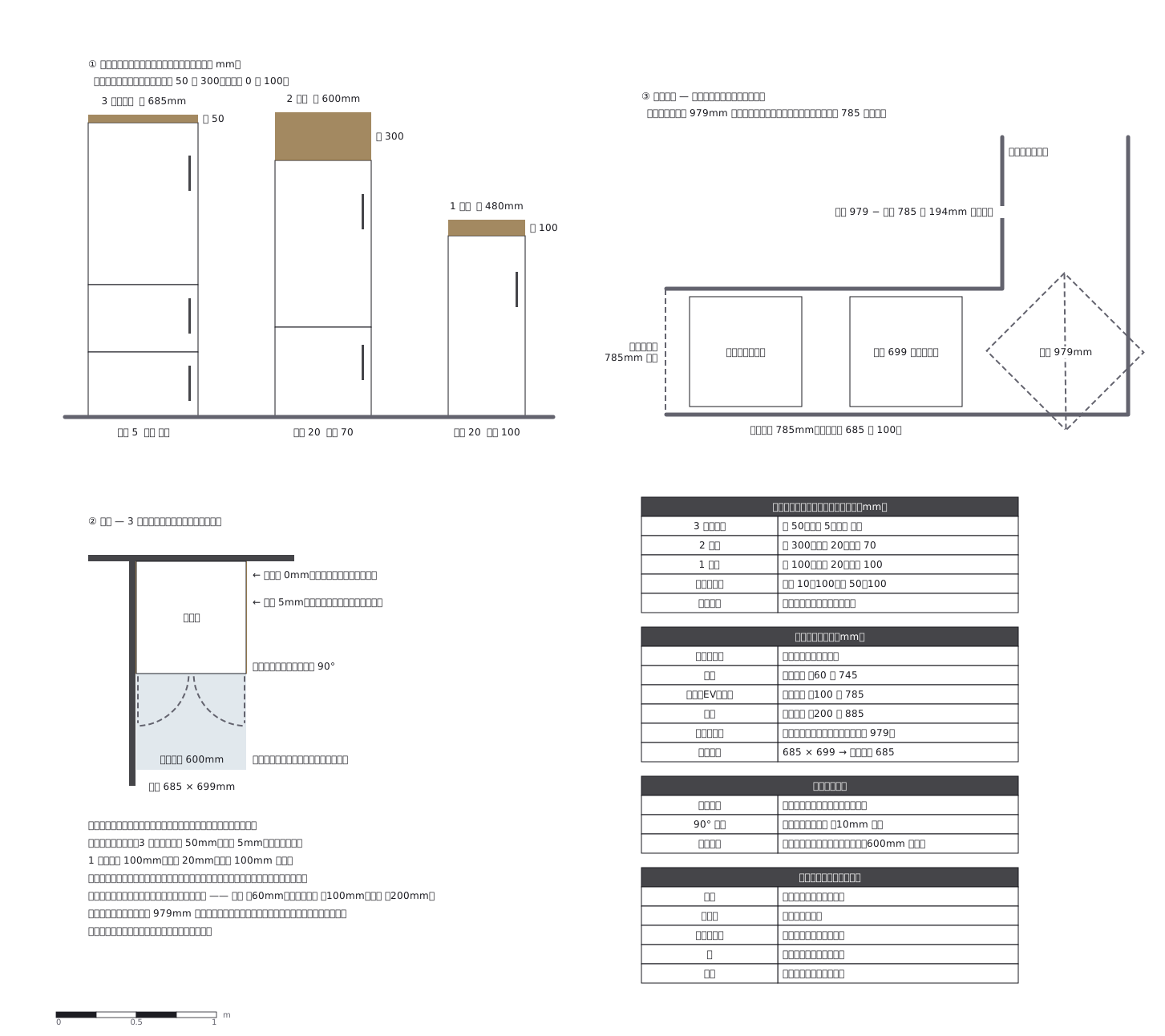 Fitting a refrigerator: clearances differ by model, and a corner turns on the diagonal
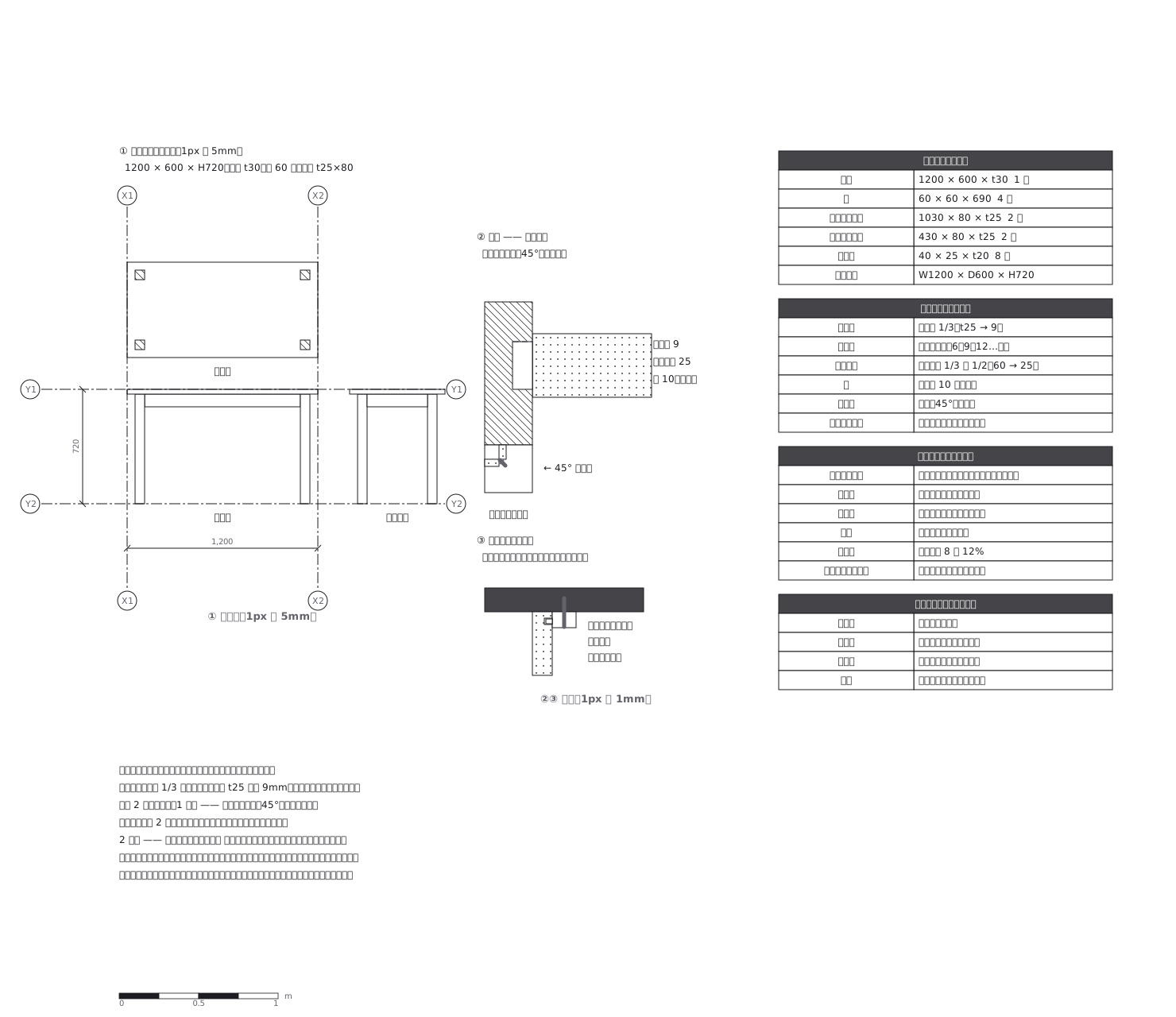 A bench built for making: tenons mitred where they meet, and a top that is never screwed down
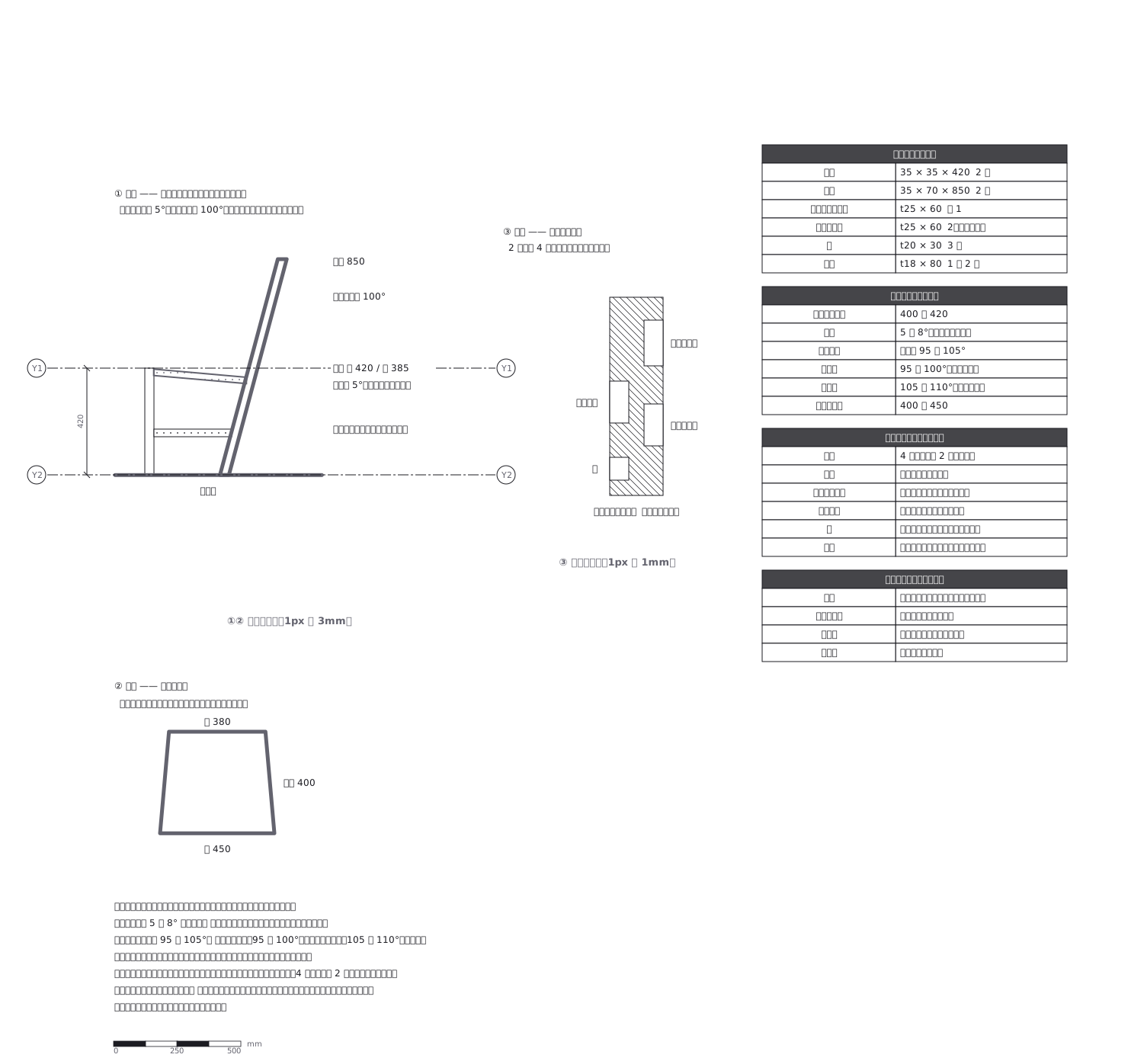 A chair drawn for making: four tenons meet in the back leg, and they must be set at different heights
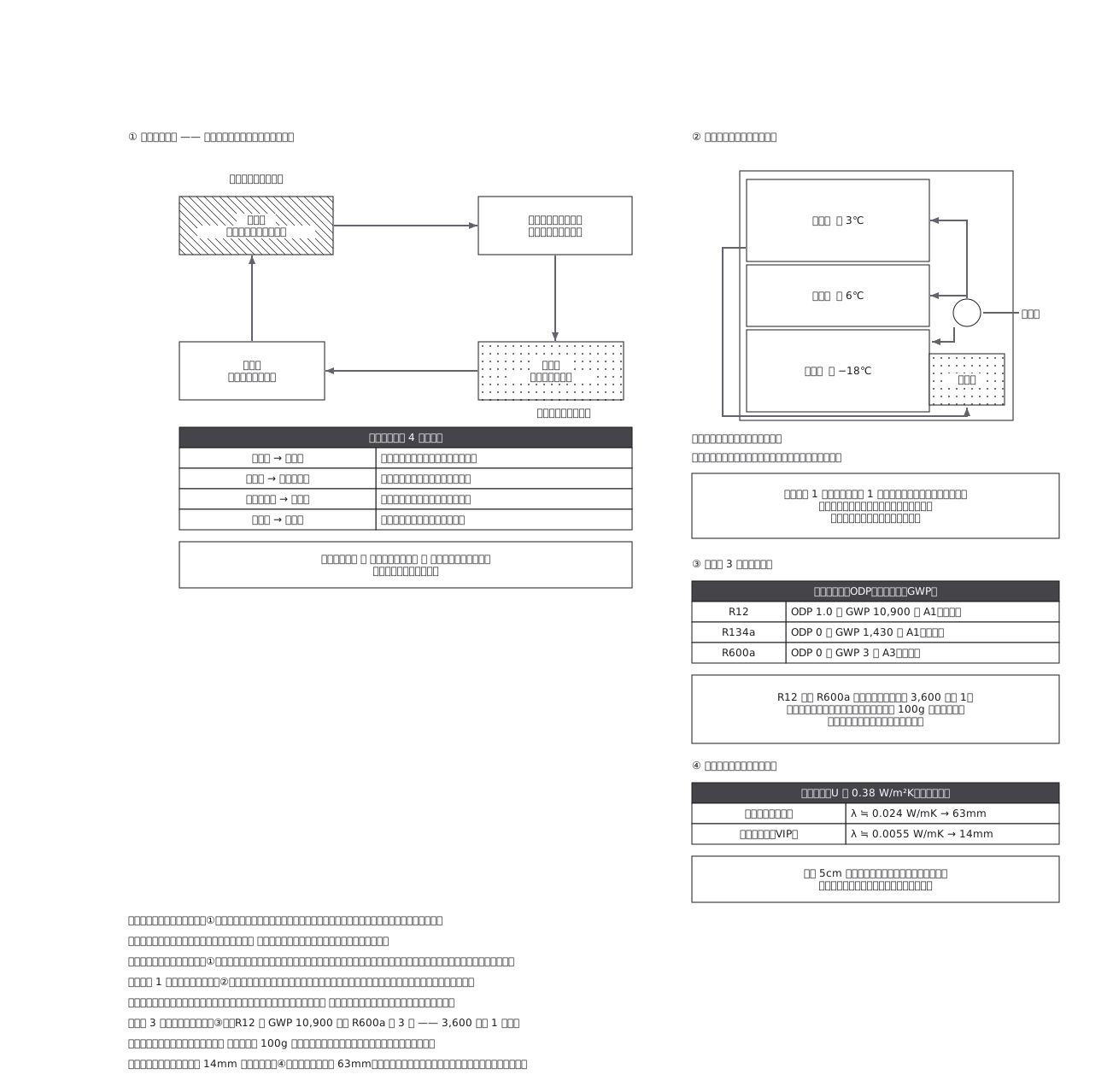 A fridge does not make cold, it pumps heat out — and it throws away more than it took, because the compressor's electricity comes out as heat too
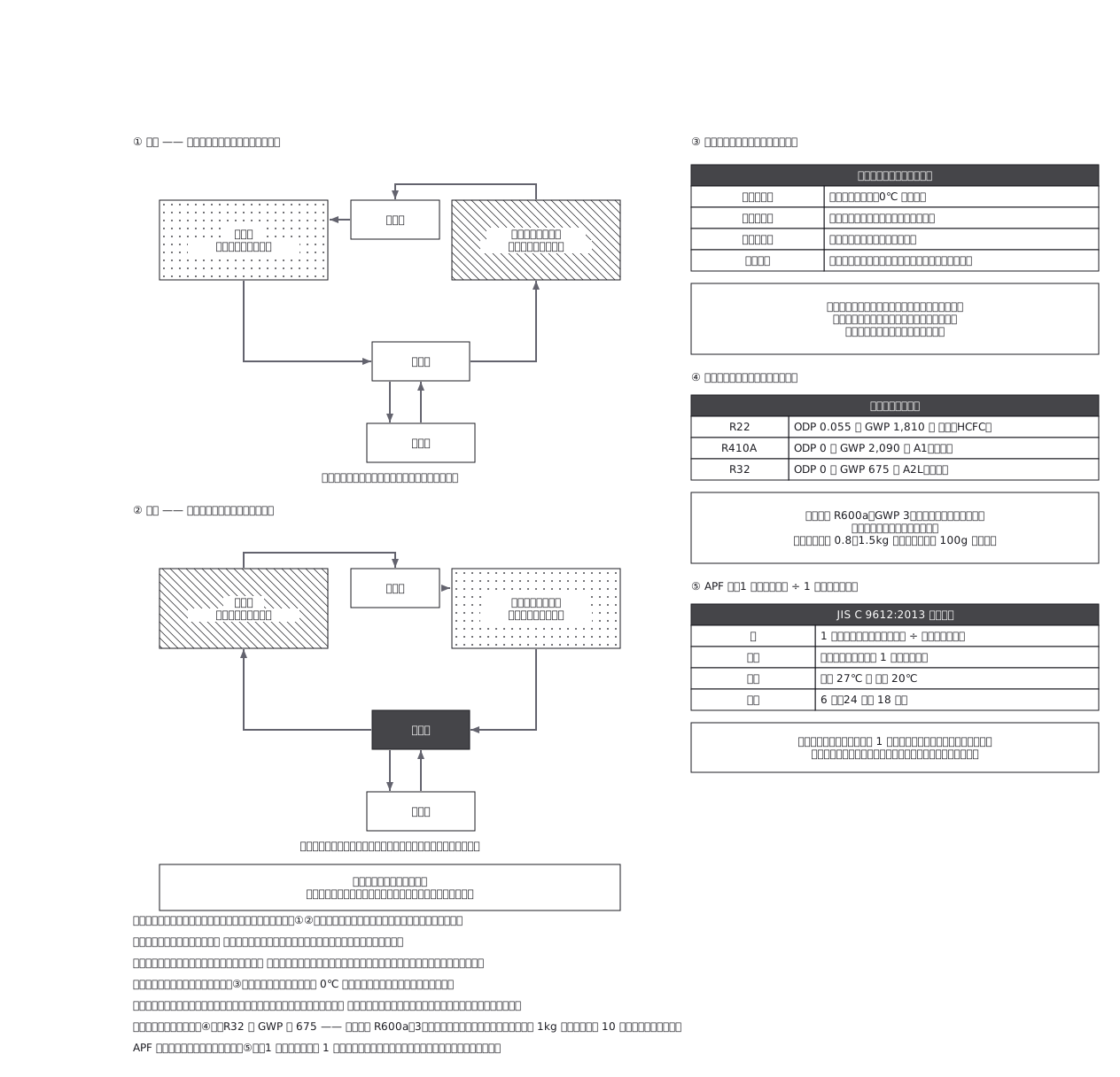 Heating and cooling swap the roles of the indoor and outdoor coils, and the only part that changes is one valve — which is also why a heat pump briefly runs cooling in the middle of heating, to melt its own frost
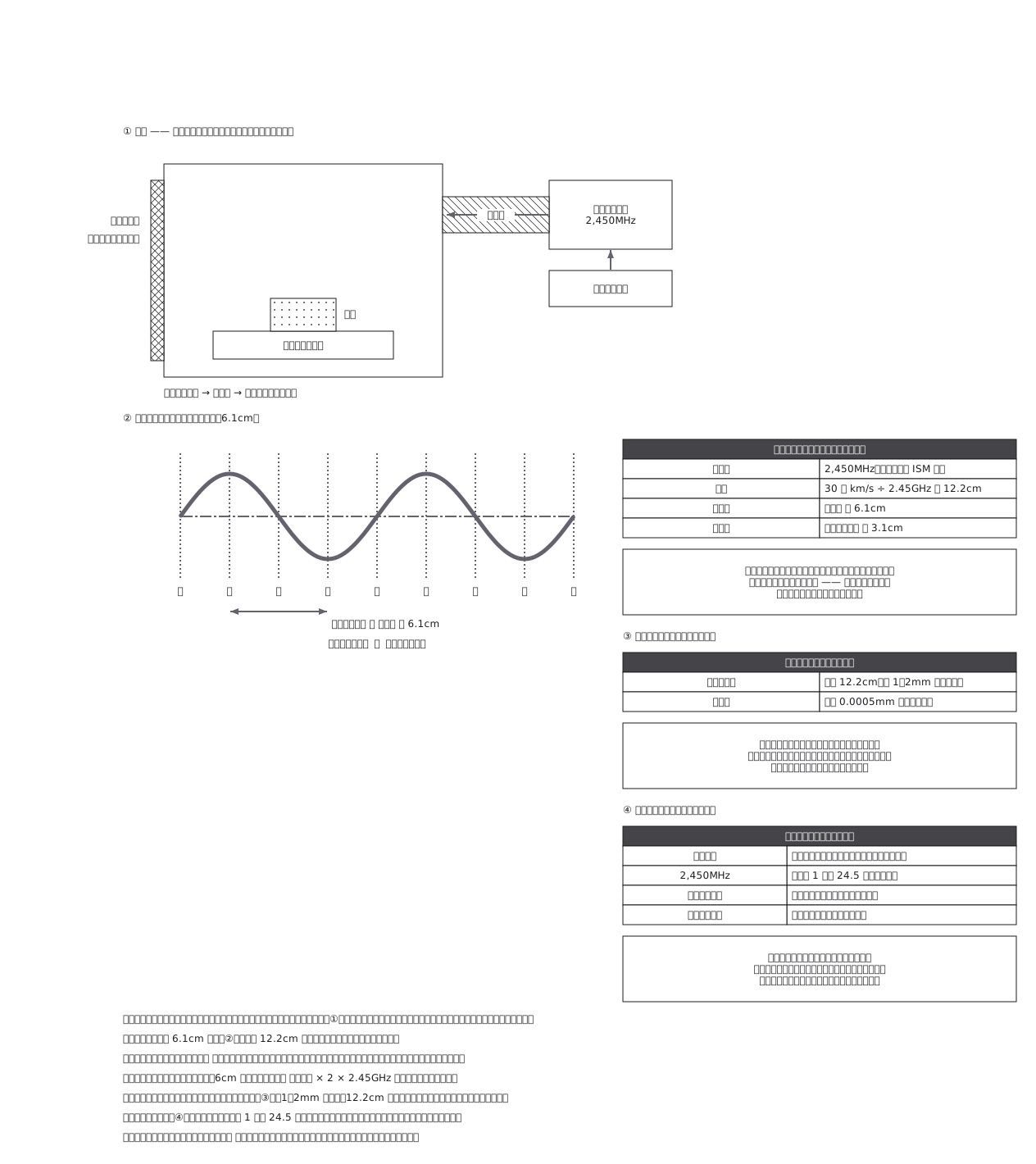 Hot and cold spots sit 6.1cm apart because that is half of the 12.2cm wavelength, which no cabinet design can remove — so the food is moved instead
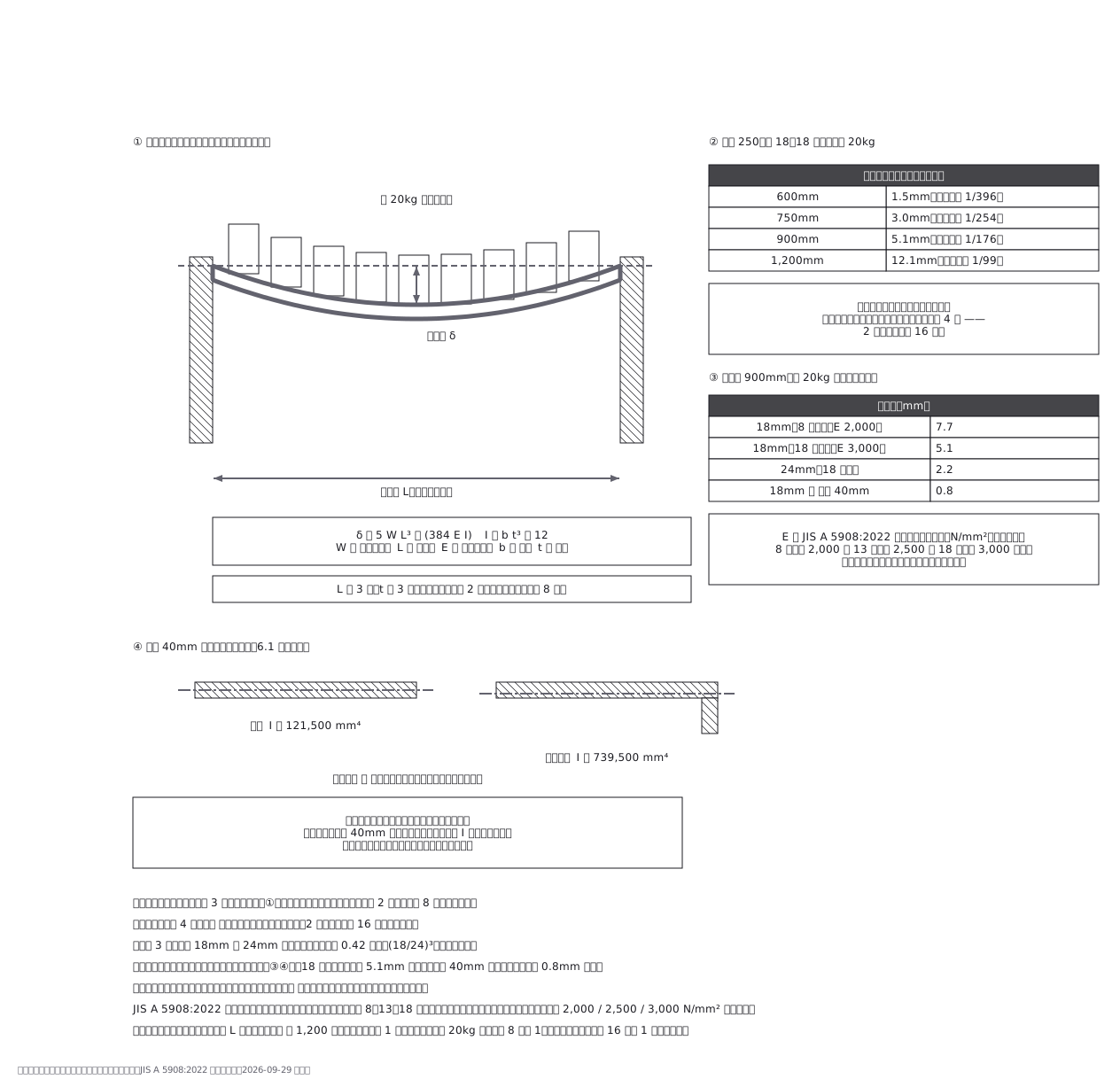 A shelf sags with the cube of its span, so doubling the span sags it eight times — and gluing a 40mm rail under the front edge does more than upgrading the board
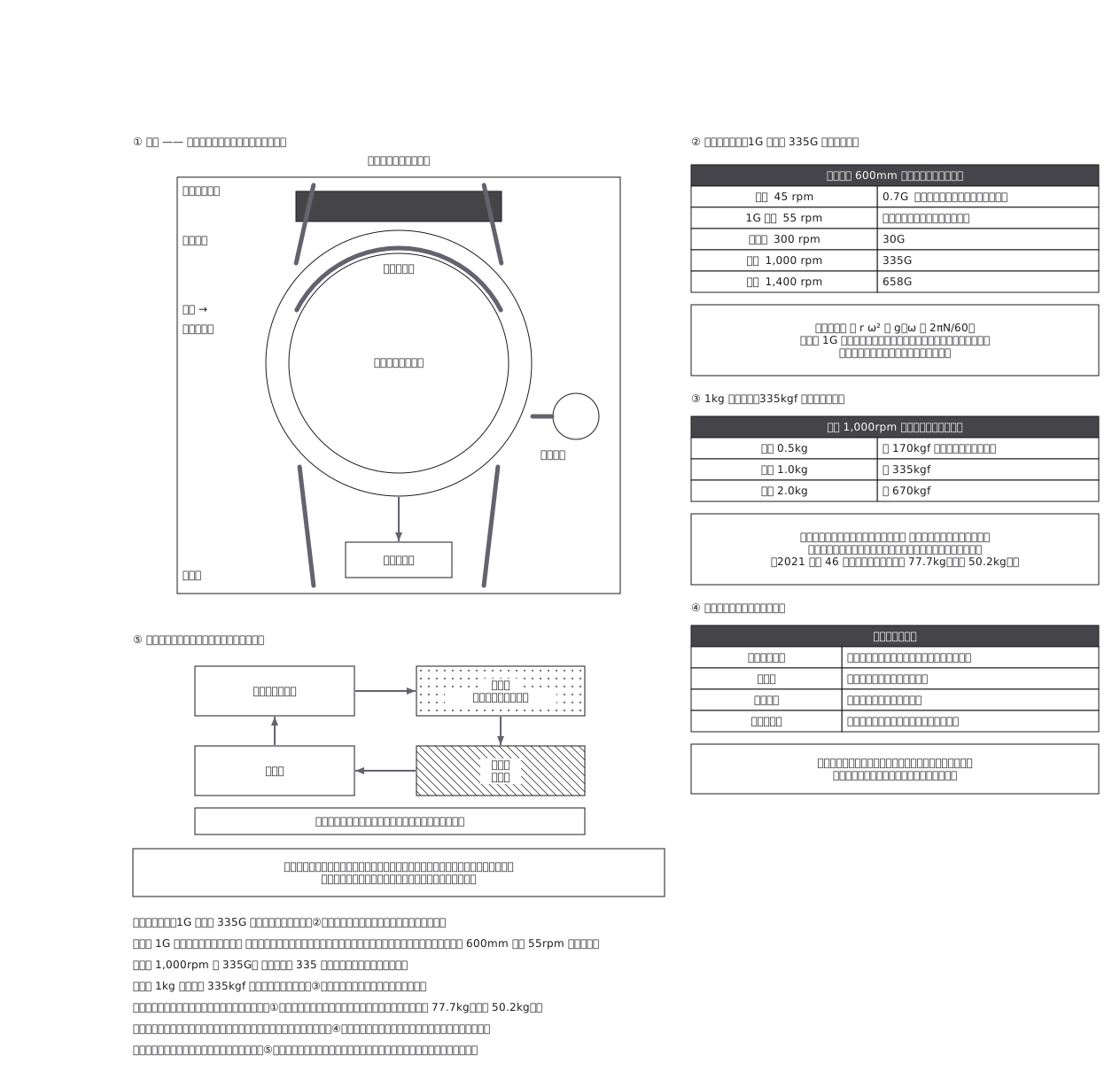 The same drum has to stay under 1G to wash and reach 335G to spin, which is why it hangs on springs behind a concrete weight rather than being bolted to the machine
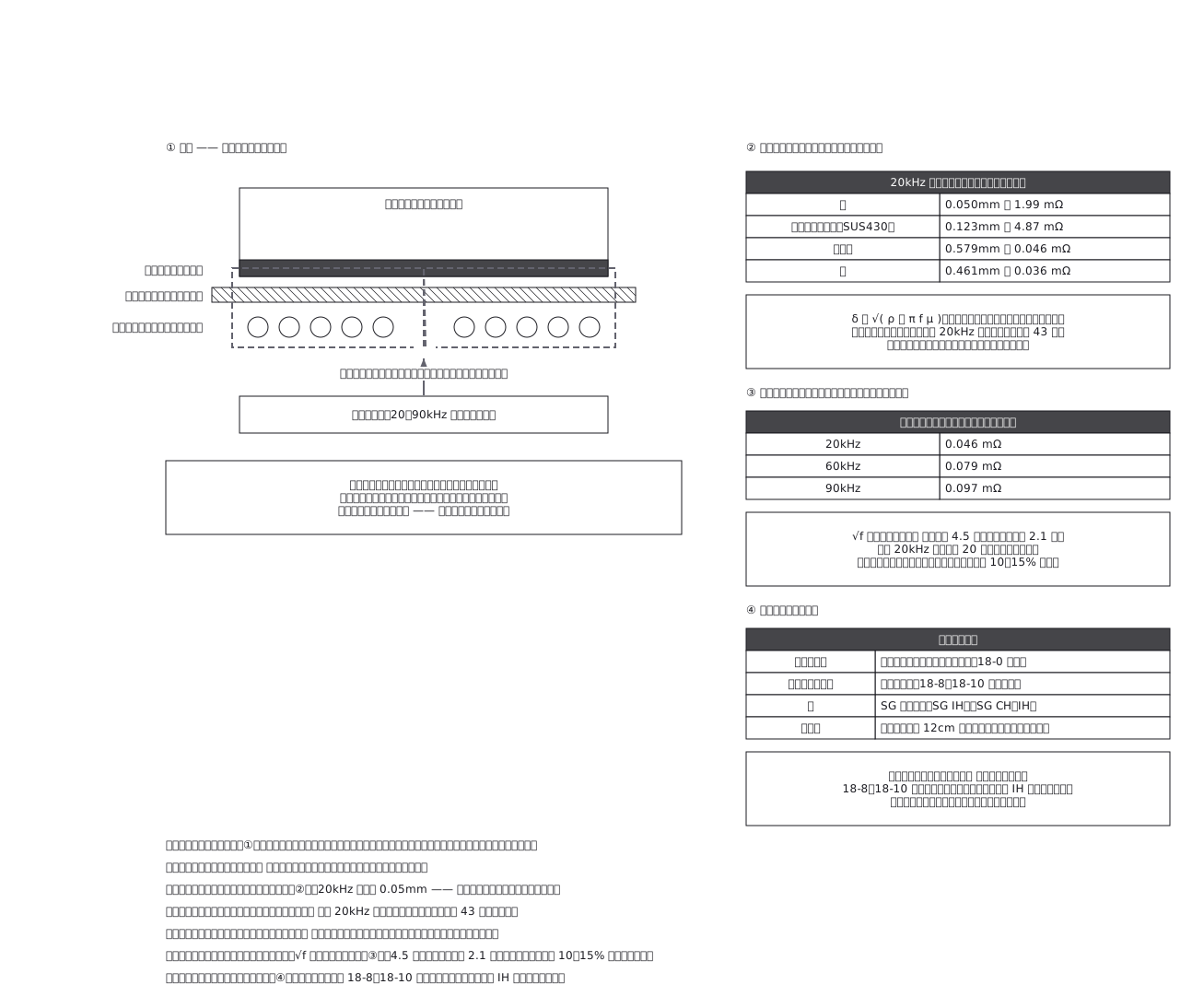 Induction heats only the outer 0.05mm of the pan, and that thin skin is why iron works and aluminium does not: at 20kHz iron's surface resistance is 43 times aluminium's
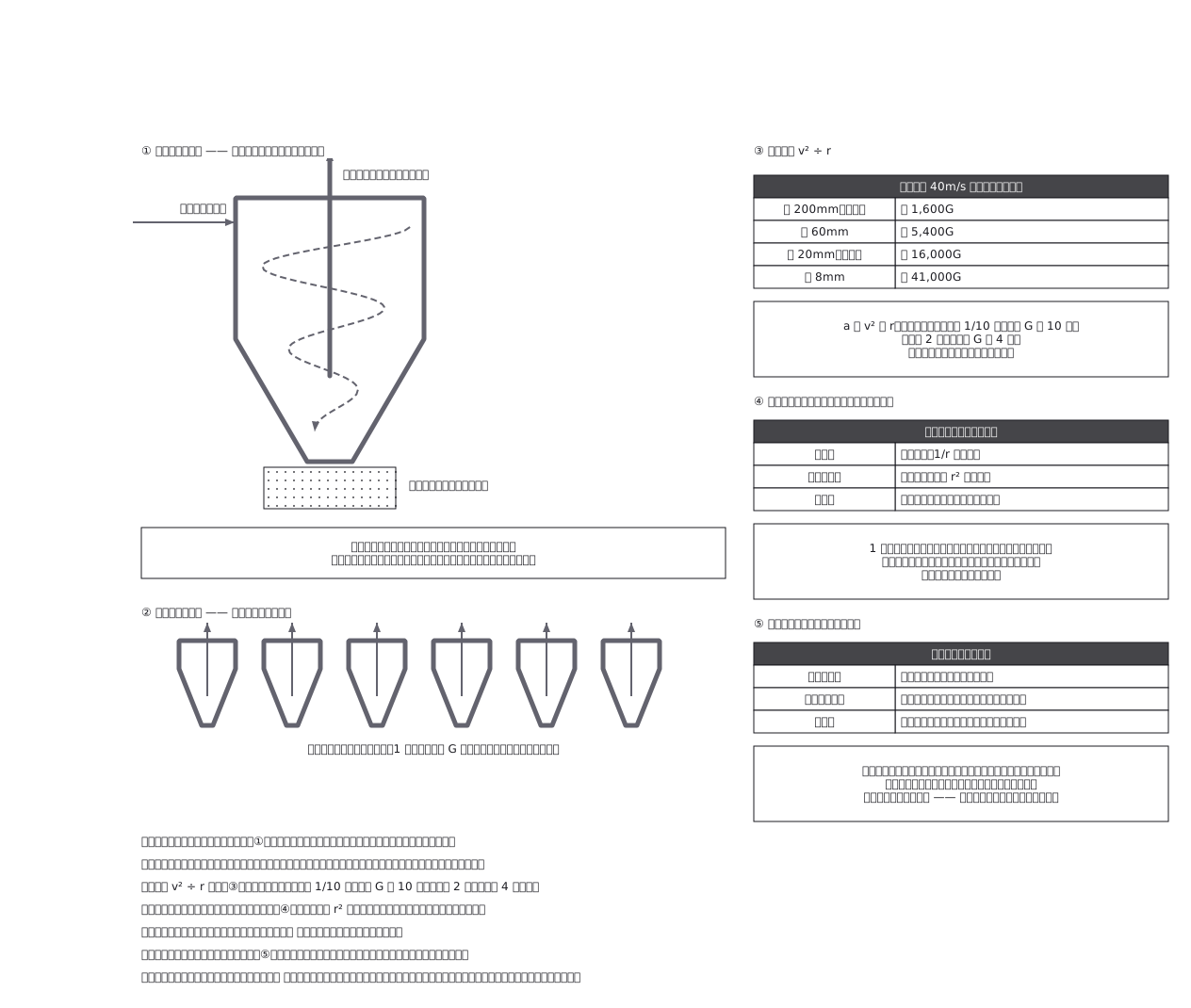 Centrifugal force is v squared over r, so a tenth of the radius is ten times the g — but a tenth of the radius is a hundredth of the airflow, which is why the small cones come in rows
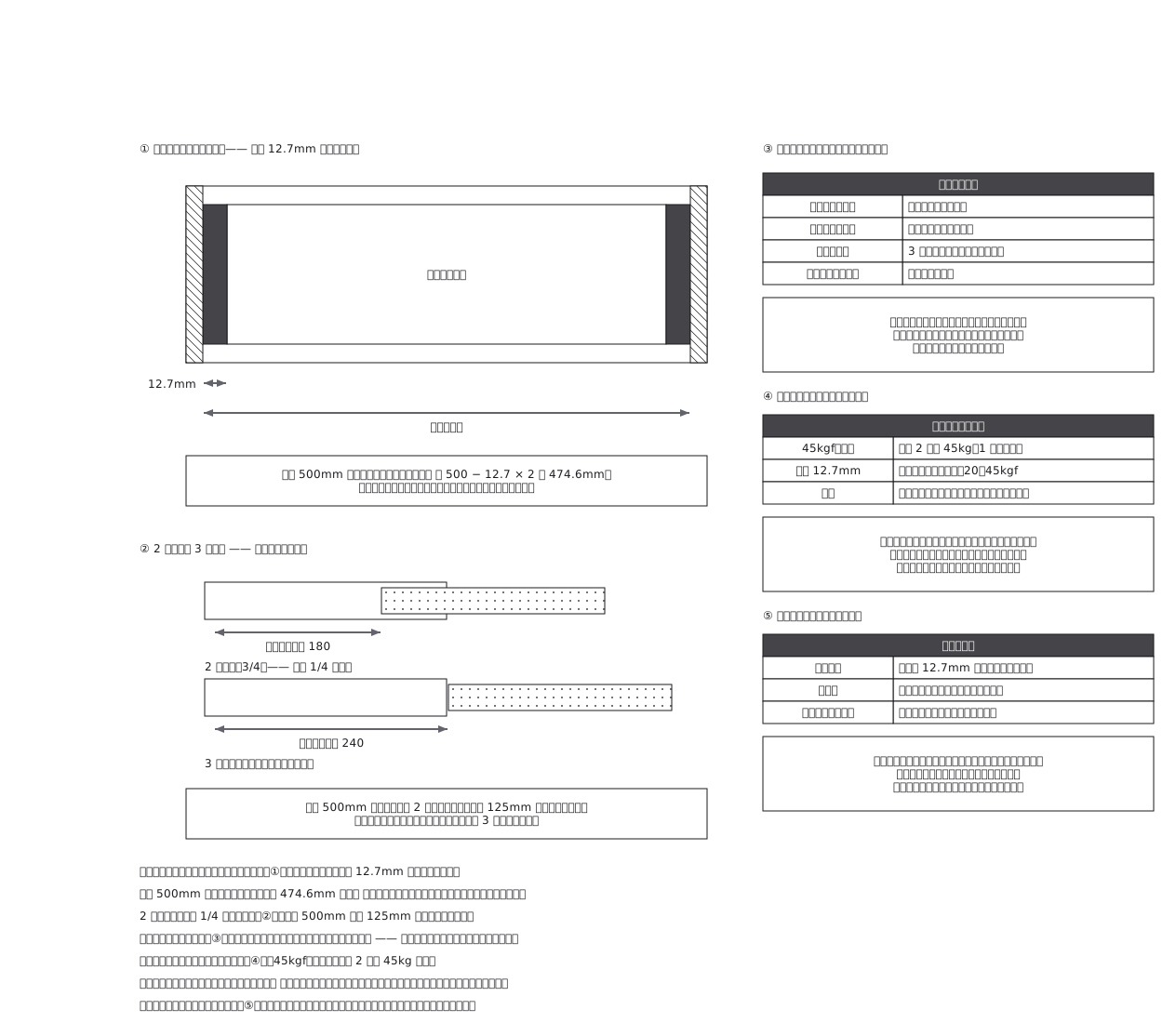 The slide decides the drawer, not the other way round: a side-mounted pair takes 12.7mm each side, so a 500mm opening leaves a 474.6mm box
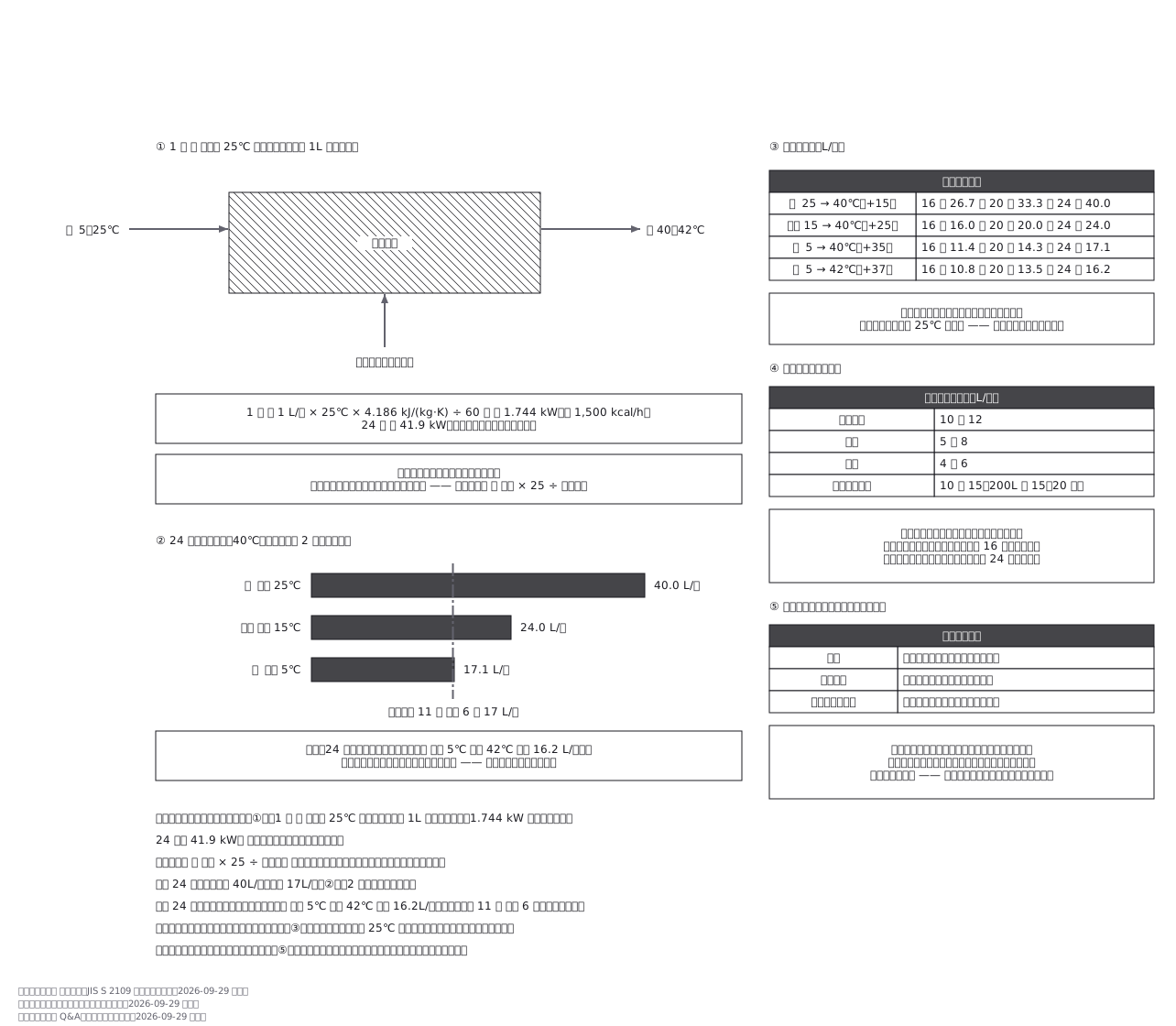 A water heater is rated in heat, not flow: the same 24-go unit gives 40 litres a minute in summer and 17 in winter, because the rating assumes a 25 degree rise
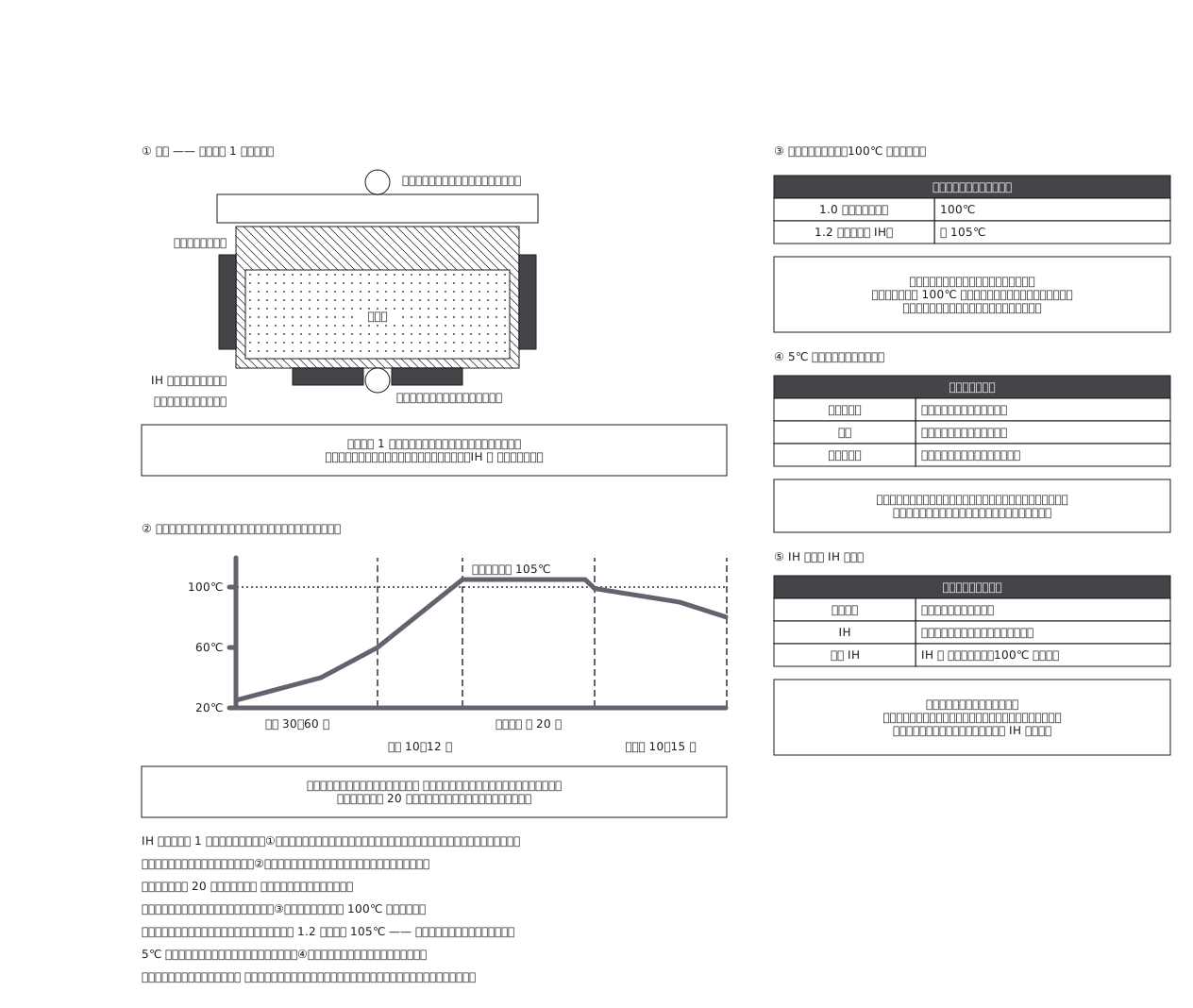 Boiling water refuses to go past 100C, so a pressure cooker adds exactly one part — a valve — to lift that ceiling to about 105C
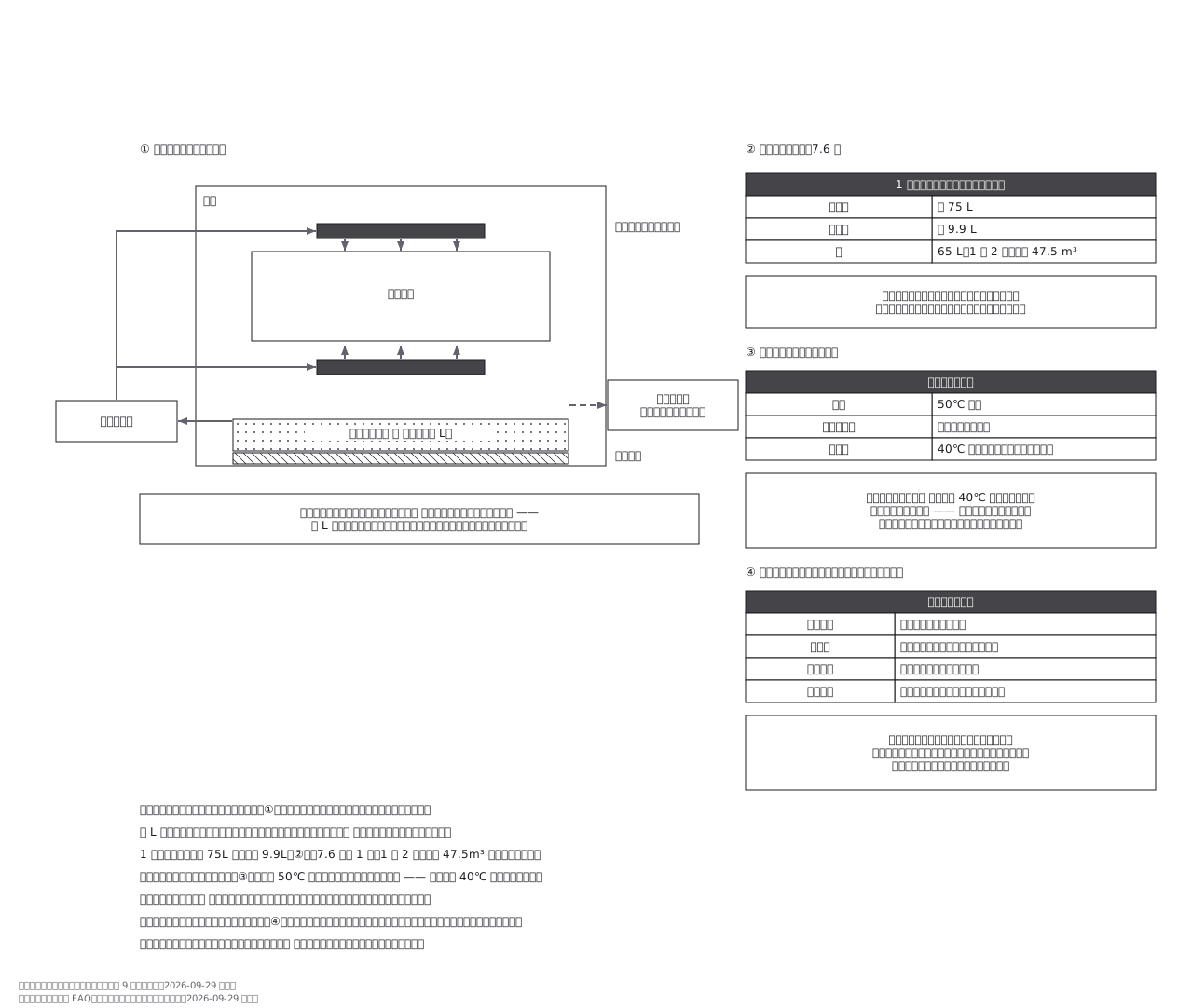 A dishwasher does not use less water, it uses the same water many times: 10 litres pumped around twenty times is 200 litres of water hitting the dishes
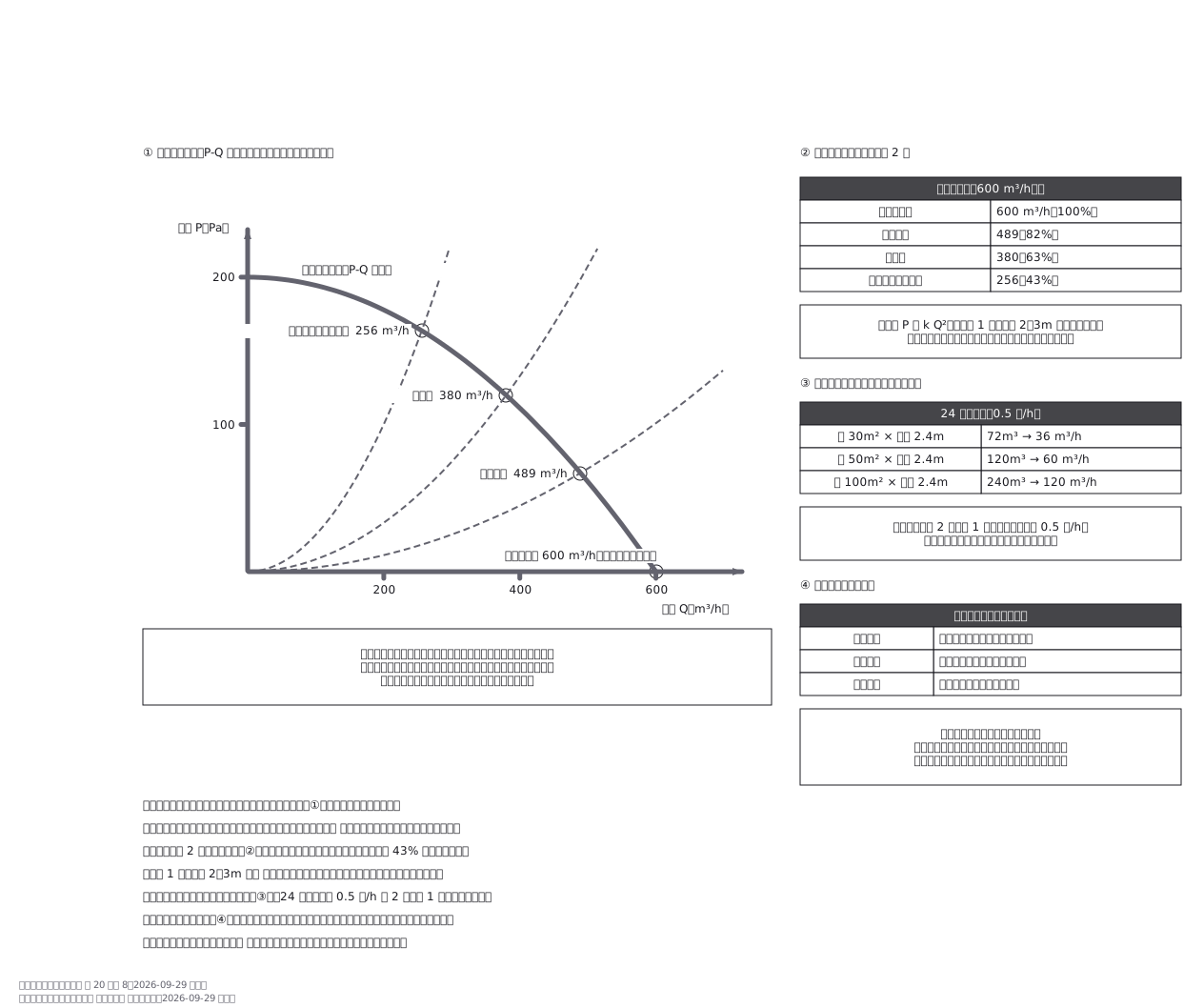 The airflow on the box is the free-delivery figure; what you actually get is where the fan curve meets the duct resistance, and a long bent duct can cut it to 43 percent
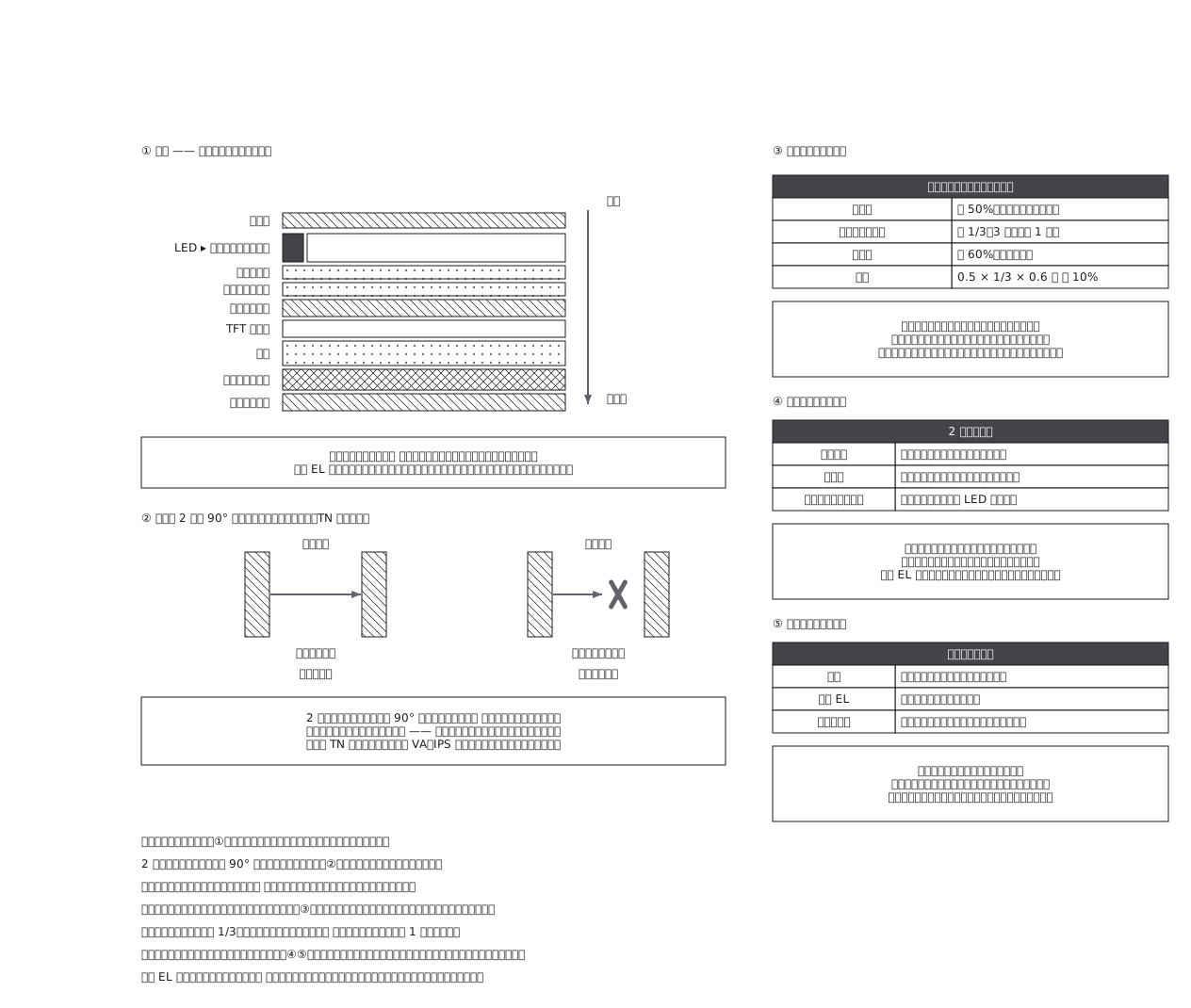 An LCD makes no light of its own — it only blocks it, which is why its black is whatever light failed to be blocked, and why only a tenth of the backlight ever reaches your eye
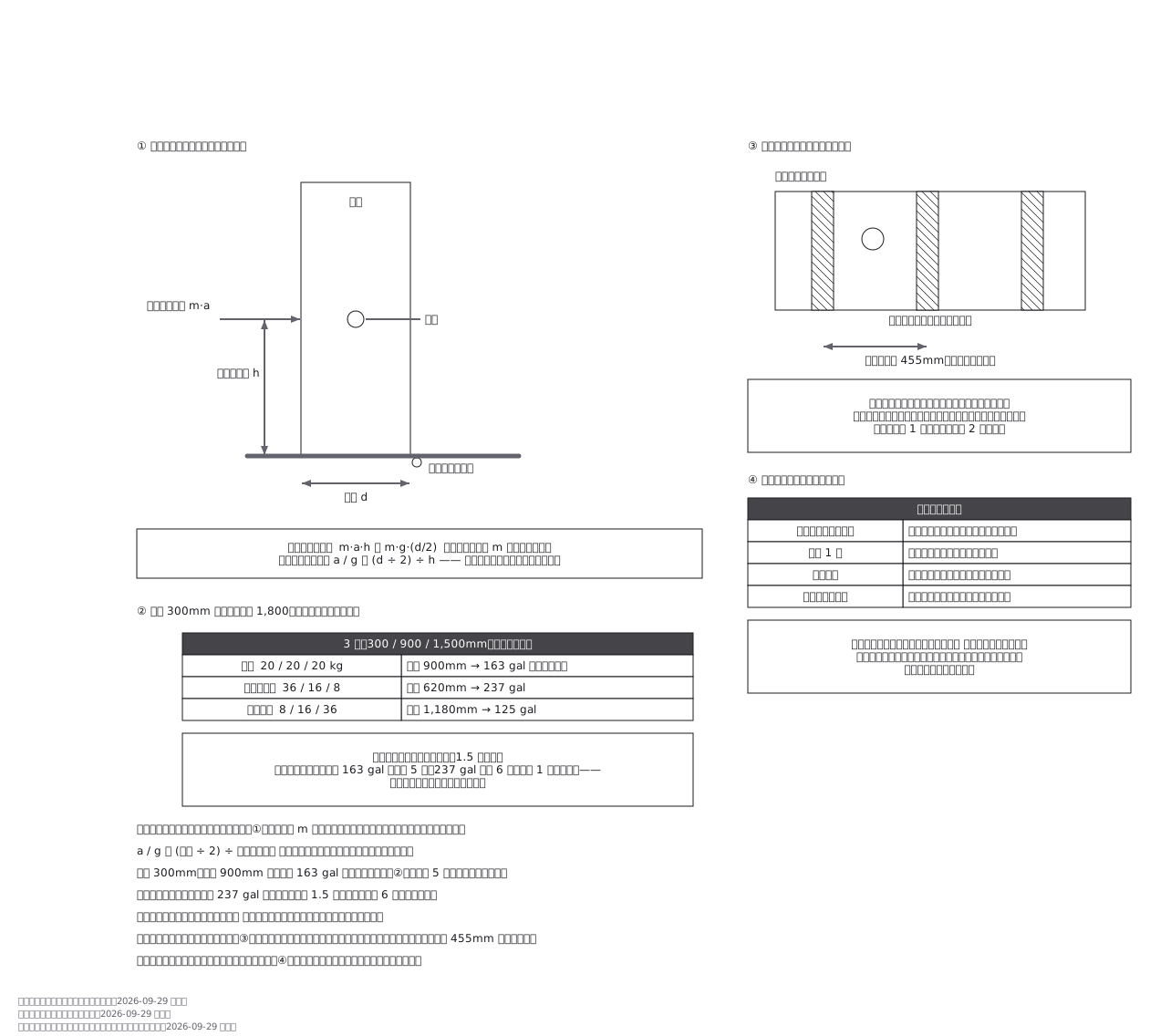 Mass cancels out of the tipping condition, so how easily furniture falls depends only on its depth and the height of its centre of gravity — a shallow tall bookcase goes over at a shindo 5+
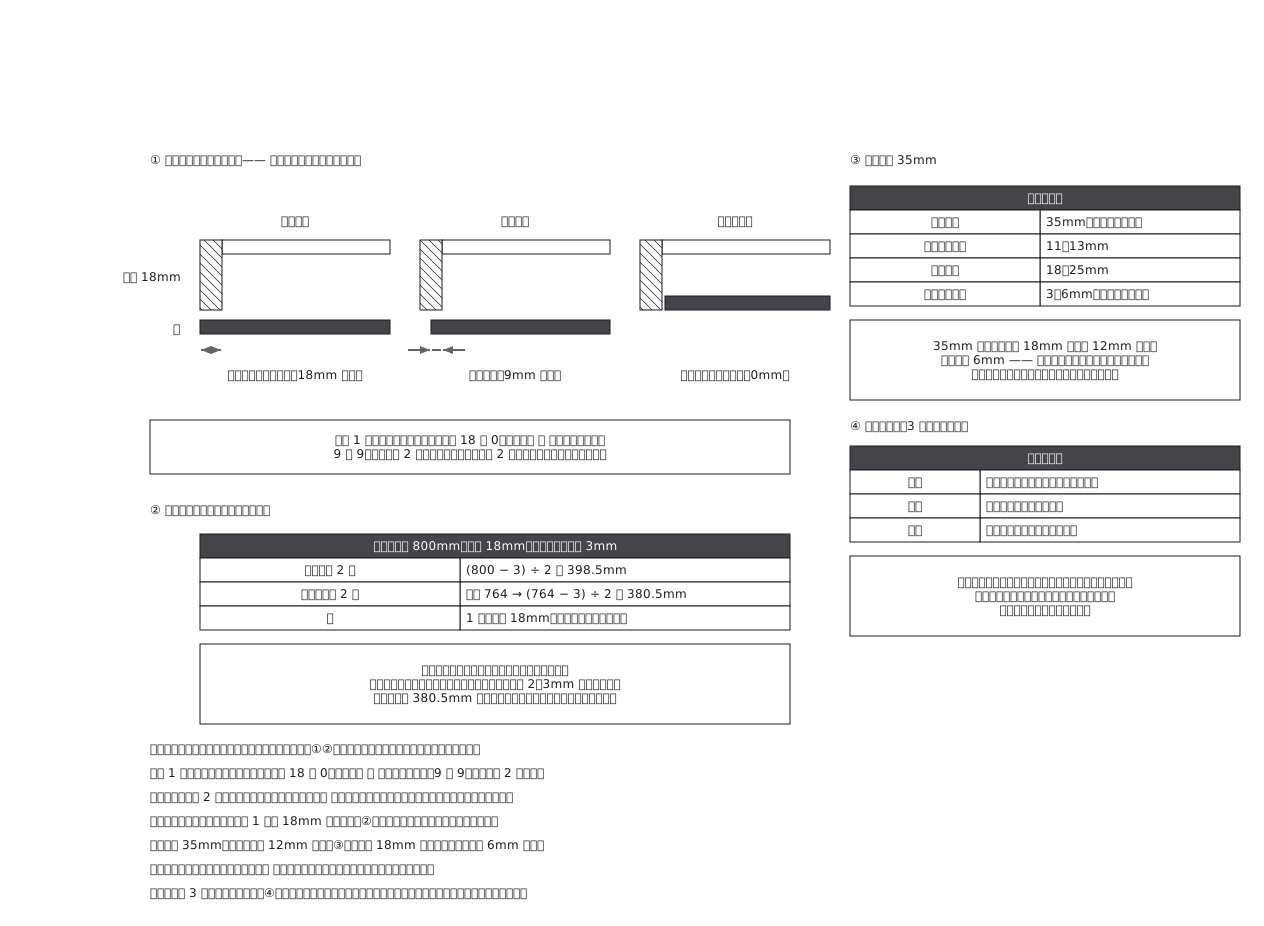 You cannot size a cabinet door until the hinge is chosen: the overlay goes straight into the width, and full overlay versus inset differs by 18mm per door
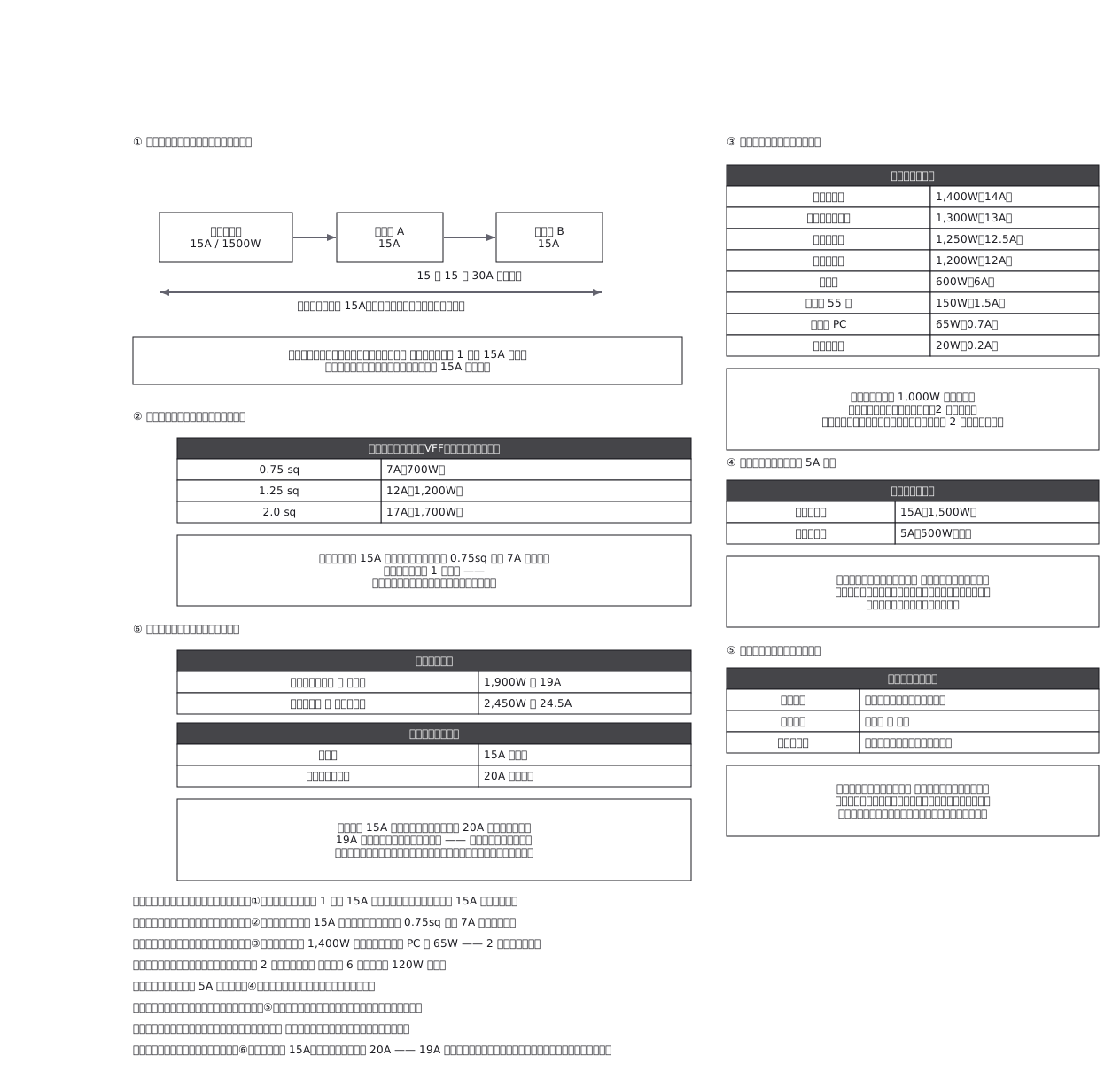 Chaining power strips does not add up: the wall socket caps the whole chain at 15A, the flex gauge caps it lower still (0.75sq means 7A), and the 20A branch breaker trips after the 15A strip has already overheated
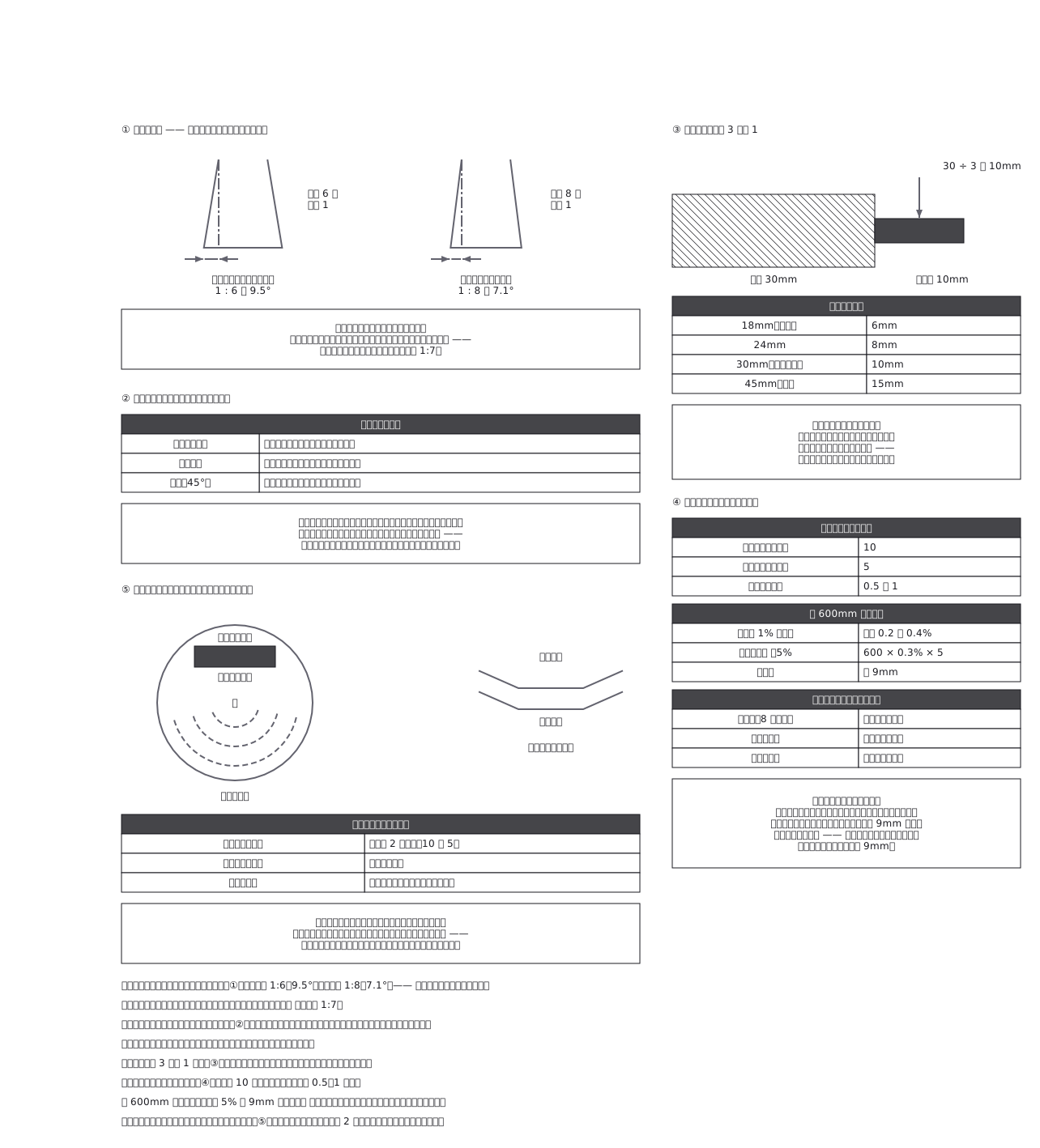 Dovetail slope is the limit before the corner grain snaps (1:6 in softwood, 1:8 in hardwood), a tenon is one third of the stock, and a 600mm top moves 9mm across the grain — so the joint that fails is usually the one that was not allowed to move
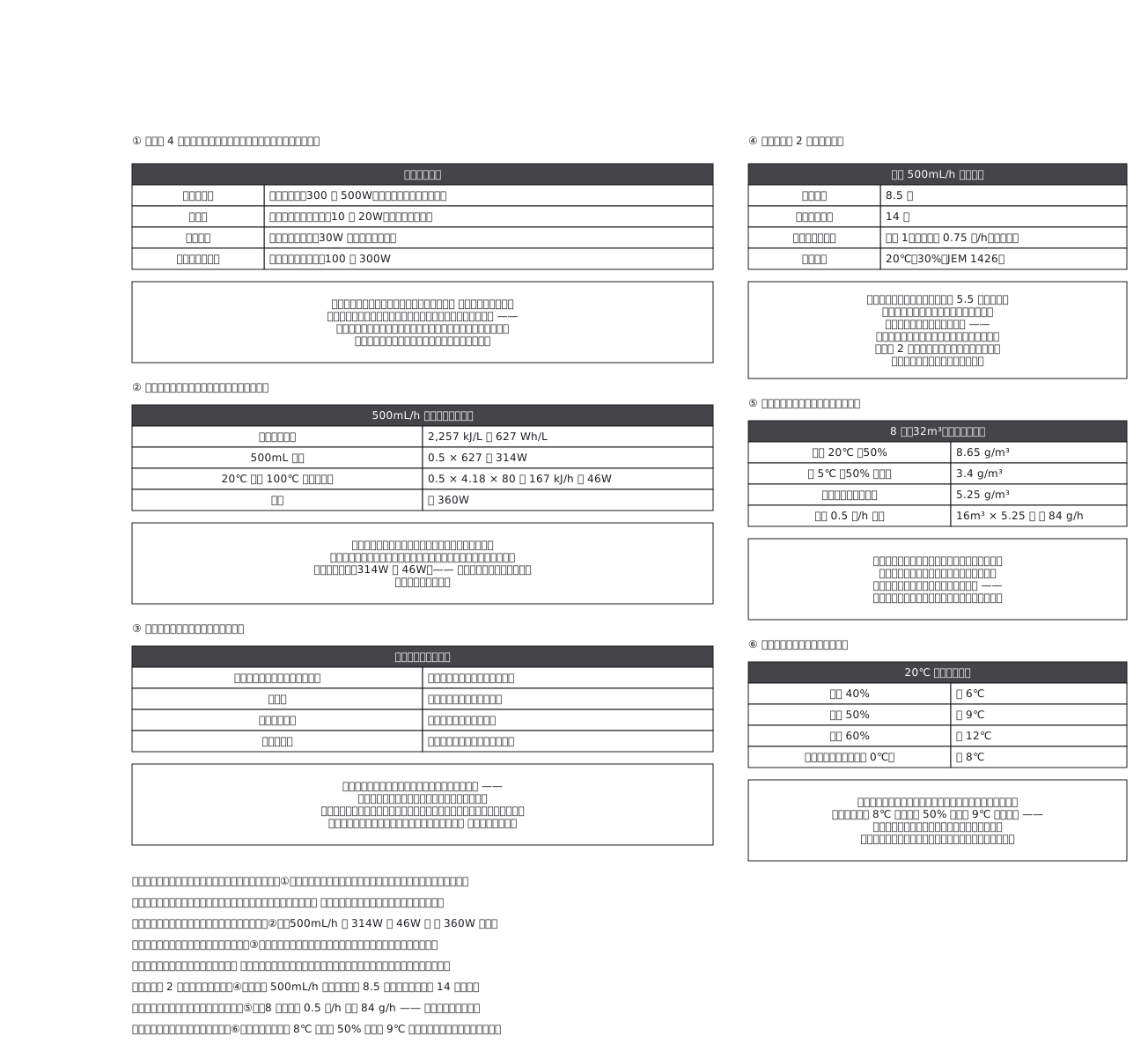 Every humidifier needs the same 627Wh to evaporate a litre — the four types differ only in where that heat comes from, which is why the evaporative one is cheap on the meter and cools the room instead
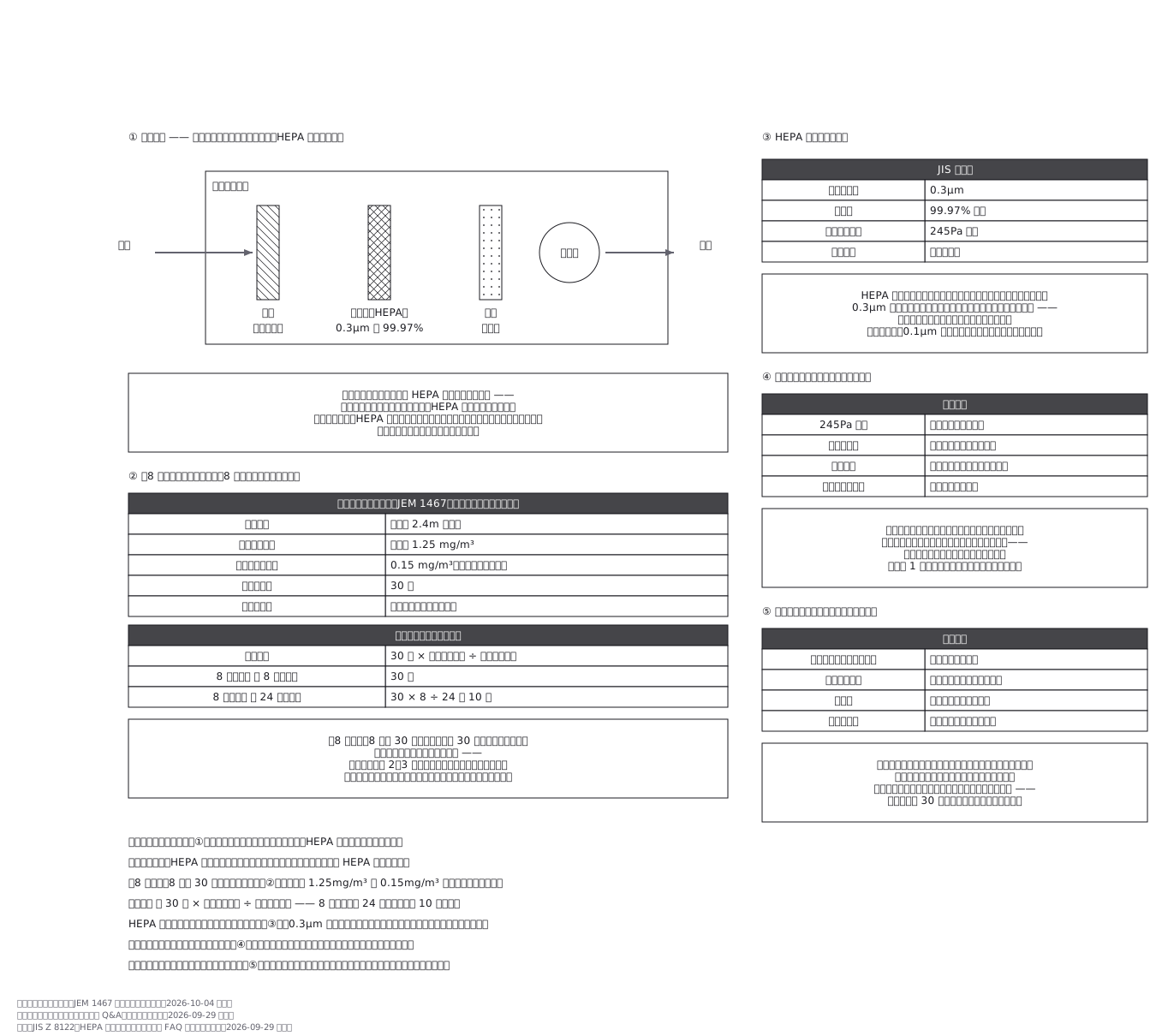 The order of the filters is the order of their lifetimes, and the room size on the box is really a time: it names the room this machine can clean in thirty minutes, so a room its own size takes the full half hour
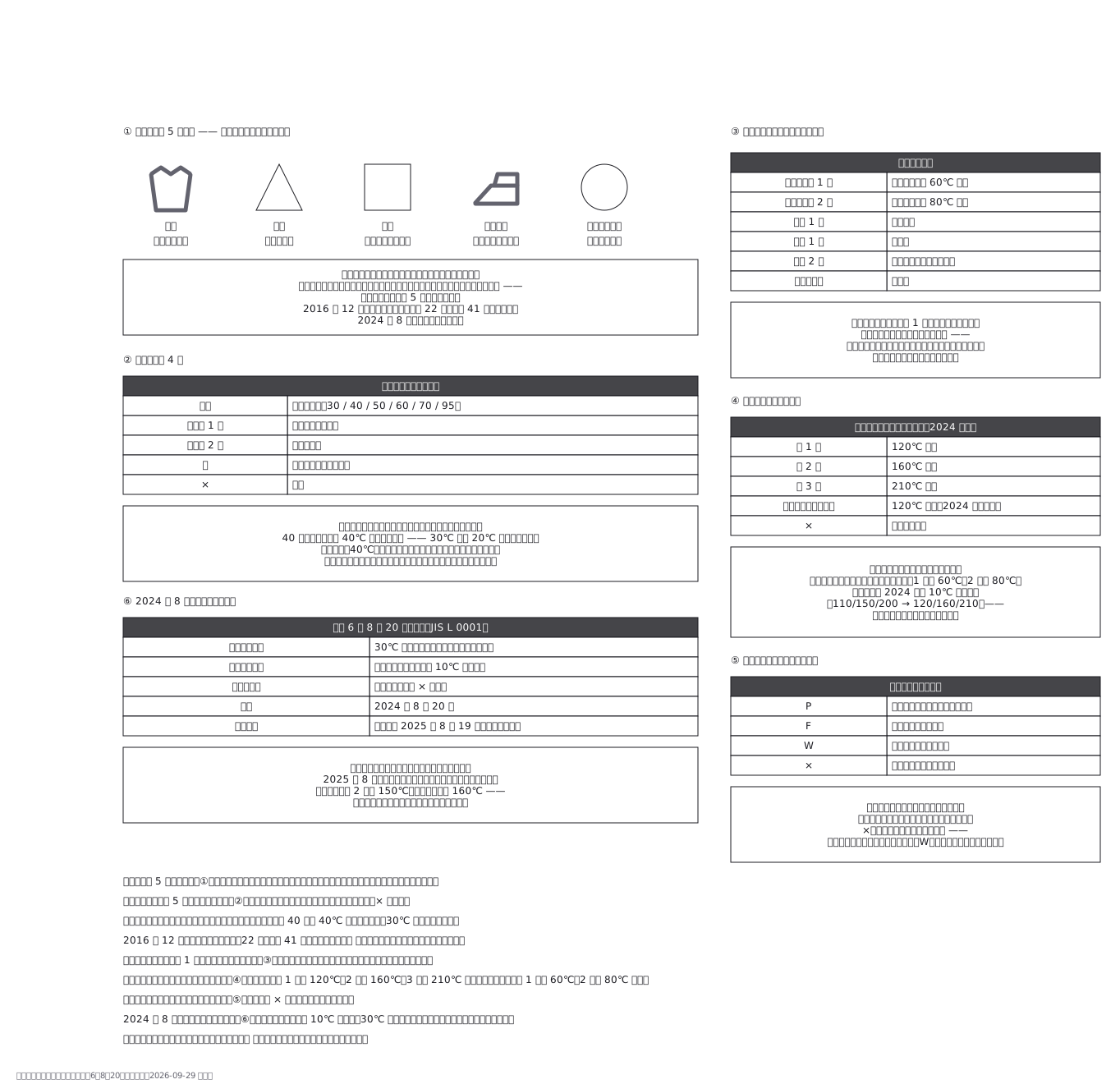 Care labels have only five base shapes — tub, triangle, square, iron, circle — and everything else is a mark added to them; the number is a ceiling, not an instruction, and in 2024 the iron temperatures moved up 10 degrees without the symbols changing
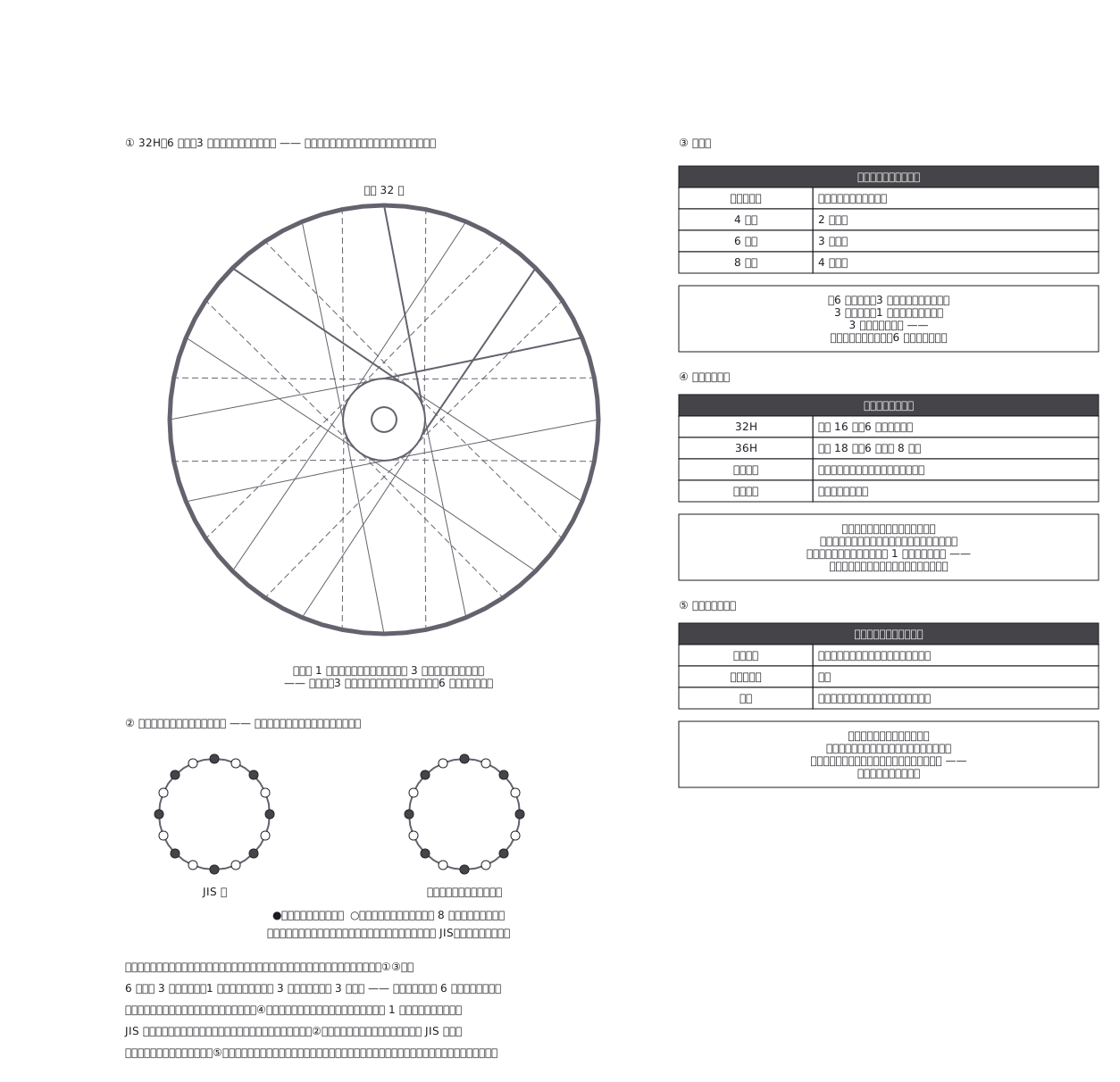 A spoke pattern is named after how it crosses, not how it connects: three crossings per spoke is a 3-cross, also called six-spoke because the sixth spoke counted from the reference is the one it meets, and the half-pitch offset between the two hub flanges is what separates JIS lacing from Italian
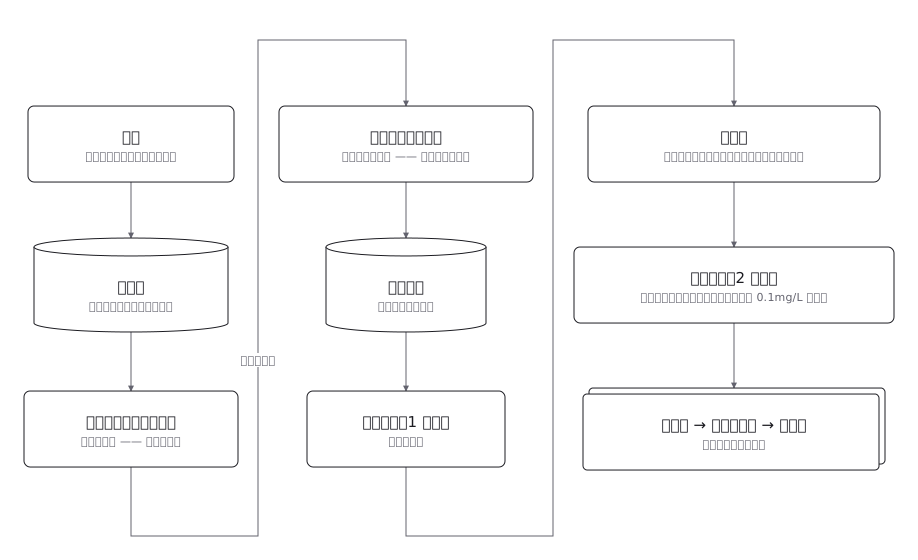 Chlorine goes in twice, and the two doses are for different things: the first, before filtration, is part of the treatment, while the second is there to still be working when the water reaches a tap — and the coagulation stage is two basins, one that stirs fast and one that stirs slowly, because the floc has to be grown before it will settle
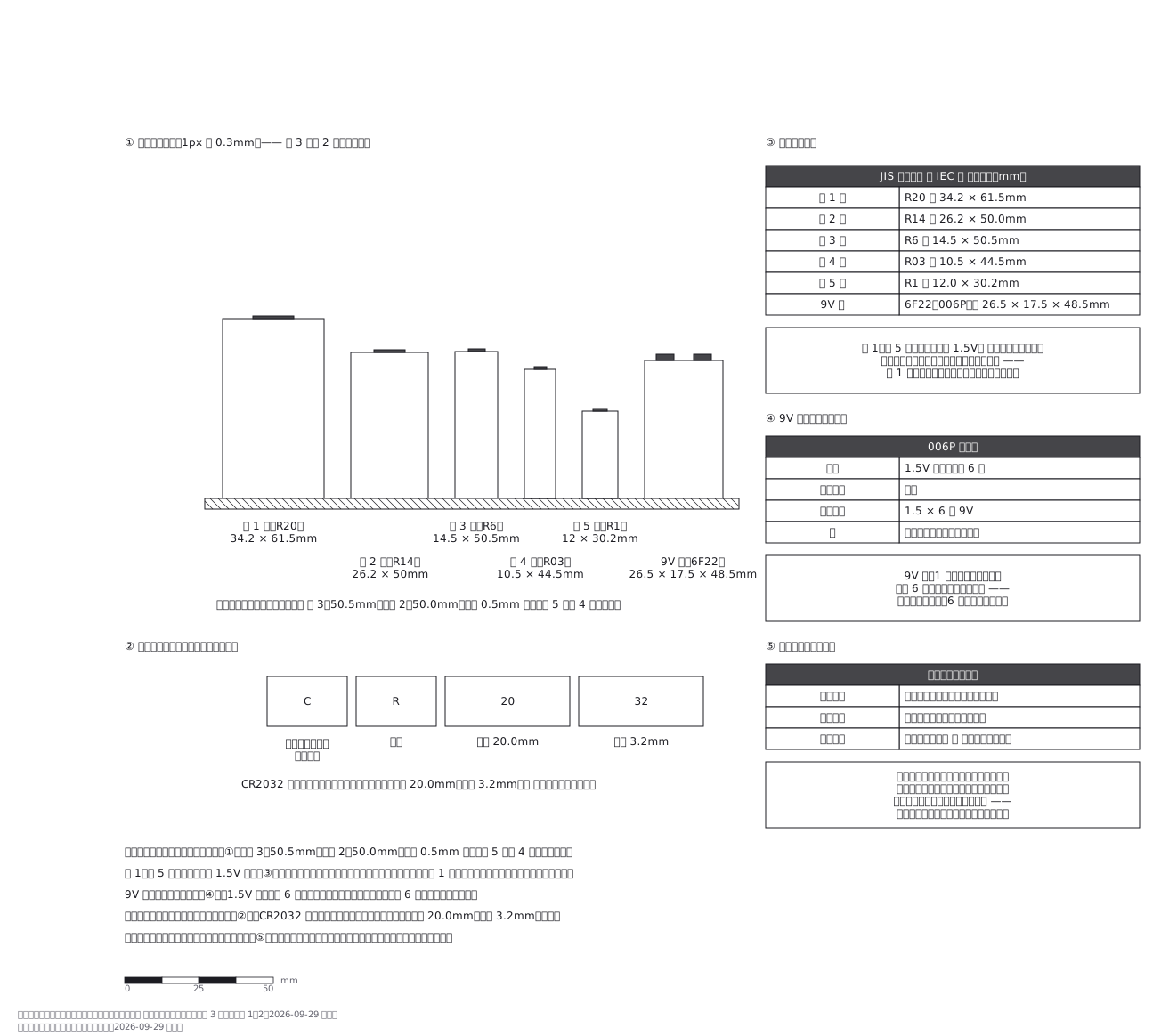 The numbering is not a size order: an AA cell is half a millimetre taller than a C cell, and an N cell is fatter than an AAA — all of them are 1.5 volts, so what a bigger cell buys is current and hours, not strength, and a button cell number like CR2032 is simply its diameter and height in millimetres
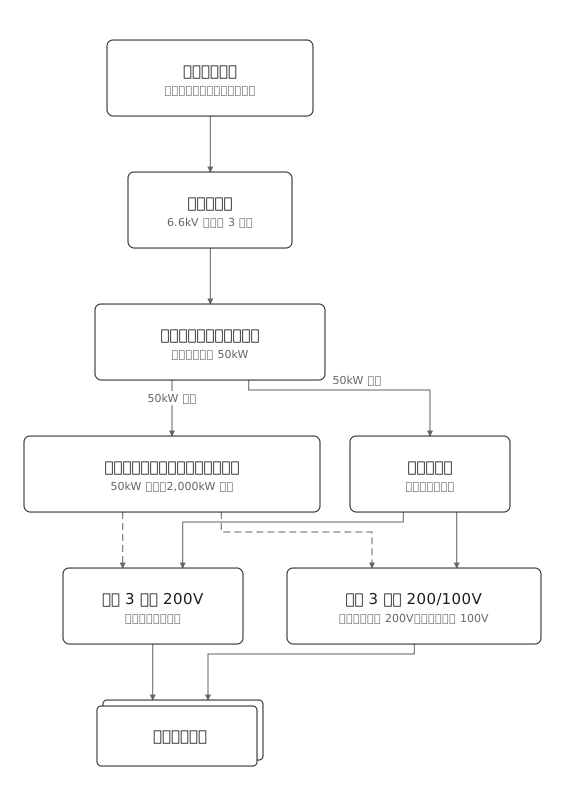 What arrives at a Japanese house is not 100V but a single-phase three-wire 200/100V supply — the two outer conductors are 200V apart and either one is 100V from the neutral — which is why an air conditioner on 200V is not a separate supply but the one that was already there
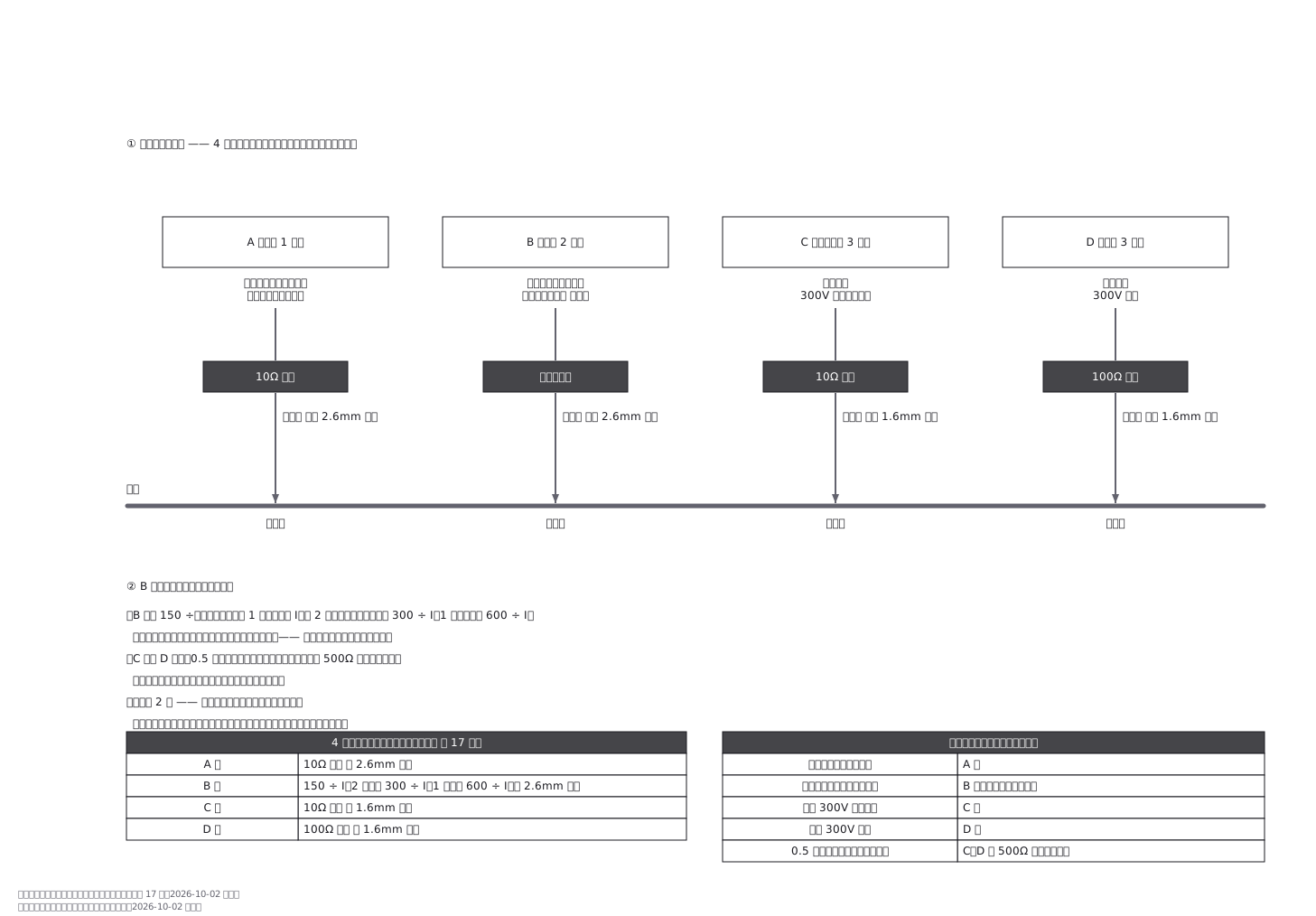 Three of the four Japanese earthing classes are given as a number — ten, ten and a hundred ohms — but class B, bonded to the neutral of a transformer bridging high and low voltage, is given as a formula: 150 divided by the earth fault current. Fix one number instead and the same voltage appears whatever the current.
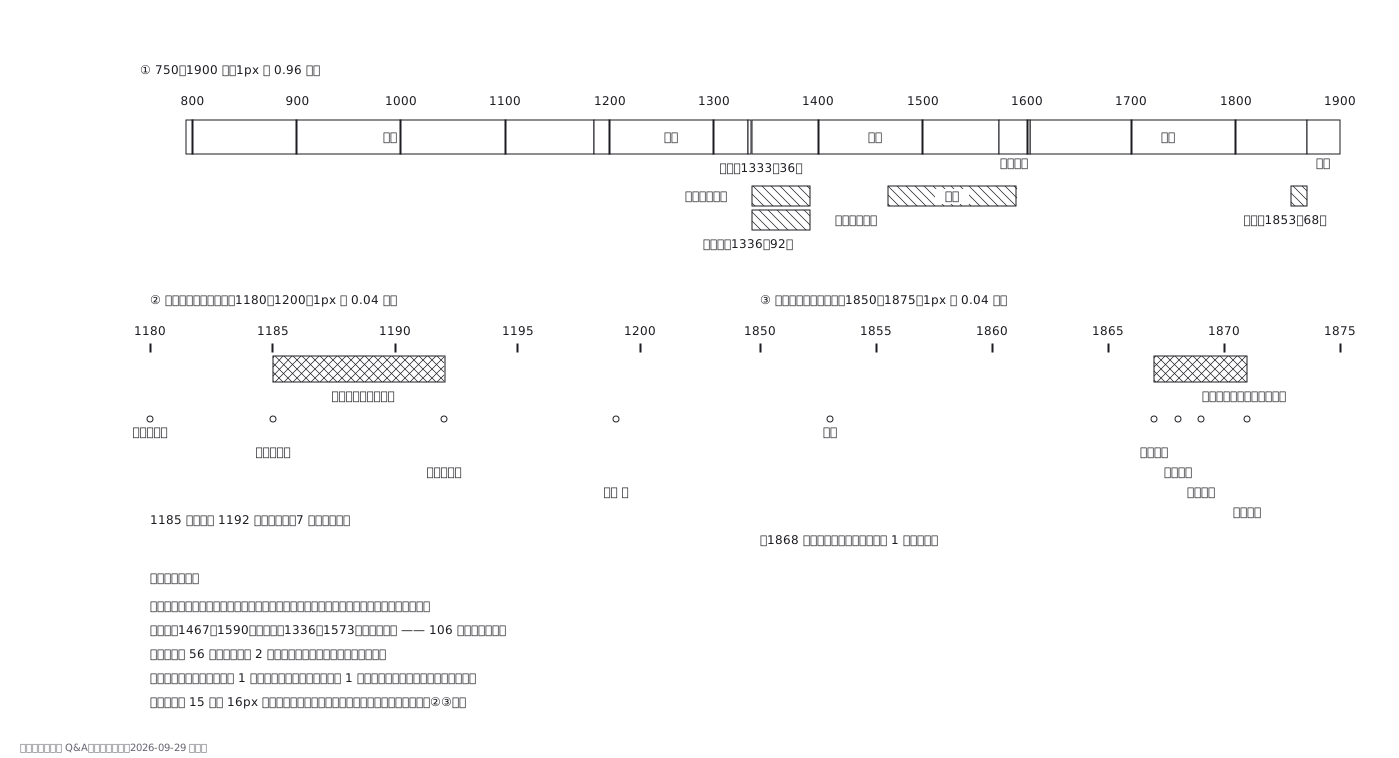 A timeline of Japanese historical periods that refuses to be a single line: the Warring States era sits inside the Muromachi period for 106 years, two imperial courts ran in parallel for 56, and the two famous boundaries — the founding of the Kamakura shogunate and the turn from Edo to Meiji — are drawn as hatched bands of years rather than as a date, then enlarged below.
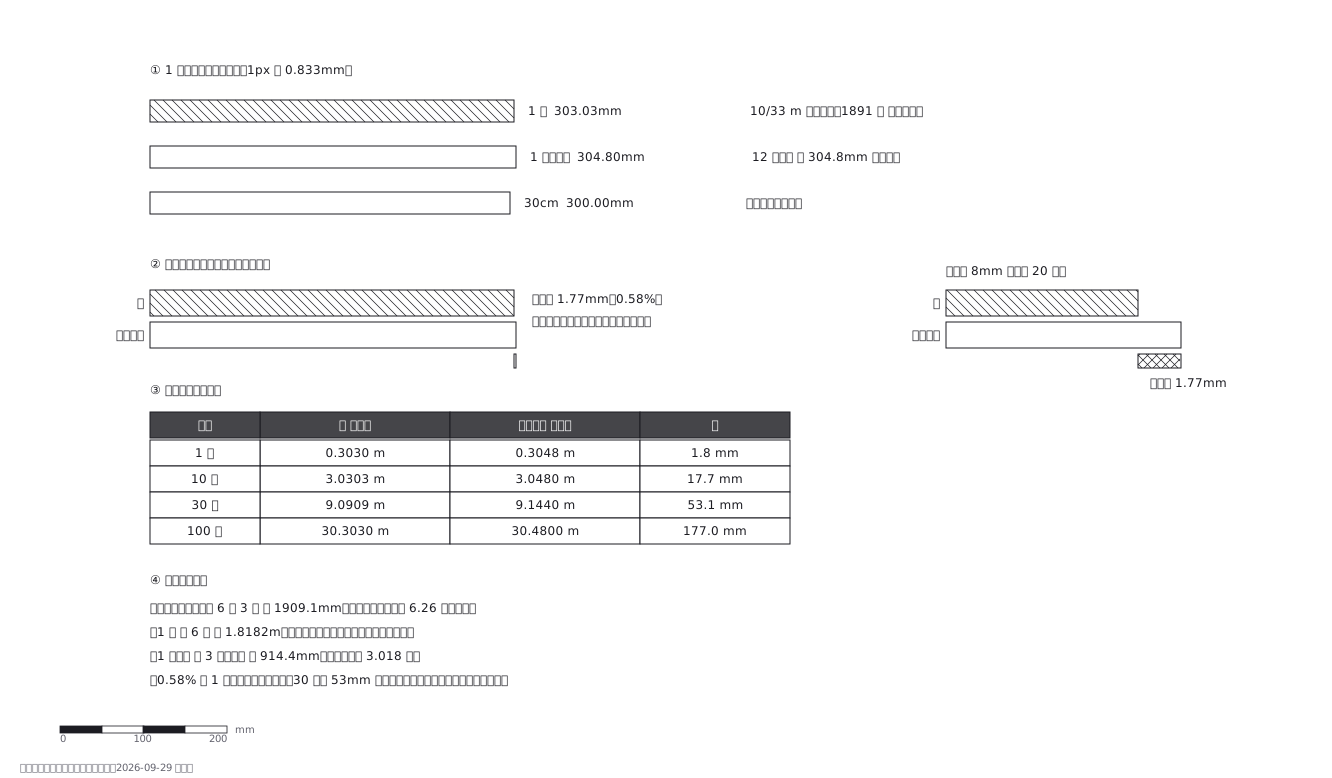 The Japanese shaku is 303.03 mm and the foot is 304.80 mm — both about a foot long, and neither the same. Lining them up at the left shows the right ends parting by 1.77 mm, a gap too thin to shade at full size, so the last 8 mm is enlarged twenty times beside it; stack thirty and the drawing is out by 53 mm.
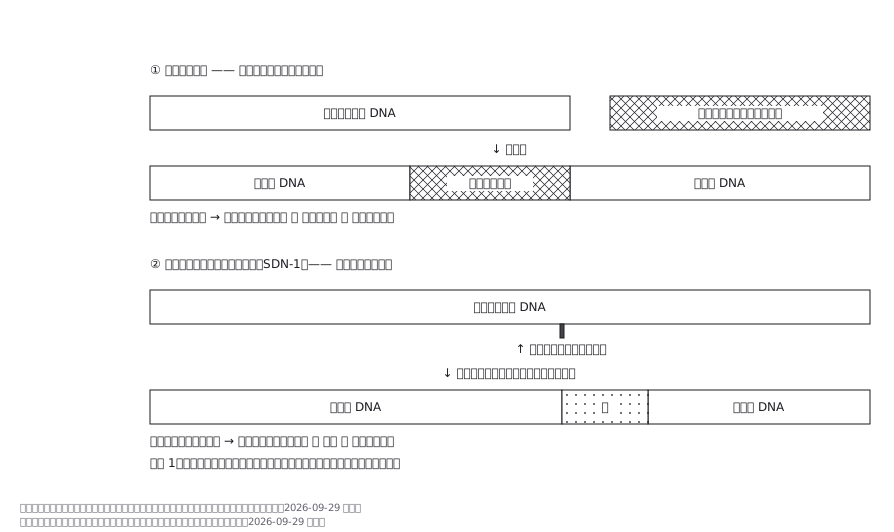 Both alter a genome; they differ in what is left behind. Recombination inserts a gene from another organism and that gene stays. Editing of the cut-and-leave kind severs the organism own sequence and lets the cell repair it, leaving a scar indistinguishable from a natural mutation. In Japan that structural difference is the legal one.
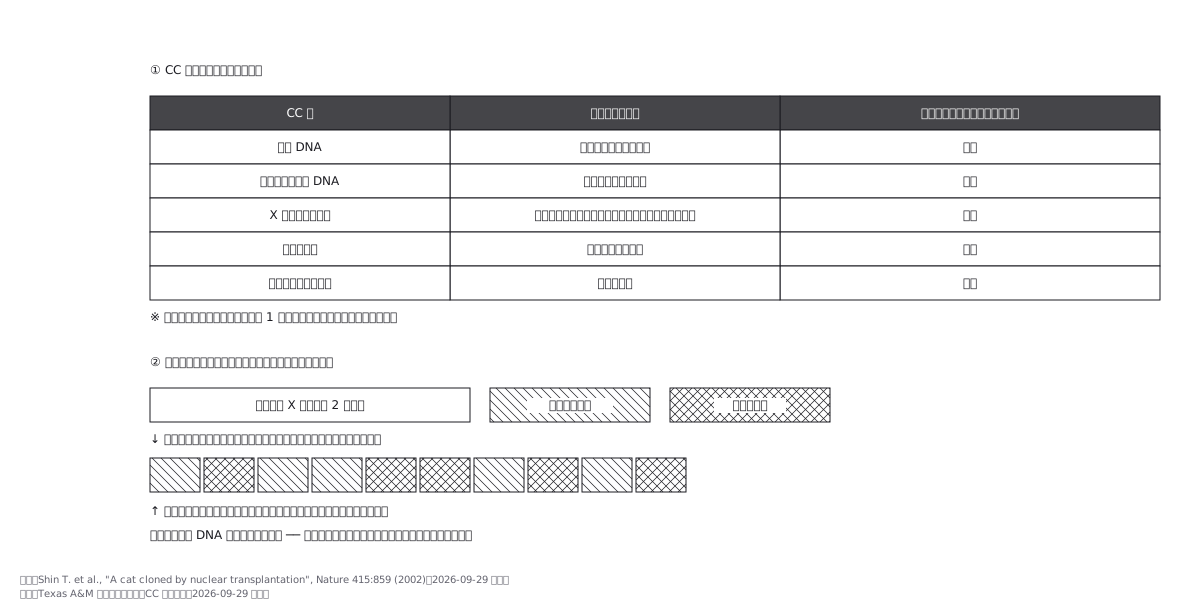 CC, the first cloned cat, carried the same nuclear DNA as Rainbow and came out a different colour. Only the top row of the table comes from the original animal. The tortoiseshell pattern comes from neither cat: in every female one X chromosome is silenced at random, cell by cell, after fertilisation. It is not written in the DNA, so a clone cannot copy it.
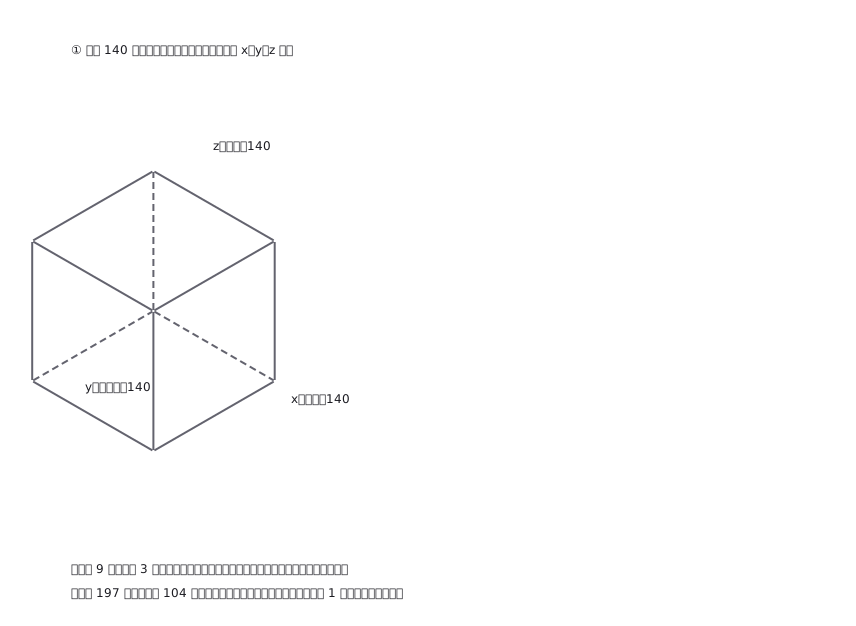 A cube in isometric projection whose source contains no paper coordinates at all — only x, y and z. The drawing engine applies the projection: a hundred along x moves 86.6 right and 50 down, y the same to the left, z straight up. The three edges hidden behind the solid are dashed because the author said so; the machine does not decide what is hidden.