IT and software
Data centre power system (single-line diagram, 2N)
2N does not mean doubling: it means two paths that never join before the equipment, because one shared point is a single point of failure — and the UPS is not a power source, just the bridge over the 10 seconds the generator needs
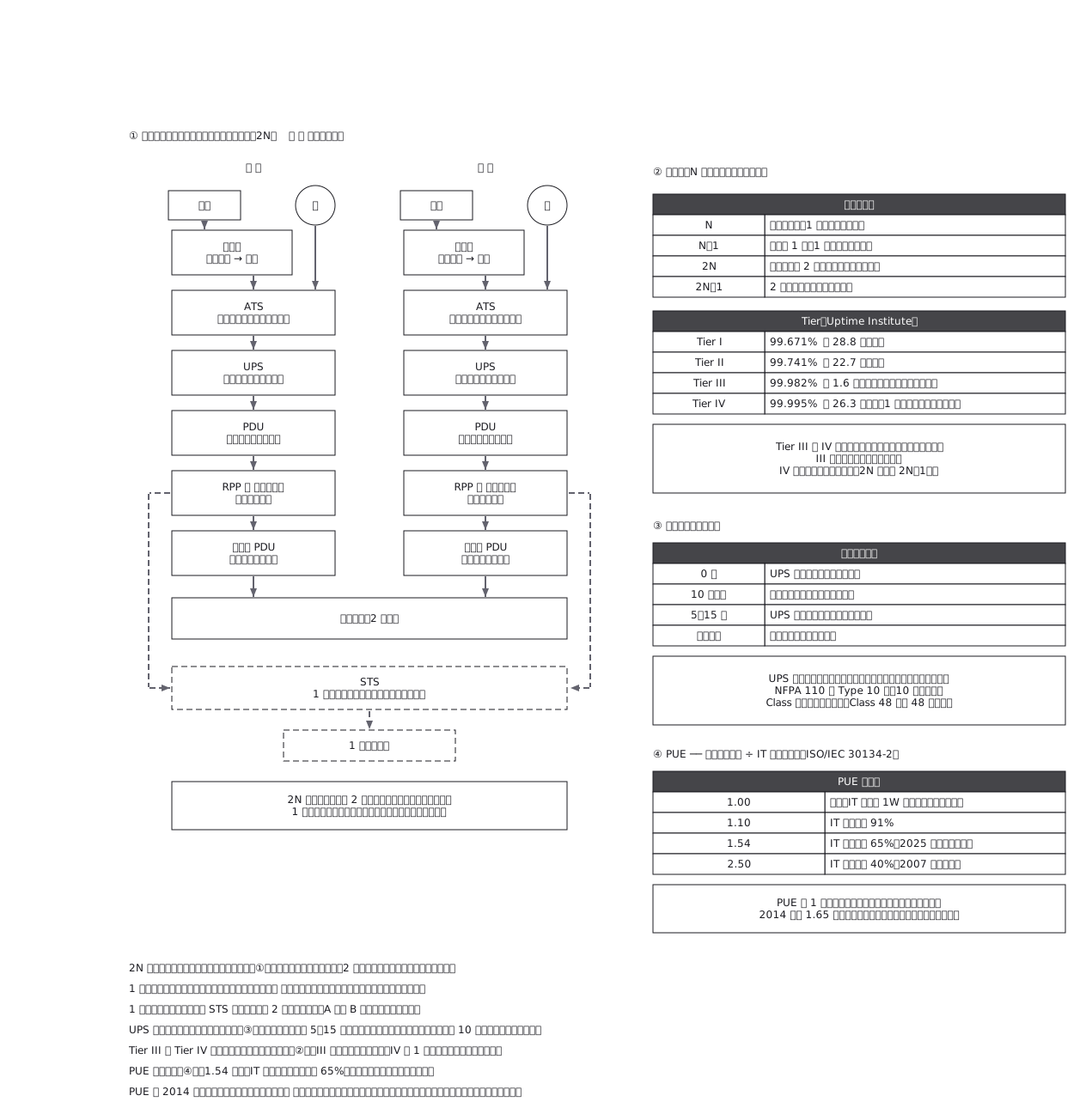
This drawing comes from one YAML file. No shape was moved by hand.
Notes in the source (in Japanese)
2N とは、二重にすることではない。受電からサーバーの口まで、2 本の道が一度も交わらないこと。1 か所でも合流していれば、そこが単一障害点になる。
発電機は ATS へつなぐ。 商用は受変電を通って ATS へ、発電機は ATS へ直接入り、ATS がどちらかを選ぶ(以前は発電機の線が受変電に入っていて、切り替える場所が読めなかった)。
STS はサーバーの下流ではなく、両系の途中から取る。 2 電源の機器は A・B から直接取り、1 電源の機器だけが STS(両系から入って 1 本で出す)の先につながる。
UPS は長時間の電源ではない。 電池が持つのは 5〜15 分で、仕事は発電機が立ち上がるまでの 10 秒を埋めること(NFPA 110 の Type 10 = 10 秒以内)。
Tier III と IV の差は時間ではない。 III は止めずに保守でき、IV は 1 か所壊れても止まらない。
PUE は比(ISO/IEC 30134-2)。全施設の電力 ÷ IT 機器の電力。2025 年の加重平均は 1.54 = IT が使えるのは全体の 65%。
ISO/IEC 30134-2 の版は確かめていない(-2 は部の番号で、版ではない)。
PUE の年ごとの値は Uptime Institute Global Data Center Survey(2025 年版で 1.54、6 年続けて横ばい)。https://uptimeinstitute.com/resources/research-and-reports/uptime-institute-global-data-center-survey-results-2025 (2026-09-29 取得)Tier の可用性(99.671〜99.995%)は Uptime Institute の白書「Tier Classifications Define Site Infrastructure Performance」に出る値。いまの Tier Standard: Topology の本文に % が載っているかは確かめていない(登録が要る)。年あたりの時間は % から計算した(99.741% → 0.259% × 8,760 時間 = 22.7 時間)。
Source (YAML)
examples/gallery/241-データセンターの電力系統.zumen.yaml
More in this field
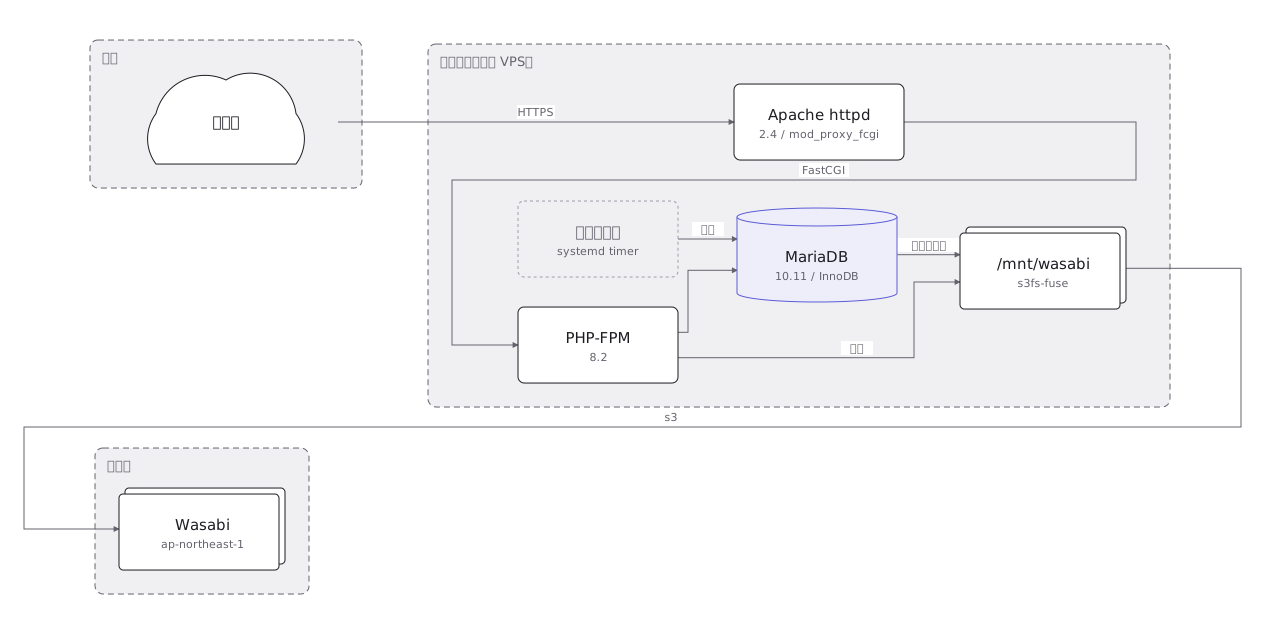 An on-premise server layout rack by rack, with the redundant power feeds and network links drawn as separate paths
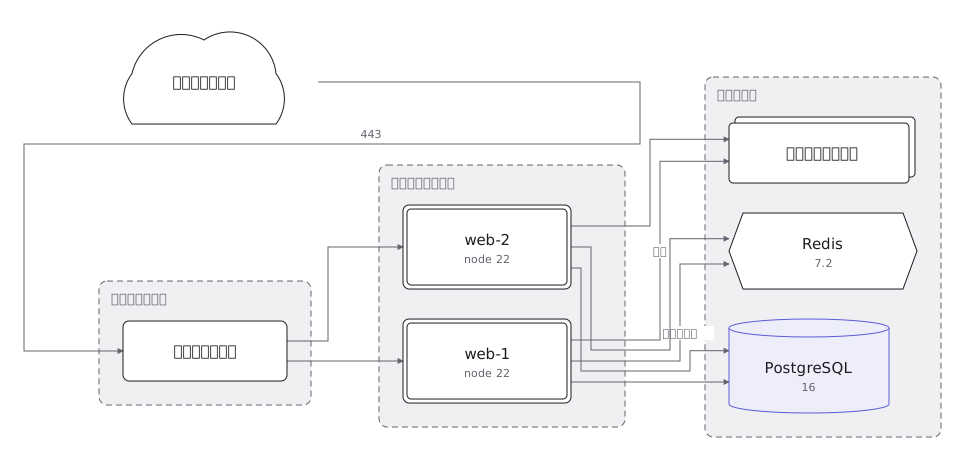 A cloud architecture showing the VPC and its subnets, and where the load balancer, application, database and object store sit
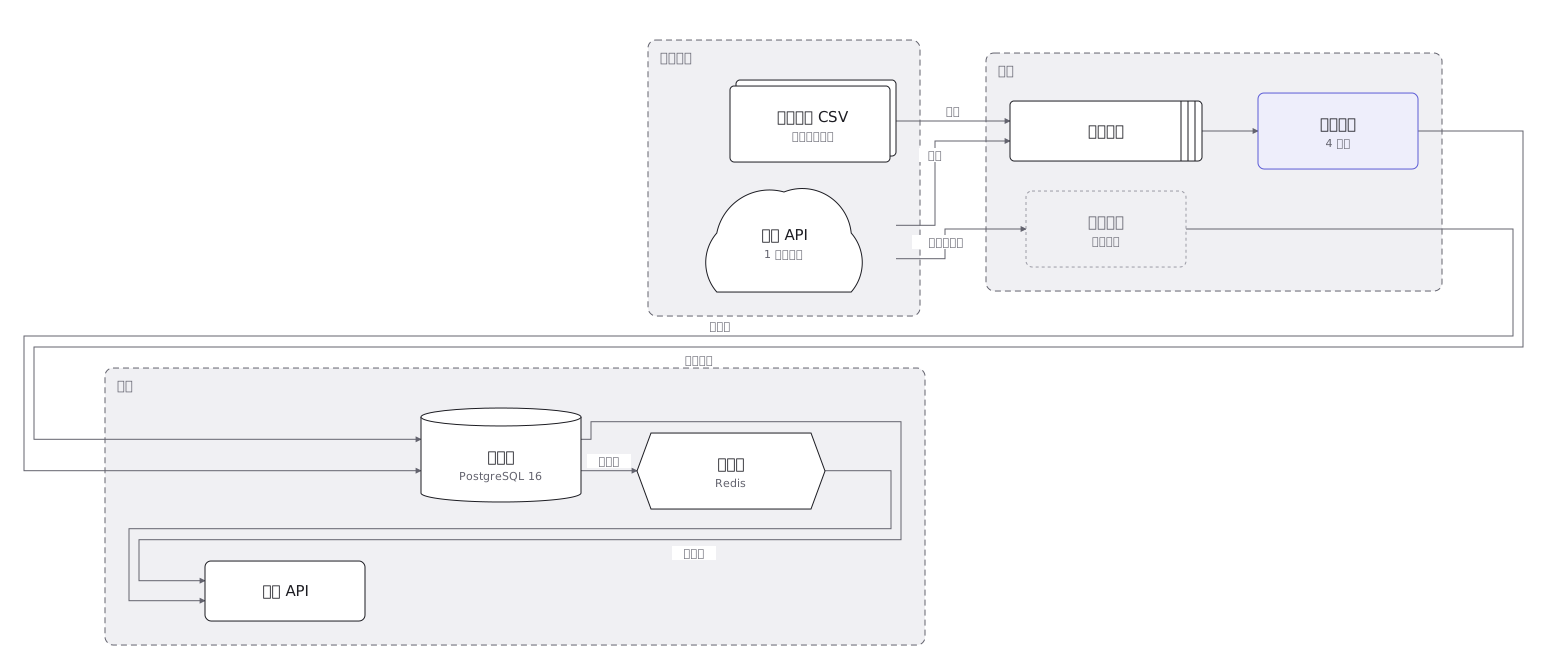 Where data goes from collection through transformation, storage and aggregation to display, and what kind of container holds it at each step
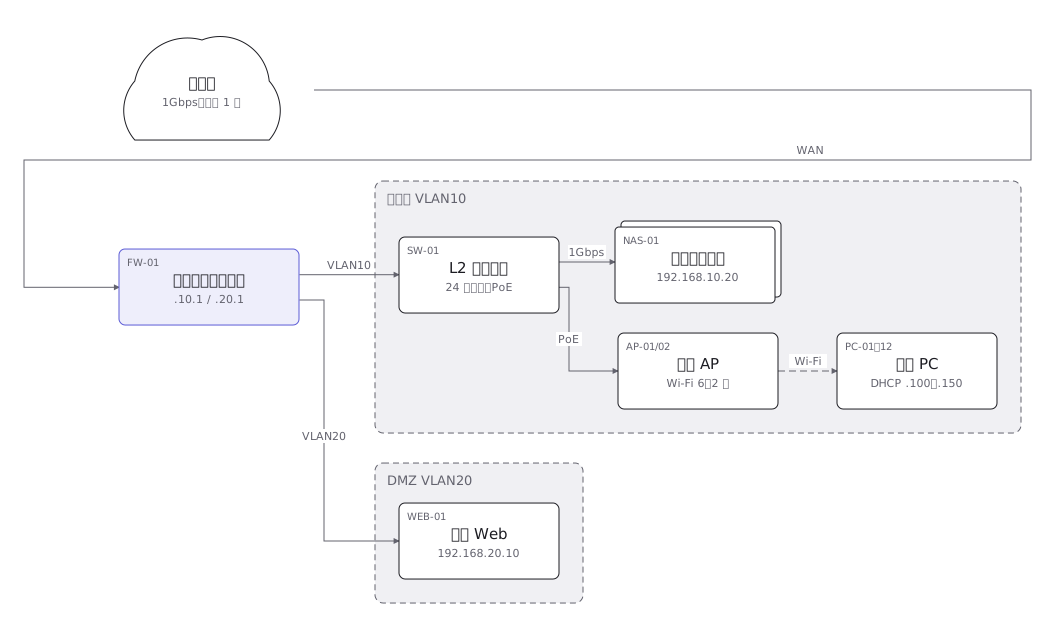 A network layout of the links and equipment between sites, with the address range carried by each segment
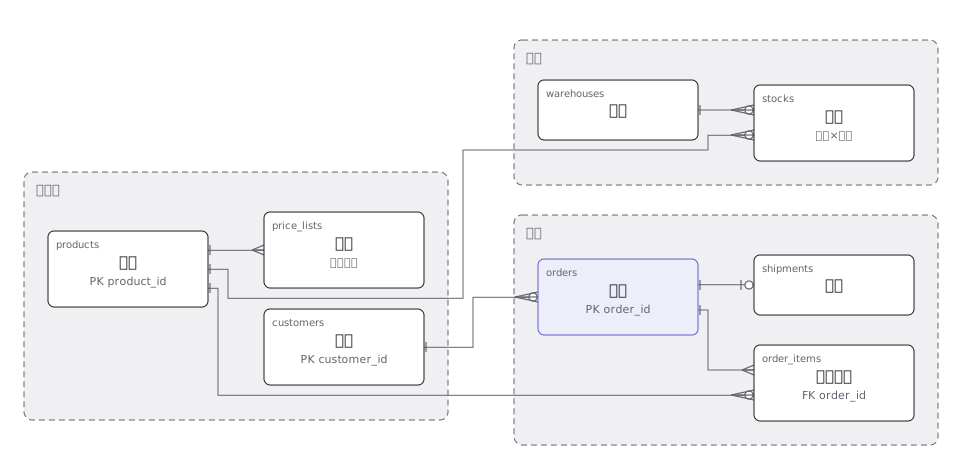 An order management ER diagram with primary and foreign keys, and the one-to-many relationships drawn as crow feet
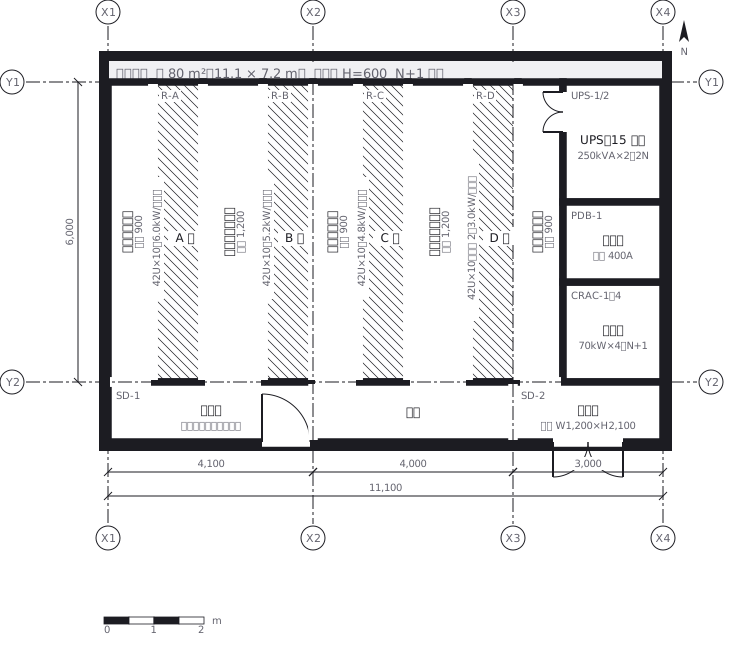 A server room where racks face each other to make hot and cold aisles, with the clearance of each aisle written in
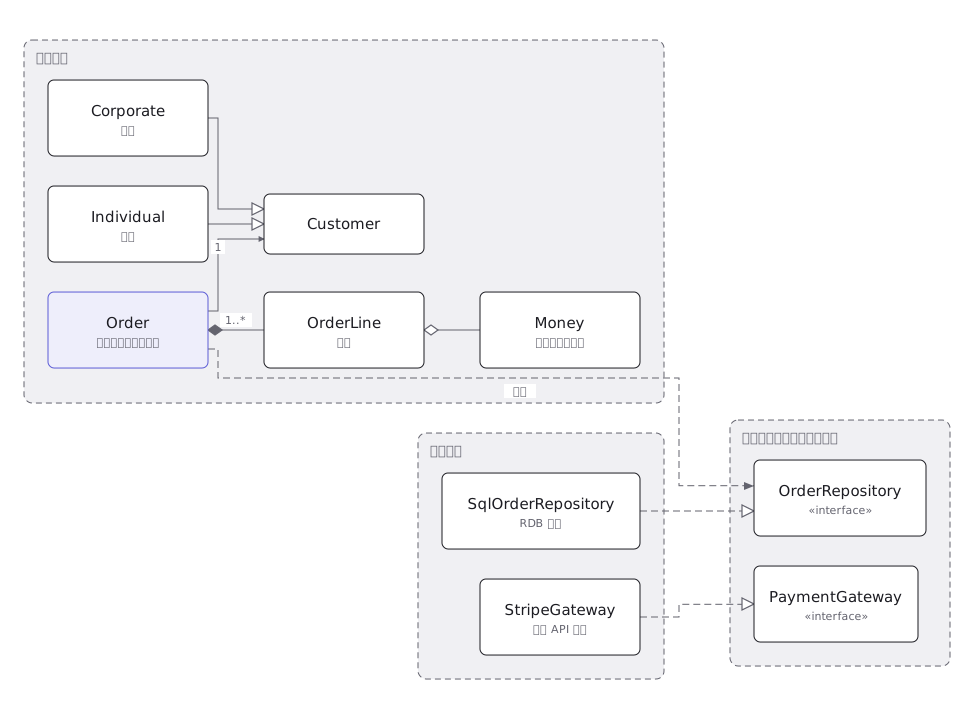 A UML class diagram where inheritance, realisation, association and aggregation are told apart by line type and end symbol
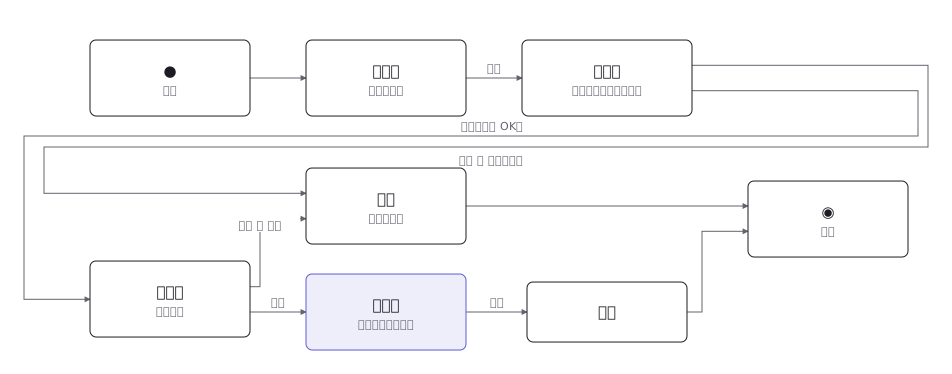 A UML state machine with transitions, the events and guards that fire them, and the pseudostates that begin and end it