Appliances and furniture
Woodworking joints — dovetail slope, tenon one third, and wood movement
Dovetail slope is the limit before the corner grain snaps (1:6 in softwood, 1:8 in hardwood), a tenon is one third of the stock, and a 600mm top moves 9mm across the grain — so the joint that fails is usually the one that was not allowed to move
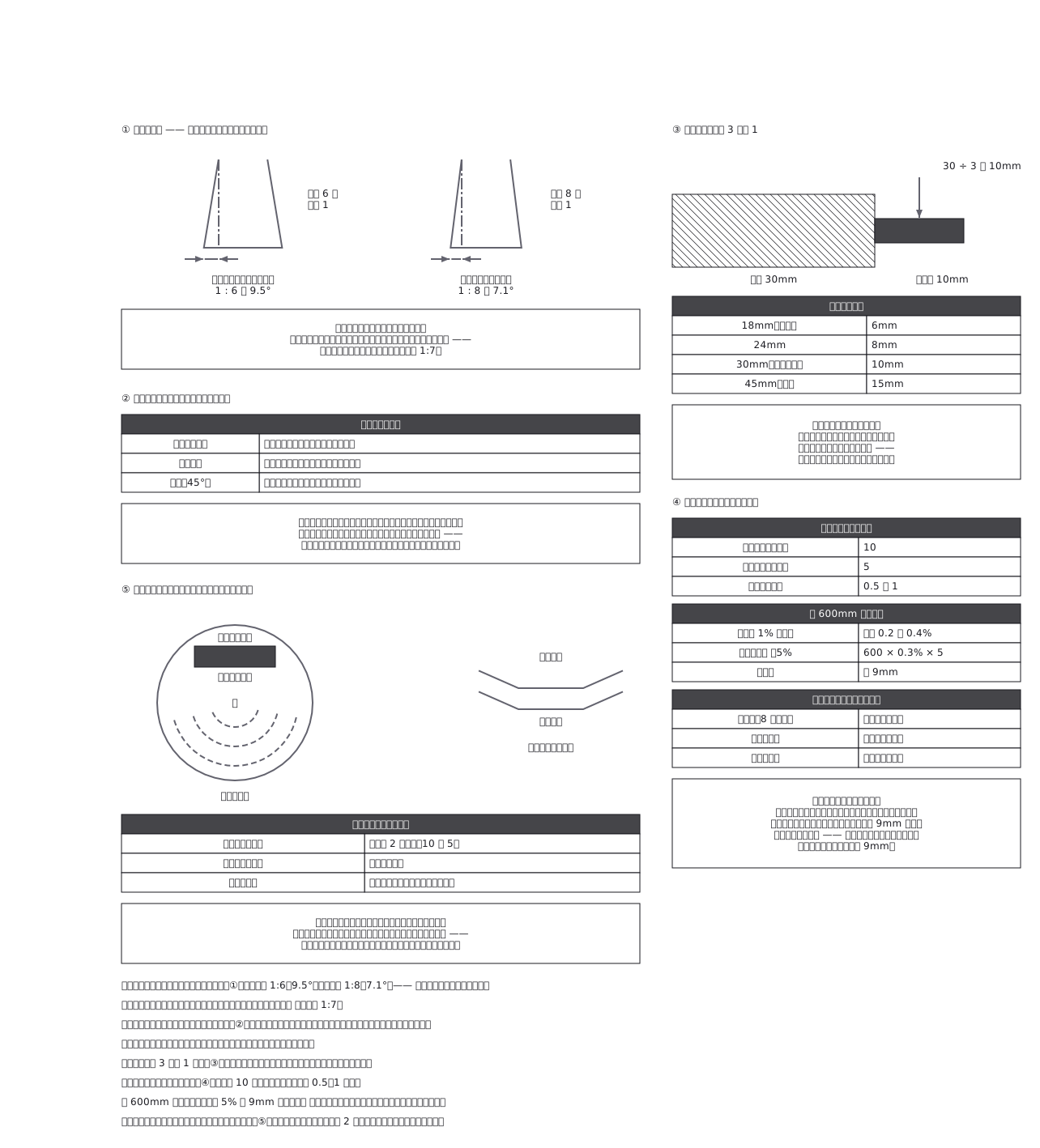
This drawing comes from one YAML file. No shape was moved by hand.
Notes in the source (in Japanese)
蟻組の勾配は、欠けない角度の限界。 針葉樹は 1:6(9.5°)、広葉樹は 1:8(7.1°) —— かたい木ほどゆるくする。角度を立てるほど、テールの角が「短い木口」になって欠けるから。迷ったら 1:7。
勾配があるかどうかで役目が変わる。 蟻組は引っぱっても抜けず、あられ組は接着剤が切れたら抜ける。引き出しの前板を必ず蟻組にするのは、そこだけ毎日引っぱられるから —— 奥板があられ組なのは手抜きではない。
ほぞは材厚の 3 分の 1。(30mm の材なら 10mm。)厚くしても強くならない ——ほぞを厚くすると受ける穴が広がり、折れるのはほぞではなく穴の側になる。
木は幅方向にしか動かない。 接線 10 / 放射 5 / 繊維 0.5〜1、含水率 1% あたり幅の 0.2〜0.4%。幅 600mm の天板は含水率 5% で 9mm 動く。固定すると力が逃げ場を失い、板が割れるか 幕板・框が裂ける。
反る向きは、挽く前から決まっている。 木表は接線方向で木裏(放射方向)の2 倍縮むので、乾くと木表が凹・木裏が凸になる。板の反りは不良品ではなく、丸太のどこから取ったかの結果。
Source (YAML)
examples/gallery/262-木工の組み手.zumen.yaml
More in this field
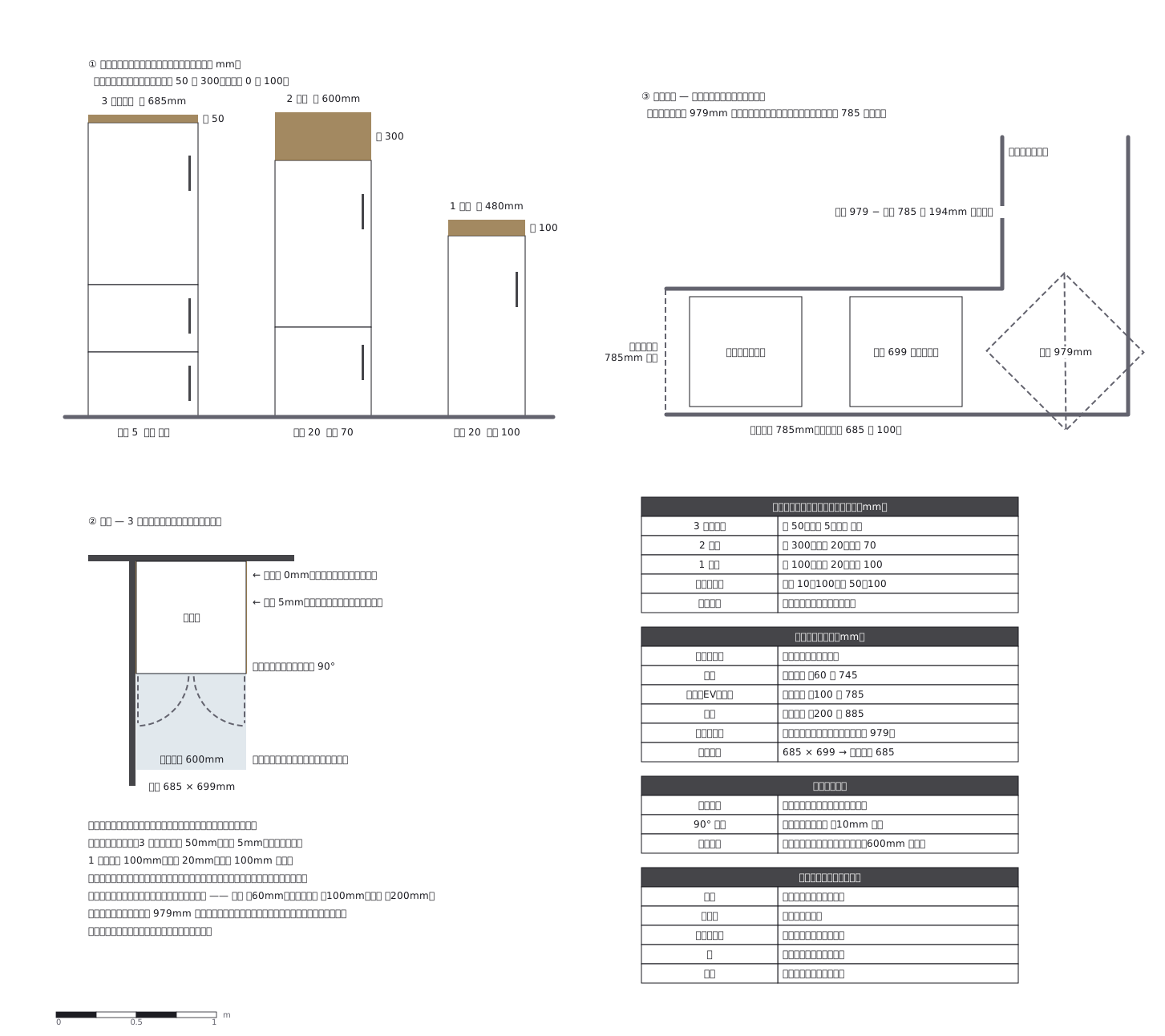 Fitting a refrigerator: clearances differ by model, and a corner turns on the diagonal
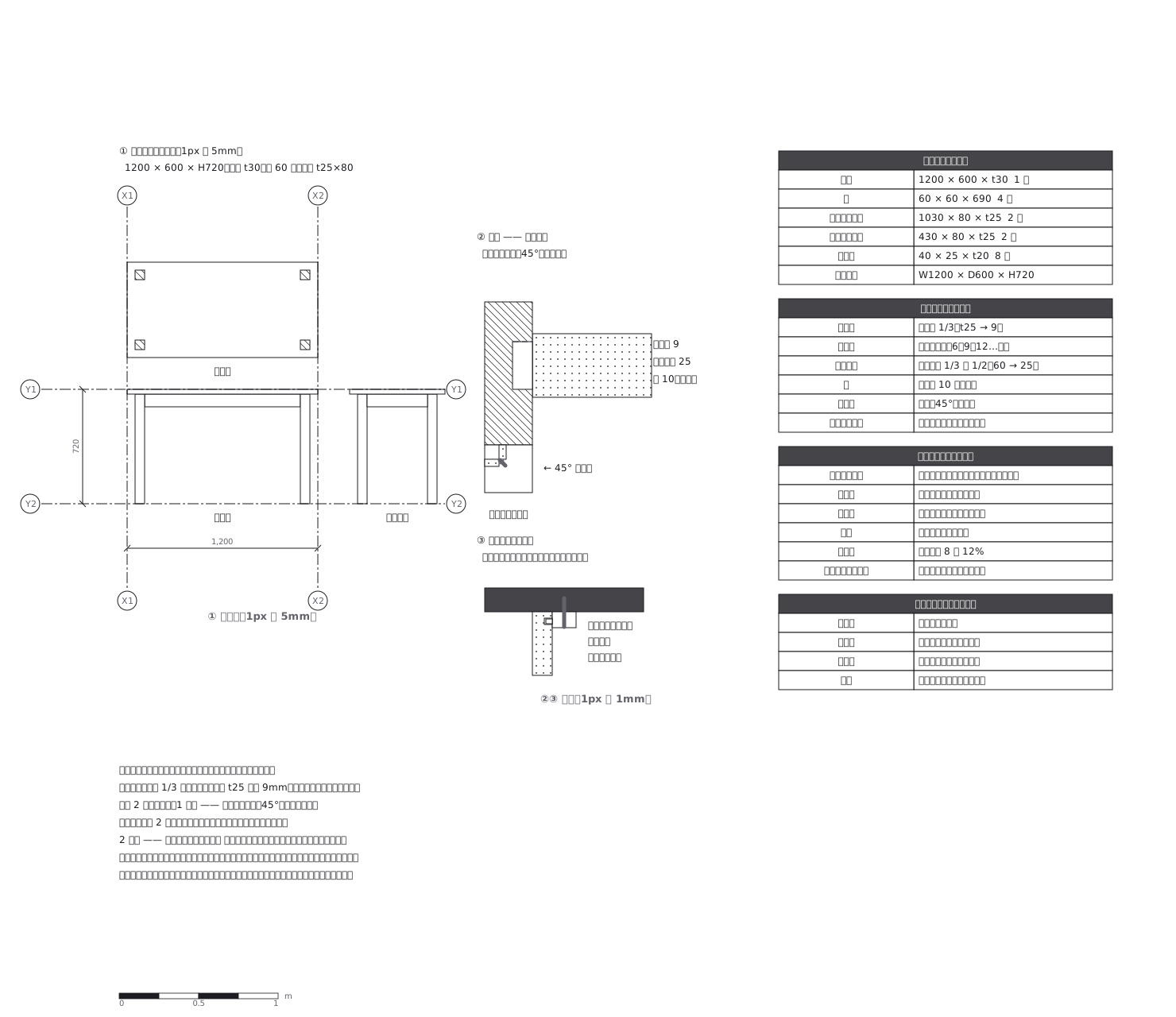 A bench built for making: tenons mitred where they meet, and a top that is never screwed down
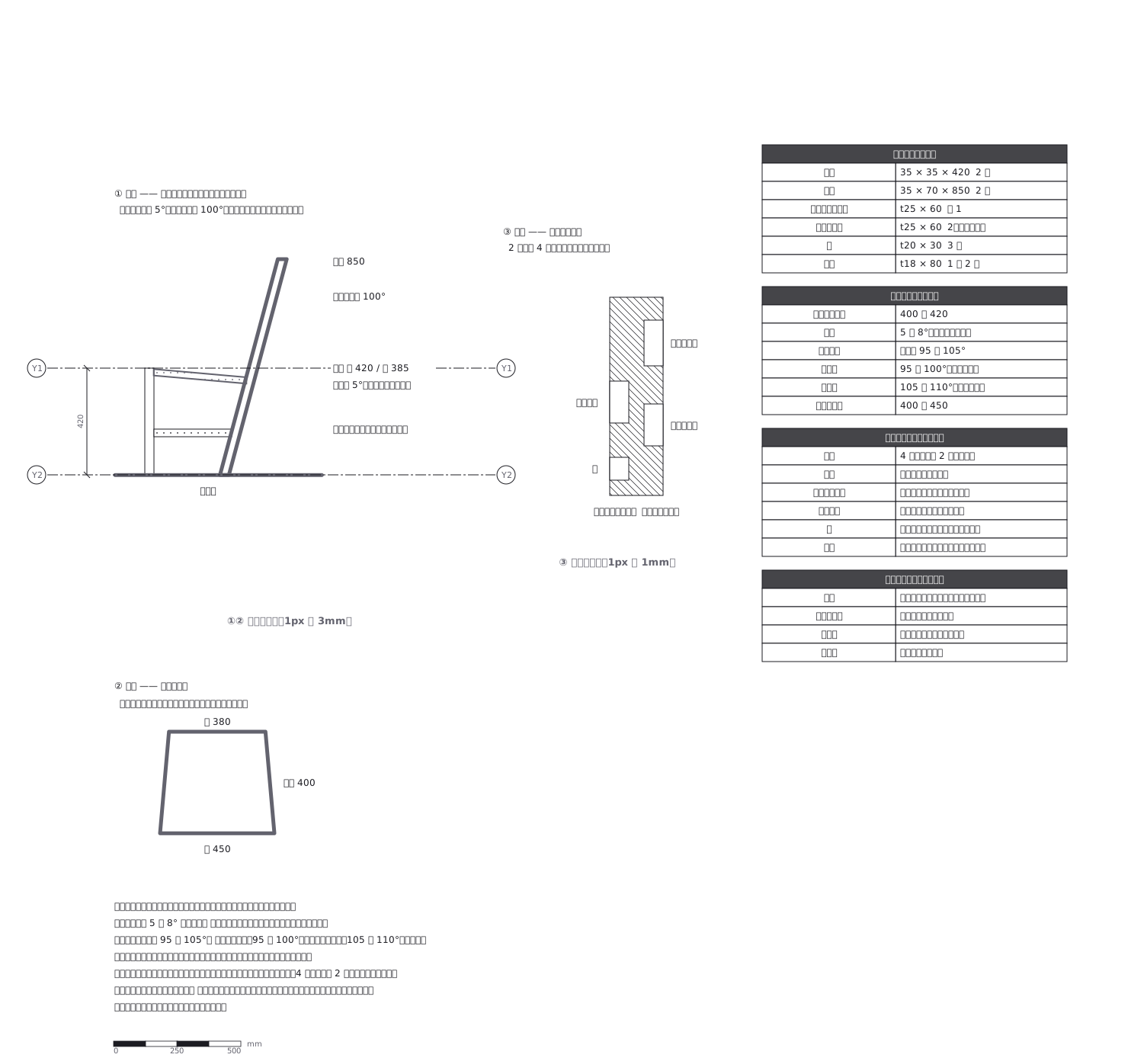 A chair drawn for making: four tenons meet in the back leg, and they must be set at different heights
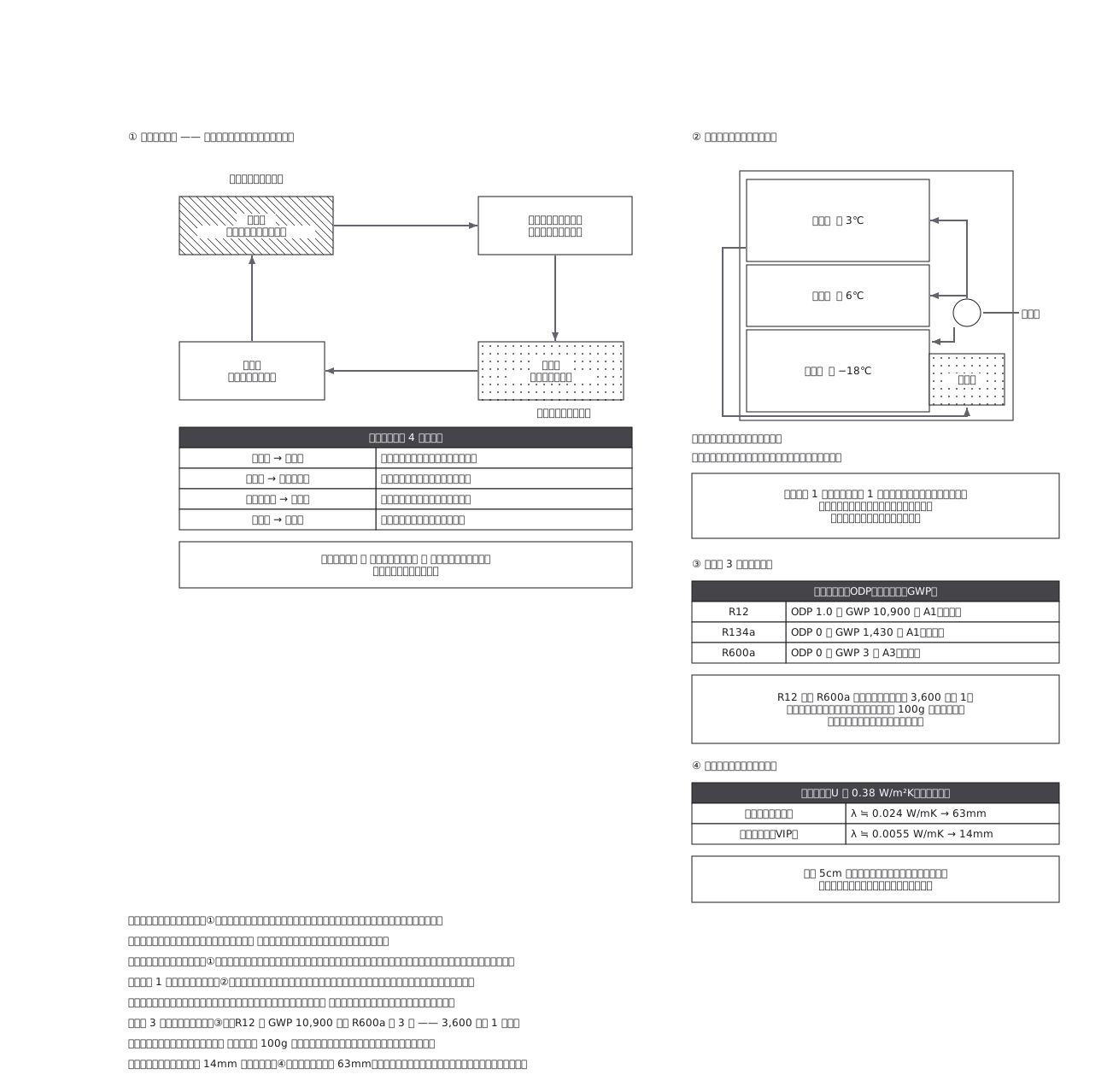 A fridge does not make cold, it pumps heat out — and it throws away more than it took, because the compressor's electricity comes out as heat too
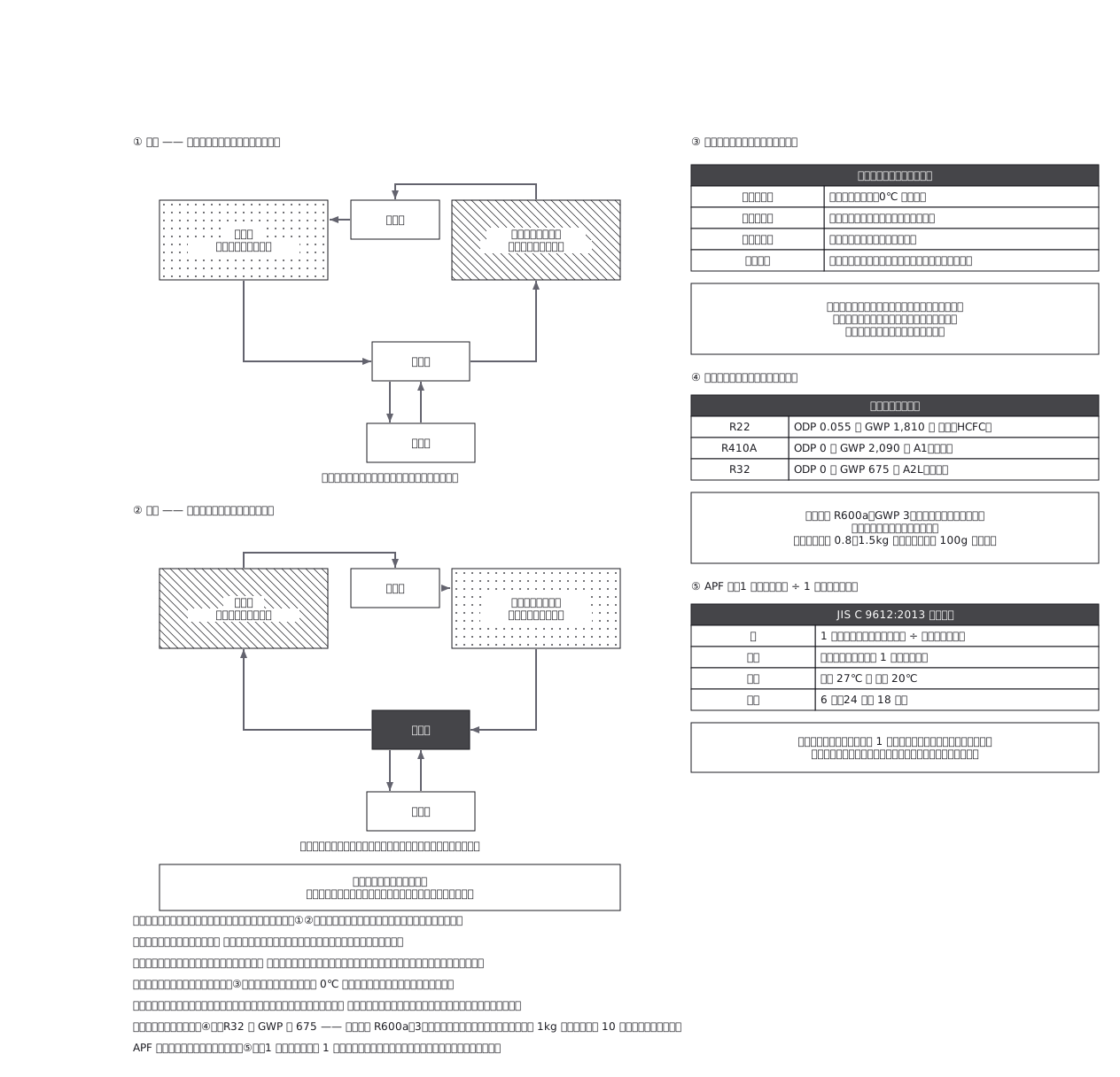 Heating and cooling swap the roles of the indoor and outdoor coils, and the only part that changes is one valve — which is also why a heat pump briefly runs cooling in the middle of heating, to melt its own frost
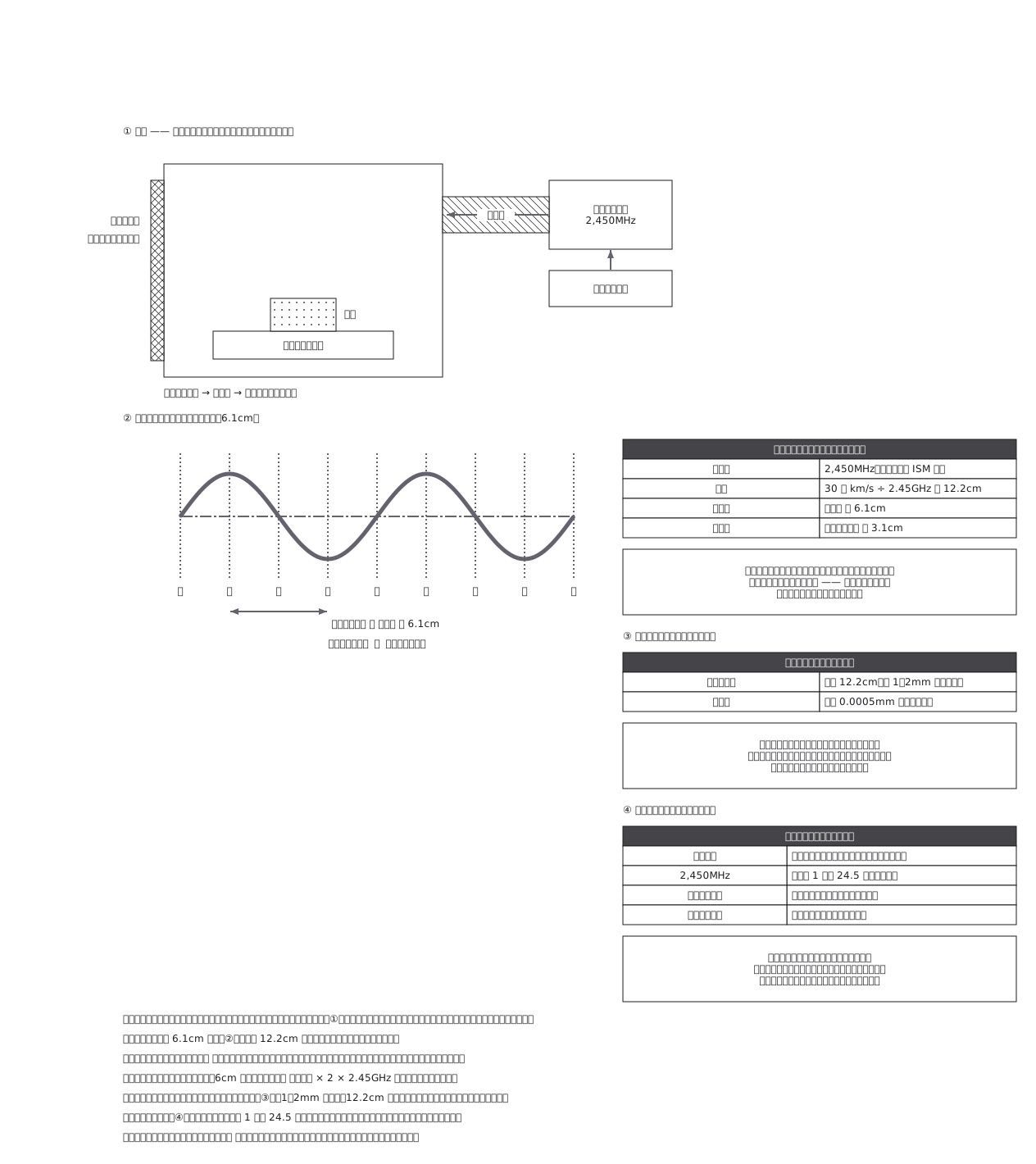 Hot and cold spots sit 6.1cm apart because that is half of the 12.2cm wavelength, which no cabinet design can remove — so the food is moved instead
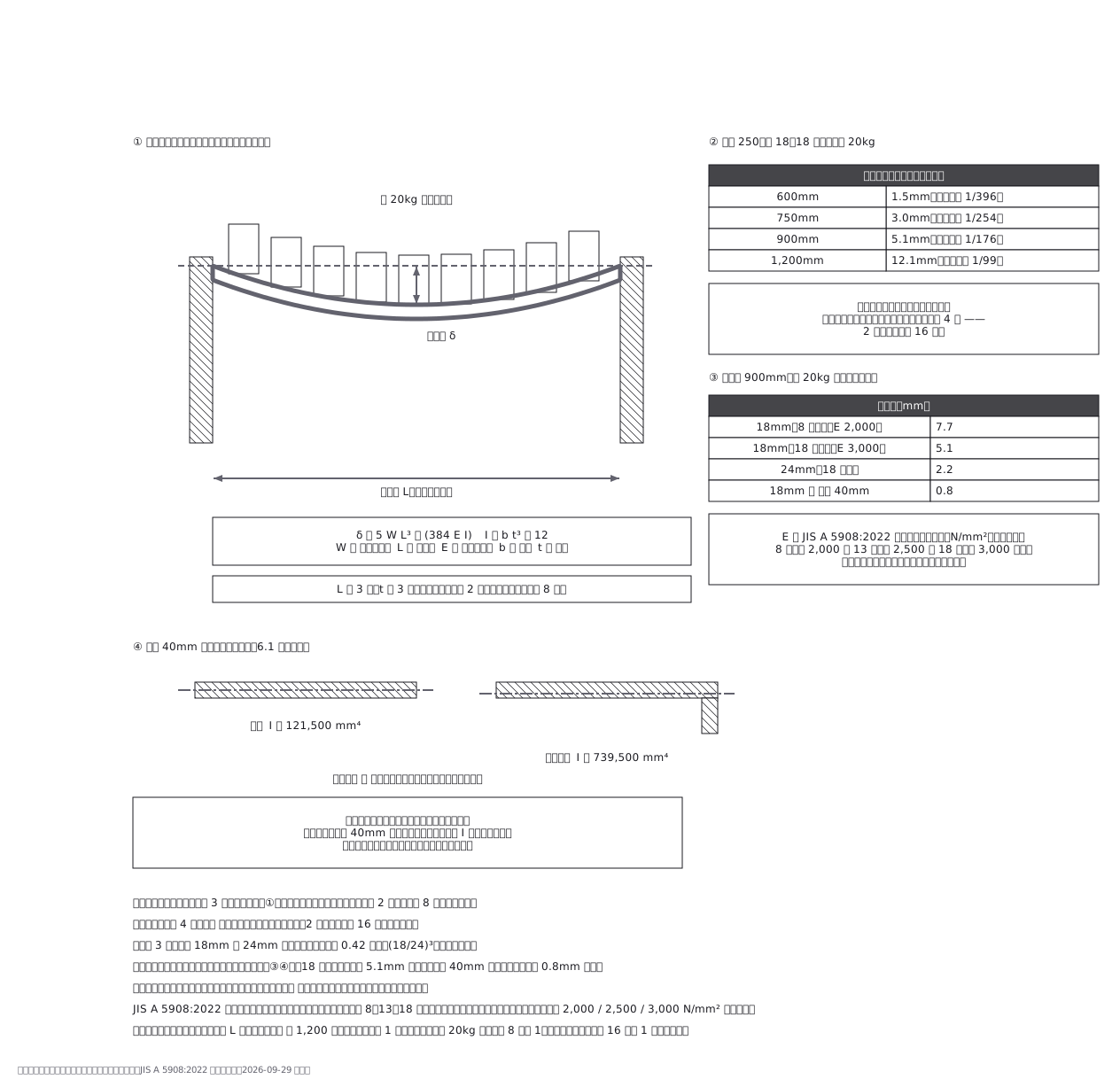 A shelf sags with the cube of its span, so doubling the span sags it eight times — and gluing a 40mm rail under the front edge does more than upgrading the board
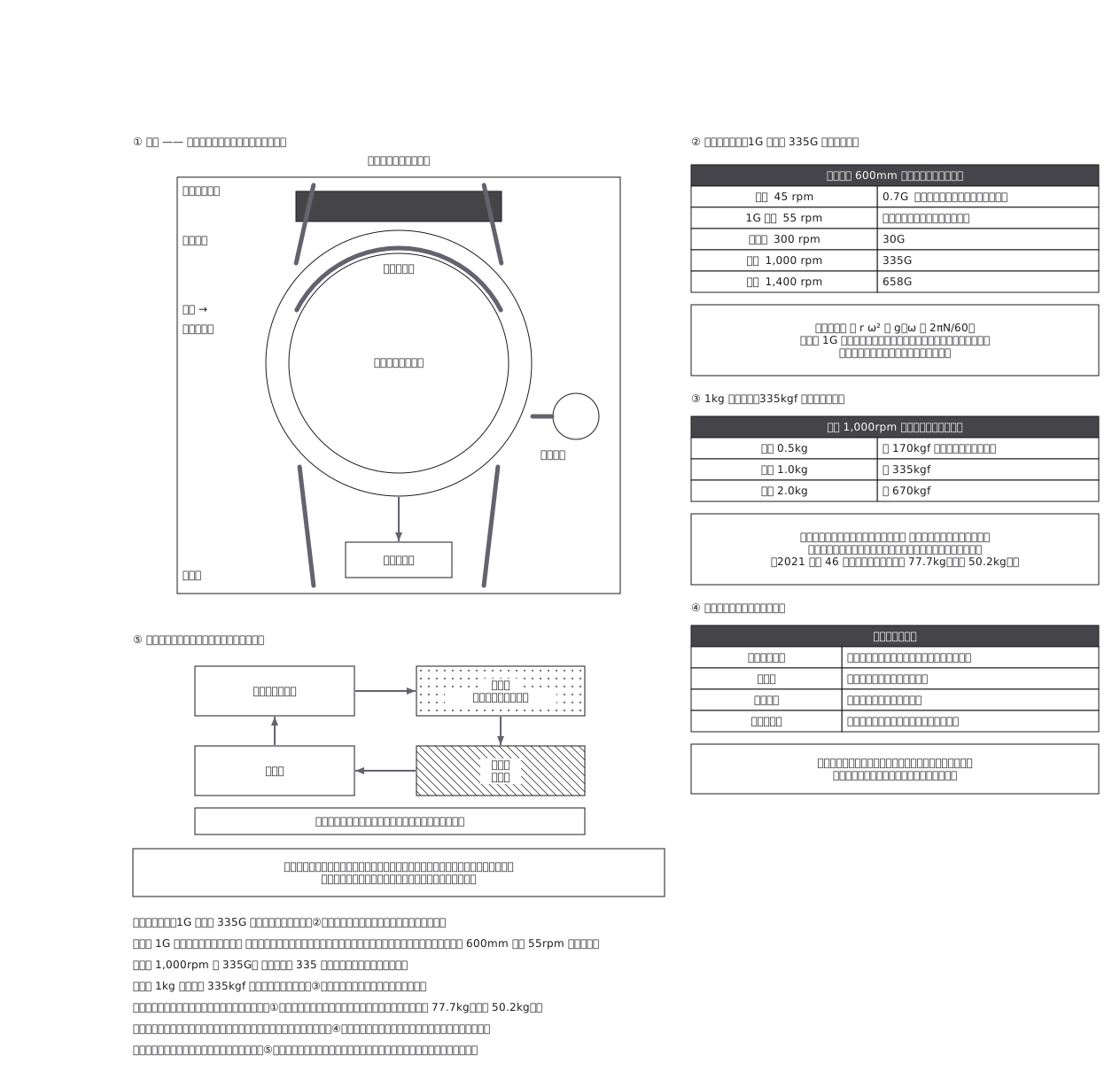 The same drum has to stay under 1G to wash and reach 335G to spin, which is why it hangs on springs behind a concrete weight rather than being bolted to the machine