Health, food and farming
Sake's three-stage brewing — saccharification and fermentation in the same tank at once
Sake is the rare brew where starch is turned to sugar and sugar to alcohol in the same tank at the same time, so the rice is added in three goes over four days — one sixth, then two, then three — because pouring it all in at once would dilute the lactic acid that keeps the starter safe
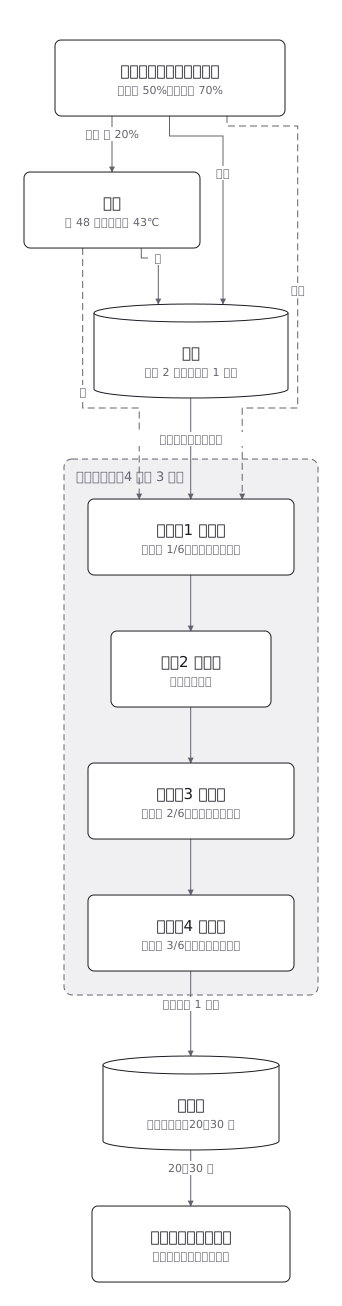
This drawing comes from one YAML file. No shape was moved by hand.
Notes in the source (in Japanese)
日本酒がほかの醸造酒と違うのは、糖化と発酵を同じタンクで同時にやるから。ワインはぶどうに糖があるので、そのまま発酵する(単発酵)。ビールは麦を糖にして麦汁にしてから、酵母を入れる(単行複発酵)。日本酒は米のデンプンを麹の酵素が糖に変えるそばから、酵母がその糖を食べる ——並行複発酵という。世界の醸造酒で、この形はほかにほとんど無い。
だから麹が要る。 米には糖が無く、麦芽のように米を発芽させることもしない。麹菌を米に生やして、その酵素を借りる。 麹米は総米のおよそ 20% で、特定名称酒ではこうじ米の割合が 15% 以上と決まっている(清酒の製法品質表示基準・国税庁告示第 8 号(平成元年)。平成 15 年改正・平成 16 年 1 月施行で、純米酒の精米歩合 70% 以下の要件は削除された)。
三段仕込みは、4 日で 3 回に分けて足す。1 日目 初添(総米の 1/6)→ 2 日目 踊(何も足さずに 1 日待つ) →3 日目 仲添(2/6)→ 4 日目 留添(3/6)。足す量が 1 : 2 : 3 で、タンクの中は 1 → 3 → 6 と増える。
なぜ一度に入れないか。 酒母は乳酸で酸性にして雑菌を締め出した液で、そこへ一度に全量を足すと酸が薄まって雑菌が動く。3 回に分ければ、酸と酵母の濃さを保ったまま量だけ増やせる ——踊は、初添で増えた酵母が量に追いつくのを待つ日で、休みではない。
留添の日が、もろみの 1 日目。 そこから 20〜30 日。留添の品温はもろみ全体の最低温をねらい、吟醸で 6〜7℃、普通酒で 7〜10℃。低いほど発酵はゆっくり進み、香りが残る。
数えているのは日数ではなく、酵母の数と酸の濃さ。図の縦は時間の順だが、段を分ける理由はどれも「薄めないこと」に行き着く。
wrap: false は、試して戻した結果。 この図は 9 段あって細長いが、折り返すと三段仕込みの囲みの中で順が入れ替わり、1 : 2 : 3 が読めなくなる。囲みは「4 日で 3 回」という中身そのものなので、外して短くすることもしない。
Source (YAML)
examples/gallery/287-日本酒の三段仕込み.zumen.yaml
More in this field
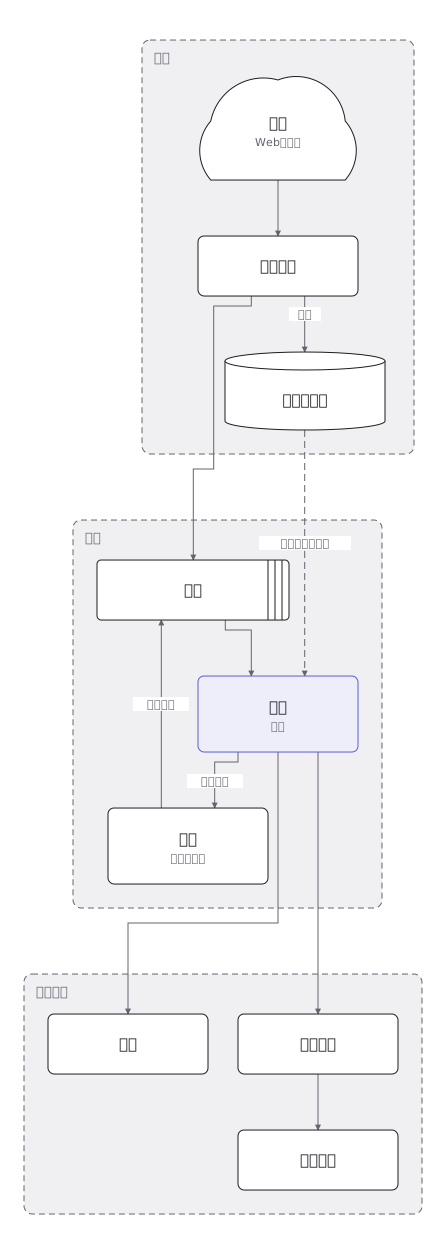 How an outpatient moves through a hospital — reception, consultation, tests, payment, prescription — and where each department keeps people waiting
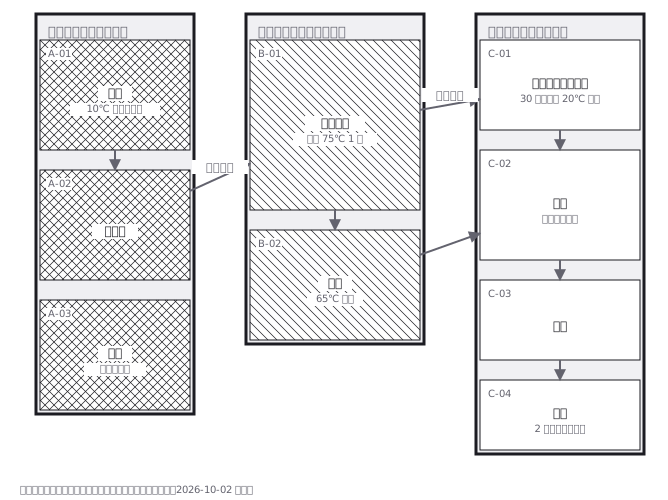 A school meal kitchen split into contaminated and clean zones, with the paths of food, people and crockery kept from crossing
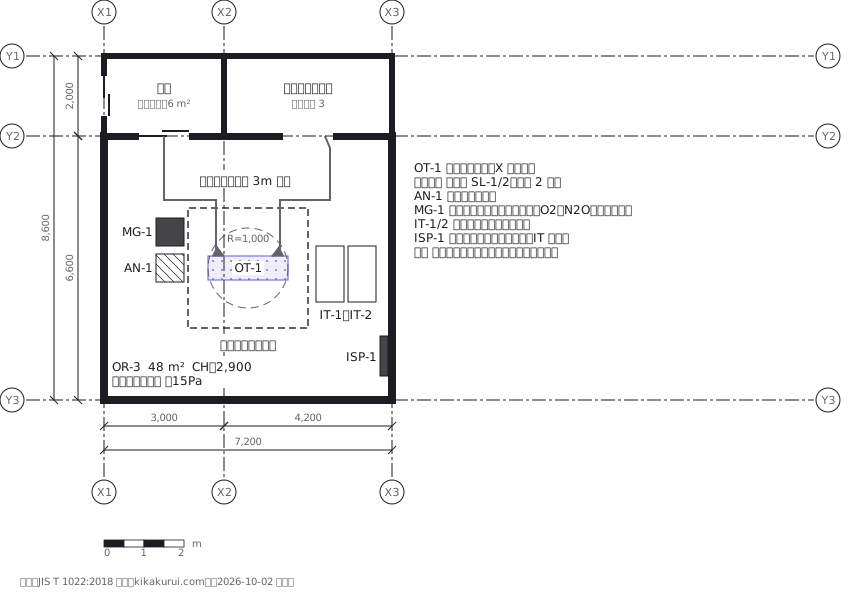 An operating room laid out around the table: surgical light, anaesthesia machine, electrosurgical unit and monitors, with the sterile field
 The fourteen meridians and their principal points, named to the WHO standard acupuncture point locations
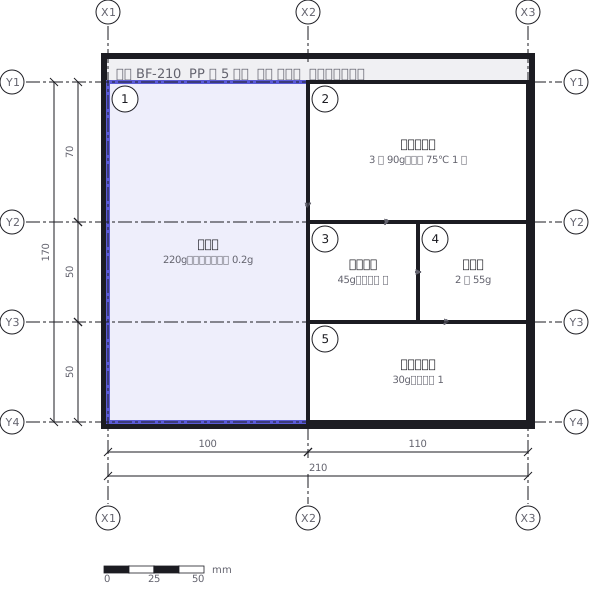 A packing instruction for a boxed lunch: what goes in each compartment, how much, which way up, and in what order
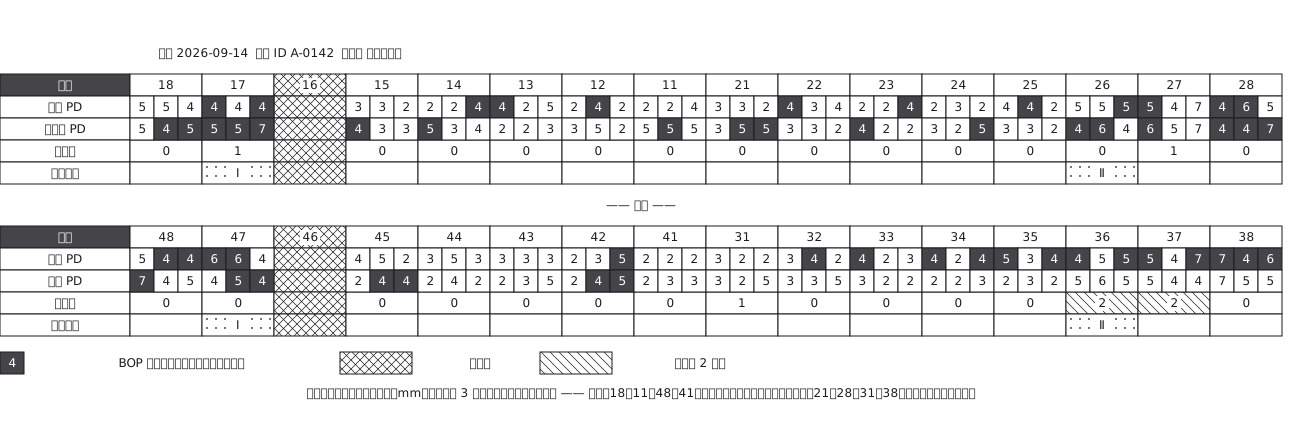 A periodontal chart where all 32 teeth are measured at six points each, recording pocket depth, bleeding and mobility
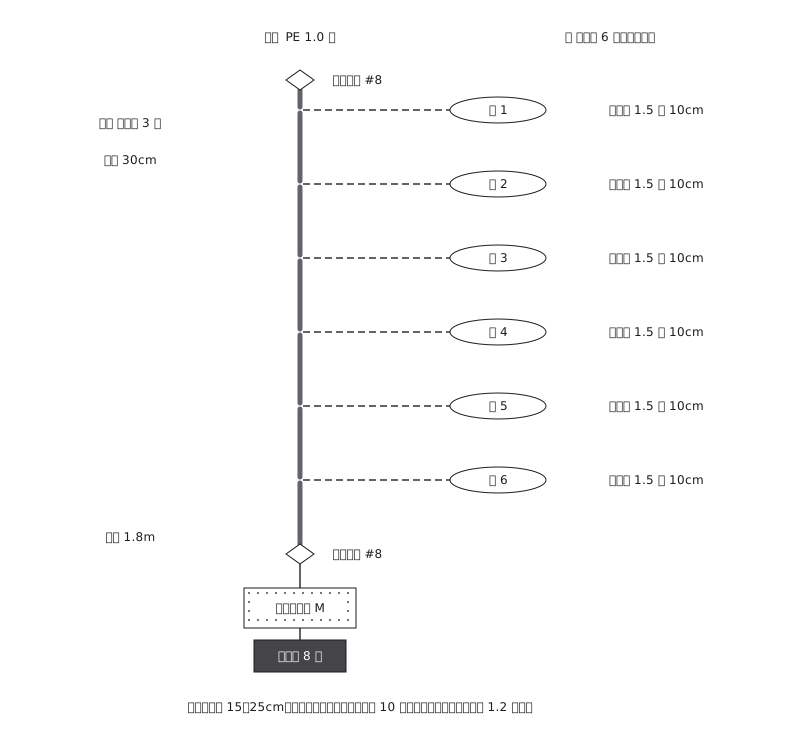 A sabiki fishing rig from main line to six hooks, feeder cage and sinker, with the gauge and length specified for every section
 High-density apple training, with tree and row spacing