Appliances and furniture
Rice cooker temperature and pressure — one valve is all that is added
Boiling water refuses to go past 100C, so a pressure cooker adds exactly one part — a valve — to lift that ceiling to about 105C
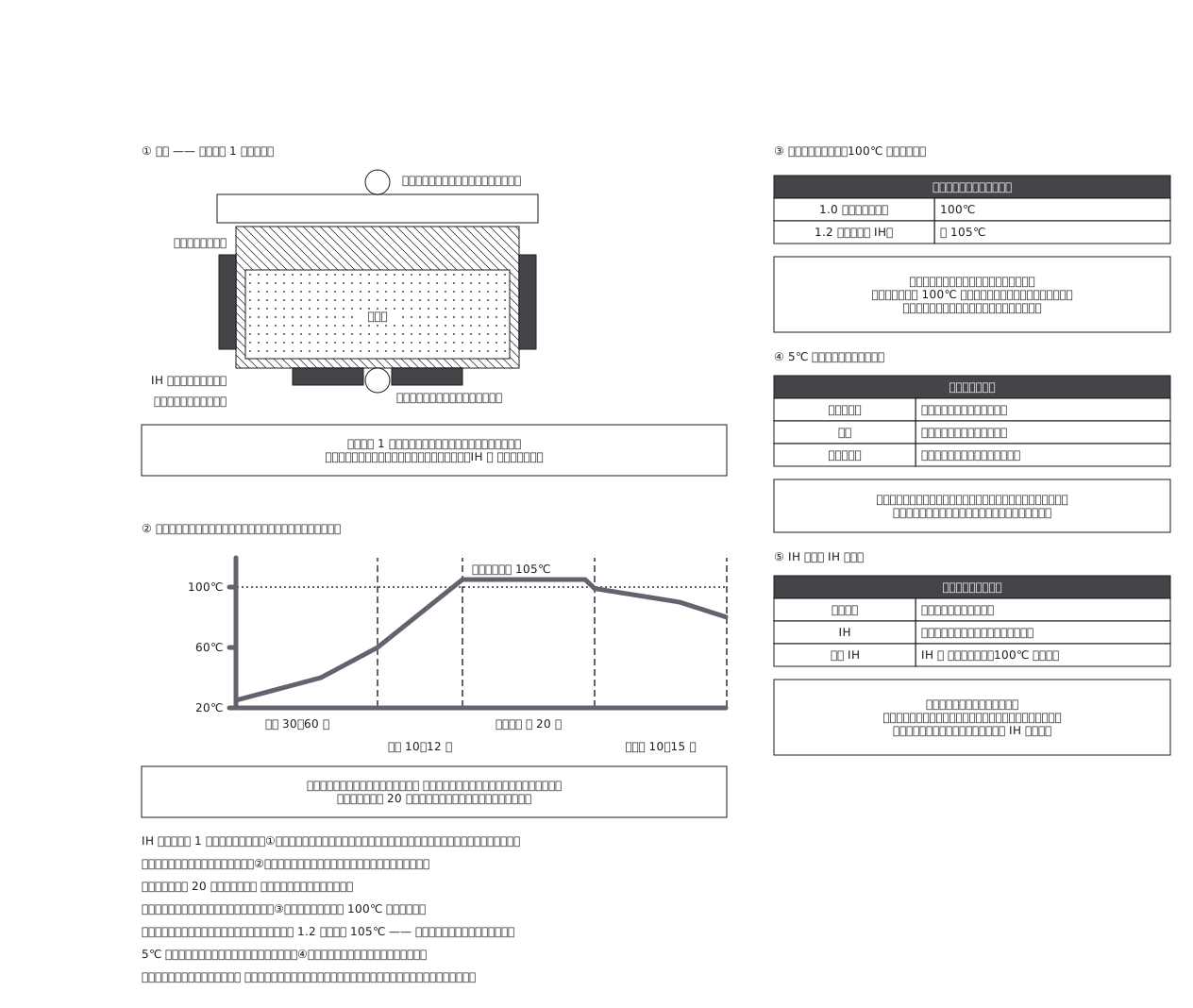
This drawing comes from one YAML file. No shape was moved by hand.
Notes in the source (in Japanese)
水は、沸いている間は温度が上がらない。 ふつうの鍋では 100℃ が上限で、それ以上の熱は入れられない。圧を上げると沸点が上がり、その上限が動く—— 1.2 気圧で約 105℃。圧力 IH に足されているのは、弁ひとつ。
IH のコイルは 1 つではない。 底だけだと上が炊けないので、側面からも入れて釜そのものを発熱させる(IH は釜が発熱体)。
炊飯は 4 つの工程 —— 浸水(30〜60 分。米が水を吸うのは、まだ冷たいうち)、昇温(10〜12 分)、沸騰維持(約 20 分。ここでデンプンが糊化する)、蒸らし(10〜15 分)。
減圧は、かき混ぜる代わり。 炊飯中はふたを開けられないので、圧を抜いて中の水を一気に沸かせ、米を動かしてムラを減らす。
温度センサ(鍋センサ)は、本体の内枠の底の中央からばねで釜底の外面に押し当てられ、その温度で主に底のコイルを制御する。ふたの側にも別の温度センサがある(この図では略した)。出典:特開 2020-000548「炊飯器」東芝ホームテクノ 段落「内枠6の底部中央部には、鍋温度検出手段としての鍋センサ14が、鍋5の外面底部と弾発的に接触するように配設される」https://patents.google.com/patent/JP2020000548A/ja (取得 2026-10-05)。メーカーや機種で細部は違う。
沸点は飽和蒸気表による(1.2 気圧 = 約 121.6kPa(絶対圧)で飽和温度 約 105℃)。②の曲線と工程の分数は模式。
Source (YAML)
examples/gallery/255-炊飯器の温度と圧力.zumen.yaml
More in this field
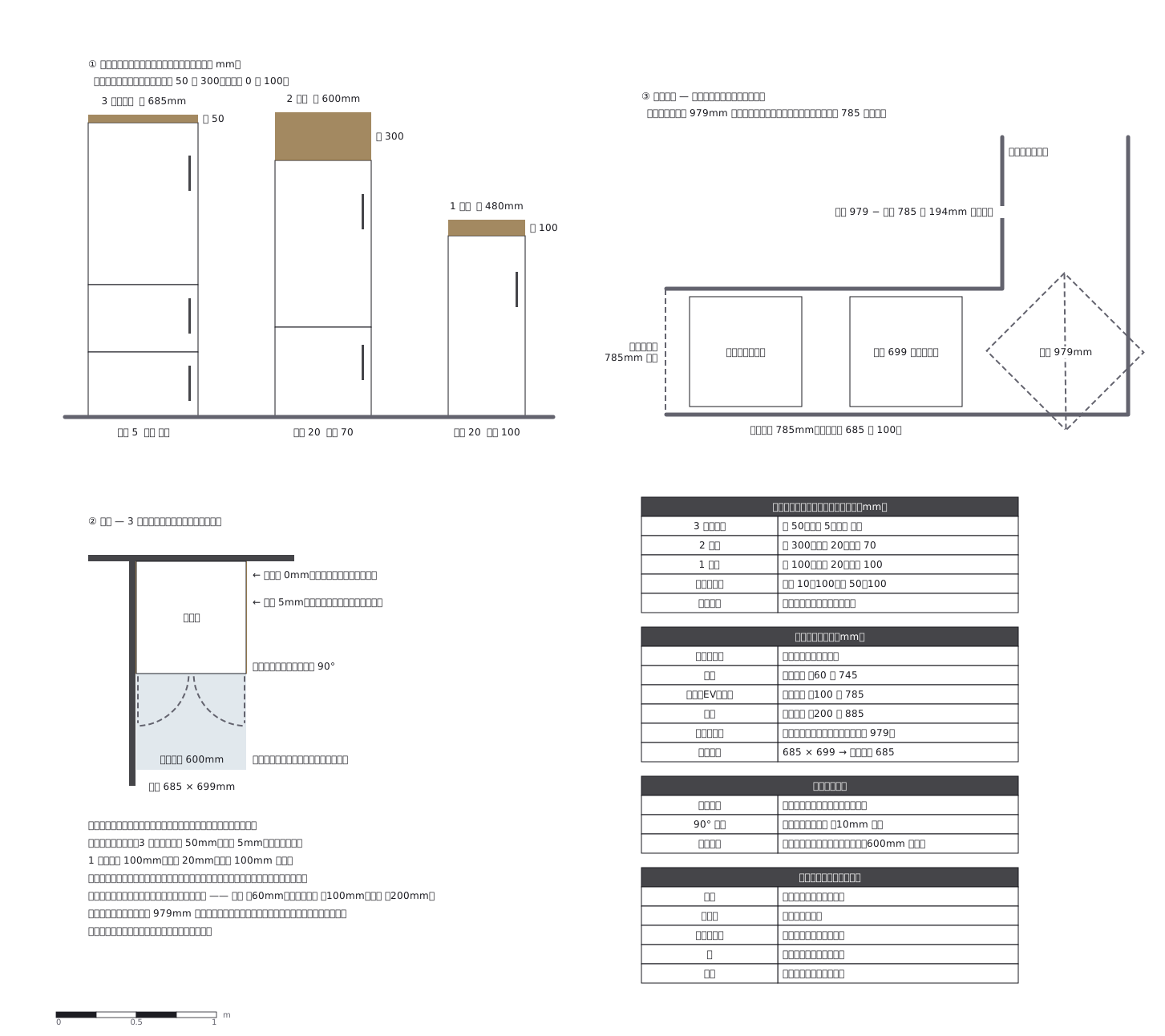 Fitting a refrigerator: clearances differ by model, and a corner turns on the diagonal
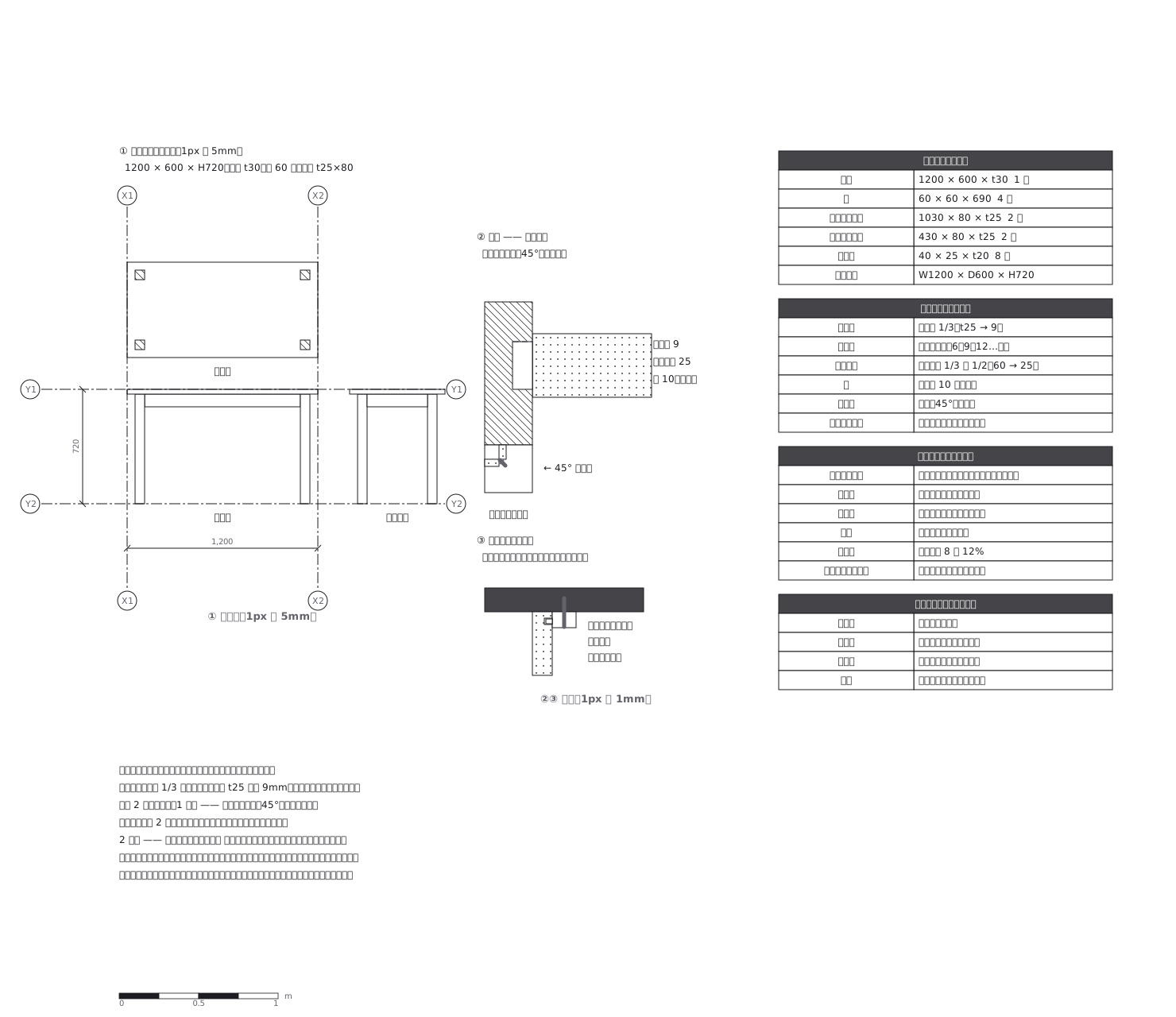 A bench built for making: tenons mitred where they meet, and a top that is never screwed down
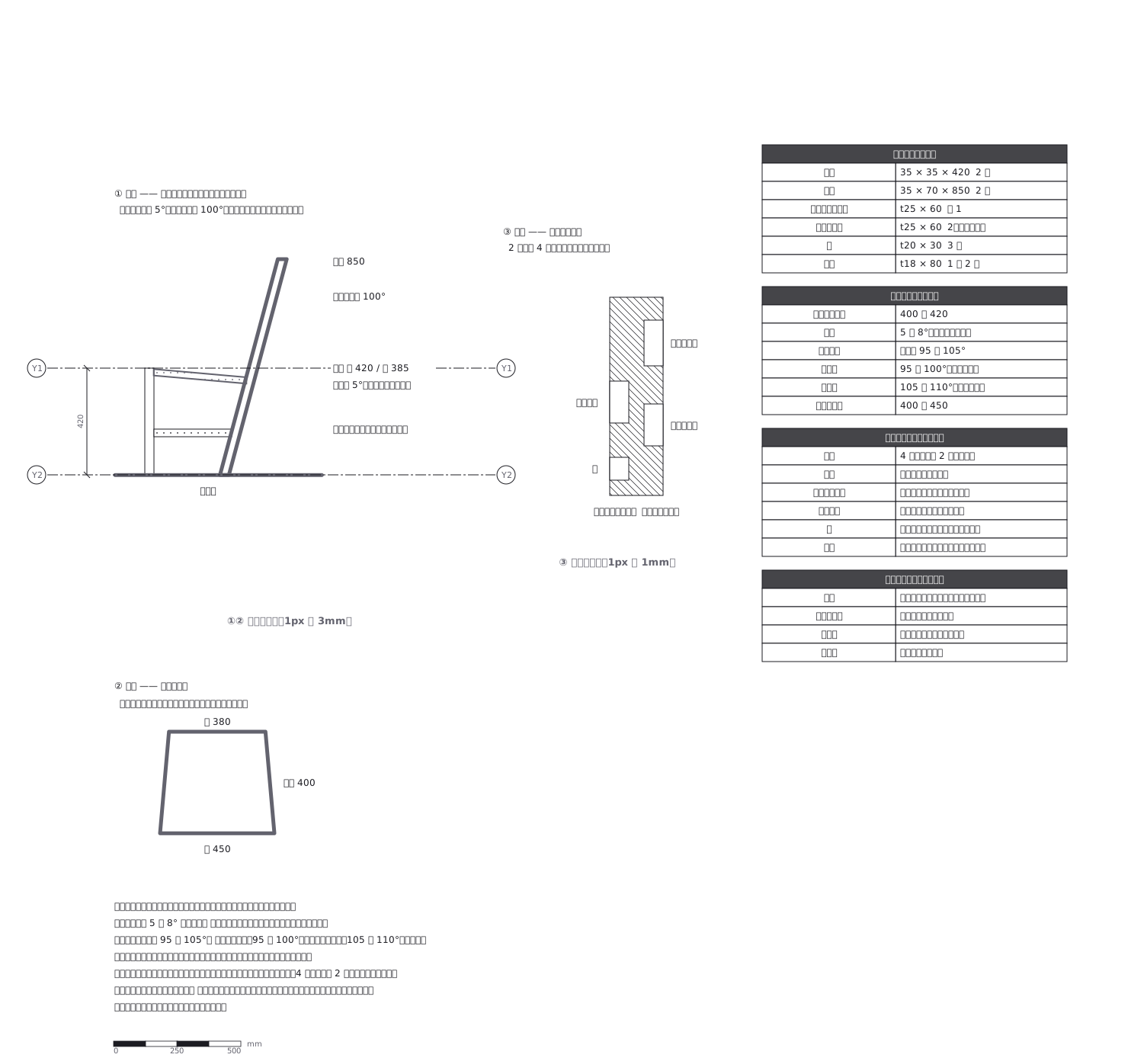 A chair drawn for making: four tenons meet in the back leg, and they must be set at different heights
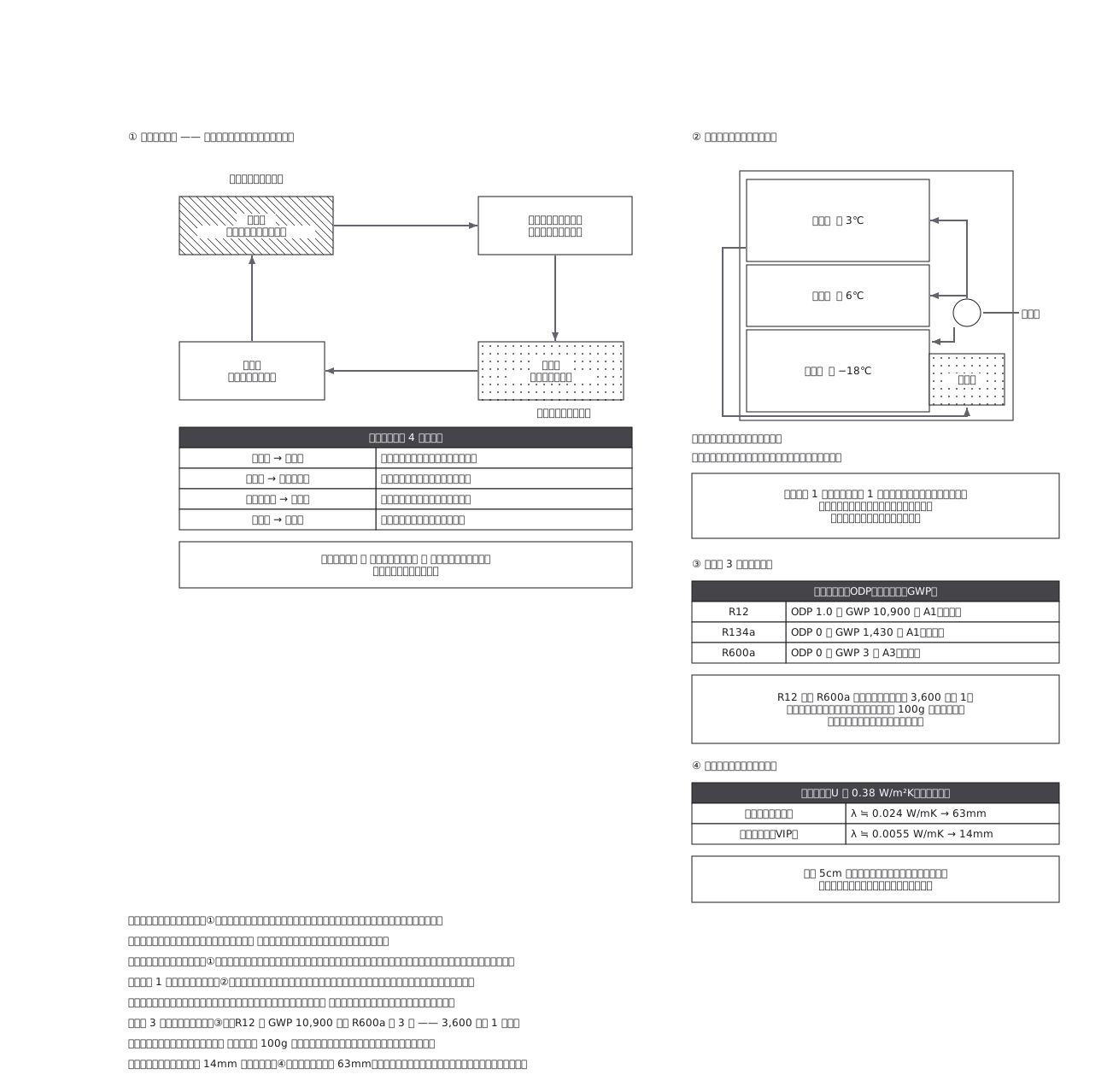 A fridge does not make cold, it pumps heat out — and it throws away more than it took, because the compressor's electricity comes out as heat too
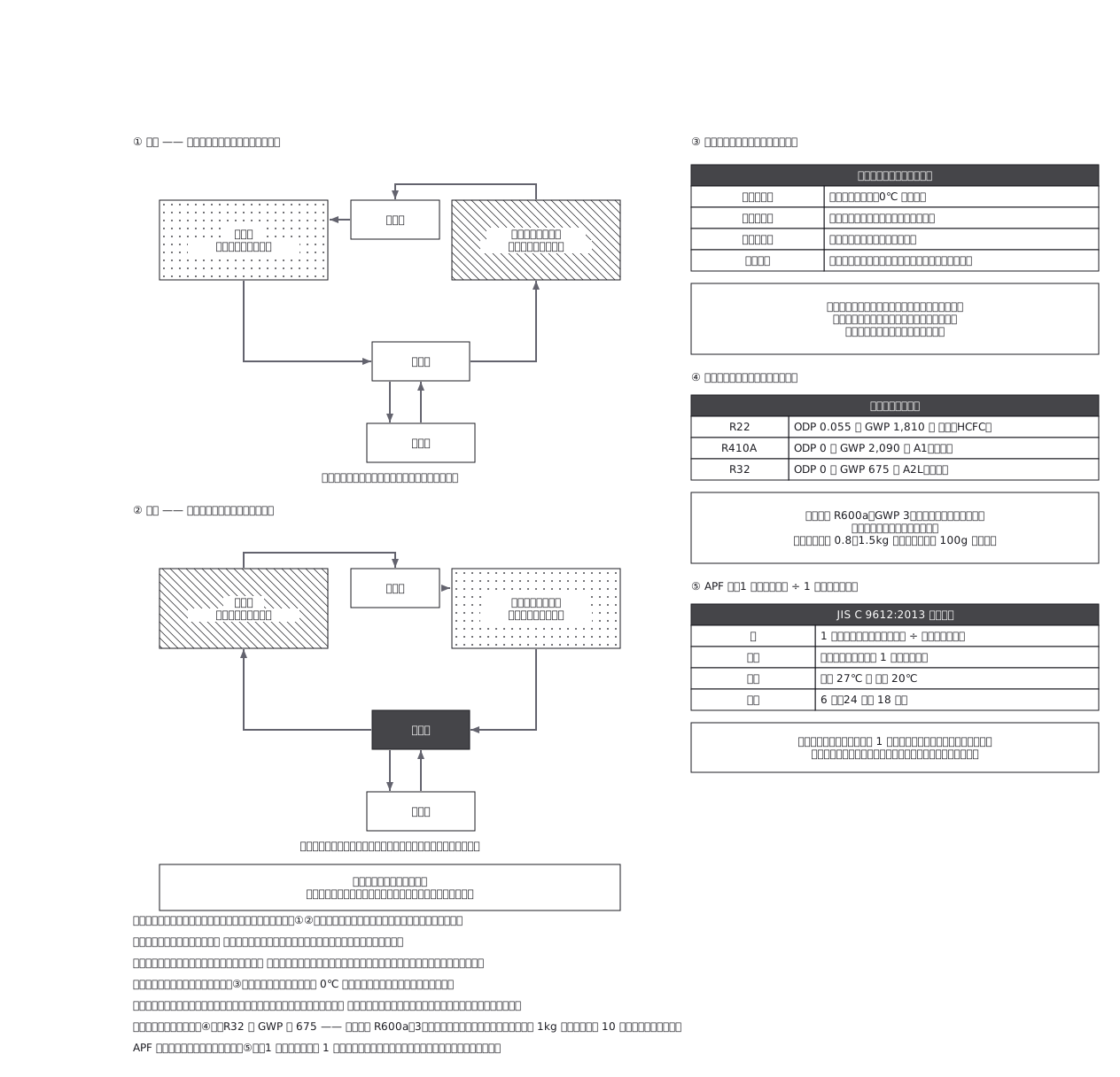 Heating and cooling swap the roles of the indoor and outdoor coils, and the only part that changes is one valve — which is also why a heat pump briefly runs cooling in the middle of heating, to melt its own frost
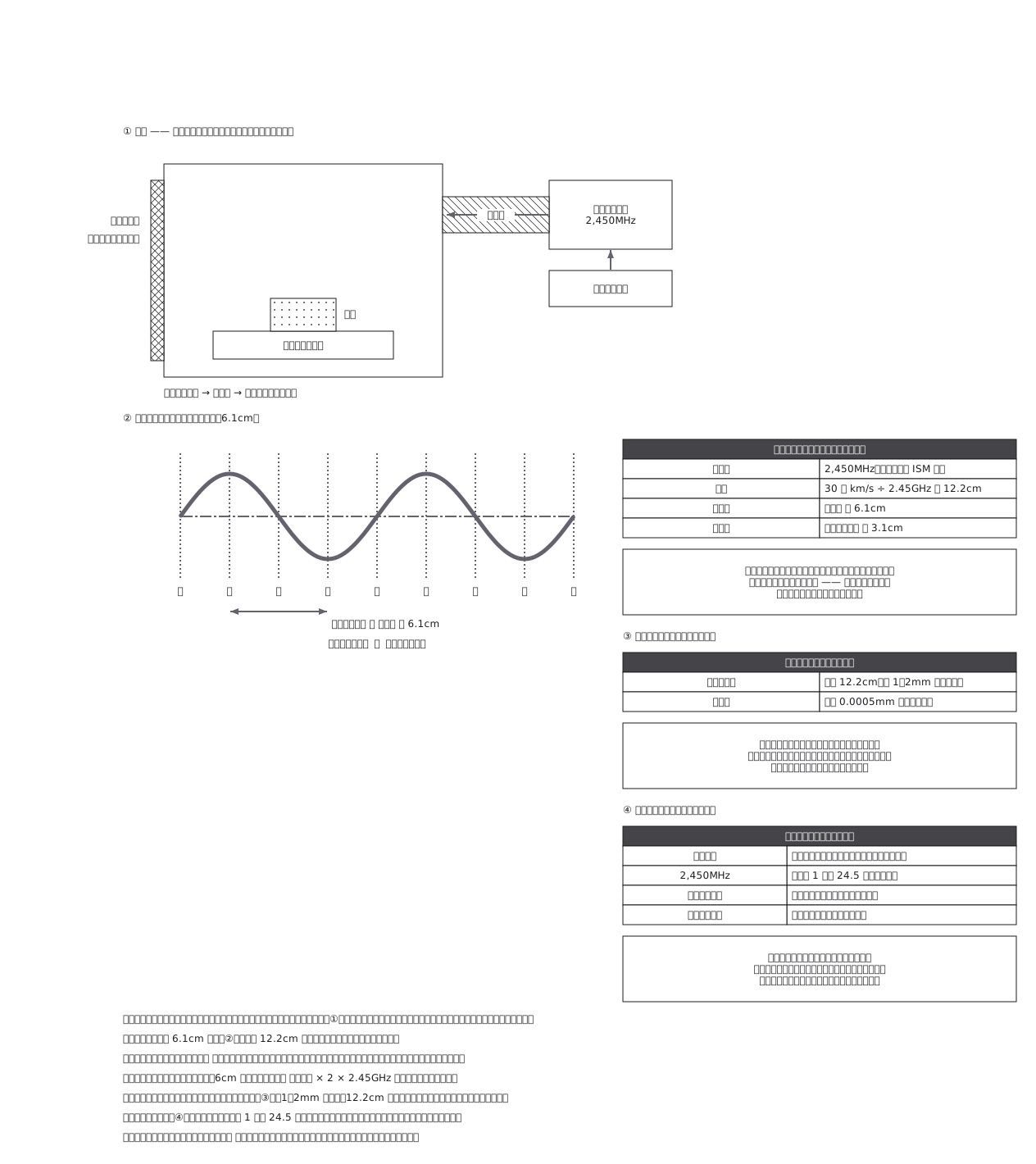 Hot and cold spots sit 6.1cm apart because that is half of the 12.2cm wavelength, which no cabinet design can remove — so the food is moved instead
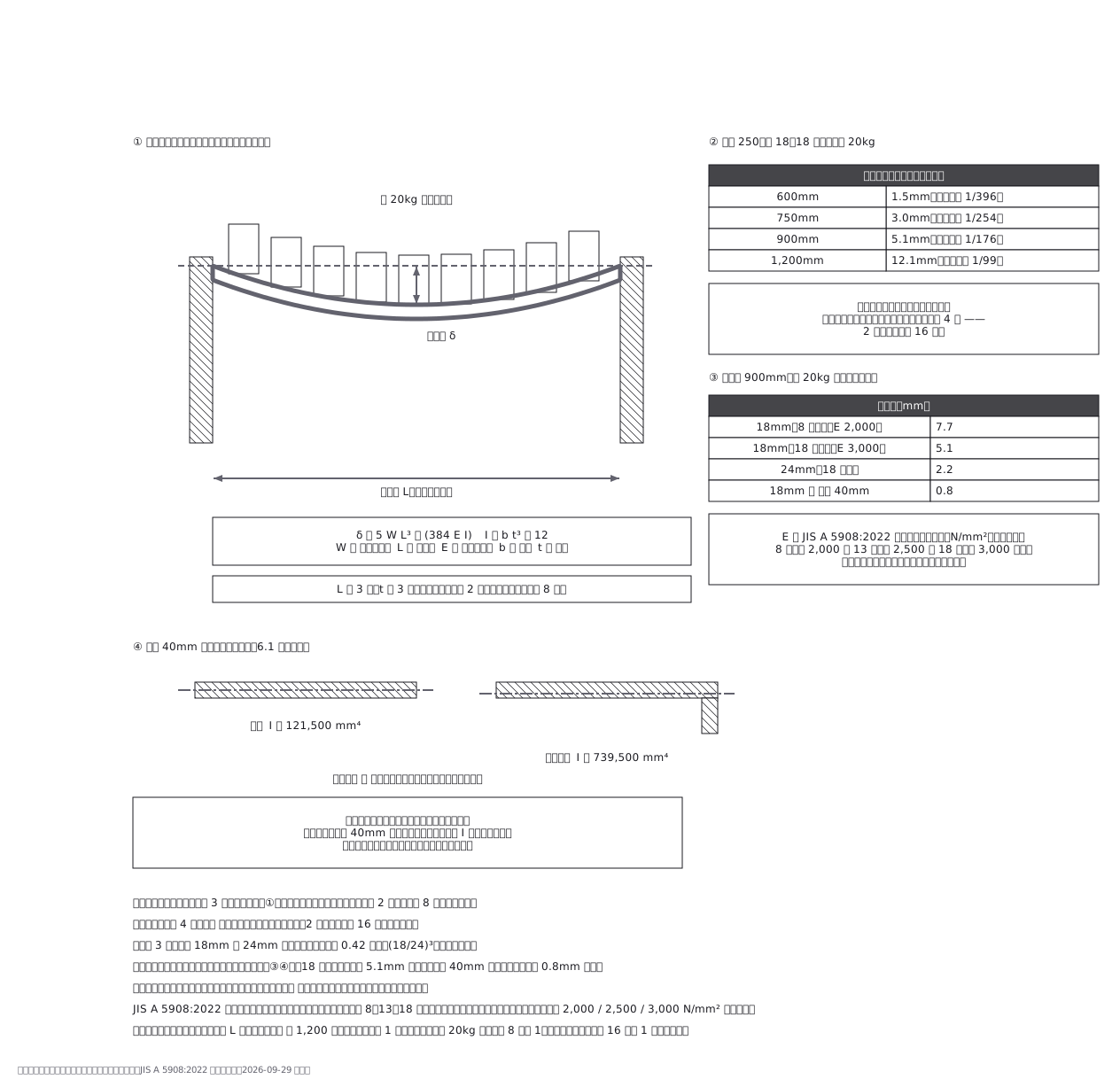 A shelf sags with the cube of its span, so doubling the span sags it eight times — and gluing a 40mm rail under the front edge does more than upgrading the board
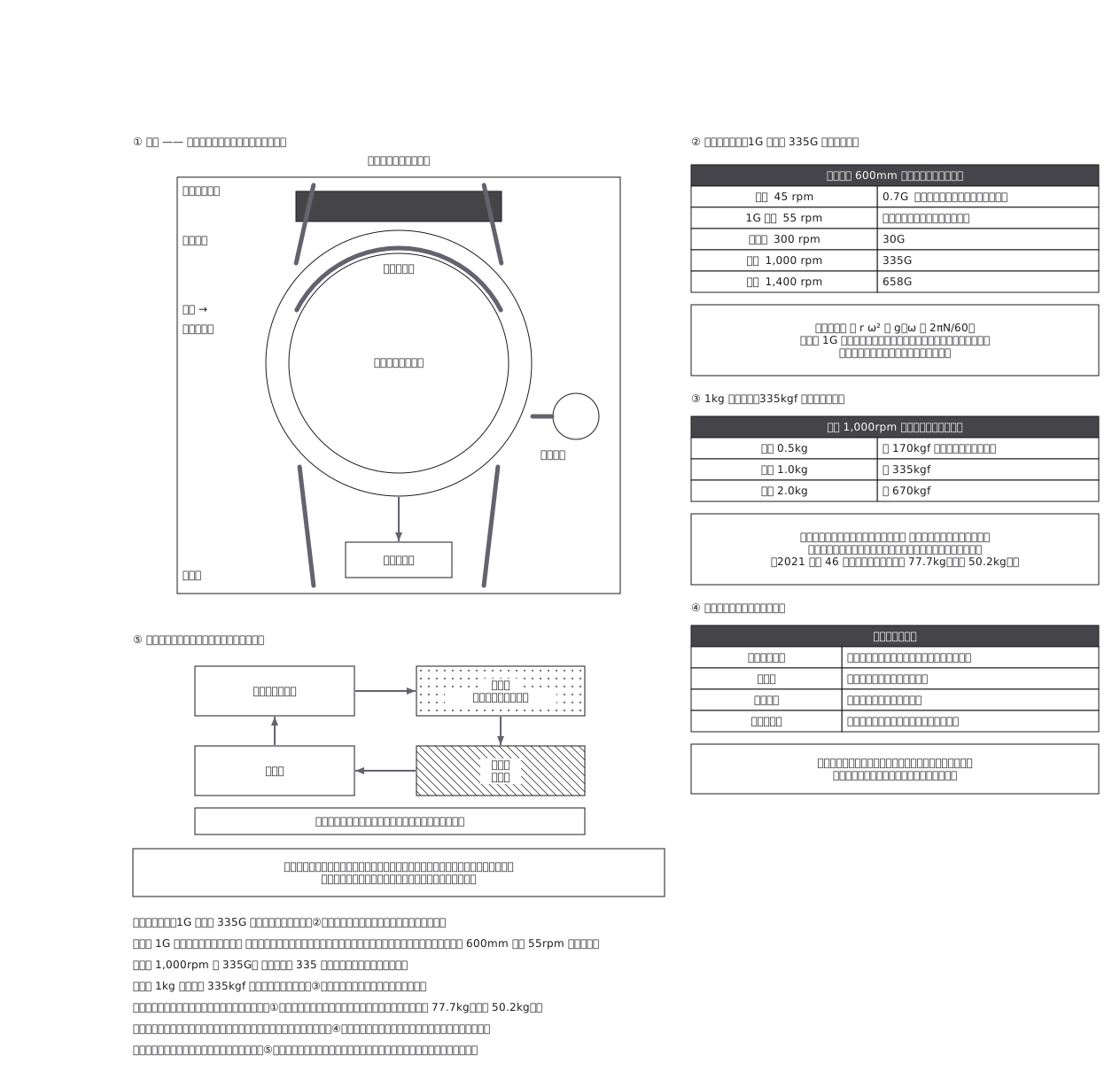 The same drum has to stay under 1G to wash and reach 335G to spin, which is why it hangs on springs behind a concrete weight rather than being bolted to the machine