Services and electrical
Sewage treatment flow (the standard activated sludge process)
A sewage works does not destroy the dirt; it feeds it to microorganisms, settles them out and carts them somewhere else. One line in the drawing runs backwards — the returned sludge, because the microorganisms are the machine, so they are put back rather than thrown away, and only the surplus is drawn off into the sludge line. A combined sewer also spills untreated water in heavy rain.
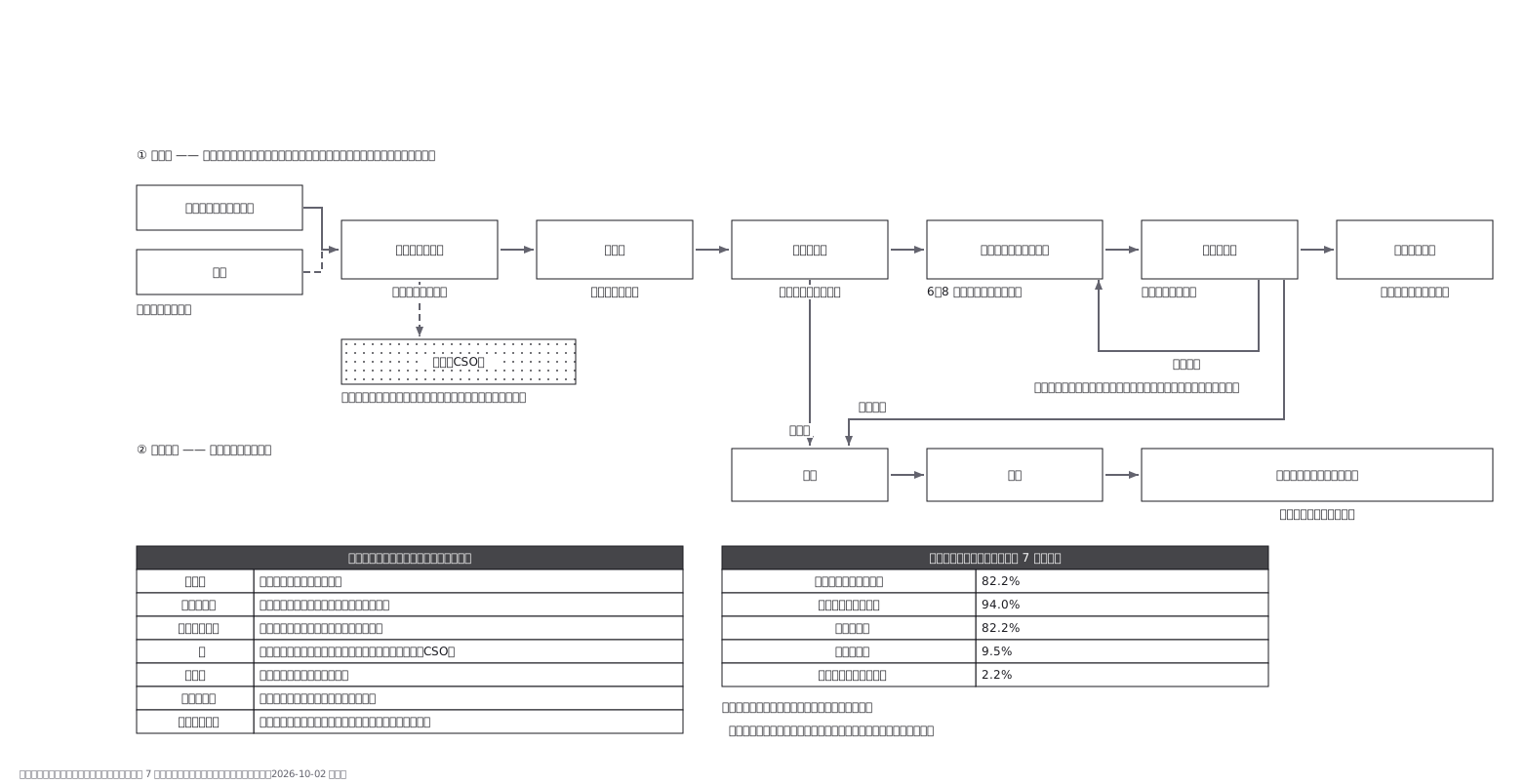
This drawing comes from one YAML file. No shape was moved by hand.
Notes in the source (in Japanese)
汚れを消しているのではない。微生物に食べさせて、沈めて、別の場所へ運んでいる。
管渠・ポンプ場 → 沈砂池(砂と大きなごみ)→ 最初沈殿池(沈む有機物)→反応タンク(曝気。6〜8 時間)→ 最終沈殿池(活性汚泥を沈める)→ 消毒して放流。
返送汚泥。 最終沈殿池で沈めた活性汚泥を、反応タンクへ戻す。微生物そのものが装置なので、捨てずに戻さないと次の水を処理できない。増えた分だけが余剰汚泥として抜かれ、汚泥の道(濃縮 → 消化 → 脱水 → 焼却・溶融・炭化)へ入る。
戻る線が、機械の並べ方を壊した。最終沈殿池が反応タンクより前の段へ引かれ、水の道が沈砂池 → 最初沈殿池 → 濃縮(汚泥の道)と読める絵になった。折り返しても、groups を外しても直らない。戻る線が主役の図は、置き場所を自分で書くほうが速い。
合流式は雨水と汚水を同じ管で流す。工費が安く、雨で管の中が自然に洗われるが、晴れた日は流れが遅くて沈殿物がたまり、大雨のときは処理しきれない分を未処理または簡易処理のまま放流する(合流式下水道越流水 = CSO)。分流式は別の管に分ける。流量も水質も安定するが、汚水管は細いので人が入れず、清掃や点検がしにくい。
令和 7 年度末の下水道処理人口普及率は 82.2%。浄化槽なども足した汚水処理人口普及率は 94.0%(下水道 82.2%・浄化槽 9.5%・農業集落排水など 2.2%・コミュニティ・プラント 0.1%)。出典:国土交通省・農林水産省・環境省「令和 7 年度末の汚水処理人口普及状況について」(2026-08-24 発表、https://www.mlit.go.jp/report/press/mizukokudo13_hh_000756.html 、取得 2026-10-02)
上水の側は見本 306。
Source (YAML)
examples/gallery/321-下水処理の流れ.zumen.yaml
More in this field
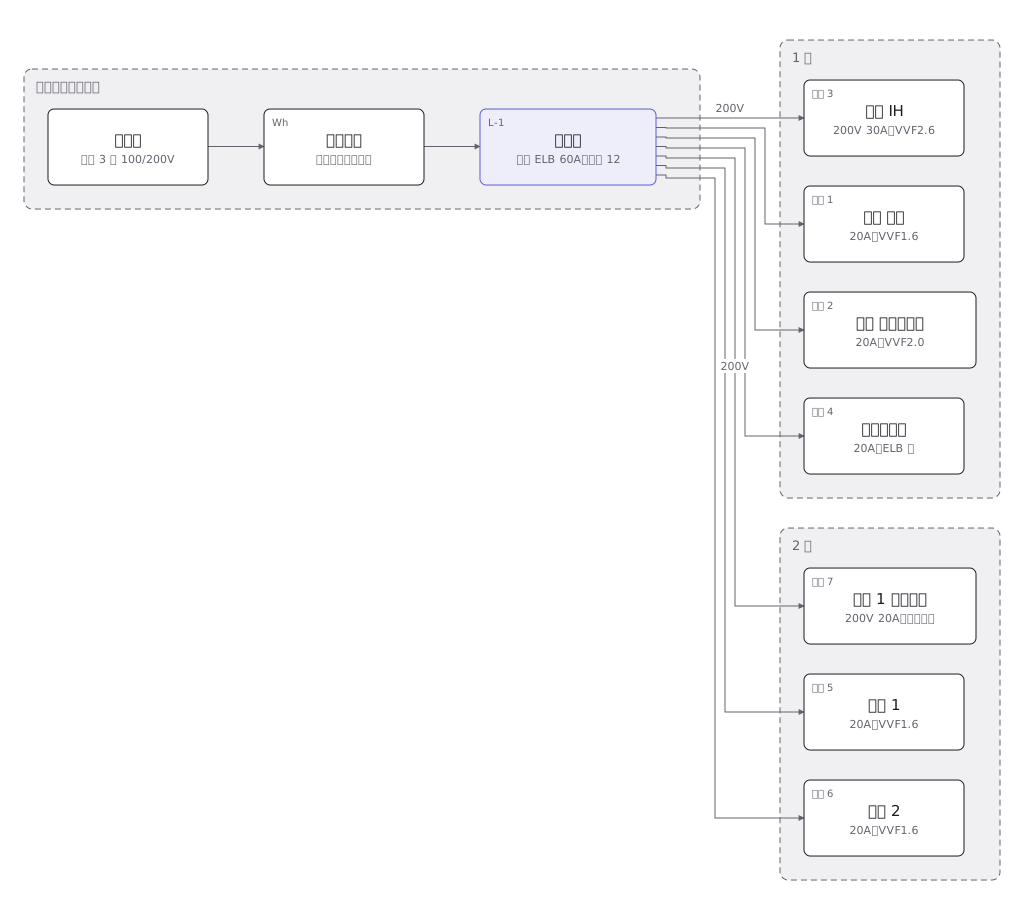 A house wiring layout from the service entrance to the consumer unit, then breaker by breaker to the sockets and lights in each room
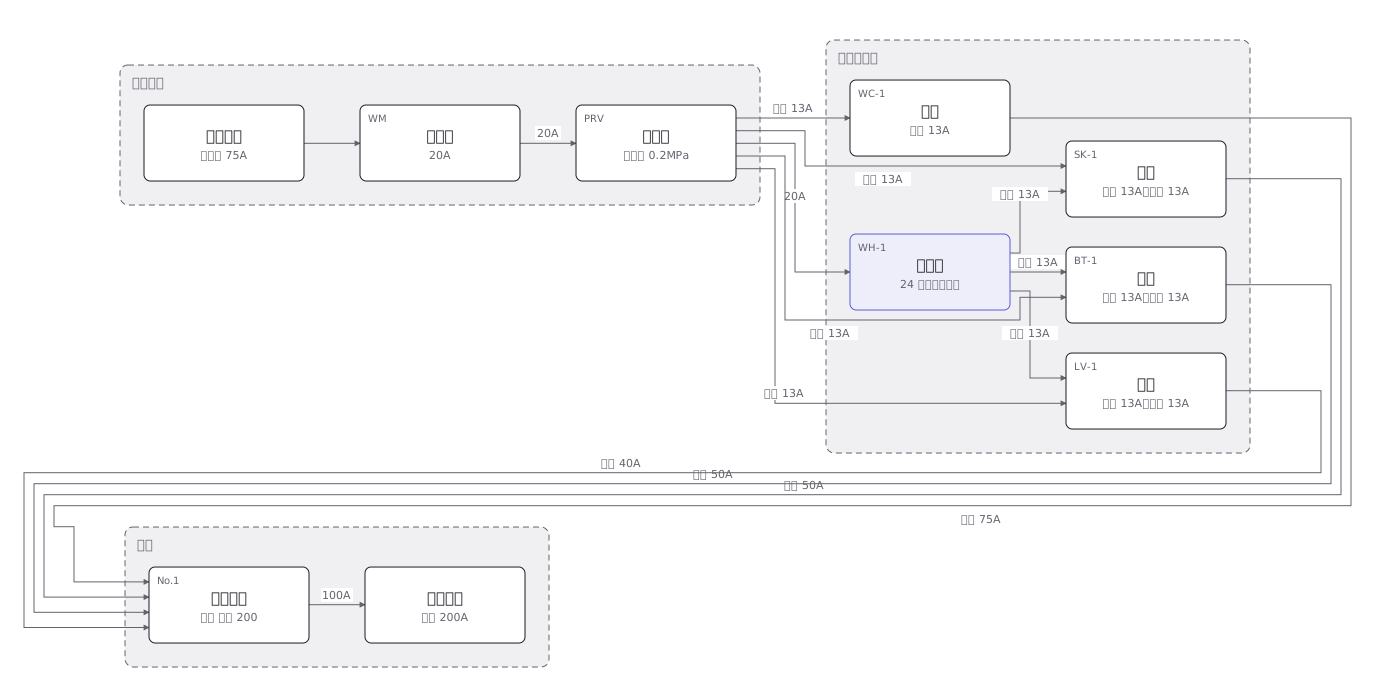 The four plumbing systems of a house — cold supply, hot supply, drainage and venting — separated out fixture by fixture
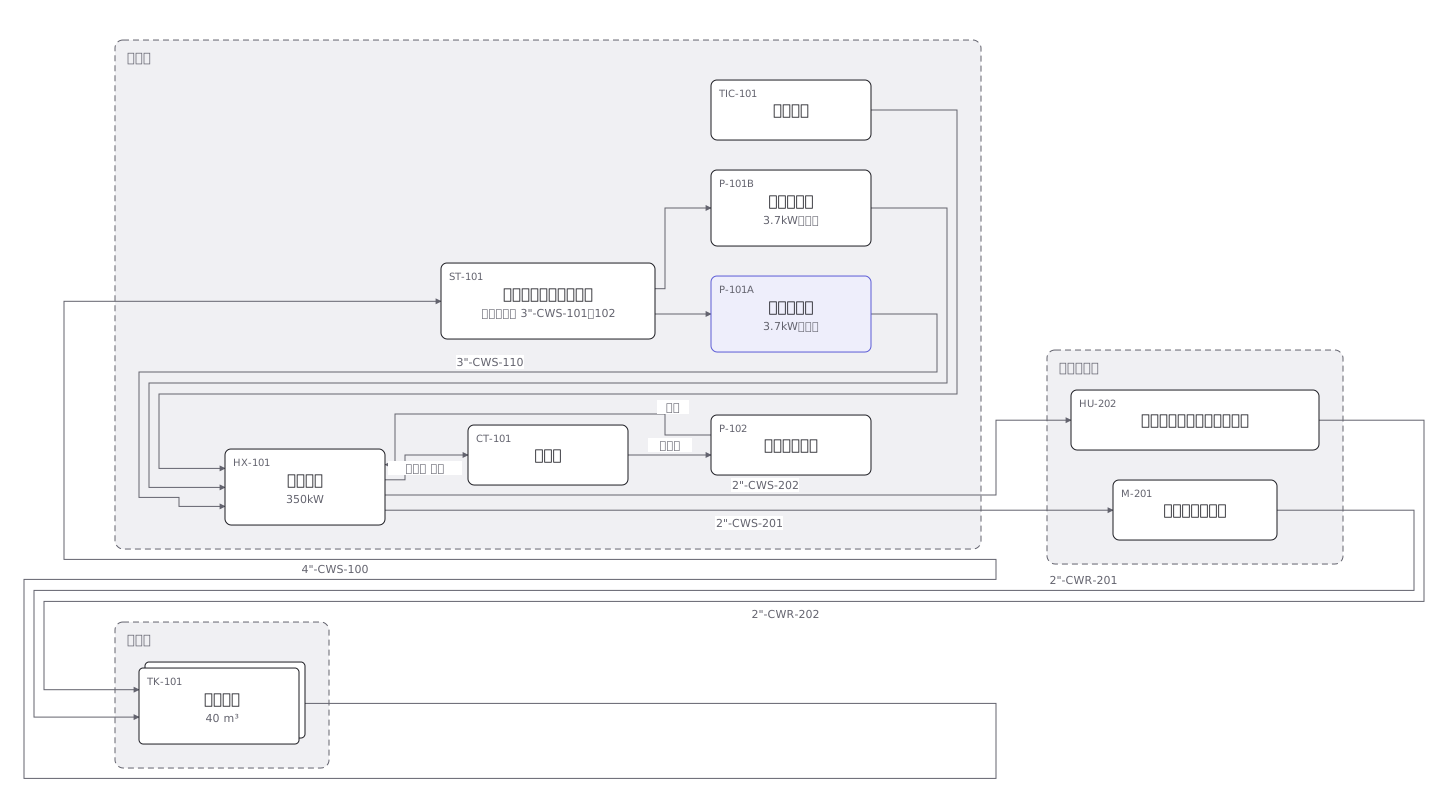 A cooling water P&ID where pumps, heat exchangers, valves and instruments are joined by pipes distinguished by line type
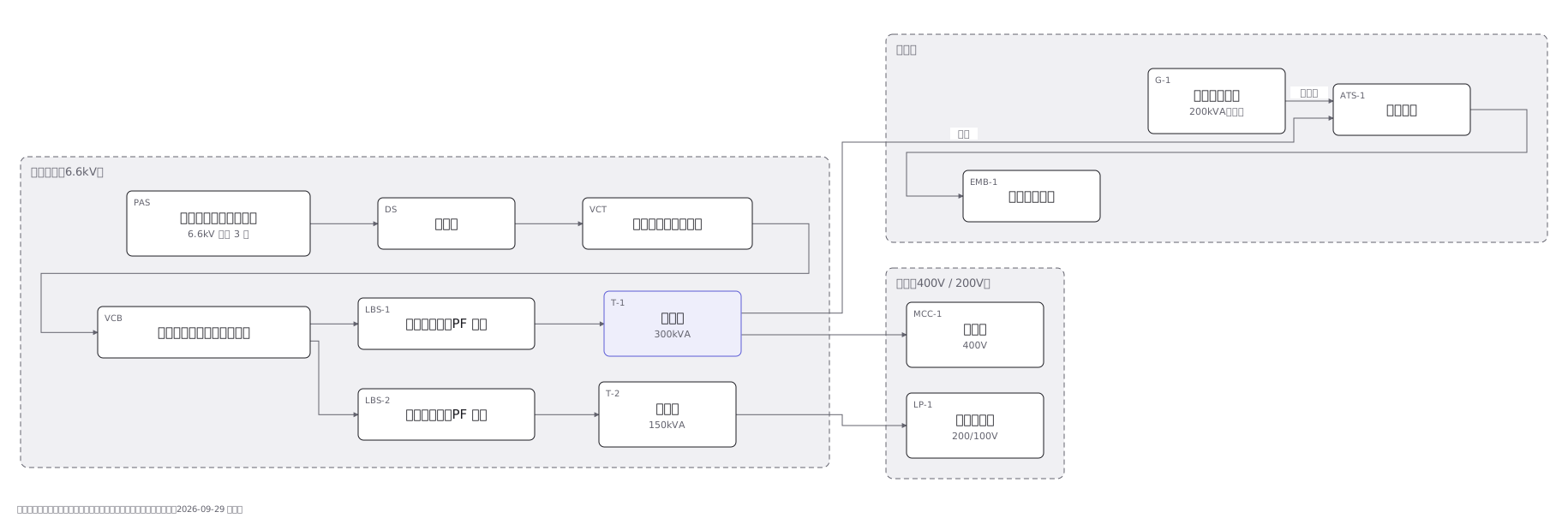 A substation single-line diagram from the incoming supply through disconnector, breaker and transformer to the low voltage boards
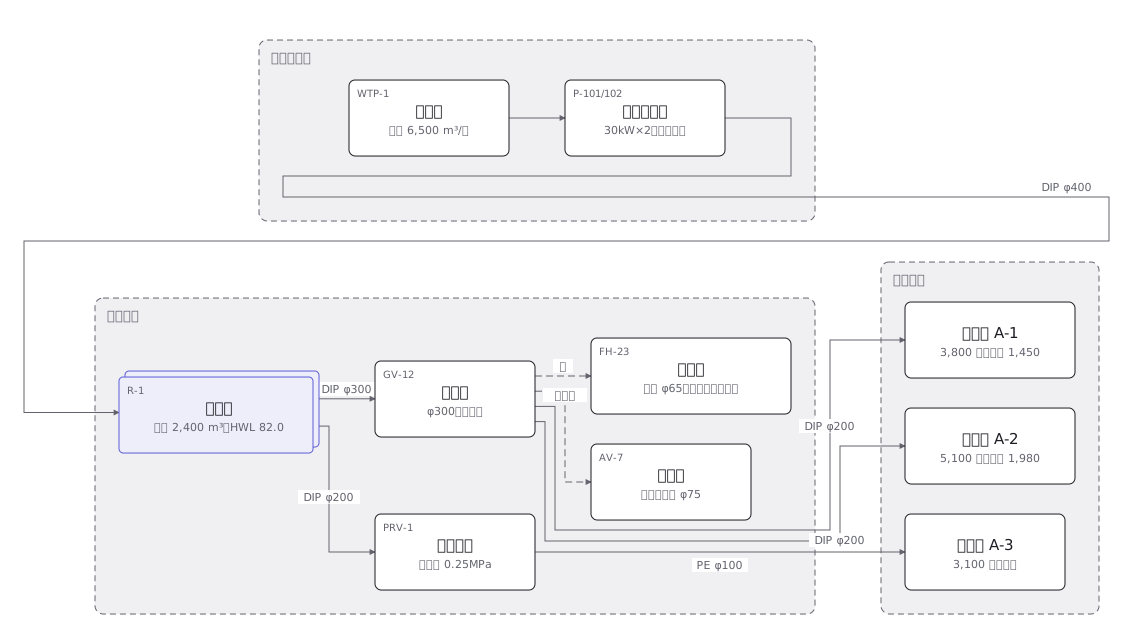 A town water distribution network from treatment works through service reservoirs and trunk mains to each supply zone, with the ground level of every zone
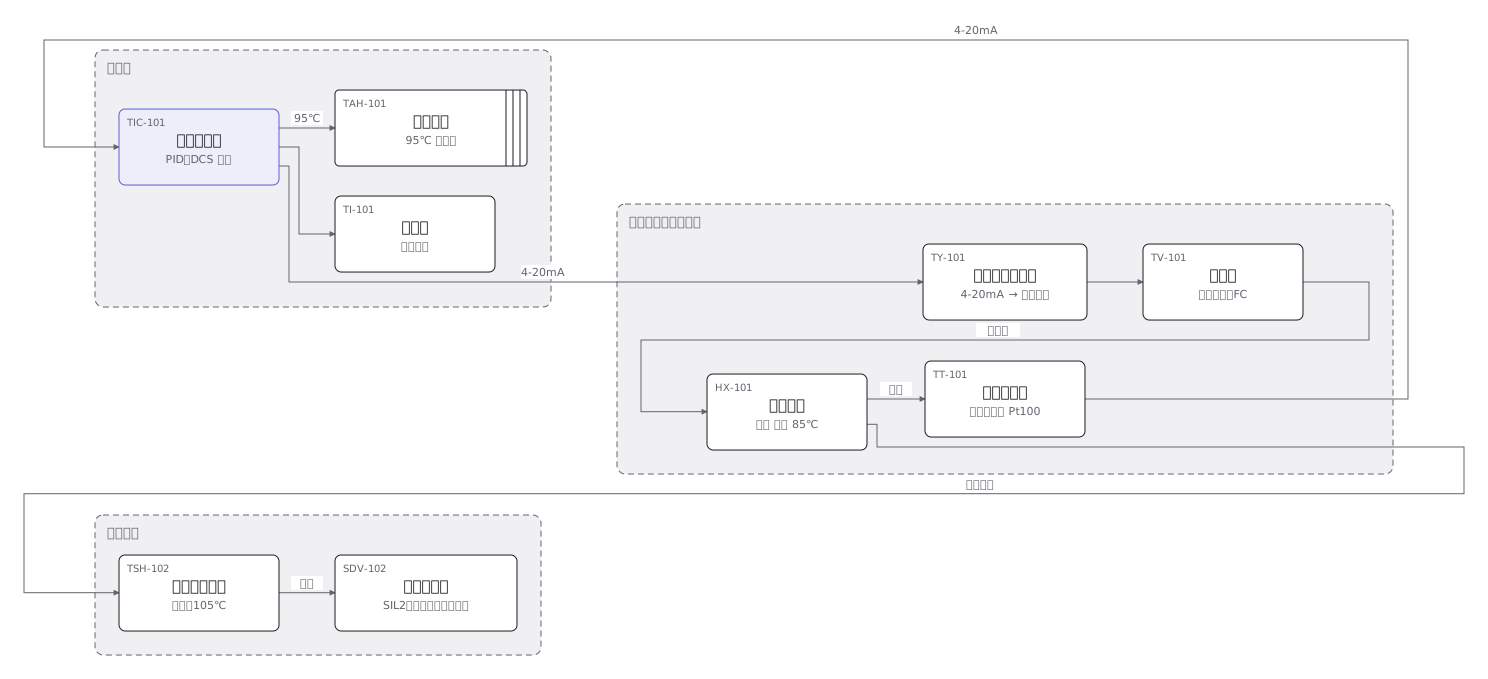 An instrument loop from sensing element through transmitter and controller to final element, every device carrying its ISA tag
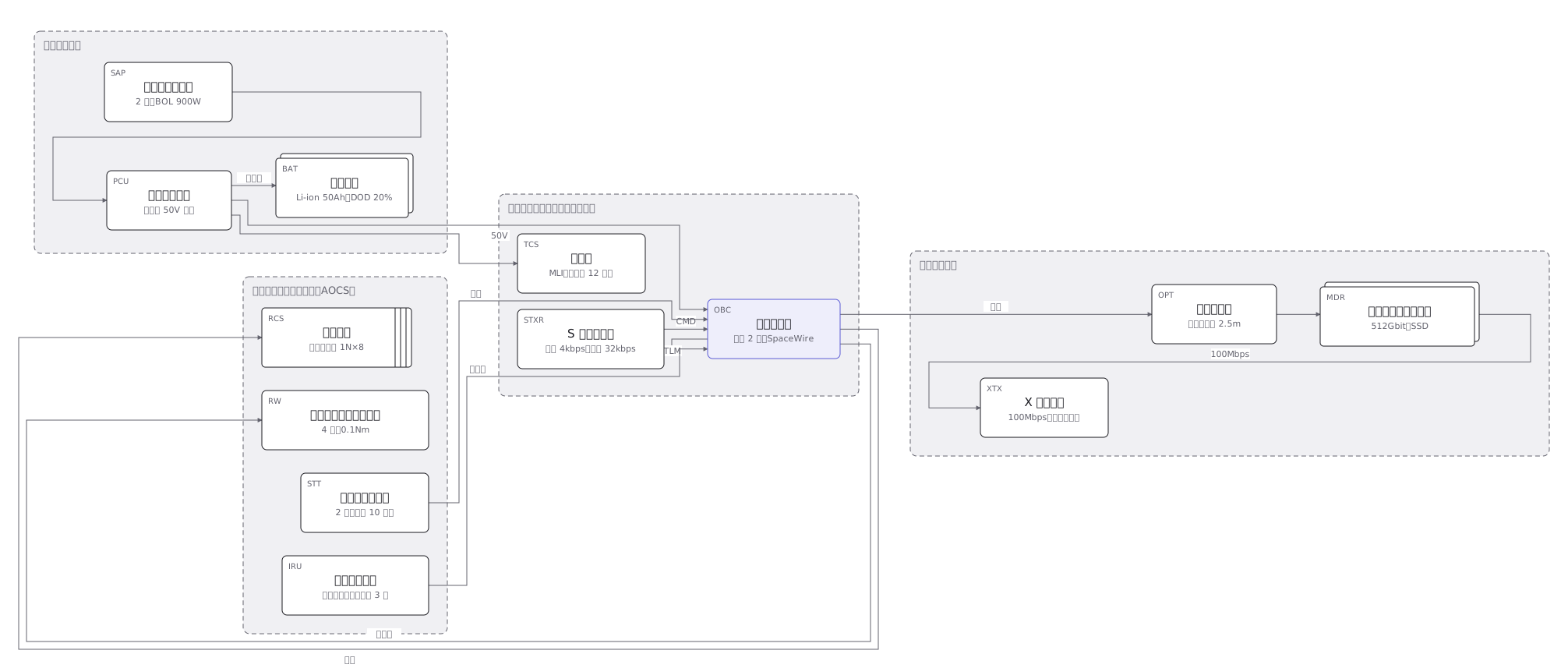 The subsystems of a 150kg satellite and how they connect: power, communications, attitude control, data handling and the mission payload
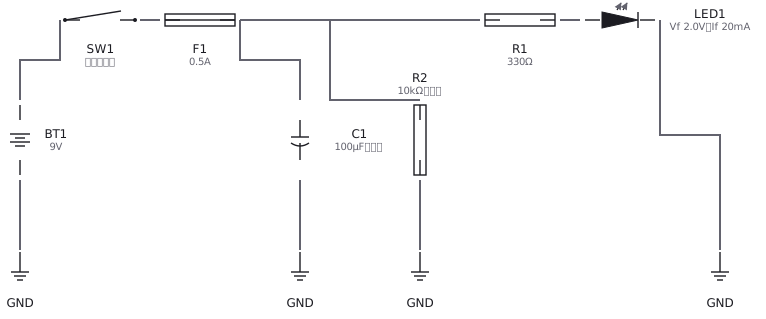 An LED circuit drawn with IEC and JIS symbols: supply, resistor, LED and switch