Transit and transport
Runway numbers and markings (the number is the bearing itself)
A runway number is not a name but a bearing: the magnetic heading divided by ten. Use the same strip from the other end and the heading differs by 180 degrees, so the two numbers always differ by 18 and the runway is called 16/34. Because magnetic north drifts, the number painted on the ground is not permanent — when the bearing moves far enough, it gets repainted.
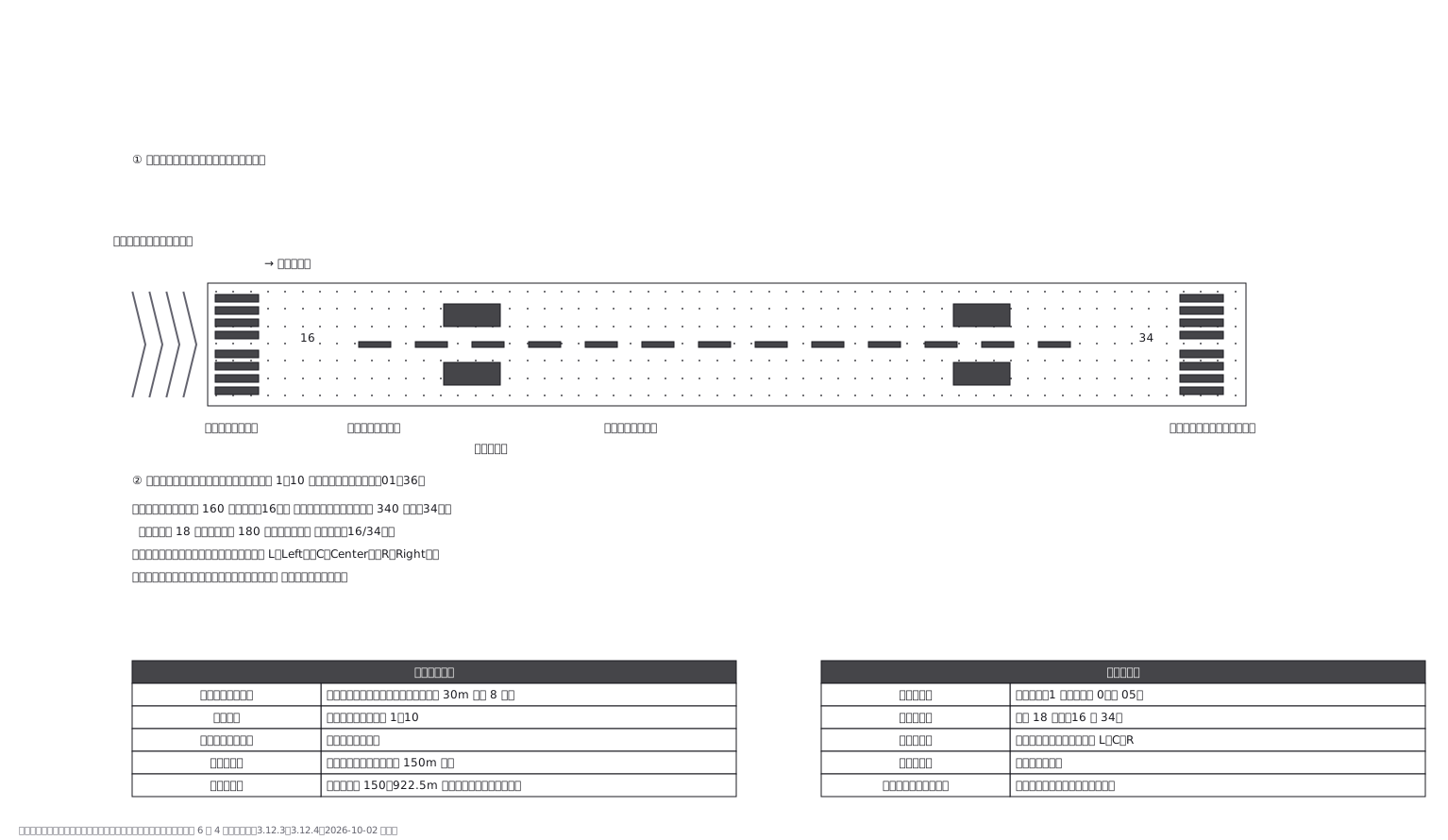
This drawing comes from one YAML file. No shape was moved by hand.
Notes in the source (in Japanese)
滑走路の番号は名前ではなく、方位である。磁北から右回りに測った方位角を 1/10 した数(四捨五入) —— 01 から 36 まで。
同じ 1 本の滑走路を逆から使えば、方位は 180 度違う。だから番号は必ず 18 違い、「16/34」のように両方を書く。この図の滑走路は磁方位 160 度なので、こちらから進入すれば 16、反対からなら 340 度で 34。
同じ方位の滑走路が並ぶときは、進入の向きから見て左からL(Left)・C(Center)・R(Right) を付ける。
磁北は動く。 方位がずれれば番号も変わるので、塗り替える。地図の記号と違い、地面に書いてある数字のほうが動く。
滑走路進入端標識(滑走路の向きに沿った縦縞の束。本数は幅で決まり、30m なら 8 本)・指示標識(滑走路番号)・滑走路中心線標識・目標点標識(進入端から 150m 以上)。過走帯標識は黄色の山形模様(山の先は滑走路を向く)、移設滑走路進入端標識(ずらした進入端)は中心線上の矢印で示す。接地帯標識(進入端から 150〜922.5m の縦縞)はこの図では省いた。
出典:国土交通省航空局「陸上空港の施設の設置基準と解説」(令和 6 年 4 月一部改正)3.12.3 滑走路標識・3.12.4 過走帯標識 https://www.mlit.go.jp/koku/content/001736131.pdf(取得 2026-10-02)。指示標識の数字は方位の 1/10 を四捨五入し、1 桁なら頭に 0 を付ける。
長さの比は模式。 道路の平面線形は見本 61、地図記号は見本 165。
Source (YAML)
examples/gallery/334-滑走路の番号とマーキング.zumen.yaml
More in this field
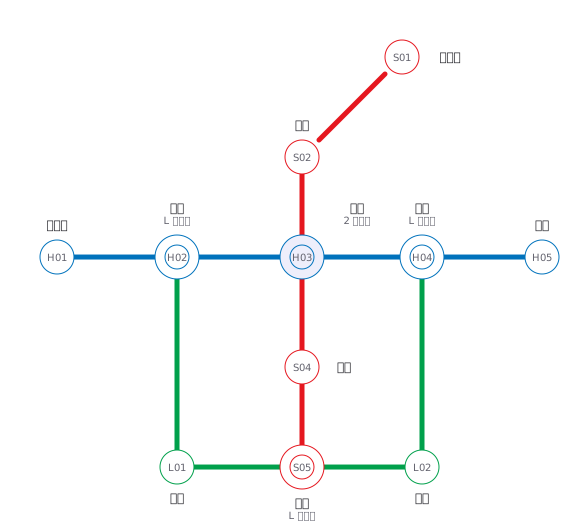 A fictional transit map of three lines told apart by colour and station numbering, drawn only in horizontal, vertical and 45° segments, with interchange stations marked by a double circle
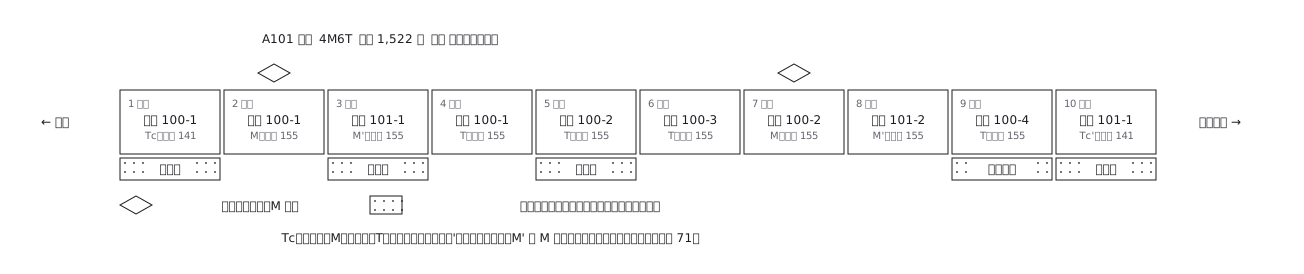 A ten-car commuter train set out car by car: which are motored and which are trailers, where the pantographs are, and what each car carries inside
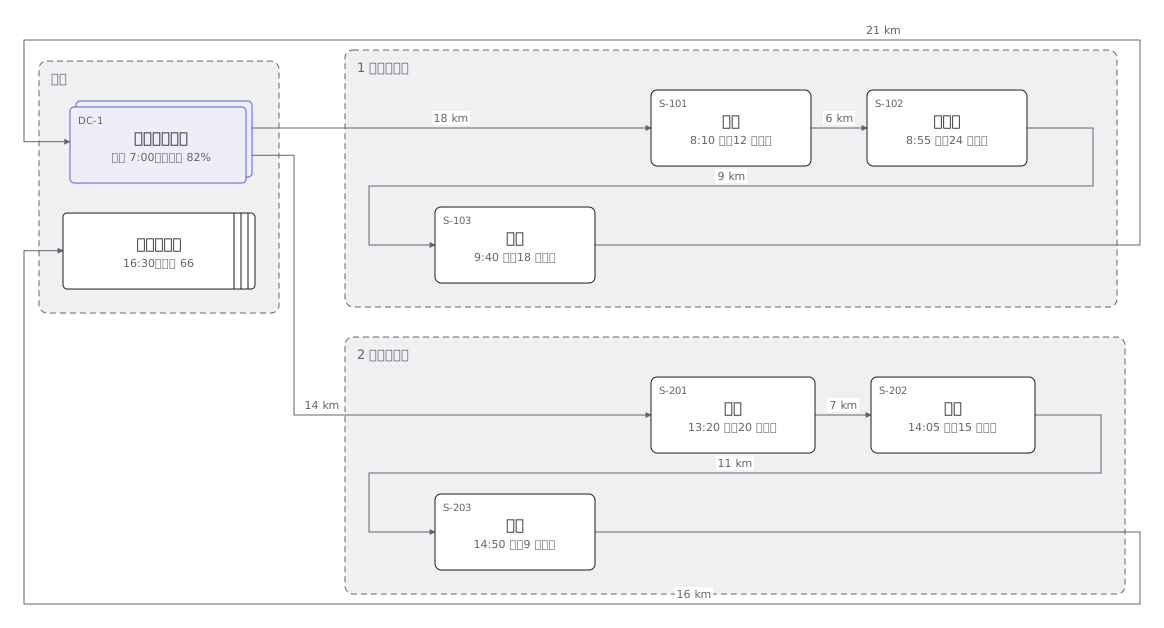 Delivery rounds for one two-tonne van split into a morning and an afternoon run: the order of calls and the stops themselves
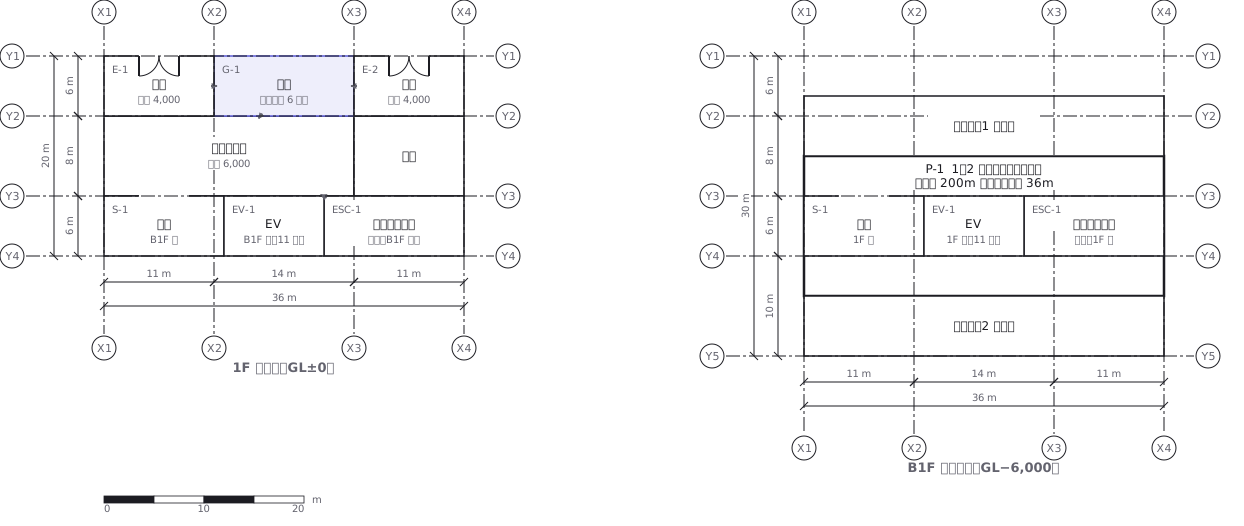 A station on two levels — ground floor and concourse — showing how the gates, stairs, lifts and exits line up with each other
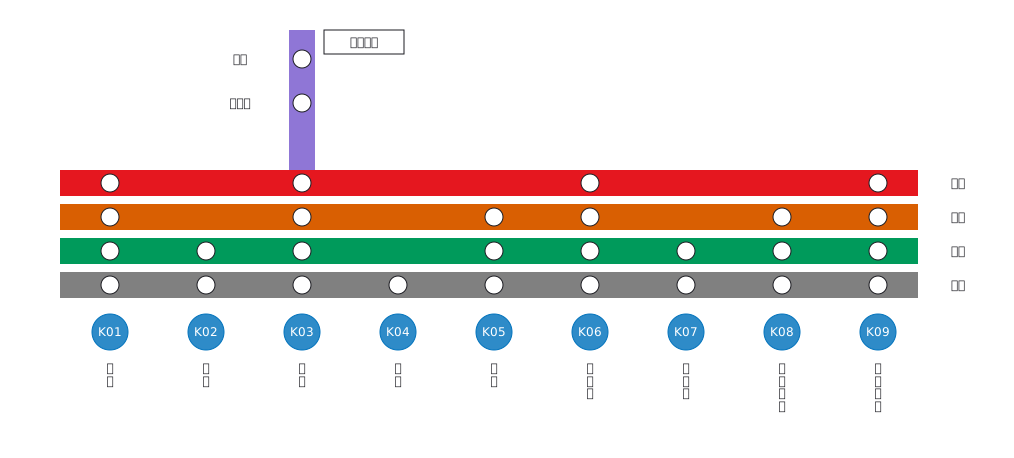 Stopping pattern chart: a band per service, a circle per stop
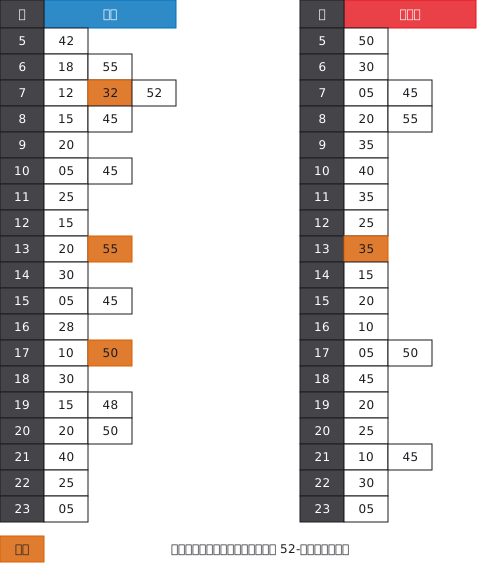 A station timetable with hours down the side and minutes across, weekday and weekend separated, and train types shown by symbol
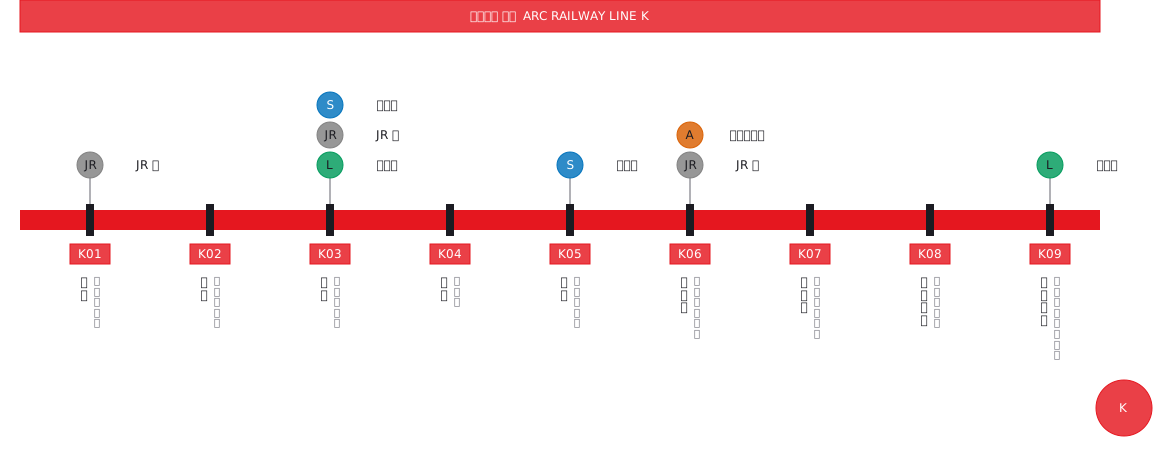 Interchange guide with station names set vertically
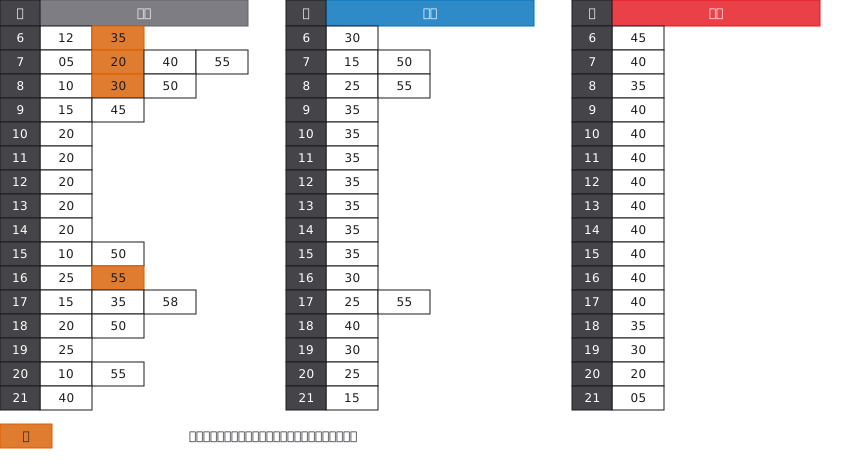 A bus stop timetable in three columns — weekday, Saturday, Sunday and holiday — with the departure minutes listed under each hour