Transit and transport
25 drawings in Transit and transport, each generated from a single YAML file.
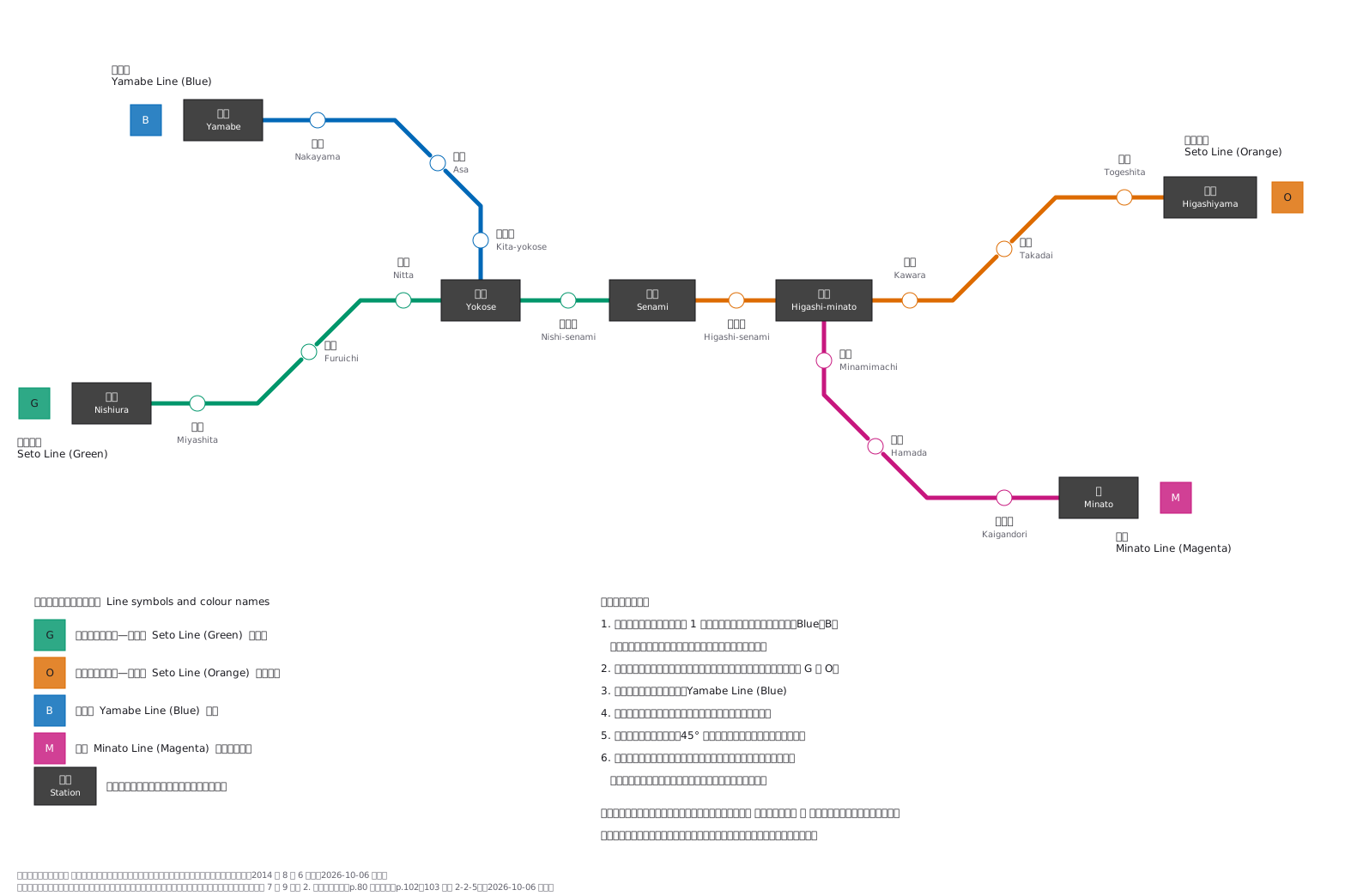
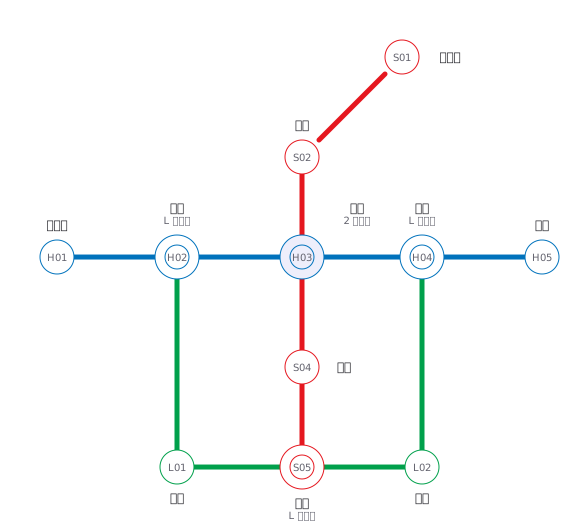 A fictional transit map of three lines told apart by colour and station numbering, drawn only in horizontal, vertical and 45° segments, with interchange stations marked by a double circle
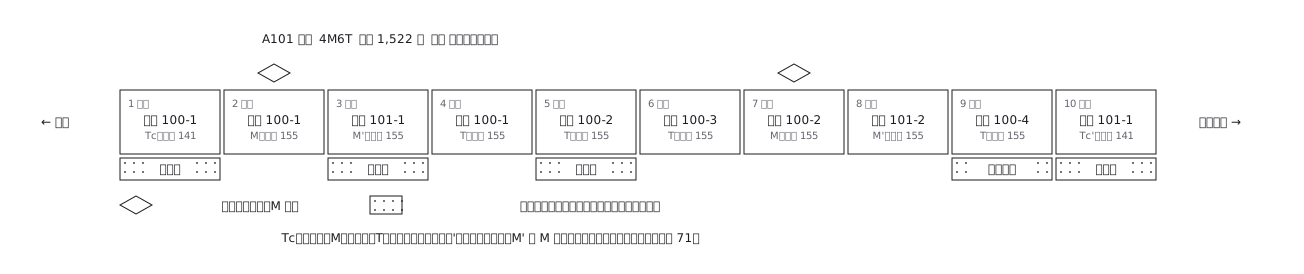 A ten-car commuter train set out car by car: which are motored and which are trailers, where the pantographs are, and what each car carries inside
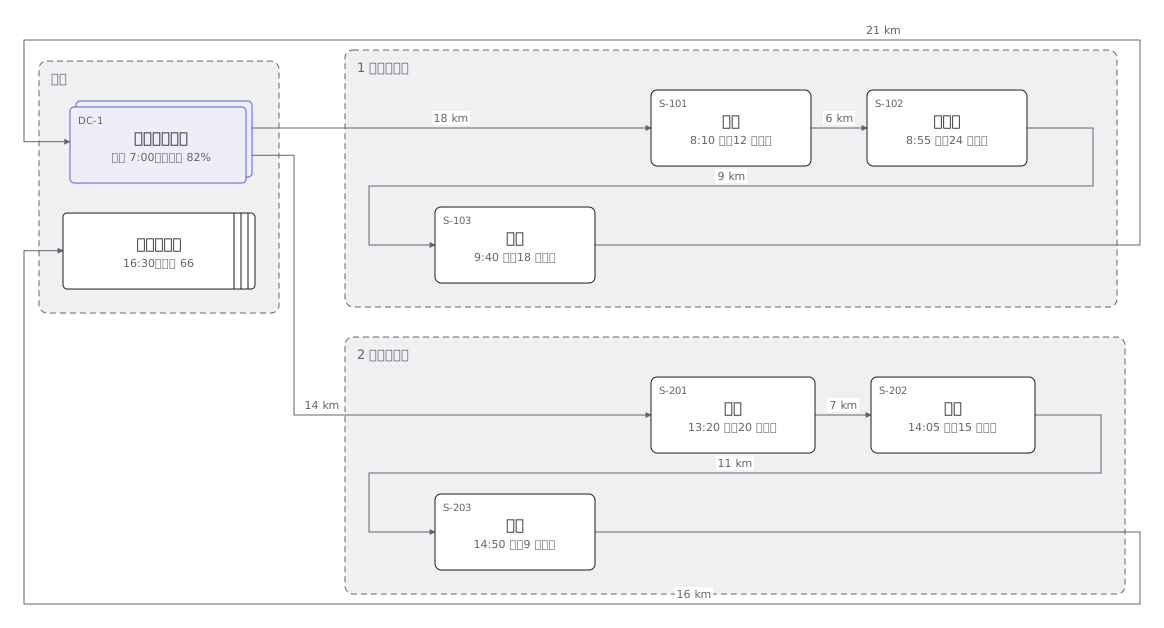 Delivery rounds for one two-tonne van split into a morning and an afternoon run: the order of calls and the stops themselves
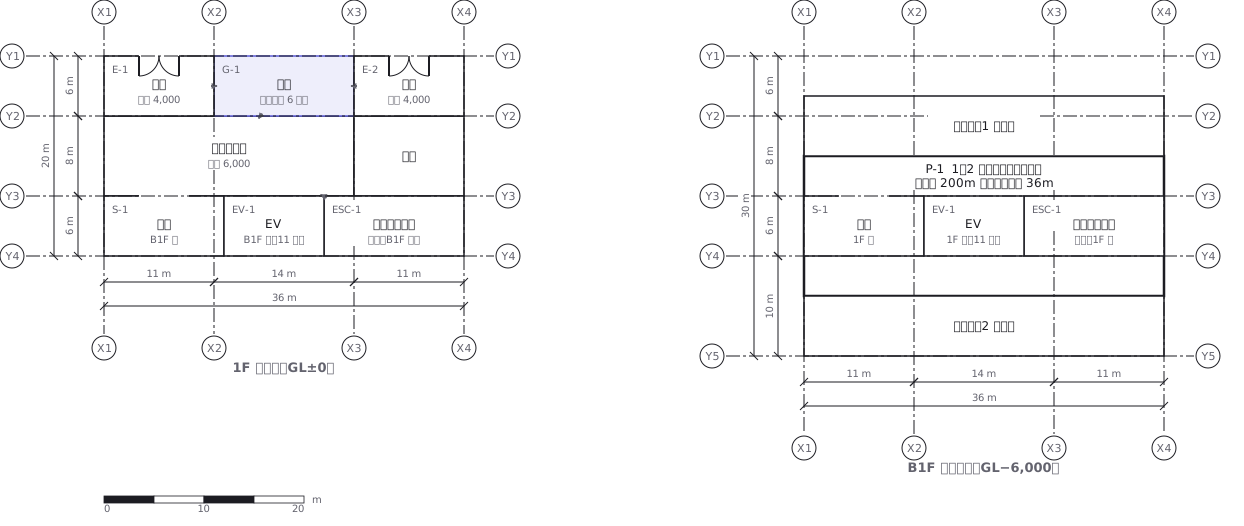 A station on two levels — ground floor and concourse — showing how the gates, stairs, lifts and exits line up with each other
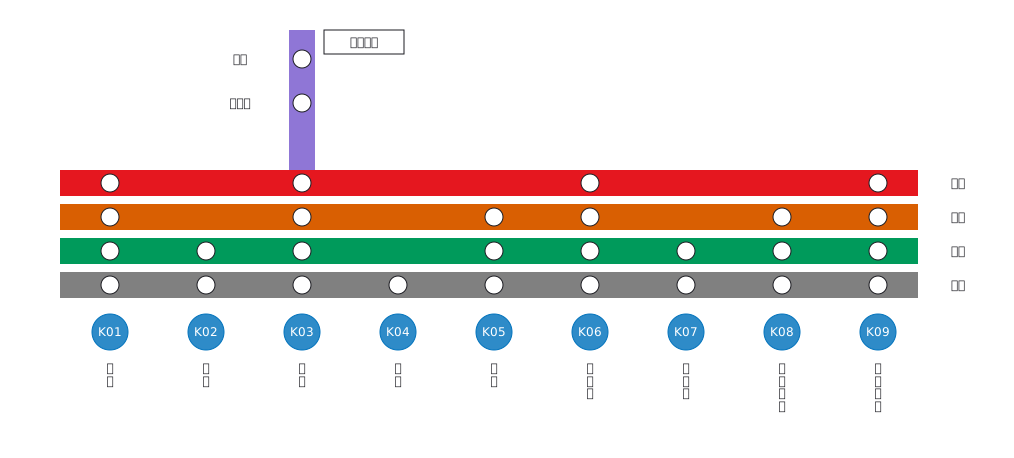 Stopping pattern chart: a band per service, a circle per stop
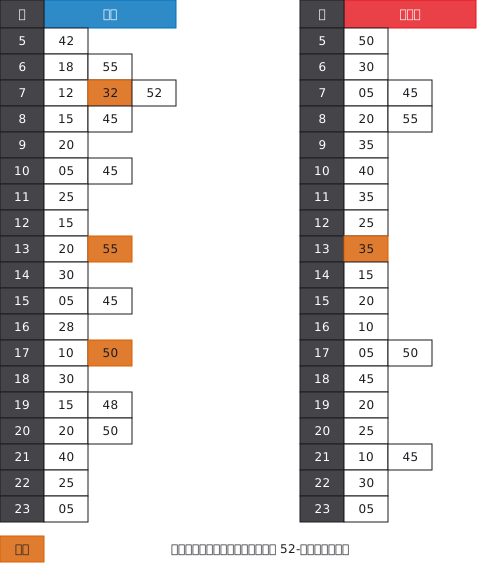 A station timetable with hours down the side and minutes across, weekday and weekend separated, and train types shown by symbol
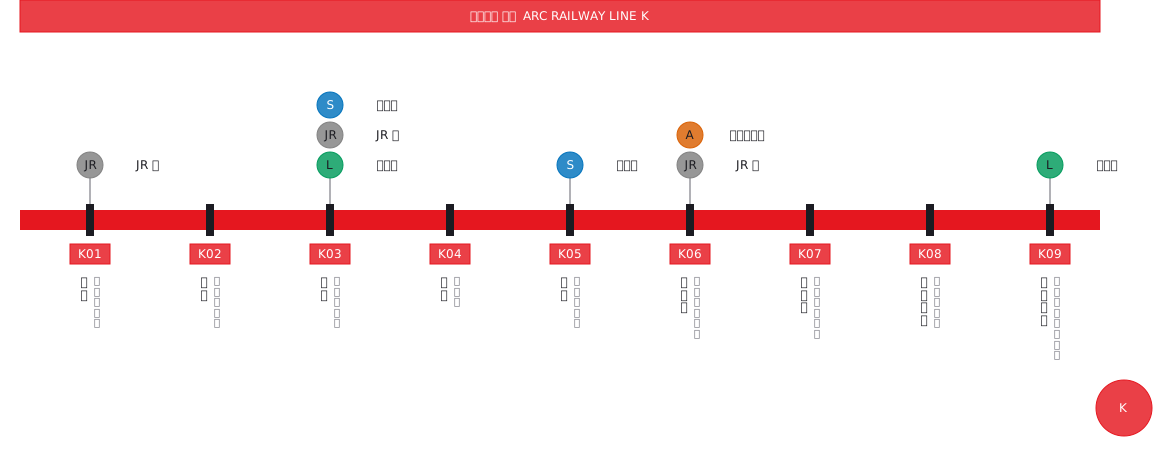 Interchange guide with station names set vertically
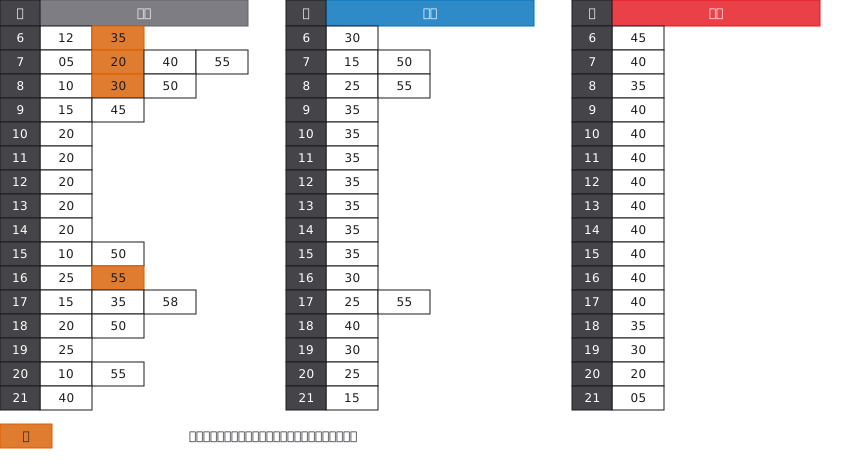 A bus stop timetable in three columns — weekday, Saturday, Sunday and holiday — with the departure minutes listed under each hour
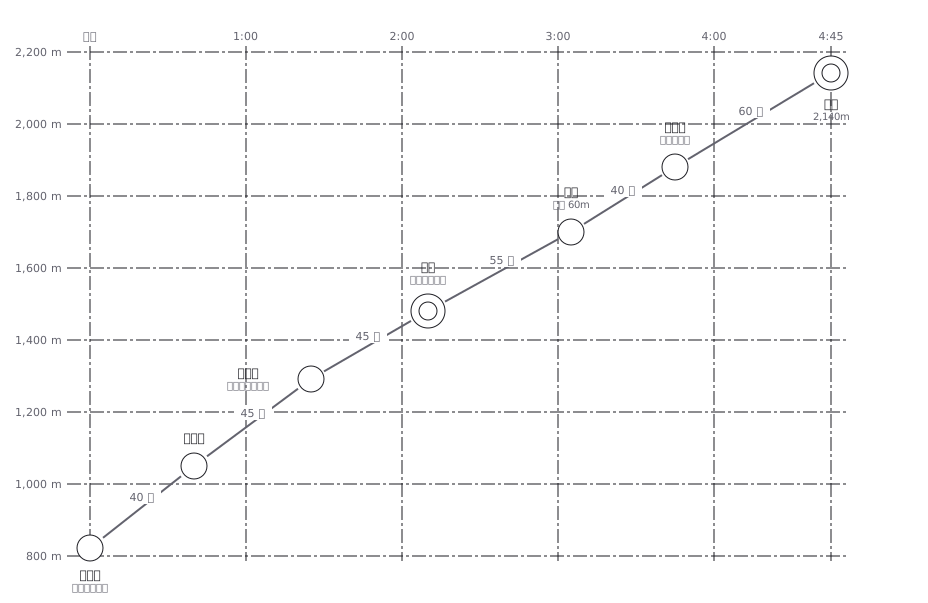 A hiking profile with distance across and elevation up, annotated with how long each section takes to walk
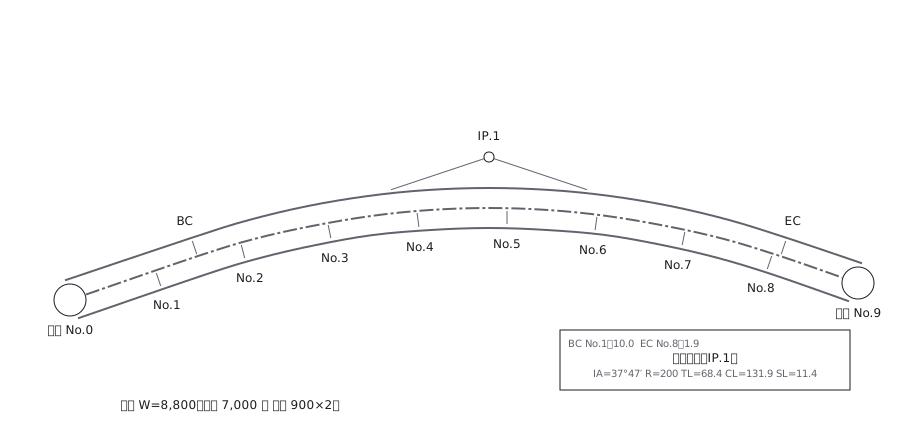 A road alignment where straights and a circular curve join up, with the intersection point and tangents, chainage ticks and the curve parameters; the centreline is a chain line and the road edges are solid
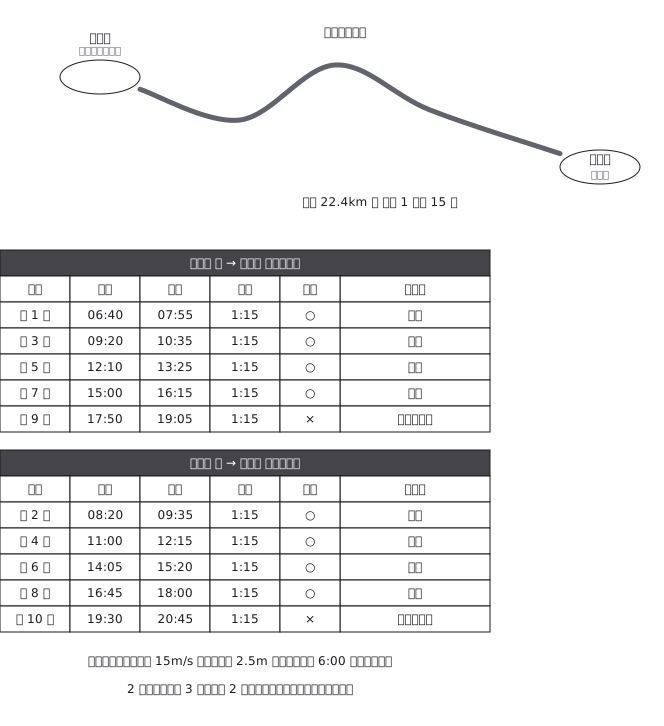 Ferry sailings route by route, with departure and arrival times and the name of the vessel working each one
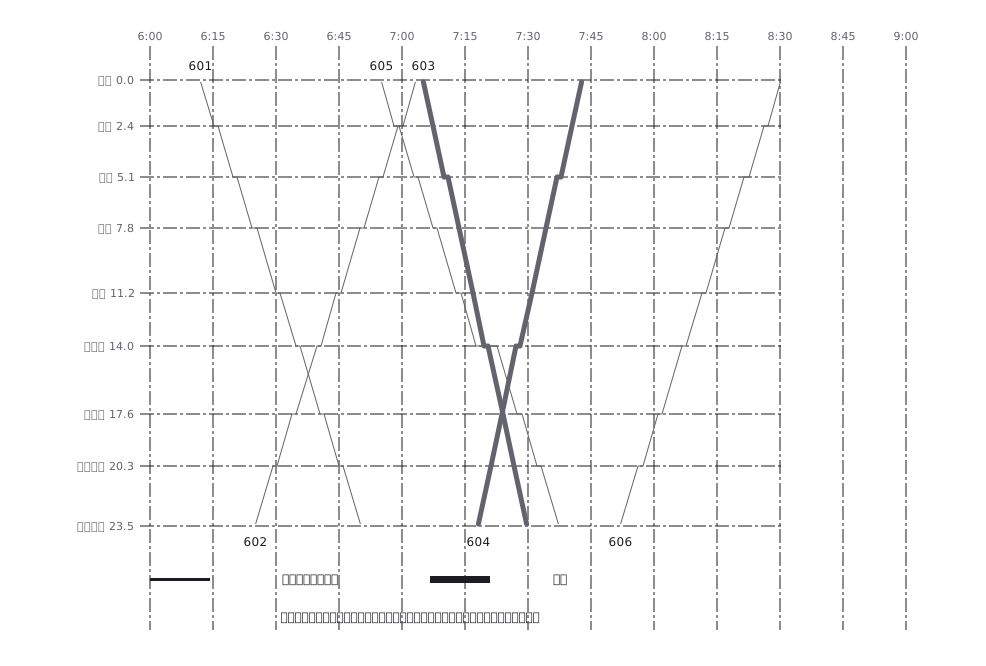 A train graph with time across and stations down, where every train becomes a single sloping line and the slope is its speed
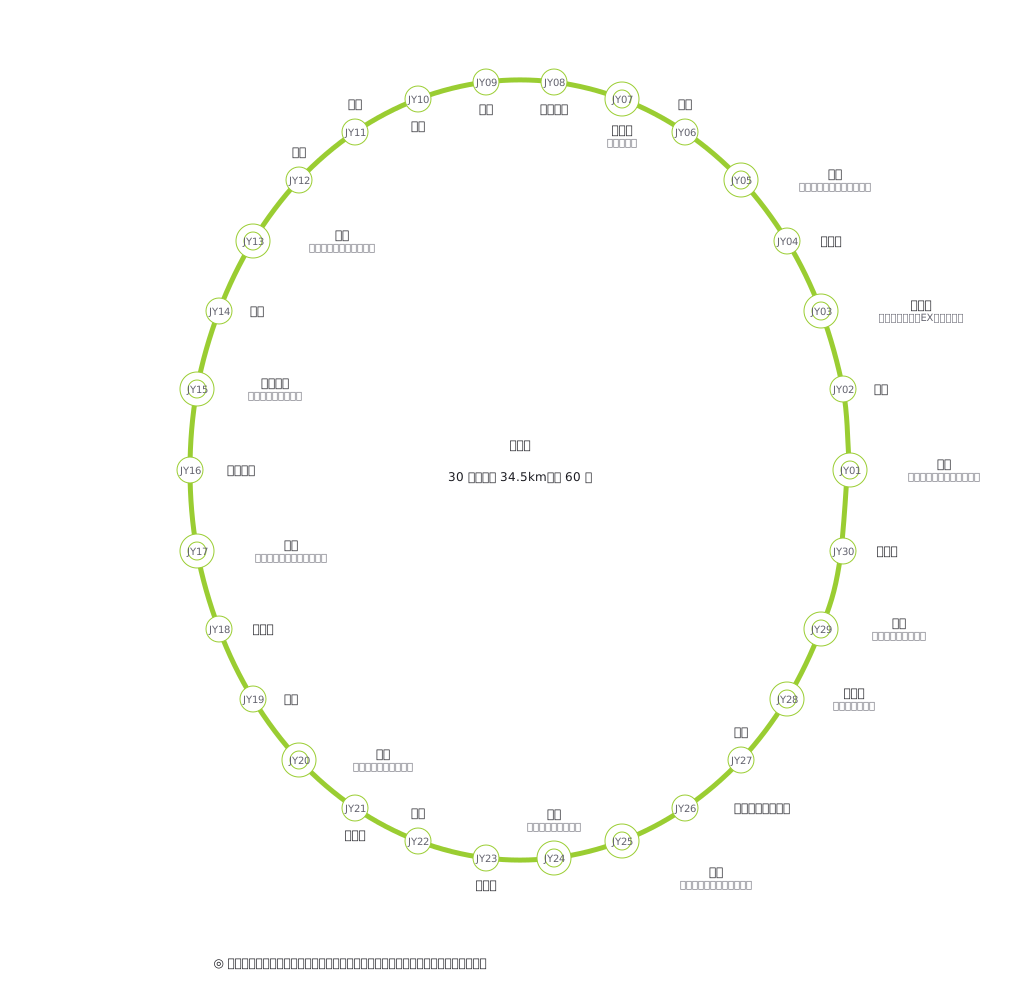 The Yamanote loop drawn with its thirty stations evenly spaced rather than to scale, each one carrying the lines you can change to
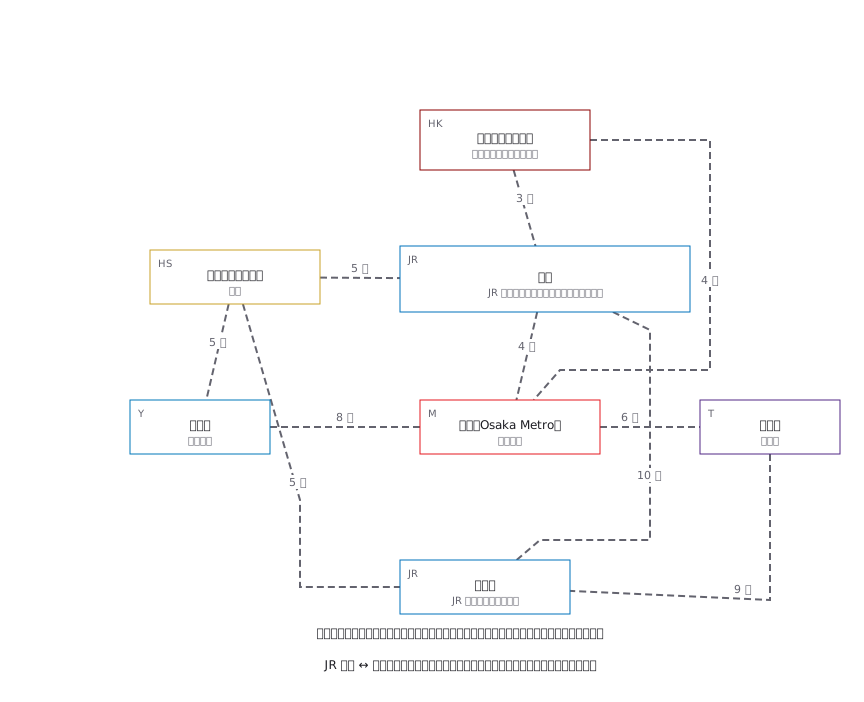 Seven stations all called Umeda, and the walk between them
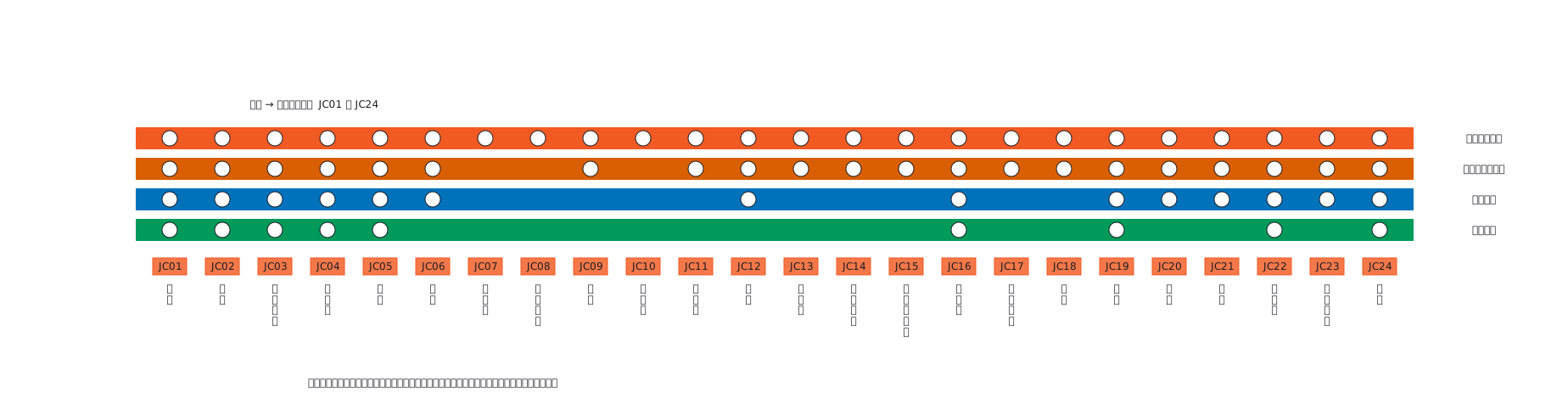 Which trains stop where, weekday and weekend
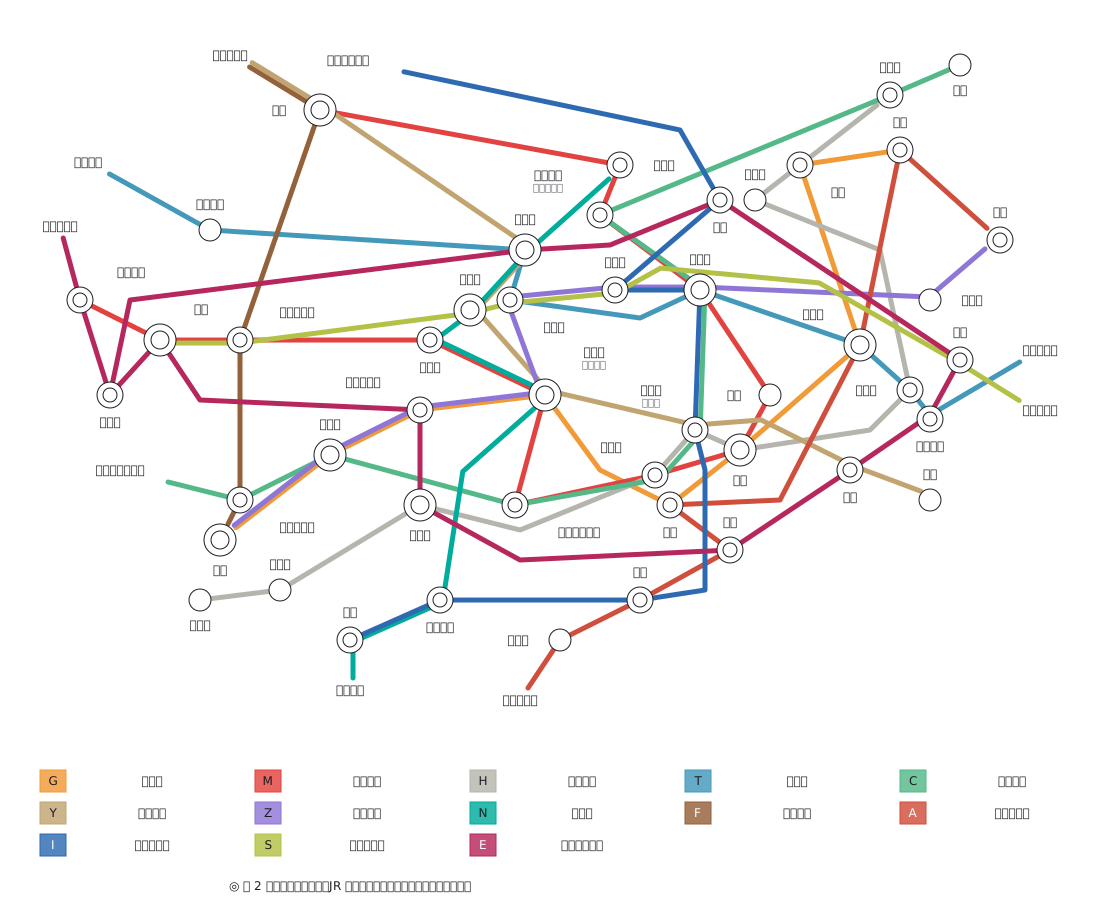 Thirteen Tokyo subway lines on one map of the central area, each told apart by its letter code as well as its colour
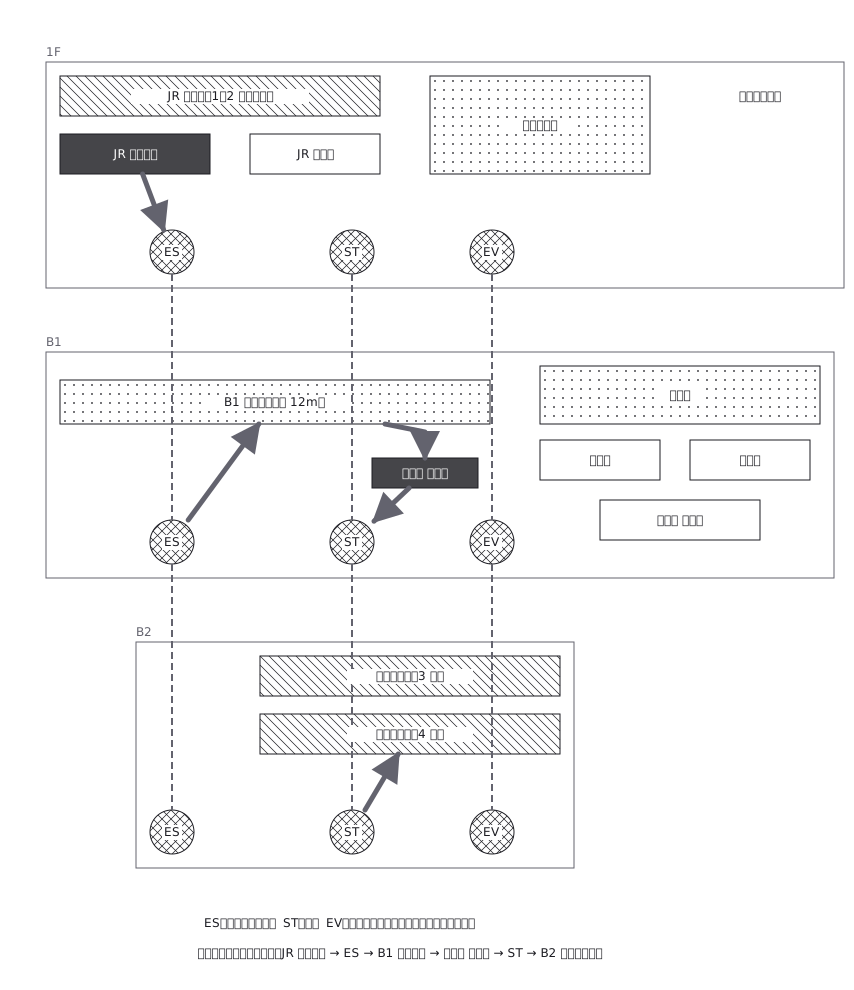 Interchange across three levels, with the vertical moves
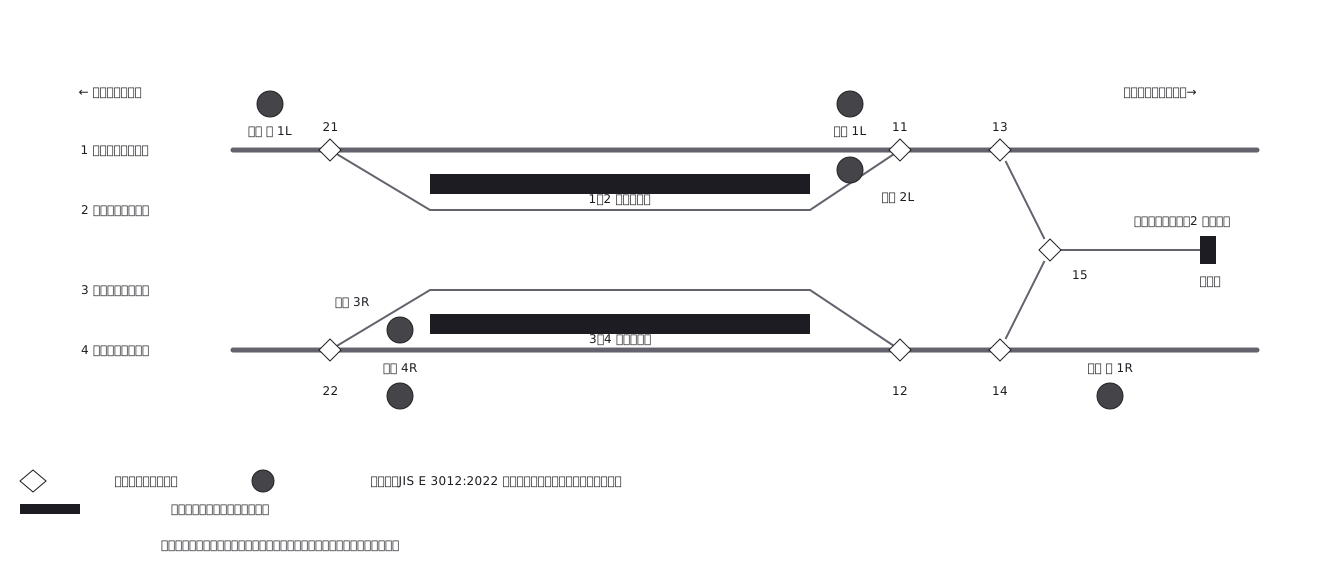 Track layout: two islands, four roads, passing possible
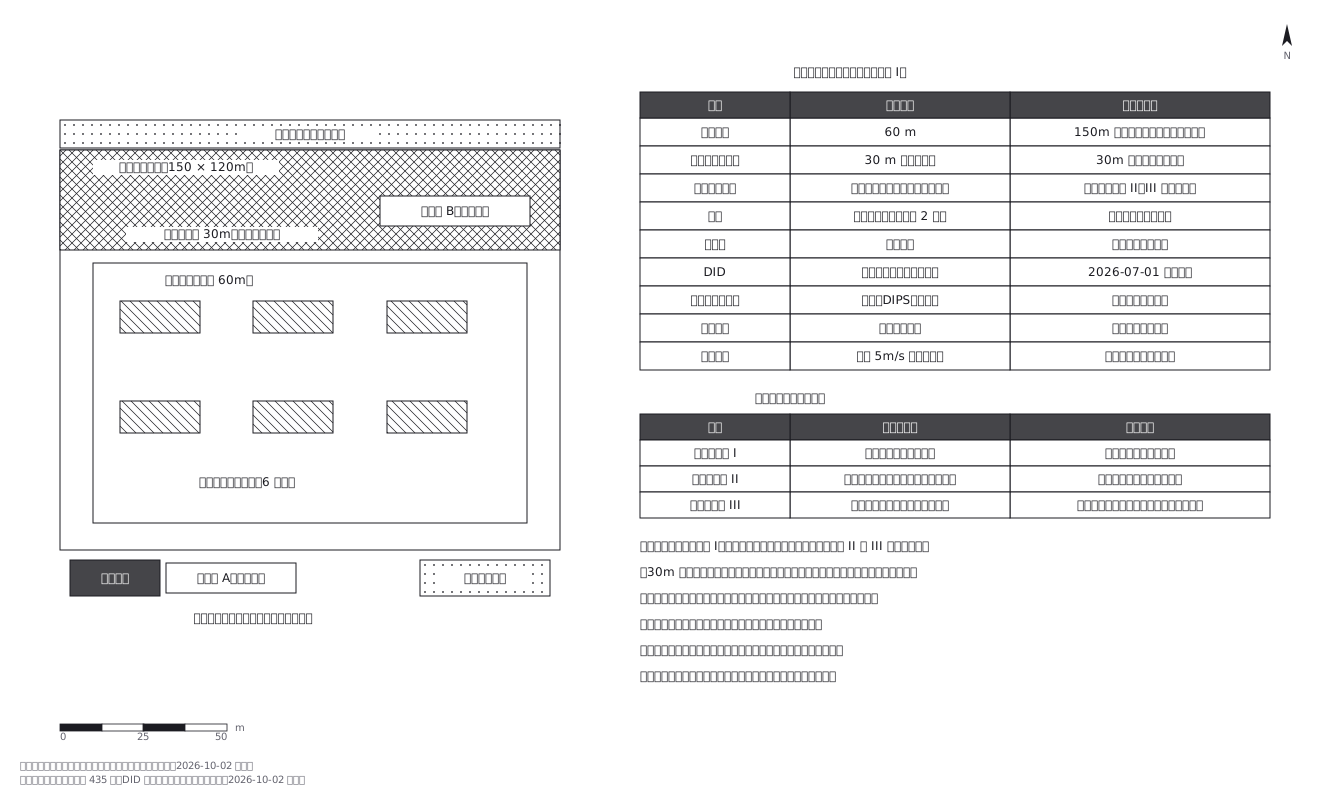 Drone flight plan and the area kept clear of people
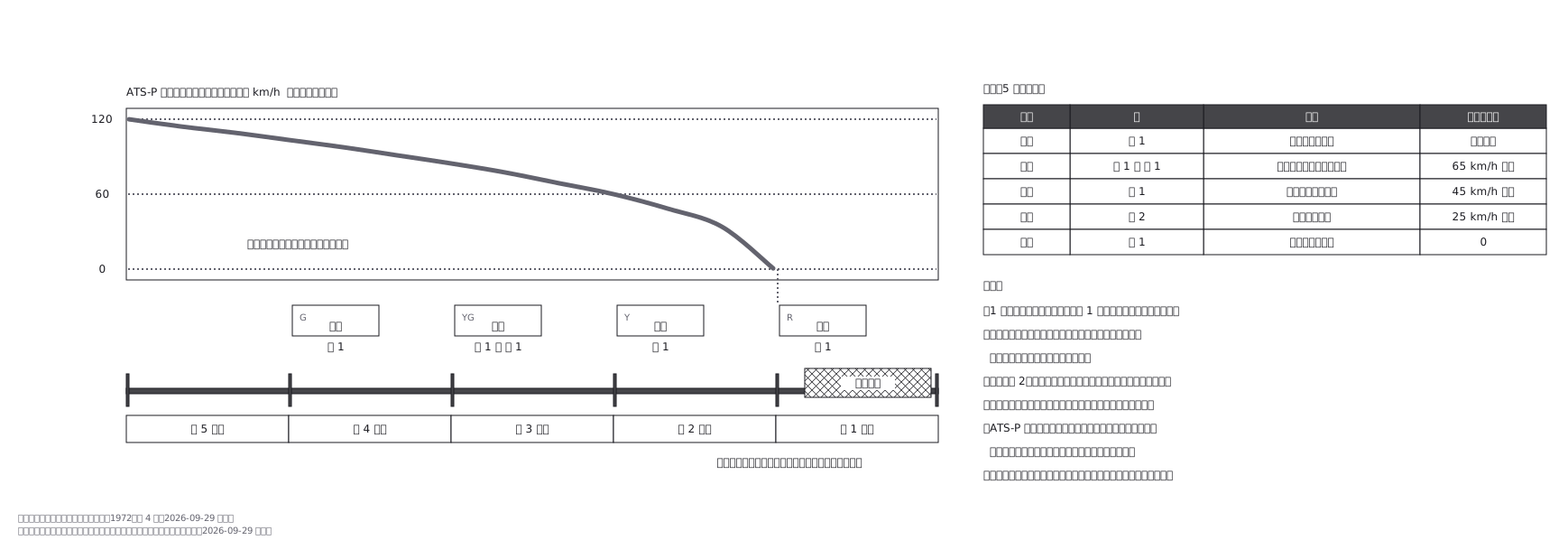 Block sections and signal aspects, counted back from the train ahead
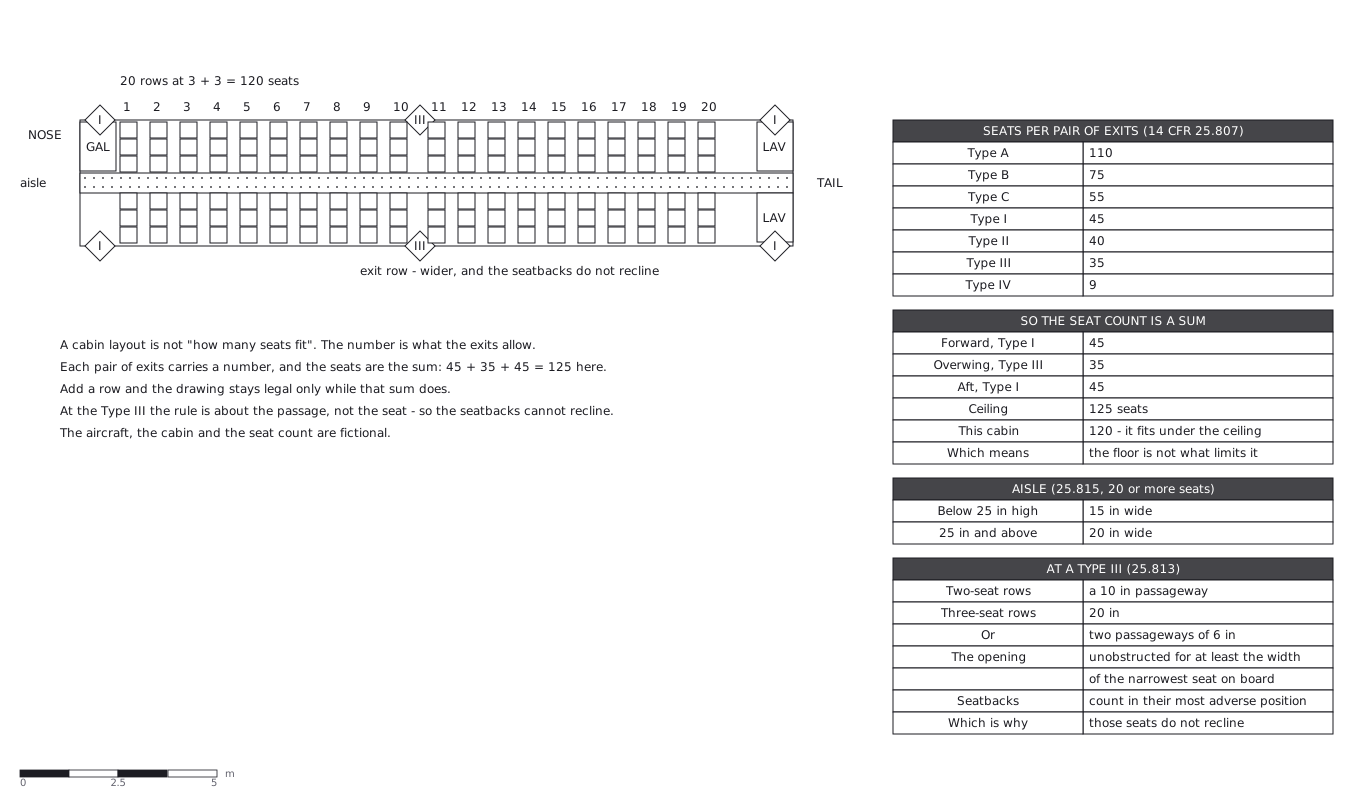 The seat count is not what fits - it is what the exits allow
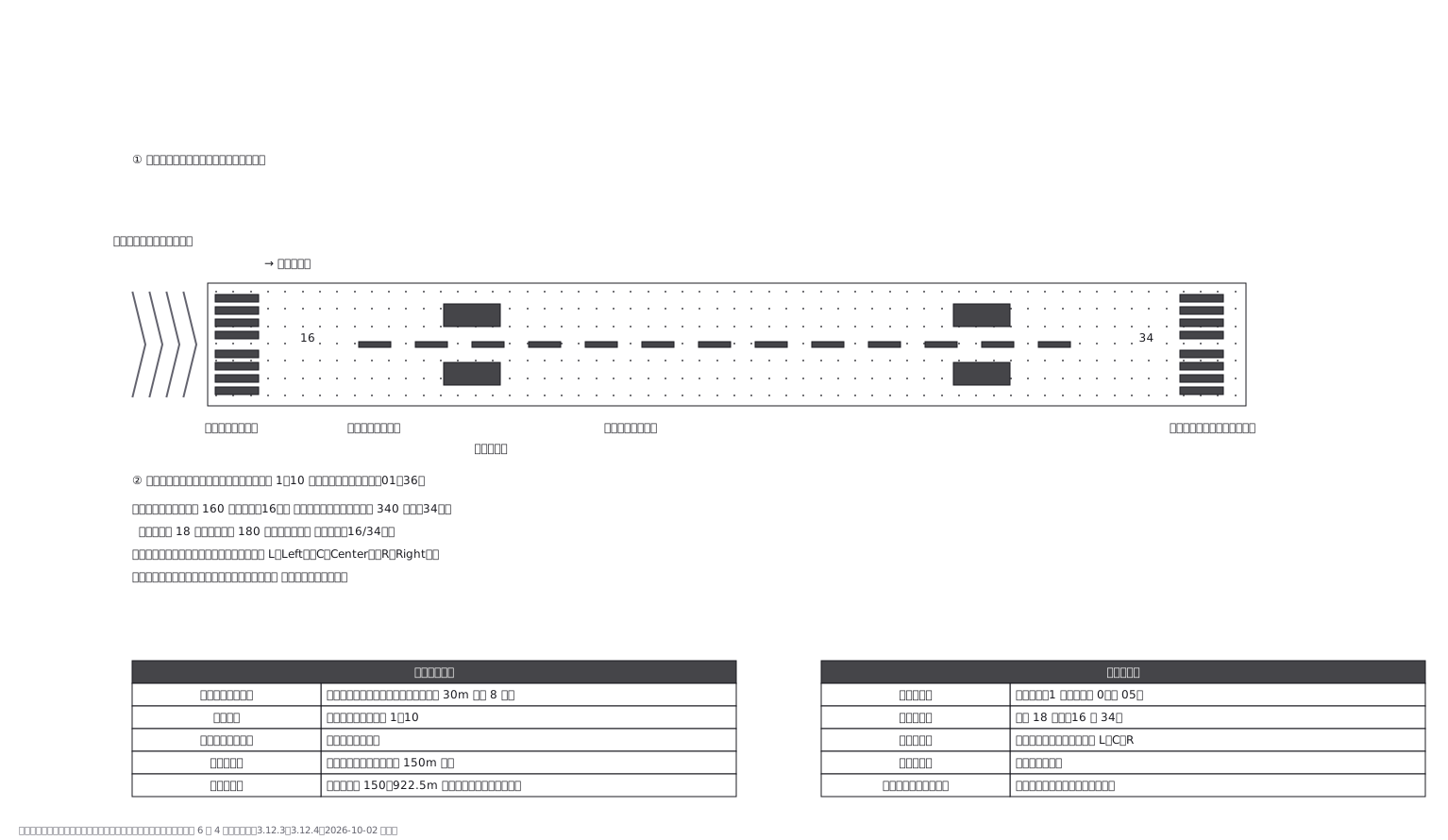 A runway number is not a name but a bearing: the magnetic heading divided by ten. Use the same strip from the other end and the heading differs by 180 degrees, so the two numbers always differ by 18 and the runway is called 16/34. Because magnetic north drifts, the number painted on the ground is not permanent — when the bearing moves far enough, it gets repainted.
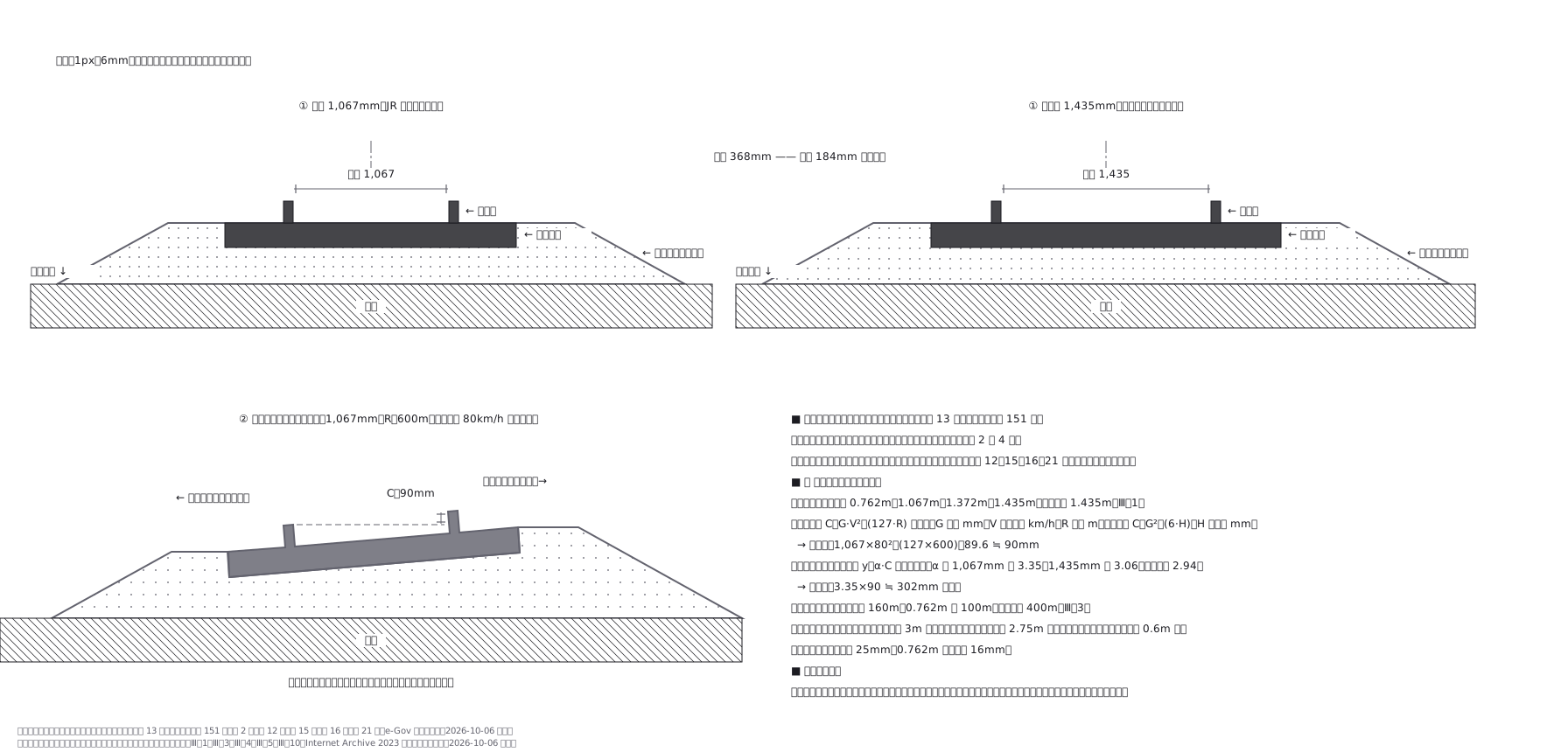 Rail, sleeper, ballast and formation in cross-section at 1,067 mm and 1,435 mm gauge, and a curve where the outer rail is raised 90 mm — cant from C = GV²/127R, as the ministry standard gives it
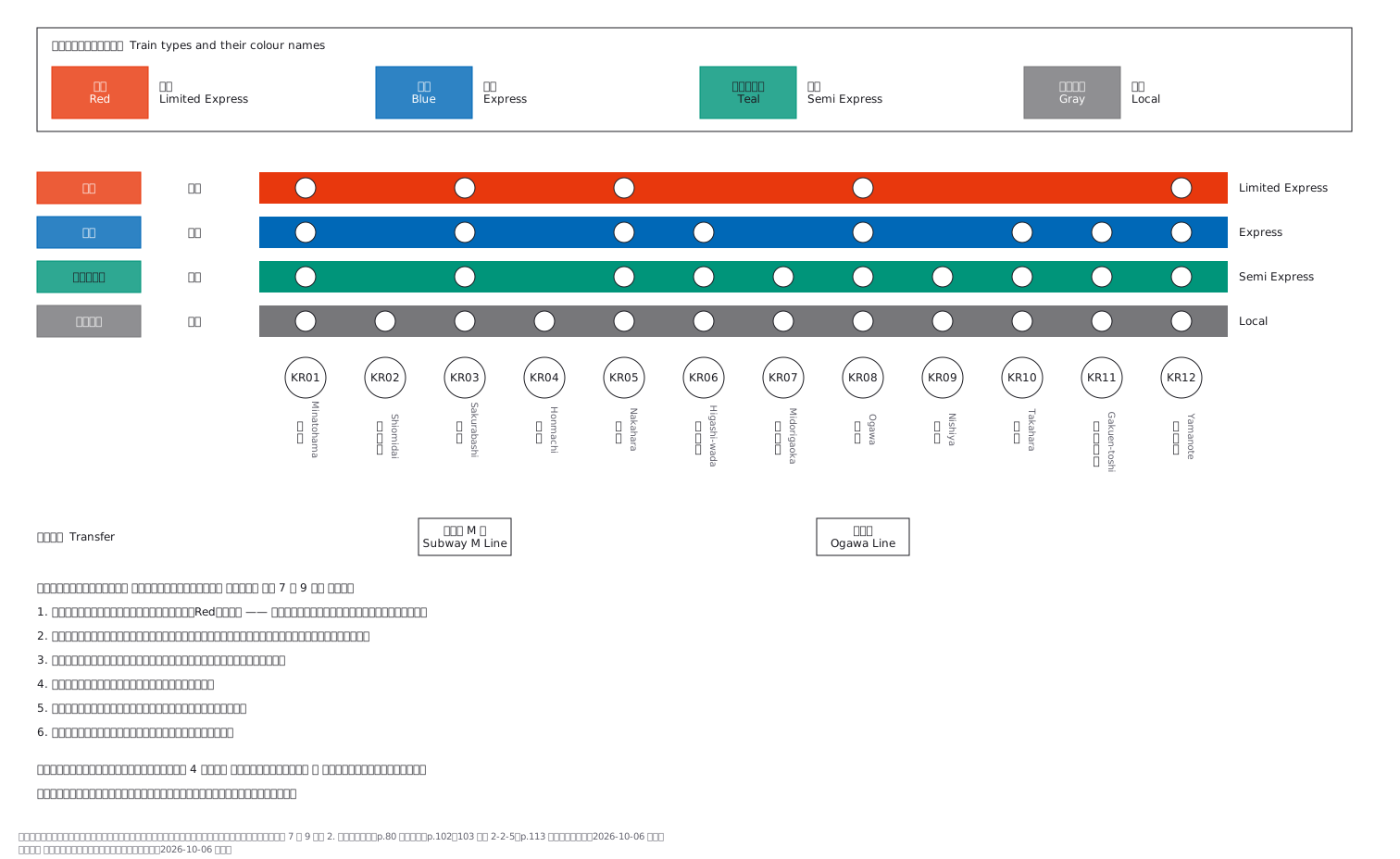 A stopping-pattern chart that names each colour, so no one has to rely on colour alone
 A route map where each line letter is the initial of its colour name