Learning and geometry
World time zones (the 15-degree bands, and the times countries actually keep)
Every 15 degrees of longitude is an hour, but clocks follow borders. Twenty cities from the IANA tz database sit on the nominal bands: Seoul keeps Japan's 135-degree time, all of China keeps +8, Kolkata +5:30 and Kathmandu +5:45, and Kiritimati and Apia lie east of 180 degrees yet keep +14 and +13, a whole day ahead of Pago Pago next door.
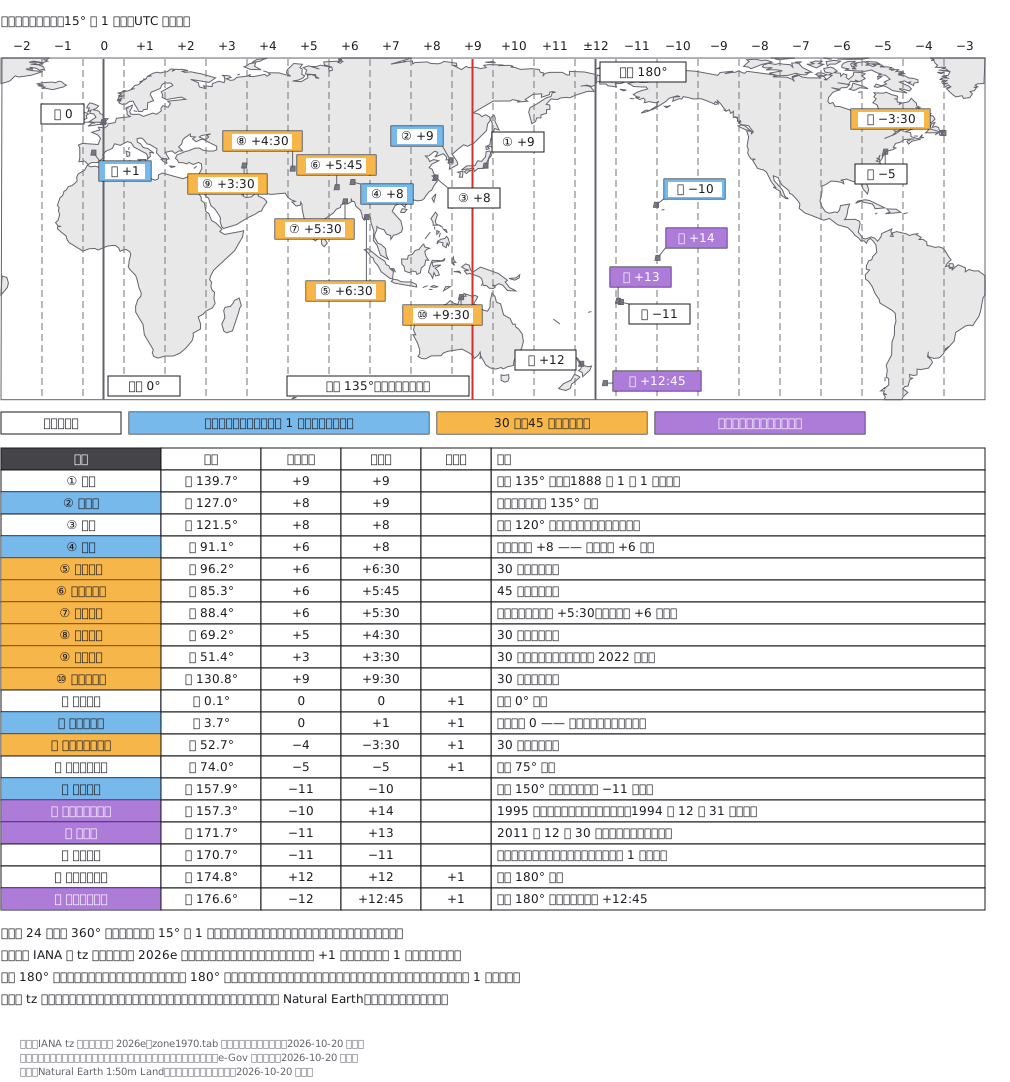
This drawing comes from one YAML file. No shape was moved by hand.
Notes in the source (in Japanese)
経度 15° で 1 時間 —— でも、時計の時刻は国が決める。 経度で決めた時差の帯の上に、実際の標準時を置いた。
決まり・値 ——
- 日本:「明治二十一年一月一日ヨリ東経百三十五度ノ子午線ノ時ヲ以テ本邦一般ノ標準時ト定ム」(明治十九年勅令第五十一号、e-Gov で本文)- 各都市の標準時と夏時間の有無は IANA の tz データベース 2026e の今の行(Zone の最後の行の STDOFF と、Rule が max まで続くか)- キリティマティ:−10:00 は 1994 年 12 月 31 日まで、その後 +14:00(12 月 31 日が無い)- アピア:−11:00 は 2011 年 12 月 29 日 24:00 まで、その後 +13:00(12 月 30 日が無い)。夏時間は 2021 年まで- テヘラン:夏時間は 2022 年まで- コルカタ・ラサ:tz の代表地はインドがコルカタ、中国が上海。ラサは Asia/Shanghai に結ばれていて座標が無い(位置は約の値)- 座標は zone1970.tab の代表地(東京・ソウル・上海・ヤンゴン・カトマンズ・コルカタ・カブール・テヘラン・ダーウィン・ロンドン・マドリード・セントジョンズ・ニューヨーク・ホノルル・キリティマティ・アピア・パゴパゴ・オークランド・チャタム)- 「経度では」は経度 ÷ 15 を丸めた値。経度 180° の帯(172.5° より外)は ±12
正距円筒図法(経度が等間隔なので、15° の帯がまっすぐ同じ幅になる)。左端を西経 37.5° にして帯の境と枠を揃え、太平洋を真ん中に置いた。陸は経度をつなげてから左右に 360° ずらした写しも作り、枠で切った。札は点を隠さない・札どうし重ならないことを作るときに確かめた。
- 時間帯の境の線(国境・州境に沿う実際の線)—— 線のデータを持っていない。都市の点で示した- 日付変更線の線 —— どこを通るかを決めた一次資料を確かめられなかった。⑯⑰⑳の札で、経度 180° とずれる所だけ示した- 夏時間の始まりと終わりの日(国ごとに違う)。表には「夏時間があるか」だけ- 新疆で使われている現地の時刻(tz は Asia/Urumqi を +6 とするが、中国の標準時は +8)
Source (YAML)
examples/gallery/402-時差の世界地図-経度の帯と国が決めた時.zumen.yaml
More in this field
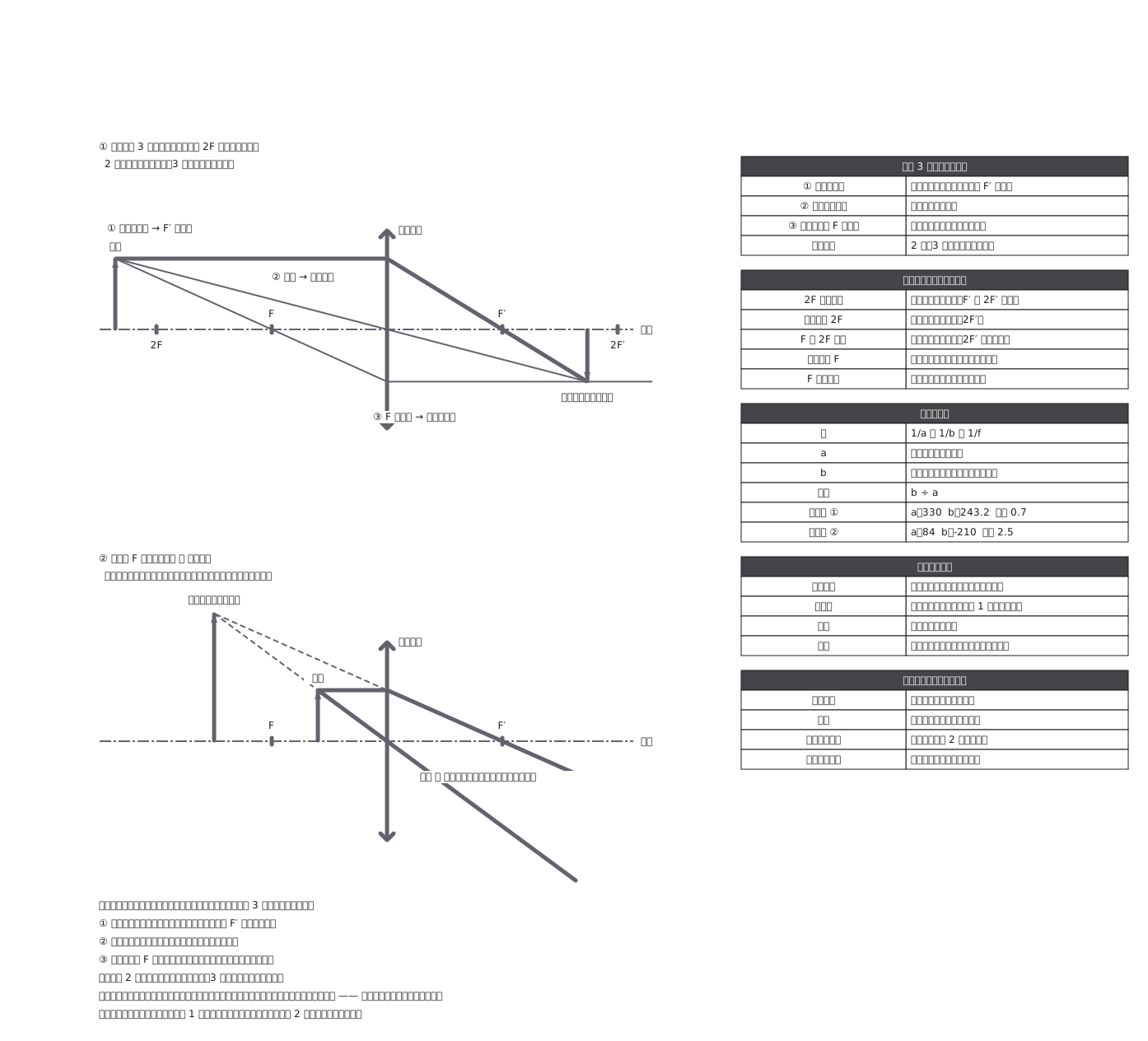 Ray tracing through a convex lens: there are only three lines to draw, and two of them fix the image
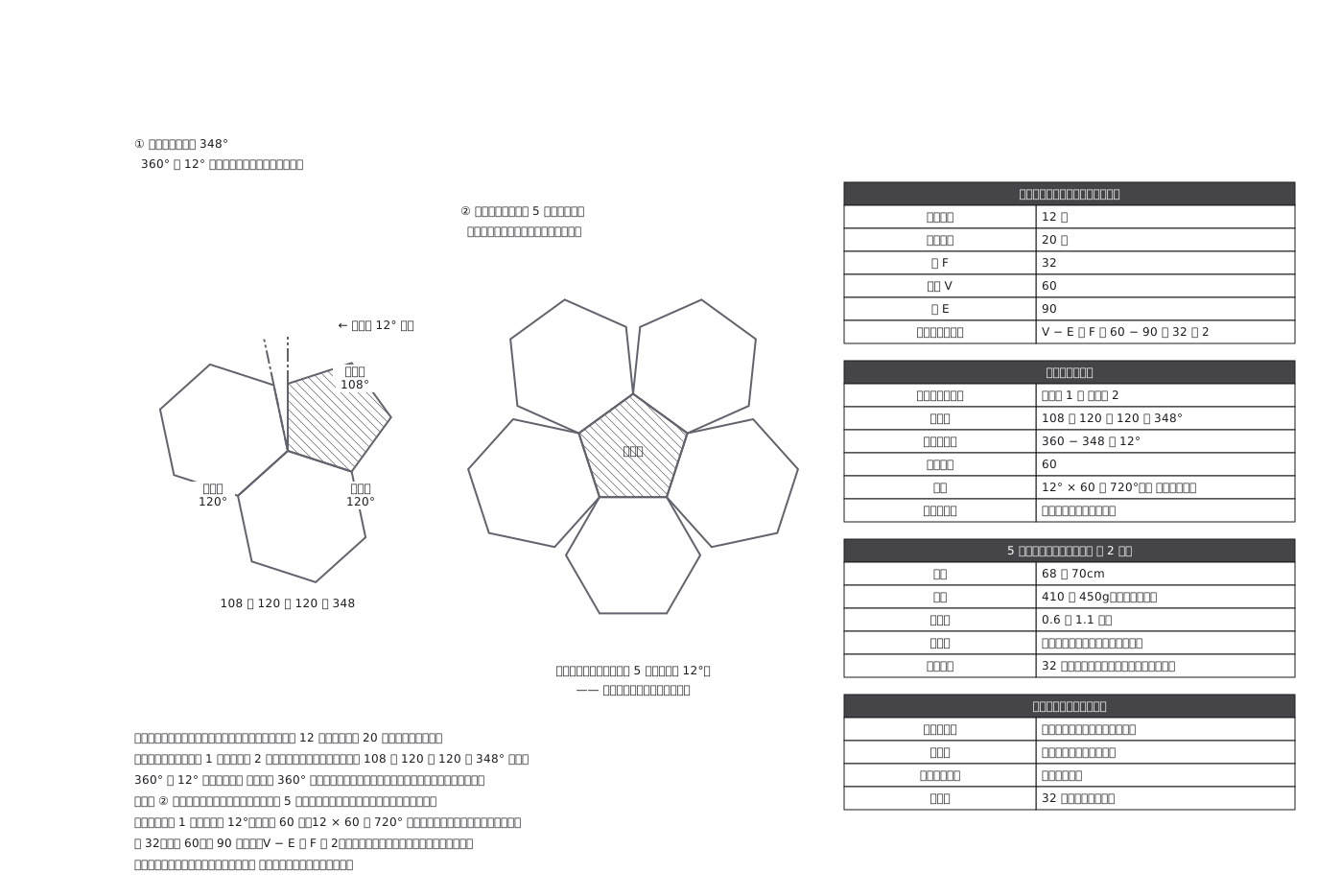 A football is a truncated icosahedron: the 12 degrees missing at every vertex are what make it a sphere
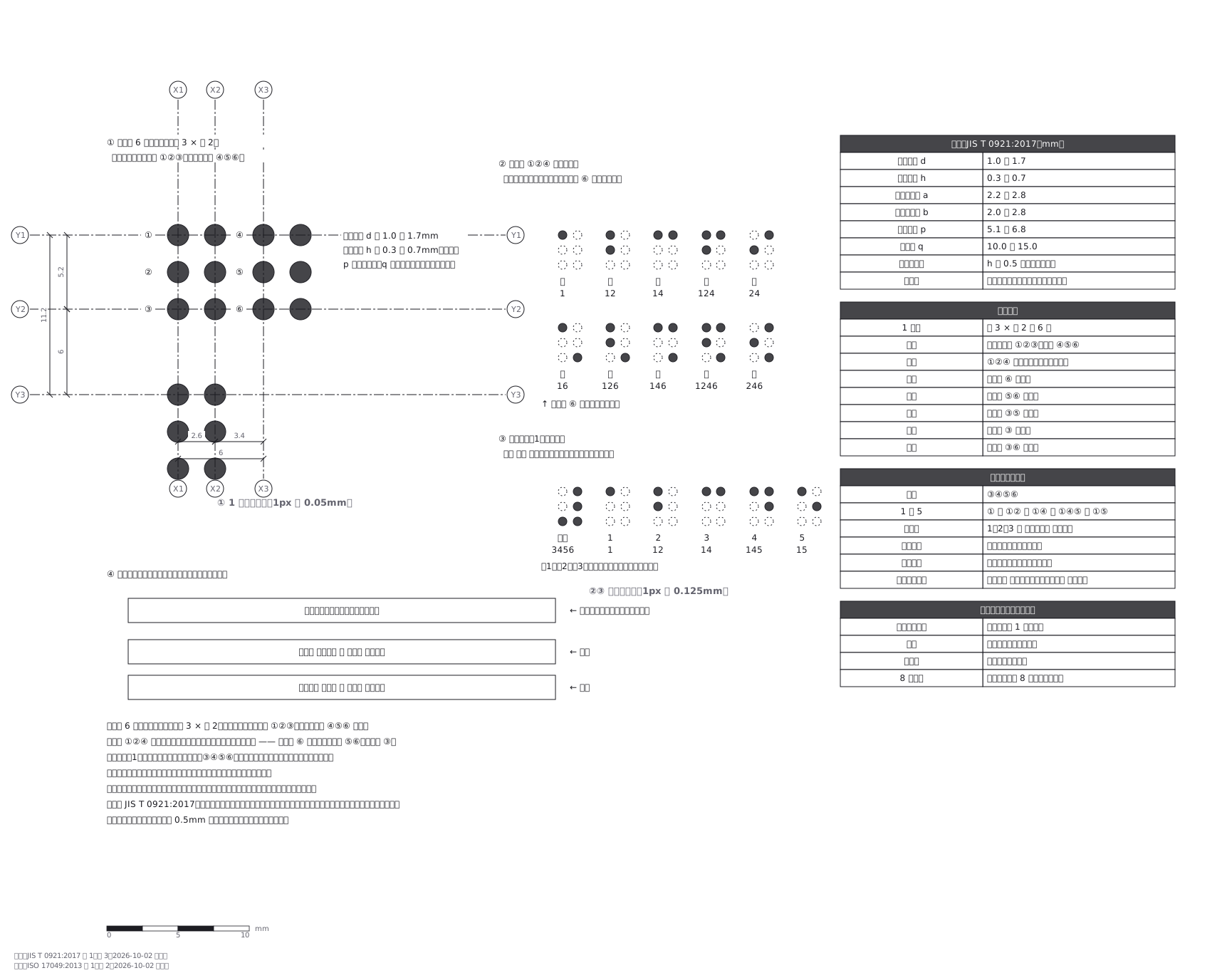 Braille has only six dots, so “a” and “1” are the same shape until a number sign says otherwise
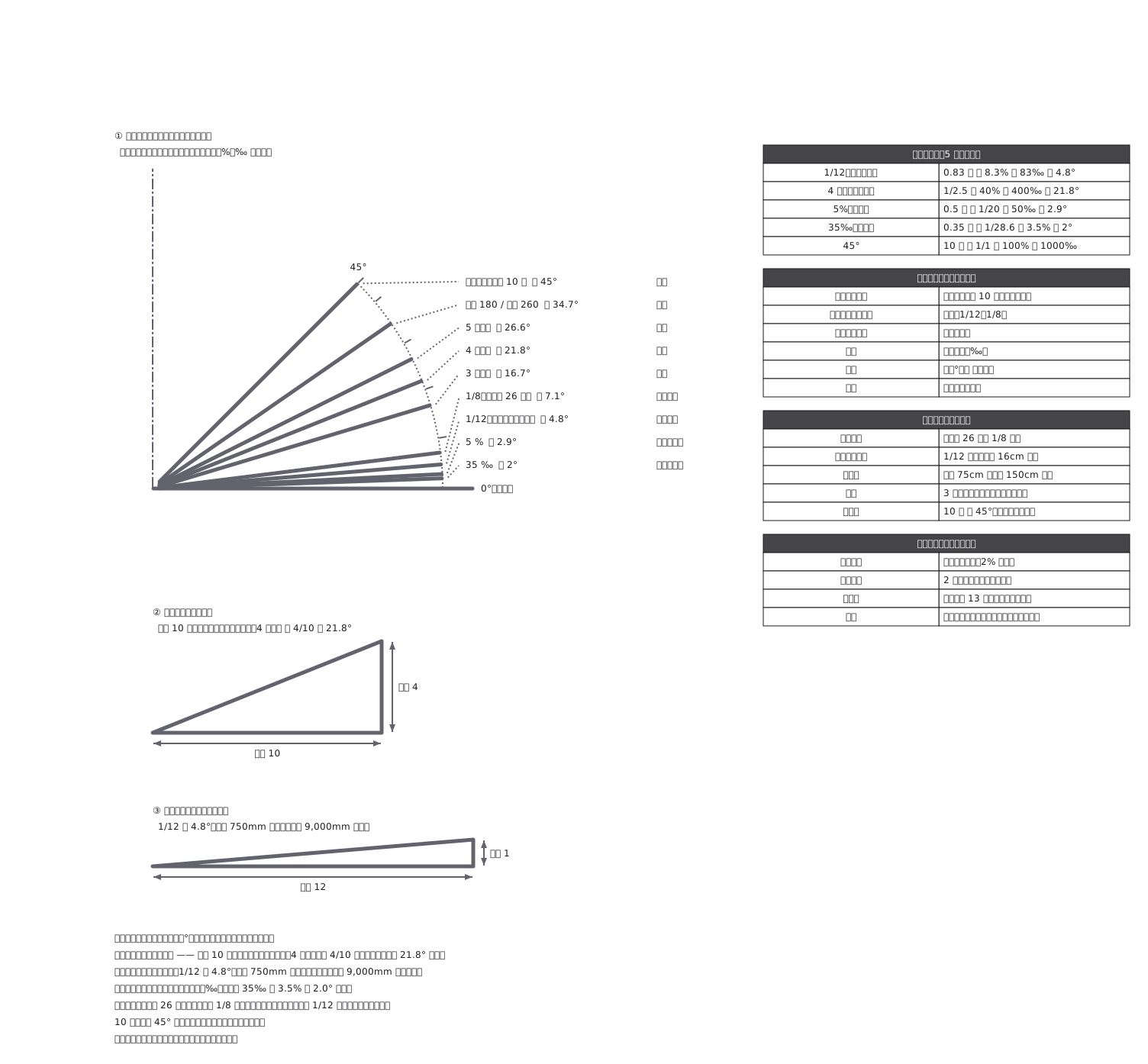 Slope notation: roofs in sun, ramps in fractions, roads in percent, railways in per mille — degrees are the minority
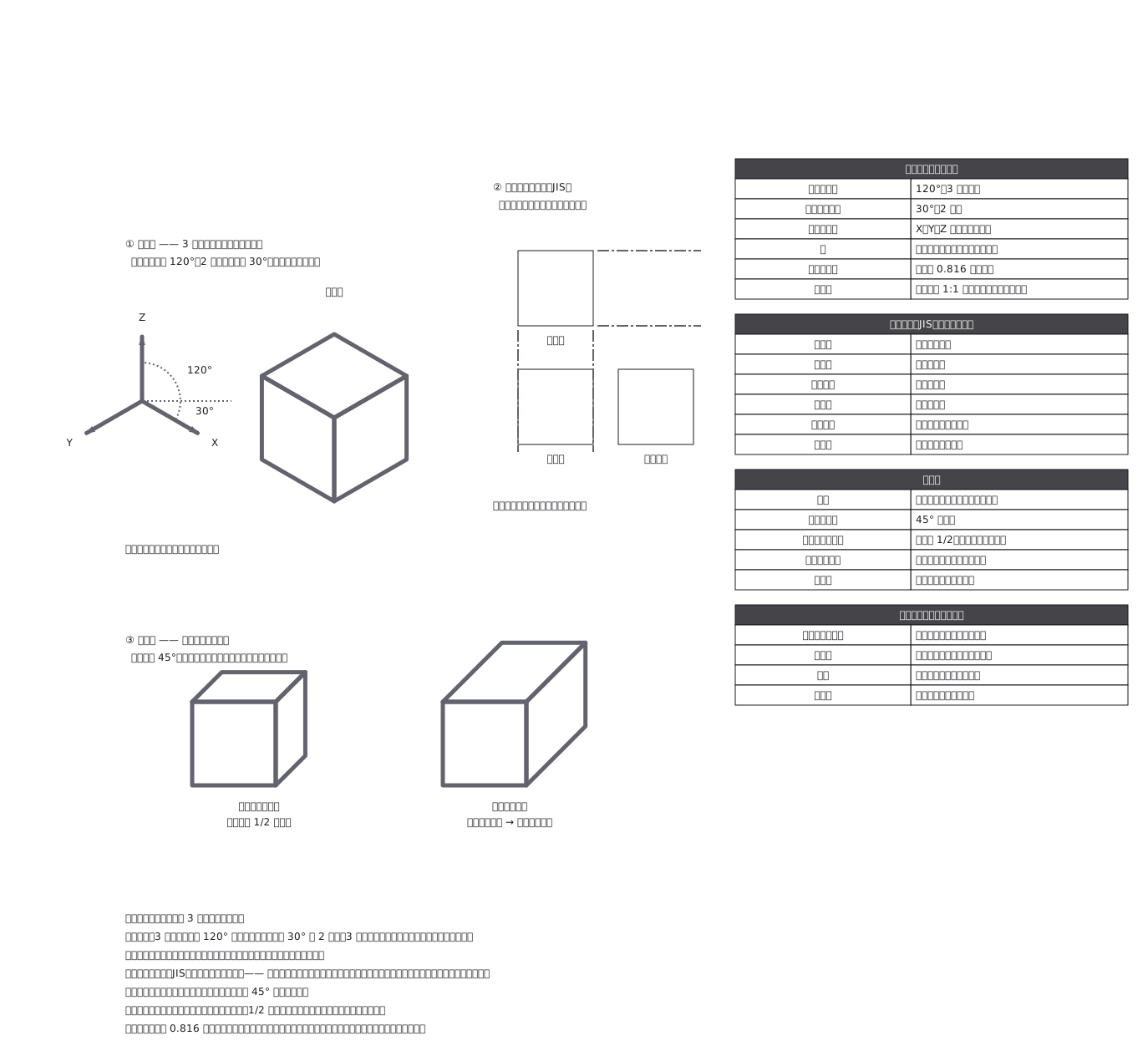 Isometric, third-angle and oblique: one scale serves all three axes, but circles become ellipses
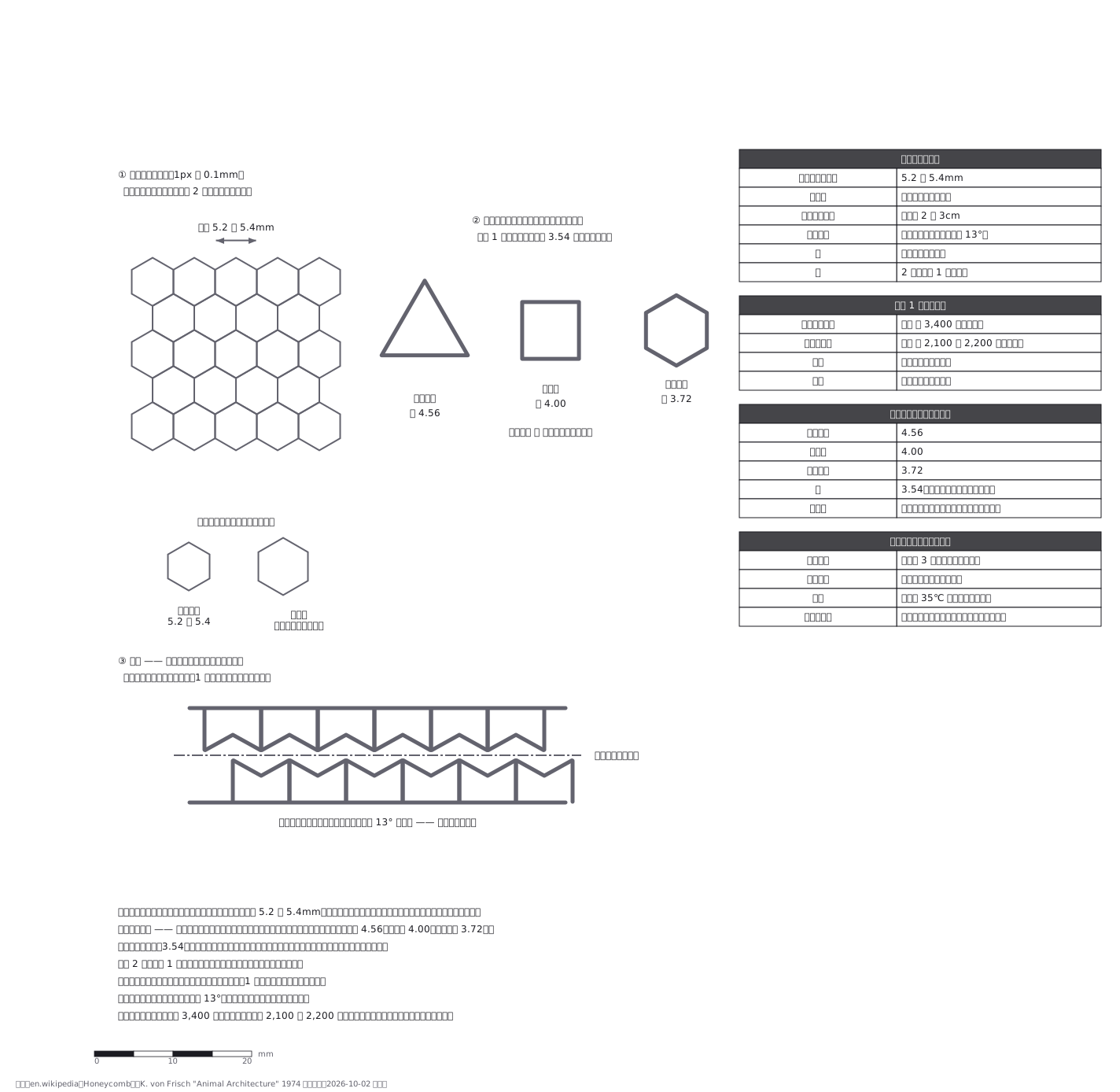 Honeycomb cells: for a given area the hexagon has the shortest wall of any shape that tiles
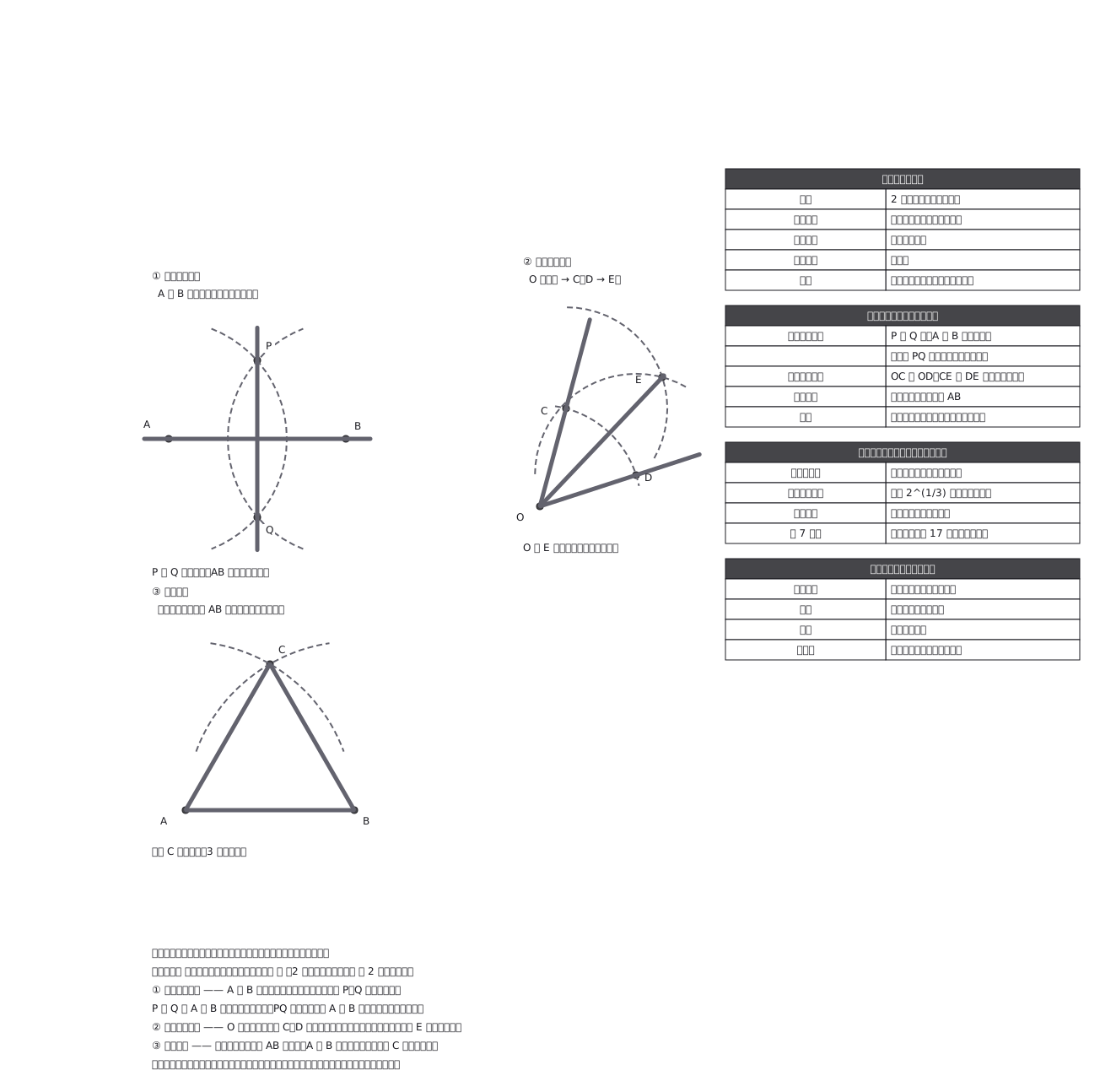 Ruler-and-compass constructions: no scale is used, because equal compass openings make equal lengths
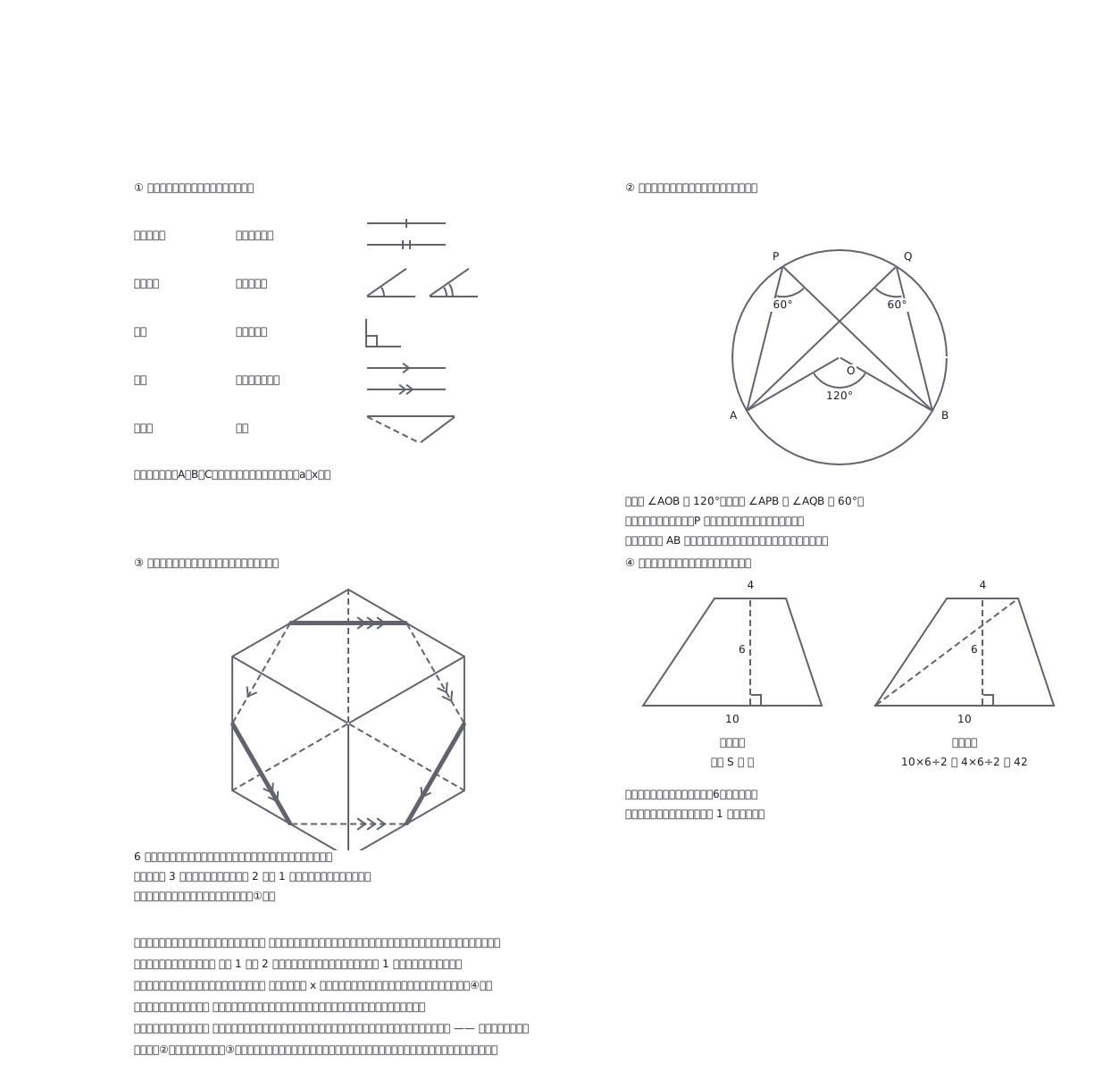 Figures in maths problems: the marks carry the meaning — equal ticks, right-angle squares, parallel chevrons — and only the given values are written on the figure