Instruments and acoustics
Twinkle, Twinkle, Little Star (a staff score with English lyrics)
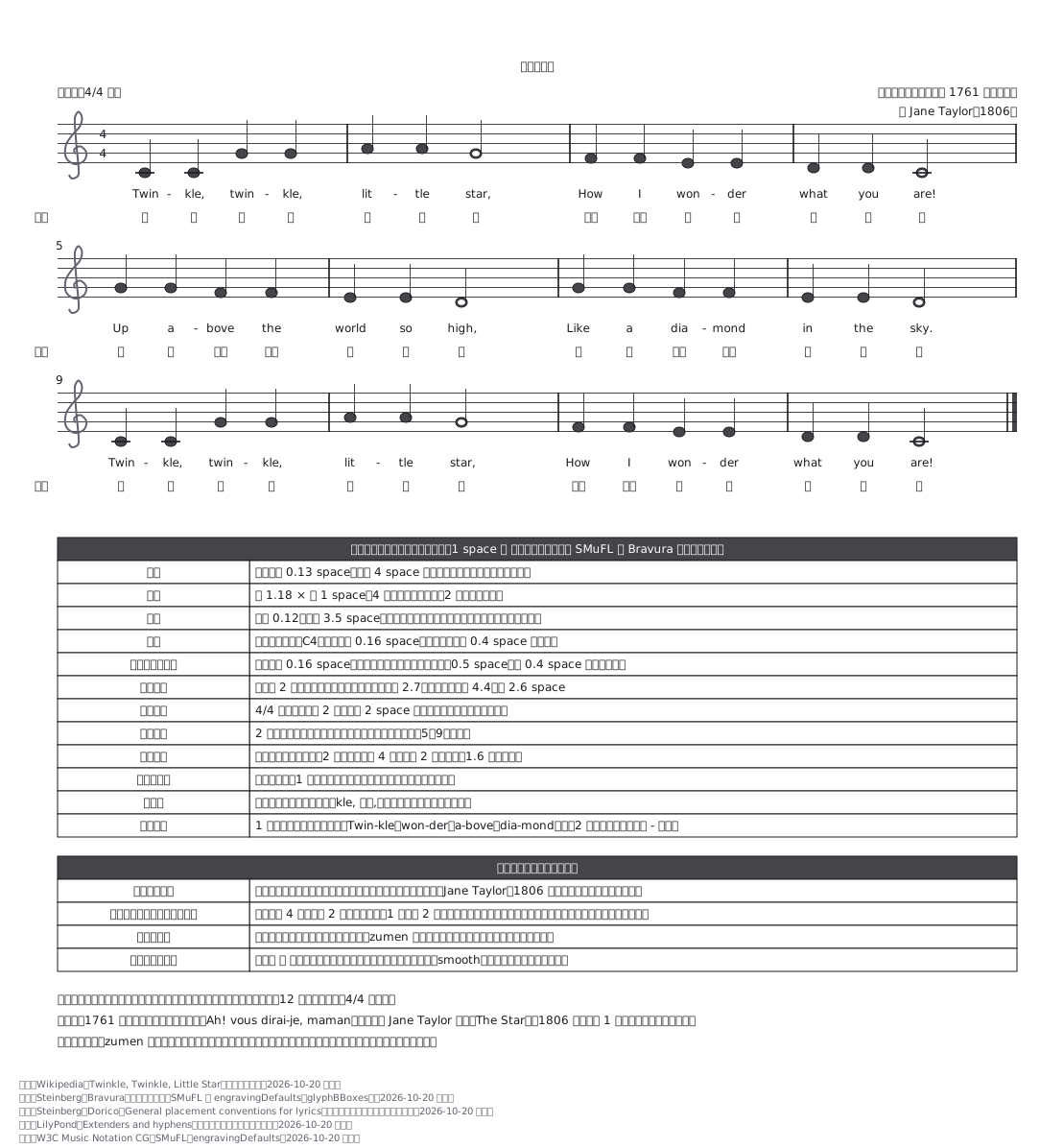
An ordinary score: Twinkle, Twinkle, Little Star in C major, 4/4, on three staves, with Jane Taylor's 1806 words under the notes. Each syllable is centred on its notehead, ignoring trailing punctuation, and a hyphen sits midway inside Twin-kle and dia-mond. Staff lines, stems and barlines follow the SMuFL engraving defaults; the clef is one smooth curve.
This drawing comes from one YAML file. No shape was moved by hand.
Notes in the source (in Japanese)
楽譜は、五線の間隔(1 space)を物差しにした図面。 普通の楽譜を 1 枚、決まりどおりに組む。
決まり(SMuFL の Bravura の engravingDefaults、取得 2026-10-20)——五線 0.13・符尾 0.12・加線 0.16(はみ出し 0.4)・小節線 0.16・終止線の太線 0.5(間 0.4)space。符頭は 1.18 × 1 space、符尾は 3.5 space。ト音記号はソの線から上 4.39・下 2.63、幅 2.68 space。旋律と歌詞の区切りは Wikipedia の譜のソース(LilyPond)と同じ。歌詞は英語の原詩(Jane Taylor 1806)。日本語の訳詞は付けない(著作権)。歌詞は五線の下、1 音 1 音節は符頭の真ん中に揃え(句読点は数えない)、語の切れ目のハイフンは音節の真ん中に置く。
Source (YAML)
examples/gallery/403-きらきら星-英語の歌詞つきの五線譜.zumen.yaml
More in this field
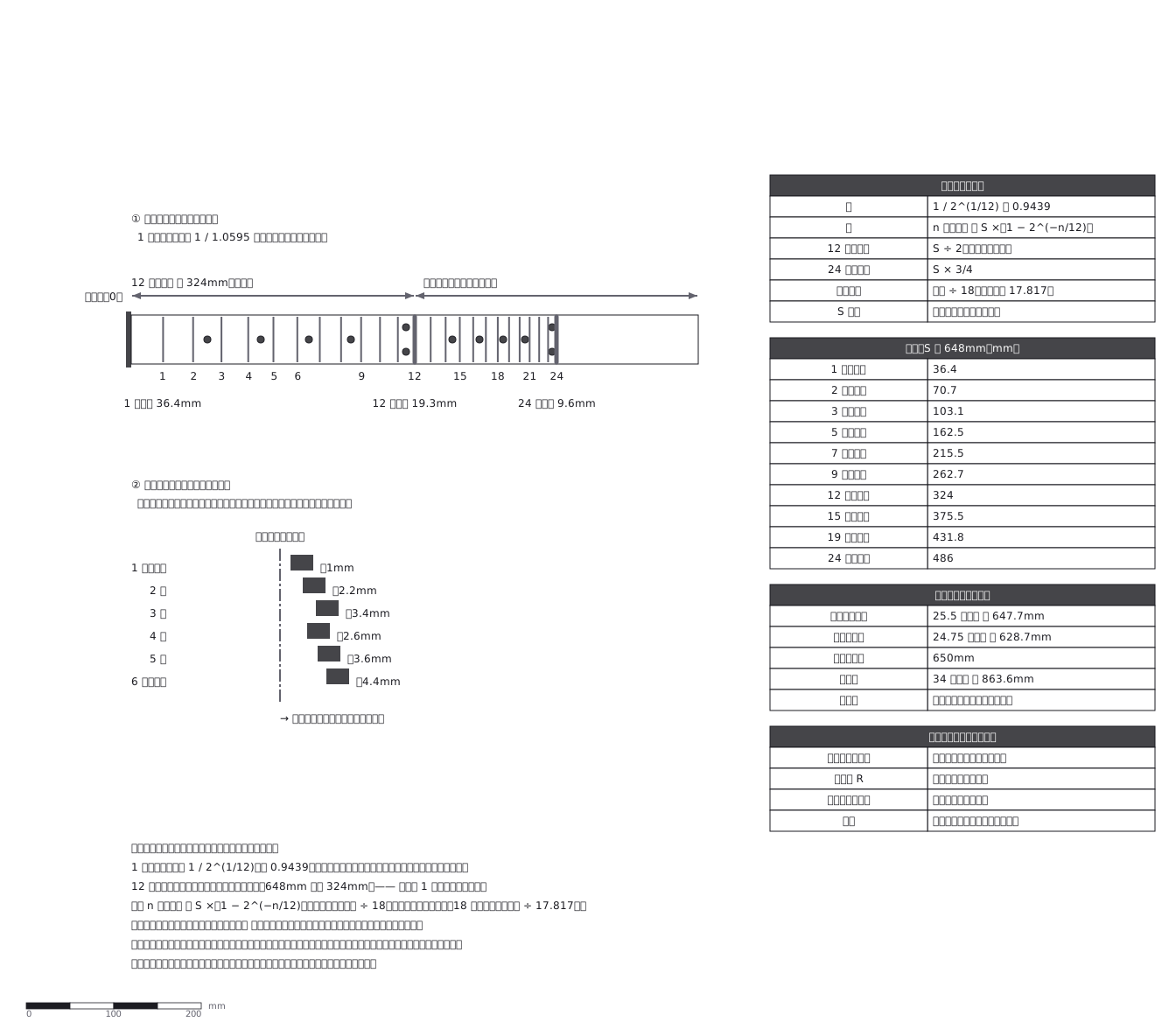 Guitar frets are a geometric series, and the saddle must still be moved back to play in tune
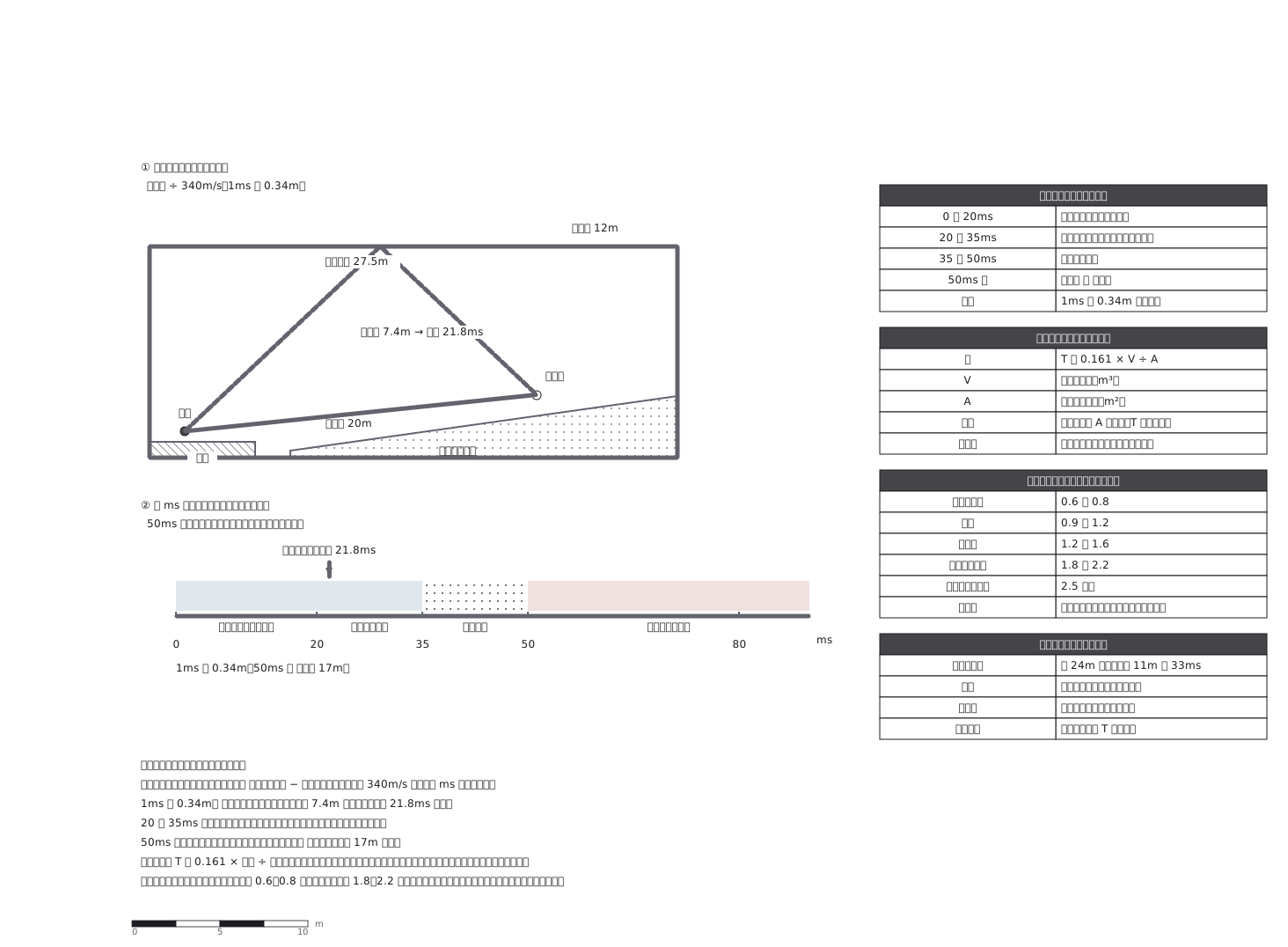 Hall acoustics: delay is nothing but a difference in path length — one millisecond is 0.34 m
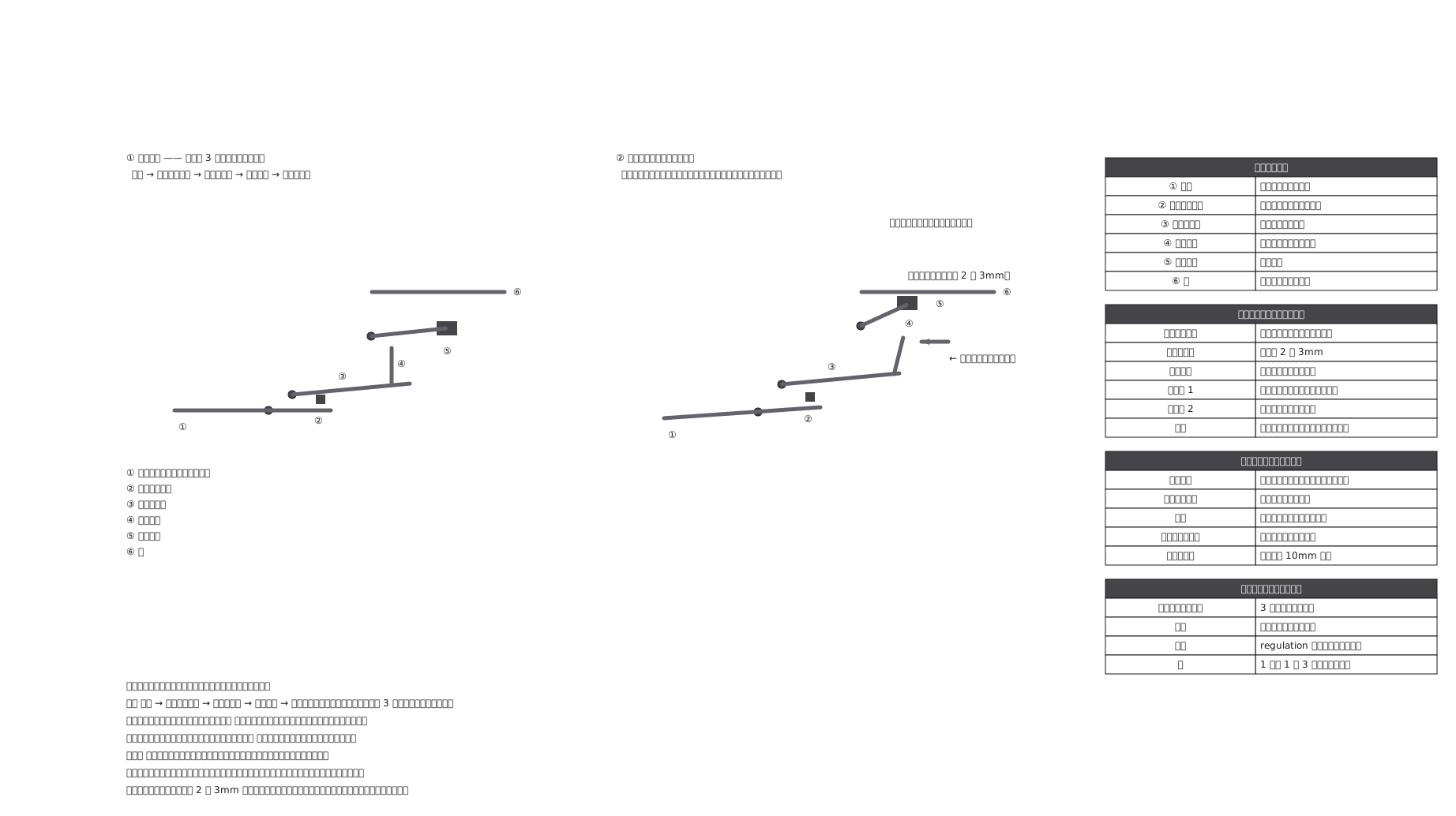 A piano action: the jack lets go just before the string, so nothing is pushing the hammer at impact
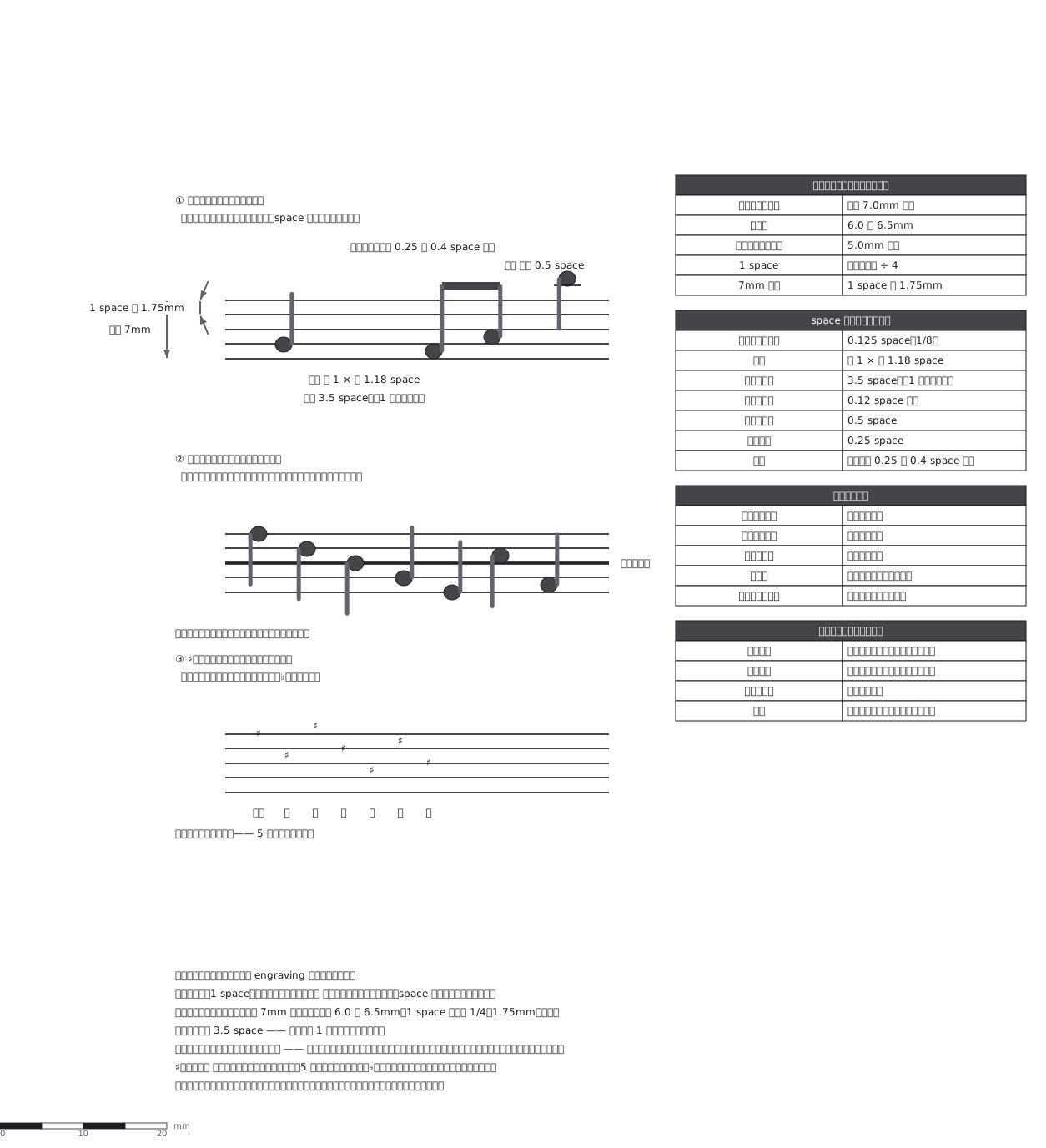 Music engraving: the staff space is the unit for every measurement, and the stem is 3.5 of them
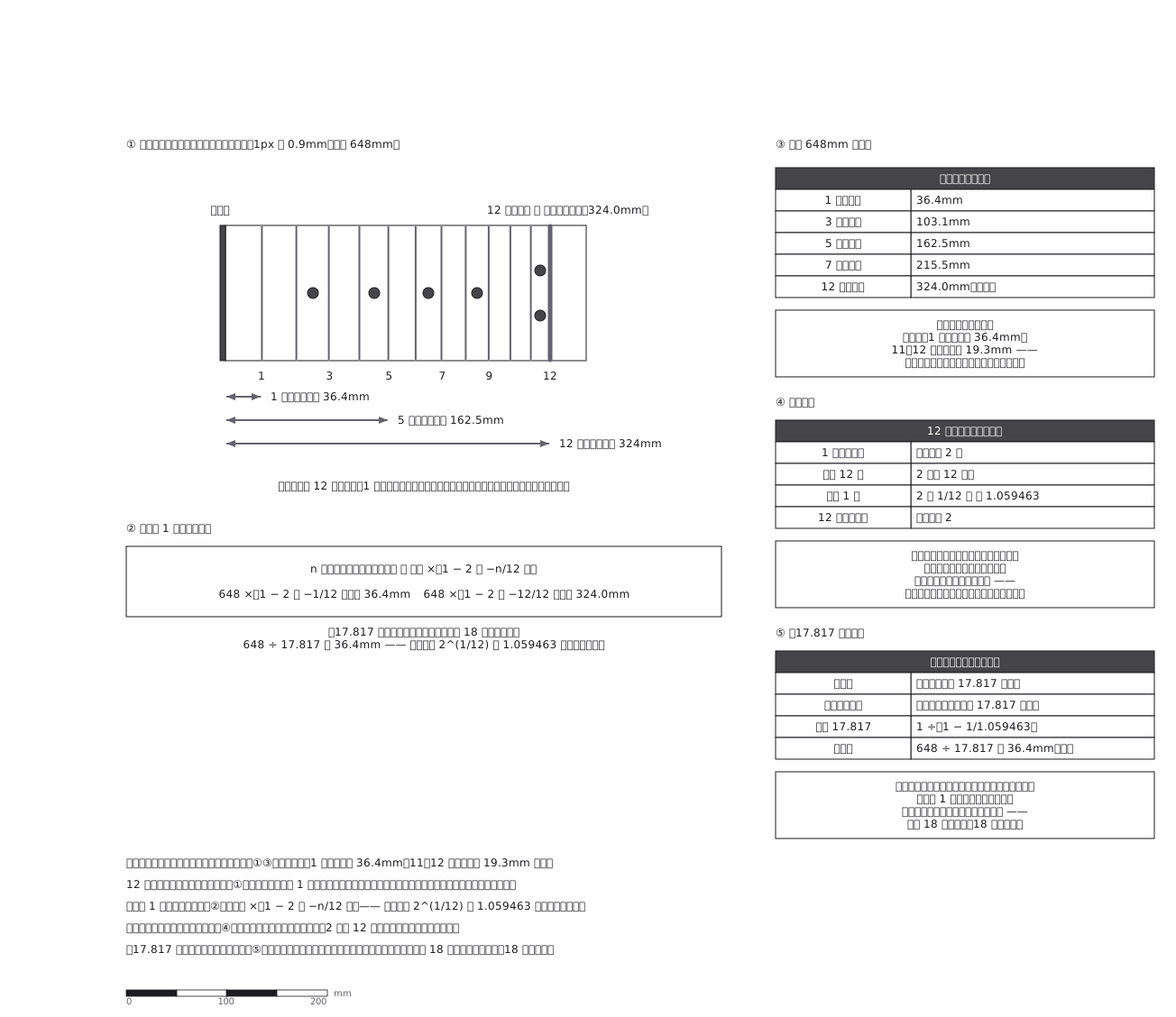 Frets crowd together as you climb because what is divided into twelve is not a distance but a ratio: each semitone multiplies by 2^(1/12), so the twelfth fret lands at exactly half the string and everything beyond it repeats at half size
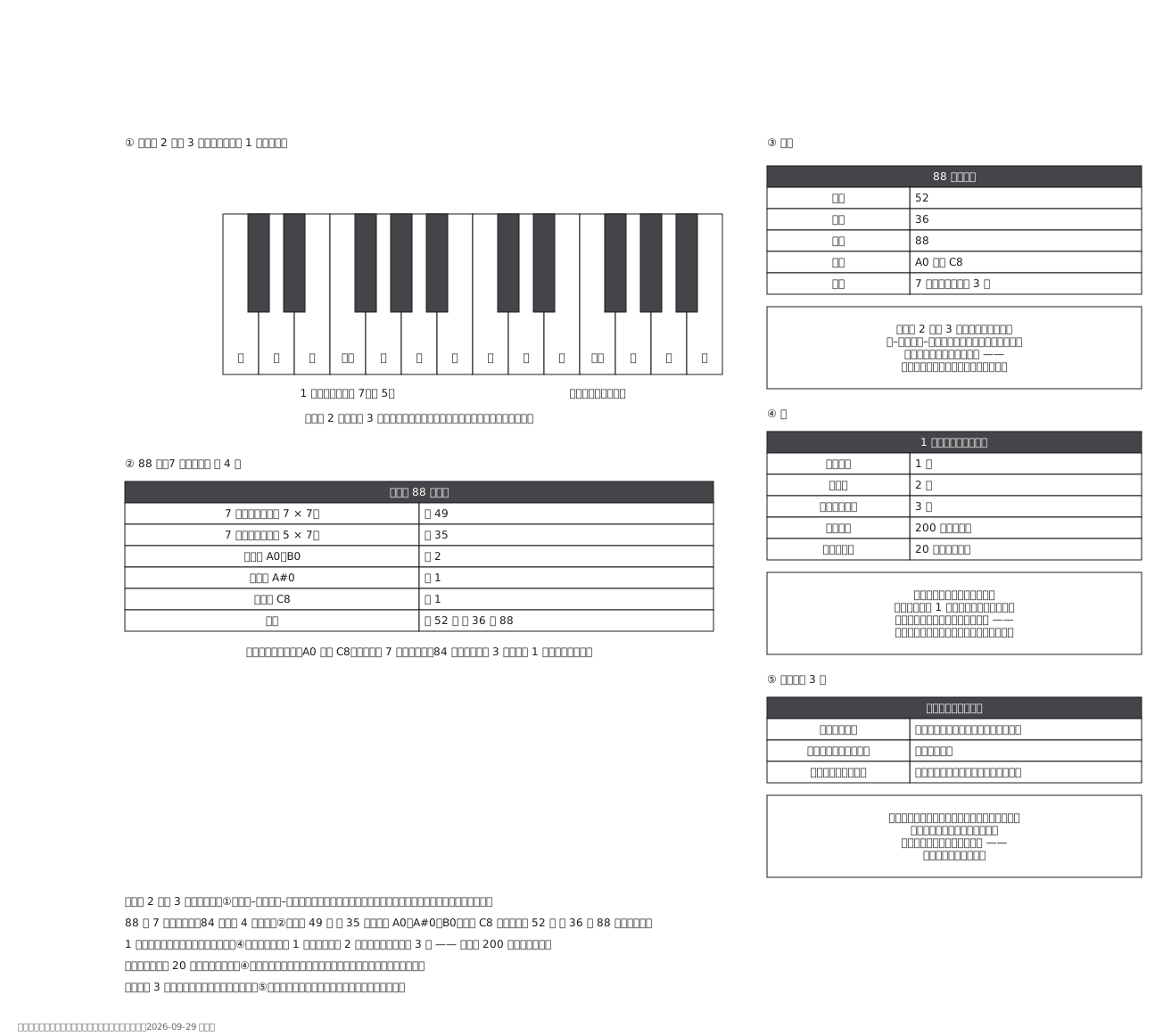 The black keys are grouped in twos and threes so that a hand can find its place without looking — twelve evenly spaced keys would give no landmark at all — and 88 turns out to be seven octaves plus four: three keys added below and one above
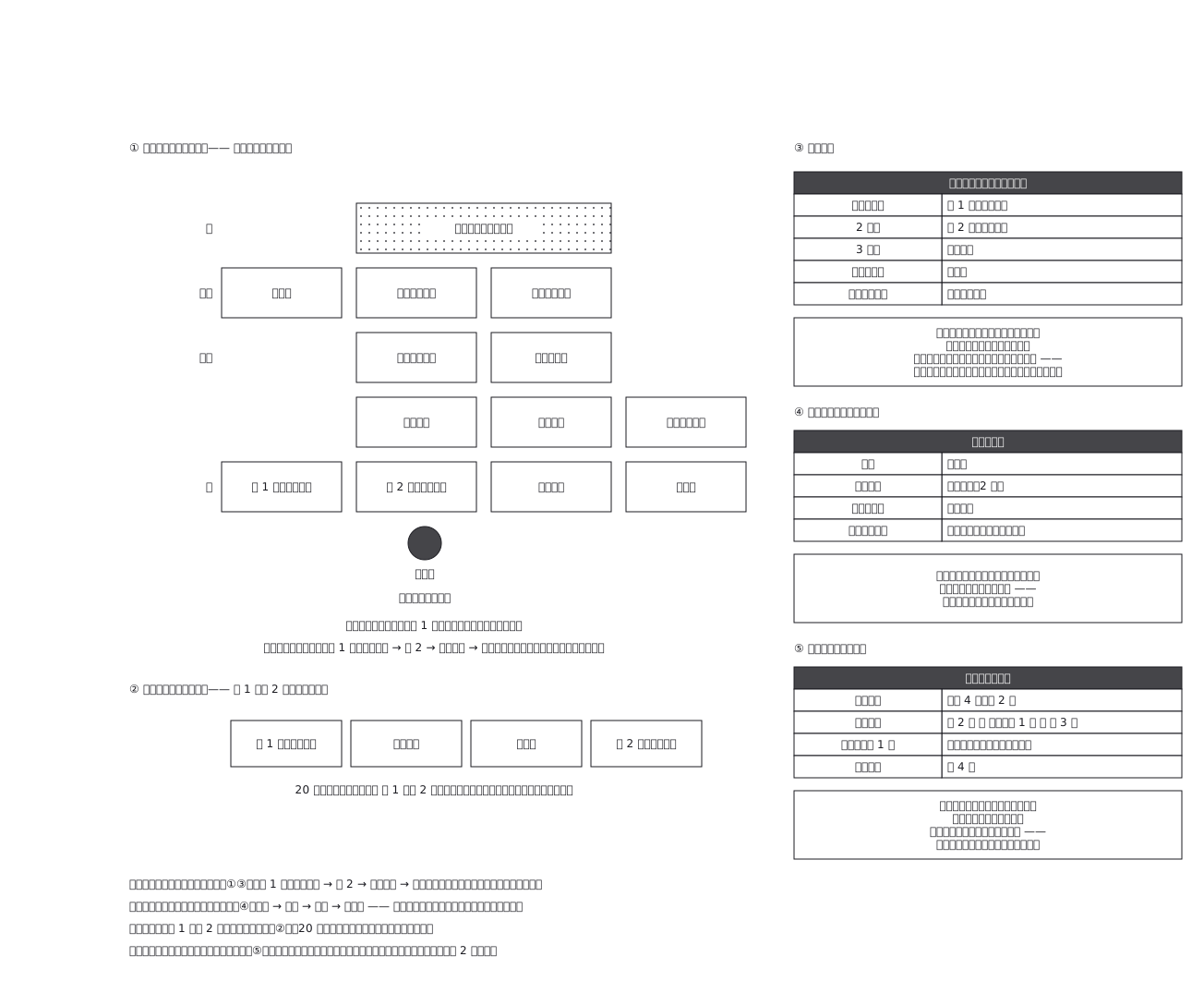 The strings run left to right from high to low and the louder the instrument the further back it sits, so the seating plan is itself a balance control — and "double wind" or "triple wind" names the size of the orchestra by counting only the woodwind
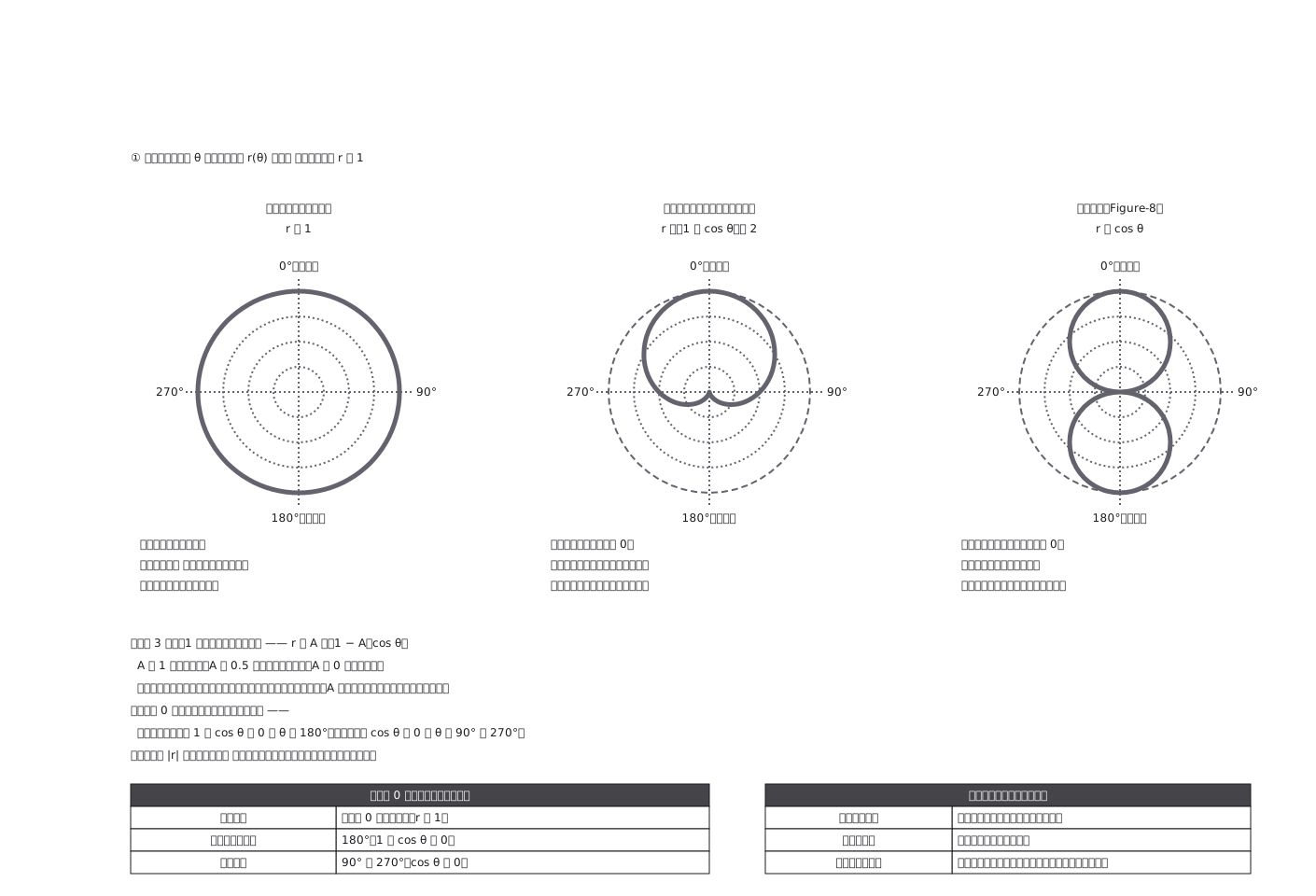 A polar plot of how much a microphone picks up from each direction. The three familiar shapes are not separate inventions but one formula at its ends and middle — omnidirectional, cardioid and figure-of-eight are A = 1, 0.5 and 0 in r = A + (1 - A)cos θ. Solving the same formula gives the dead angles: 180 degrees for a cardioid, 90 and 270 for a figure-of-eight.