Building and civil
N-value calculation and hold-down hardware
Hold-down selection (N-value method): the stronger a shear wall is, the harder it pulls its end post out of the ground
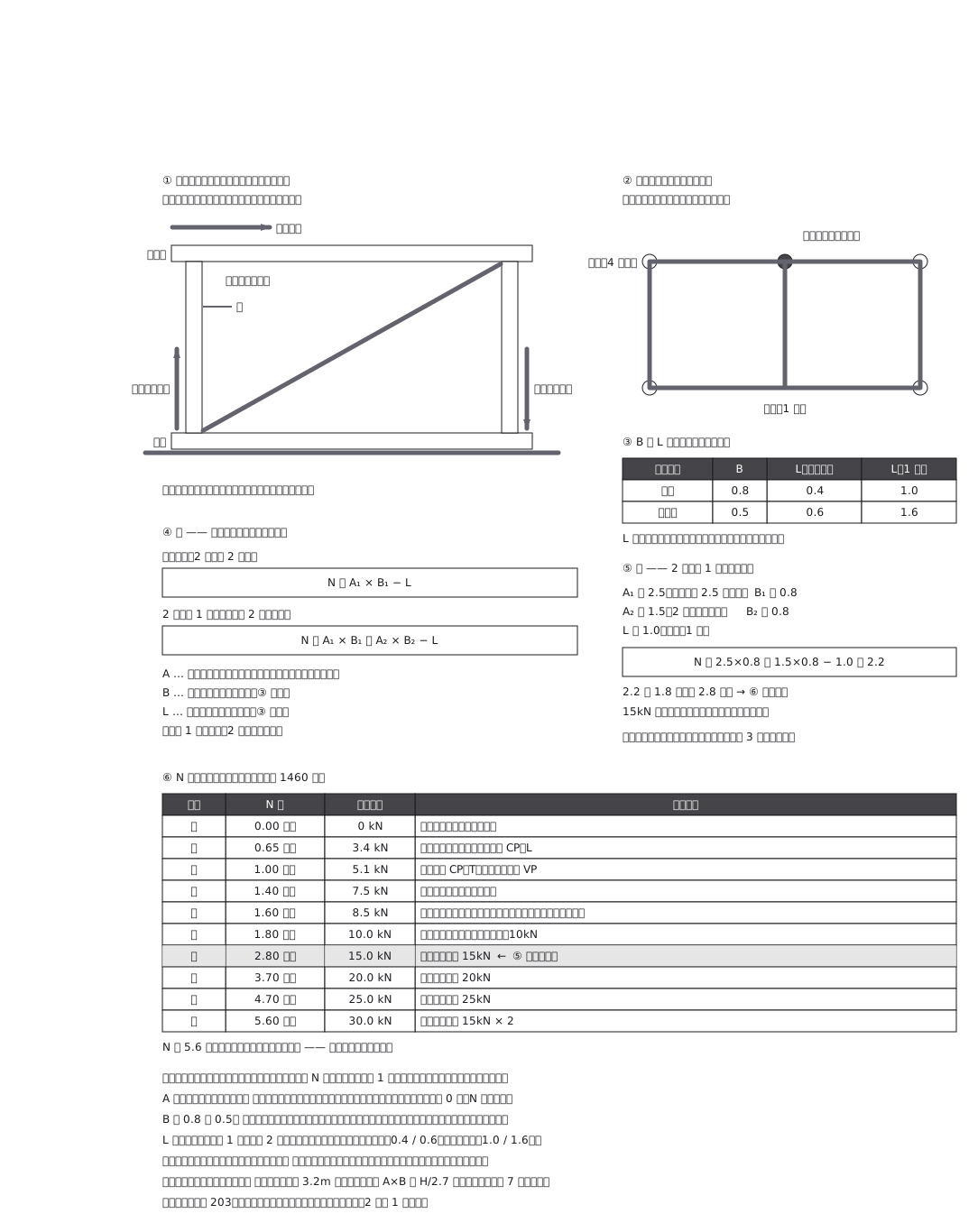
This drawing comes from one YAML file. No shape was moved by hand.
Notes in the source (in Japanese)
壁を強くするほど、その端の柱は抜けようとする。
耐力壁は地震で回転し、端の柱を持ち上げる。その力を N 値として数で出し、告示 1460 号の(い)〜(ぬ)から金物を選ぶ。感覚では選べない。壁量計算(見本 203)と 2 つで 1 組。
N 値は、柱がどこに立っているかで変わる。同じ筋かいでも、出隅の柱と壁の中間の柱では引き抜かれる力が違う ——壁の強さだけを見て金物を選べない。
強い金物を付ければよい、でもない。 金物が引き抜きに耐えても、留める釘やビスの本数が足りなければ、そこから抜ける ——告示の表は、金物と留め方をひと組で決めている。
Source (YAML)
examples/gallery/211-N値計算と接合金物.zumen.yaml
More in this field
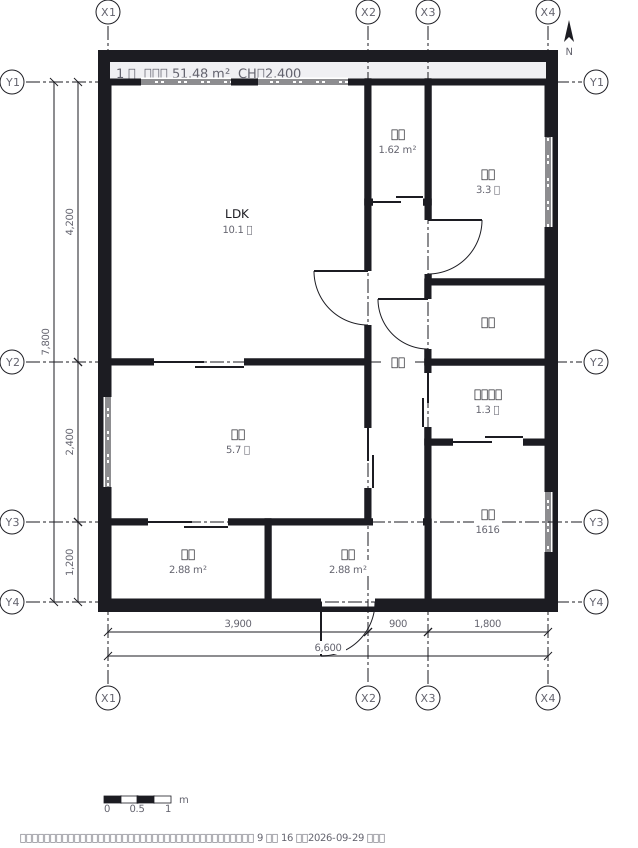 A two-bedroom apartment plan with room dimensions, which way each door swings, and where the wet rooms and storage sit
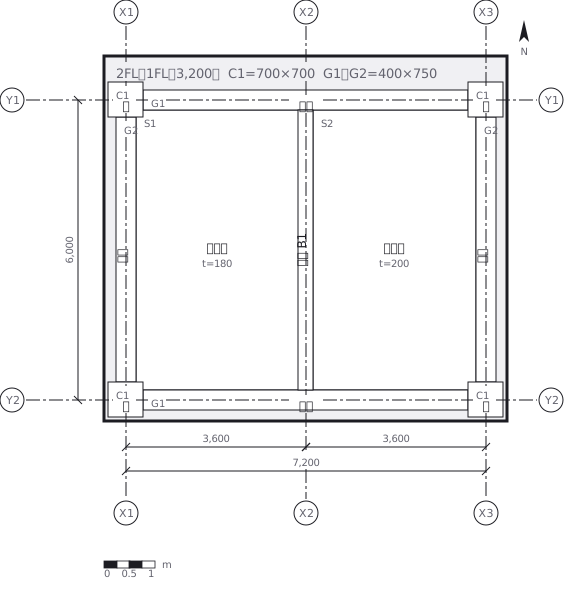 A reinforced concrete framing plan for a second floor, with the grid lines and the mark of every column, girder, beam and slab
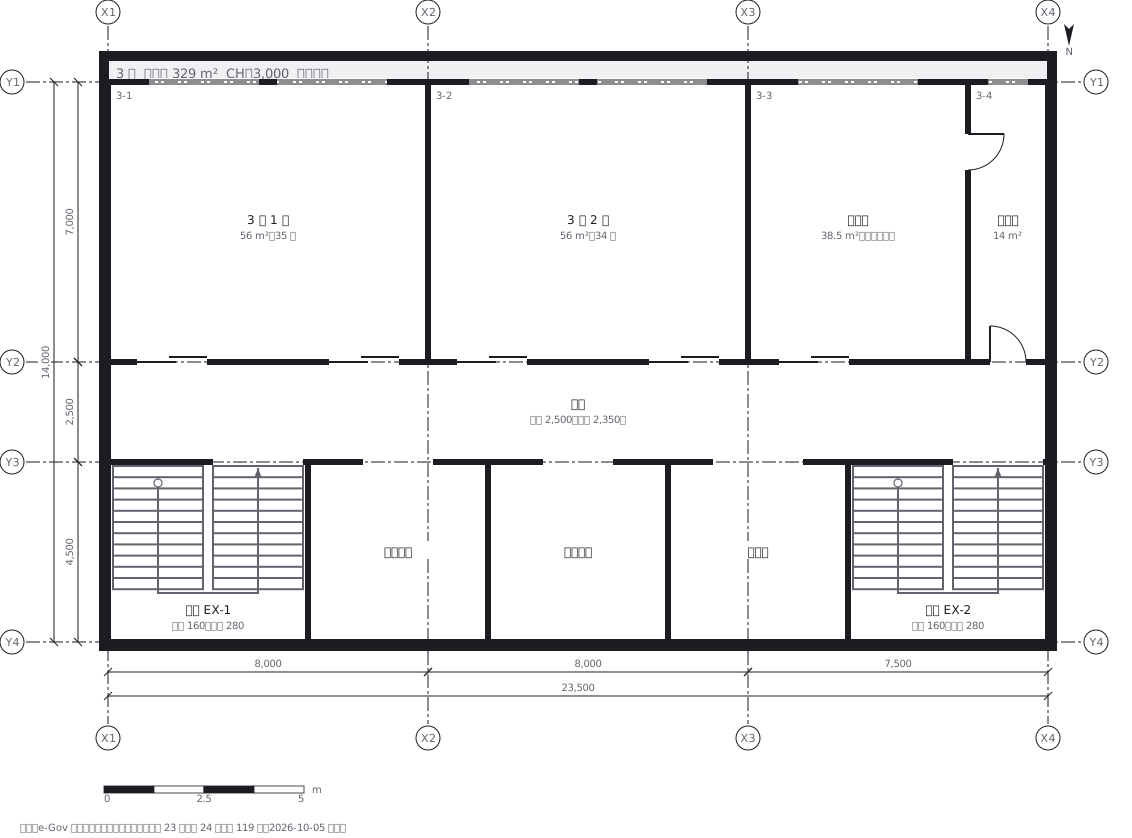 School floor plan (walls, door swings, grid lines, dimensions)
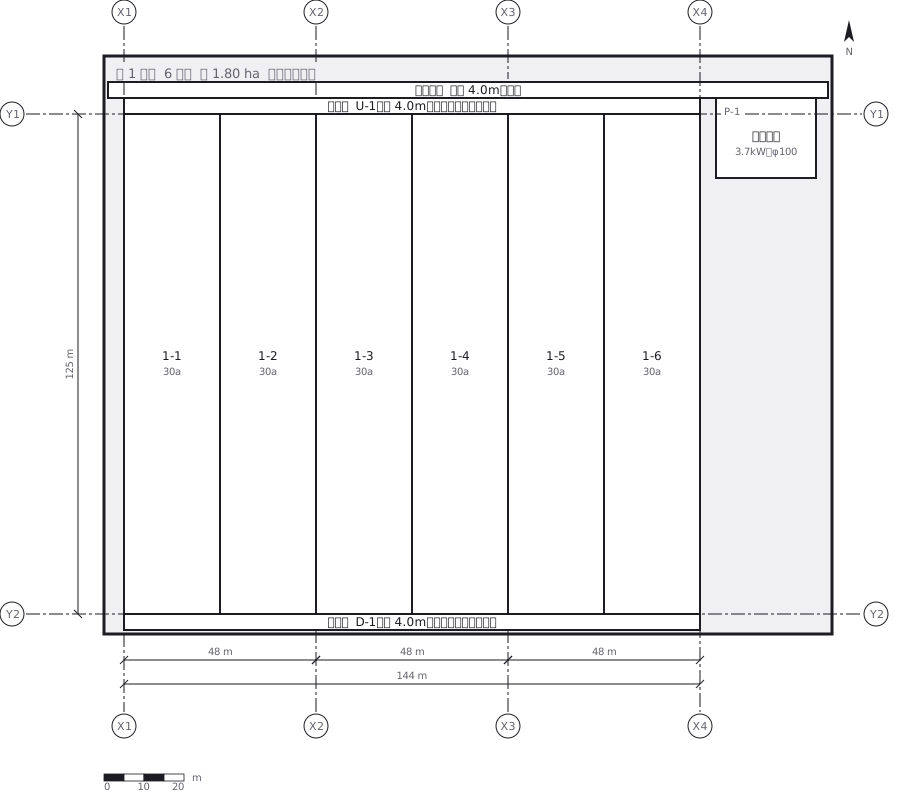 A farmland consolidation plan laying out 30-are plots, with the irrigation channels, the drainage channels and the farm roads that serve them
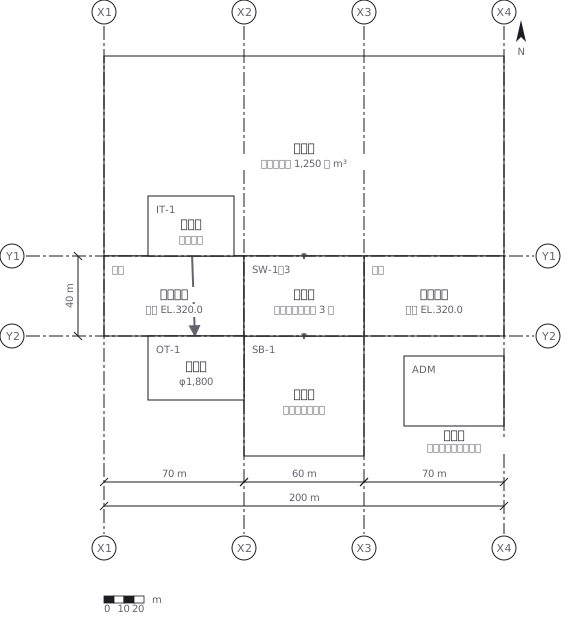 The plan of a concrete gravity dam: the body, the spillway, the intake works and the access road for maintenance
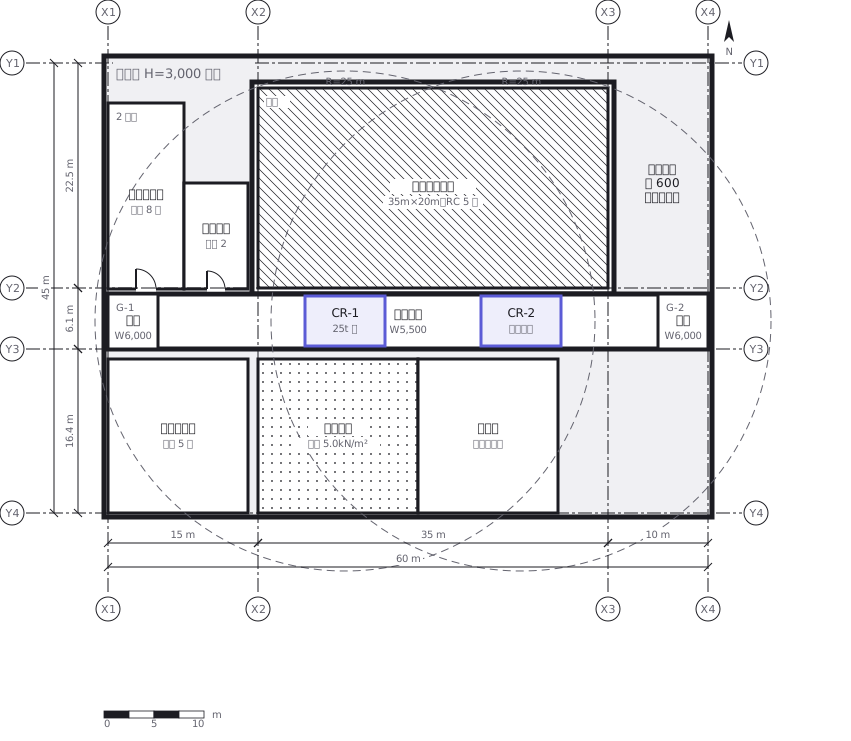 Site logistics plan with the crane radius
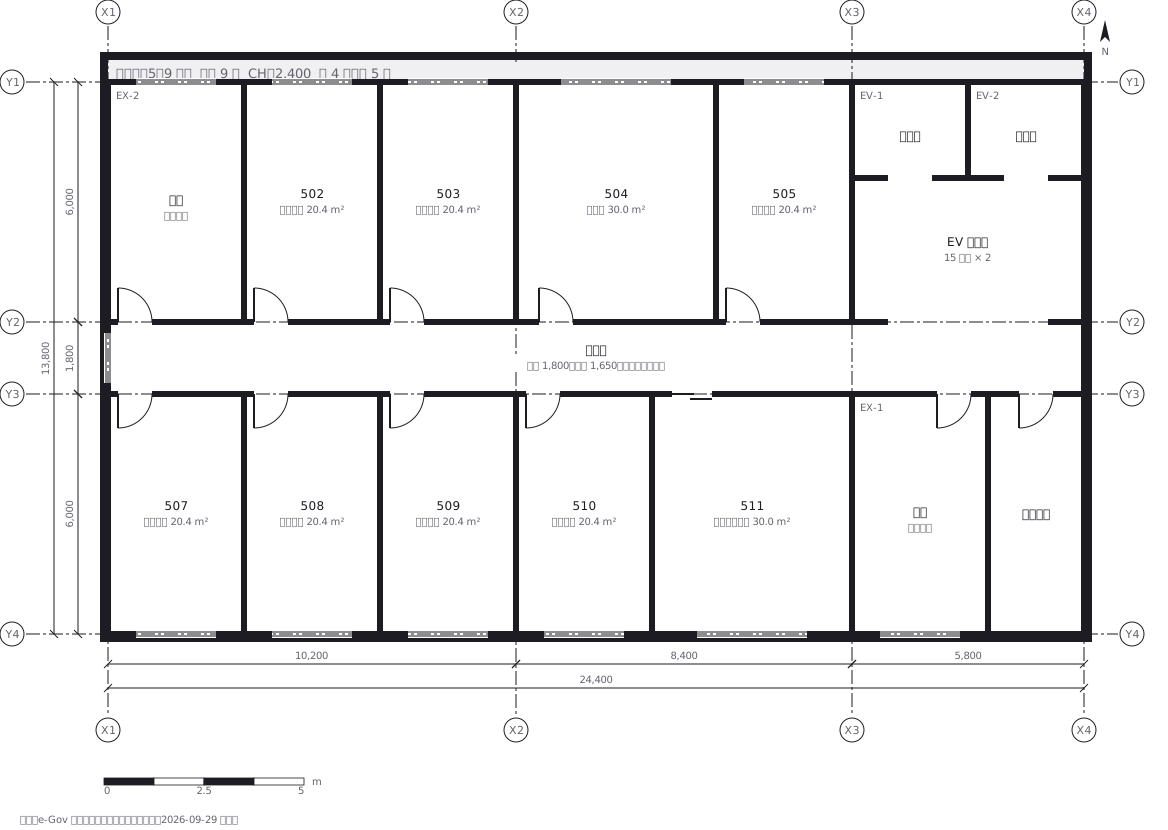 The typical floor of a business hotel with nine rooms, a central corridor, two direct stairs, and two lifts with their hall
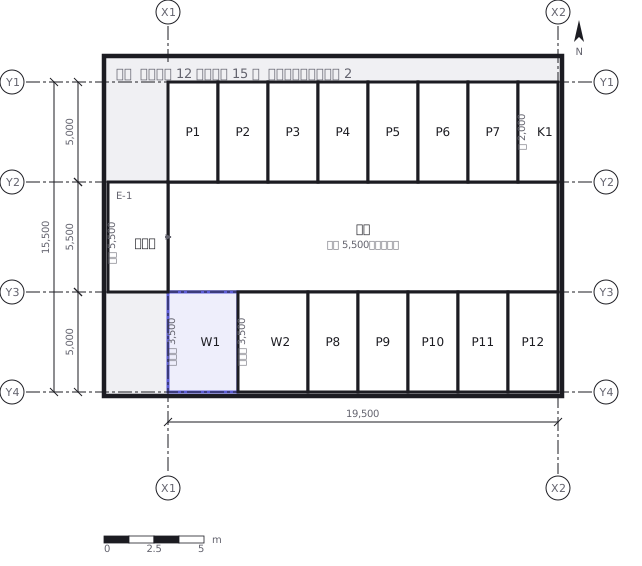 A surface car park set out for fourteen cars, with bay dimensions, aisle width and where the entrance and exit sit