Appliances and furniture
Building a bicycle wheel — the crossing pattern gives the name
A spoke pattern is named after how it crosses, not how it connects: three crossings per spoke is a 3-cross, also called six-spoke because the sixth spoke counted from the reference is the one it meets, and the half-pitch offset between the two hub flanges is what separates JIS lacing from Italian
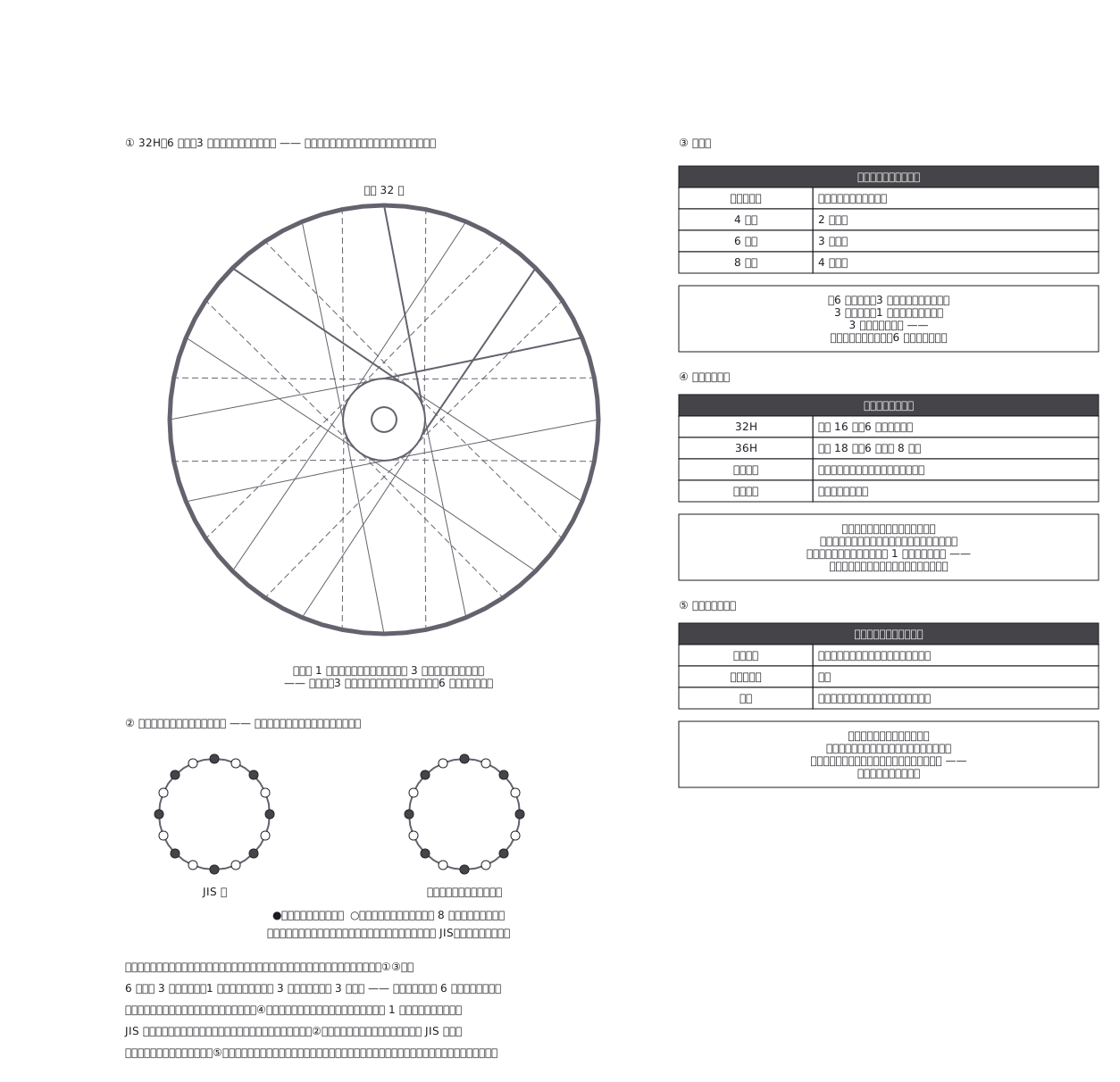
This drawing comes from one YAML file. No shape was moved by hand.
Notes in the source (in Japanese)
スポークは、ハブとリムを結ぶ線ではない。何本目と交差させるかで呼び名が変わり、交差のしかたそのものが組み方の名前になる。
交差させないのがラジアル組、交差させるのがタンジェント組。タンジェント組は交差の数で 4 本組(2 クロス)・6 本組(3 クロス)・8 本組(4 クロス)。「6 本組」と「3 クロス」は同じもの。 3 クロスは「1 本が同じフランジの 3 本と交わる」(Sheldon Brown "Wheelbuilding")。「6 本組」の数え方の由来は、解説によって説明が分かれるので書かない。
穴は左右のフランジで半ピッチずれている。リムの穴が左右のフランジへ交互に向かうので、片側のスポークはリムの穴を 1 つ飛ばしで使う。32H なら片側 16 穴で 6 本組がふつう、36H なら片側 18 穴で 6 本組か 8 本組。
JIS 組とイタリアン組は、穴の位置ではなく、スポークの通し方(頭を外側にするか内側にするか)の組み合わせの違い。穴の並びはどちらも同じなので、② の穴の図だけでは見分けられない。裏返しても向きが変わらないのが JIS、逆になるのがイタリアン(複数の解説で一致。規格の条文は確かめていない)。
後輪は左右対称に組めない。 スプロケットの厚みぶんハブが片寄るので、リムの中心を車体の中心へ戻すとフリー側だけ角度が立つ(オチョコ/オフセット)。フリー側のスポークが短く、反フリー側が長い。張力も左右で変わる。
組み始めはバルブ穴の横から —— 空気入れが差し込める隙間を残すため。
図は 32H・6 本組。スポーク 32 本をすべて描いてある(実線が手前のフランジ、破線が奥)。
Source (YAML)
examples/gallery/289-自転車ホイールの組み方.zumen.yaml
More in this field
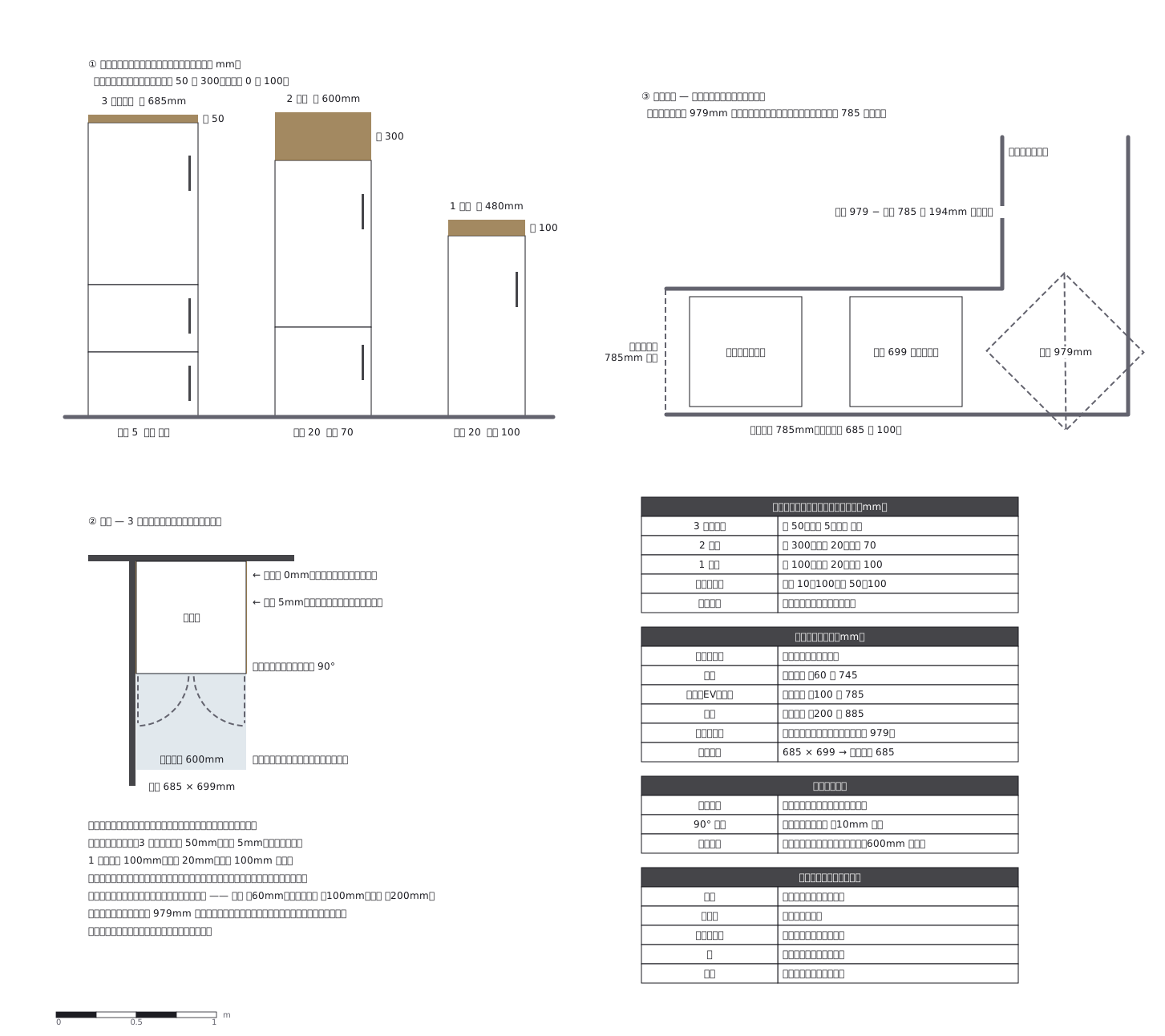 Fitting a refrigerator: clearances differ by model, and a corner turns on the diagonal
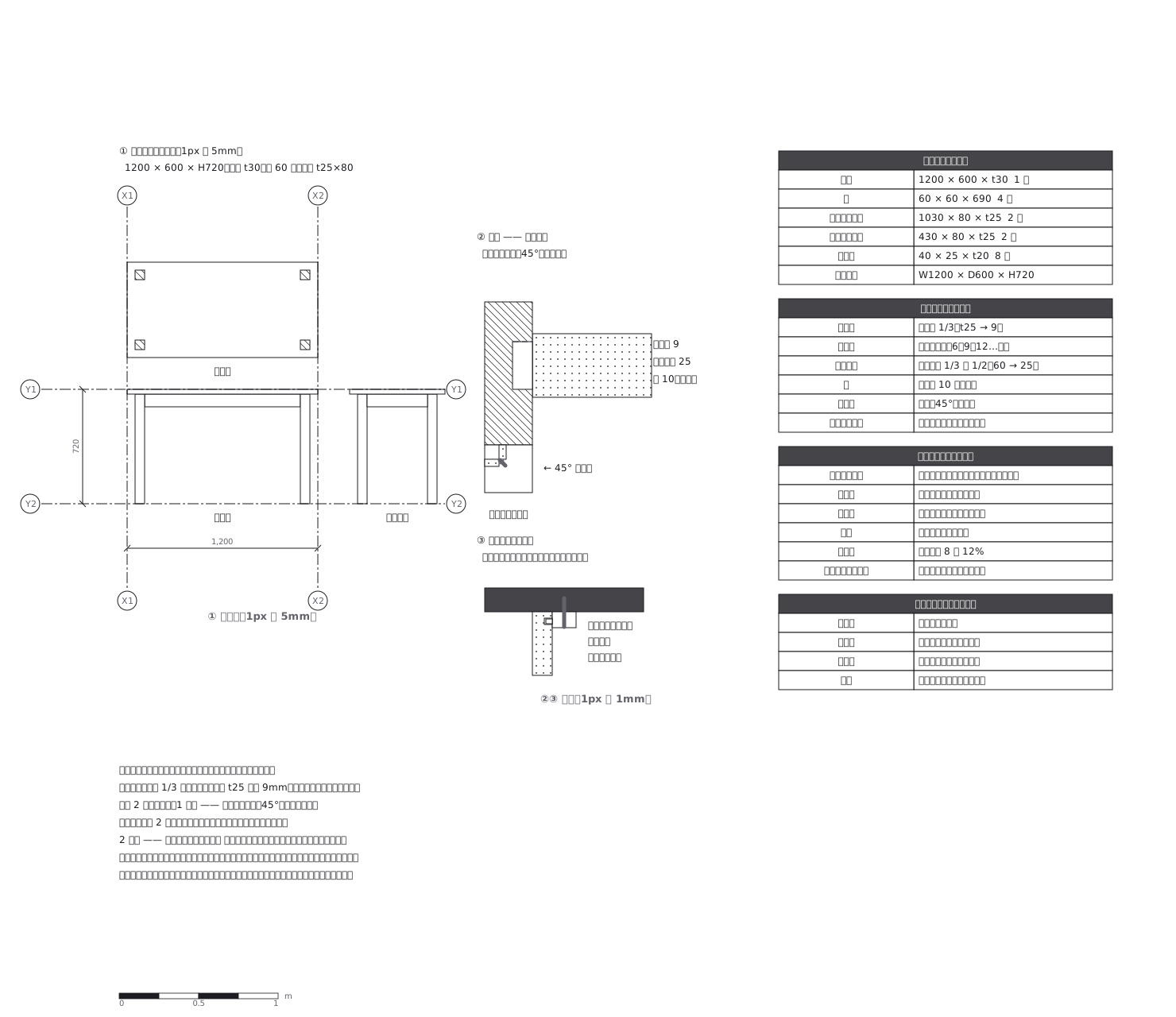 A bench built for making: tenons mitred where they meet, and a top that is never screwed down
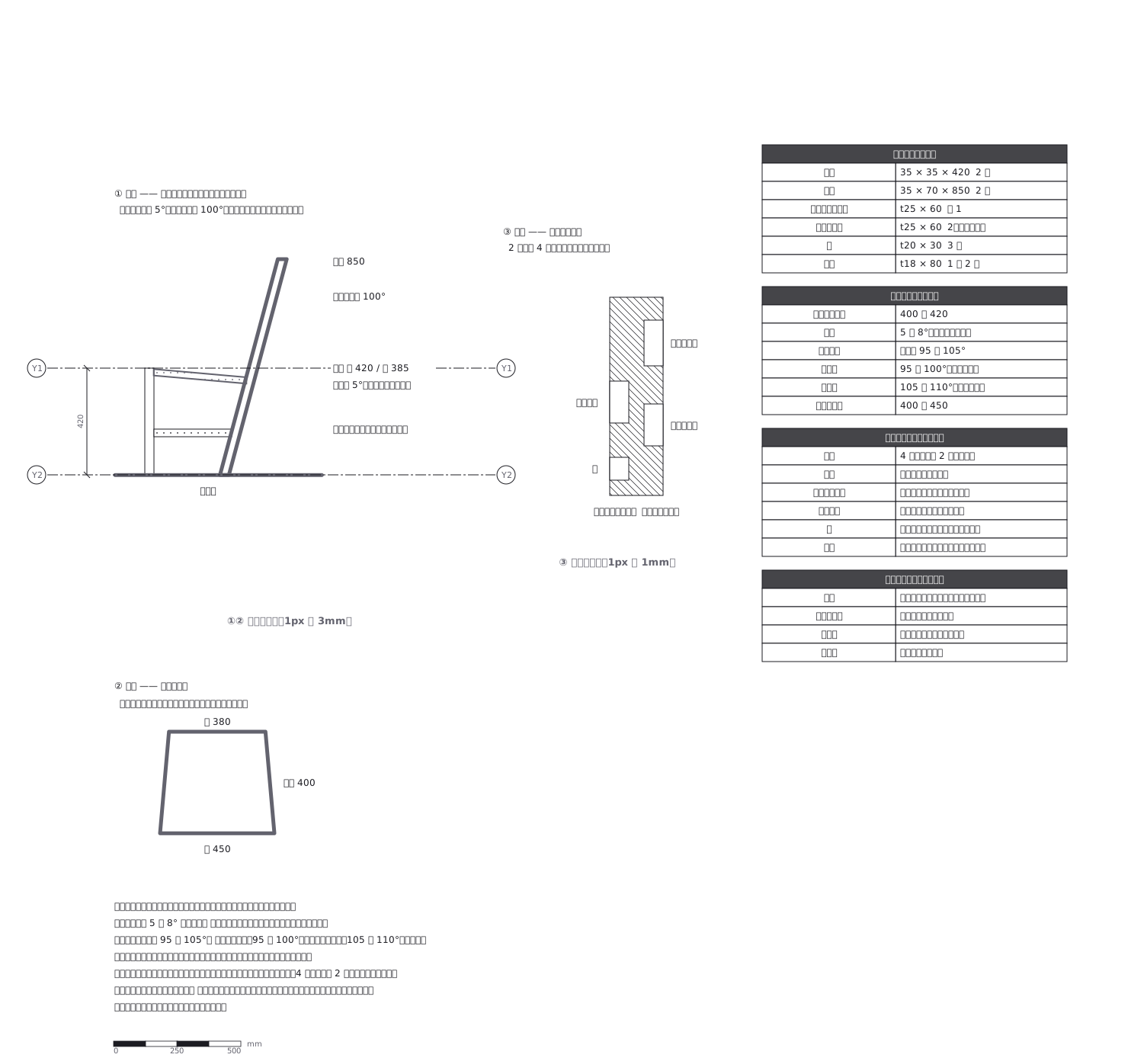 A chair drawn for making: four tenons meet in the back leg, and they must be set at different heights
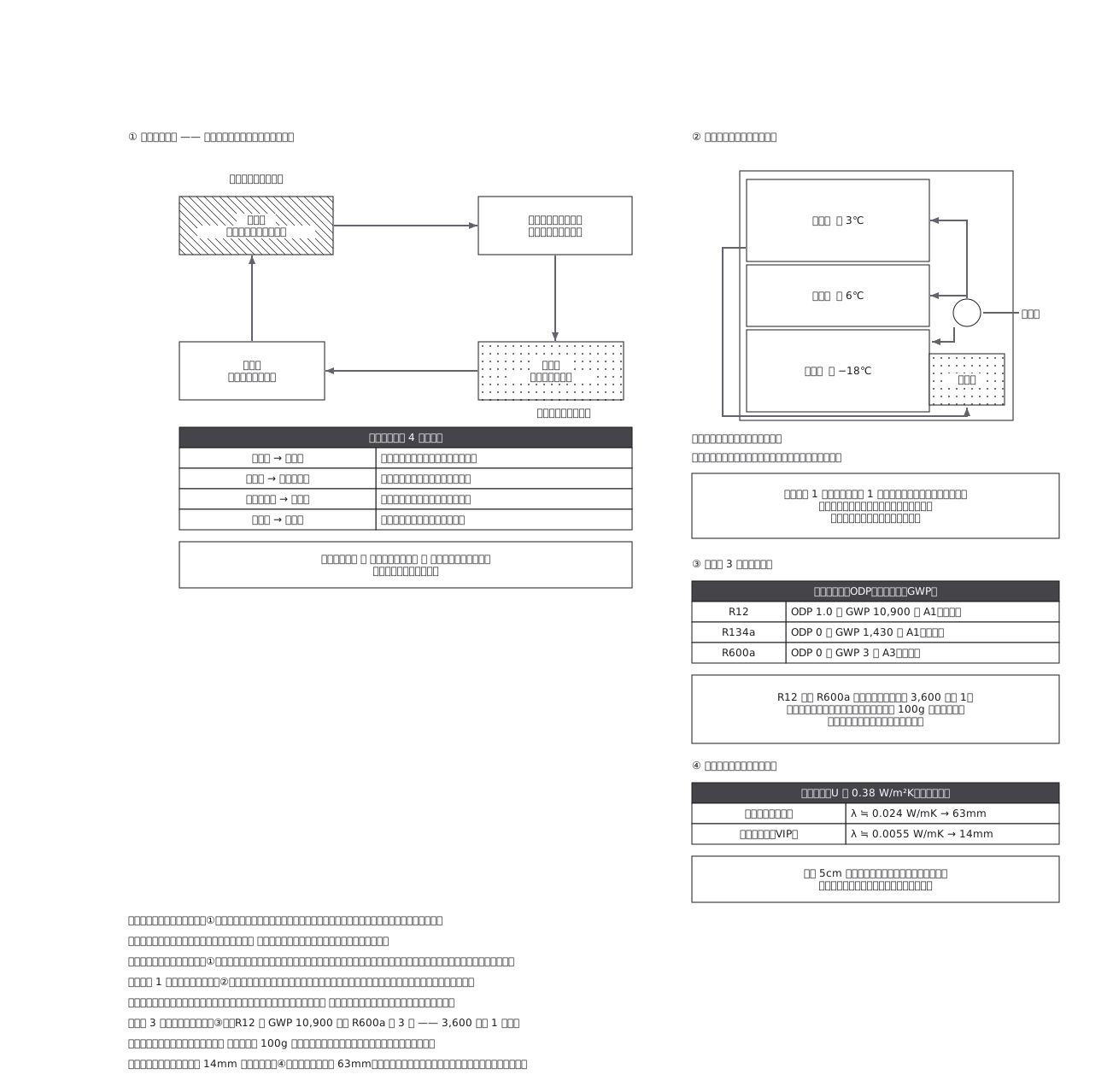 A fridge does not make cold, it pumps heat out — and it throws away more than it took, because the compressor's electricity comes out as heat too
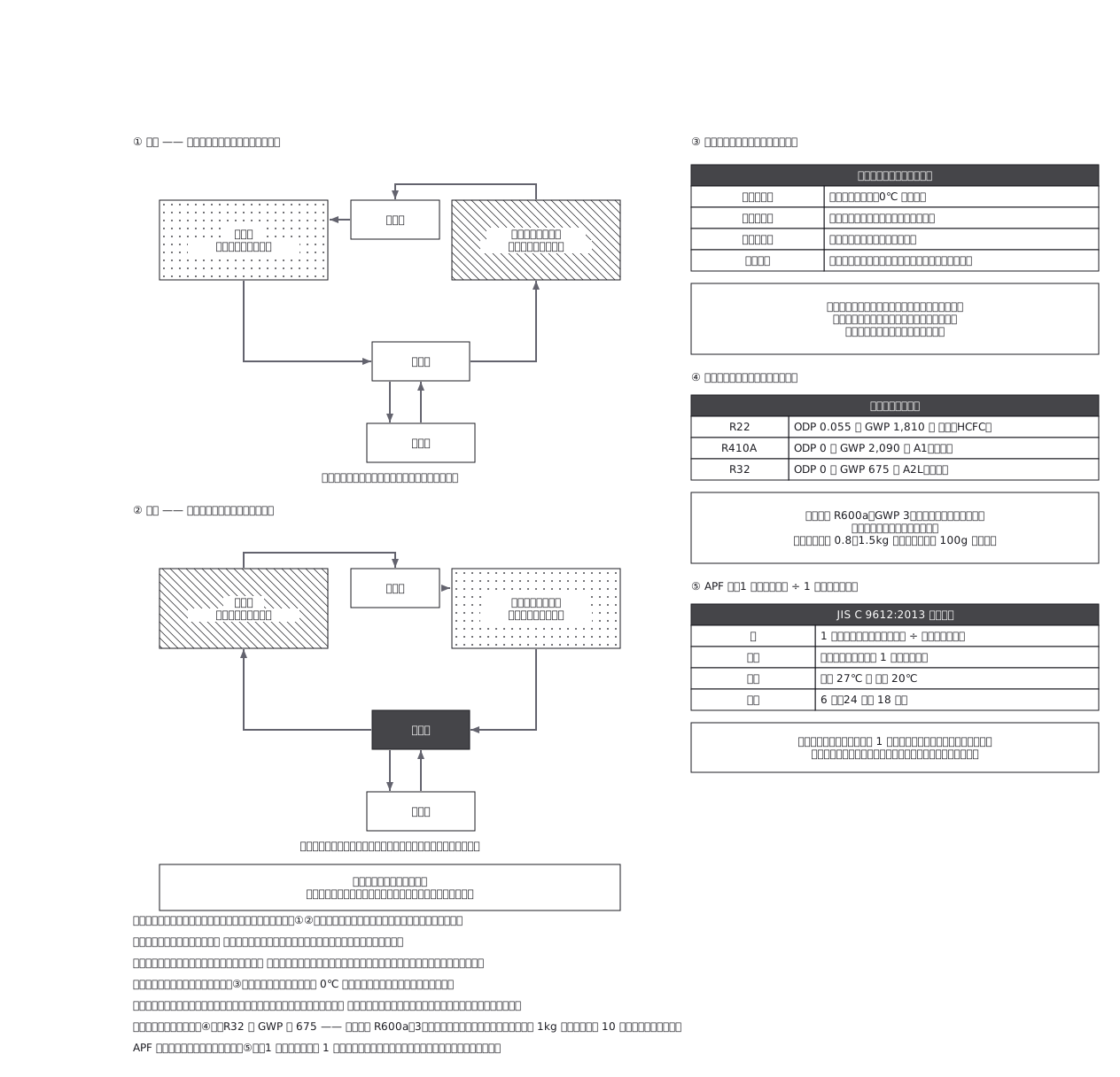 Heating and cooling swap the roles of the indoor and outdoor coils, and the only part that changes is one valve — which is also why a heat pump briefly runs cooling in the middle of heating, to melt its own frost
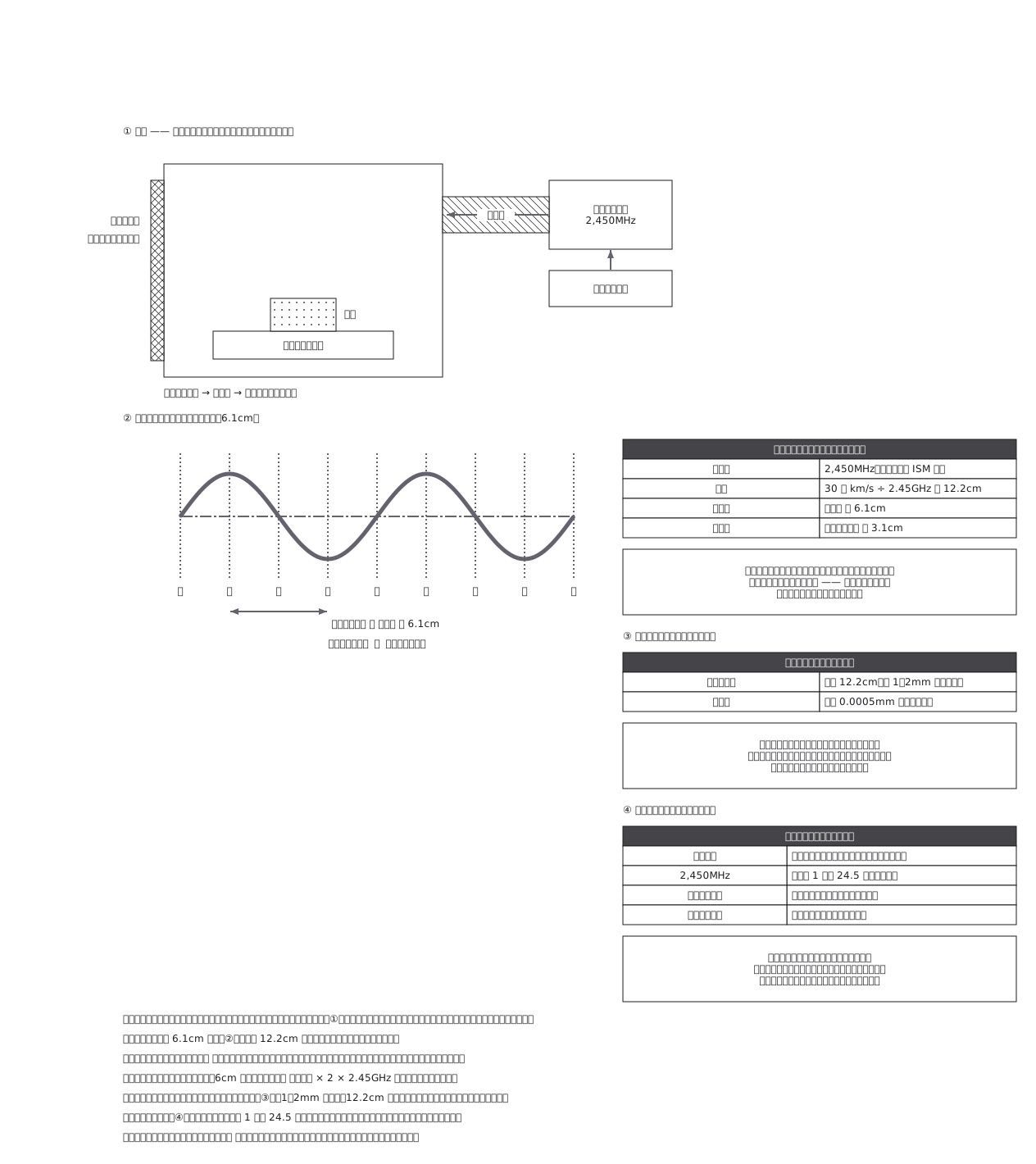 Hot and cold spots sit 6.1cm apart because that is half of the 12.2cm wavelength, which no cabinet design can remove — so the food is moved instead
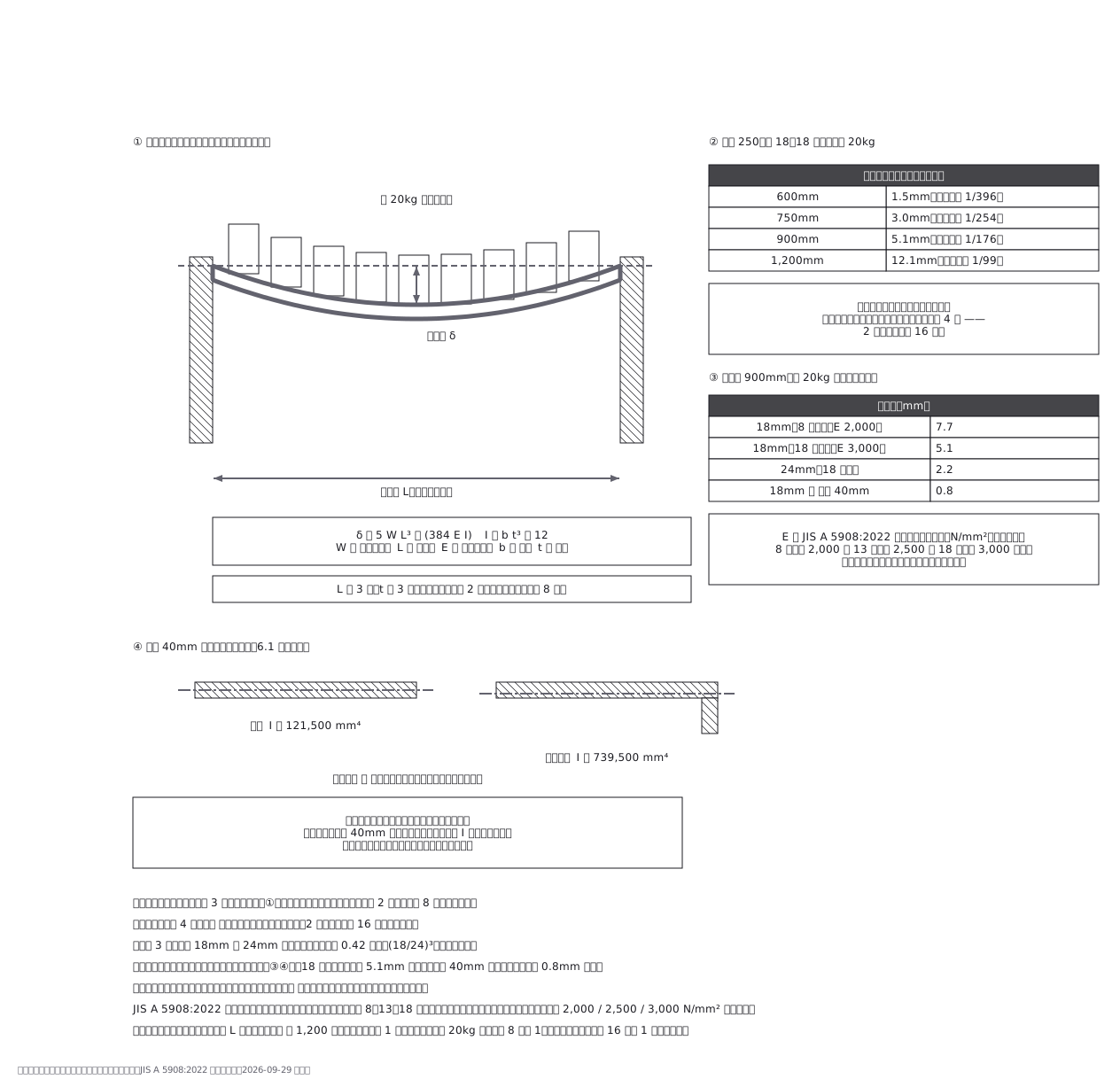 A shelf sags with the cube of its span, so doubling the span sags it eight times — and gluing a 40mm rail under the front edge does more than upgrading the board
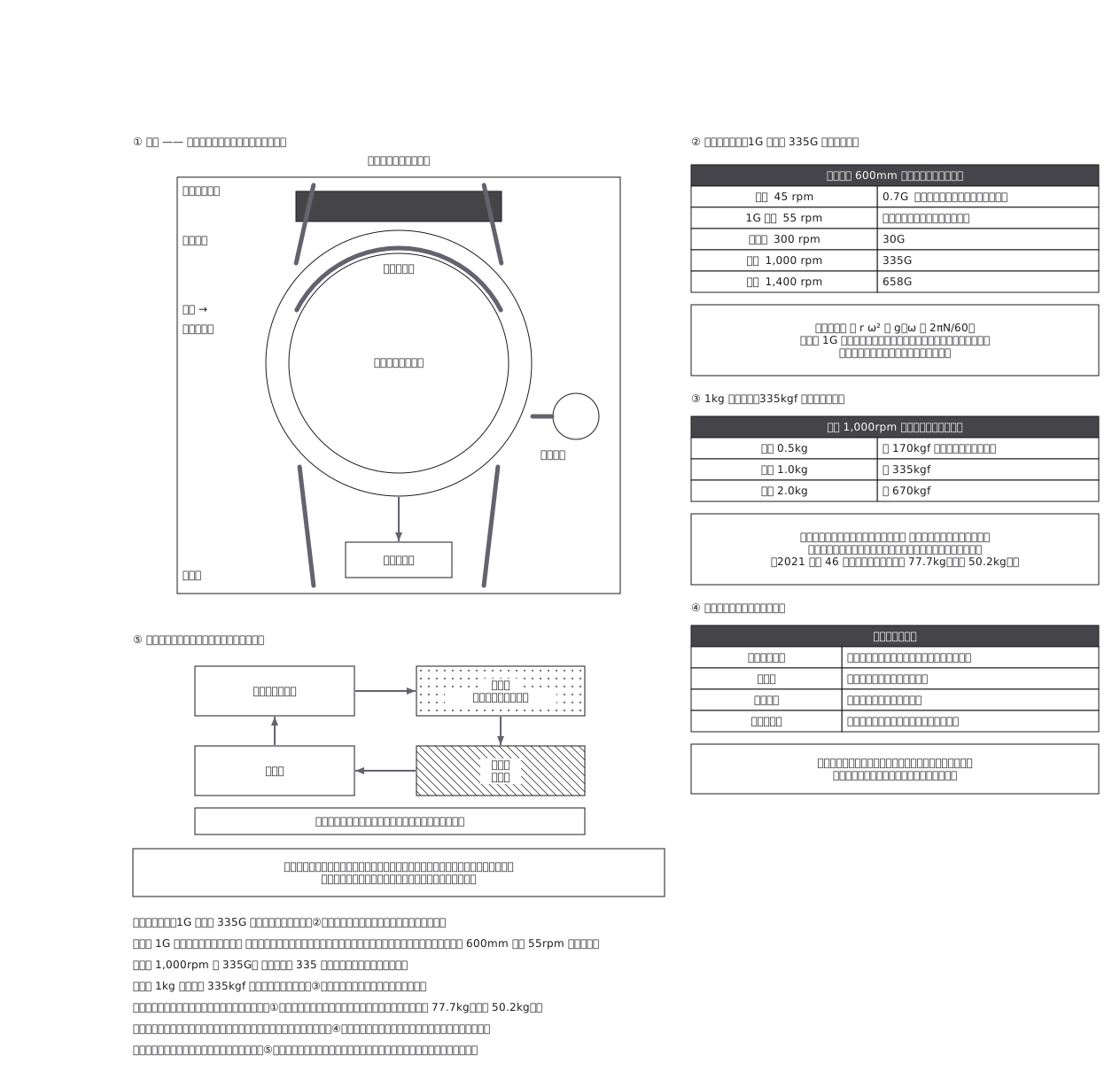 The same drum has to stay under 1G to wash and reach 335G to spin, which is why it hangs on springs behind a concrete weight rather than being bolted to the machine