Instruments and acoustics
How equalizers work (a GEQ has 31 fixed bands, a PEQ lets you choose centre and width)
A graphic EQ moves only the level of 31 fixed bands, whose centres are 1000 Hz times powers of 10^(1/10); a parametric EQ also lets you choose the centre and the width. Pulling three neighbouring sliders cuts deeper than any one of them, and a feedback tone that falls between two graphic bands is a job for a narrow parametric band.
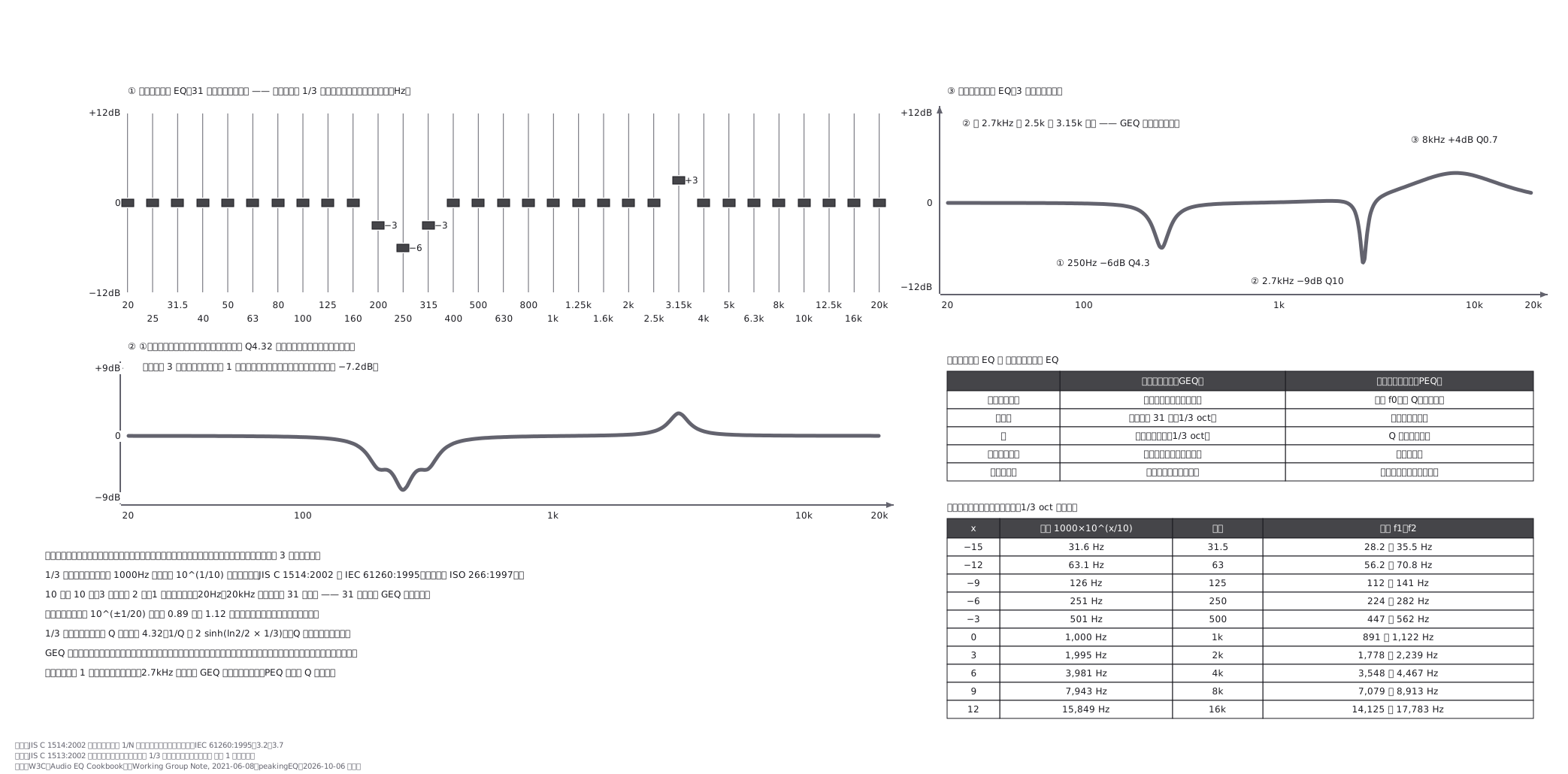
This drawing comes from one YAML file. No shape was moved by hand.
Notes in the source (in Japanese)
イコライザーは、どこを(周波数)・どれだけ(ゲイン)・どの幅で(Q)変えるかの 3 つ。グラフィック EQ はそのうち「どれだけ」だけを動かし、パラメトリック EQ は 3 つとも動かす。
JIS C 1514:2002(IEC 61260:1995)は、オクターブ比を 10 のべきで G = 10^(3/10) と決め、基準を厳密に 1000Hz とする。1/3 オクターブの厳密な中心は fm = 1000 × G^(x/3) = 1000 × 10^(x/10)(x は整数)。帯域の端は f1 = fm × G^(−1/6)、f2 = fm × G^(+1/6)(= 10^(±1/20) 倍)。公称値は厳密値を丸めたもので、JIS C 1514:2002 の引用規格に ISO 266:1997(Preferred frequencies)がある。例:x = 7 の厳密値 5,011.872Hz、公称 5,000Hz(JIS C 1514:2002 3.5 備考 3)。20Hz(x = −17)から 20kHz(x = 13)まで 31 本。
② ③の曲線はアナログのピーキングフィルタ(Audio EQ Cookbook の peakingEQ と同じ形、A = 10^(dB/40))の振幅で、各バンドを直列につないだもの(dB で足す)として計算した。実機の GEQ は回路で重なり方が違うので、深さは目安。1/3 オクターブの Q は 1/Q = 2 sinh((ln2/2) × 1/3) から 4.318。
つまみの設定(200・250・315Hz を下げ、3.15kHz を上げる)と PEQ の 3 バンドは説明のための例。
- シェルビング(低域・高域をまとめて上げ下げする形)とハイパス —— 形が違う。PEQ の 3 バンドはピーキングだけにした- 位相の変化 —— EQ は位相も動かすが、この図は大きさだけ- 製品のパネル —— 実在の機種の配置をなぞらない
EQ がミキサーのどこにあるかは見本 343、スピーカーの構造は見本 371、PA の配置は見本 101・370。
Source (YAML)
examples/gallery/372-イコライザーの仕組み-GEQとPEQ.zumen.yaml
More in this field
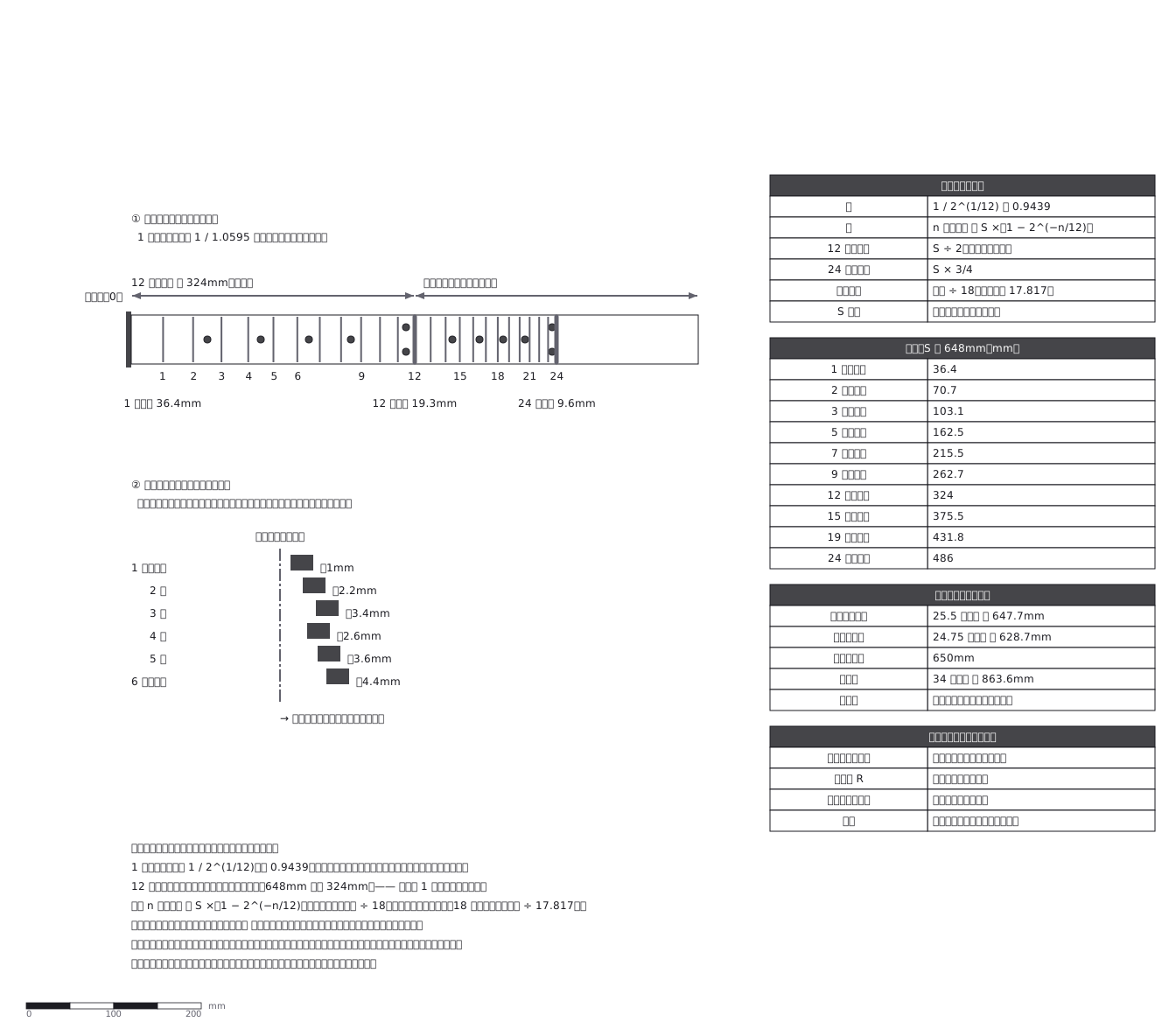 Guitar frets are a geometric series, and the saddle must still be moved back to play in tune
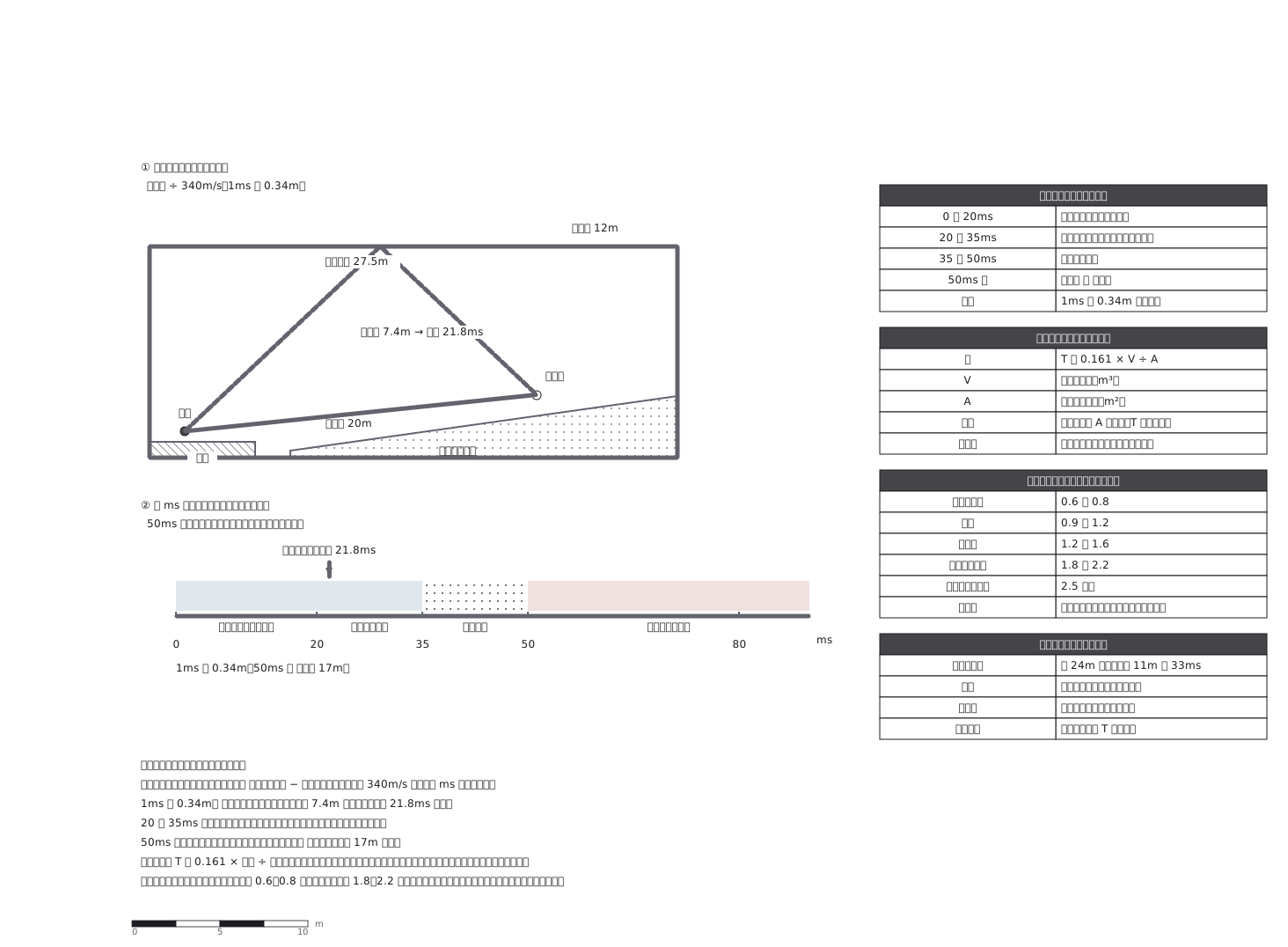 Hall acoustics: delay is nothing but a difference in path length — one millisecond is 0.34 m
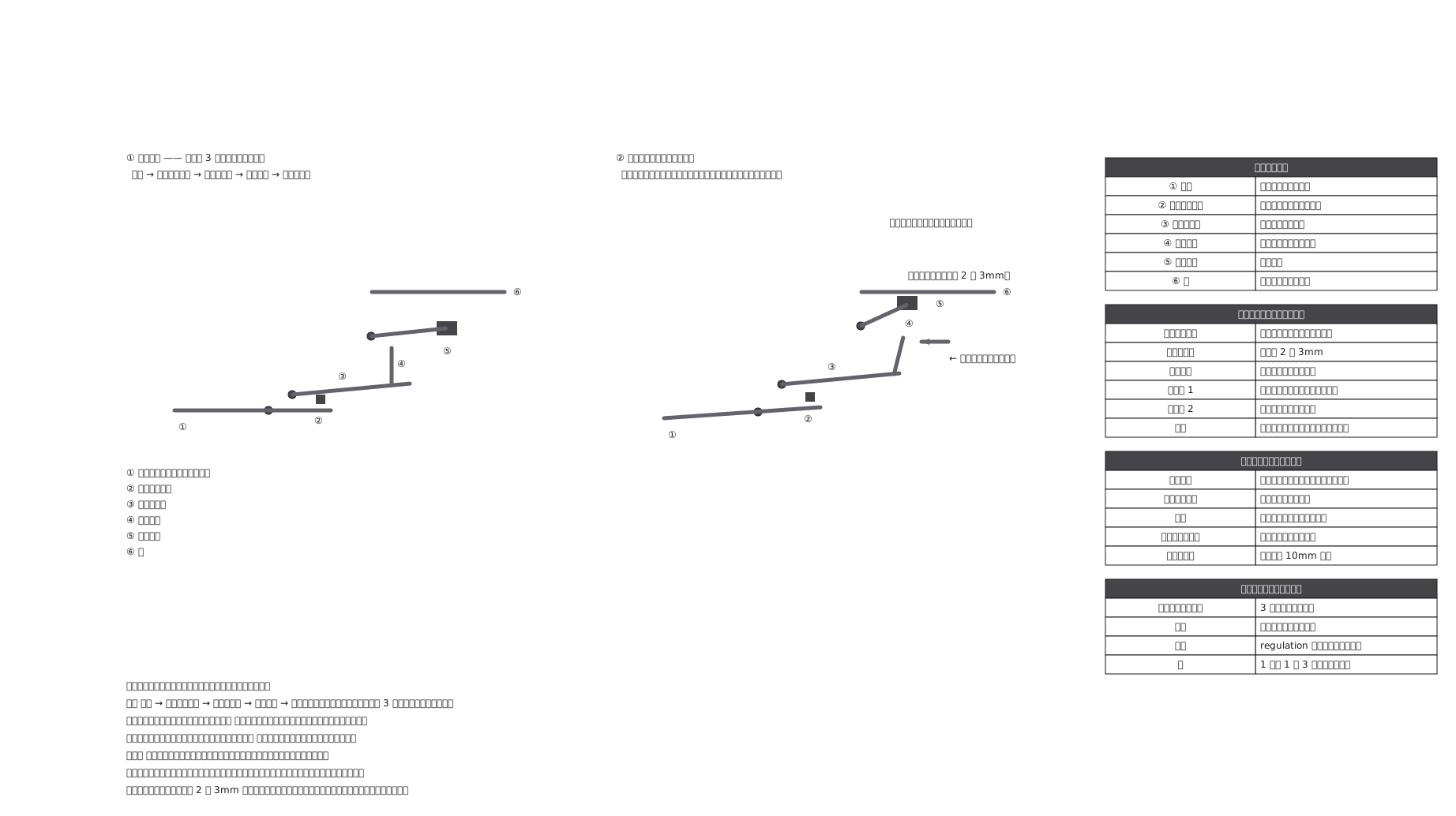 A piano action: the jack lets go just before the string, so nothing is pushing the hammer at impact
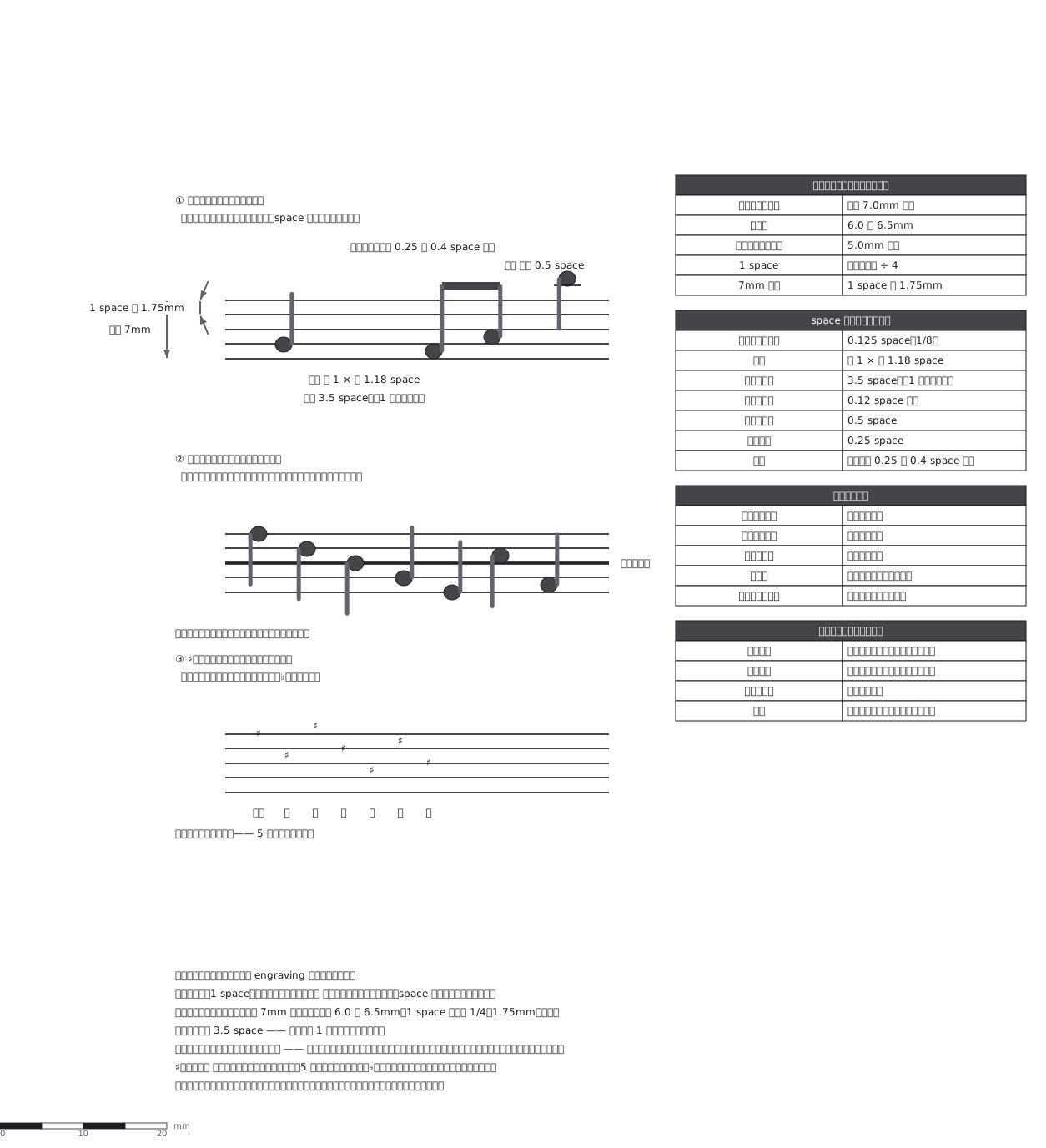 Music engraving: the staff space is the unit for every measurement, and the stem is 3.5 of them
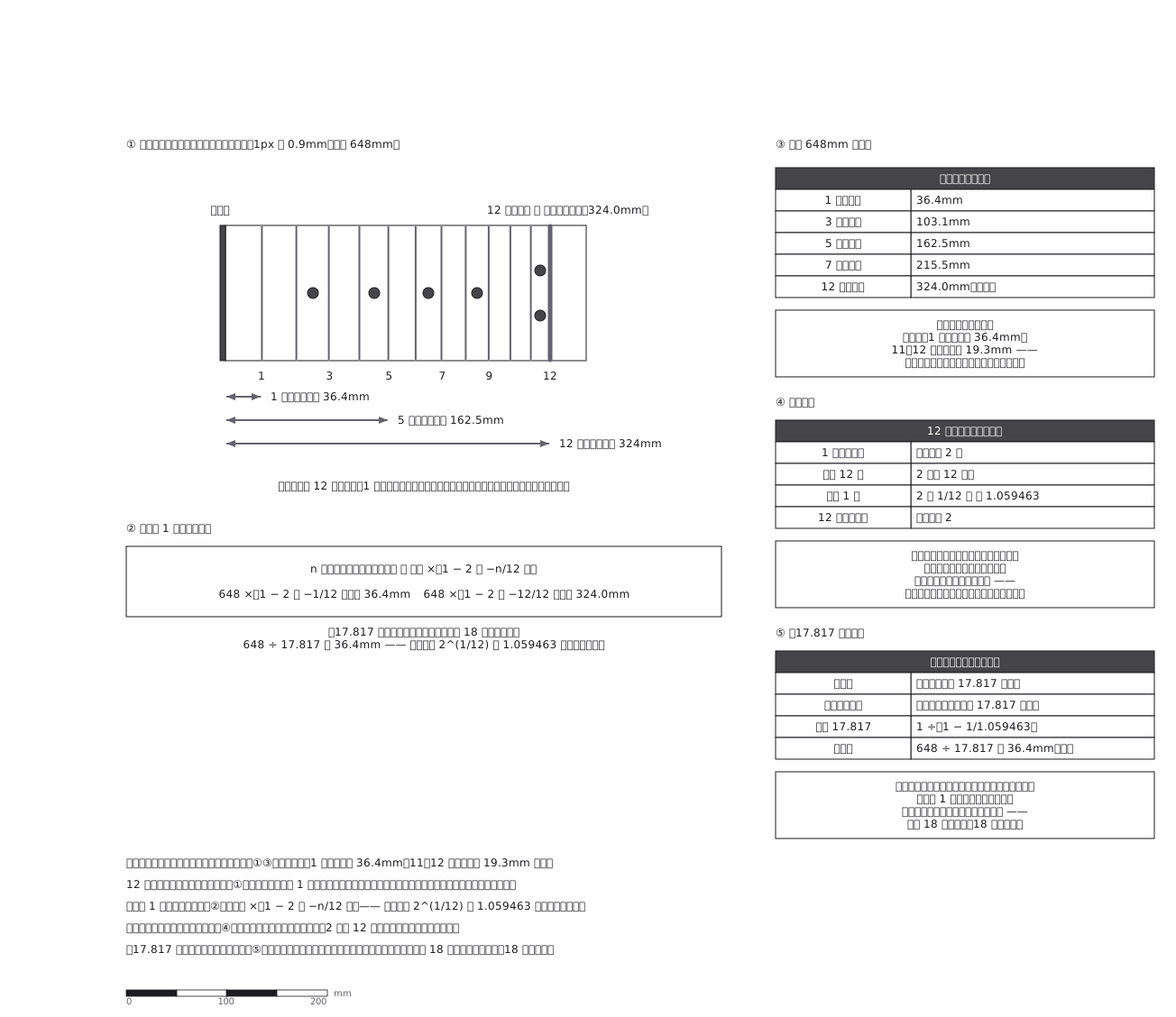 Frets crowd together as you climb because what is divided into twelve is not a distance but a ratio: each semitone multiplies by 2^(1/12), so the twelfth fret lands at exactly half the string and everything beyond it repeats at half size
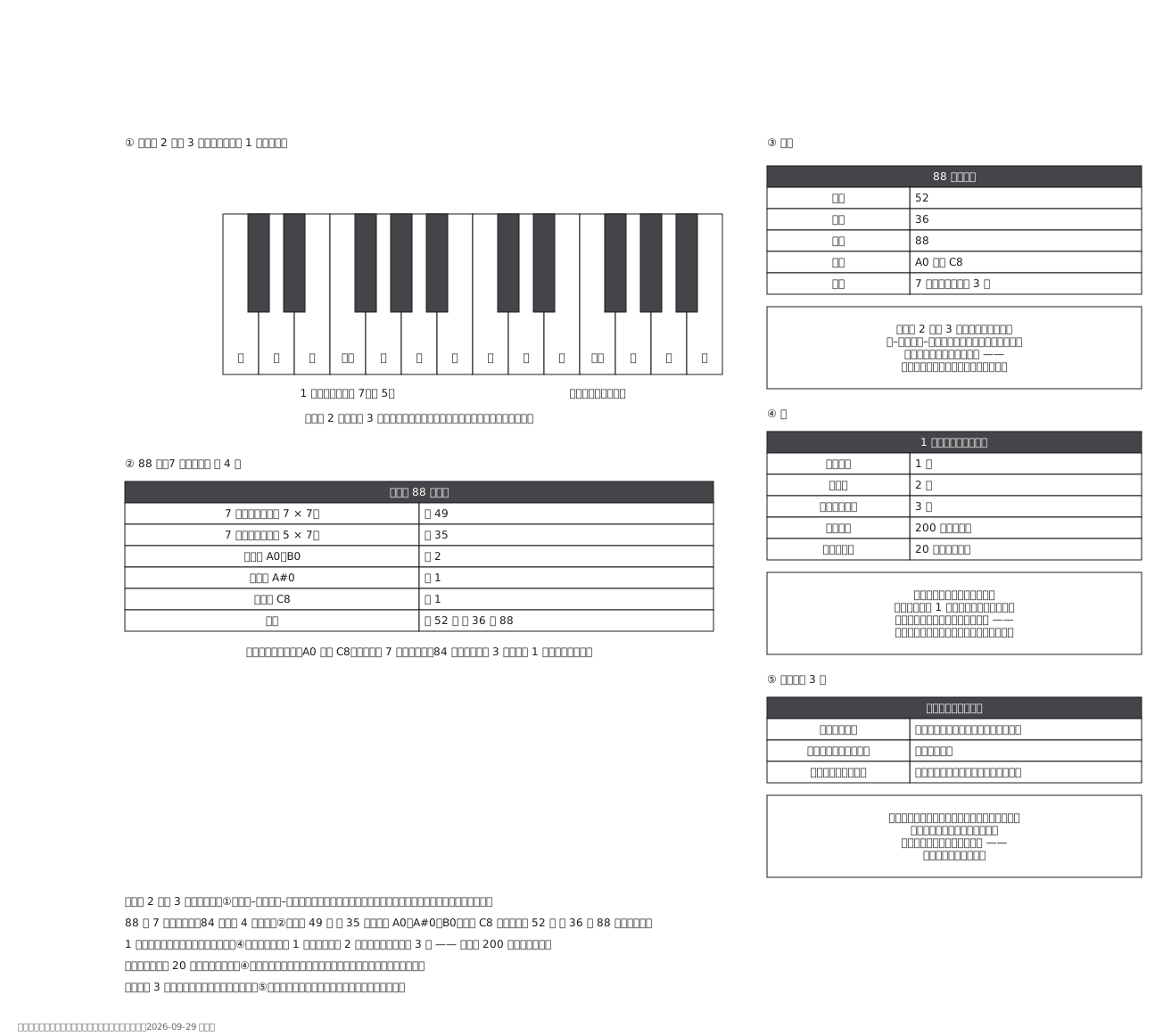 The black keys are grouped in twos and threes so that a hand can find its place without looking — twelve evenly spaced keys would give no landmark at all — and 88 turns out to be seven octaves plus four: three keys added below and one above
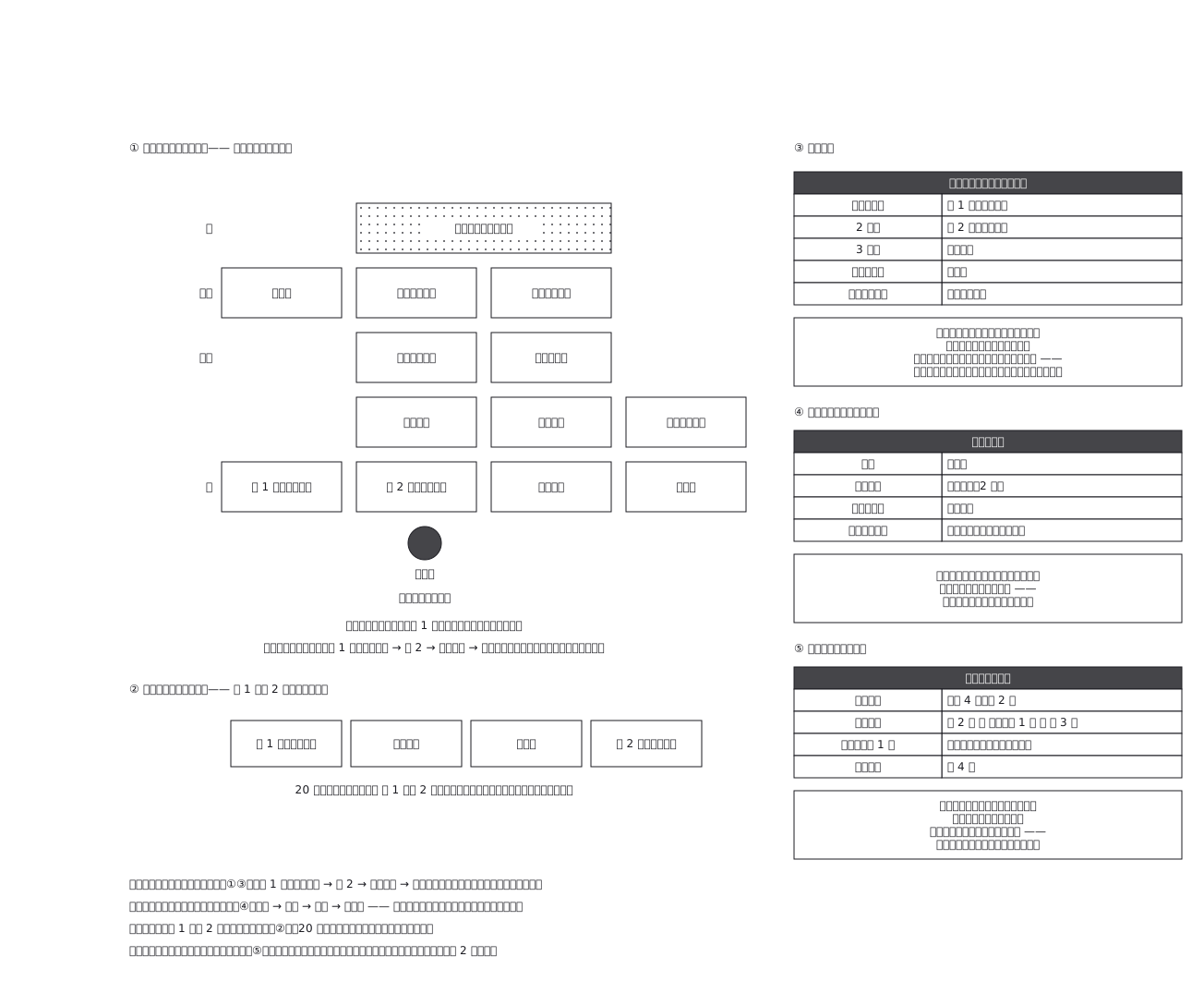 The strings run left to right from high to low and the louder the instrument the further back it sits, so the seating plan is itself a balance control — and "double wind" or "triple wind" names the size of the orchestra by counting only the woodwind
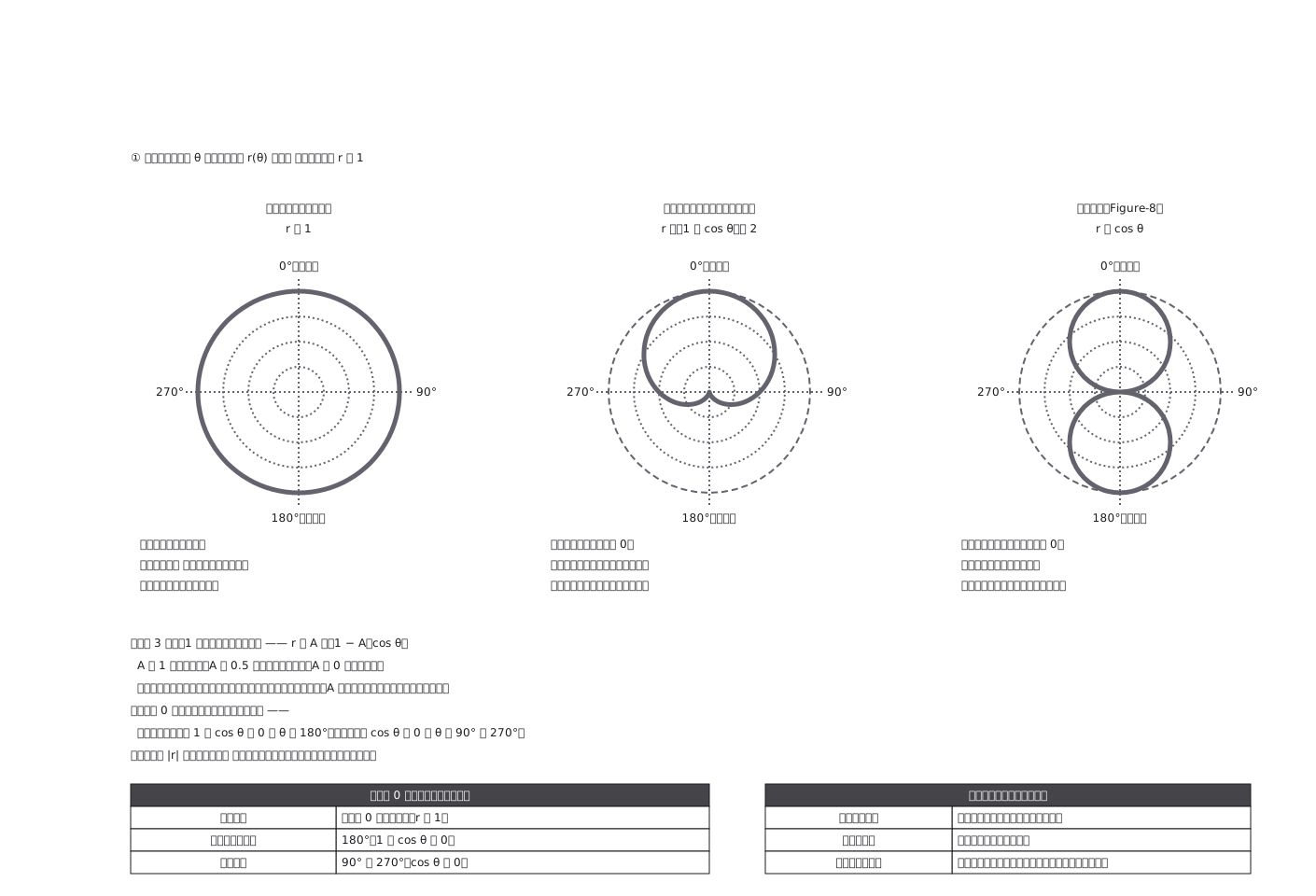 A polar plot of how much a microphone picks up from each direction. The three familiar shapes are not separate inventions but one formula at its ends and middle — omnidirectional, cardioid and figure-of-eight are A = 1, 0.5 and 0 in r = A + (1 - A)cos θ. Solving the same formula gives the dead angles: 180 degrees for a cardioid, 90 and 270 for a figure-of-eight.