Instruments and acoustics
Loudspeaker construction (dynamic driver — magnet, coil and cone)
A cone loudspeaker cut through its axis. The magnet drives flux across a narrow gap; current in the voice coil sitting in that gap is pushed forward or back, and the cone, held centred by the spider and the surround, pushes the air. Reverse the current and the force reverses — feed it AC and the cone moves back and forth.
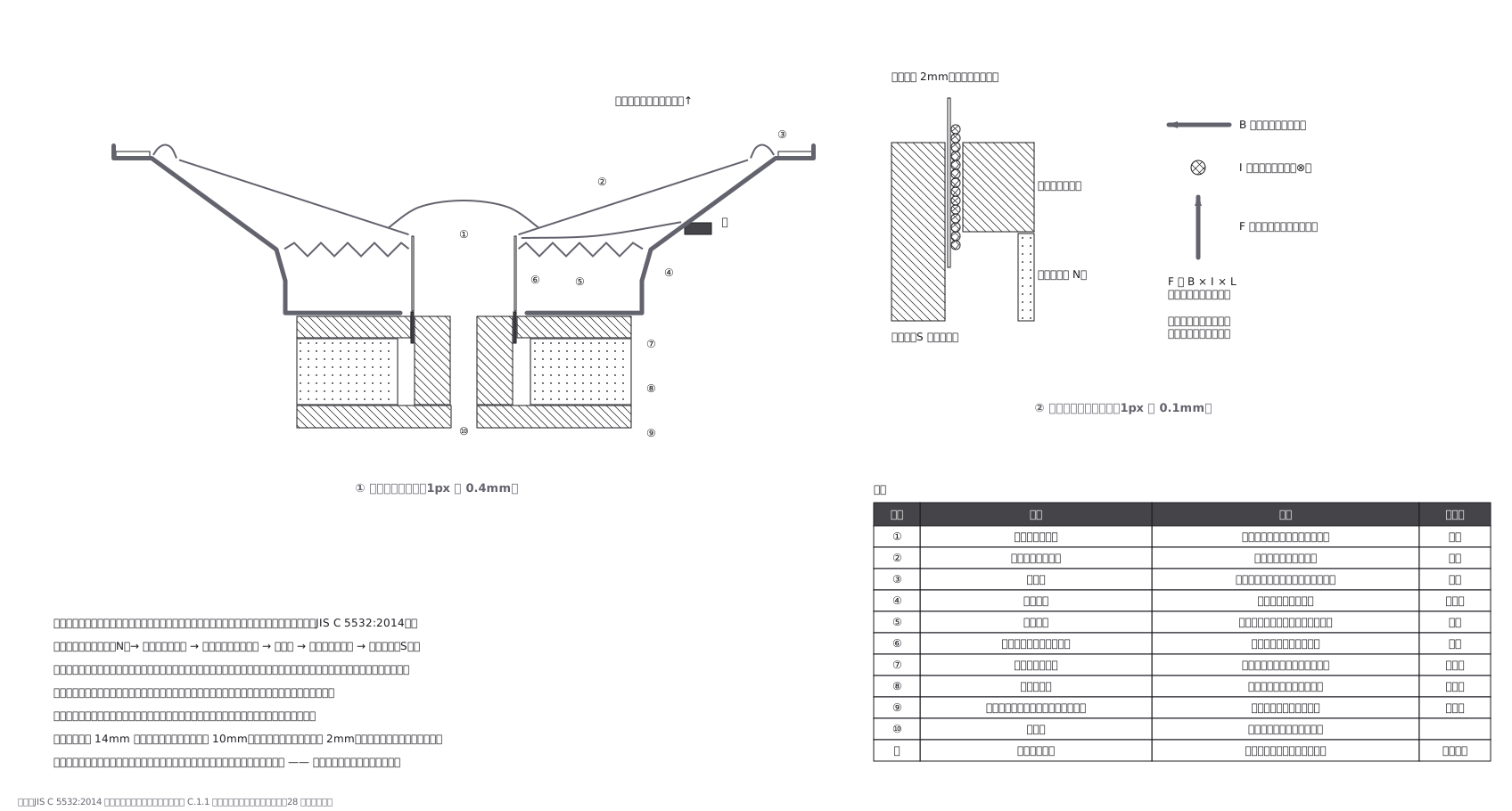
This drawing comes from one YAML file. No shape was moved by hand.
Notes in the source (in Japanese)
音は、コイルが磁石から受ける力で出ている。
いちばん多いスピーカーは動電形(ダイナミック)。JIS C 5532:2014 は「静磁界中におかれた導体に流した電流によって生じる力で振動板を駆動するスピーカ」と定めている。
部品の名前と、どれが動いてどれが止まっているか、そしてどの向きに力がかかるかを 1 枚で言う。断面で描くのは、磁気回路が中にあって外からは見えないから。
- ① 外形 30cm ほどの外磁形(リング状のフェライト磁石を鉄の板で挟む形)を、軸で切った断面。1px = 0.4mm- ② ギャップの拡大。1px = 0.1mm。コイルの線の断面に ⊗(電流が紙の奥へ)を描いた- 力の向き:B(ギャップの中で外から中心へ)と I(紙の奥へ)から、F = I L × B は上(前)を向く。磁石の上を N として描いた。逆に着磁すれば向きは逆になるが、「電流と力が比例する」ことは変わらない
寸法(コイル高 14mm・プレート厚 10mm・ギャップ 2mm など)は説明のための例で、特定の製品ではない。JIS C 5532:2014 の「設計データ」は、エアギャップの磁束密度・総磁束・ボイスコイルの巻数と長さ・ギャップの幅・ボイスコイルの最大振幅(Xp-p)を挙げる —— 図の部品はこの項目と対応している。
- 断面の模様:鉄(プレート・ポール)は斜線、磁石は点で分けた(材料が違う)- 部品の番号は右半分にだけ振った。左は同じ形(軸対称)- 部品名のうち「ダンパー」「ダストキャップ」「錦糸線」は業界の慣用名で、JIS C 5532:2014 の本文では確かめていない
- 箱(エンクロージャ)—— JIS C 5532:2014 附属書 C.3 の別の話- ネオジム磁石の内磁形・ホーン(コンプレッションドライバー)—— 形が違う。1 枚に混ぜない- 周波数特性・インピーダンス —— 測る話で、構造の図ではない
PA の配置は見本 101・370、マイクの指向性は見本 327、イコライザーは見本 372。
Source (YAML)
examples/gallery/371-スピーカーの構造-動電形.zumen.yaml
More in this field
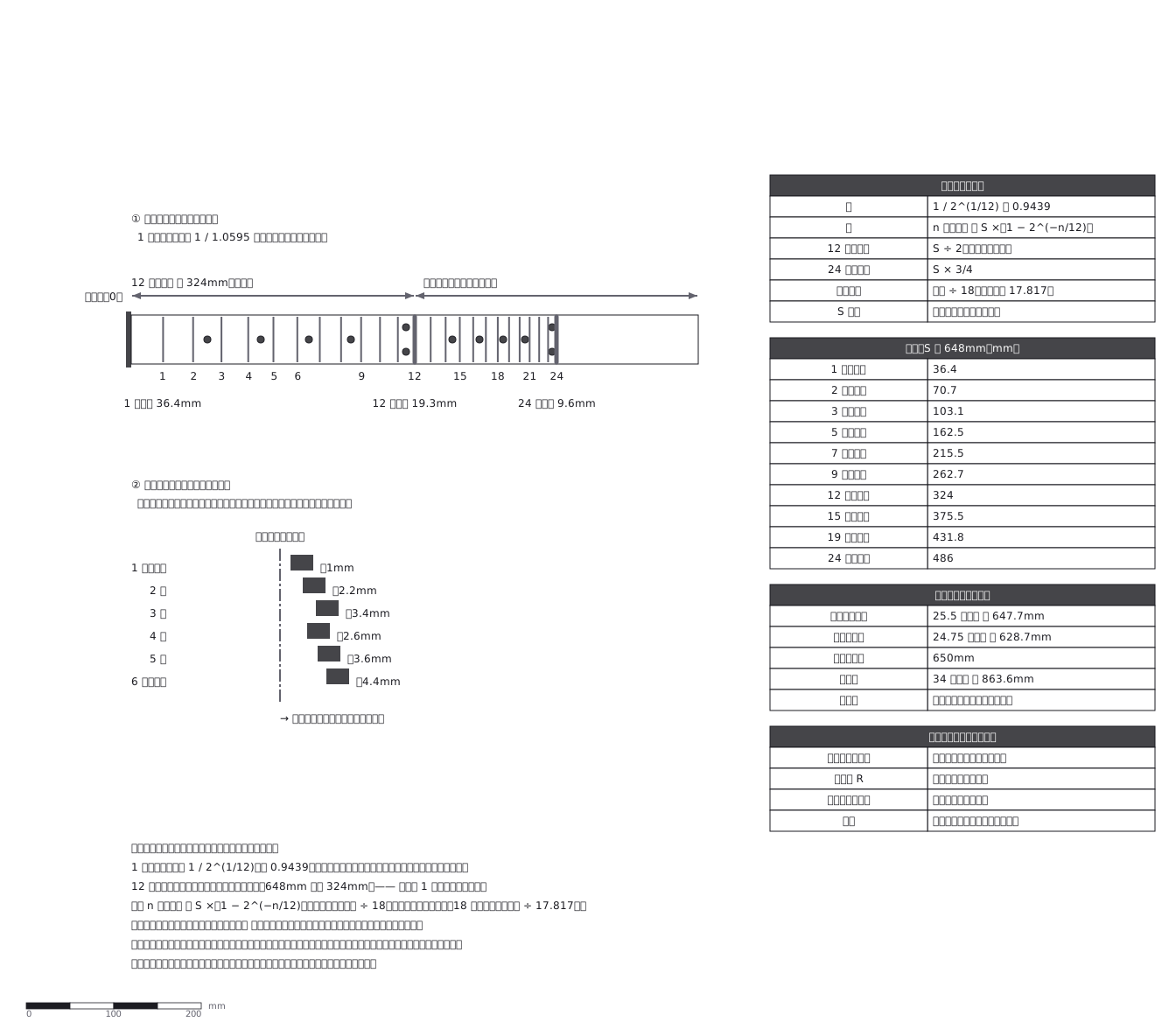 Guitar frets are a geometric series, and the saddle must still be moved back to play in tune
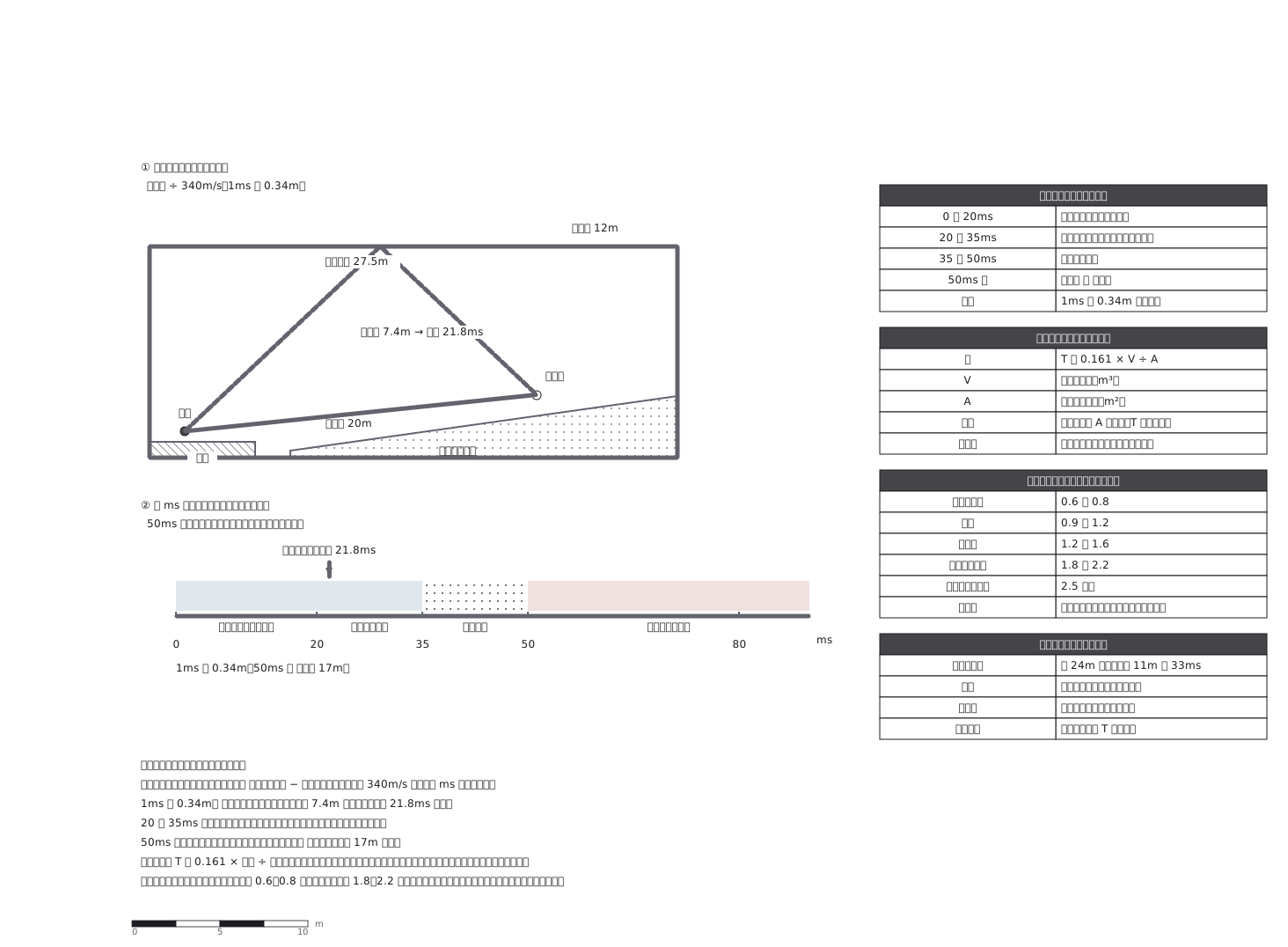 Hall acoustics: delay is nothing but a difference in path length — one millisecond is 0.34 m
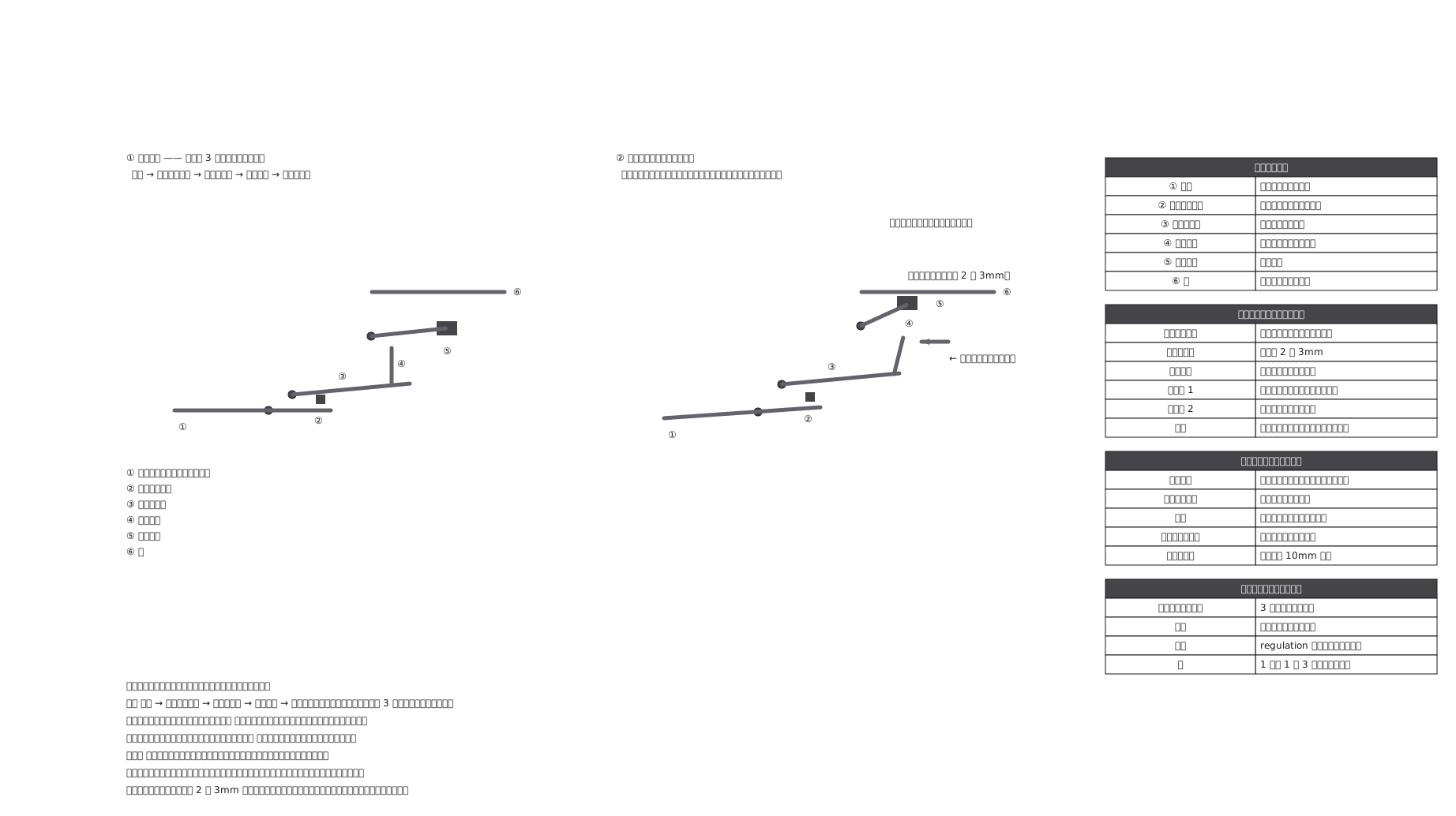 A piano action: the jack lets go just before the string, so nothing is pushing the hammer at impact
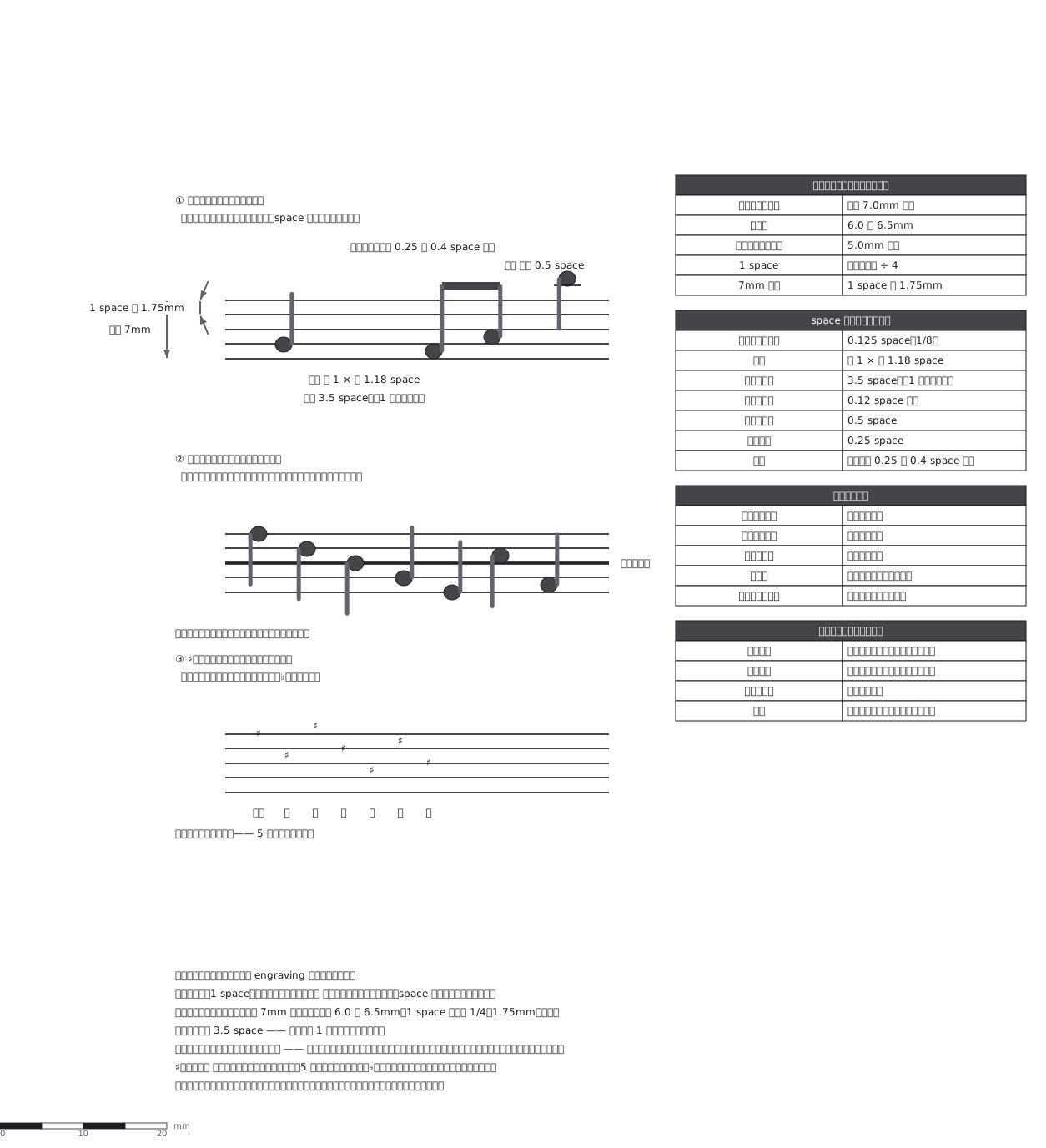 Music engraving: the staff space is the unit for every measurement, and the stem is 3.5 of them
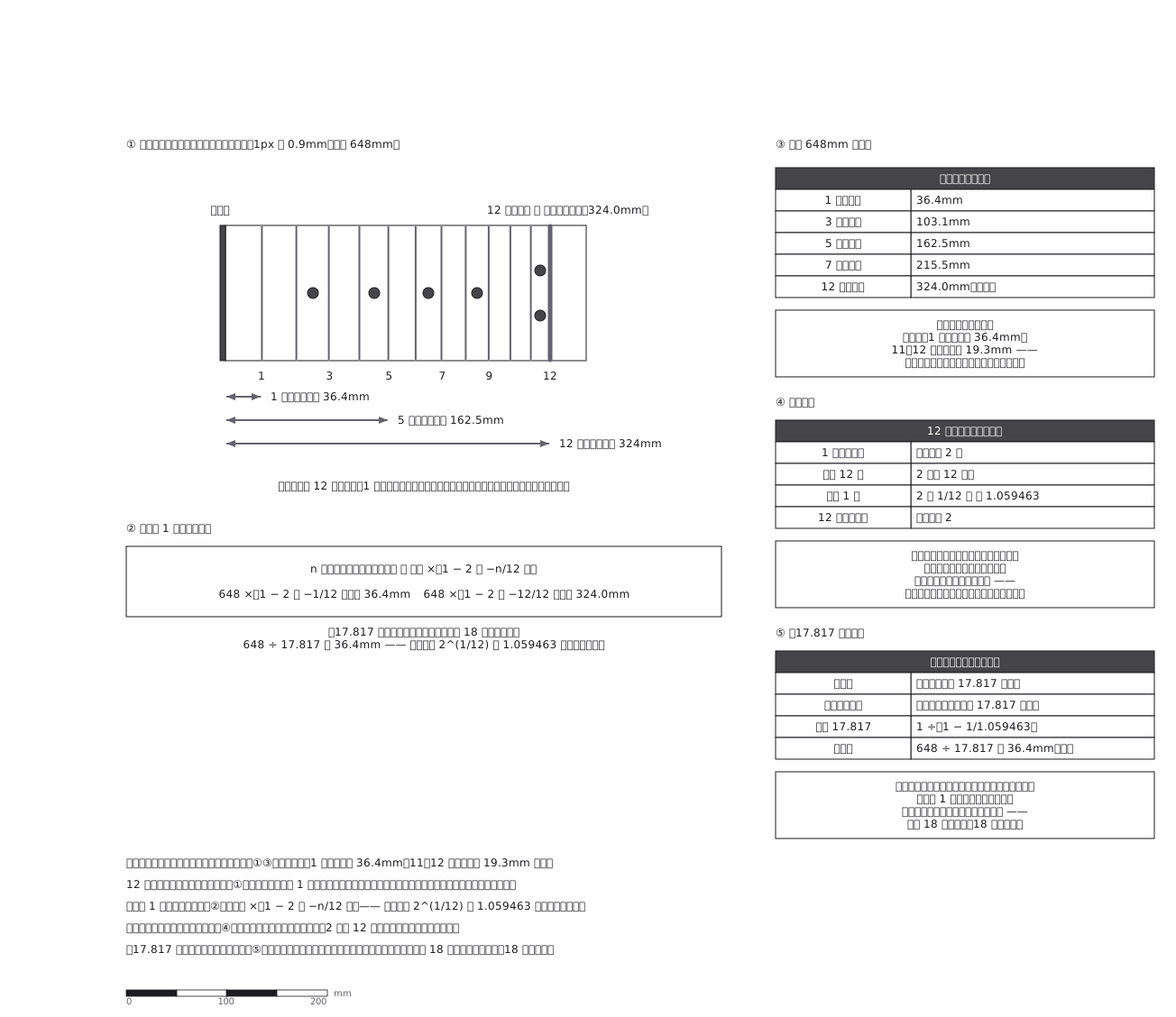 Frets crowd together as you climb because what is divided into twelve is not a distance but a ratio: each semitone multiplies by 2^(1/12), so the twelfth fret lands at exactly half the string and everything beyond it repeats at half size
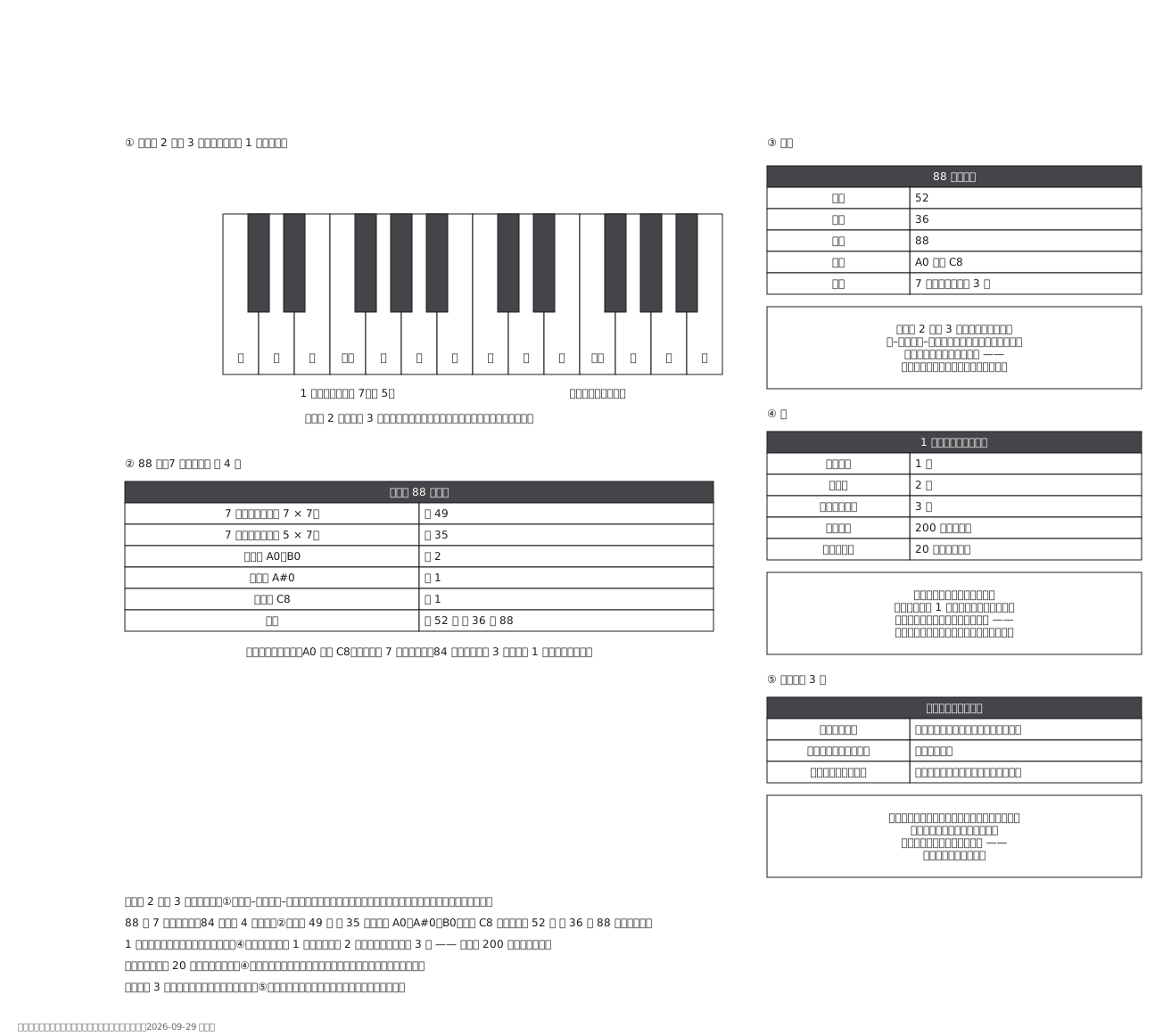 The black keys are grouped in twos and threes so that a hand can find its place without looking — twelve evenly spaced keys would give no landmark at all — and 88 turns out to be seven octaves plus four: three keys added below and one above
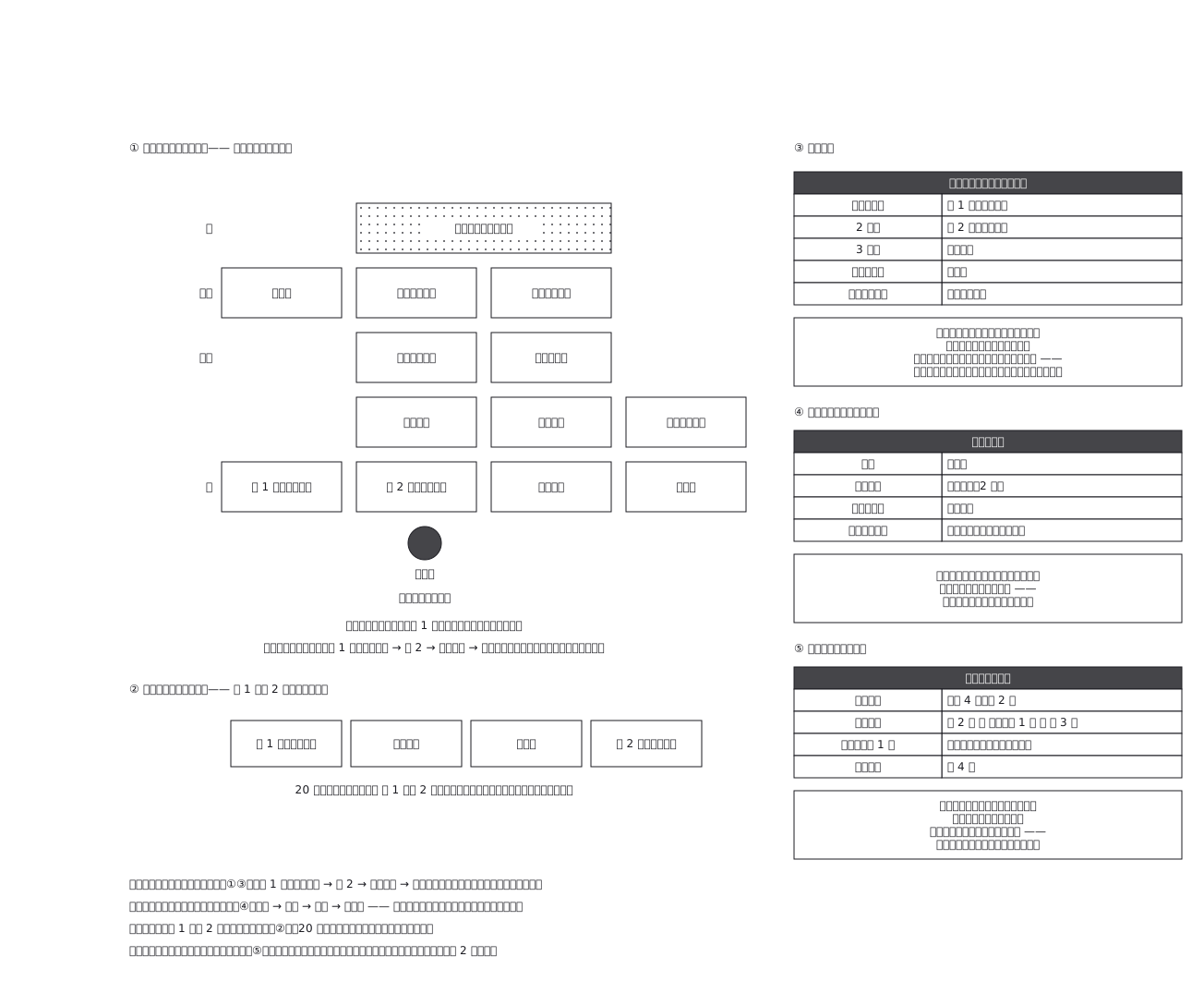 The strings run left to right from high to low and the louder the instrument the further back it sits, so the seating plan is itself a balance control — and "double wind" or "triple wind" names the size of the orchestra by counting only the woodwind
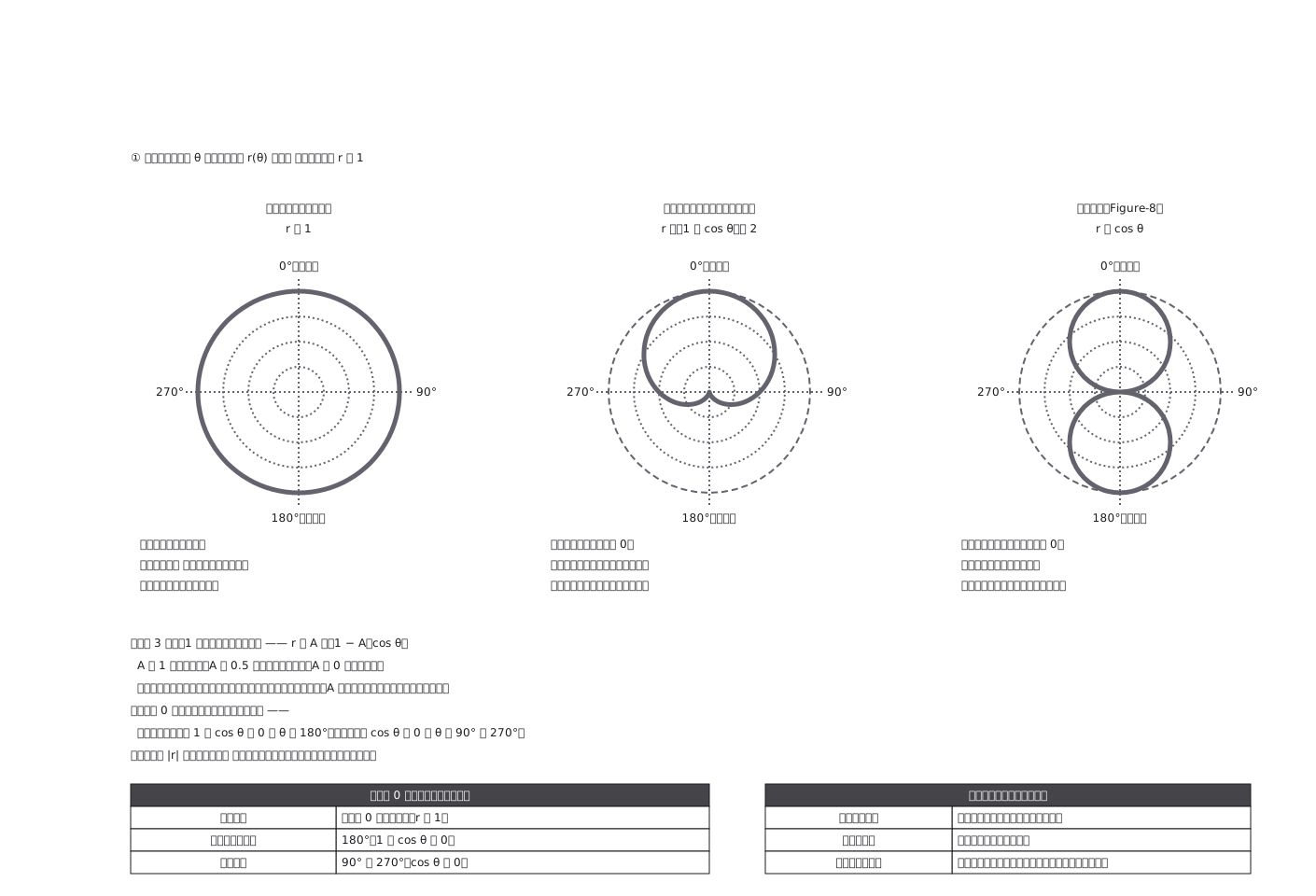 A polar plot of how much a microphone picks up from each direction. The three familiar shapes are not separate inventions but one formula at its ends and middle — omnidirectional, cardioid and figure-of-eight are A = 1, 0.5 and 0 in r = A + (1 - A)cos θ. Solving the same formula gives the dead angles: 180 degrees for a cardioid, 90 and 270 for a figure-of-eight.