Retail and logistics
Baseball infield — layout (schematic)
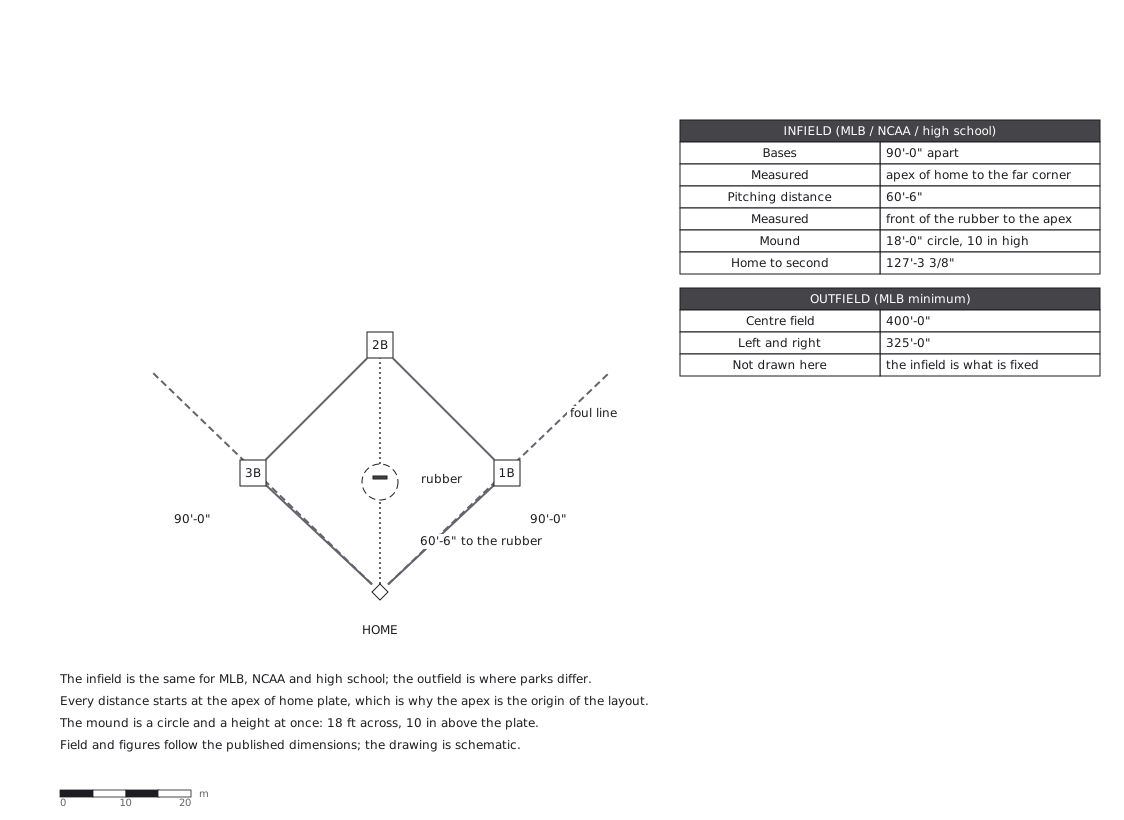
Baseball infield: every distance starts at the apex of home plate
This drawing comes from one YAML file. No shape was moved by hand.
Notes in the source (in Japanese)
Every distance starts at the apex of home plate.
Bases are 90 ft apart, measured apex-to-far-corner; the rubber is 60 ft 6 infrom the same apex; home to second is 127 ft 3 3/8 in because the infield isa square stood on its corner.
The infield is fixed, the outfield is not —— 400 ft to centre and 325 ftdown the lines are minimums, and every park past that is its own shape.
Figures follow the published dimensions; the drawing is schematic(bags and plate are drawn oversize so they can be seen). Distances are laidout from the apex of the plate at the bottom of the diamond mark: the bagcentres sit 127.3 px (90 ft at 1 px = 6 in) along each axis, the mound centre59 ft out and the front of the rubber 18 in nearer, at 60 ft 6 in.Source: Official Baseball Rules 2.01, 2.04 and Appendix 2 (MLB; checked 2026-10-02).
Source (YAML)
examples/gallery/150-Baseball-infield.zumen.yaml
More in this field
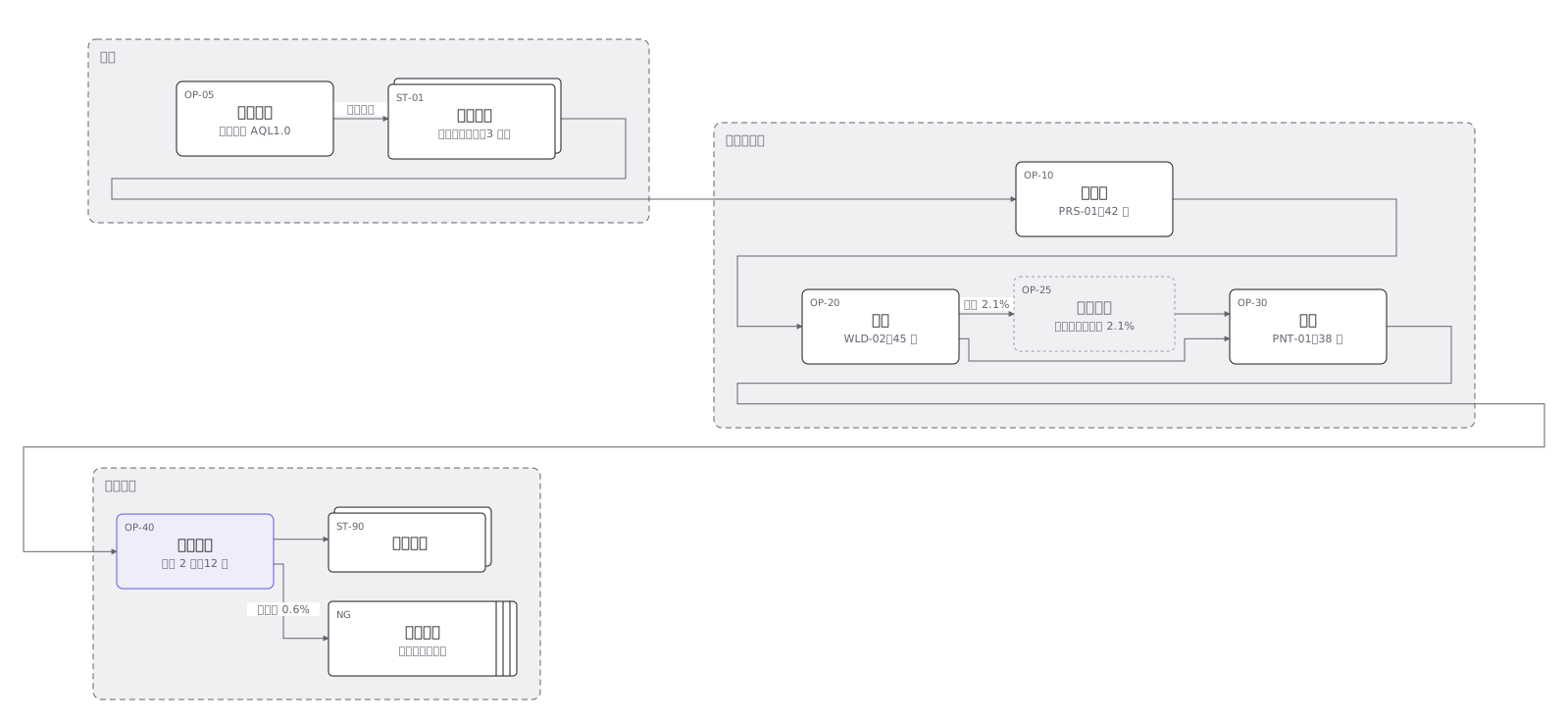 An assembly line with what happens at each station, and the route a part takes back when inspection rejects it
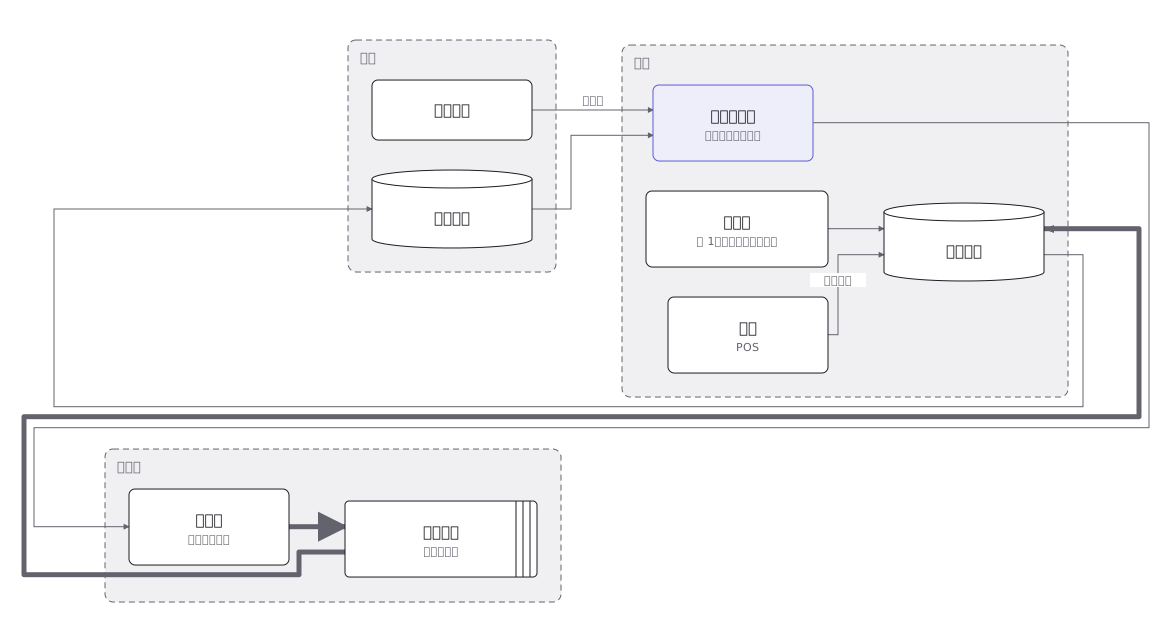 How a shop restocks: the reorder point, the safety stock, and the lead time that has to be covered until goods arrive
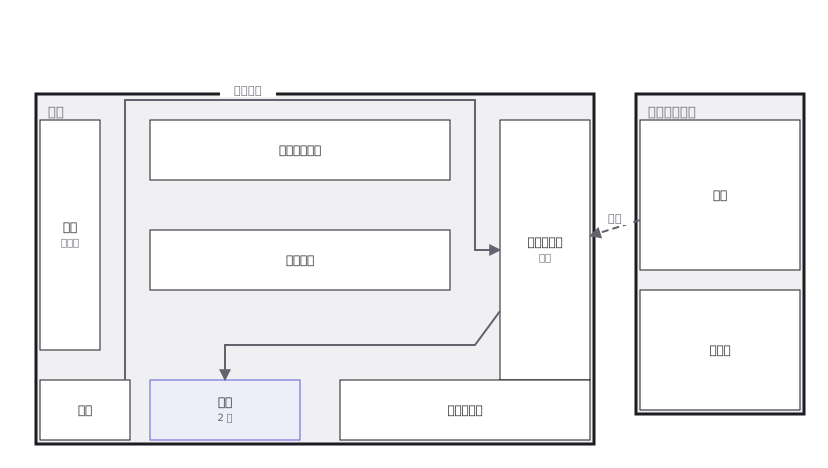 A convenience store floor layout: the fixtures, the main aisle, the till and chilled cases, and the path a customer takes from the door
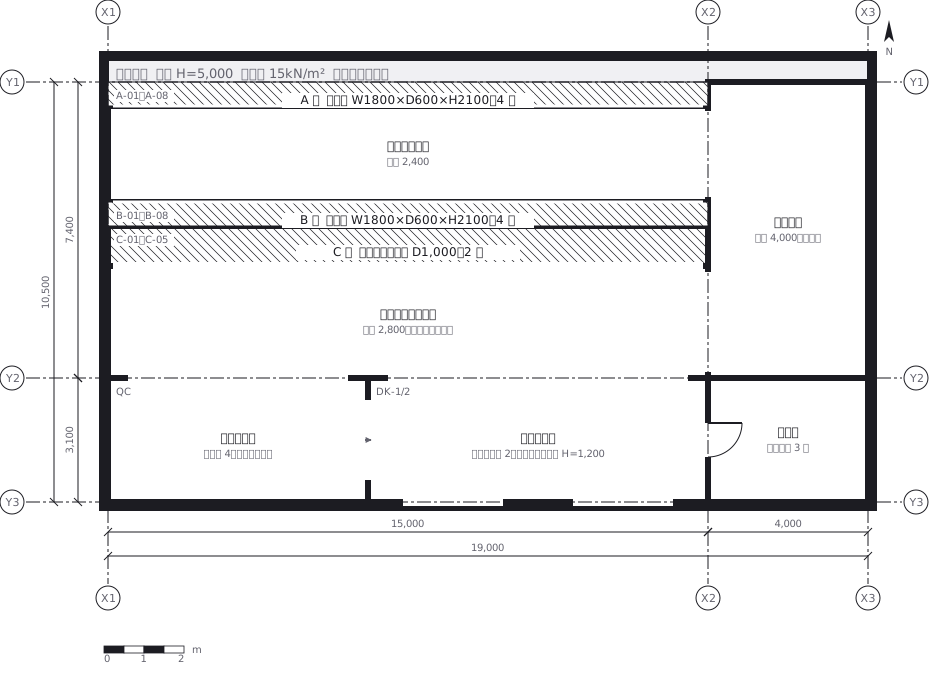 A warehouse where every rack bay, level and position carries an address, overlaid with the aisles and the picking route
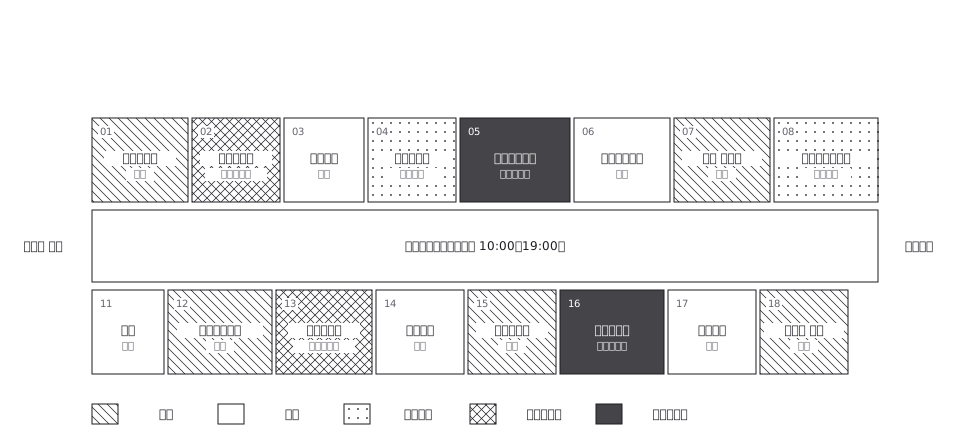 Shopping street directory, trade by hatch
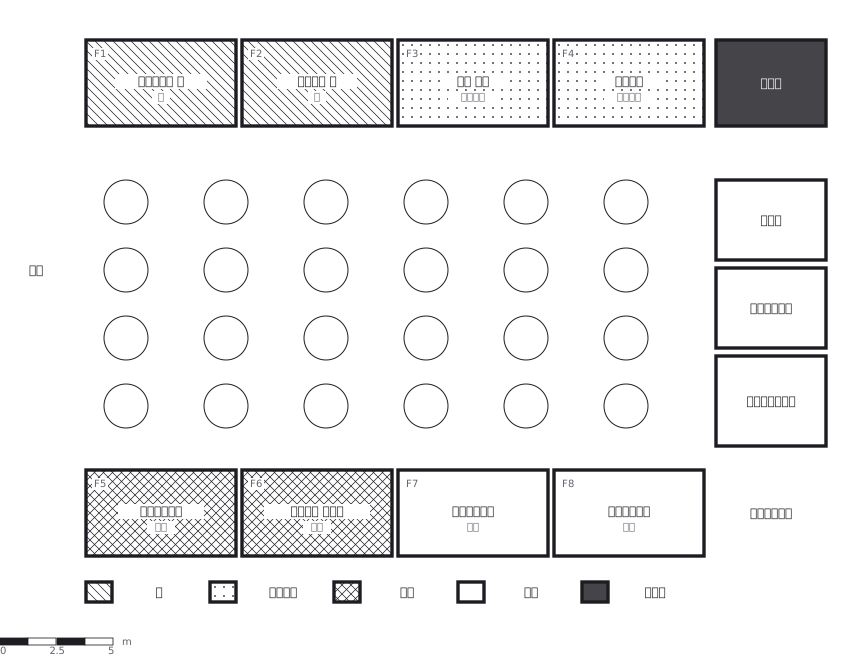 A food court laid out with 240 seats in the middle and the outlets around the edge, each cuisine distinguished by hatch rather than colour
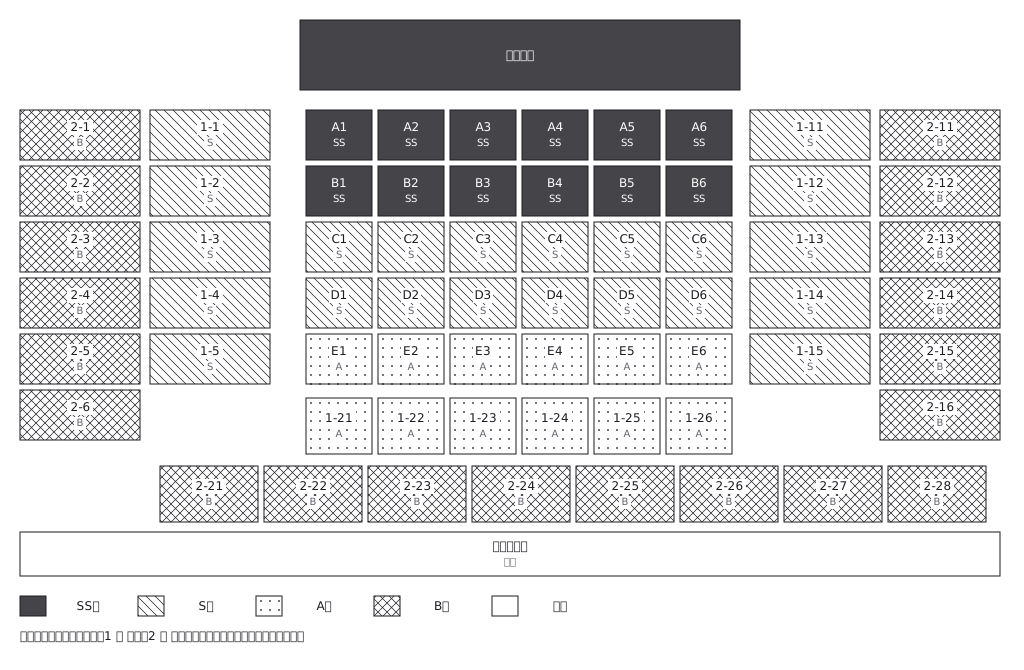 A domed stadium with its seats divided into five price bands, including standing room
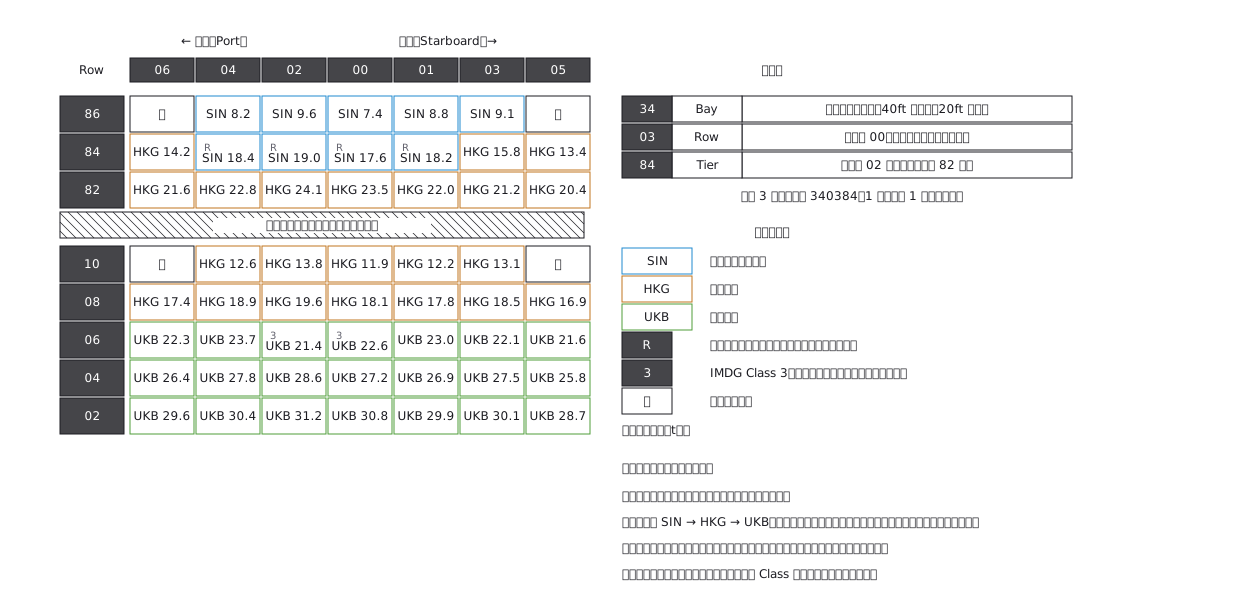 Container stowage: bay, row and tier are the address