Learning and geometry
How a spider builds an orb web — radials are for walking, only the spiral is sticky
A spider does not stick to its own web because only the spiral is sticky: the radials and the temporary scaffold are dry, and the scaffold is cut away as the sticky spiral is laid from the outside in
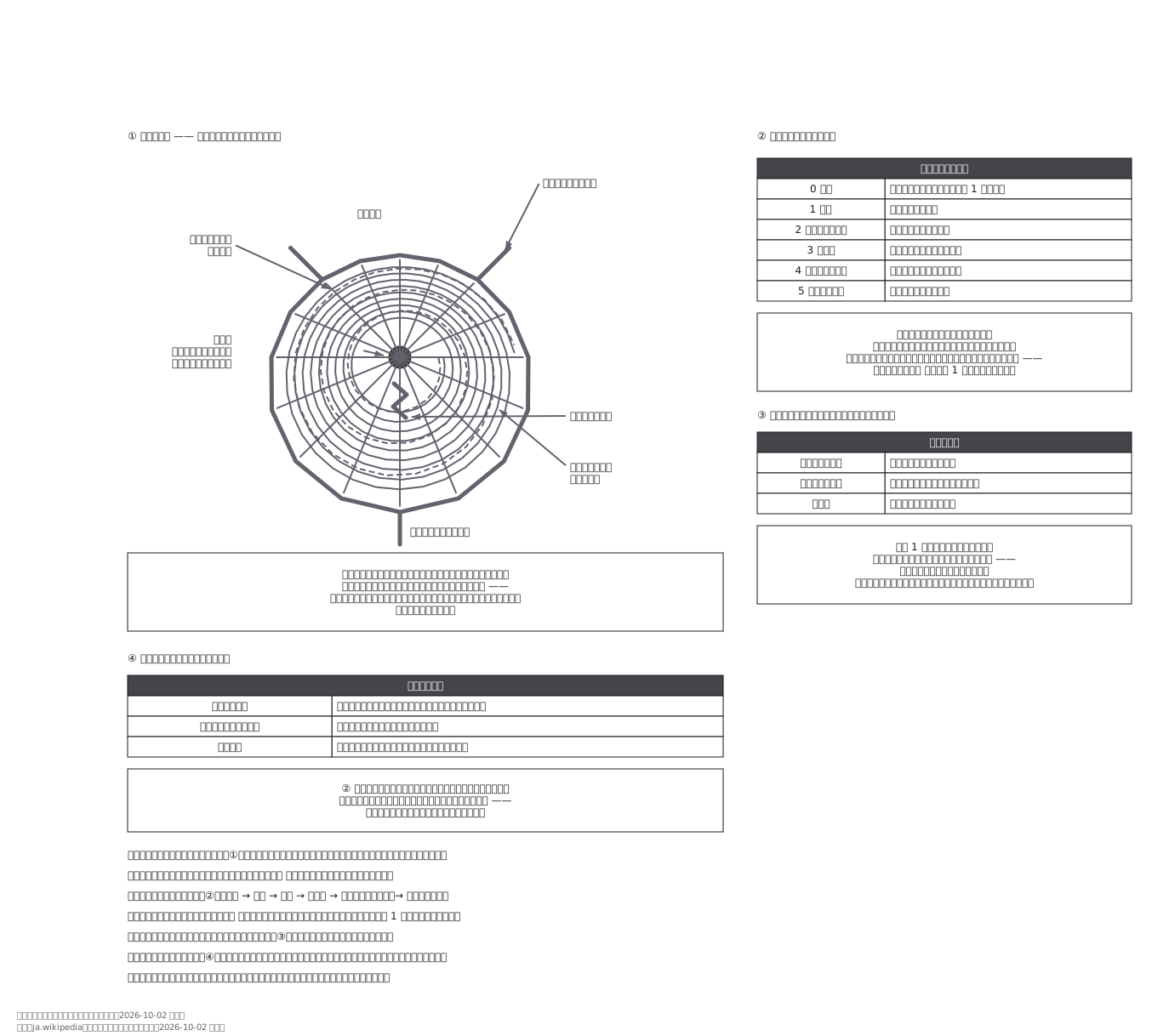
This drawing comes from one YAML file. No shape was moved by hand.
Notes in the source (in Japanese)
クモが自分の網にくっつかないのは、歩く糸が粘らないから。縦糸(放射糸)と足場糸は粘らず、粘るのは横糸だけ ——クモは縦糸の上だけを歩く。横糸には粘球がほぼ等間隔に並び、獲物はそこで止まる。
張る順番は決まっている。 糸を風に流して渡す橋糸 → 枠糸 →縦糸(放射糸) → 足場糸(中心から外へ、粗いらせん)→横糸(外から内へ、細かいらせん)→ 足場糸を切り捨てる。足場糸は横糸を張るための仮設で、通ったあとに捨てていく —— 仮設を残さない。完成まで 1 時間とかからない。
こしきは縦糸が集まる中心で、ここにクモが止まる。白帯(隠れ帯)はジグザグや X 状の白い帯 ——姿を隠す働きとされるが、効果があるかどうかは定かではないと書かれている。
横糸は、網の下側のほうが数が多い(こしきは中心より上に来る)。なぜそうなるのかを書いた資料は見つけられなかったので、ここには理由を書いていない。
張り替え方は種で違う。 ジョロウグモは網全体をあまり張り替えず、壊れた所や横半分だけを作り直す。足場糸も切らずに残す(横糸の間のジグザグ)。② の「足場糸を切る」は、オニグモのような円網の一般形。オニグモは夕方に張って朝にたたむのが基本だが、地域差がある。
出典(2026-10-02 確認):富山市科学博物館「じょろうぐも」(横糸は中央から下に多く、上にはほとんど無い)https://www.tsm.toyama.toyama.jp/_ex/curators/negoro/zyorougumo.htmja.wikipedia「ジョロウグモ」(部分的な張り替え・足場糸が残る)/「オニグモ」(夕方に張り朝にたたむ。地域差)
Source (YAML)
examples/gallery/267-クモの円網.zumen.yaml
More in this field
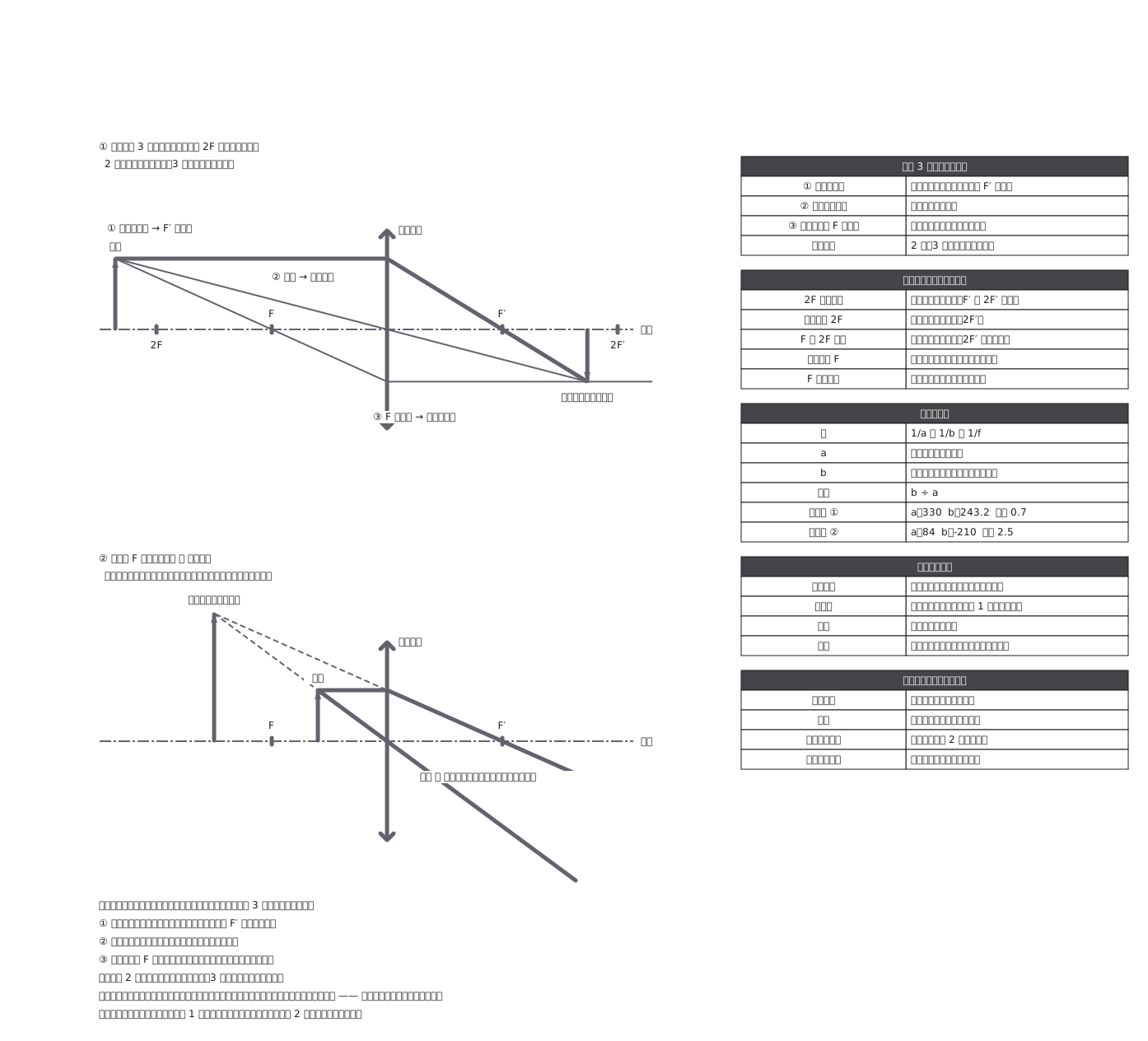 Ray tracing through a convex lens: there are only three lines to draw, and two of them fix the image
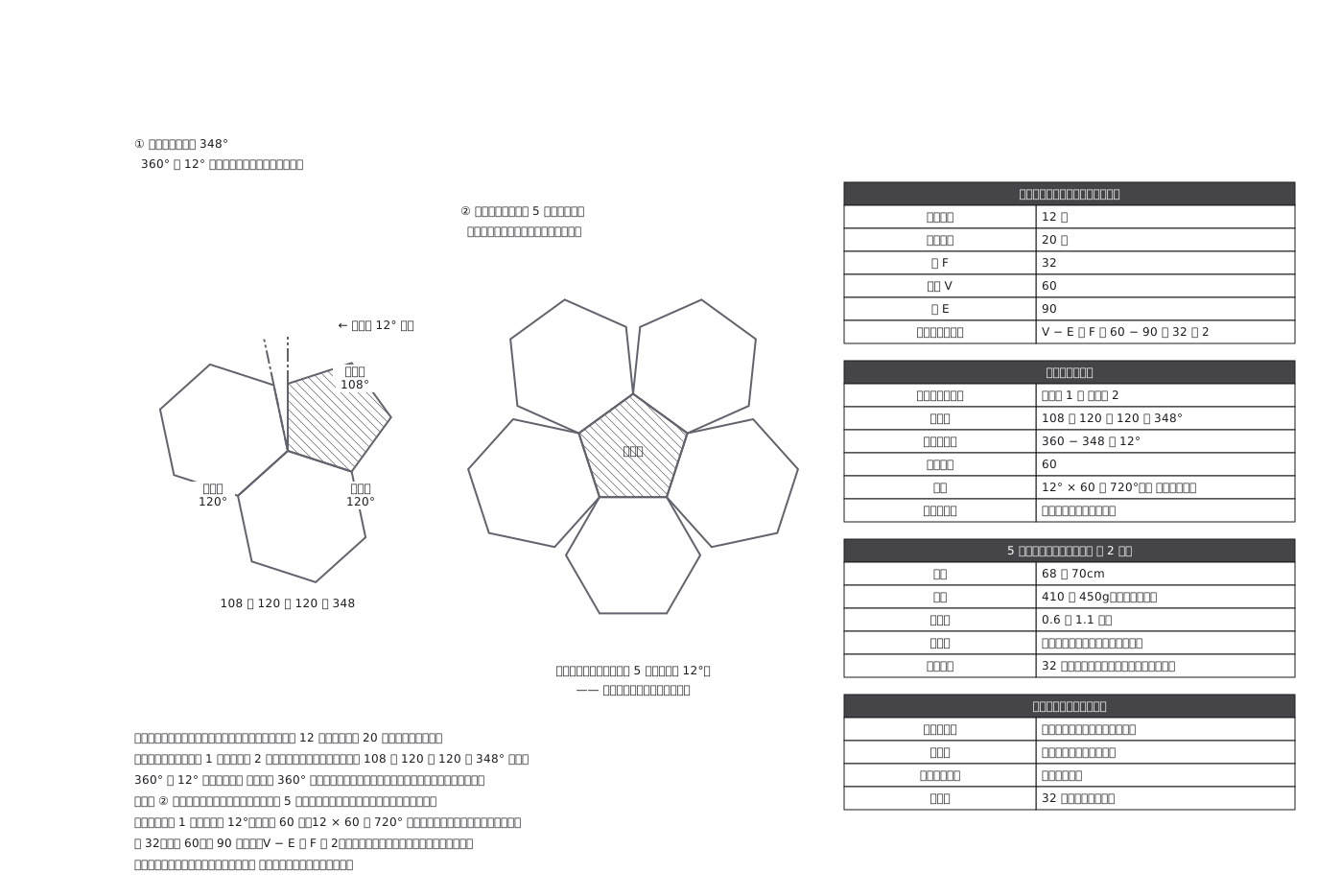 A football is a truncated icosahedron: the 12 degrees missing at every vertex are what make it a sphere
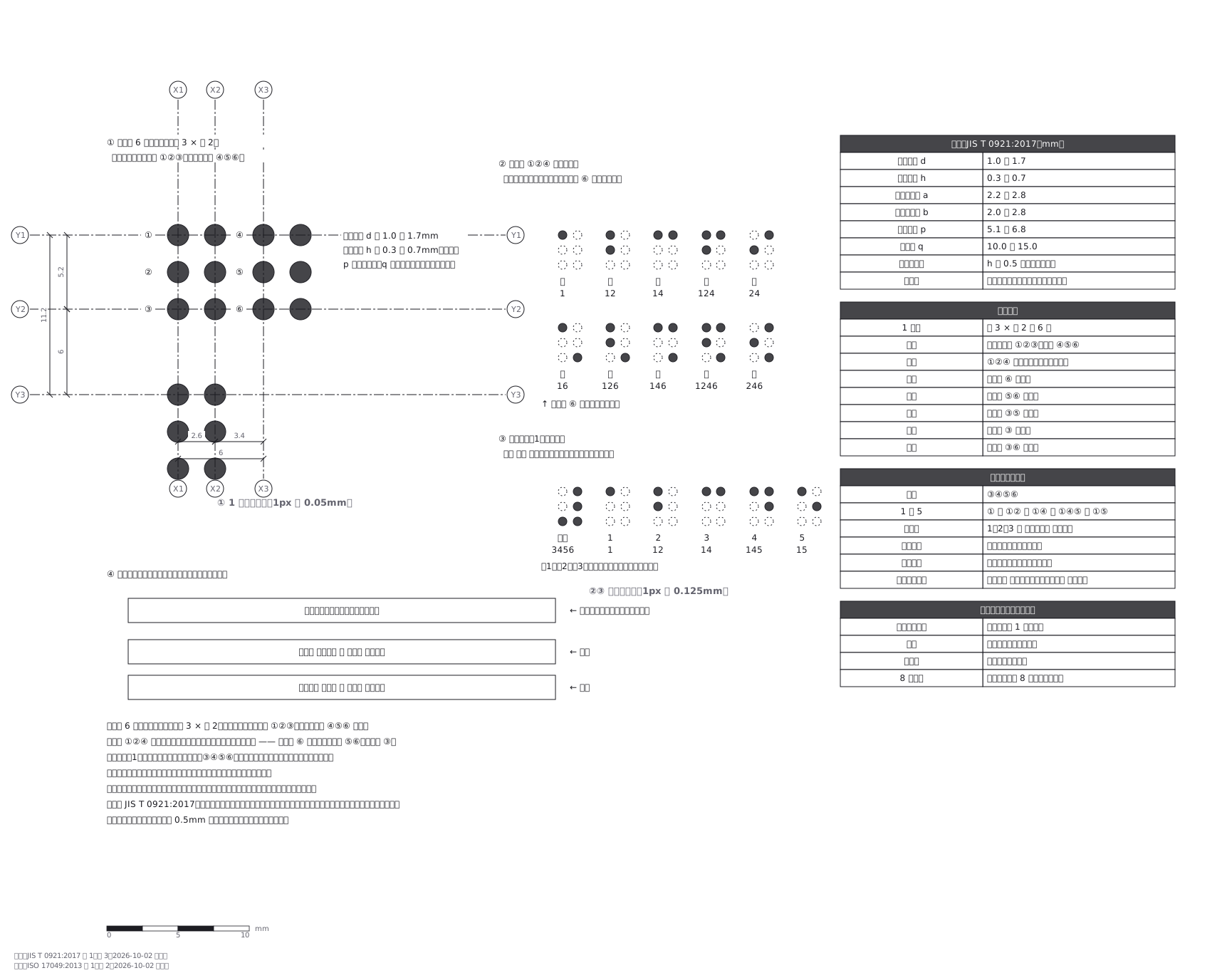 Braille has only six dots, so “a” and “1” are the same shape until a number sign says otherwise
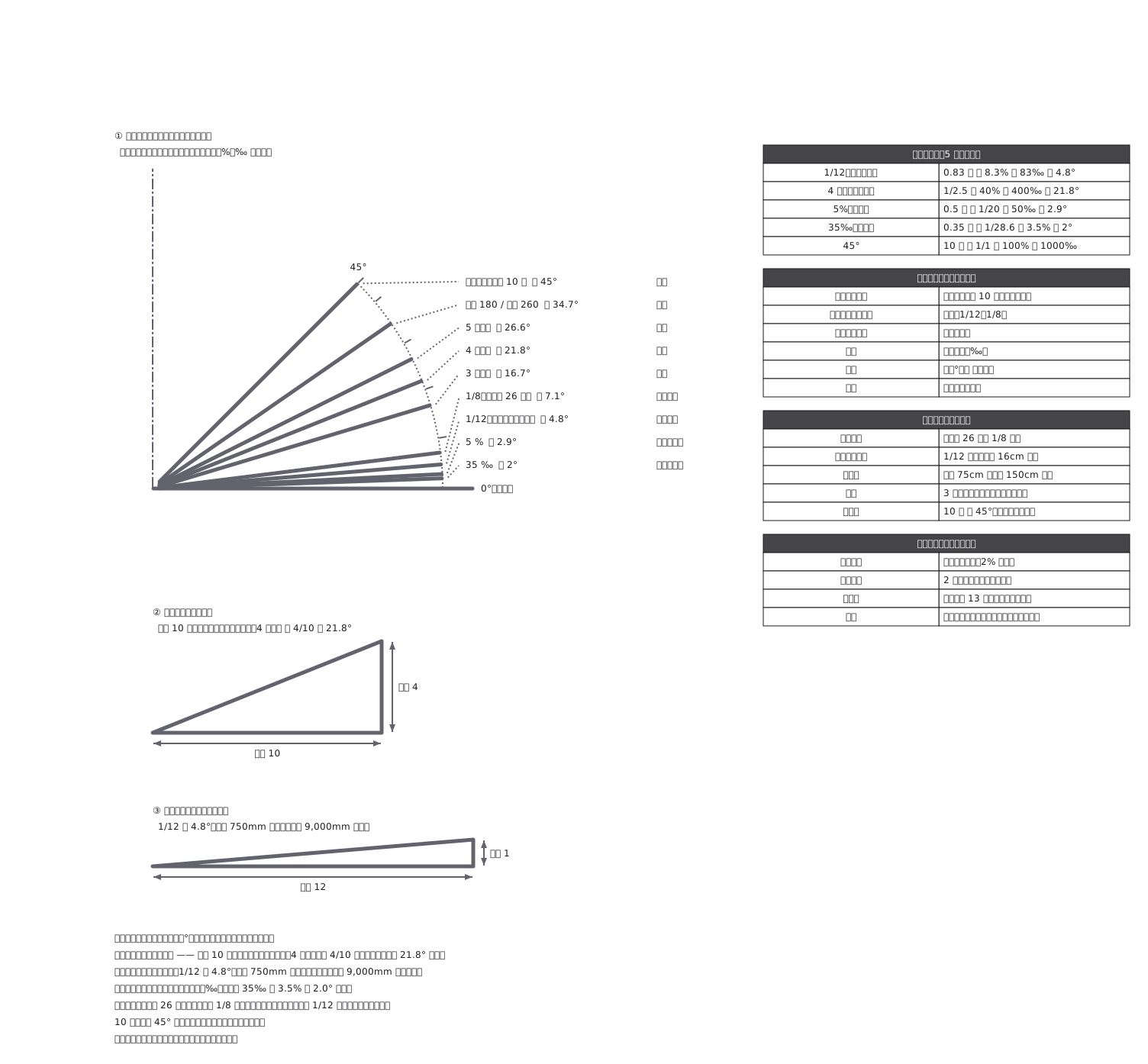 Slope notation: roofs in sun, ramps in fractions, roads in percent, railways in per mille — degrees are the minority
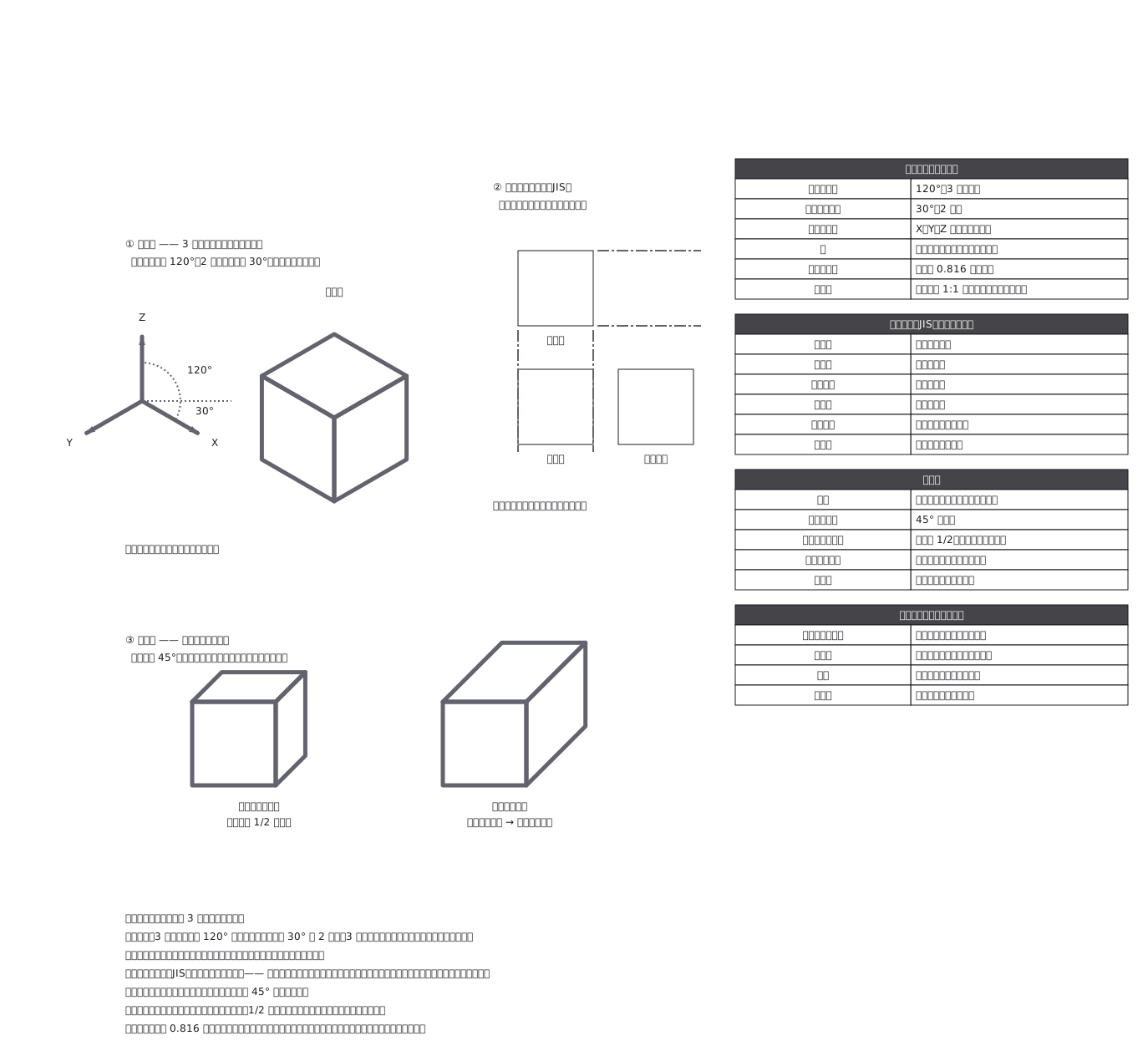 Isometric, third-angle and oblique: one scale serves all three axes, but circles become ellipses
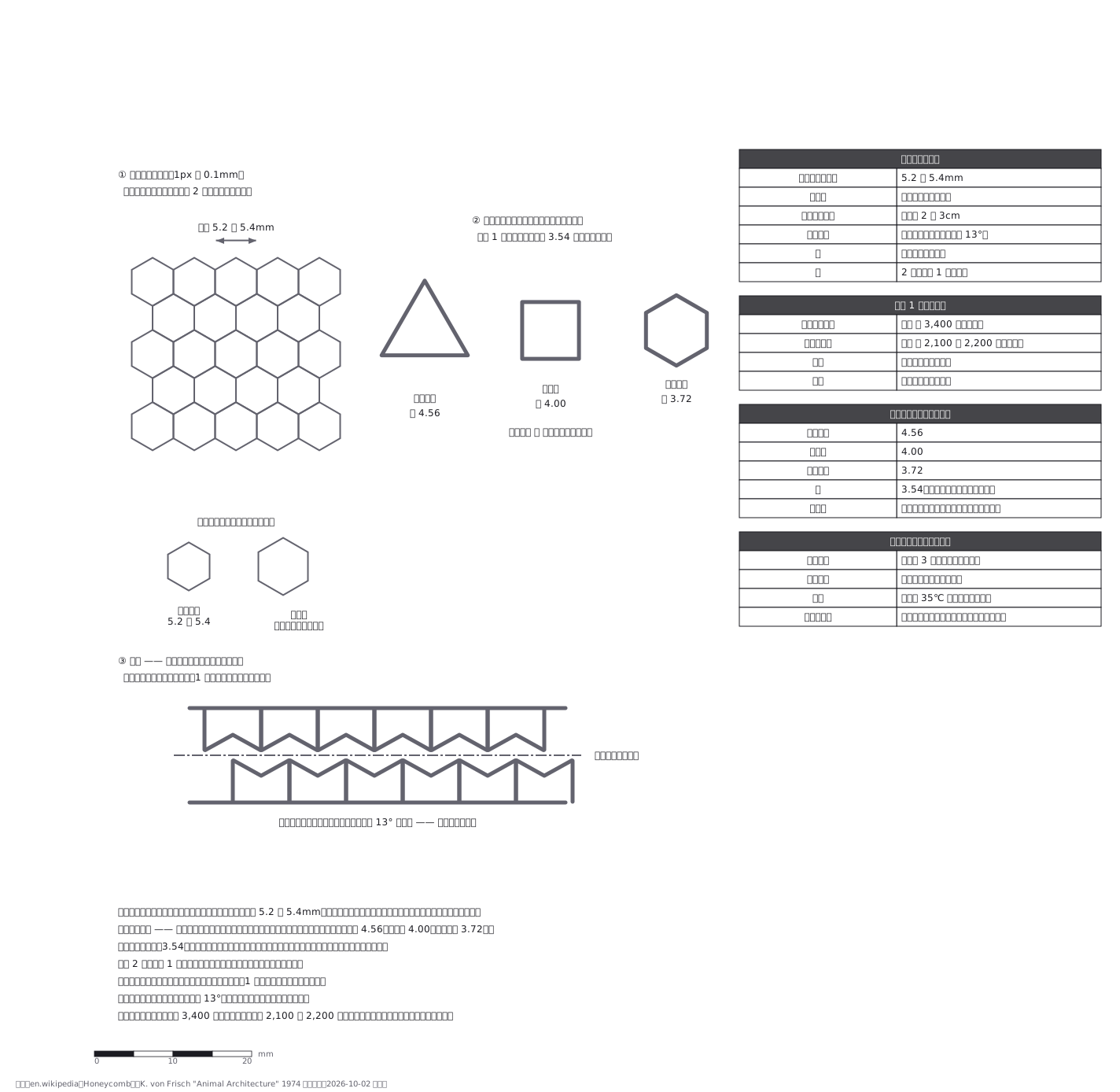 Honeycomb cells: for a given area the hexagon has the shortest wall of any shape that tiles
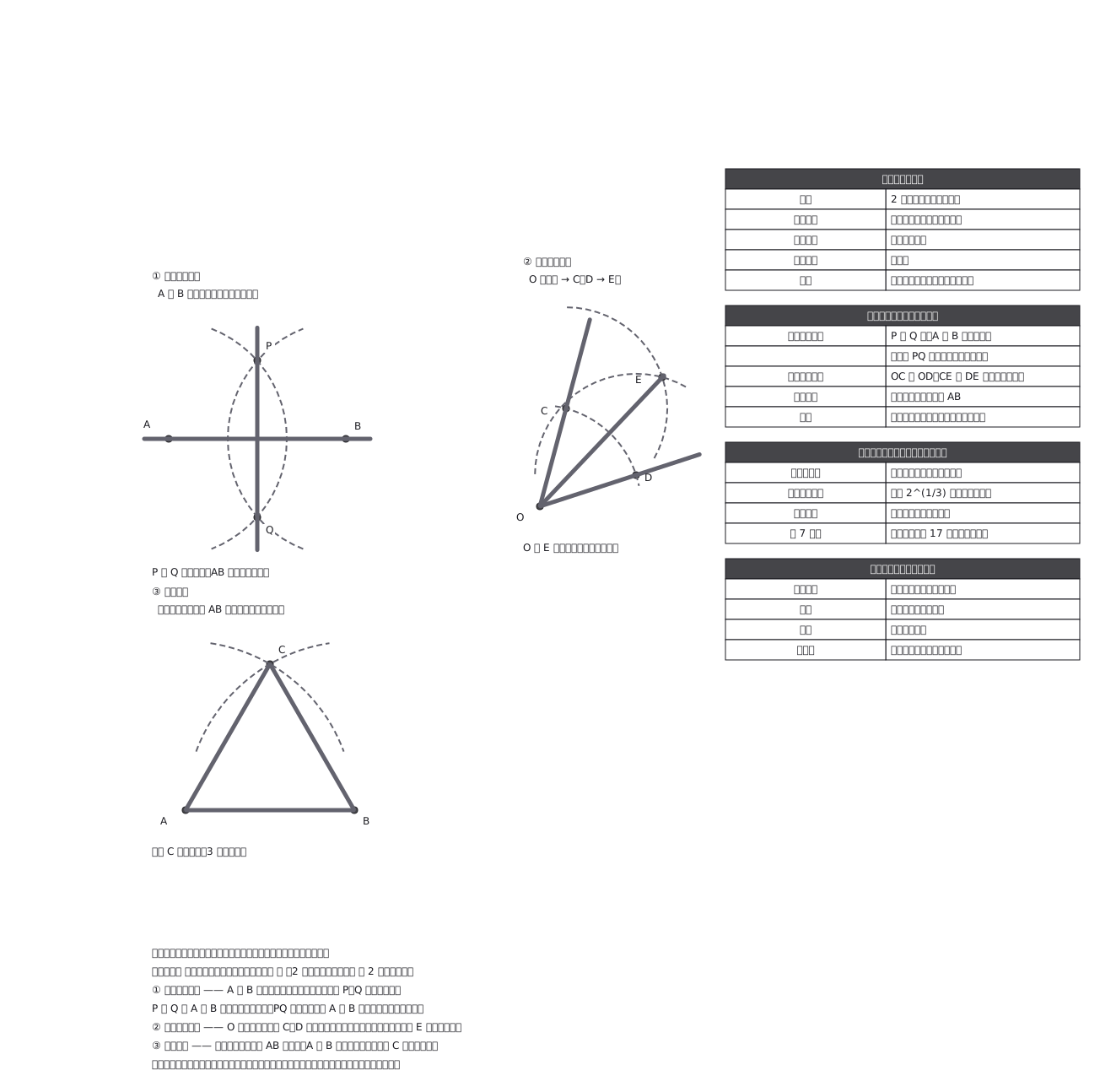 Ruler-and-compass constructions: no scale is used, because equal compass openings make equal lengths
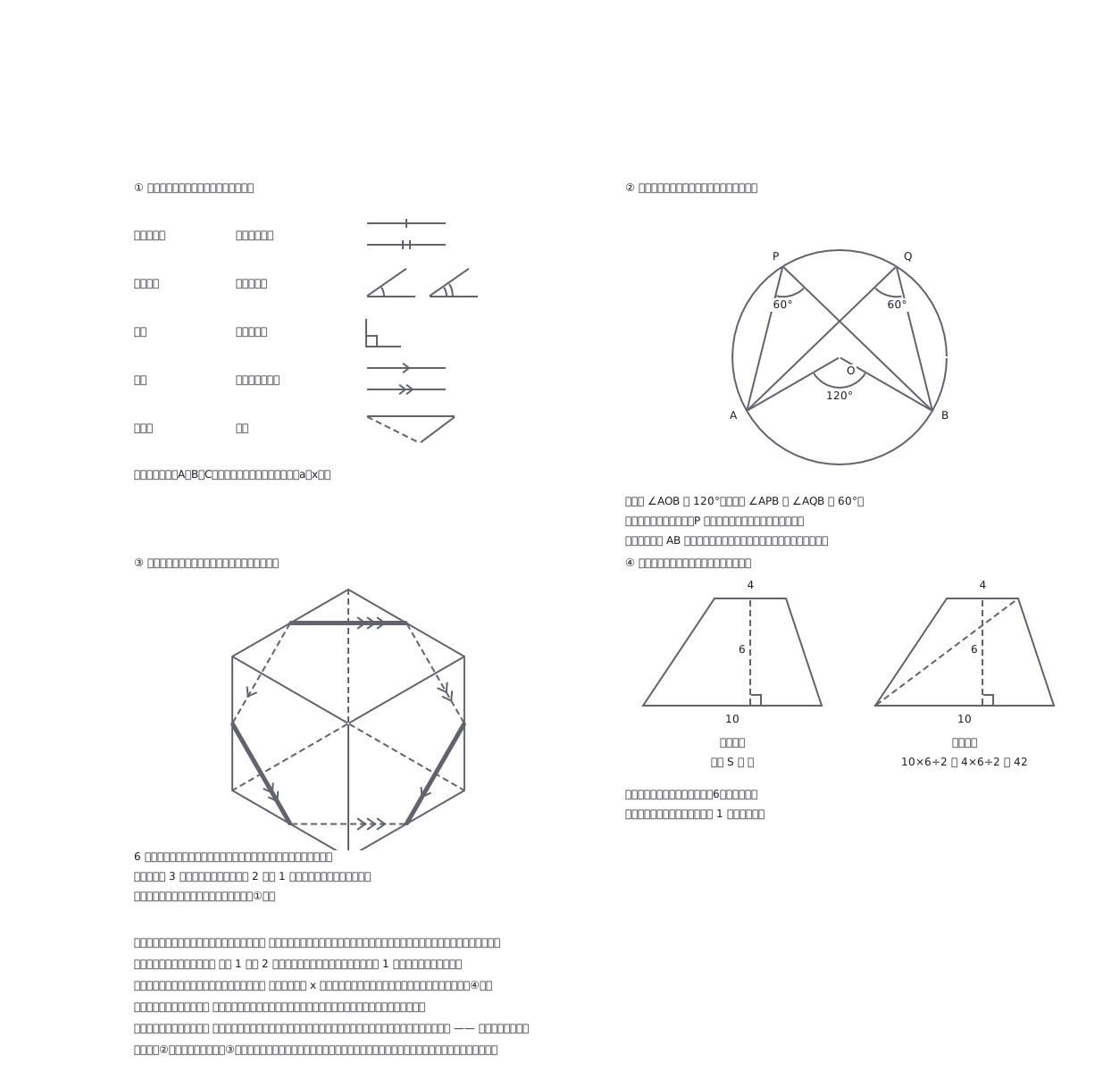 Figures in maths problems: the marks carry the meaning — equal ticks, right-angle squares, parallel chevrons — and only the given values are written on the figure