Learning and geometry
Japanese coins — size is not in order of value
Three orderings that never agree: the 50 yen coin is smaller than the 5, the 10 is bigger than the 100, and the weights rank differently again — the only two with holes are the 5 and the 50, which are then told apart by the milled edge, because the set is designed to be read by hand
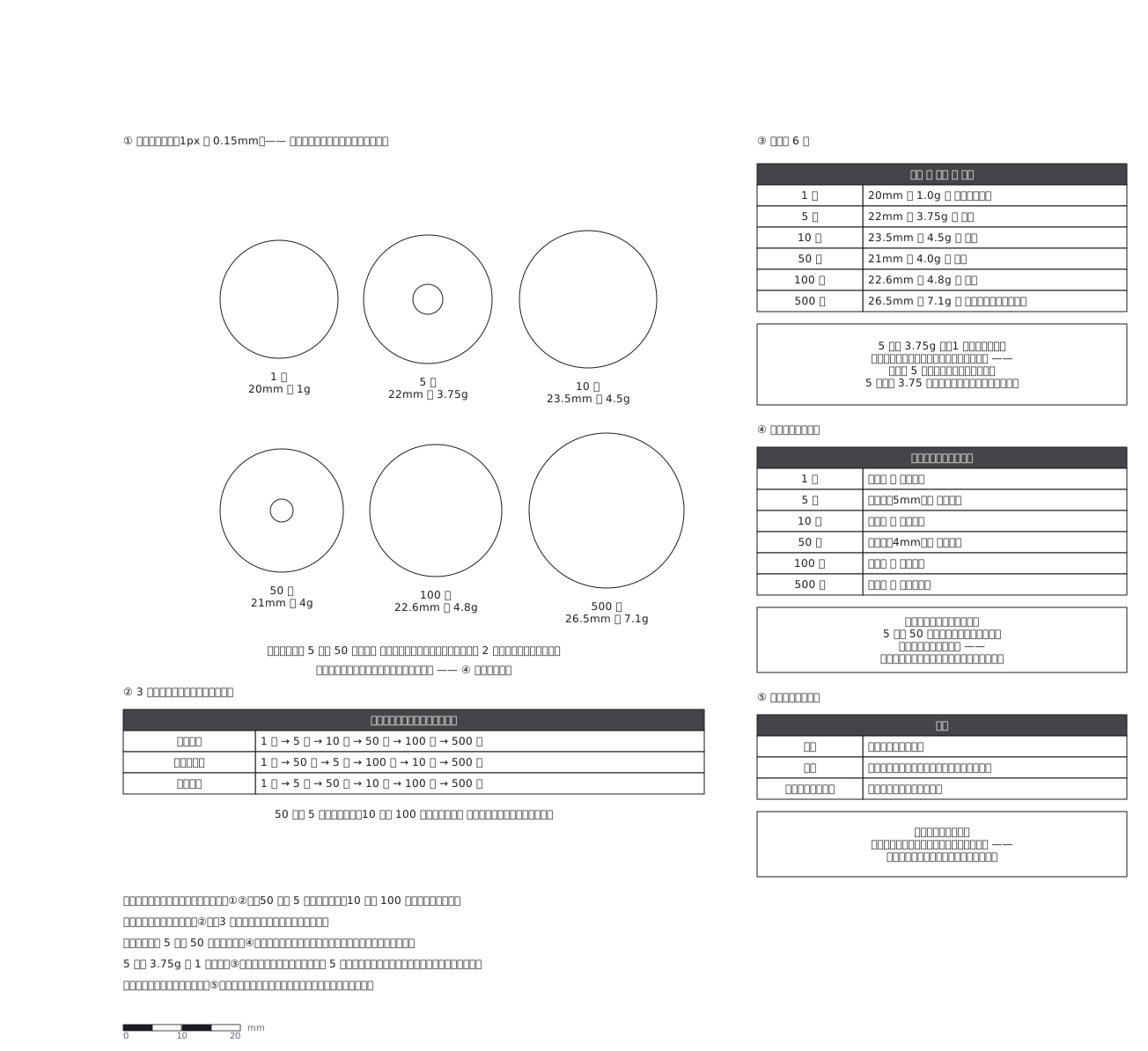
This drawing comes from one YAML file. No shape was moved by hand.
Notes in the source (in Japanese)
3 つの順番が、どれも一致しない。
- 価値の順 —— 1 → 5 → 10 → 50 → 100 → 500- 大きさの順 —— 1 円 20mm → 50 円 21mm → 5 円 22mm → 100 円 22.6mm → 10 円 23.5mm → 500 円 26.5mm- 重さの順 —— 1 円 1.0g → 5 円 3.75g → 50 円 4.0g → 10 円 4.5g → 100 円 4.8g → 500 円 7.1g
50 円は 5 円より小さく、10 円は 100 円より大きい。 価値と形はつながっていない。
穴があるのは 5 円と 50 円だけ(5mm と 4mm)。どちらも穴があるが、50 円にはギザがあり、5 円には無い ——触っただけで区別できるように組んである。ギザがあるのは 50 円と 100 円で、500 円は斜めのギザ。
5 円の 3.75g は 1 匁(もんめ)。 ほかの 5 種が 1.0・4.0・4.5・4.8・7.1 と切りのよい数なのに、5 円だけ 3.75 という半端な数なのは、尺貫法の重さの単位がそのまま残っているから。
厚さは法令で定めていない。 決まっているのは直径・重さ・素材・縁・穴で、厚さは「おおよその値」しかない(通貨の単位及び貨幣の発行等に関する法律施行令 別表第一。「形式」は直径・孔径と、500 円の縁の刻印だけ。e-Gov 法令検索、2026-09-29 確認)。以前は「自動販売機は厚さで見分けていない」と書いていたが、裏が取れない(製造各社の公開資料は「検銭センサ」「多次元アルゴリズム」までで、厚みを読むという解説もある)。確かめられないので、自動販売機の話は図から外した(2026-09-29)。
素材はアルミニウム(1 円)・黄銅(5 円)・青銅(10 円)・白銅(50 円・100 円)・バイカラークラッド(500 円。2021 年 11 月から)。
同じ題材で、見本 216 もある。 216 は素材・直径・量目と「手で見分ける順」、こちらは「価値・大きさ・重さの 3 つの順番が、どれも一致しない」ことを扱う。
Source (YAML)
examples/gallery/300-日本の硬貨.zumen.yaml
More in this field
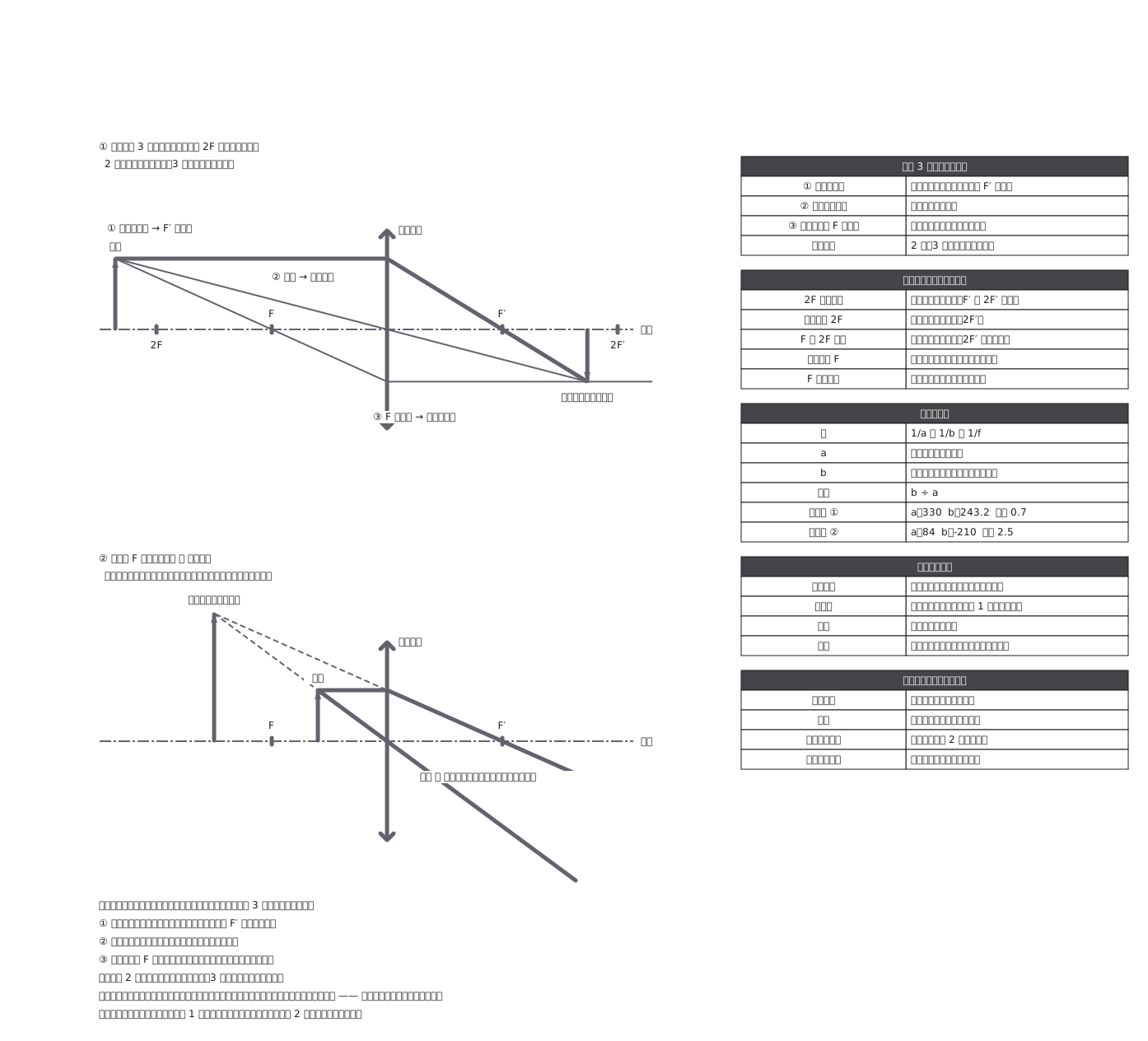 Ray tracing through a convex lens: there are only three lines to draw, and two of them fix the image
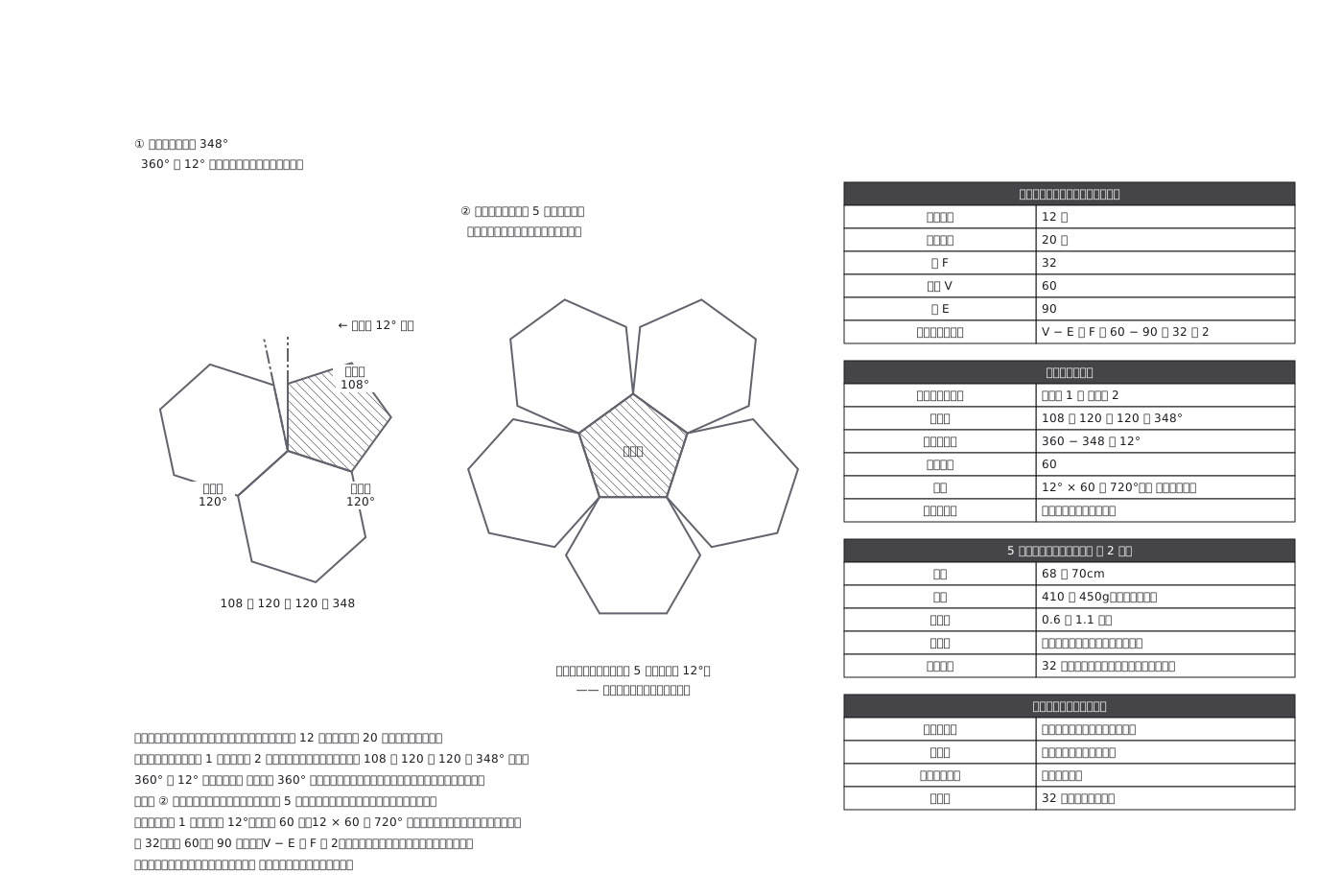 A football is a truncated icosahedron: the 12 degrees missing at every vertex are what make it a sphere
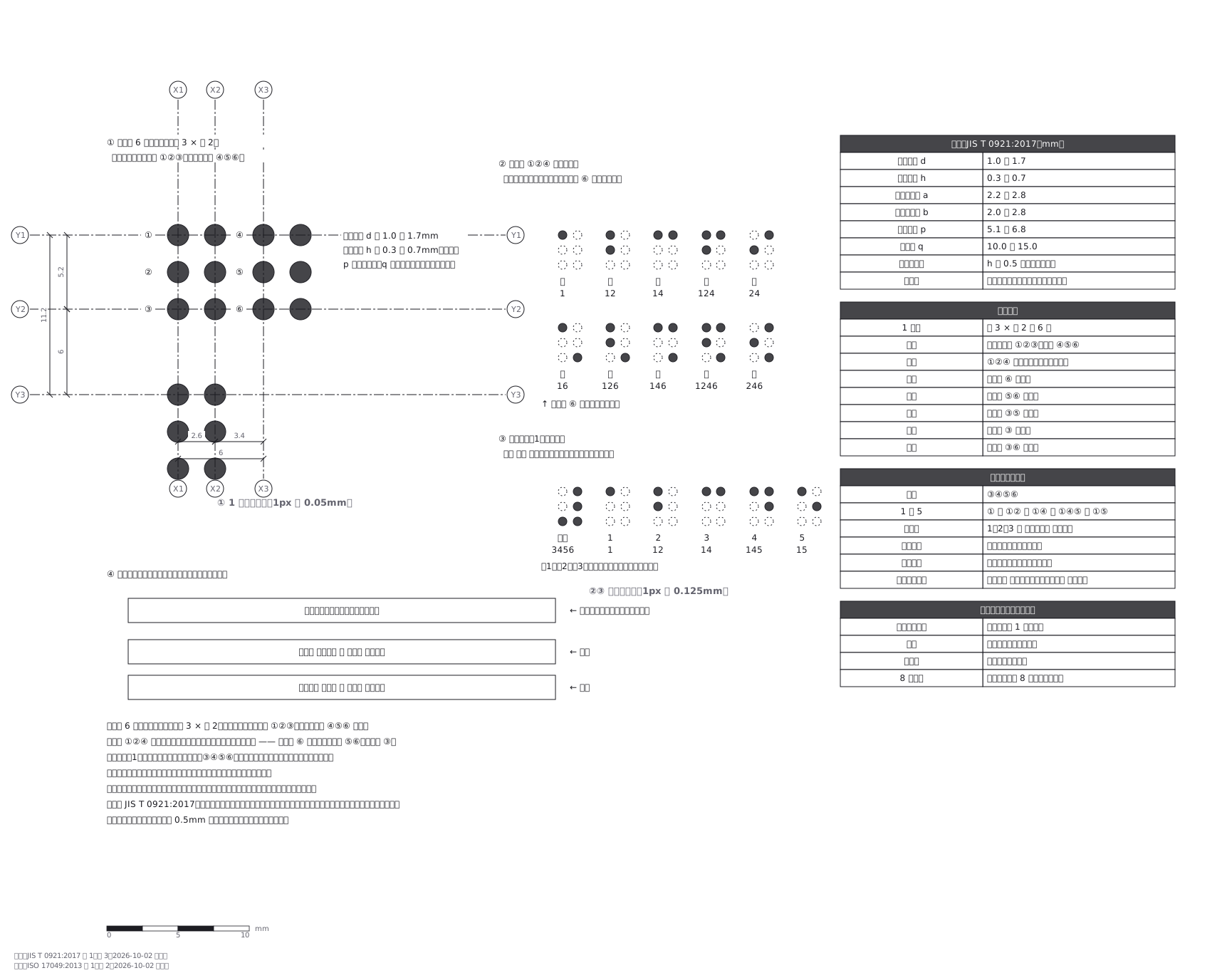 Braille has only six dots, so “a” and “1” are the same shape until a number sign says otherwise
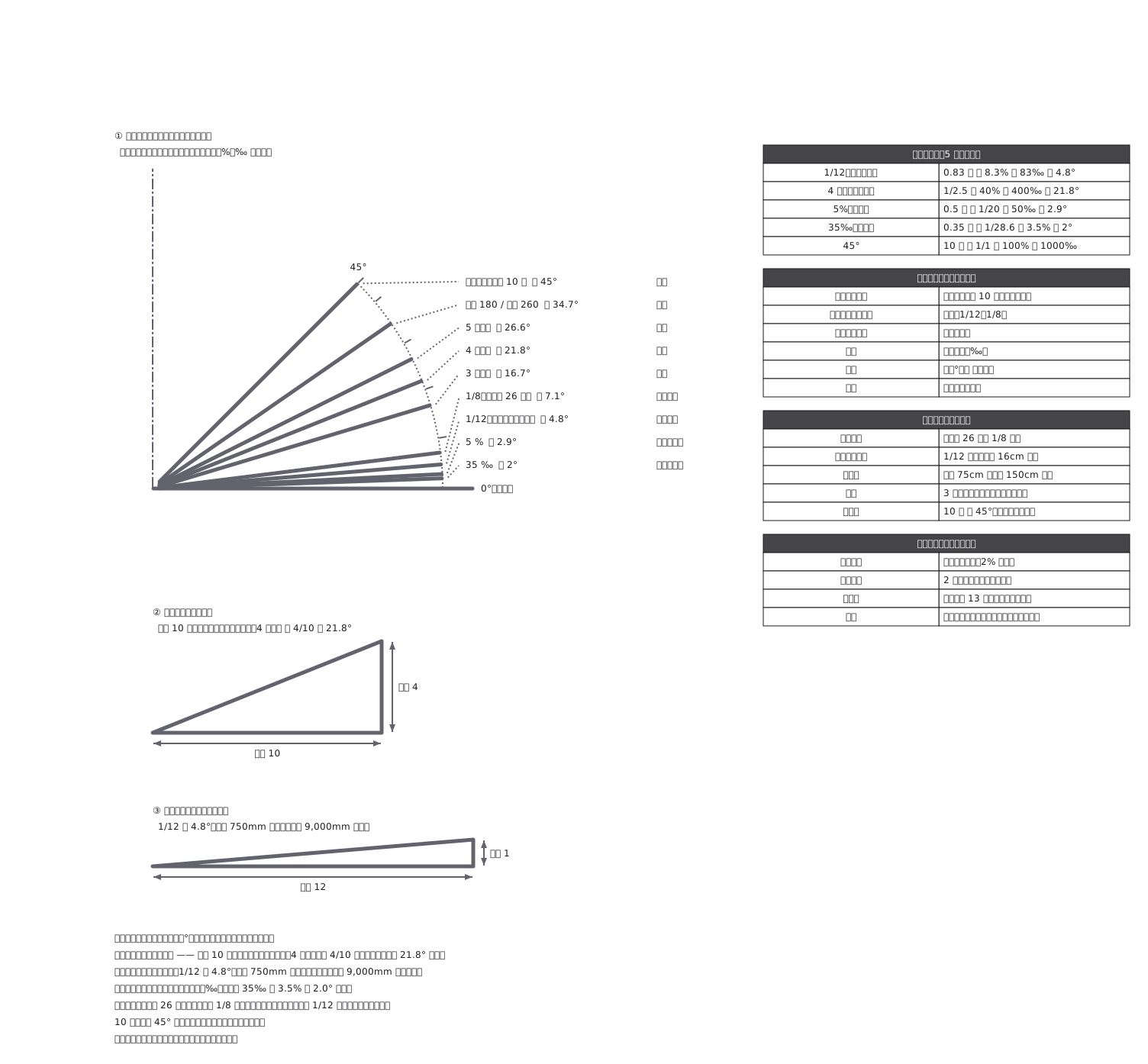 Slope notation: roofs in sun, ramps in fractions, roads in percent, railways in per mille — degrees are the minority
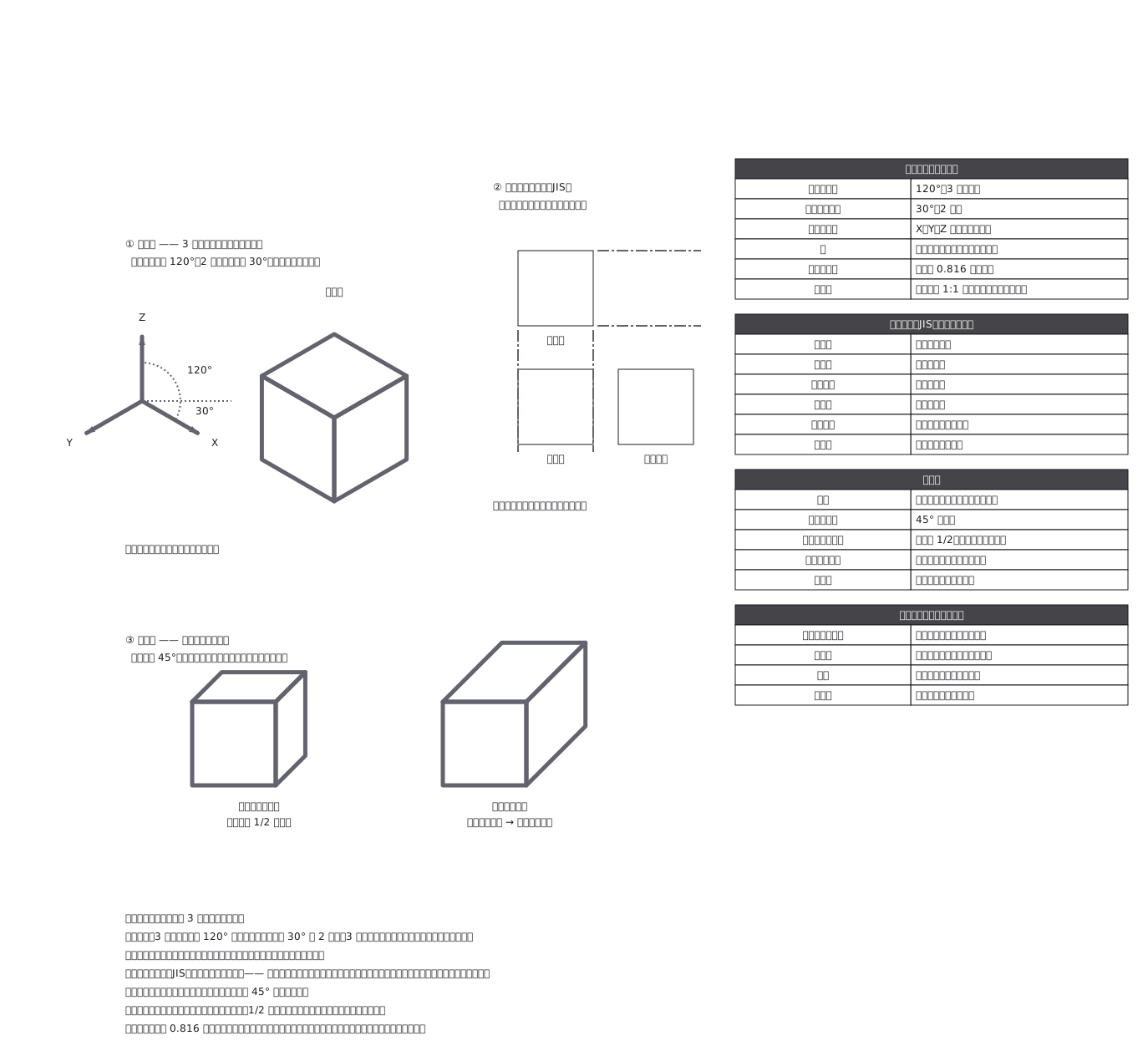 Isometric, third-angle and oblique: one scale serves all three axes, but circles become ellipses
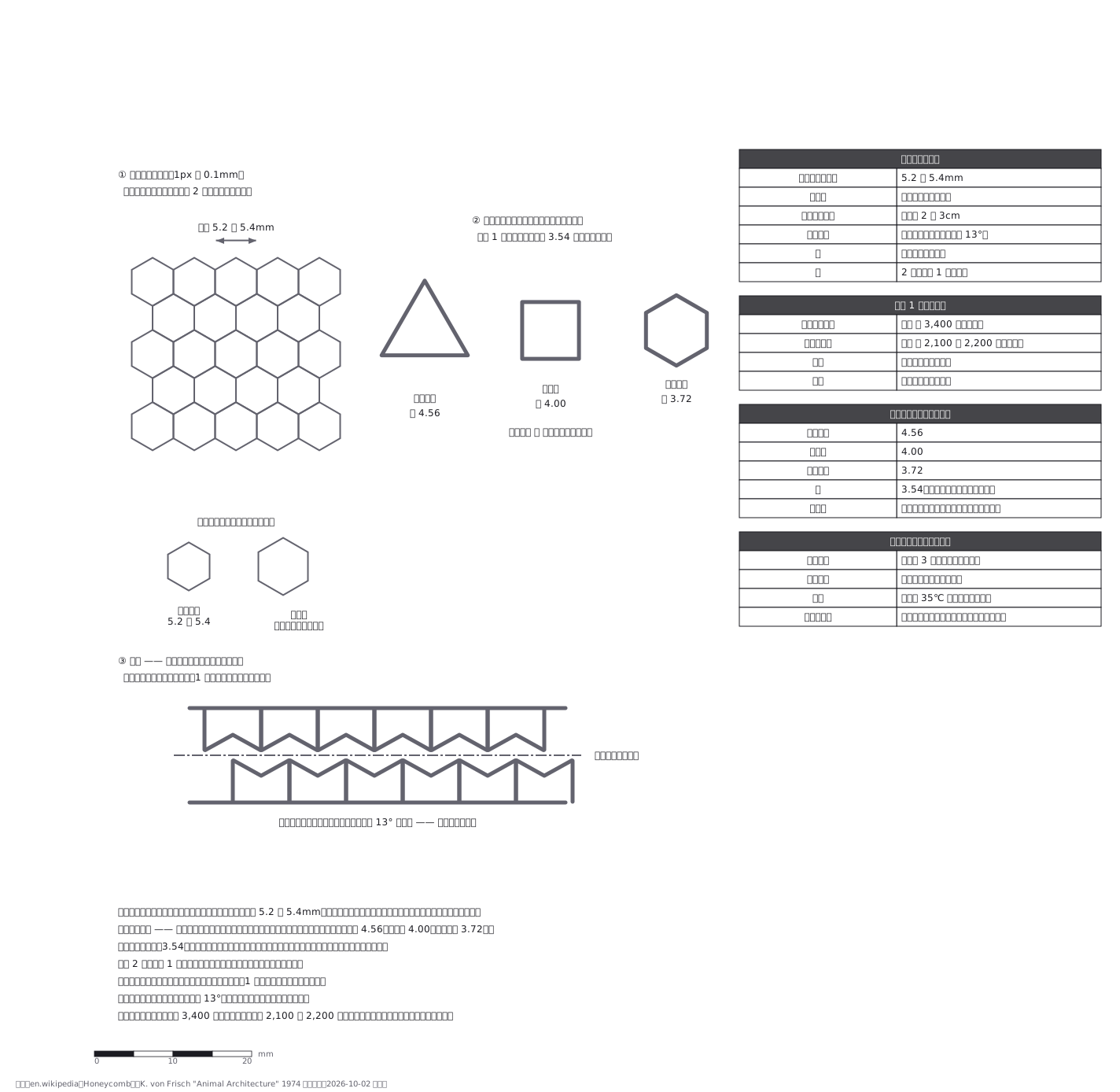 Honeycomb cells: for a given area the hexagon has the shortest wall of any shape that tiles
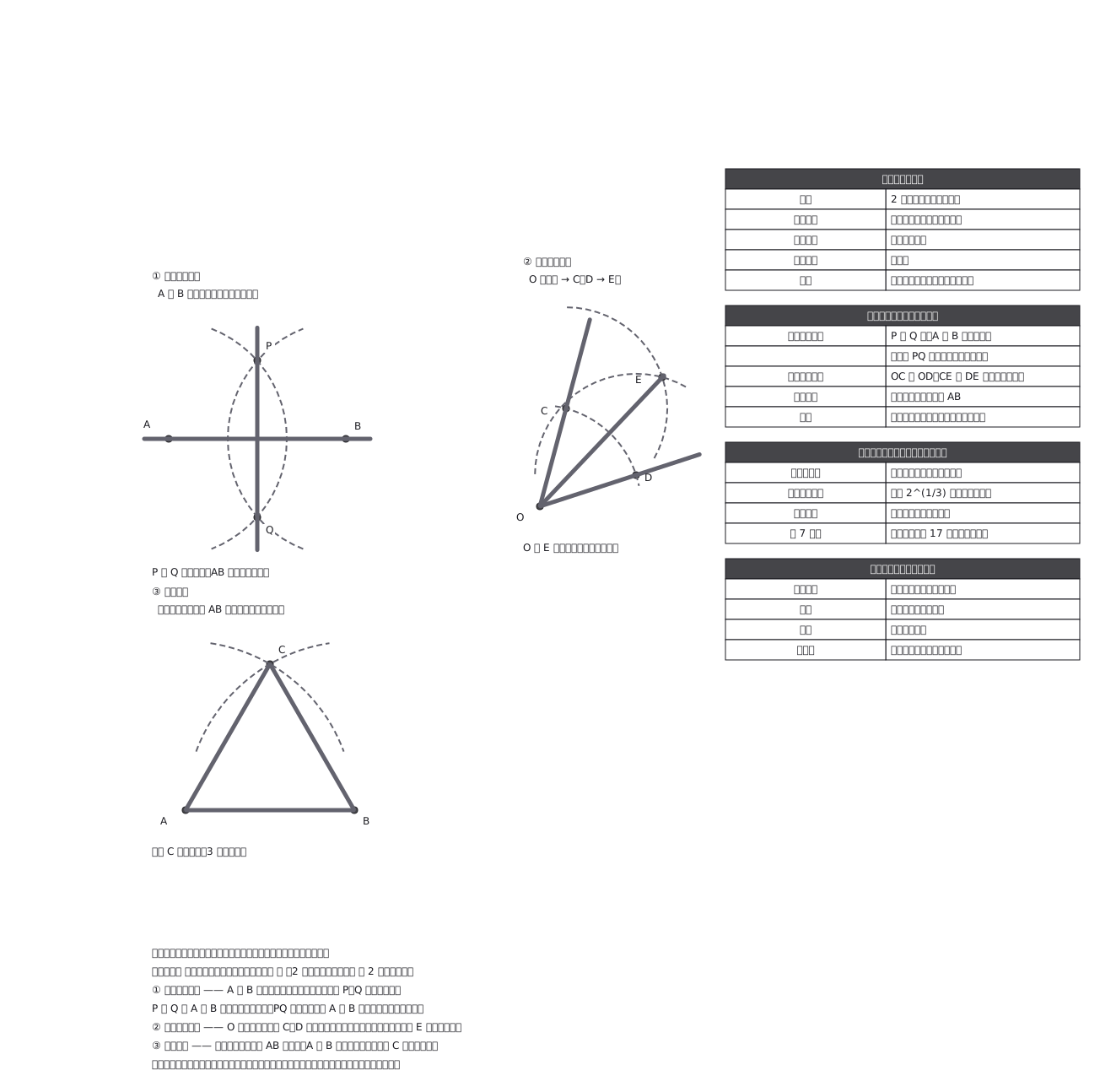 Ruler-and-compass constructions: no scale is used, because equal compass openings make equal lengths
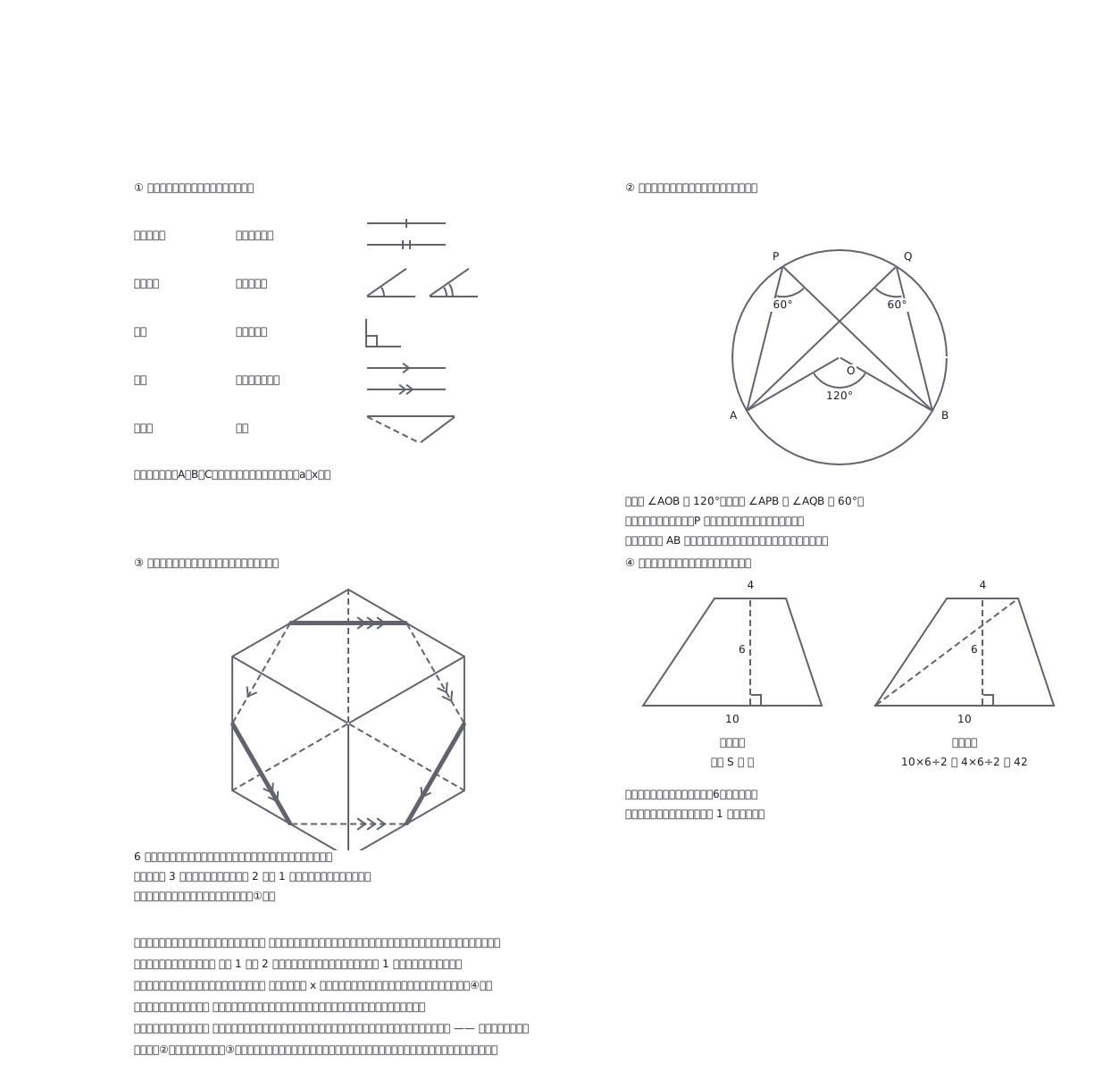 Figures in maths problems: the marks carry the meaning — equal ticks, right-angle squares, parallel chevrons — and only the given values are written on the figure