Disaster and emergency
Emergency building damage assessment — a red placard does not mean "total loss"
A red placard does not mean total loss: it answers whether it is safe to go in now, not how badly the building is damaged — two different papers, two different questions
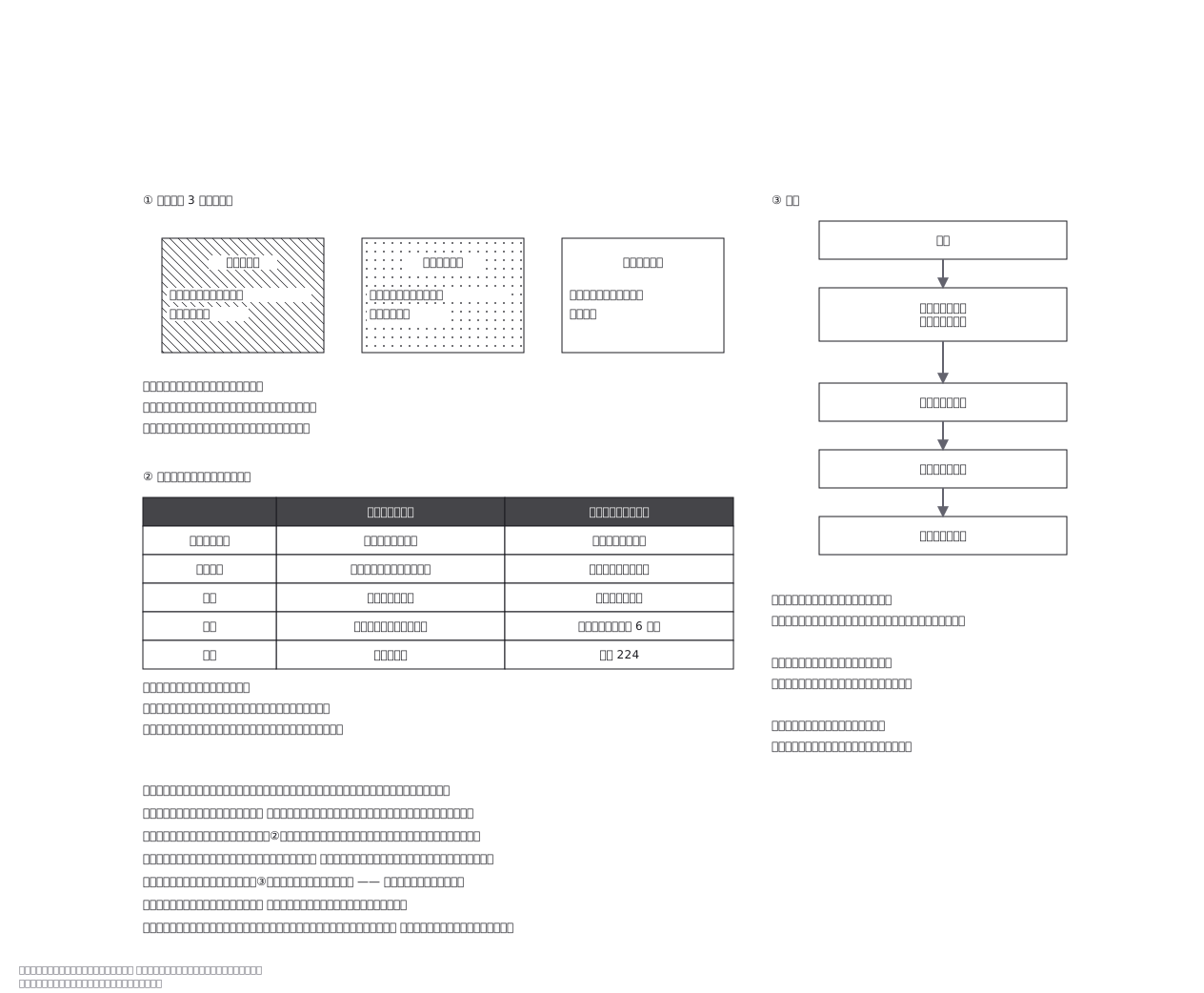
This drawing comes from one YAML file. No shape was moved by hand.
Notes in the source (in Japanese)
答えているのは「今入って大丈夫か」であって、「どれだけ壊れたか」ではない。
目的は余震などの二次災害を防ぐこと。外壁や窓ガラスの落下、付属設備の転倒も危険のうち。だから壊れ方が小さくても、落ちそうなものがあれば赤になる。
応急危険度判定は申請を待たない(行政と判定士が回る)。罹災証明は申請してから始まる(自分で出さないと始まらない)——この違いを知らないと、赤い紙を見て「手続きは済んだ」と思ってしまう。
出典: 全国被災建築物応急危険度判定協議会の判定制度(全国統一の調査表と、危険・要注意・調査済の 3 種の判定ステッカー)。各都道府県の制度解説(神奈川県「震災建築物応急危険度判定について」ほか)で、3 区分と「余震による二次災害の防止」が目的であることを確かめた。
Source (YAML)
examples/gallery/232-応急危険度判定.zumen.yaml
More in this field
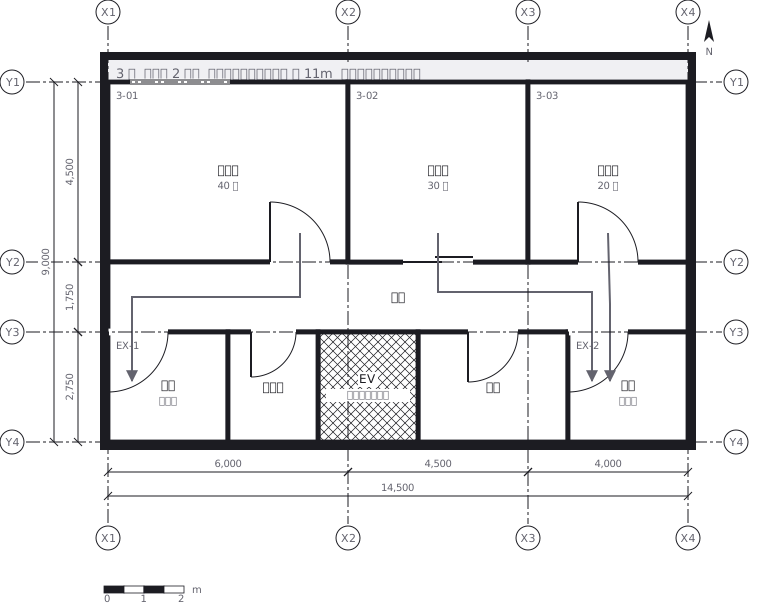 Escape routes on a third floor: two ways out of every room to a staircase, with the travel distance and the fire doors and extinguishers along the way
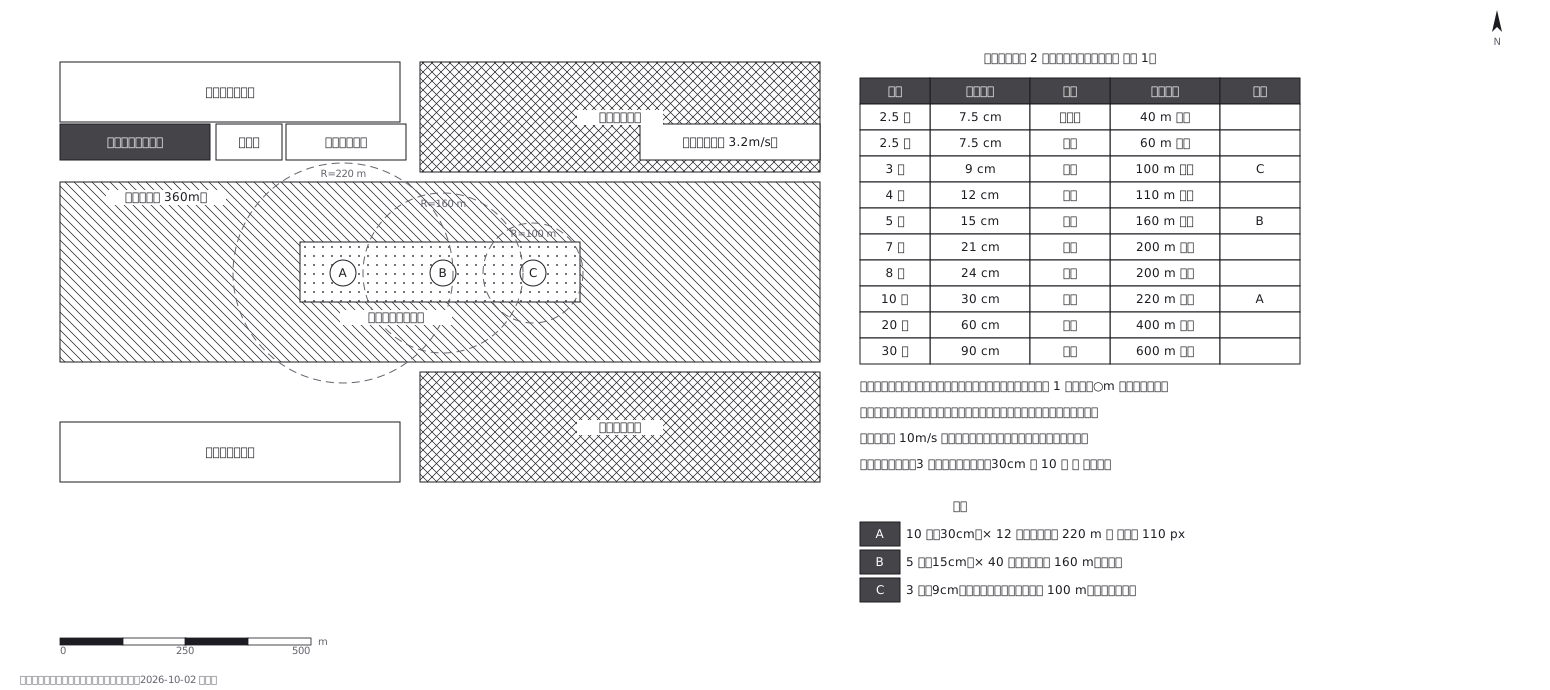 Fireworks safety distances, a circle per shell size
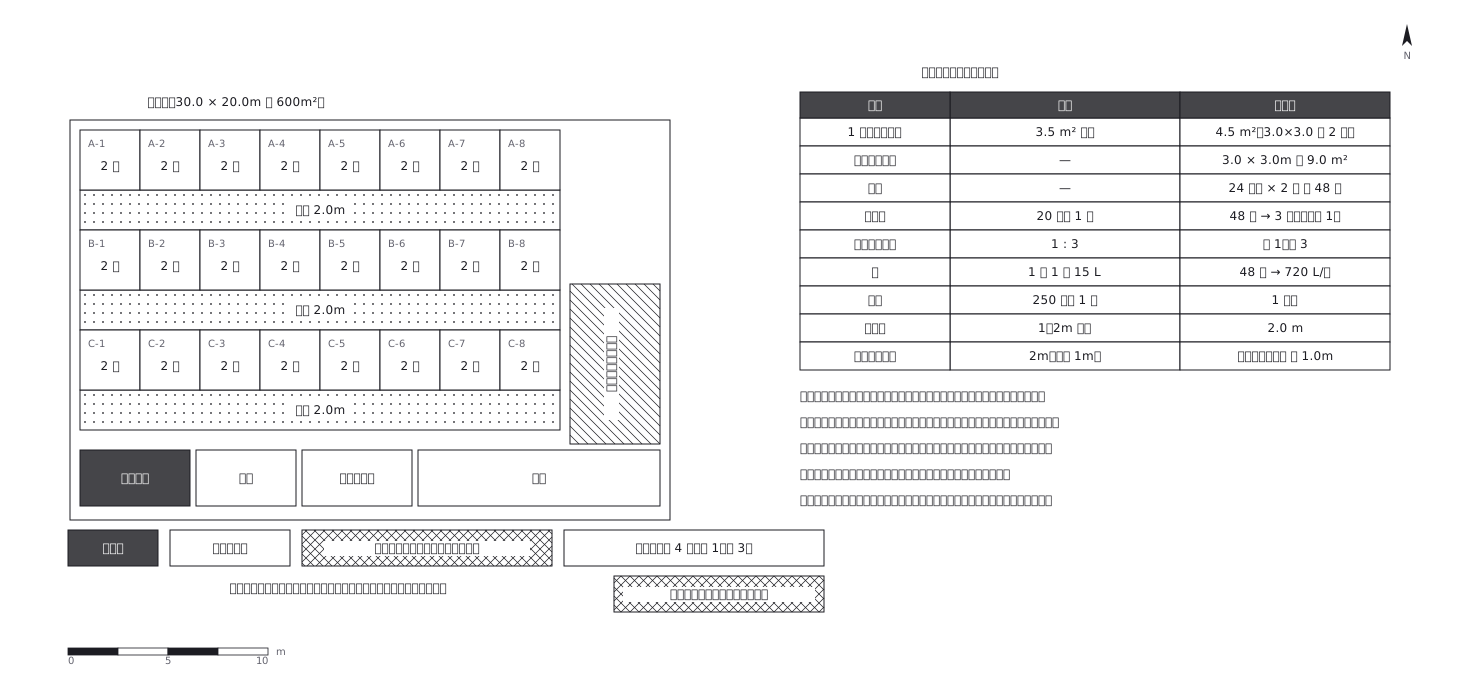 Shelter layout: 3.5 sq m a person, and how many toilets
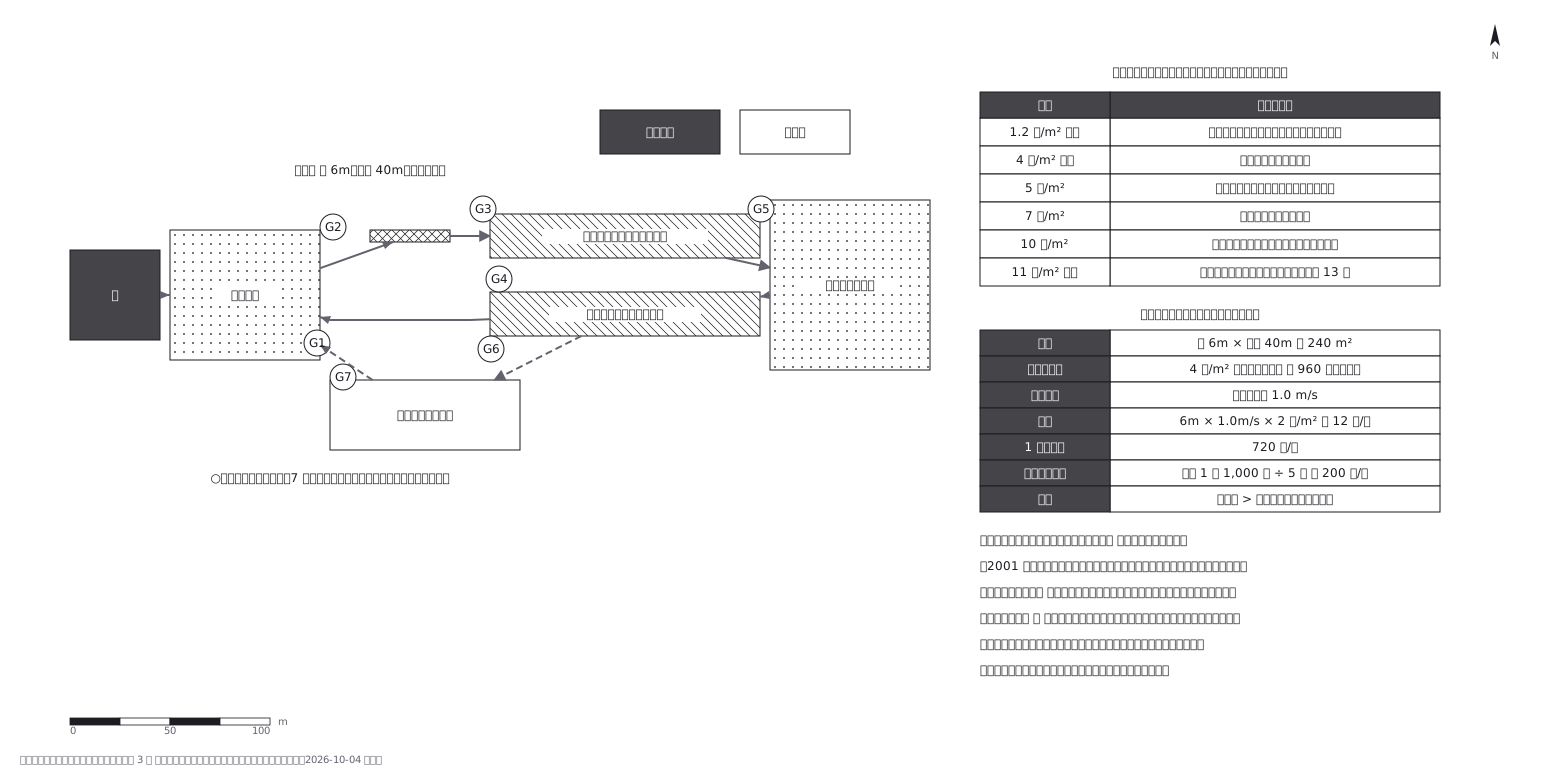 Crowd plan: how many can flow out against how many come in
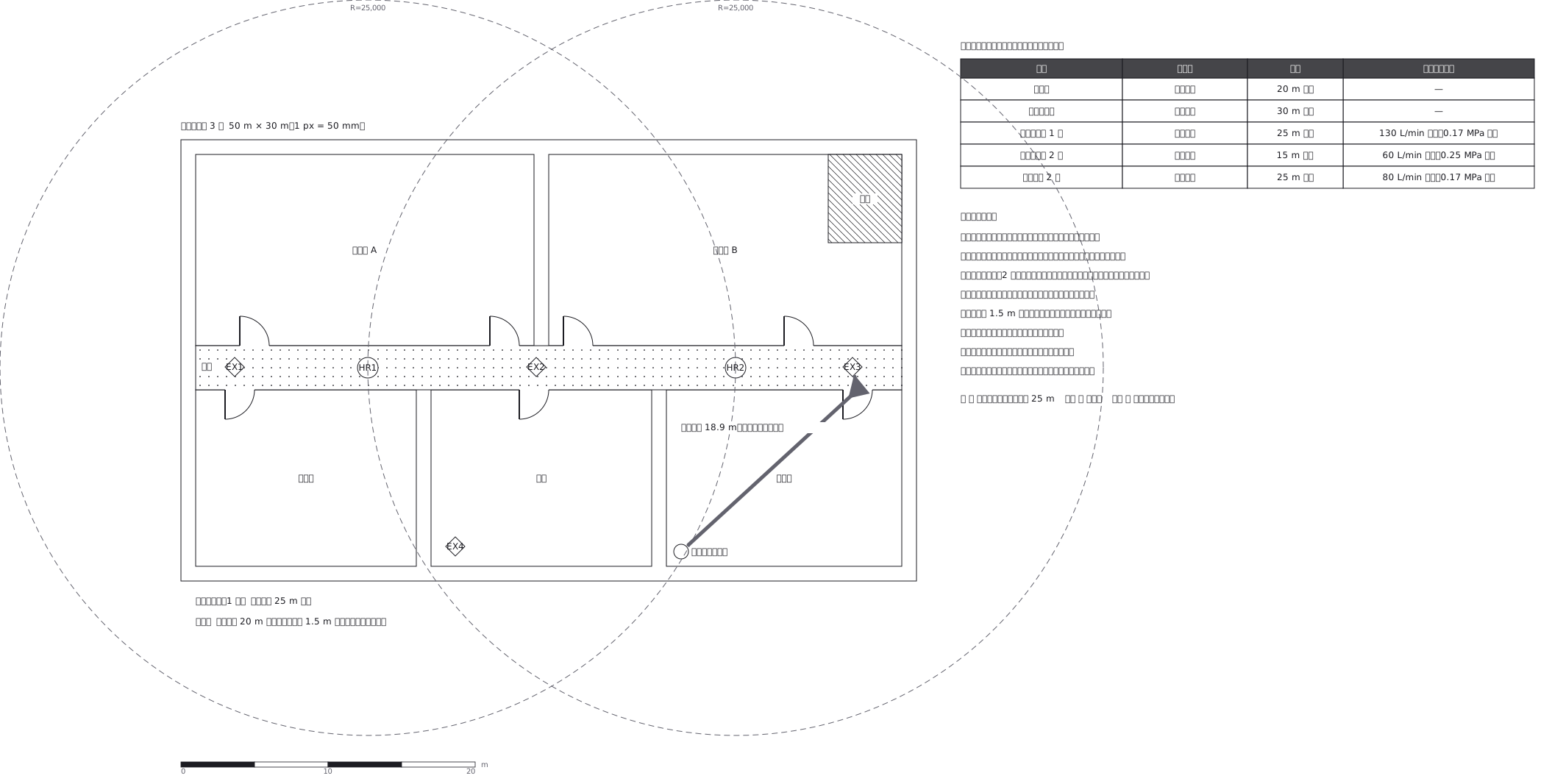 Extinguishers and hose reels, measured two different ways
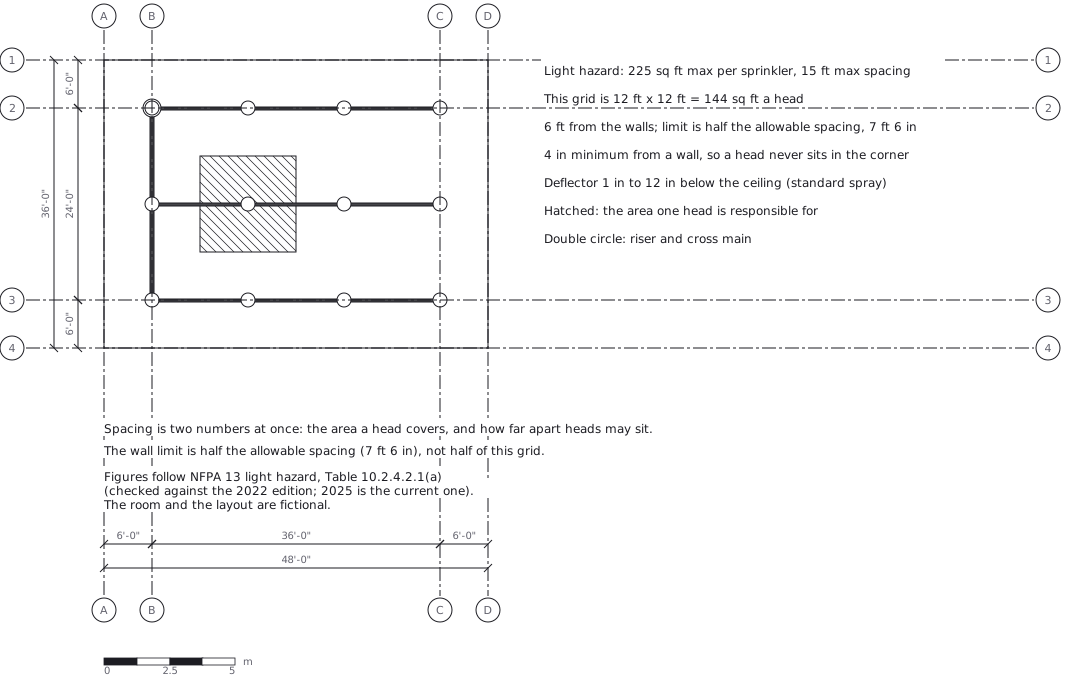 Sprinkler layout: area per head and spacing, decided together
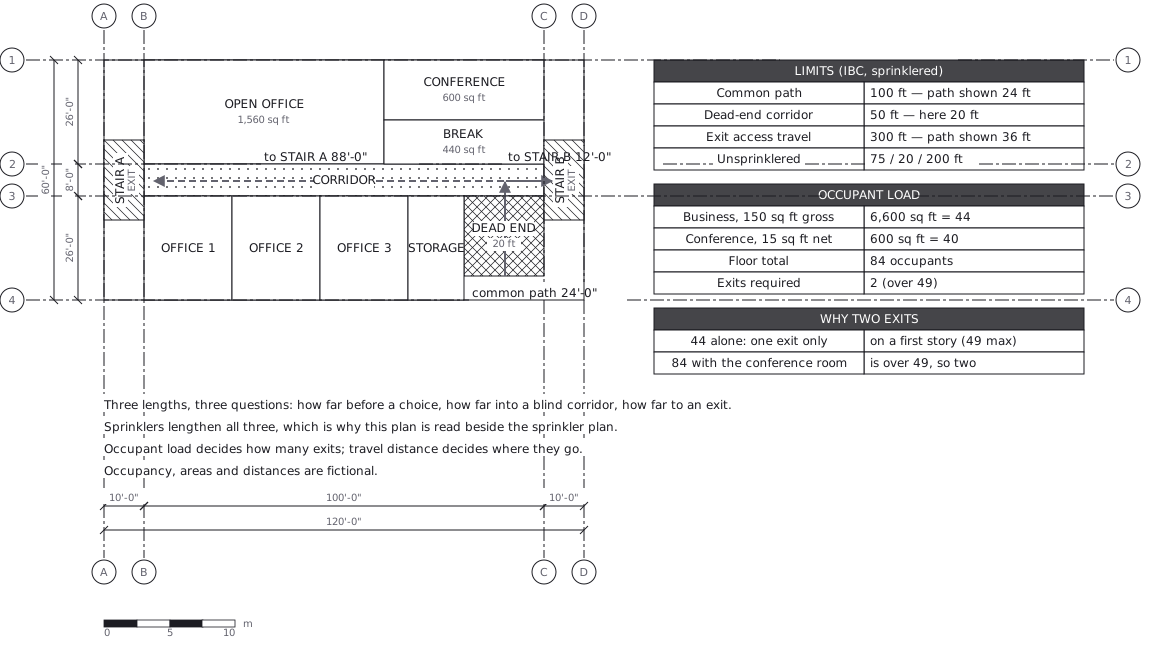 Egress plan: three lengths answering three questions
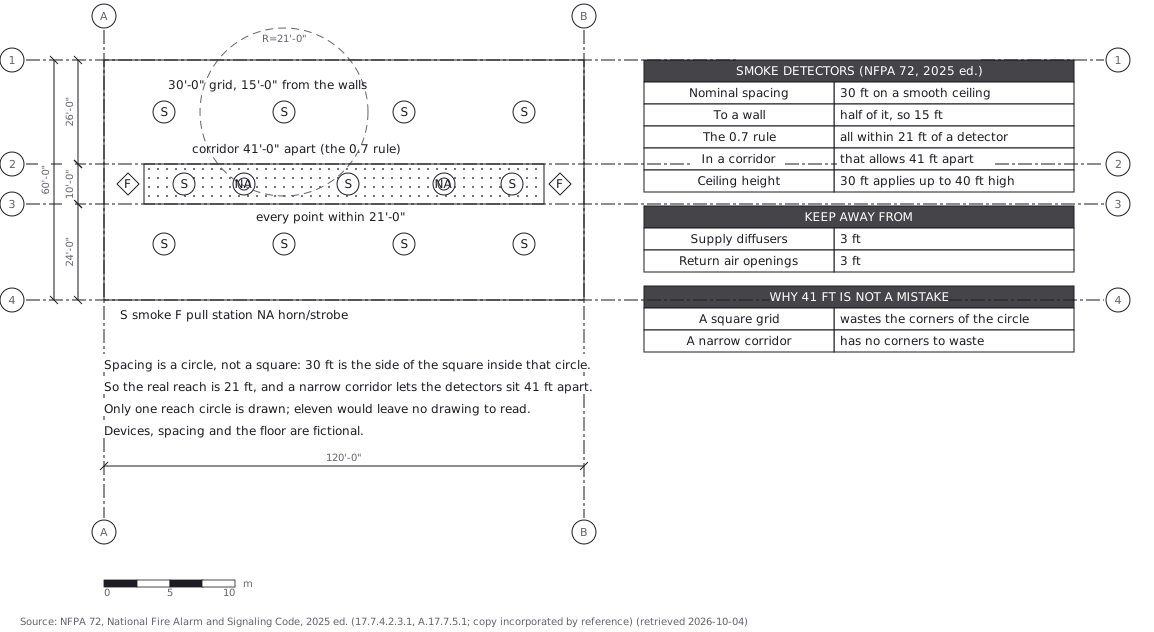 Fire alarm devices: spacing is a circle, not a square