Disaster and emergency
Earthquake early warning (the lead time is only what is left)
An earthquake early warning does not predict anything; it borrows the gap between the fast P wave and the slow S wave. Detection, analysis and delivery take a few seconds, and that cost is the same however far away the epicentre is — so the warning time is only what is left over, and directly beneath a shallow quake there is nothing left.
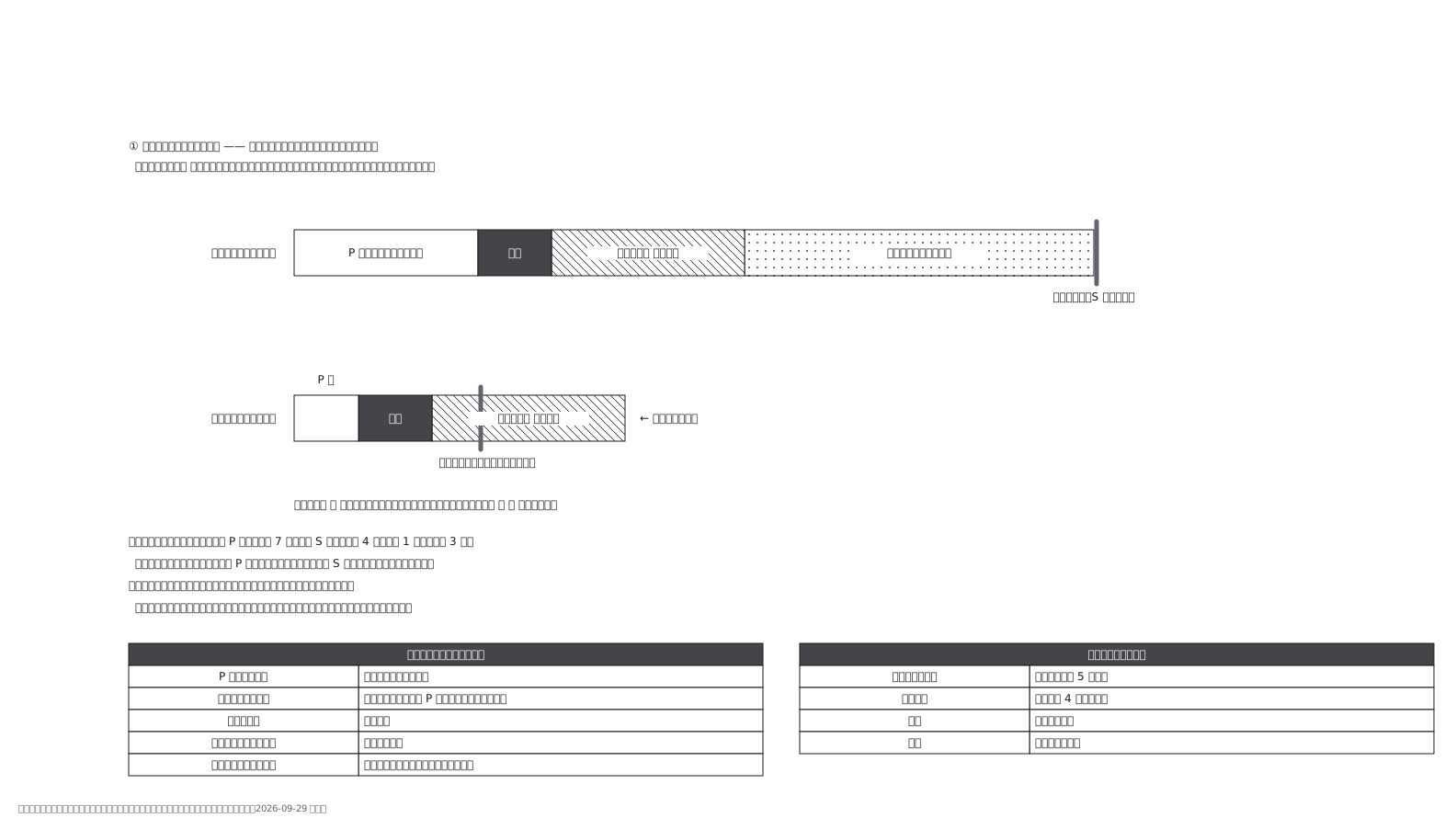
This drawing comes from one YAML file. No shape was moved by hand.
Notes in the source (in Japanese)
速報は地震を予知していない。速い波と遅い波の差を借りているだけ。
P 波は秒速約 7 キロ、S 波は秒速約 4 キロ(気象庁「緊急地震速報の仕組み」)。1 秒あたり約 3 キロの差で離れていく。先に届く P 波を捕まえて、あとから来る S 波より先に知らせる —— それが全部。
震源に近い観測点で P 波を捉え、震源と規模を推定する。そこに解析と伝達の数秒程度が乗る(気象庁「緊急地震速報の特性や限界」)。(以前は「P 波到達後 3 秒」「処理に数秒〜数十秒」と書いていた。3 秒は出典で確かめられず、「数秒〜数十秒」は処理時間ではなく発表から強い揺れまでの時間だった。2026-09-29 に直した。)この合計は、震源までの距離と関係なく引かれる。
海溝型のように震源が遠ければ、借りられる差が大きいので猶予は数秒から数十秒になる。
陸地の浅い直下型では、激しく揺れる震央付近で原理上数秒しか猶予がないか、あるいは間に合わない。これは装置が遅いからではなく、借りる差がそもそも無いから。
警報は最大予測震度 5 弱以上のとき。予測震度 4 以上の地域へ伝える。警報は最低限の情報、予報はより豊富な情報を出す。
帯の長さは模式。 目盛りを打っていないのは、各段の秒数が出典に無いから ——確かなのは「解析と伝達に数秒程度」「猶予は数秒から長くても数十秒」「P 波 約 7 km/s・S 波 約 4 km/s」だけで、この図が言いたいのは長さではなく、引かれる分が先にあるという順番。
出典: 気象庁「緊急地震速報の仕組み」「緊急地震速報の特性や限界」「緊急地震速報とは」(取得 2026-09-29)。
震度とマグニチュードの違いは見本 315、避難の判定は見本 221。
Source (YAML)
examples/gallery/331-緊急地震速報.zumen.yaml
More in this field
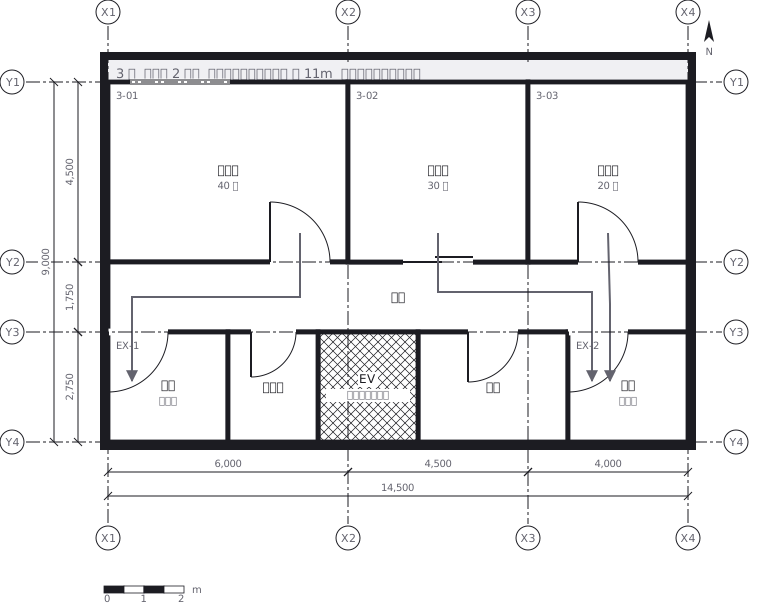 Escape routes on a third floor: two ways out of every room to a staircase, with the travel distance and the fire doors and extinguishers along the way
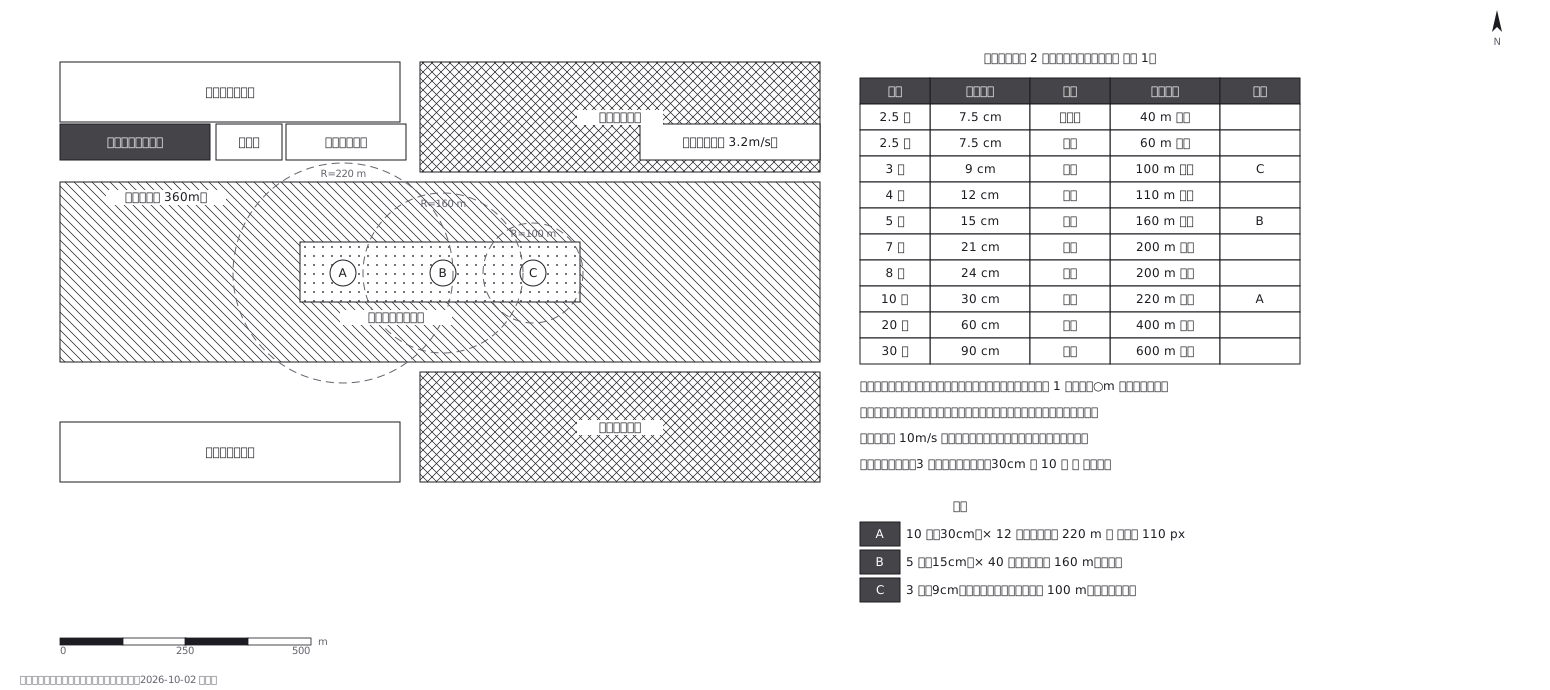 Fireworks safety distances, a circle per shell size
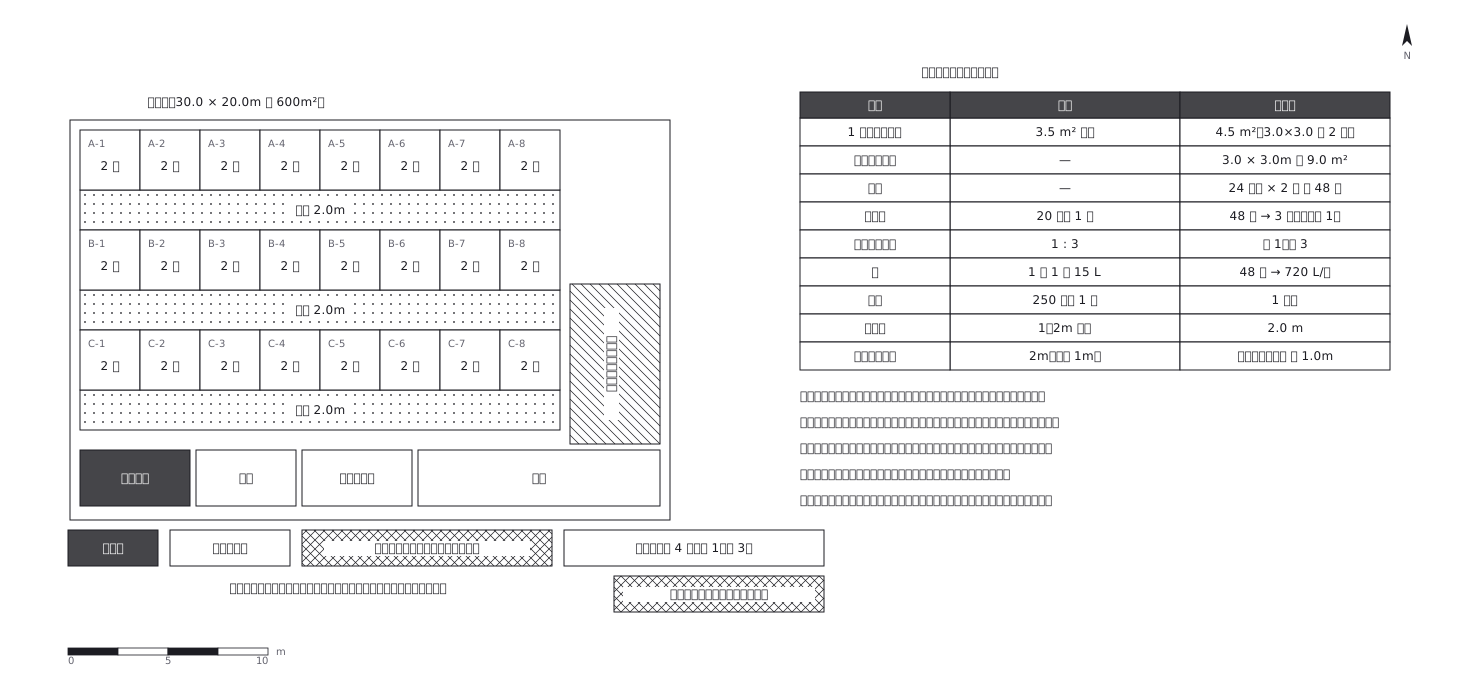 Shelter layout: 3.5 sq m a person, and how many toilets
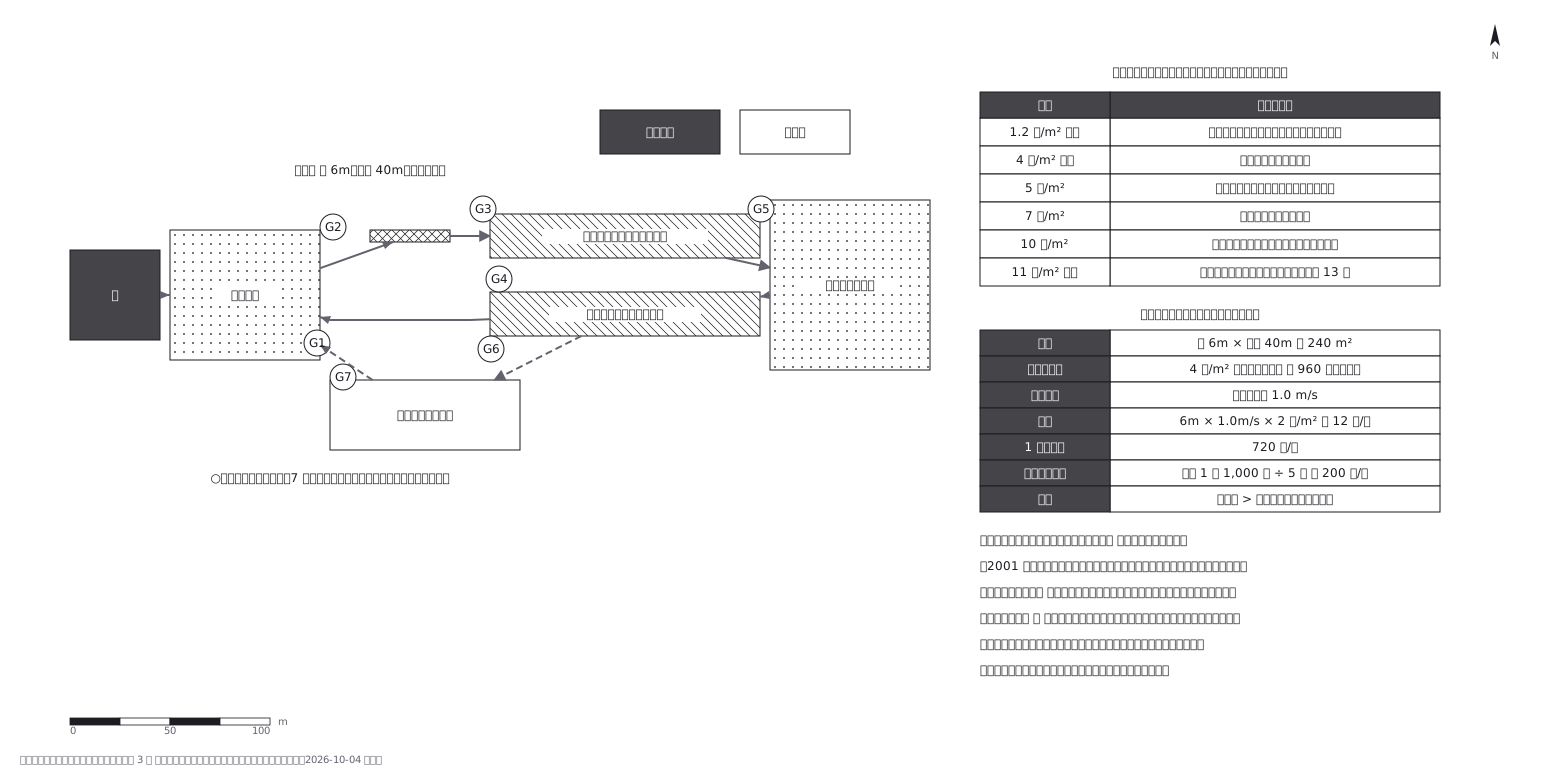 Crowd plan: how many can flow out against how many come in
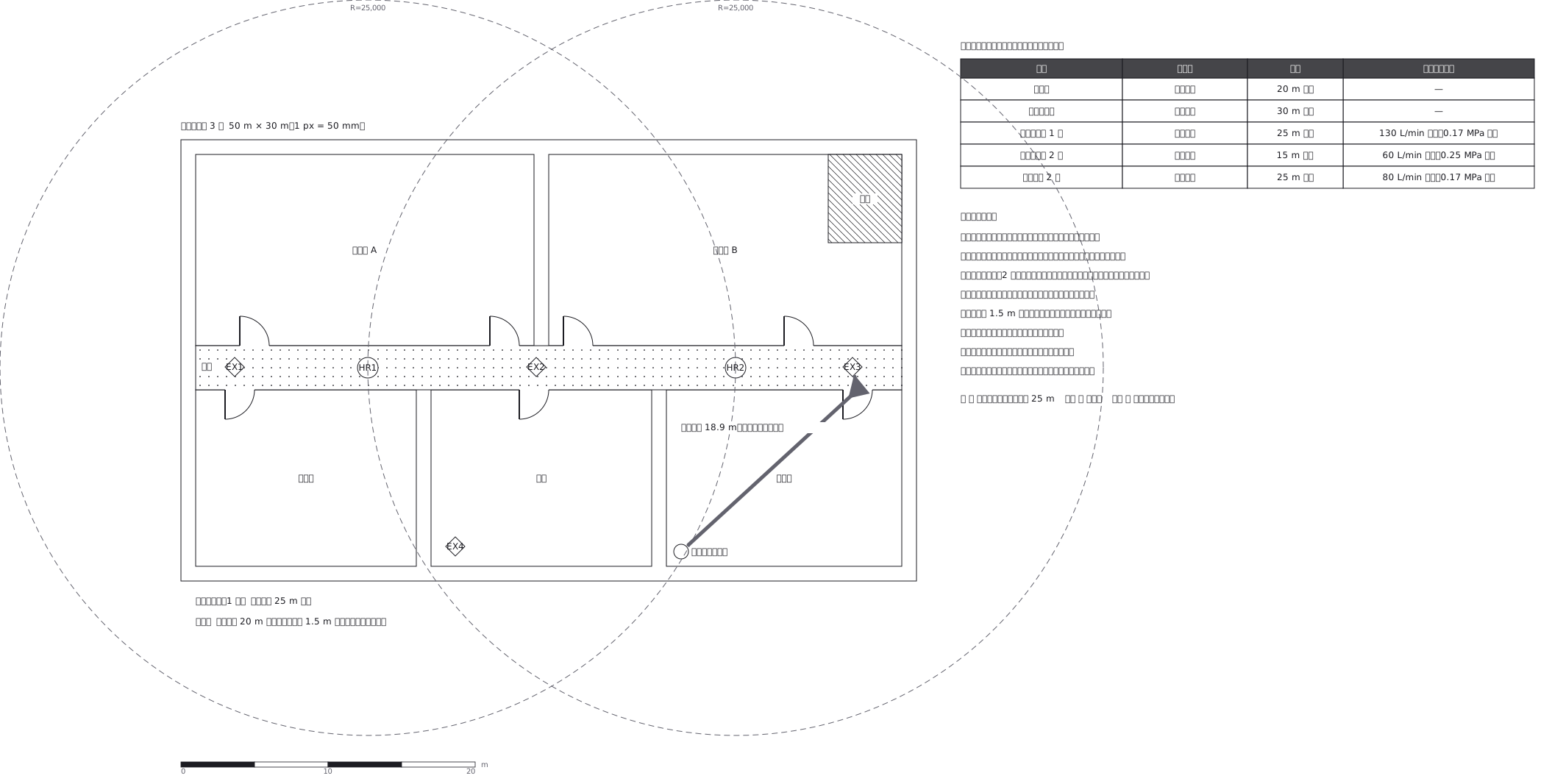 Extinguishers and hose reels, measured two different ways
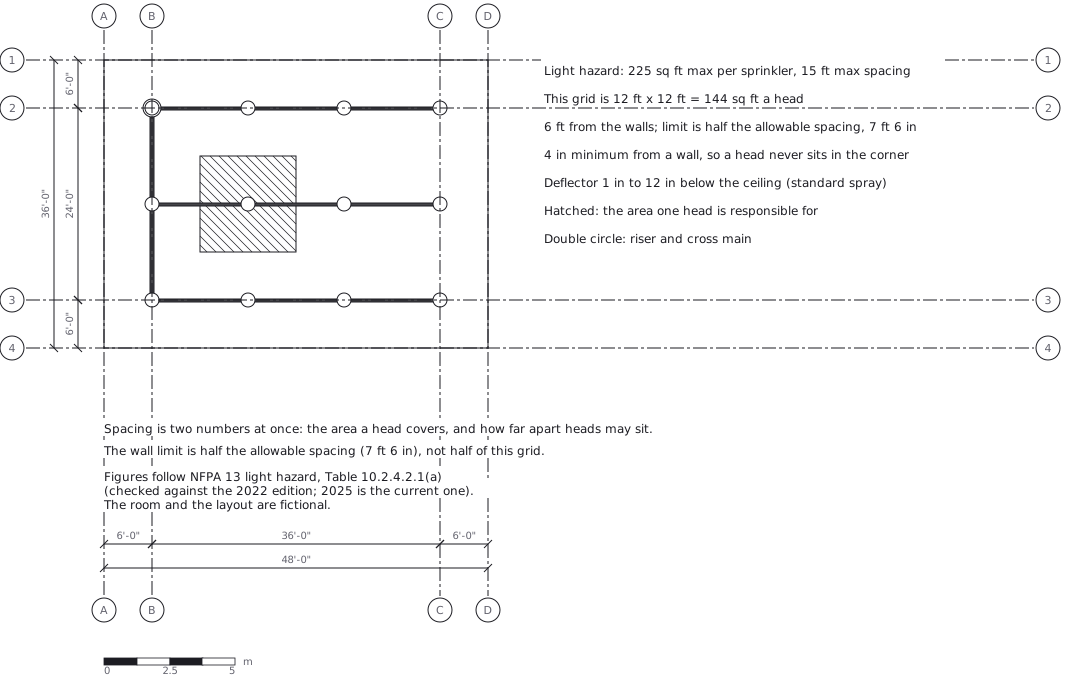 Sprinkler layout: area per head and spacing, decided together
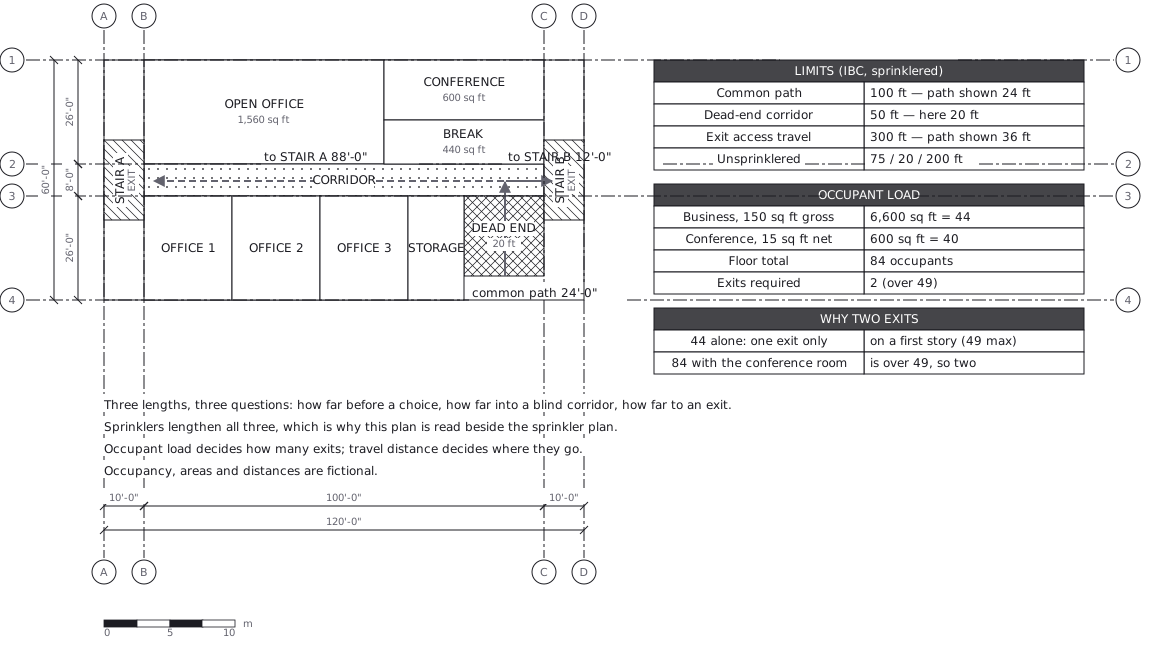 Egress plan: three lengths answering three questions
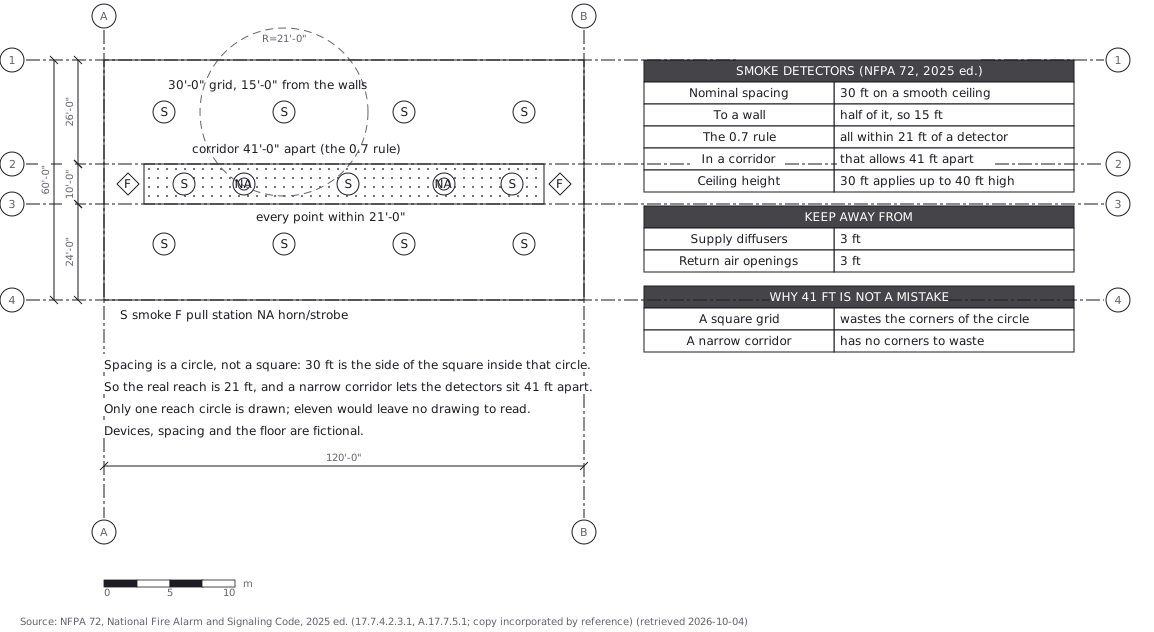 Fire alarm devices: spacing is a circle, not a square