Instruments and acoustics
Trombone slide positions (the slide opens wider the further out you go)
The seven trombone slide positions at real size. They are not evenly spaced: 85mm from first to second, 113mm from sixth to seventh, each gap 1.0595 times the last — the twelfth root of two that spaces guitar frets, running outward instead of inward, because a slide lengthens the whole tube. Below: the partials at each position, and why an F attachment still cannot reach B1.
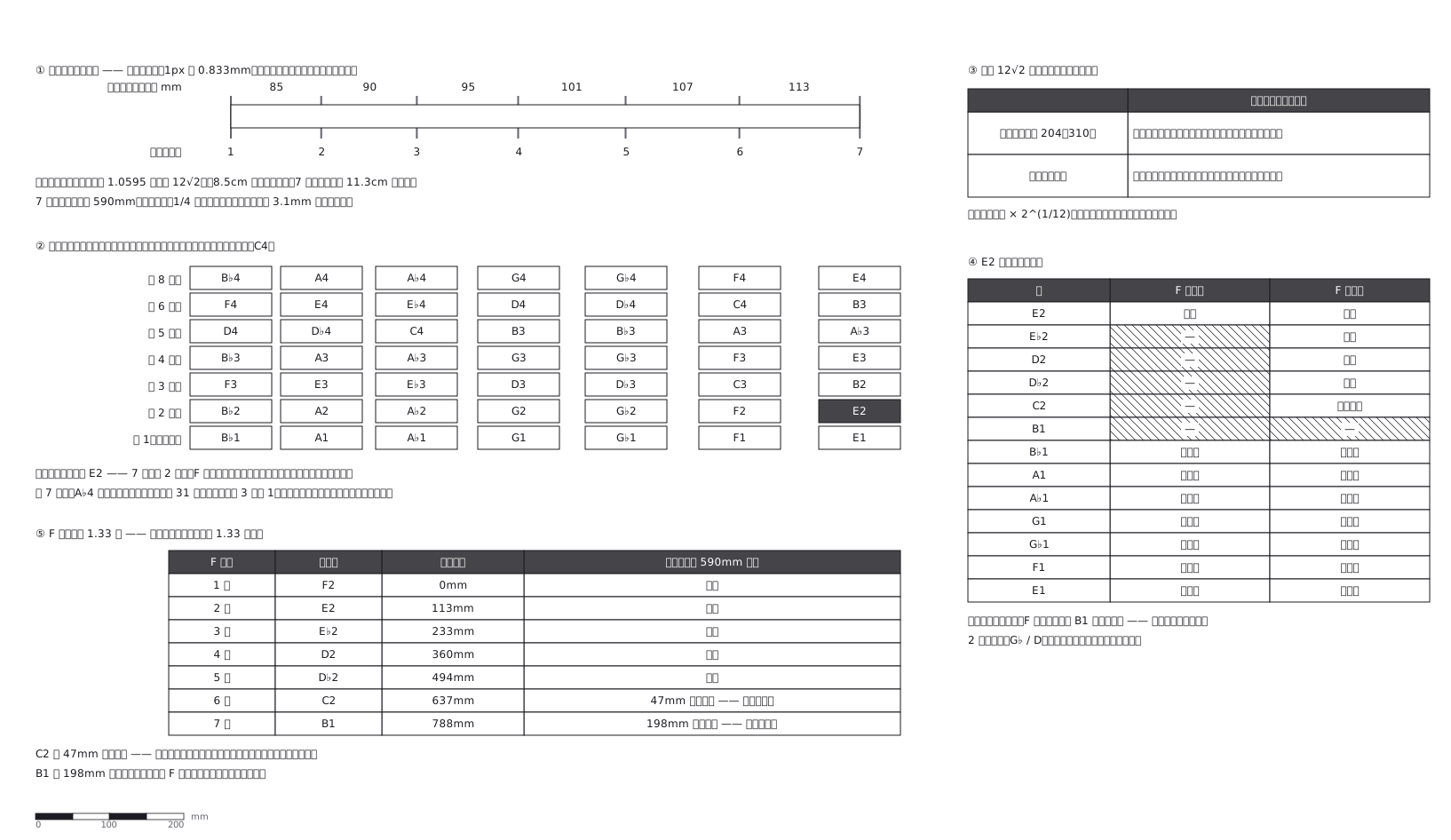
This drawing comes from one YAML file. No shape was moved by hand.
Notes in the source (in Japanese)
7 つのポジションは、等間隔ではない。 1 番と 2 番は 8.5cm、6 番と 7 番は 11.3cm 離れている。隣へ行くたびに 1.0595 倍(= 12√2)。
半音下げるには管を 2^(1/12) 倍にする。管が長くなるほど「その 5.95%」が増えるので、先へ行くほど間隔が開く。
ギターのフレット(見本 204・310)も 12√2 だが、詰まっていく。押さえたところから駒までの残りを短くしていくから。トロンボーンは管ぜんぶを長くしていくので、開いていく。式は同じで、測る向きが逆。
F 管の無いテナーの最低音は E2(7 番・第 2 倍音)。その下のペダル B♭1 までの 5 音(E♭2・D2・D♭2・C2・B1)は出ない。F 管はこの穴を埋めるために付いている。
それでも B1 は残る。 F 管側は管が 1.33 倍なので、同じ半音でも移動が 1.33 倍要る。C2 で 47mm、B1 で 198mm 足りない ——スライドの長さが先に尽きる。 バストロンボーンが 2 つめの弁を持つのは、そのため。
横だけが実寸(1px = 0.833mm)。②の升目の横位置は①の目盛りと同じ ——「その音は、スライドがここにあるときに出る」と読む。縦は音の高さで、寸法ではない。
管長 2.85m は、奏者の表(1 番から 3.25 / 6.75 / 10.5 / 14.5 / 18.75 / 23.25 インチ)から逆算した値。計算と表は、どこも 3.1mm 以内で合う(表は 1/4 インチ=6.35mm 刻み)。第 7 倍音の低さ:1200 × log2(7/4) − 1000 = −31 セント。
ギターのフレットは見本 204・310、楽譜の寸法は見本 210、ピアノの鍵盤は見本 311。
Source (YAML)
examples/gallery/350-トロンボーンのポジション.zumen.yaml
More in this field
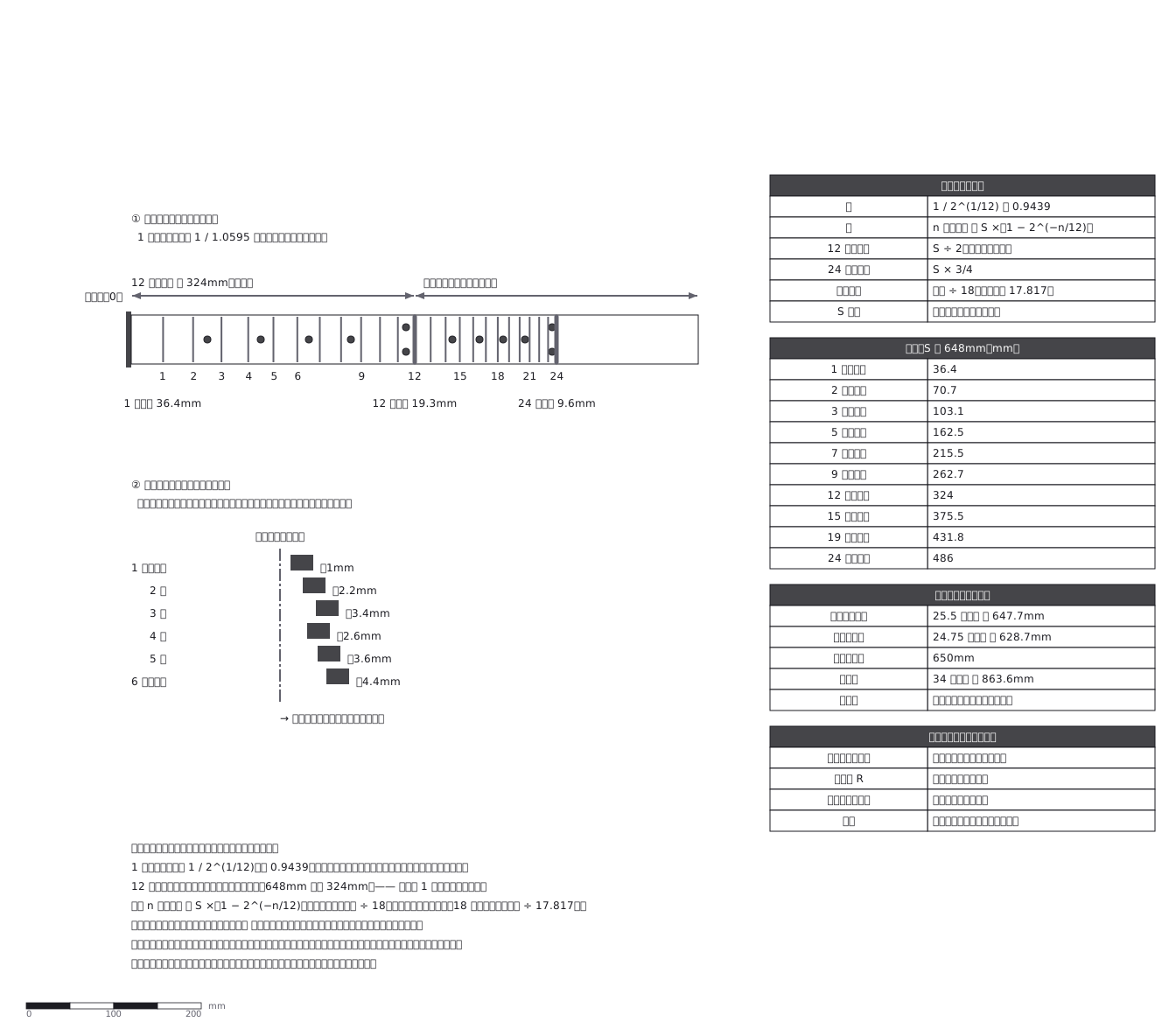 Guitar frets are a geometric series, and the saddle must still be moved back to play in tune
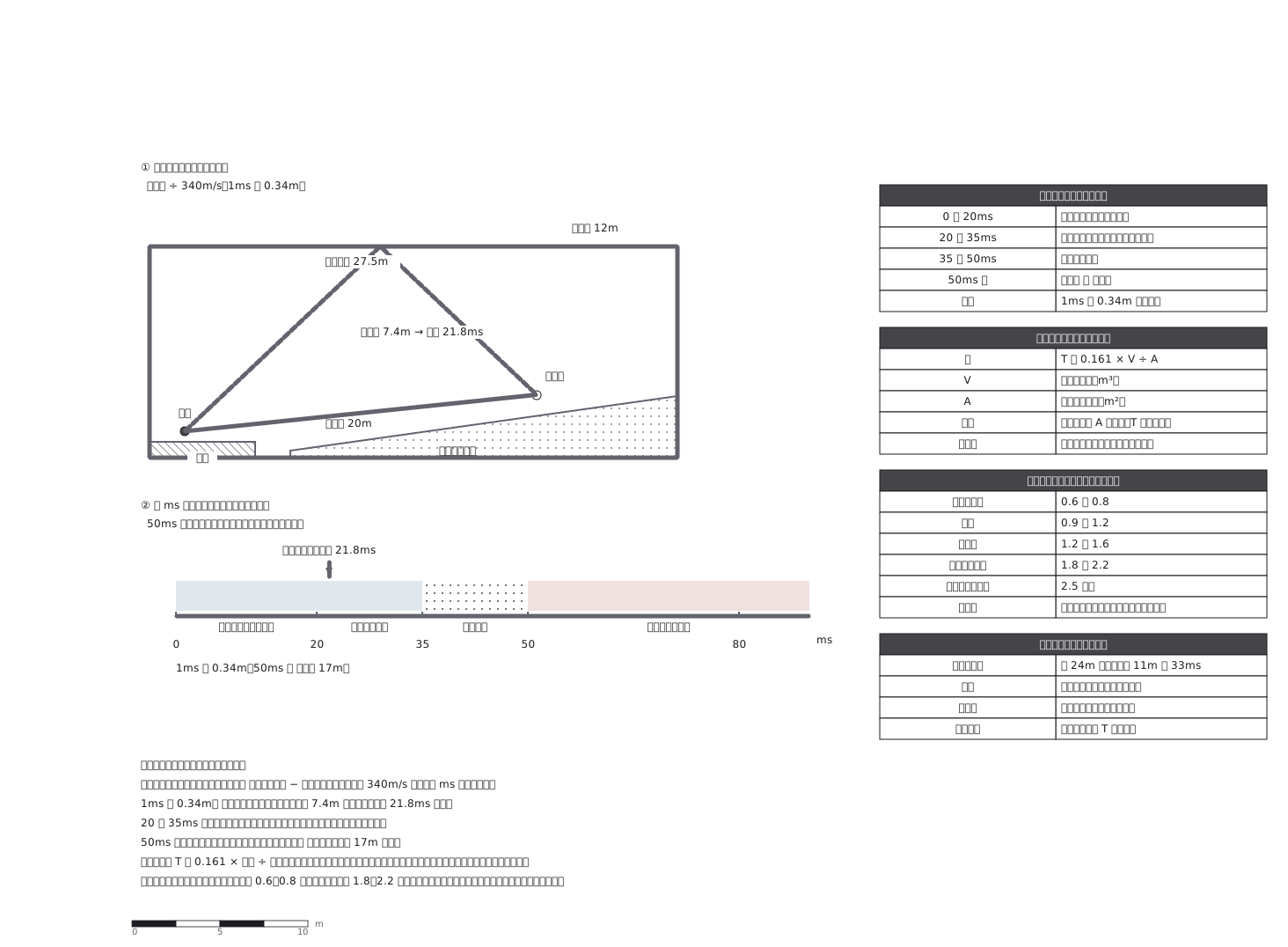 Hall acoustics: delay is nothing but a difference in path length — one millisecond is 0.34 m
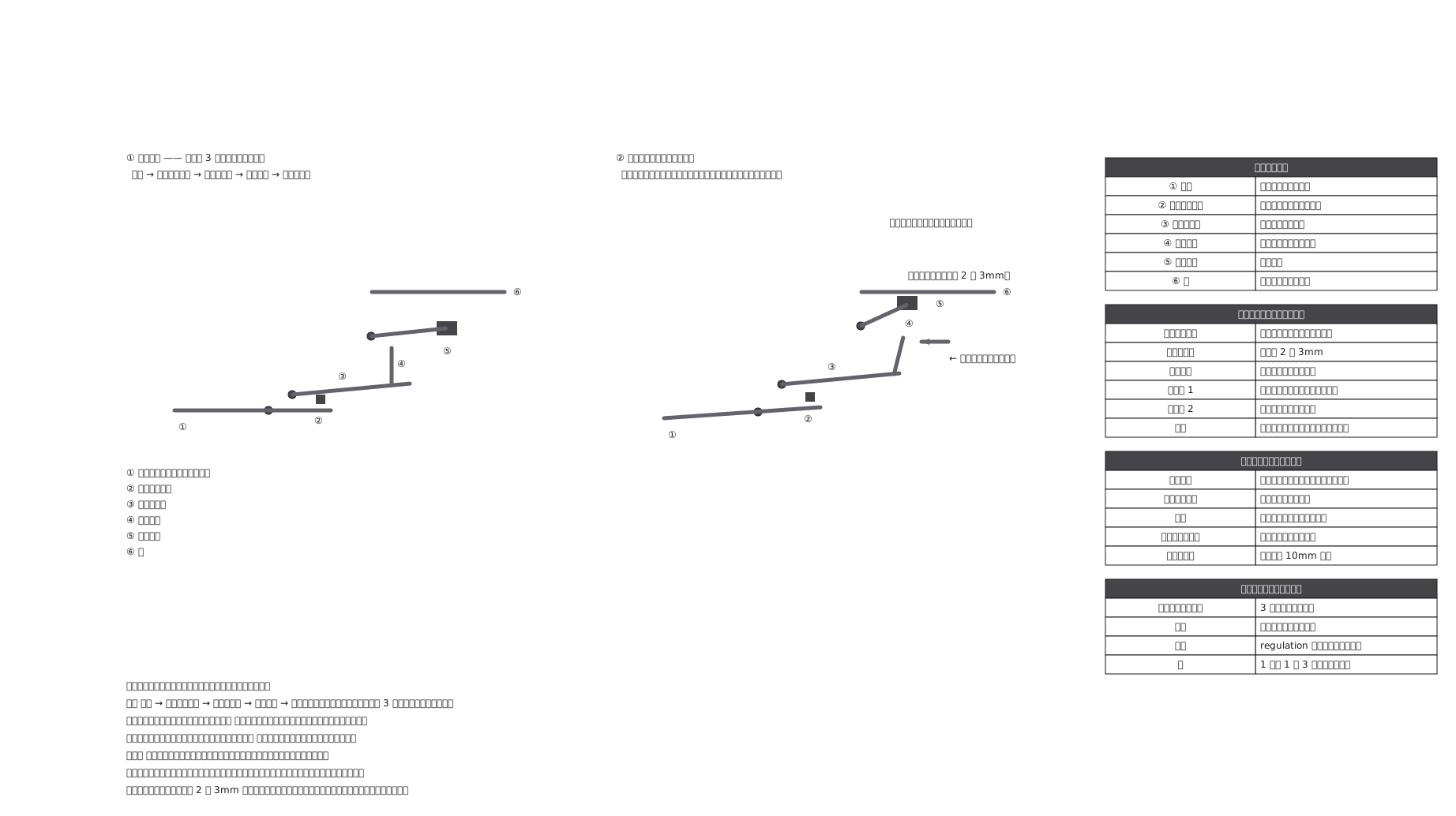 A piano action: the jack lets go just before the string, so nothing is pushing the hammer at impact
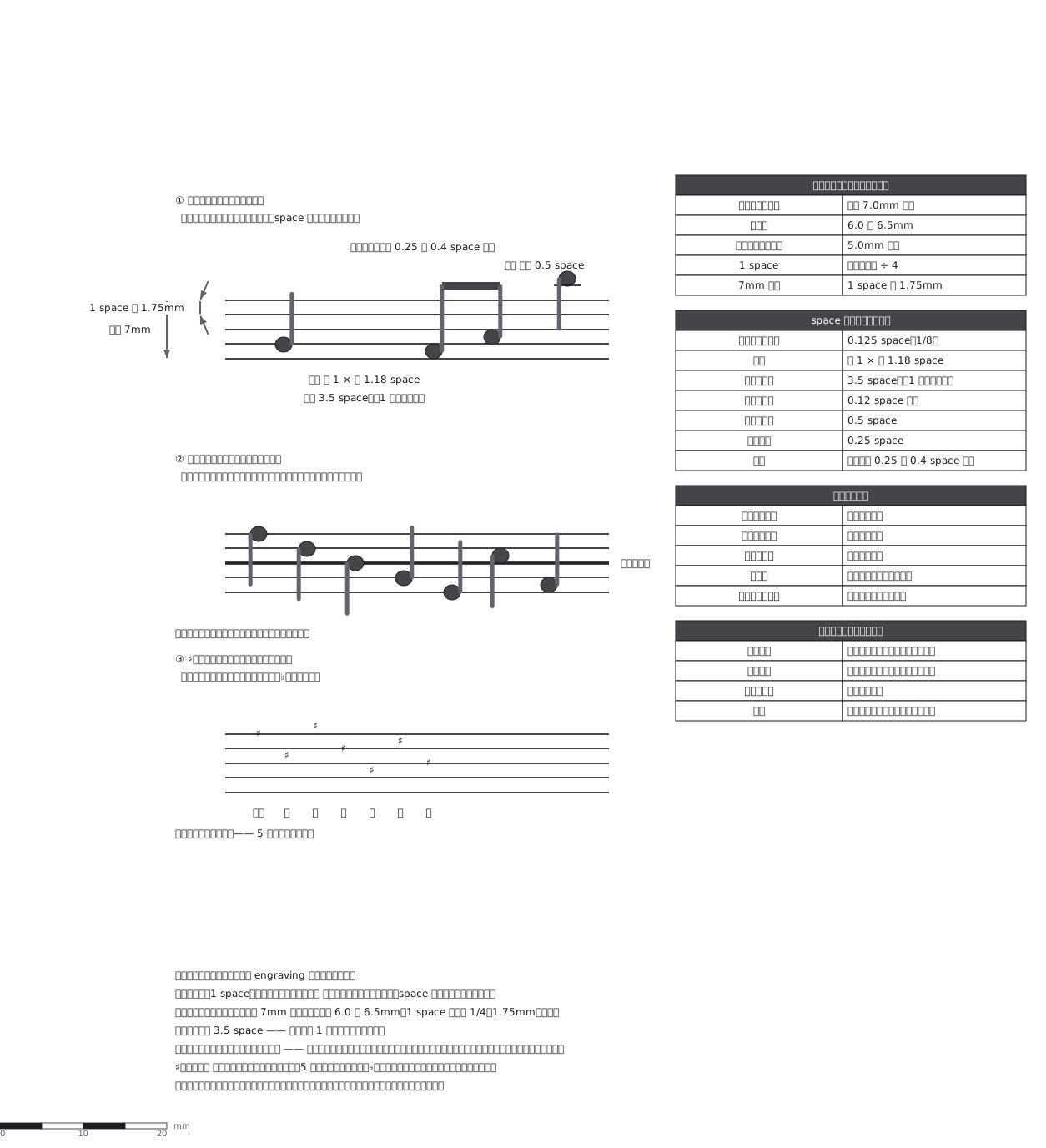 Music engraving: the staff space is the unit for every measurement, and the stem is 3.5 of them
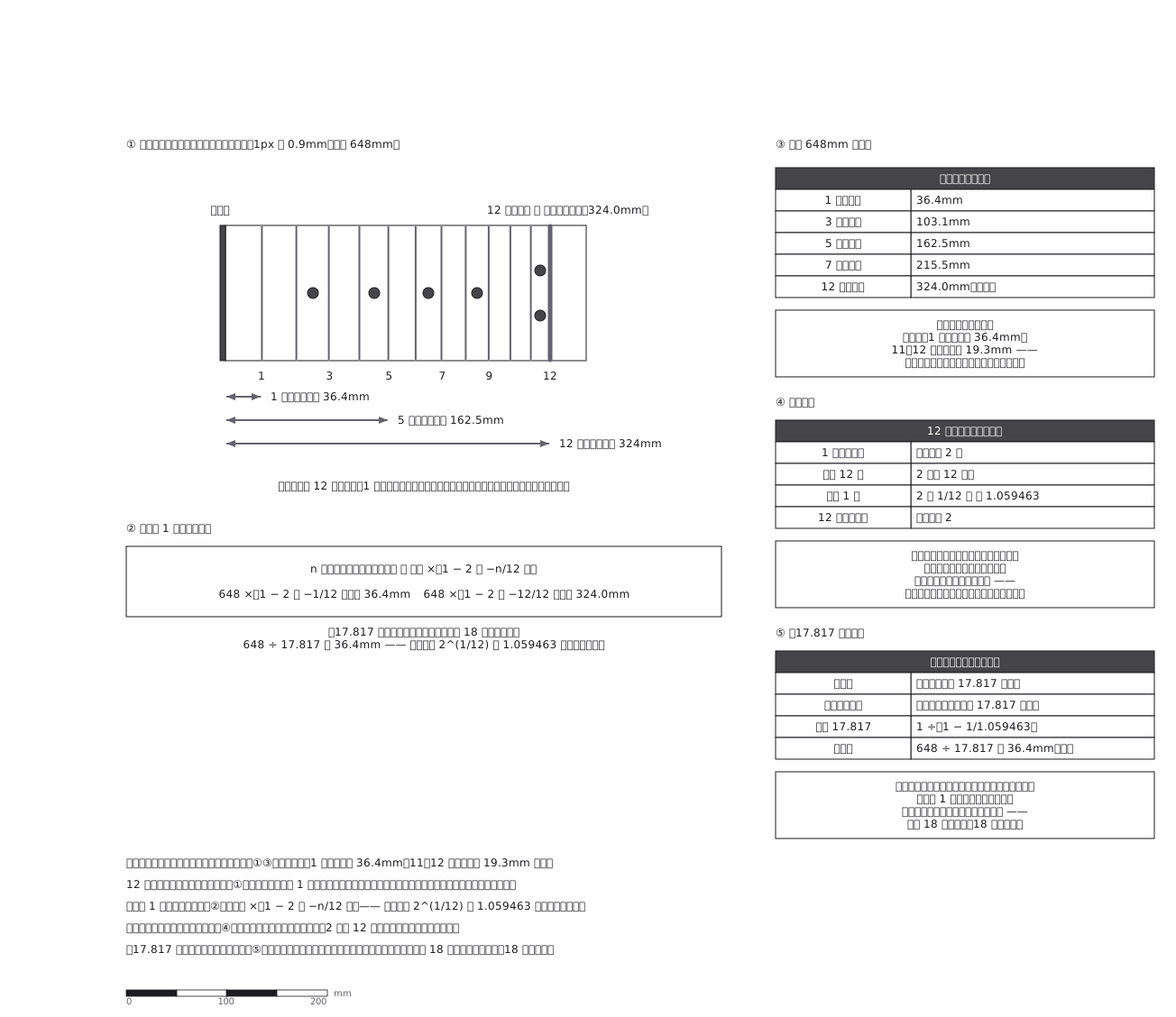 Frets crowd together as you climb because what is divided into twelve is not a distance but a ratio: each semitone multiplies by 2^(1/12), so the twelfth fret lands at exactly half the string and everything beyond it repeats at half size
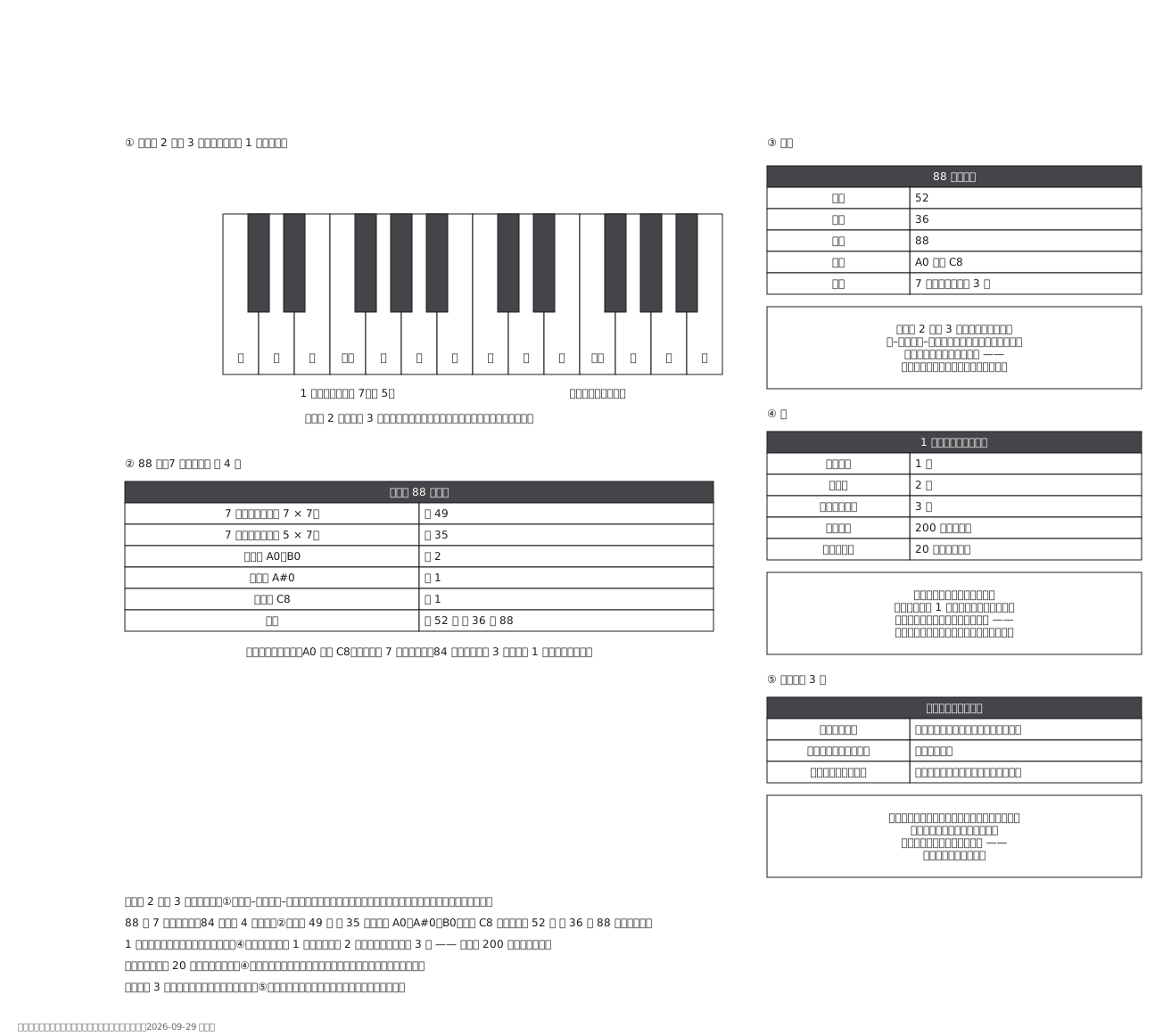 The black keys are grouped in twos and threes so that a hand can find its place without looking — twelve evenly spaced keys would give no landmark at all — and 88 turns out to be seven octaves plus four: three keys added below and one above
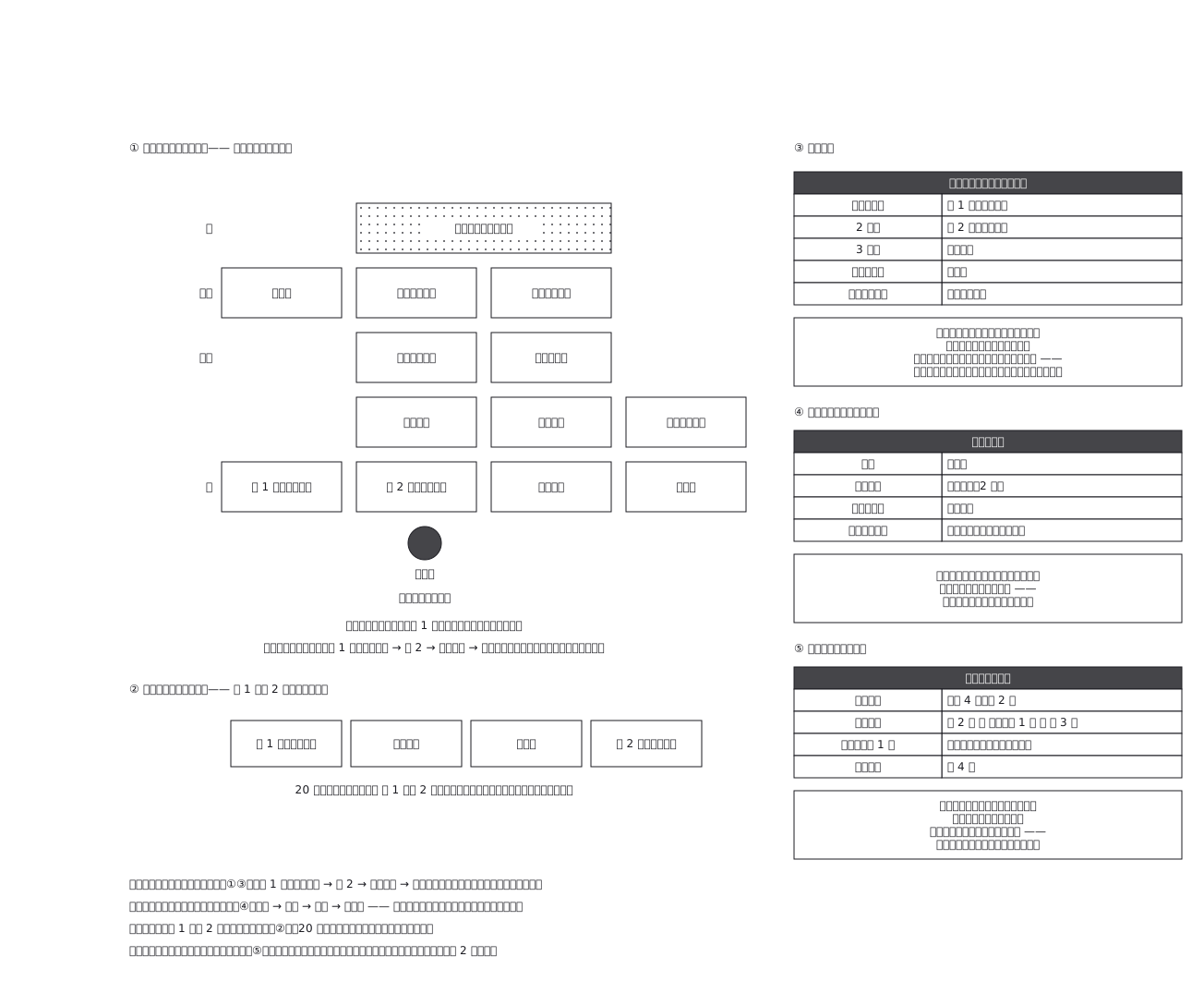 The strings run left to right from high to low and the louder the instrument the further back it sits, so the seating plan is itself a balance control — and "double wind" or "triple wind" names the size of the orchestra by counting only the woodwind
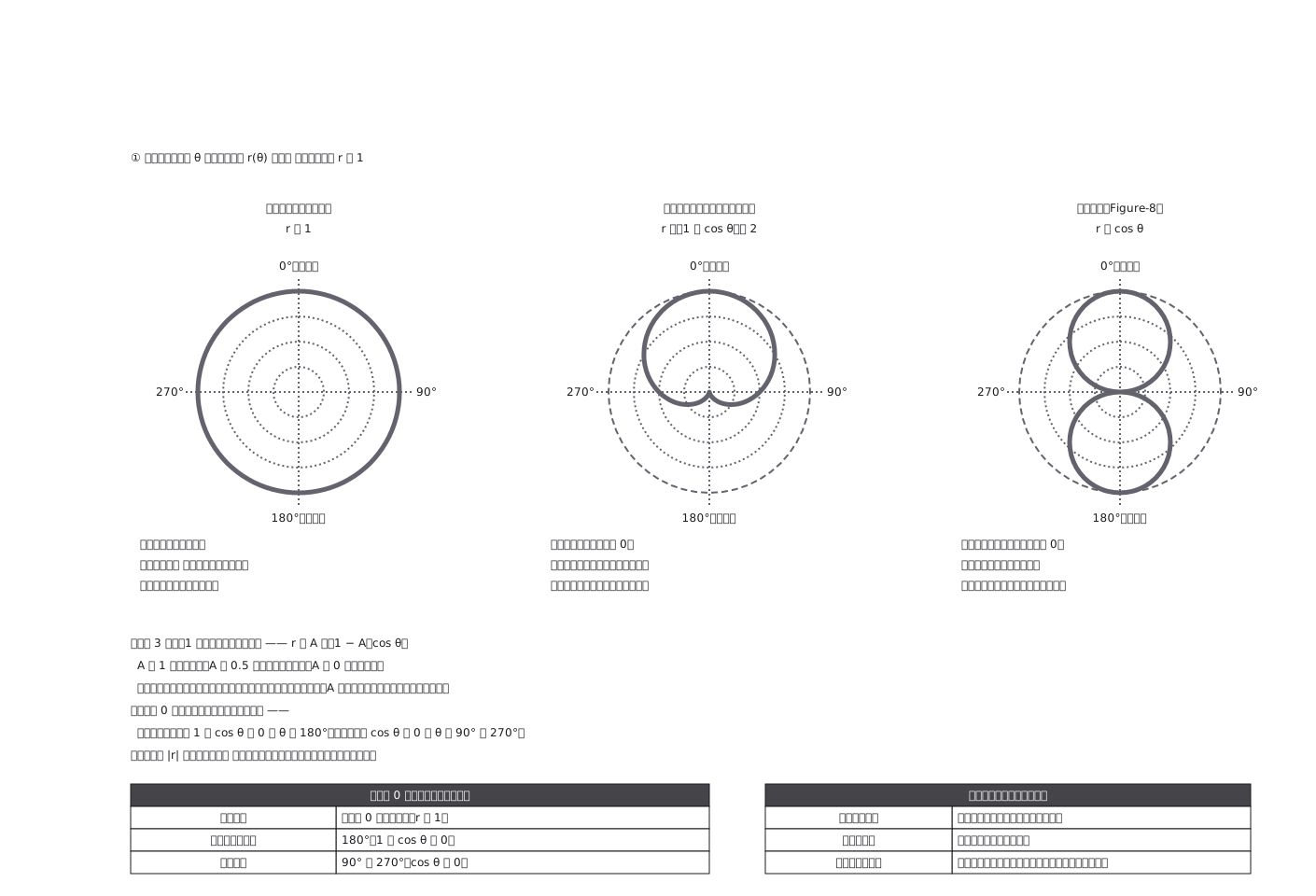 A polar plot of how much a microphone picks up from each direction. The three familiar shapes are not separate inventions but one formula at its ends and middle — omnidirectional, cardioid and figure-of-eight are A = 1, 0.5 and 0 in r = A + (1 - A)cos θ. Solving the same formula gives the dead angles: 180 degrees for a cardioid, 90 and 270 for a figure-of-eight.