Disaster and emergency
Modified START (primary triage, Japanese disaster medicine)
Modified START triage as used in Japan (circulation judged by the radial pulse): four things to look at, three separate roads to red, and only two treatments allowed on the spot — because stopping costs the people behind
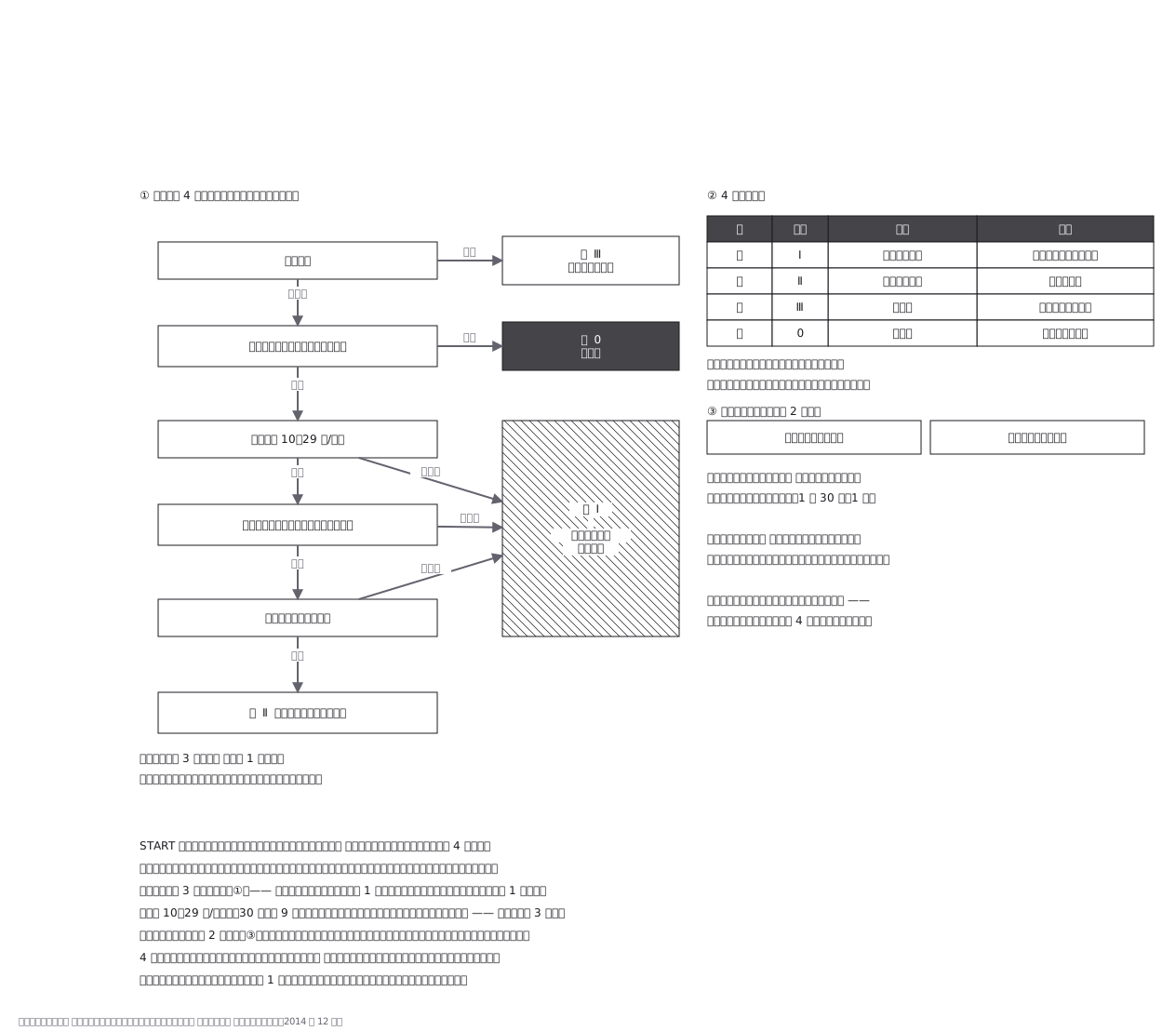
This drawing comes from one YAML file. No shape was moved by hand.
Notes in the source (in Japanese)
医療者でなくてもできるように作られている。見るのは歩行・呼吸・循環・意識の 4 つだけで、1 人 30 秒〜1 分。
赤に行く道が 3 本ある —— 呼吸数 10〜29 回/分の外、橈骨動脈が触れない(微弱)、簡単な指示に従えない。どれか 1 つで赤。
この場でしてよいのは 2 つだけ —— 用手気道確保と、活動性出血の止血。止まると、後ろの人が見てもらえなくなる。
4 区分は順番であって、見捨てることではない。 状態は変わるので、何度もやり直す。### 日本で使うのは START 変法
元の START(米国)は、循環を毛細血管の戻り(CRT)2 秒で見る。日本の災害医療で使うSTART 変法は、橈骨動脈が触れるかどうかで見る(触れない・微弱なら赤)。「脈 120/分 以上」は START ではなく、次の二次トリアージ(PAT)の生理学的評価の基準。最初はこの 2 つを混ぜて「脈 120/分 以上で赤」と書いていた。災害医療センターの研修資料で分けた。
出典: 国立病院機構 災害医療センター「トリアージ」(岩手医科大学 災害医学講座 実践災害医療研修、2014 年 12 月)の START 変法と PAT の図。
Source (YAML)
examples/gallery/228-STARTトリアージ.zumen.yaml
More in this field
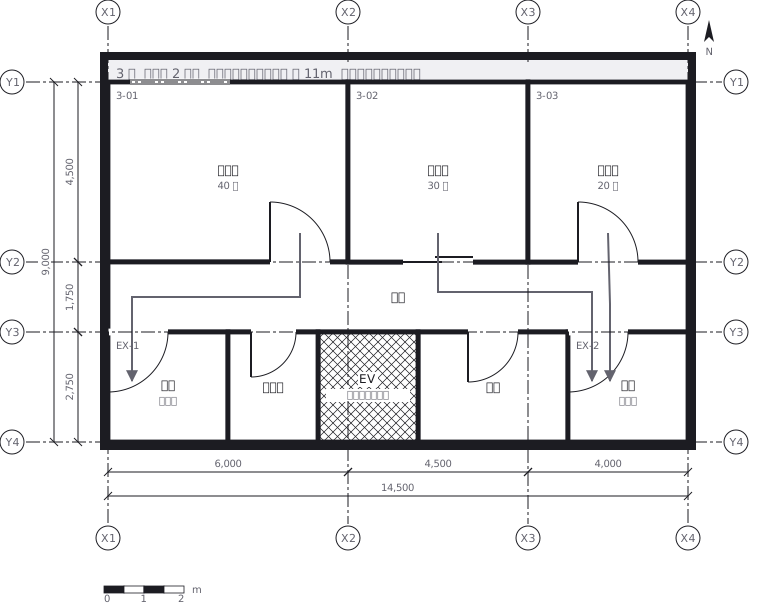 Escape routes on a third floor: two ways out of every room to a staircase, with the travel distance and the fire doors and extinguishers along the way
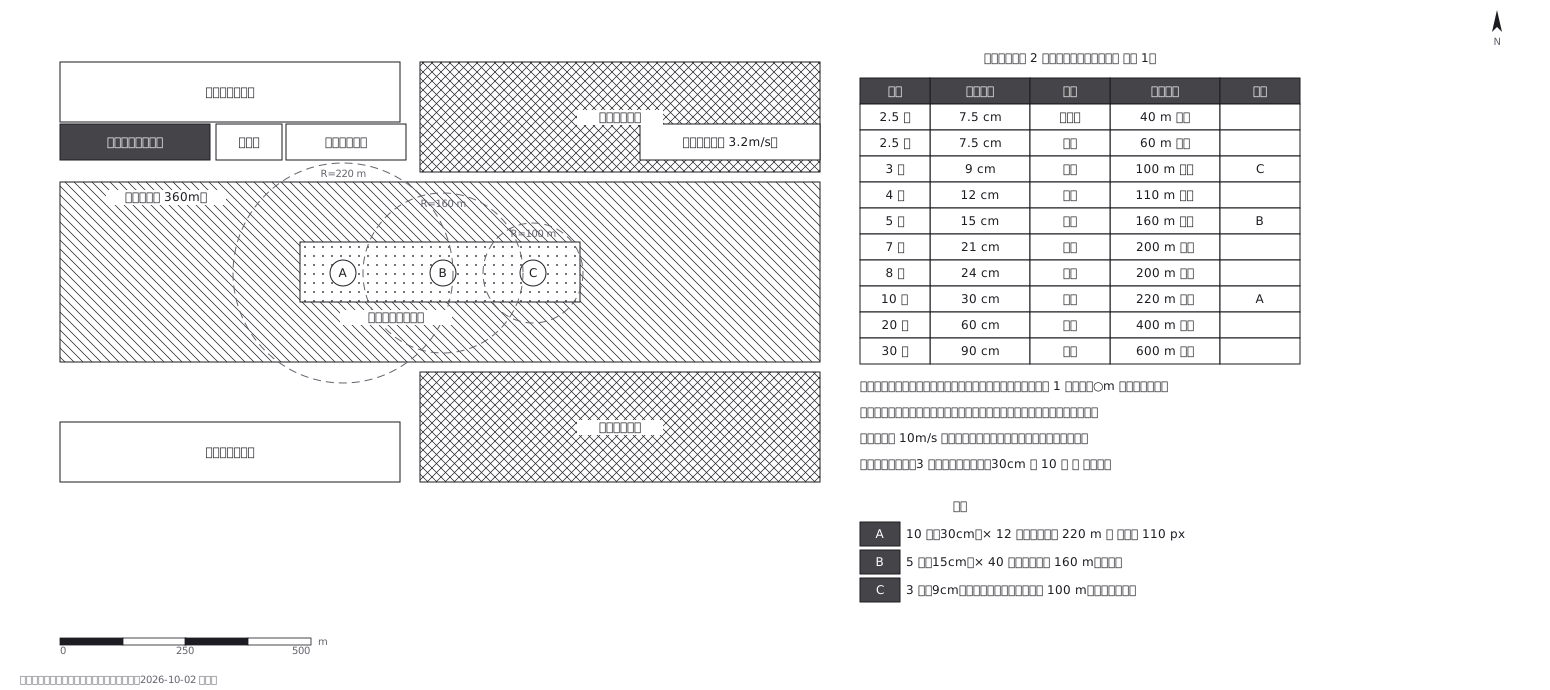 Fireworks safety distances, a circle per shell size
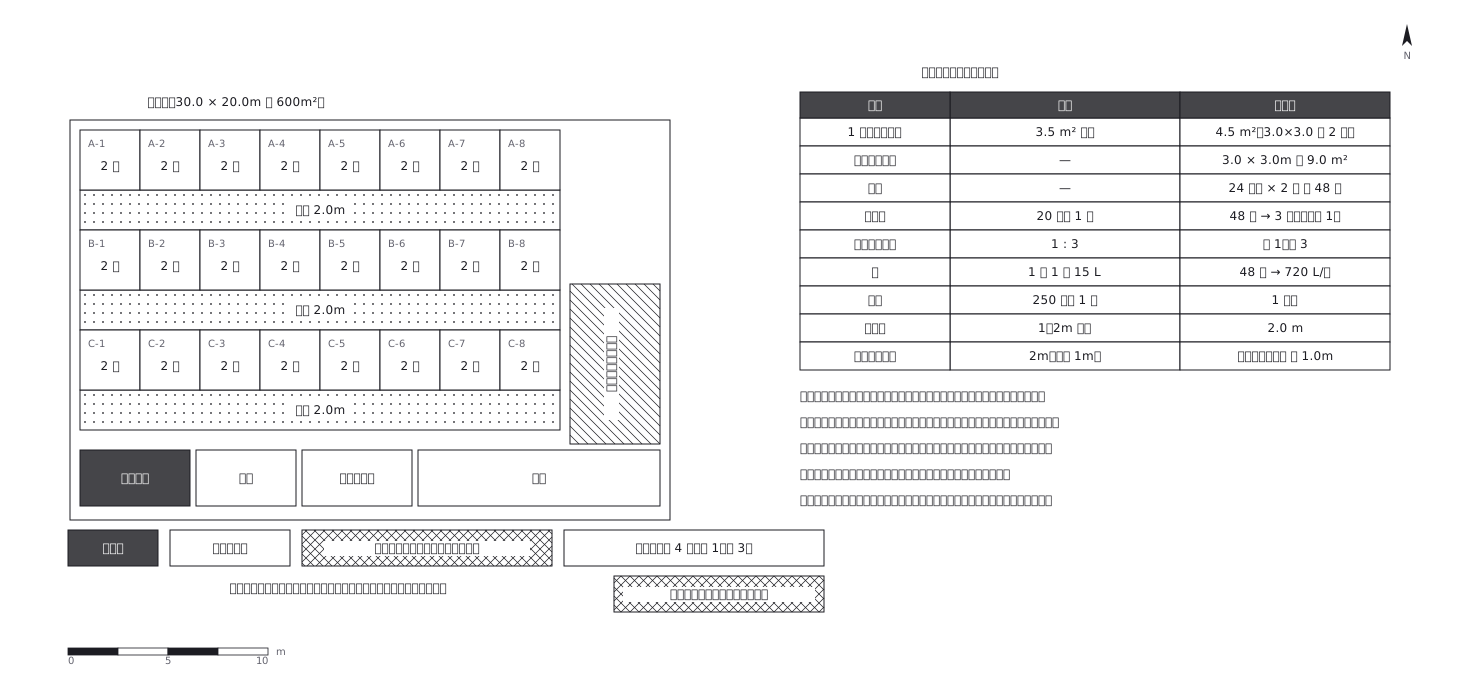 Shelter layout: 3.5 sq m a person, and how many toilets
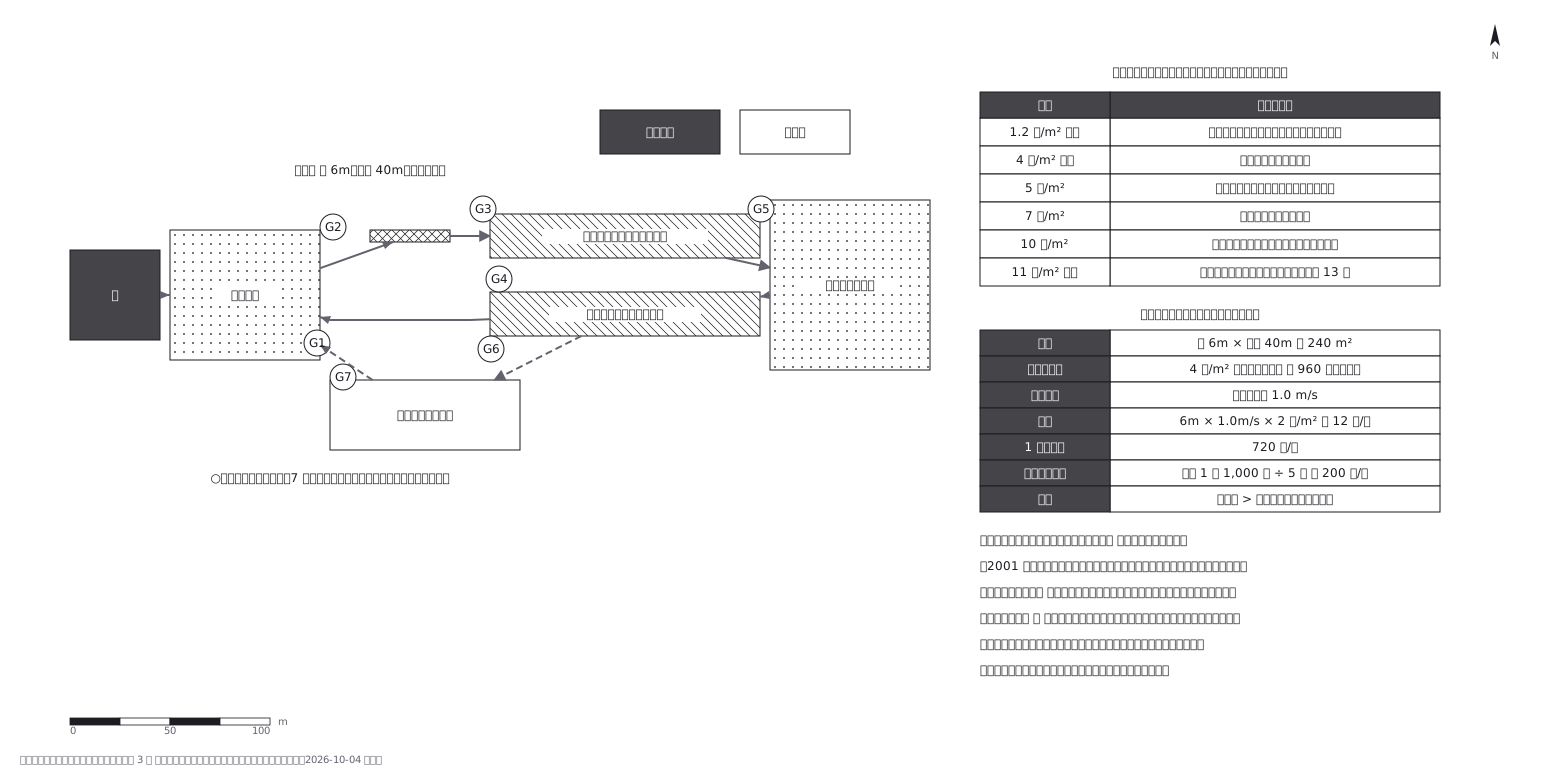 Crowd plan: how many can flow out against how many come in
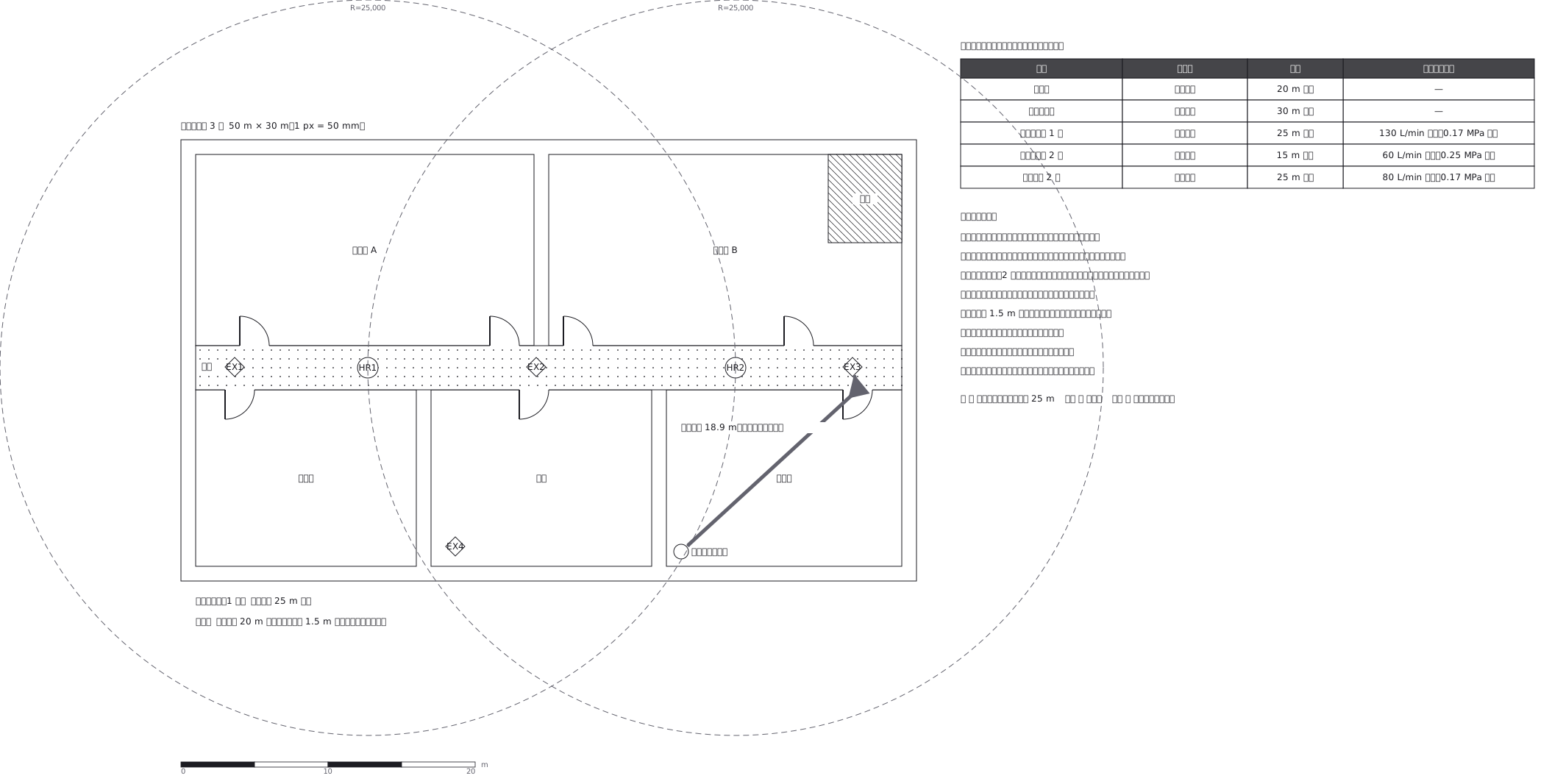 Extinguishers and hose reels, measured two different ways
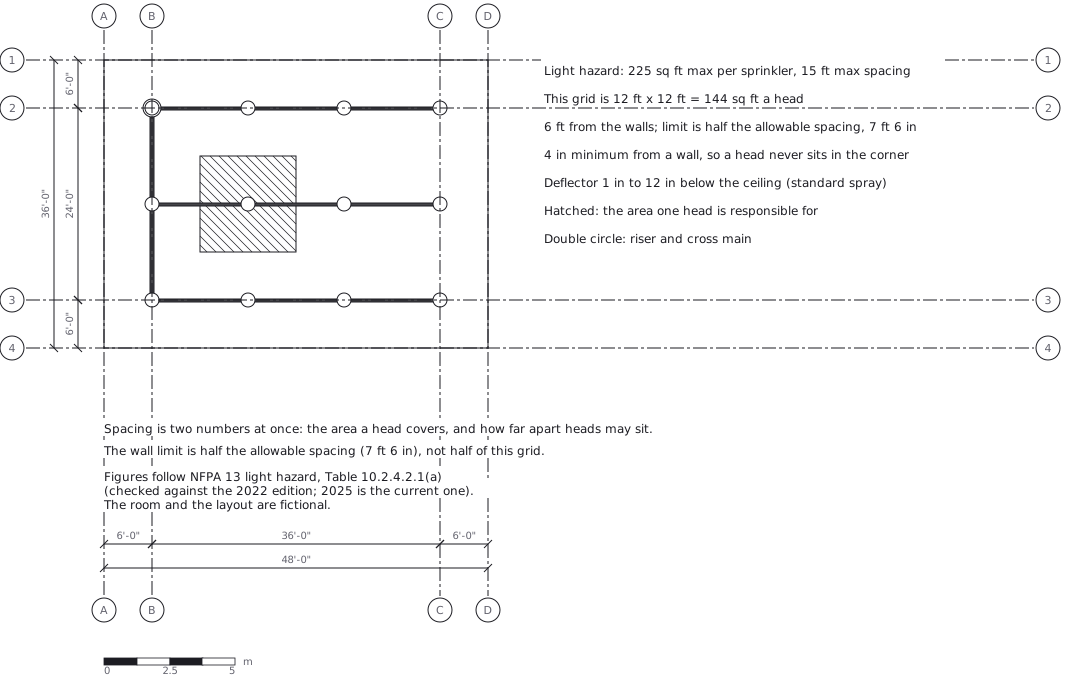 Sprinkler layout: area per head and spacing, decided together
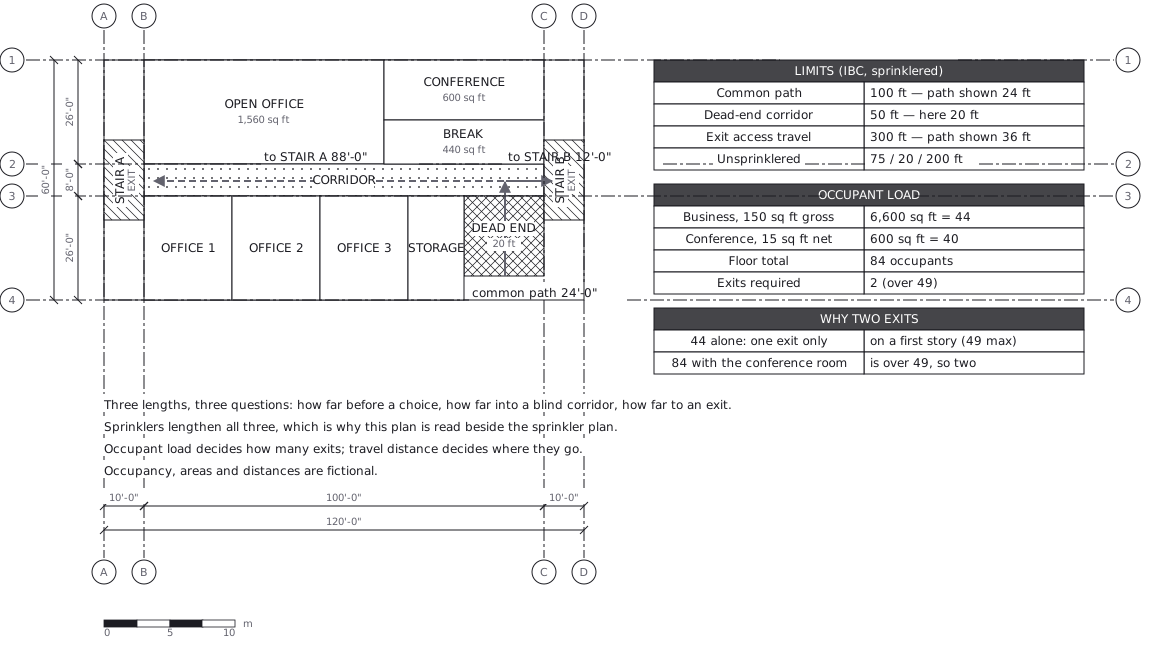 Egress plan: three lengths answering three questions
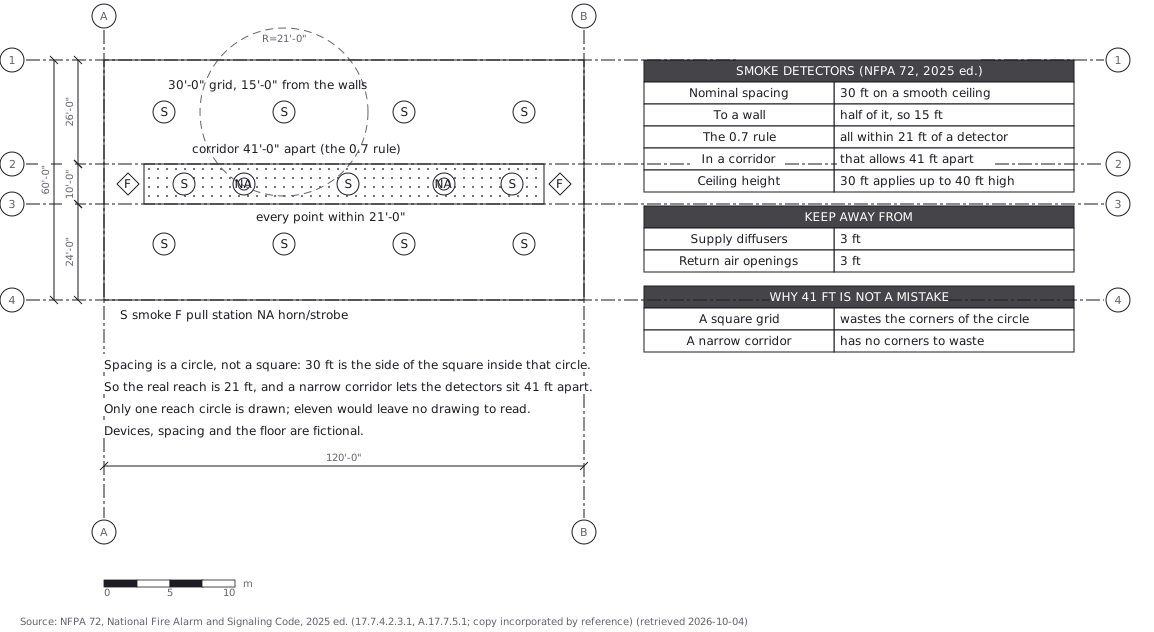 Fire alarm devices: spacing is a circle, not a square