This one came from text with no coordinates in it — the placement and the routing were
decided by the machine. (Other drawings do carry coordinates: on a floor plan or a
lighting plot, where a thing sits is the drawing.)
Why diagrams rot
The architecture changes → updating the diagram is a chore → nobody updates it →
the diagram is now a lie → nobody looks at diagrams any more.
Existing drawing tools are finished products for drawing the first version. There is no point
competing there. zumen is aimed at the rot, not at the blank page.
What it can draw
Not only servers and networks. Transit maps and train timetables, floor plans and
framing plans, piping and switchgear, periodontal charts, fishing rigs, theatrical lighting
plots, vehicle damage reports, container stowage, fireworks safety distances —
if a drawing says “what connects to what”, “in which order”, or “what is where”,
the same notation covers it. Real events can be drawn straight from the record. The 11 March 2011 tsunami,
from the Japan Meteorological Agency’s own gauge readings (example 355):
the highest waves reached Iwate before its forecast was raised above 10 m.
Famous buildings too, from their published figures: Tokyo Skytree’s 634 m at one metre to the pixel (example 358).
House styles swap too. Keep the plan, change only the style table: greyscale, colour-coded, or a mix of the two (359, 360, 361).
The samples below all come from the same eleven words of vocabulary. No
industry-specific shape packs were added: the expertise lives in the tags
(C1G12"-CS-101LBS-1), not in the shapes.
Architectural drawings carry grid lines and dimensions. Walls have thickness and
doors show their swing — you cannot build anything from a drawing without dimensions. Dimensions come out in millimetres, metres, or feet and inches — whichever the
drawing's own scale asks for.
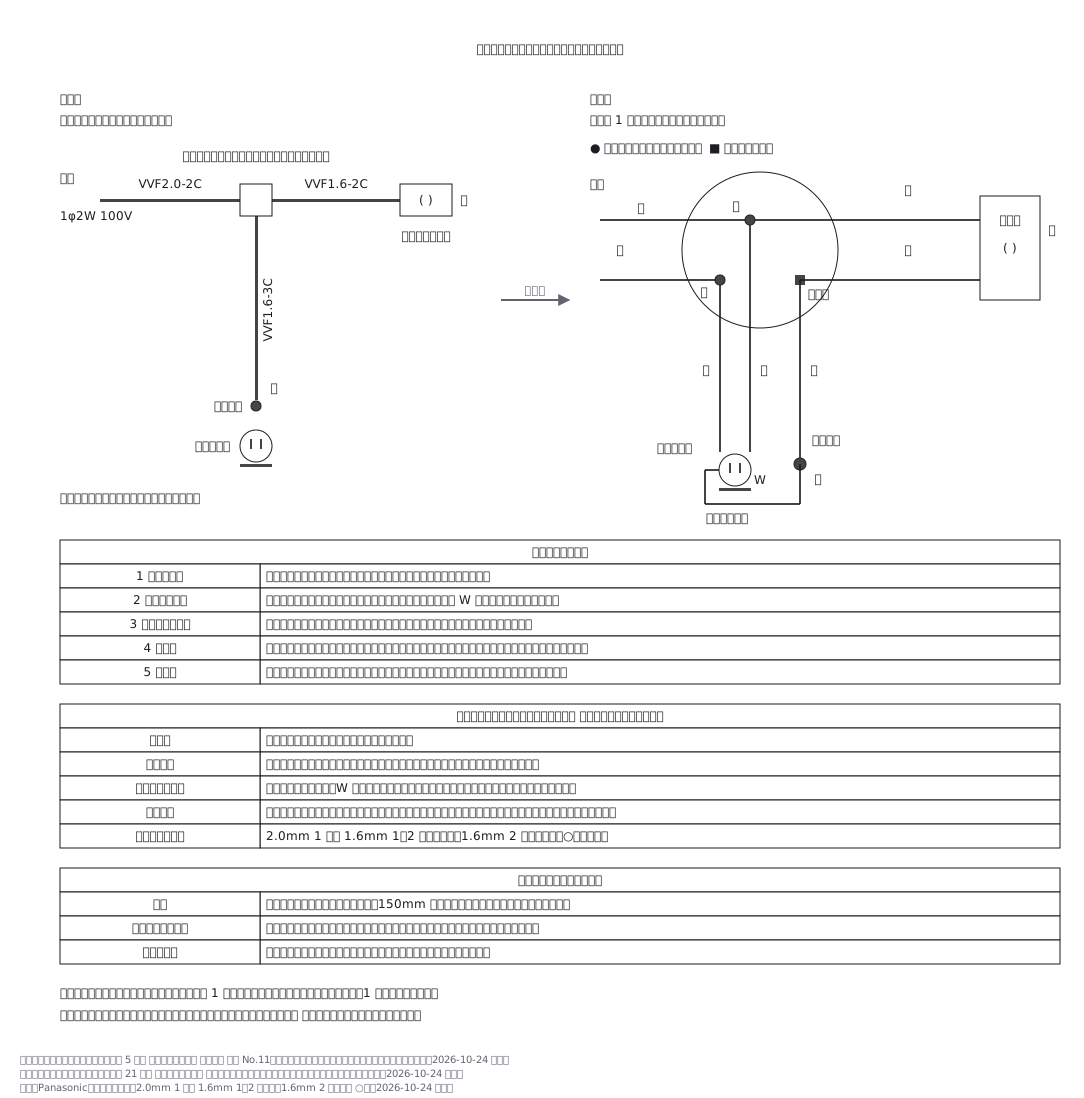
New Example 405 How a Japanese electrician turns a one-line wiring plan into a full wiring diagram. The plan shows only where…
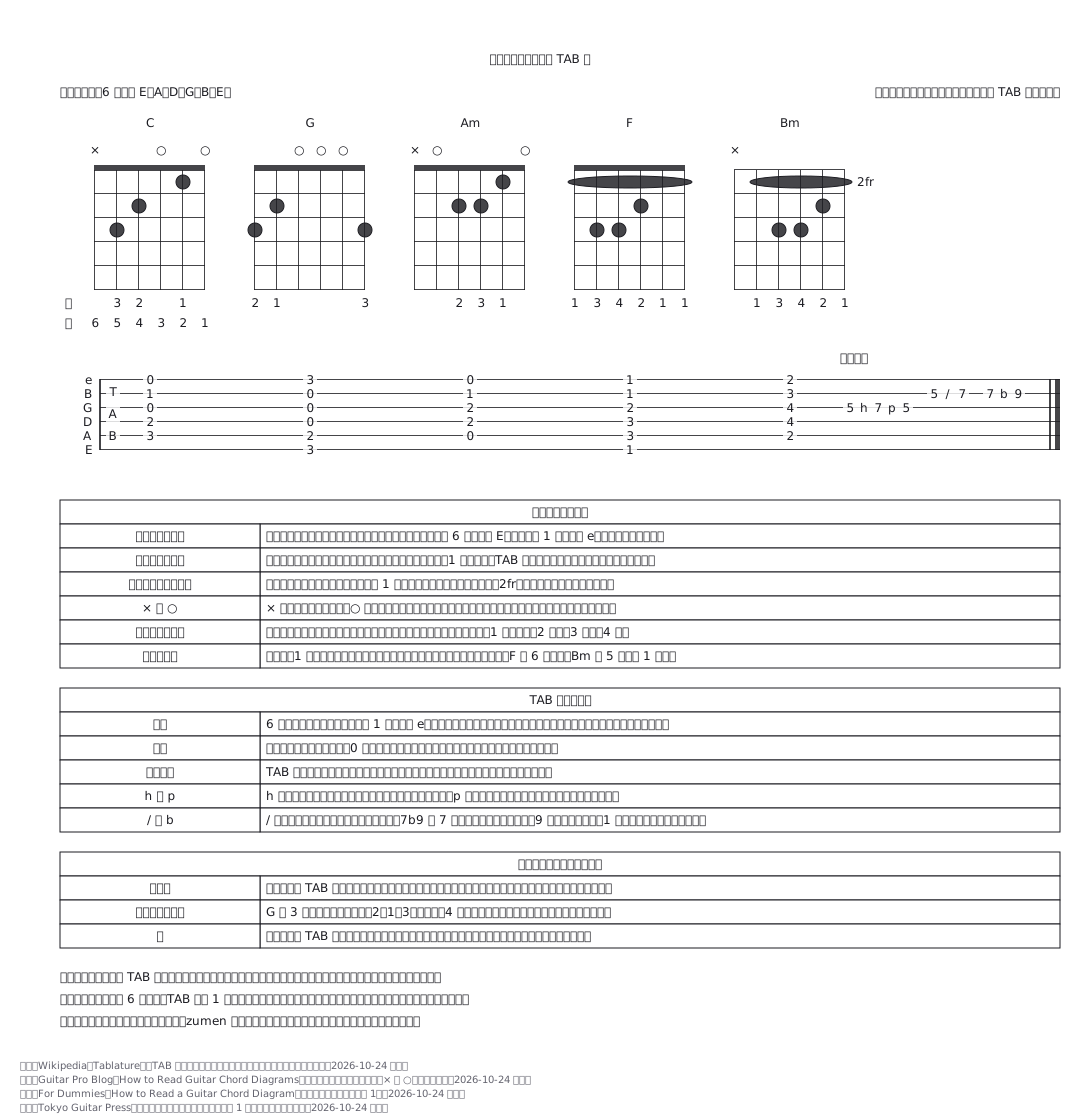
New Example 404 Five basic guitar chords (C, G, Am, F, Bm) written twice and lined up: chord boxes on top, TAB below. In the …
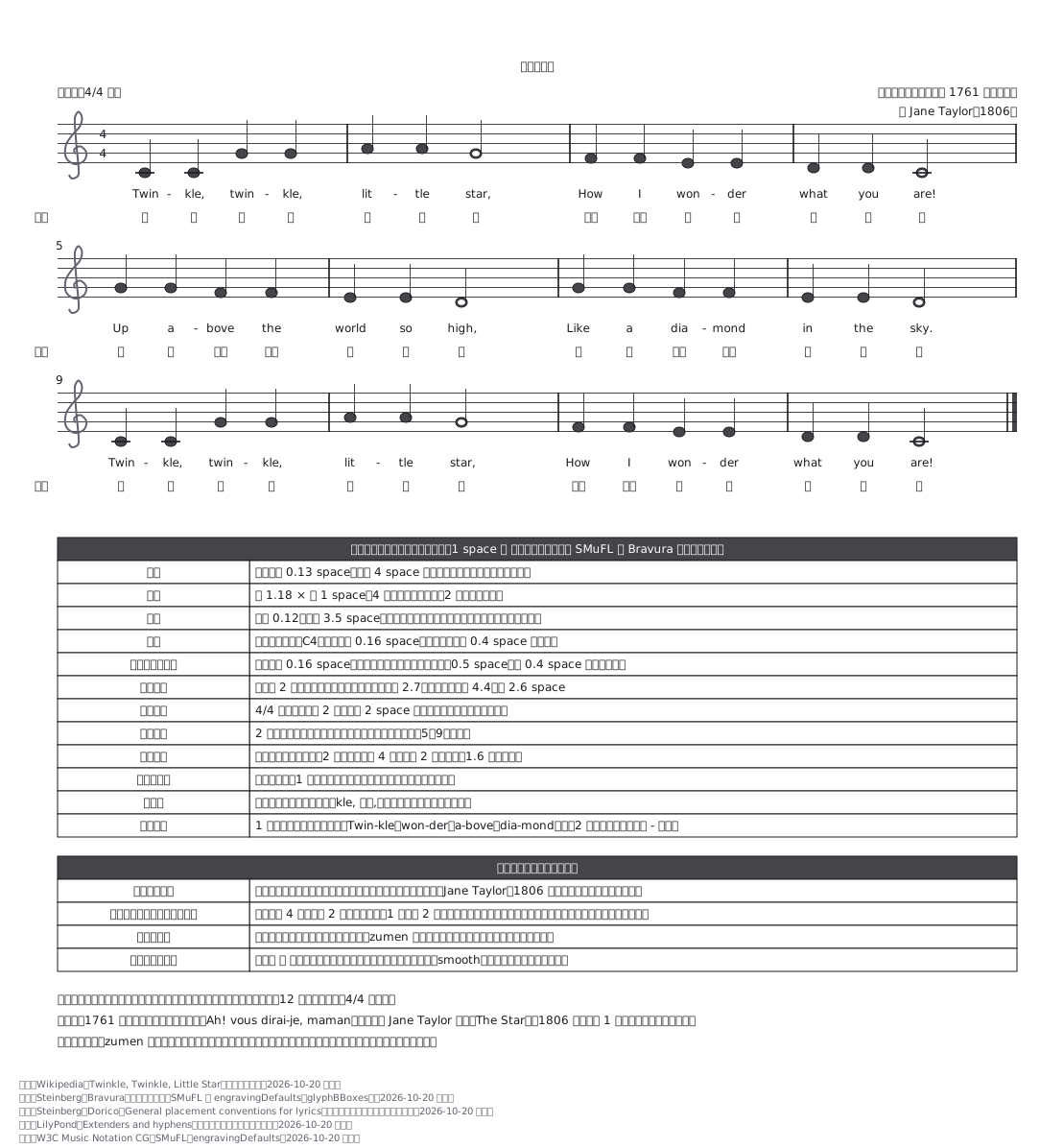
New Example 403 An ordinary score: Twinkle, Twinkle, Little Star in C major, 4/4, on three staves, with Jane Taylor's 1806 wo…
Feature Changelog A cleaner editor: whether a person has reviewed the diagram, whether an AI proposal is pending, and how many items a person fixed versus the AI placed are always on screen
Feature Changelog Markup on the diagram (pen and sticky notes) in colours and widths of your choice; it never changes the diagram and follows the box it is tied to
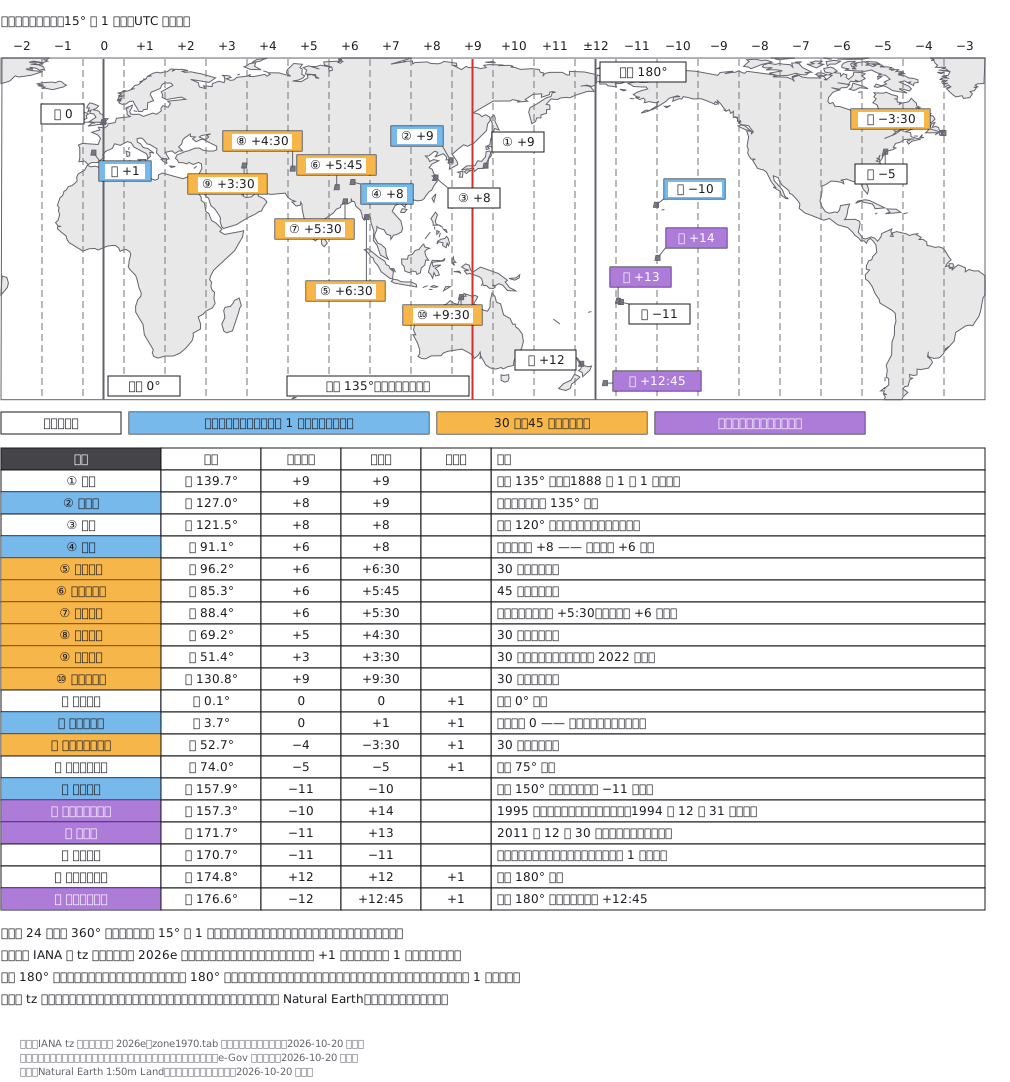
New Example 402 Every 15 degrees of longitude is an hour, but clocks follow borders. Twenty cities from the IANA tz database …
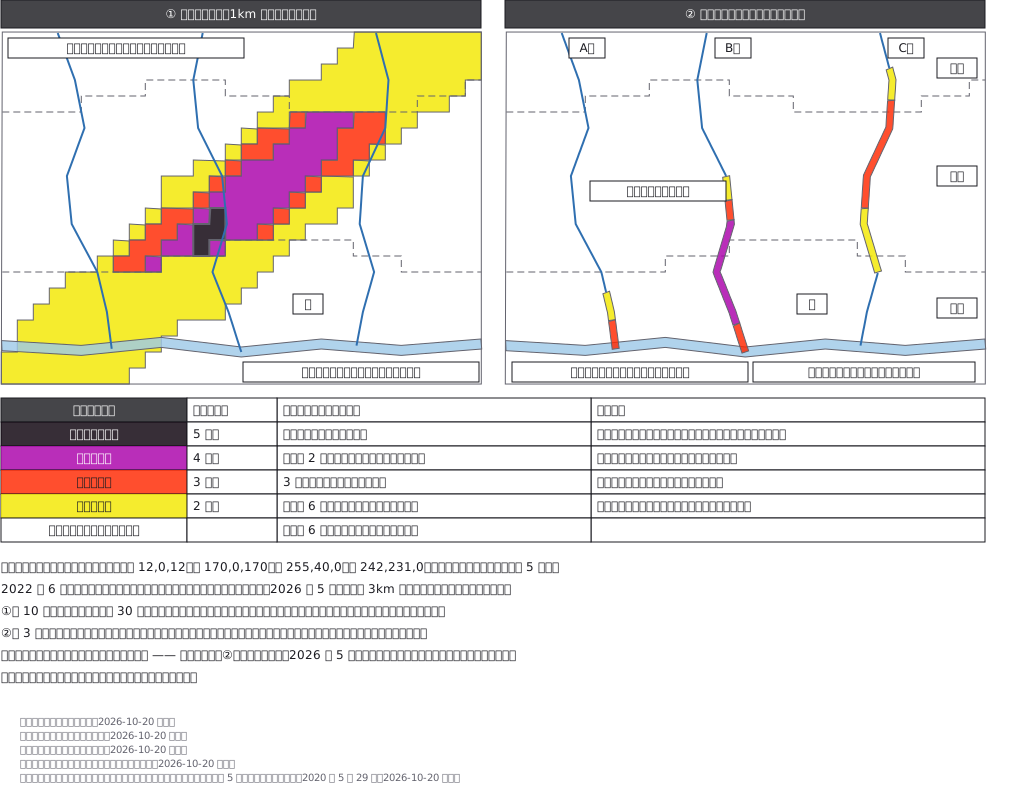
New Example 401 JMA's KiKiKuru risk maps for a fictional town: the landslide map paints a 1 km mesh yellow, red, purple and b…
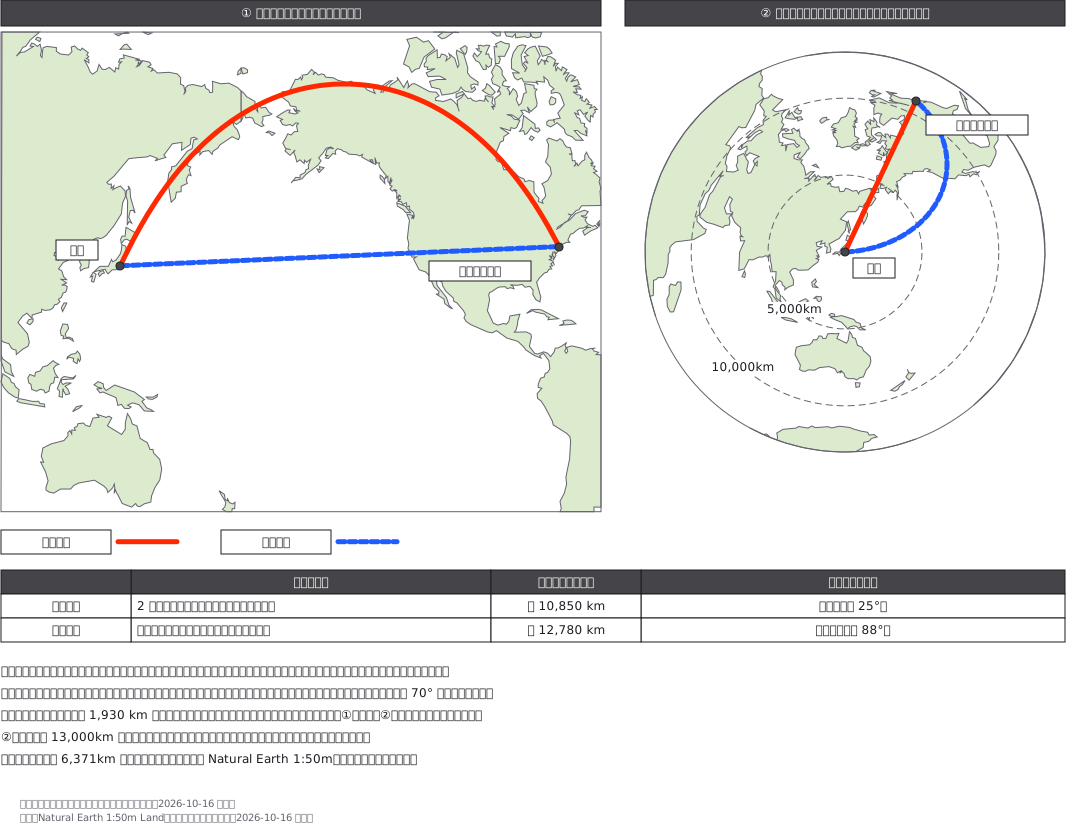
New Example 400 Tokyo to New York two ways on two projections: on Mercator the shortest great-circle route arcs up over Alask…
Exterior wall framing, in the order a framer builds itRoof framing: in plan a rafter is a lineDeck framing: a load path in seven partsAccessible toilet room: the drawing is made of clearancesTwo-story house plan in feet and inches, with OPEN TO BELOWA lane closure is mostly road, not work: the taper, the buffer and the termination area take far more length than the job itselfA deed describes land as a walk, not a pictureNo dimensions on it - the field is the rulerParking striping: the access aisle is not spare tarmacSite plan: the envelope is the lot with the yards taken outSeptic site plan: a plan decided by how fast water leaves the soilJapanese emergency vehicles: red lights, siren loudness and fire-engine vermilion are set by regulation, but the black-and-white police livery is notFour interchange types drawn for left-hand traffic at one scale: the trumpet gathers every ramp into one road so a single toll plaza serves it, the diamond leaves an at-grade junction at each ramp end, and the cloverleaf turns every right turn into a 270-degree loop at the cost of weavingThe Seto-Ohashi is not one bridge but six in a row — three suspension, two cable-stayed and one truss — all double-decked with the expressway on top and the railway below, and the two Bisan-Seto suspension bridges share a single anchorage between themTokyo Skytree at 634 m beside Tokyo Tower at 333 m, both at one metre to the pixel: the Tembo Deck floors at 340 to 350 m, the Tembo Galleria ramp to 451.2 m, the 8 m concrete core column rising 375 m inside a separate steel frame, and the lifts at 600 m a minute. The top of Tokyo Tower sits 17 m below the upper deck. Drawn from published figures only; not an official diagram.The mats decide the room, not the other way round: a 4.5-mat tea room is a square of exactly three mat-widths with four mats pinwheeled around a half mat, and where the sunken hearth is cut — inside the host mat or outside it, in either handedness — gives the eight hearth positions that each change the procedure itselfYou know what kind of sign it is before you can read a word of it: shape and colour arrive first, so a yellow diamond means caution from further away than any text can be resolved — and the main sign carries no conditions at all, since when and where and to whom it applies lives on the small plate below itTwo staircases can both satisfy the stride rule of twice the rise plus the going equalling 610mm and still differ by twenty degrees of pitch — the formula only asks whether the step matches a stride, never how steep the climb is, and at the legal limit you cannot see the treads on the way downGreen sits at the end of the row because red has to sit where it is most visible: the order of the colours is not an aesthetic choice but a ranking of how badly each one would be missed — and the arrows below follow the same logic, left turn under green, straight under amber, right turn under redPassing through and turning around are different problems: a 700mm chair clears an 800mm door but needs a 1,400mm square to turn 180 degrees and a 1,500mm circle to turn right roundA cadastral map is not a drawing but a set of coordinates: the boundary points are held as plane rectangular coordinates, the lines merely join them, and the area falls out of the arithmetic rather than a tape measureKumiko lattice is arithmetic before it is woodwork: fixing the hexagon fixes every length and angle in the pattern, and the three-way joint only lies flat because the three pieces are notched to different depths — one third, two thirds, one halfThe single arc on a floor plan decides how the room can be used: a 780mm frame only gives 747mm of clear opening once the leaf is in the way, and the door sweeps 0.44m² of floor that nothing else can occupyA two-bedroom apartment plan with room dimensions, which way each door swings, and where the wet rooms and storage sitSchool floor plan (walls, door swings, grid lines, dimensions)An amenity floor in a fictional residential tower, drawn the opposite way to a flat sales plan: the equipment is the selling point, so it is all shown. Two bowling lanes at USBC size (60 ft from foul line to head pin, 41.5 in wide), a gym with five treadmills and a boxing ring, a spin studio, a lounge with a billiard table, lockers and a kids room, in a beige house style.A fictional ready-built two-storey house of the late-1980s bubble era, squeezing a parking bay, a small garden and four bedrooms plus a tatami room onto a 132 m² plot. A corridor runs north from the south entrance with the stairs on its right and the bath and toilet at the back. Not a copy of any real or fictional house.A fictional two-storey Showa-era house with a Western-style reception room beside the entrance, so that guests never enter the family rooms. Tatami rooms of six and eight mats are drawn mat by mat; upstairs there is only a single child's room and a drying deck. Not a copy of any real or fictional house.A fictional single-storey Showa-era house of the ta-no-ji type: four eight-mat tatami rooms divided by sliding screens in a two-by-two grid, so that removing the screens makes one thirty-two-mat hall. The formal room has its alcove, a veranda runs along the south to a garden with a pond, and the kitchen and bath sit to the north. Not a copy of any real or fictional house.A sales plan for a fictional two-storey wooden house, drawn from the plot and the roads first: a 6 m road to the south, 4 m to the west. The ground floor shows an eight-mat tatami room mat by mat, and the garden, parking bay with a car, paving and deck share the sheet; the upper floor sits alongside.A Japanese rental listing sheet (maisoku) for a fictional 25 m² studio: the rent band on top, the plan and a fittings list, then the property summary with the 22 items the real-estate advertising code requires for a used rental, and the agent's strip at the foot that each agency swaps for its own. Walking time counts 80 m of road as one minute, rounding up. Every name and figure is a placeholder.A sales plan for a fictional 143 m² corner flat wrapped by a curved balcony: an arc on an 11.0 m chord bulging 2.2 m, cut into twenty straight segments, 16.64 m² by the segment formula. The living room opens on two sides; warm grey walls and columns, white rooms, a face only on the living area, no furniture.A fictional 84 m² three-bedroom flat drawn as a greyscale sales plan: dark grey walls and columns, rooms left white, a pale face only on the living-dining-kitchen, a deck on the balcony, fixtures in thin lines and no furniture. Examples 360 and 361 share the same plan; only the style table differs.The same flat as example 359 in the colour-coded sales style: pink living-dining-kitchen, bedrooms with floorboards, wet areas and hall in blue tile. Not one room was moved; only the palette and the style table were swapped.The same flat again, mixing the two: greyscale walls and columns with only the floor finishes laid over them, lengthwise boards and tiled wet areas. The wet rooms read from the pattern, with no colour added.The greyscale version of the same trade: walls as mass, no loose furnitureAn estate agent floor plan: made to decide with, not to build fromThe typical floor of a business hotel with nine rooms, a central corridor, two direct stairs, and two lifts with their hallShadow-hour zoning: the iso-shadow lines here were computed, not sketched — the inner line clears its limit but the outer one does notHold-down selection (N-value method): the stronger a shear wall is, the harder it pulls its end post out of the groundThirteen zoning districts: the name alone fixes nothing — coverage and floor-area ratios are chosen from a list, and the same 200m² lot can hold eight times the floor areaFloor-area ratio in Japan: a narrow street caps it below the zoned figure, so the road sizes the buildingNAND flash: reads and writes go by the page, erases only by the block — every other property of an SSD follows from that mismatchDie-per-wafer: squares in a circle, so the bigger the die the larger the share thrown awayJapanese timber wall-quantity check: enough shear wall still fails if it sits on one sideJapanese setback planes: the shape of a house is decided by slanting lines, not by the plotJapanese coins: the order by size is not the order by value, so the hand reads the hole first, then the reeding, and only then the sizeBanknote tactile marks: the shape is identical, and only its position tells the denominationSchool desks and chairs are sized by height, not by year, and the pair must matchA trading card layout: the back must look the same upside down, or the face is readable from the tableSignatures and the page plan: collation marks step down the spine, so one signature out of order breaks the staircase — an inspection turned into a shapeSaddle-stitch imposition: facing page numbers always add up to the page count plus oneTactile paving: only two kinds, and one line tells you which side the platform is onA lay-judge courtroom: the prosecution sits on the bench’s right, so on the plan it is on the leftA pyrometric cone is not a thermometer. It is a small clay pyramid stood at 8 degrees in the kiln, and it bends until its tip is level with the base — at which point the ware has had the right amount of heat work, meaning temperature and time together. The quoted temperatures hold only for a stated heating rate: the same cone bends at a different temperature if the kiln climbs faster.Kiln loading: three posts per shelf, because three points always lie in one plane — and bisque and glaze firings are packed in opposite waysWhat sets the size of a gear tooth is the module, not the diameter — the diameter is what comes out of it, and so is the centre distance, which means the shaft positions are fixed the moment the gears are chosen. Two gears mesh if the module and the pressure angle match; the tooth counts and diameters can differ freely, and the speed ratio is just the inverse ratio of the tooth counts.The same 30mm turns into a running fit or a permanent one depending on two letters: H7/g6 leaves 7 to 41 microns of clearance, H7/p6 always bites by at least 1 micronA welding symbol is read together with its arrow: below the reference line means the arrow side, above it means the other side, so the same symbol welds the opposite face if the arrow movesA flat pattern is not the sum of the outside dimensions: the outside stretches when you bend it, and the amount subtracted is each shop measured value, not a standardA plywood cutting diagram: enough area is not the same as a way to cut itA debating chamber: the seating order itself states how large each bloc isPlayground clearances: the fall height decides how much space to keepTemple layouts through time: the pagoda drifts away from the centreJapanese timber joints: pulled harder, they tighten; each post has a nameBeam reinforcement: the last moment it can be changed is before the pourA reinforced concrete framing plan for a second floor, with the grid lines and the mark of every column, girder, beam and slabReflected ceiling plan: you look up by drawing it looking downJapanese wall section, where seven heights are fixed at onceA surface car park set out for fourteen cars, with bay dimensions, aisle width and where the entrance and exit sitSite logistics plan with the crane radiusRope access work plan — the law says what the drawing must carryA construction bar chart with a bar per trade, showing where the work overlaps and where the labour piles upA standard section through an L-shaped retaining wall: the body dimensions, the reinforcement, and the crushed stone, backfill, weep holes and drainageA road pavement section stacking surface, binder, upper and lower base courses and subgrade, each with its thicknessTactile paving: bars mean go, dots mean stopThe plan of a concrete gravity dam: the body, the spillway, the intake works and the access road for maintenanceJapanese map symbols: a circle around a sign makes it the senior oneA farmland consolidation plan laying out 30-are plots, with the irrigation channels, the drainage channels and the farm roads that serve themTemple garden plan, drawn with closed curvesThe garden path to a tea house: outer and inner roji, with the stepping stones, water basin, middle gate, waiting bench and planting
Egress plan: three lengths answering three questionsSprinkler layout: area per head and spacing, decided togetherFire alarm devices: spacing is a circle, not a squareNot a picture of the fire - the way out is written on itJMA's KiKiKuru risk maps for a fictional town: the landslide map paints a 1 km mesh yellow, red, purple and black along a band of heavy rain, but on the plain and in the uninhabited mountains it stops at yellow: no warning criteria are set there. The flood map colours the small rivers, purple and red moving downstream; the large river gets none. Evacuate at purple; never wait for black.Seismic intensity two ways for a fictional inland quake in western Japan: the shindo measured at each station as coloured tags, and JMA's estimated intensity map painting shindo 4 and above on a grid. The strongest station reading is 5-lower, yet the grid estimates 6-upper right above the fault where no seismometer stands.Tsunami warnings and advisories (fictional): the coastline itself is coloured, purple doubled in width for a major tsunami warning, red for a warning and yellow for an advisory, on the dark blue sea JMA uses. The first bulletin after an M8+ quake says only "huge" or "high"; the update replaces them with 10 m, 5 m, 3 m and 1 m and raises two areas.Lightning nowcast for northern Japan (fictional): lightning activity levels 1–4 painted on a 5 km grid in the JMA colours, for the current analysis and 30 and 60 minutes ahead, with the JMA meaning of each level and the action it calls for.Weekly weather charts (fictional): six daily forecast surface charts around Japan side by side, with isobars, blue H and red L stamps and fronts drawn to JMA conventions, showing highs and lows passing from west to east over the week.Gridded weather distribution forecast (fictional): Japan divided into 20 km cells, each coloured clear, cloudy or rain in the JMA colours, for 9:00, 15:00 and 21:00 side by side so the rain band can be seen moving south, with prefecture boundaries drawn over the stepped grid.Today's weather by city on a map of Japan (fictional values): a card per city with its weather mark, forecast high and change from yesterday, set beside the city and tied to its true position by a thin leader line, with Okinawa moved into an inset at the same scale.Typhoon track forecast (fictional) over the coastlines of Japan and East Asia: the current centre with its storm (red) and gale (yellow) areas, dashed 70% forecast circles out to 120 hours, and the storm warning area drawn as one red line wrapping every forecast circle widened by the storm radius, as JMA draws it.Surface weather chart around Japan (a fictional forecast): coastlines on a polar stereographic base, isobars every 4 hPa traced from a pressure field with 1000 and 1020 hPa drawn thick, a deepening low east of Hokkaido with occluded, warm and cold fronts whose symbols sit on the side the front is moving toward, and the JMA blue H / red L stamps.Weekly weather forecast table: 5 cities × 7 days, each cell with a weather mark (sun, cloud, umbrella in the JMA colours), chance of rain, and high/low temperatures, showing how "later" and "at times" combine two marks, plus the A/B/C reliability grade from day 3. Forecast values are fictional.Telling Japanese fire apparatus apart: what each one carries, how many crew ride it, and how many a fire station is meant to haveAerial ladder trucks: what sits on the chassis, how far each model reaches, and why the longest ladders reach the least distance sidewaysKnots are chosen by the job they do — joining two ropes, tying to an object, or stopping an end — and every knot is the weakest point of the rope, taking it down to 40-80% of its rated strengthFire compartments: the shortcut you use every day is the one that closes — a drill map must show the route after the shutters come down, not beforeAn earthquake early warning does not predict anything; it borrows the gap between the fast P wave and the slow S wave. Detection, analysis and delivery take a few seconds, and that cost is the same however far away the epicentre is — so the warning time is only what is left over, and directly beneath a shallow quake there is nothing left.Deciding whether to leave: five questions answered once, in advance — and flood-depth bands read as floors of your own house, not as metresA single-storey nursery has no upstairs, so the plan is half about the building next door — and three people coming out to help halves the time the children spend outsideDamage certification: a hazard map measures from the ground, this measures from the floor — so the same water gives two different numbers, and 0.1m changes the categoryDisaster toilets are counted in uses, not litres: five per person per day, so a family of four needs 140 bags for a week — and the bags stay in the houseModified START triage as used in Japan (circulation judged by the radial pulse): four things to look at, three separate roads to red, and only two treatments allowed on the spot — because stopping costs the people behindDisaster headquarters: one chain of command and one place for information, and for the biggest events the report skips a rung and goes to prefecture and nation at onceIntensity and magnitude measure different things — one earthquake has a single magnitude but as many intensities as there are places — and because each step of magnitude multiplies the energy by about 32, two steps is already a thousandfold, which is exactly what the small-looking numbers hideThe 105,385 dead and missing of the 1923 Great Kanto earthquake by cause: 91,781, or 87.1 per cent, died in fire. Kanagawa had 2.6 times as many houses collapse as Tokyo, but Tokyo had 5.0 times as many burn, and 96 per cent of Tokyo city's dead were fire deaths. Figures follow the single tally the Cabinet Office report cites.The 5,488 deaths of the 1995 Kobe earthquake in the national vital statistics, as two proportional bands: 81.3 per cent died on the morning of 17 January, 77.0 per cent of asphyxia or crushing. Crossing cause with date shows that all fifteen deaths from crush syndrome came on the 19th or later, after rescue. A table explains why the death toll is quoted three ways.The 11 March 2011 tsunami at ten Pacific tide gauges, north to south: first wave and highest wave on one time axis, from the Japan Meteorological Agency record. Hatched bars mean at least: the gauge broke or went off the scale. The first warning at 14:49 forecast 3 m for Iwate; it rose to over 10 m at 15:30, after the highest waves had struck Ofunato, Kamaishi and Miyako.A family evacuation timeline for a typhoon, from three days out to the river overflowing, one row per person, cued by alert level rather than by the clock. Below it, what two drills measured and what was changed: the grandmother took 45 minutes on foot, not 20, so she now leaves half a day early by car. The version opened on the day is the one the last drill corrected.Japan separates the place you run to from the place you stay. An emergency evacuation site is designated per hazard, eight of them; a shelter is where you live when you cannot go home. One school can be a shelter yet wrong for a flood. Three fictional sites are marked per hazard, with the parts of a JIS Z 9098 sign and which hazards have no sign system at all.Opening a shelter starts by checking whether the building itself survived — put people in first and you may have to move them againA red placard does not mean total loss: it answers whether it is safe to go in now, not how badly the building is damaged — two different papers, two different questionsShelter layout: 3.5 sq m a person, and how many toiletsEscape routes on a third floor: two ways out of every room to a staircase, with the travel distance and the fire doors and extinguishers along the wayExtinguishers and hose reels, measured two different waysA typhoon forecast: the circle is where the centre lands 70% of the timeA surface chart: the barbs tell you which way the front is movingFireworks safety distances, a circle per shell sizeCrowd plan: how many can flow out against how many come in
Every 15 degrees of longitude is an hour, but clocks follow borders. Twenty cities from the IANA tz database sit on the nominal bands: Seoul keeps Japan's 135-degree time, all of China keeps +8, Kolkata +5:30 and Kathmandu +5:45, and Kiritimati and Apia lie east of 180 degrees yet keep +14 and +13, a whole day ahead of Pago Pago next door.Tokyo to New York two ways on two projections: on Mercator the shortest great-circle route arcs up over Alaska while the constant-bearing rhumb line is straight; on an azimuthal equidistant map centred on Tokyo the great circle is the straight line and the rhumb line bends. About 10,850 km against 12,780 km.Two-source interference on water: crests and troughs from two sources in step, with five lines of reinforcement and four of cancellation drawn as hyperbolas. The path difference can never exceed the source spacing, so the number of lines is fixed by spacing divided by wavelengthWavelength, amplitude, period and frequency on two graphs, position and time, with v = fλ; then audible sound (17 mm to 17 m) and visible light (380 to 750 nm) on one logarithmic ruler, more than four orders of magnitude apartThe Comstock–Needham names for insect wing veins on a generalised wing: C, Sc, R, M, Cu and A from front to back, branches numbered from the front, cross-veins named after the two veins they join, and each cell named after the vein in front of itAn insect compound eye is a mosaic of hexagonal facets, up to about 30,000 per eye in large dragonflies. One ommatidium in section shows cornea, crystalline cone, pigment cells, photoreceptors and rhabdom; side by side, apposition eyes take light through one lens per rhabdom while superposition eyes pool light from many lenses across a clear zoneAt the altitude of the ISS, 400km, Earth still pulls at 88.5 per cent of its surface strength. Astronauts float because the station is falling, not because gravity has gone: in one second it travels 7.66km and drops 4.34m, and 7.66km further on the surface has curved away by the same 4.34m. Tables give the pull at every altitude up to the Moon, and why it is called microgravity rather than zero.A population pyramid is not a picture of today but eighty years of births stacked upright: the bulges and the notch move up one step every year, and the notch at 1966 records a year people avoided, not a generation that was lostA spider does not stick to its own web because only the spiral is sticky: the radials and the temporary scaffold are dry, and the scaffold is cut away as the sticky spiral is laid from the outside inDiffraction records only intensities, never phases, so a crystallographer has to fetch the phases from somewhere else — a known structure, anomalous scattering, or a heavy-atom derivative — whereas cryo-EM has no phase problem at all and pays instead by having to average tens of thousands of particlesThrow away every length and only the fold is left: a TOPS cartoon draws helices as circles and strands as triangles, and whether a connecting line stops at the edge of a symbol or runs into its centre is what tells you which end of the strand it joins — so two proteins of very different size can share one diagramOnly the middle two fields of an ISBN change length, so a publisher that issues many books holds a short registrant number and gets a longer title field in return — and the check digit, a weighted sum of alternating 1s and 3s, is deliberately imperfect: swapping two adjacent digits that differ by five slips straight throughThree orderings that never agree: the 50 yen coin is smaller than the 5, the 10 is bigger than the 100, and the weights rank differently again — the only two with holes are the 5 and the 50, which are then told apart by the milled edge, because the set is designed to be read by handTwo angles per residue are almost the whole story of a protein backbone: the peptide bond is a partial double bond so omega barely turns, leaving phi and psi, and each secondary structure lands in its own patch of the plot — which is why structure validation is done on six separate plots, since glycine and proline are allowed quite different placesNinety-seven leap years every four hundred, not a hundred: dropping three of them brings the average year to 365.2425 days, within 0.0003 of the real one — and the four-hundred-year total happens to divide by seven, so the weekdays come back round as wellAt a quarter past three the hands are not together: while the minute hand travelled ninety degrees the hour hand moved seven and a half, and the same arithmetic explains why the hands coincide eleven times in twelve hours rather than twelveThe whole A series follows from two decisions — A0 has an area of exactly one square metre and the sides are in the ratio root two — and root two is the only ratio that survives being halved, which is also why a photocopier needs just one number to step between sizesElectron pairs around a central atom push each other as far apart as they can, and that alone fixes the shape. Methane, ammonia and water all have four pairs on the same tetrahedral skeleton; what differs is how many of them are bonds, and each lone pair squeezes the bond angle further — 109.5, then 107, then 104.5 degrees.The shape of the periodic table is the electron configuration: block widths of 2, 6, 10 and 14 are orbital capacities, so no other width is possibleTwo set squares come as a pair because two of them make ten angles in 15-degree steps, where one alone makes only fourFigures in maths problems: the marks carry the meaning — equal ticks, right-angle squares, parallel chevrons — and only the given values are written on the figureRuler-and-compass constructions: no scale is used, because equal compass openings make equal lengthsHoneycomb cells: for a given area the hexagon has the shortest wall of any shape that tilesIsometric, third-angle and oblique: one scale serves all three axes, but circles become ellipsesSlope notation: roofs in sun, ramps in fractions, roads in percent, railways in per mille — degrees are the minorityBraille has only six dots, so “a” and “1” are the same shape until a number sign says otherwiseA football is a truncated icosahedron: the 12 degrees missing at every vertex are what make it a sphereA press cannot print grey: it lays ink or it does not. Halftone varies the size of evenly spaced dots and lets the eye mix them. A shaded sphere at three screen rulings, round dots touching at 78.5 per cent, where round, square and elliptical dots join, rulings from newspapers (85 lpi) to fine art (300), and why the inks sit 30 degrees apart: screens 7 degrees apart beat into moiré.Brightness is set not by the aperture or the shutter but by their sum, so equal exposures line up on a diagonal: f/2.8 at 1/500, f/4 at 1/250 and f/5.6 at 1/125 are all 12 EV. One stop either way halves the light. What the diagonal does not equalise is the picture — a smaller aperture deepens the focus and a slower shutter lets movement blur, which is why choosing along it is the craft.Ray tracing through a convex lens: there are only three lines to draw, and two of them fix the image
A graphic EQ moves only the level of 31 fixed bands, whose centres are 1000 Hz times powers of 10^(1/10); a parametric EQ also lets you choose the centre and the width. Pulling three neighbouring sliders cuts deeper than any one of them, and a feedback tone that falls between two graphic bands is a job for a narrow parametric band.A cone loudspeaker cut through its axis. The magnet drives flux across a narrow gap; current in the voice coil sitting in that gap is pushed forward or back, and the cone, held centred by the spider and the surround, pushes the air. Reverse the current and the force reverses — feed it AC and the cone moves back and forth.The seven trombone slide positions at real size. They are not evenly spaced: 85mm from first to second, 113mm from sixth to seventh, each gap 1.0595 times the last — the twelfth root of two that spaces guitar frets, running outward instead of inward, because a slide lengthens the whole tube. Below: the partials at each position, and why an F attachment still cannot reach B1.The strings run left to right from high to low and the louder the instrument the further back it sits, so the seating plan is itself a balance control — and "double wind" or "triple wind" names the size of the orchestra by counting only the woodwindThe black keys are grouped in twos and threes so that a hand can find its place without looking — twelve evenly spaced keys would give no landmark at all — and 88 turns out to be seven octaves plus four: three keys added below and one aboveFrets crowd together as you climb because what is divided into twelve is not a distance but a ratio: each semitone multiplies by 2^(1/12), so the twelfth fret lands at exactly half the string and everything beyond it repeats at half sizeFive basic guitar chords (C, G, Am, F, Bm) written twice and lined up: chord boxes on top, TAB below. In the box the low E string is on the left, the thick top line is the nut, x and o sit above and the numbers below name the fingers; F and Bm show the barre as a long oval. In the TAB the top line is the high e. The two face opposite ways, so each labels its strings.An ordinary score: Twinkle, Twinkle, Little Star in C major, 4/4, on three staves, with Jane Taylor's 1806 words under the notes. Each syllable is centred on its notehead, ignoring trailing punctuation, and a hyphen sits midway inside Twin-kle and dia-mond. Staff lines, stems and barlines follow the SMuFL engraving defaults; the clef is one smooth curve.Music engraving: the staff space is the unit for every measurement, and the stem is 3.5 of themA piano action: the jack lets go just before the string, so nothing is pushing the hammer at impactThe same control means different things depending on where in the chain it sits. An aux send taken before the fader keeps its level when the engineer moves the fader, which is what a performer monitor needs; taken after, it follows the fader, which is what a reverb needs. Insert is in series and cuts the path open; aux is in parallel and branches away and back.A polar plot of how much a microphone picks up from each direction. The three familiar shapes are not separate inventions but one formula at its ends and middle — omnidirectional, cardioid and figure-of-eight are A = 1, 0.5 and 0 in r = A + (1 - A)cos θ. Solving the same formula gives the dead angles: 180 degrees for a cardioid, 90 and 270 for a figure-of-eight.Hall acoustics: delay is nothing but a difference in path length — one millisecond is 0.34 mGuitar frets are a geometric series, and the saddle must still be moved back to play in tune
The numbering is not a size order: an AA cell is half a millimetre taller than a C cell, and an N cell is fatter than an AAA — all of them are 1.5 volts, so what a bigger cell buys is current and hours, not strength, and a button cell number like CR2032 is simply its diameter and height in millimetresHot and cold spots sit 6.1cm apart because that is half of the 12.2cm wavelength, which no cabinet design can remove — so the food is moved insteadCentrifugal force is v squared over r, so a tenth of the radius is ten times the g — but a tenth of the radius is a hundredth of the airflow, which is why the small cones come in rowsInduction heats only the outer 0.05mm of the pan, and that thin skin is why iron works and aluminium does not: at 20kHz iron's surface resistance is 43 times aluminium'sThe same drum has to stay under 1G to wash and reach 335G to spin, which is why it hangs on springs behind a concrete weight rather than being bolted to the machineHeating and cooling swap the roles of the indoor and outdoor coils, and the only part that changes is one valve — which is also why a heat pump briefly runs cooling in the middle of heating, to melt its own frostThree of the four Japanese earthing classes are given as a number — ten, ten and a hundred ohms — but class B, bonded to the neutral of a transformer bridging high and low voltage, is given as a formula: 150 divided by the earth fault current. Fix one number instead and the same voltage appears whatever the current.A timeline of Japanese historical periods that refuses to be a single line: the Warring States era sits inside the Muromachi period for 106 years, two imperial courts ran in parallel for 56, and the two famous boundaries — the founding of the Kamakura shogunate and the turn from Edo to Meiji — are drawn as hatched bands of years rather than as a date, then enlarged below.The Japanese shaku is 303.03 mm and the foot is 304.80 mm — both about a foot long, and neither the same. Lining them up at the left shows the right ends parting by 1.77 mm, a gap too thin to shade at full size, so the last 8 mm is enlarged twenty times beside it; stack thirty and the drawing is out by 53 mm.Both alter a genome; they differ in what is left behind. Recombination inserts a gene from another organism and that gene stays. Editing of the cut-and-leave kind severs the organism own sequence and lets the cell repair it, leaving a scar indistinguishable from a natural mutation. In Japan that structural difference is the legal one.CC, the first cloned cat, carried the same nuclear DNA as Rainbow and came out a different colour. Only the top row of the table comes from the original animal. The tortoiseshell pattern comes from neither cat: in every female one X chromosome is silenced at random, cell by cell, after fertilisation. It is not written in the DNA, so a clone cannot copy it.A cube in isometric projection whose source contains no paper coordinates at all — only x, y and z. The drawing engine applies the projection: a hundred along x moves 86.6 right and 50 down, y the same to the left, z straight up. The three edges hidden behind the solid are dashed because the author said so; the machine does not decide what is hidden.What arrives at a Japanese house is not 100V but a single-phase three-wire 200/100V supply — the two outer conductors are 200V apart and either one is 100V from the neutral — which is why an air conditioner on 200V is not a separate supply but the one that was already thereChlorine goes in twice, and the two doses are for different things: the first, before filtration, is part of the treatment, while the second is there to still be working when the water reaches a tap — and the coagulation stage is two basins, one that stirs fast and one that stirs slowly, because the floc has to be grown before it will settleYou cannot size a cabinet door until the hinge is chosen: the overlay goes straight into the width, and full overlay versus inset differs by 18mm per doorChaining power strips does not add up: the wall socket caps the whole chain at 15A, the flex gauge caps it lower still (0.75sq means 7A), and the 20A branch breaker trips after the 15A strip has already overheatedA spoke pattern is named after how it crosses, not how it connects: three crossings per spoke is a 3-cross, also called six-spoke because the sixth spoke counted from the reference is the one it meets, and the half-pitch offset between the two hub flanges is what separates JIS lacing from ItalianDovetail slope is the limit before the corner grain snaps (1:6 in softwood, 1:8 in hardwood), a tenon is one third of the stock, and a 600mm top moves 9mm across the grain — so the joint that fails is usually the one that was not allowed to moveEvery humidifier needs the same 627Wh to evaporate a litre — the four types differ only in where that heat comes from, which is why the evaporative one is cheap on the meter and cools the room insteadThe order of the filters is the order of their lifetimes, and the room size on the box is really a time: it names the room this machine can clean in thirty minutes, so a room its own size takes the full half hourCare labels have only five base shapes — tub, triangle, square, iron, circle — and everything else is a mark added to them; the number is a ceiling, not an instruction, and in 2024 the iron temperatures moved up 10 degrees without the symbols changingMass cancels out of the tipping condition, so how easily furniture falls depends only on its depth and the height of its centre of gravity — a shallow tall bookcase goes over at a shindo 5+An LCD makes no light of its own — it only blocks it, which is why its black is whatever light failed to be blocked, and why only a tenth of the backlight ever reaches your eyeThe airflow on the box is the free-delivery figure; what you actually get is where the fan curve meets the duct resistance, and a long bent duct can cut it to 43 percentA dishwasher does not use less water, it uses the same water many times: 10 litres pumped around twenty times is 200 litres of water hitting the dishesBoiling water refuses to go past 100C, so a pressure cooker adds exactly one part — a valve — to lift that ceiling to about 105CA water heater is rated in heat, not flow: the same 24-go unit gives 40 litres a minute in summer and 17 in winter, because the rating assumes a 25 degree riseA fridge does not make cold, it pumps heat out — and it throws away more than it took, because the compressor's electricity comes out as heat tooFitting a refrigerator: clearances differ by model, and a corner turns on the diagonalThe slide decides the drawer, not the other way round: a side-mounted pair takes 12.7mm each side, so a 500mm opening leaves a 474.6mm boxA shelf sags with the cube of its span, so doubling the span sags it eight times — and gluing a 40mm rail under the front edge does more than upgrading the boardA chair drawn for making: four tenons meet in the back leg, and they must be set at different heightsA bench built for making: tenons mitred where they meet, and a top that is never screwed down
Ducts are sized by a pressure budget, not by the roomPanel schedule: the table is shaped like the panelHow a Japanese electrician turns a one-line wiring plan into a full wiring diagram. The plan shows only where things sit; the full diagram draws every conductor: white neutral to the lamp and the socket W terminal, black live to the socket and switch, a red switch leg back to the lamp, and each joint marked as a crimp sleeve or a push-in connector, per the national exam rules.Japan's two mains frequencies: 50 Hz in the east and 60 Hz in the west, split along prefecture lines and the Fuji River, with a close-up of central Japan showing the four frequency converter stations (Sakuma, Shin-Shinano, Higashi-Shimizu, Hida-Shinano) that link the grids by turning AC into DC and back, 2.1 GW in all and 3 GW planned for FY2027.The lumens on the box describe the fitting, not the desk: a polar candela plot is the only document that connects them, and at 2.5m a spot that gives 400lx underneath gives 110lx just 1.4m to the sideThe tread is always horizontal: the staircase appears because the front and rear rollers run on separate rails, and where those two rails come together the steps flatten out at the landingThe counterweight is not there to cancel the weight but to halve the difference: car plus half the rated load, so the motor only ever lifts half the rated load in either directionAt night you see no hull, only coloured lights, so the arcs are cut to make the colours alone fix her heading. Each sidelight covers 112.5 degrees and the sternlight 135 — exactly 360 with no overlap. Green alone means she crosses to your right, red alone to your left, both means head on, and a white sternlight means you are overtaking.A nautical chart carries three datums at once: depths from the lowest water, clearances from the highest, and light heights from the mean — each taken at its worst caseA transmission line profile: the wire sags, and the towers are sized so it still clearsA cooling water P&ID where pumps, heat exchangers, valves and instruments are joined by pipes distinguished by line typeAn instrument loop from sensing element through transmitter and controller to final element, every device carrying its ISA tagA substation single-line diagram from the incoming supply through disconnector, breaker and transformer to the low voltage boardsThe circuit diagram taught at primary school: series and parallelAn LED circuit drawn with IEC and JIS symbols: supply, resistor, LED and switchA house wiring layout from the service entrance to the consumer unit, then breaker by breaker to the sockets and lights in each roomThe four plumbing systems of a house — cold supply, hot supply, drainage and venting — separated out fixture by fixtureLand-based aquaculture: the water is cleaned, not replacedA sewage works does not destroy the dirt; it feeds it to microorganisms, settles them out and carts them somewhere else. One line in the drawing runs backwards — the returned sludge, because the microorganisms are the machine, so they are put back rather than thrown away, and only the surplus is drawn off into the sludge line. A combined sewer also spills untreated water in heavy rain.A town water distribution network from treatment works through service reservoirs and trunk mains to each supply zone, with the ground level of every zoneThe subsystems of a 150kg satellite and how they connect: power, communications, attitude control, data handling and the mission payload
Every dimension comes from what cattle will not doRestorative chart: one number fixes a toothThree small grids decide the fourth - the cloth is computedJapan grades earthquake and flood damage to a house on a single scale of economic loss, and the six names on it are just intervals: under 10% is partial, then four ten-point bands, and everything from 50% upward is simply "total". The cuts are where public help begins rather than where the damage looks different, which is why two of them were added only in 2020 and 2021.A Japanese prescription form, laid out box by box, with one line of it taken apart: drug name, how much is in one packet, how many packets per dose, how many times a day and when, and how many days it covers — all five in a single line. The form also has to say how long it stays valid, and when that box is left blank the default is four days counted from the day it was issued, holidays included.The phases of a clinical trial are not divided by how many people take part but by who they are — healthy volunteers, then a few mildly affected patients, then the people who would actually use the drug — and only the last of the three is described as verifying efficacy rather than examining itOne donation splits into three products that keep for wildly different times — red cells 28 days cold, plasma a year frozen, platelets just four days at room temperature — which is why plasma can be stockpiled and platelets cannot, and why the shortage people talk about is almost always the four-day oneGrowing koji is two days of walking a temperature up and stopping it at the top: the mould heats itself as it grows, so the maker cannot hold the temperature down — only decide how often to break the rice up, and the shape of that climb is the recipeSake is the rare brew where starch is turned to sugar and sugar to alcohol in the same tank at the same time, so the rice is added in three goes over four days — one sixth, then two, then three — because pouring it all in at once would dilute the lactic acid that keeps the starter safeWhich way the knife travels is decided by the backbone, not by the cook: the belly side is cut head to tail and the back side tail to head, and a cross-section shows the two cuts running either side of the bone to leave three pieces — right fillet, left fillet, boneVisual acuity 1.0 is an angle, not a size: the gap must subtend one minute of arc and the whole ring five, which is why a chart for 5m and one for 3m print rings of different sizesEach business records only one step back and one step forward; the chain is what makes the whole route traceable, so one missing record breaks it — and the lot size chosen at the factory decides how much has to be recalledHow many strawberries go on a cake is decided by how many slices it will be cut into, and they sit between the cut lines rather than on them — a berry on the line is halved by the knife and lands on two platesThe shape of the vessel decides the arrangement: a round tub is divided radially so every seat sees the same face, while a rectangular plate carries a flowing arrangement because there is only one direction to look fromAnkle taping stops one direction only — inversion — and leaves the up-and-down movement alone; the order matters because each strip pins down the ends of the last, so tape that peels is usually tape applied in the wrong orderHaemocytometer grid: the 0.100mm depth is what turns an area into a volume, so one 1mm square holds exactly 0.1 microlitresA periodontal chart where all 32 teeth are measured at six points each, recording pocket depth, bleeding and mobilityThe fourteen meridians and their principal points, named to the WHO standard acupuncture point locationsAn operating room laid out around the table: surgical light, anaesthesia machine, electrosurgical unit and monitors, with the sterile fieldHow an outpatient moves through a hospital — reception, consultation, tests, payment, prescription — and where each department keeps people waitingA new year box packed in odd numbers and with no gaps left, in three of the traditional arrangementsBeef cutting chart: the bones decide the linesA school meal kitchen split into contaminated and clean zones, with the paths of food, people and crockery kept from crossingAllergen flow: never let the path double backCloth stretches on the 45 degree bias because nothing stretches: the woven square shears into a rhombus, so at a 120 degree cell the length gains 22.5 percent while the width loses 29.3 percent — it narrows more than it lengthensStitches are specified by number, not by name: 301 rather than "lockstitch" — three digits for the stitch, five for the seam, and the two standards are separate because thread and cloth are decided separatelyIndustrial pattern: cloth cannot be uncutCutting layout: the pattern may not be turnedA packing instruction for a boxed lunch: what goes in each compartment, how much, which way up, and in what orderHair colour sectioning: the order is the contentPest monitoring: the stations never moveHigh-density apple training, with tree and row spacingPruning instructions: not which branch, but where to cut itGill net: the mesh opens because the net is hung shortAquarium filter in section: it does not remove the poison, it turns it into a weaker one — and the water must meet the mechanical media before the biologicalHive frames: reorder them and the brood goes coldA sabiki fishing rig from main line to six hooks, feeder cage and sinker, with the gauge and length specified for every section
Baseball infield: every distance starts at the apex of home platePallet rack: the truck decides the aislePallet loading pattern in isometric: 24 cartons (550×366 mm, the JIS module for the 1,100×1,100 T11 pallet) column-interlocked in 4 layers, odd layers 2×3 and even layers turned 90° to 3×2, with plan views of each layer and a table checked against JIS Z 0651 limits.Standard mail is not a size of envelope but the name of four conditions met together — length, width, thickness and weight — and breaking any one of them moves the item to a different price table entirely; the 1cm thickness limit is really the line between what a sorting machine can swallow and what it cannotA convenience store floor layout: the fixtures, the main aisle, the till and chilled cases, and the path a customer takes from the doorShopping street directory, trade by hatchA food court laid out with 240 seats in the middle and the outlets around the edge, each cuisine distinguished by hatch rather than colourYardage book: shade the surfaces, write the distancesA domed stadium with its seats divided into five price bands, including standing roomCamera coverage, out to the distance a face still readsA warehouse where every rack bay, level and position carries an address, overlaid with the aisles and the picking routeMoving route: the drawing that says whether it fitsPallet patterns, and what they do to stabilityCrane lift plan: the further out, the less it liftsTruck loading: weight times distance from the axleContainer stowage: bay, row and tier are the addressGeneral arrangement: four drawings, each with its own scaleHow a shop restocks: the reorder point, the safety stock, and the lead time that has to be covered until goods arriveMoney and the notice of it do not travel together, and which one goes first flips at a hundred million yen. Below that, the notice reaches the receiving bank at once while the banks settle only the netted difference at a quarter past four; above it, each transfer is settled gross and in real time before the notice is sent. The two paths cross on the page because the order really does cross over.Incineration is not a way of making rubbish vanish; it is a way of cutting its volume by 80 to 95 per cent, and the ash still has to go to landfill. Whether a municipality or the business that produced it is responsible depends not on what the waste is but on where it came from — the same paper is household waste at home and industrial waste at an office.Distillation only separates what the crude already contains, and it yields fewer light fractions than the market wants — so the heavy ends get broken up to make more. Vacuum distillation squeezes further gas oil from the residue, then cracking units cut the big molecules down, and only after desulphurising and reforming is any of it a product.Half of ironmaking is putting carbon in and the other half is taking it back out: the blast furnace uses carbon to strip the oxygen off the ore and leaves molten iron at around 4% carbon, which is hard but shatters, so the converter blows it down below 2% to make steel. The scrap route skips the ore, the furnace and the coke entirely.An assembly line with what happens at each station, and the route a part takes back when inspection rejects it
A method is not a tune - it is a path through a gridA fencing piste from the FIE rules: the on-guard lines are 2m from the centre and the rear limits 7m, so each fencer has exactly 5m to retreat before both feet cross the line and a touch is lostA curling sheet from the World Curling rules, where every line is measured from the tee: hog line 6.401m before it, back line 1.829m beyond it, which puts the back line exactly at the edge of the house, and the free guard zone in betweenA 50m competition pool from the World Aquatics rules: the 50.000m is measured between touch pads, not walls, and the red floats and backstroke flags at 5m and the marks at 15m are there because swimmers may stay under for no more than 15m after the start and each turnAn American football field drawn from the rulebooks: NFL hash marks sit 70'9" in from each sideline, which leaves exactly 18'6" between them, the same as the inside width of the goal posts, while college hashes at 60 ft leave 40 ft and put a ball on the hash 10'9" outside the uprightsThe same show’s PA cut through the centreline. Each of the sixteen line-array boxes is tilted a little further down, so the top one reaches the back of the floor and the bottom one the front rows; the boxes are narrower at the back because that is where they close up when splayed. A delay tower fills in where the main has fallen off.A stadium-scale lighting plot drawn to USITT RP-2: channel in a circle, circuit in a hexagon, colour at the lens, a dashed circle for a moving light’s swing. Positions count from downstage, units from stage left — which, with the audience at the bottom of the sheet, is the right-hand end. The patch table gives each unit a universe and start address, none straddling the 512-slot edge.The 4.55m ring is sixteen bales plus four tokudawara set one bale-width further out, so a wrestler whose heel lands on one is still in — and the sand raked around the outside is not decoration but the instrument of judgement, since a foot that left the ring leaves a printTwo kinds of handover measured in opposite ways: ekiden fixes a single line and allows hundreds of metres around it to prepare, while a relay fixes a 30m zone and disqualifies anything outside itTen nails are not ten copies of one design: a little finger is 6-7mm across where a thumb is 12-16mm, so the same motif simply does not fit, and tip numbers run backwards — the smaller the number, the wider the nailOnly lane one is 400m, and it is measured 30cm inside the kerb line; every lane outside it is longer by the circumference of one lane width, which is why the staggered starts exist at allA haircut diagram records the angle the hair was held at, not the millimetres taken off: 0 degrees gives one length, 90 degrees gives a uniform layer, and everything in between is graduationA palace enfilade: how far down the rooms you are taken IS your rankA crossword is a grid before it is words: the black squares decide the lengthsA shoe pattern comes off the last: tape it, draw on it, peel it flatShoe sizing as a nomogram: 25.0 EE and 26.0 E are the same girthA hat pattern: a 12cm side wall unrolls into a fan of 50cm radiusA bag pattern: half of it is drawn, and the yardage falls out of the layoutA Persian rug cartoon: one square is one knot, and only a quarter is drawnA brick mosaic chart: the colour IS the instruction, so every cell also carries a codeA dartboard: the numbers are arranged to punish a missBilliards: the diamonds on the rails are a ruler, not decorationMahjong: the dice decide where the wall is opened, not luckOrchestra seating, two traditions side by sideDance formations: the diagonal reads strongestWhich way the floorboards run is what separates one area from another: the chorus sits where the boards run lengthwise like the main stage, the musicians where they run crosswise — and the four pillars are not decoration but the landmarks a masked actor, who can see very little, uses to know where they are standingTheatrical lighting plot, with the channel scheduleScene change plot: what happens between the picturesCamera plan: cross the line and left becomes rightPA layout, where distance turns into delayAerial shell in section: the stars keep their relative positions as they fly, so how they are packed is the shape you seeThe three main stems of a formal ikebana arrangement, set by the ratio of their lengths and the angle each one leaves atA game record on a 19-line go board where each stone carries the number of the move, showing the shape of the openingAn origami diagram carries almost no words because the line itself is the instruction: a dashed line is a valley fold and a dash-dot line a mountain fold, so the same line in the same place sends the paper the opposite way. Seen edge on afterwards, one is a V and the other an inverted V. The notation was developed by Akira Yoshizawa in the 1940s and 50s.Promotion in shogi collapses four different pieces into one: a promoted silver, knight, lance or pawn all move exactly as a gold general does, however differently they moved before. Only the king and the gold cannot promote, and only the rook and bishop gain rather than converge — each keeps its own reach and picks up one extra step. The knight alone may jump.The starting position of shogi on a nine by nine board, the two sides told apart by which way the pieces pointThe starting position of chess on an eight by eight board, with the file and rank coordinates markedThe opening position of reversi: four stones in the centre four squares, black and white alternatingA bingo card, five by five with a free centre, where each column draws from its own range of numbers
Each voter casts two ballots, one for a candidate in a single-member district and one for a party list, and the two are counted separately into 289 and 176 seats. They are not sealed off from each other: a party may enter the same person in both, so a candidate beaten in the district can still be revived from the list — and among equally ranked names, the closer the defeat, the better the chance.Six lay judges sit with three professional judges, and a verdict needs more than a majority of the nine: at least one lay judge and at least one professional judge must be among those in favour. So six lay judges agreeing unanimously still decides nothing if no professional judge agrees, and the reverse holds too — it looks like a vote but neither side can move it alone.Three instances does not mean the same three courts: a small civil claim starting at a summary court is appealed to a district court and goes no further than a high court, while a criminal case from the same summary court goes to the high court and then the supreme courtThe plot number is not an address but a route — block, section, row, number — because a cemetery keeps adding plots for decades and a flat numbering would have to be redone each time; and what is bought is the right to use, not the landThe same hamburger is taxed at 8% or 10% depending on a single question at the till, because the line is not drawn around the goods but around whether there are tables and chairs — and a newspaper follows the subscription, not the paperBookshops in Japan never bought the books on their shelves: the trade runs on consignment, so unsold copies travel back up the same chain, and the wholesaler in the middle is really a bank — paying publishers in advance against sales that have not happened and deferring collection from the shopsJapanese patent procedure is a chain of deadlines rather than steps: no examination request within three years and the application is deemed withdrawn, and a granted decision is still not a right until the first three years of fees are paid within thirty daysA company organisation chart down to section level, with headcount and remit written on each boxThe route a written proposal takes through each rank of approval, including the conditions that send it backFrom order to shipment: credit check, stock allocation, picking instruction, packing and despatch, with the owner of each stepHow an article gets made — commissioning, interview, writing, subediting, typesetting, publication — and the loops back when it is sent for reworkThe path from application to enrolment — examination, results, admission procedures — with the deadline on every stepA lower secondary school week: periods down the side, days across the top, and the subject, room and teacher in each cellSeating plan, sixty seats and two wheelchair spacesFuneral hall: the seating is the order of offeringGravestone engraving: the living are cut in redAn exhibition hall divided into booths, with aisle widths and the position of reception, meeting space and the goods entranceStatutory heir chart: the bottom 5 cm is left for the registry stampPolling station: three ballots, so nobody may double backCourtroom: where you sit is what you areA sports hall opened by the week: time bands per day allocated between clubs, groups and individual useA running order for a bingo night with who does what at each time, plus the floor plan of the prize desk and the queue for checking cardsUsed car appraisal: a body map and the deduction codesCollision scene: every dimension from one datumFamily tree for probate: marriage doubled, descent singlePatent drawings have rules of their own: line weights, margins, how reference numerals are attached and how figures are arrangedFour animal marks built from circles alone, where every sharp corner is the intersection of two of themIcon keylines: what is matched is the size the eye seesLaying out a family crest with compass divisionsA real logo with no coordinates in the source (5.4 KB)Logo construction from compass and straightedgeMixing scripts: two typographies with different baselines
Draw a component tree per screen and the same component keeps reappearing; the real structure is a net, where one component has several parents — and counting those parents is how you tell a shared component from a screen-specific one before you change itProduct page structure, desktop against mobileThe same admin screen at desktop, tablet and mobile, where the sidebar turns into a drawer rather than simply shrinkingLanding page where sections appear and disappearA mobile app with five bottom navigation tabs, and what each tab holds and where it can go from thereScreen flow with the wireframes drawn inCheckout flow, five steps and where errors return toCRUD admin flow: delete goes through a confirmation
2N does not mean doubling: it means two paths that never join before the equipment, because one shared point is a single point of failure — and the UPS is not a power source, just the bridge over the 10 seconds the generator needsAdding layers is not only about routing: it brings the ground plane close, and the same 50 ohms goes from a 2.85mm trace to a 0.34mm oneA PoE standard quotes two wattages, not one: what the switch sends and what the device receives — the difference is what the 100m of copper turns into heatIf every rack faces the same way, each row breathes in the exhaust of the row in front. Turning alternate rows around creates a cold aisle between the fronts and a hot aisle between the backs, so cold air rises through floor grilles into the fronts and hot air leaves the backs for the ceiling. Air cooling tops out around 15kW a rack, and PUE of 1.0 is the theoretical floor.It looks like one line of work, but the three steps in the middle — deposit a film, print a pattern with light, etch away what is not wanted — run once per layer, and there are many layers. Everything up to the wafer test is the front end; after that the wafer is cut into chips, mounted, sealed against shock and moisture, and tested again.Wire the same four machines three ways, send one frame from A to B, and the difference is how far it travels: a repeater hub copies it to every other port, a switch sends it only to the port it has learned B is on, and over the air everyone in range receives it. The dashed outlines are collision domains, and only the switch cuts them apart.There are two wiring standards for an eight-pin Ethernet plug and they differ in only four wires: T568A and T568B swap the orange pair with the green pair, while pins 4, 5, 7 and 8 are identical. Pair 3 is split across pins 3 and 6 with pair 1 sitting between them, a layout inherited from telephone wiring, and gigabit uses all four pairs rather than two.Rack holes are deliberately unevenly spaced — 15.875 / 15.875 / 12.7 — so that the middle of the 12.7 gap marks where one U ends and the next beginsNothing about the shape of a dot or a dash is fixed; what is fixed is the ratio of durations — dash three, gap inside a letter one, between letters three, between words seven. That is why the same code carries over sound, light or a key. Laid out at true length, SOS comes to exactly 27 units.A QR code can be 21 modules across or 177, but the three finder squares stay 7 by 7 whatever the version — the thing you have to find first is always the same size, and its 1:1:3:1:1 run of black and white reads the same scanned sideways or diagonally, so orientation never has to be known in advanceOpening a TCP connection takes three segments and closing it takes four, and the extra one is the whole point: "I have nothing more to send" and "I will not receive any more" are separate statements, so between the two FINs one side is still allowed to send. The eleven RFC 793 states are listed beside the ladder, along with why the last side to send an ACK has to wait before it disappears.Protocol headers are drawn 32 bits wide because that is the unit they are read in: the width of a field is its bit count, and nothing that does not divide into 32 ever appearsA server room where racks face each other to make hot and cold aisles, with the clearance of each aisle written inAn order management ER diagram with primary and foreign keys, and the one-to-many relationships drawn as crow feetA UML class diagram where inheritance, realisation, association and aggregation are told apart by line type and end symbolA UML state machine with transitions, the events and guards that fire them, and the pseudostates that begin and end itA UML use case diagram with the actors, the use cases, and the include and extend relationships between themA UML activity diagram from start to end, including decisions, merges and the fork and join of parallel workA cloud architecture showing the VPC and its subnets, and where the load balancer, application, database and object store sitAn on-premise server layout rack by rack, with the redundant power feeds and network links drawn as separate pathsWhere data goes from collection through transformation, storage and aggregation to display, and what kind of container holds it at each stepA network layout of the links and equipment between sites, with the address range carried by each segment
The seat count is not what fits - it is what the exits allowA fictional transit map of three lines told apart by colour and station numbering, drawn only in horizontal, vertical and 45° segments, with interchange stations marked by a double circleA route map where each line letter is the initial of its colour nameA stopping-pattern chart that names each colour, so no one has to rely on colour aloneRail, sleeper, ballast and formation in cross-section at 1,067 mm and 1,435 mm gauge, and a curve where the outer rail is raised 90 mm — cant from C = GV²/127R, as the ministry standard gives itThe Yamanote loop drawn with its thirty stations evenly spaced rather than to scale, each one carrying the lines you can change toThirteen Tokyo subway lines on one map of the central area, each told apart by its letter code as well as its colourSeven stations all called Umeda, and the walk between themWhich trains stop where, weekday and weekendStopping pattern chart: a band per service, a circle per stopInterchange guide with station names set verticallyA station timetable with hours down the side and minutes across, weekday and weekend separated, and train types shown by symbolA station on two levels — ground floor and concourse — showing how the gates, stairs, lifts and exits line up with each otherInterchange across three levels, with the vertical movesTrack layout: two islands, four roads, passing possibleA train graph with time across and stations down, where every train becomes a single sloping line and the slope is its speedBlock sections and signal aspects, counted back from the train aheadA ten-car commuter train set out car by car: which are motored and which are trailers, where the pantographs are, and what each car carries insideA bus stop timetable in three columns — weekday, Saturday, Sunday and holiday — with the departure minutes listed under each hourFerry sailings route by route, with departure and arrival times and the name of the vessel working each oneA hiking profile with distance across and elevation up, annotated with how long each section takes to walkA runway number is not a name but a bearing: the magnetic heading divided by ten. Use the same strip from the other end and the heading differs by 180 degrees, so the two numbers always differ by 18 and the runway is called 16/34. Because magnetic north drifts, the number painted on the ground is not permanent — when the bearing moves far enough, it gets repainted.Drone flight plan and the area kept clear of peopleA road alignment where straights and a circular curve join up, with the intersection point and tangents, chainage ticks and the curve parameters; the centreline is a chain line and the road edges are solidDelivery rounds for one two-tonne van split into a morning and an afternoon run: the order of calls and the stops themselves
24 of the 405 drawings are
lettered in English; the rest are in Japanese. The notation does not change with the
language — both use exactly the same eleven words.
Every sample is drawn from a .zumen.yaml in
examples/gallery.
The source of truth is readable text
version: 1
title: On-premise server layout

nodes:
  - id: httpd
    type: server
    label: Apache httpd
    technology: 2.4 / mod_php
  - id: db
    type: database
    label: MariaDB

edges:
  - from: httpd
    to: db
Git shows the diff. Review tells you who added what.
type becomes a shape, so it still reads in black and white and at small
sizes — a cylinder is a database, a hexagon is a cache, a cloud is the outside world.
Dimensions are measured from the grid lines only. Measured from the rooms they would
change depending on which side of the wall you count, and the site would disagree with the
drawing — real drawings use grid lines to make that single-valued.
No scale, no figures. Writing numbers at a scale you do not know is
worse than writing none.
The scale also chooses the units:{ mm: 40 } gives
14,000, { in: 1.5 } gives 46'-0".
Watch one grow
zumen made this of itself, from the source of each step (pnpm timelapse).
No screen recording — an animated SVG, 143 KB, 12 KB over the wire.
It competes on the second drawing
1. Ask in wordsAn AI that knows your architecture draws it
2. A diagram appearsPlacement and routing are automatic. You choose nothing
3. You fix one thingMove the box that bothers you. That is all
4. The architecture changesAsk again. The box you moved stays put
A human's edit is written only to pins in the source, and the AI cannot write
there. The tool closes that door, so it does not depend on policy or a note in the prompt.
Tried ten times with a real AI: the edit survived all ten.
Thirteen MCP tools. An agent that already knows your architecture can draw it.
Call zumen_inspect afterwards and you get crossing edges, overlapping boxes,
labels that were dropped because they did not fit, whether it is legible on a
projector, and whether a human has looked at it yet.
zumen_timelapse films a drawing growing — no screen recording, so it also
works on a machine nobody is sitting at.
Some doors are deliberately shut — resolving conflicts, writing pins, and
marking a drawing as reviewed. Open them and the AI could approve its own drawing.
What it will not do
It does not chase a shape library. The vocabulary stays small
It does not place things for you in scaled drawings. Where something sits is the author's decision when dimensions carry meaning
It ships no vendor logos. An AWS icon reads as “this runs on AWS”, which makes it useless for your own hardware
It does not finish without you. Keeping the human in the loop is the point, not a limitation
Try it
This is alpha. The builds are unsigned, so your machine will warn you
(macOS says “damaged”, Windows says “protected your PC”).
Do not make it your daily tool yet. A plain executable you can drop anywhere ships too.
 zumen